HUMANREPRODUCTIONSYSTEM
Female
Reproductive
Anatomy
The female external reproductive
structures include:
 the clitoris and
 two sets of labia
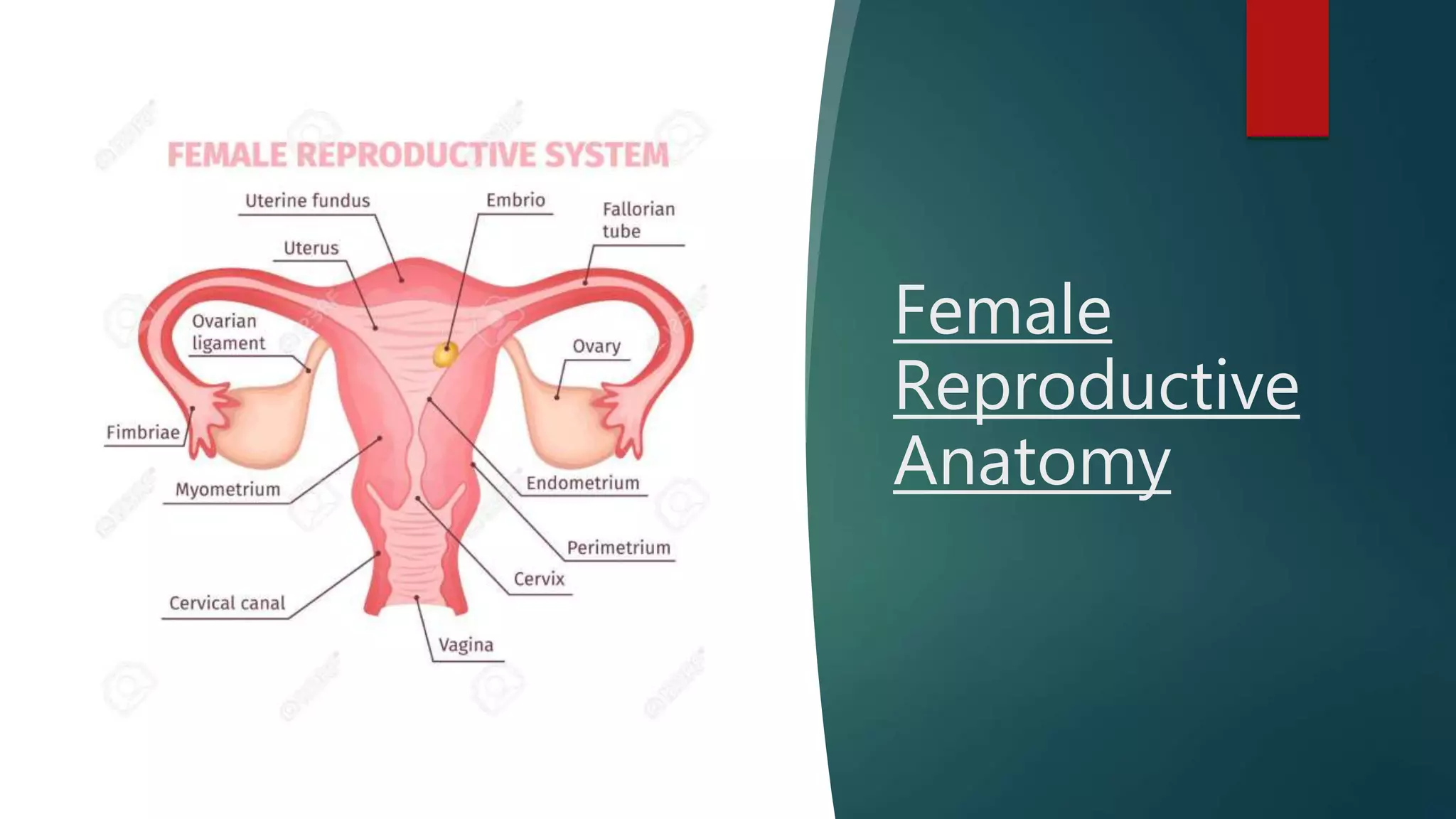
The female internal reproductive
structures include:
 A pair of gonads (ovaries),
 A system of ducts (oviducts/ fallopian tubes),
and
 Chambers (uterus, vagina, vulva) that carry
gametes and house the embryo and foetus.
Anatomy of the female
reproductive organ
Ovaries
 Lie in the abdominal cavity
 Each ovary contains many follicles, which
consist of a partially developed egg, called an
oocyte, surrounded by support cells.
 Once a month, an oocyte develops into an
ovum (egg) by the process of oogenesis
 Ovulation is the release of an egg cell from the
follicle.
 The remaining follicular tissue grows within
the ovary, forming the corpus luteum.
 The corpus luteum secretes hormones e.g.
that help to maintain pregnancy.
 If the egg is not fertilized, the corpus luteum
degenerates.
Oviducts and Uterus
 After ovulation, the egg cell travels from the
ovary to the uterus via an oviduct, or fallopian
tube.
 Cilia in the oviduct convey the egg to the
uterus, which is also called the womb.
 The uterus lining (endometrium) has many
blood vessels
 The uterus narrows at the cervix, then opens
into the vagina.
Vagina and Vulva
 The vagina is a thin-walled chamber that is the
repository for sperm during copulation and serves as
the birth canal
 The vagina opens to the outside at the vulva, which
consists of the
 labia majora,
 labia minora,
 hymen, and
 Clitoris.
The Mammary Glands
 The mammary glands are not part of the
reproductive system but are important to mammalian
reproduction.
 Within these glands there are small sacs of epithelial
tissue which secrete milk.
Male Reproductive Anatomy
Male Reproductive Organ
The male’s external reproductive organs includes:
 The scrotum and
 Penis
Then the internal structures include:
 the gonads (testes), which produce sperm and
hormones,
 and the accessory glands
Male Reproductive Anatomy
Male Gonads (Testes)
 Testes consist of highly coiled seminiferous
tubules (in which sperm form)
 surrounded by connective tissue
 Leydig cells produce hormones and are scattered
between the tubules.
 Production of normal sperm cannot occur at the
body temperatures .
 The testes are held outside the abdominal cavity
in the scrotum, where the temperature is 2ºC
lower than in the abdominal cavity.
Male Testes Anatomy
Ducts
 From the seminiferous tubules of a testis,
sperm pass into the coiled tubules of the
epididymis
 During ejaculation, sperm are propelled
through the muscular vas deferens and the
ejaculatory duct, and then exit the penis
through the urethra.
Accessory Glands
Semen is composed of:
 sperm plus
 secretions from three sets of accessory glands
 The two seminal vesicles contribute about 60% of the
total volume of semen.
 The prostate gland secretes its products directly into
the urethra through several small ducts.
 The bulbourethral glands which secrete a clear mucus
before ejaculation that neutralizes acidic urine
remaining in the urethra.
Penis
 The human penis is composed of three
cylinders of spongy erectile tissue.
 During sexual arousal, the erectile tissue fills
with blood from the arteries, causing an
erection.
 The head of the penis is called the glans and is
covered with a prepuce.
 The rest is called the shaft.
Male penis Anatomy
Gametogenesis
 Gametogenesis is the production of gametes by
meiosis.
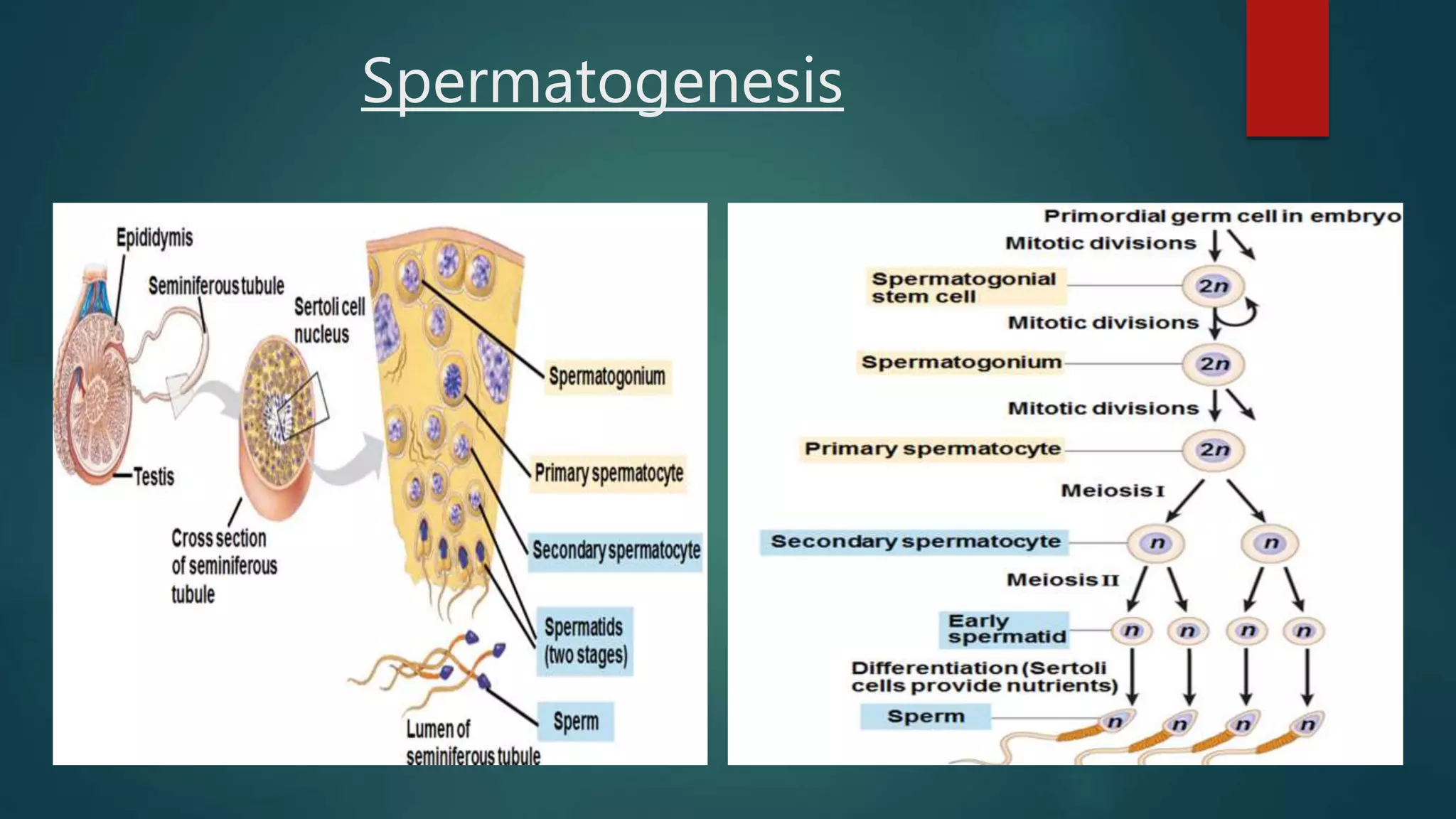
 Spermatogenesis is production of mature sperm
 Oogenesis is development of mature oocytes
(eggs).
 Sperm are small and motile and are produced
throughout the life of a sexually mature male.
Spermatogenesis
Oogenesis
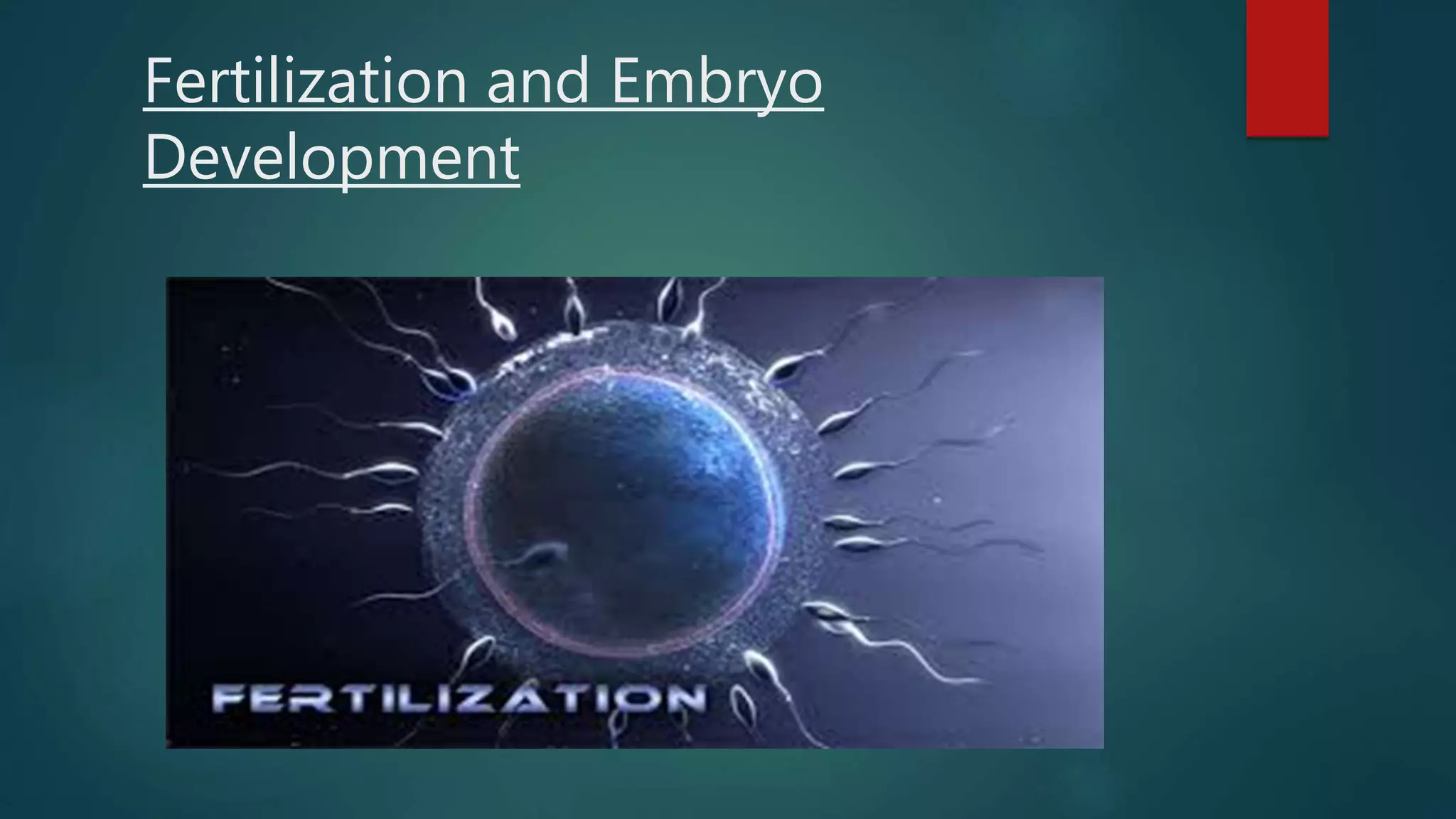
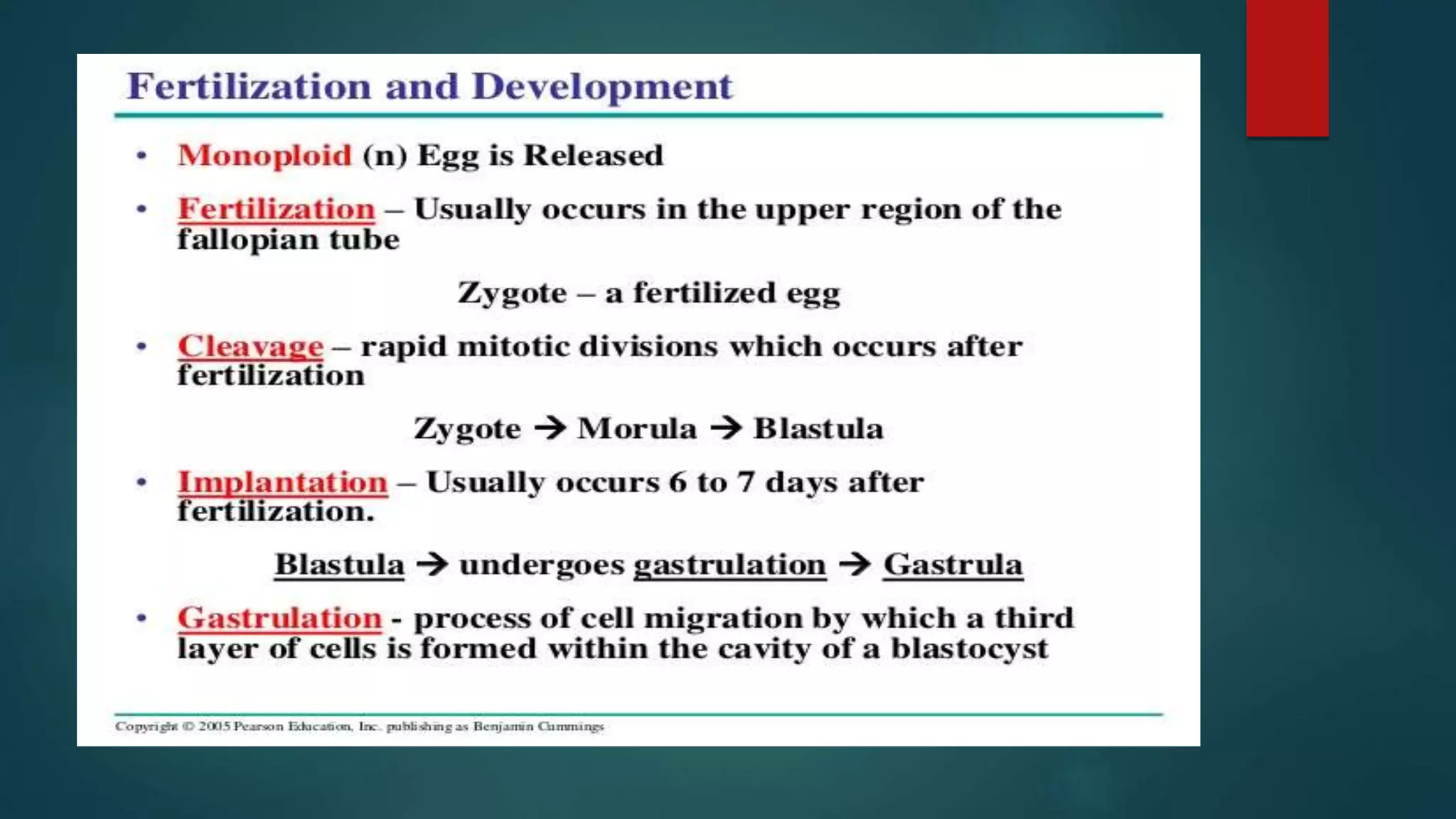
Fertilization and Embryo
Development
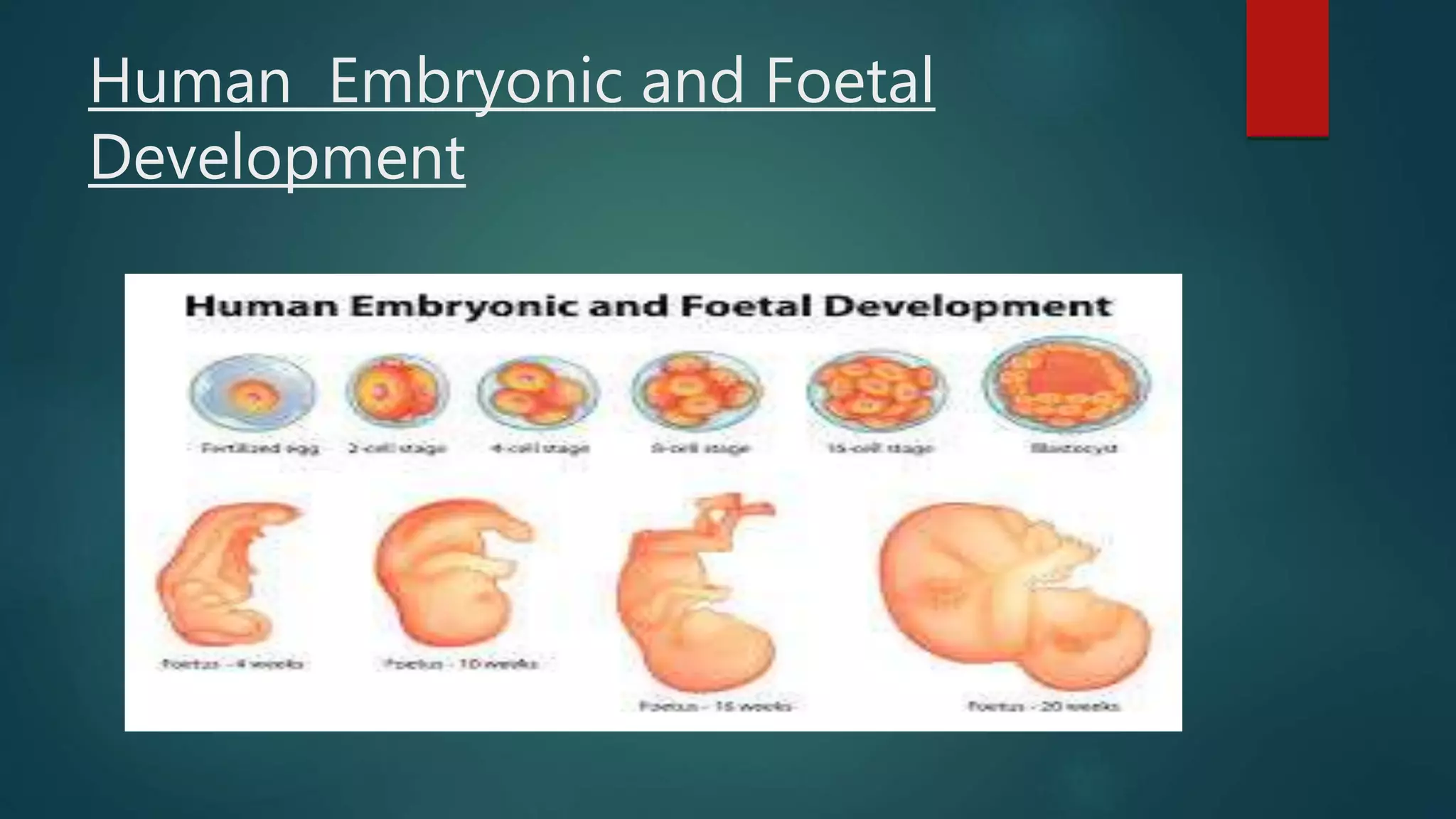
Human Embryonic and Foetal
Development
Foetal Nourishment
BIRTH
THE THREE STAGES OF LABOUR
 1. DILATION OF THE CERVIX
CERVIX
FOETUS
ENDOMETRIUM
UMBILICAL CORD
BIRTH
 2. DELIVERY OF THE BABY
BIRTH
 3. DELIVERY OF THE PLACENTA
PLACENTA
DETACHING
UMBILICAL CORD
BIRTH
 Birth is brought about by a series of strong,
rhythmic uterine contractions.
 First the baby is delivered, and then the
placenta.
 Lactation, the production of milk, is unique to
mammals.
NEW BORN BABY
Acknowledgement
Adima. (2014). Human reproduction in Humans. Accessed from slideshare at
https://www.slideshare.net/Adima2012/reproduction-in-human-beings (Accessed 03 September 2018)
Caravaca, L. (2015). Human Reproduction. Accessed from slideshare at
https://www.slideshare.net/docaro/human-reproduction-43746502 (Accessed on 02 September 2018)
Ehrenpreis, J.S. (2010) Human reproduction. Accessed from slideshare at
https://www.slideshare.net/JustinScottEhrenpreis/human-reproduction-3595794 (Accessed 01 September
2018)
Mattau, P. (2013). Human Reproduction. Accessed from slideshare at
https://www.slideshare.net/putrimattau/2-human-reproduction-system (Accessed 01 Septermber 2018)
Thandeka, M. (2014). Human Reproduction for Grade 12. Accessed from slideshare at
https://www.slideshare.net/thandekamadladleni/human-reproduction-32035664 (Accessed 02 September
2018)

Human reproduction system

  • 1.
  • 2.
  • 3.
    The female externalreproductive structures include:  the clitoris and  two sets of labia
  • 4.
    The female internalreproductive structures include:  A pair of gonads (ovaries),  A system of ducts (oviducts/ fallopian tubes), and  Chambers (uterus, vagina, vulva) that carry gametes and house the embryo and foetus.
  • 5.
    Anatomy of thefemale reproductive organ
  • 6.
    Ovaries  Lie inthe abdominal cavity  Each ovary contains many follicles, which consist of a partially developed egg, called an oocyte, surrounded by support cells.  Once a month, an oocyte develops into an ovum (egg) by the process of oogenesis
  • 7.
     Ovulation isthe release of an egg cell from the follicle.  The remaining follicular tissue grows within the ovary, forming the corpus luteum.  The corpus luteum secretes hormones e.g. that help to maintain pregnancy.  If the egg is not fertilized, the corpus luteum degenerates.
  • 8.
    Oviducts and Uterus After ovulation, the egg cell travels from the ovary to the uterus via an oviduct, or fallopian tube.  Cilia in the oviduct convey the egg to the uterus, which is also called the womb.  The uterus lining (endometrium) has many blood vessels  The uterus narrows at the cervix, then opens into the vagina.
  • 9.
    Vagina and Vulva The vagina is a thin-walled chamber that is the repository for sperm during copulation and serves as the birth canal  The vagina opens to the outside at the vulva, which consists of the  labia majora,  labia minora,  hymen, and  Clitoris.
  • 10.
    The Mammary Glands The mammary glands are not part of the reproductive system but are important to mammalian reproduction.  Within these glands there are small sacs of epithelial tissue which secrete milk.
  • 11.
  • 12.
    Male Reproductive Organ Themale’s external reproductive organs includes:  The scrotum and  Penis Then the internal structures include:  the gonads (testes), which produce sperm and hormones,  and the accessory glands
  • 13.
  • 14.
    Male Gonads (Testes) Testes consist of highly coiled seminiferous tubules (in which sperm form)  surrounded by connective tissue  Leydig cells produce hormones and are scattered between the tubules.  Production of normal sperm cannot occur at the body temperatures .  The testes are held outside the abdominal cavity in the scrotum, where the temperature is 2ºC lower than in the abdominal cavity.
  • 15.
  • 16.
    Ducts  From theseminiferous tubules of a testis, sperm pass into the coiled tubules of the epididymis  During ejaculation, sperm are propelled through the muscular vas deferens and the ejaculatory duct, and then exit the penis through the urethra.
  • 17.
    Accessory Glands Semen iscomposed of:  sperm plus  secretions from three sets of accessory glands  The two seminal vesicles contribute about 60% of the total volume of semen.  The prostate gland secretes its products directly into the urethra through several small ducts.  The bulbourethral glands which secrete a clear mucus before ejaculation that neutralizes acidic urine remaining in the urethra.
  • 18.
    Penis  The humanpenis is composed of three cylinders of spongy erectile tissue.  During sexual arousal, the erectile tissue fills with blood from the arteries, causing an erection.  The head of the penis is called the glans and is covered with a prepuce.  The rest is called the shaft.
  • 19.
  • 20.
    Gametogenesis  Gametogenesis isthe production of gametes by meiosis.  Spermatogenesis is production of mature sperm  Oogenesis is development of mature oocytes (eggs).  Sperm are small and motile and are produced throughout the life of a sexually mature male.
  • 21.
  • 22.
  • 23.
  • 25.
    Human Embryonic andFoetal Development
  • 26.
  • 27.
    BIRTH THE THREE STAGESOF LABOUR  1. DILATION OF THE CERVIX CERVIX FOETUS ENDOMETRIUM UMBILICAL CORD
  • 28.
  • 29.
    BIRTH  3. DELIVERYOF THE PLACENTA PLACENTA DETACHING UMBILICAL CORD
  • 30.
    BIRTH  Birth isbrought about by a series of strong, rhythmic uterine contractions.  First the baby is delivered, and then the placenta.  Lactation, the production of milk, is unique to mammals.
  • 31.
  • 32.
    Acknowledgement Adima. (2014). Humanreproduction in Humans. Accessed from slideshare at https://www.slideshare.net/Adima2012/reproduction-in-human-beings (Accessed 03 September 2018) Caravaca, L. (2015). Human Reproduction. Accessed from slideshare at https://www.slideshare.net/docaro/human-reproduction-43746502 (Accessed on 02 September 2018) Ehrenpreis, J.S. (2010) Human reproduction. Accessed from slideshare at https://www.slideshare.net/JustinScottEhrenpreis/human-reproduction-3595794 (Accessed 01 September 2018) Mattau, P. (2013). Human Reproduction. Accessed from slideshare at https://www.slideshare.net/putrimattau/2-human-reproduction-system (Accessed 01 Septermber 2018) Thandeka, M. (2014). Human Reproduction for Grade 12. Accessed from slideshare at https://www.slideshare.net/thandekamadladleni/human-reproduction-32035664 (Accessed 02 September 2018)