#CLOwebinar 
The presentation will begin at the top of the hour. A dial in number will not be provided. Listen to today’s webinar using your computer’s speakers or headphones. 
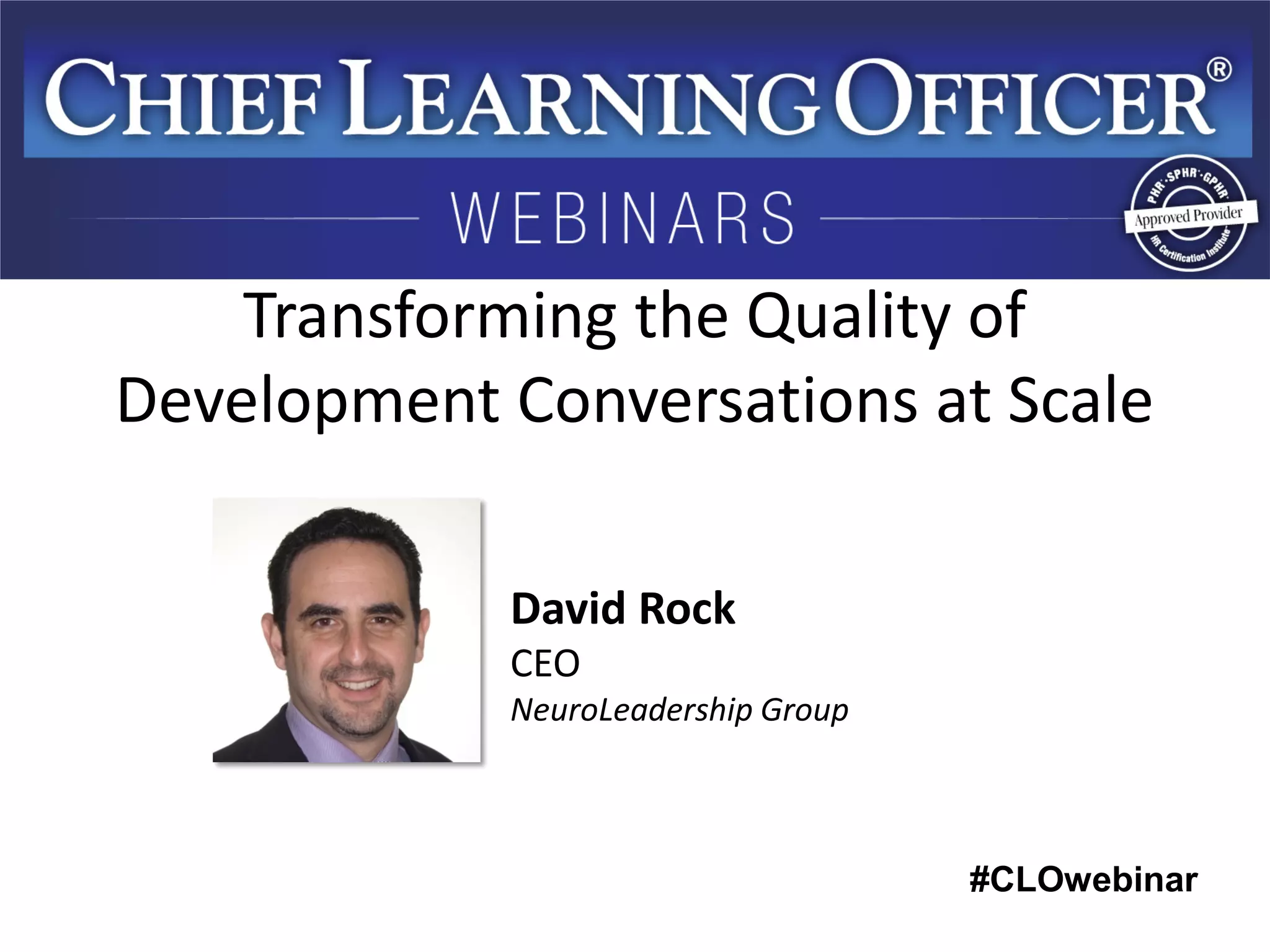
Transforming the Quality of Development Conversations at Scale
#CLOwebinar 
Speaker: David Rock CEO NeuroLeadership Group Moderator: Kate Everson Associate Editor Chief Learning Officer magazine 
Transforming the Quality of Development Conversations at Scale
#CLOwebinar 
Tools You Can Use 
Audio Control 
–A dial in number will not be provided. 
–Adjust the volume by sliding the indicator in the Media Player box to the left. 
–Also check your computer’s volume for external speakers or headsets.
#CLOwebinar 
Tools You Can Use 
Question & Answer 
–Type in your question in the “Q&A” box to the left. 
–These queries are visible by the presenter ONLY. 
–Type your question in the space at the bottom. 
–Click “Send.”
#CLOwebinar 
Tools You Can Use 
Twitter 
-Click “Post” in the Twitter widget. 
#CLOwebinar 
@CLOmedia
#CLOwebinar 
Tools You Can Use 
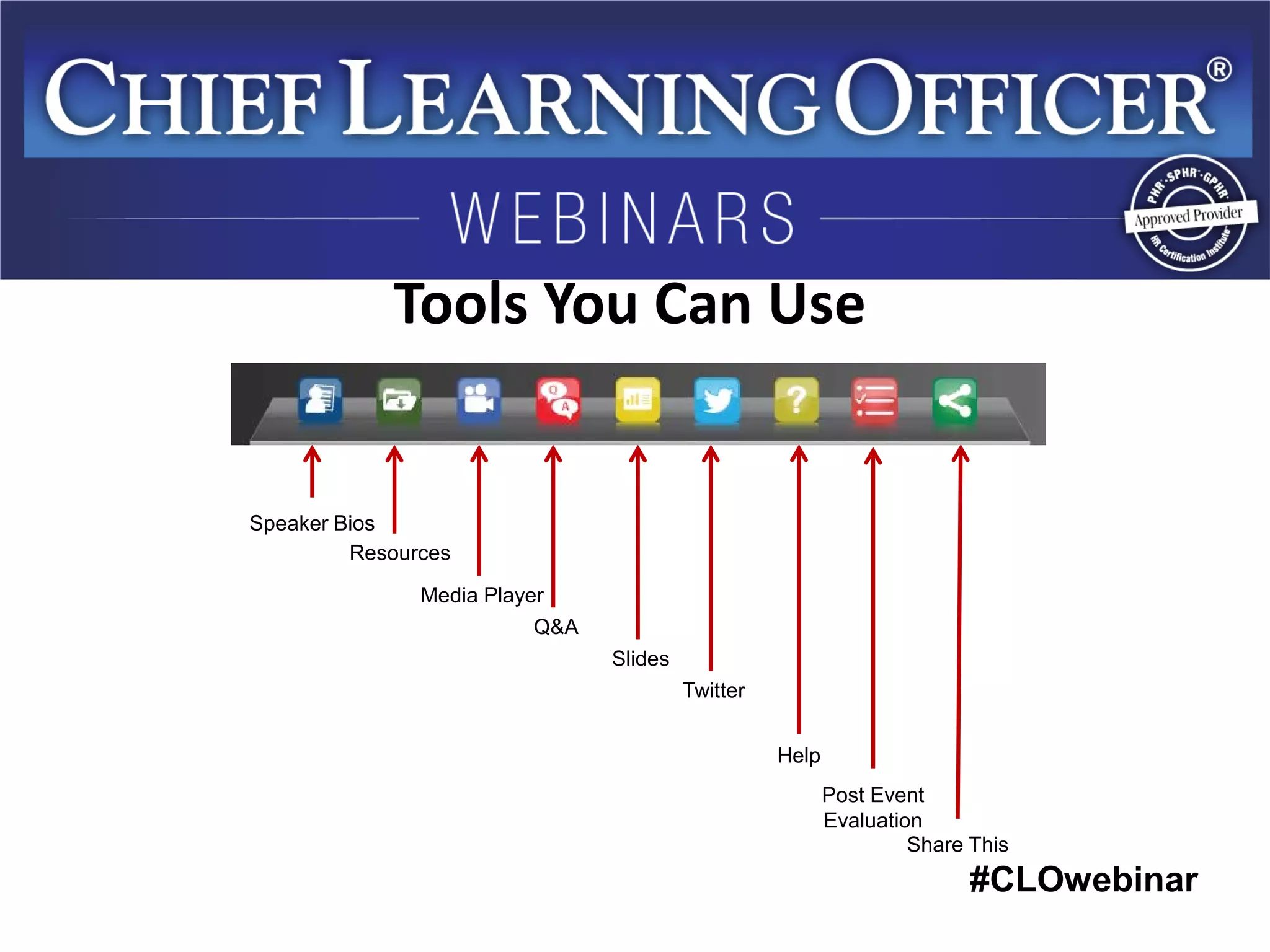
Speaker Bios 
Resources 
Media Player 
Q&A 
Slides 
Twitter 
Help 
Post Event 
Evaluation 
Share This
#CLOwebinar 
1. May I receive a copy of the slides? 
YES! Click on the resource list located on the top left portion of your screen. 
2. May I review the webinar recording at a later date? 
YES! You may log in again using today’s link to review the presentation on-demand. 
Frequently Asked Questions
#CLOwebinar 
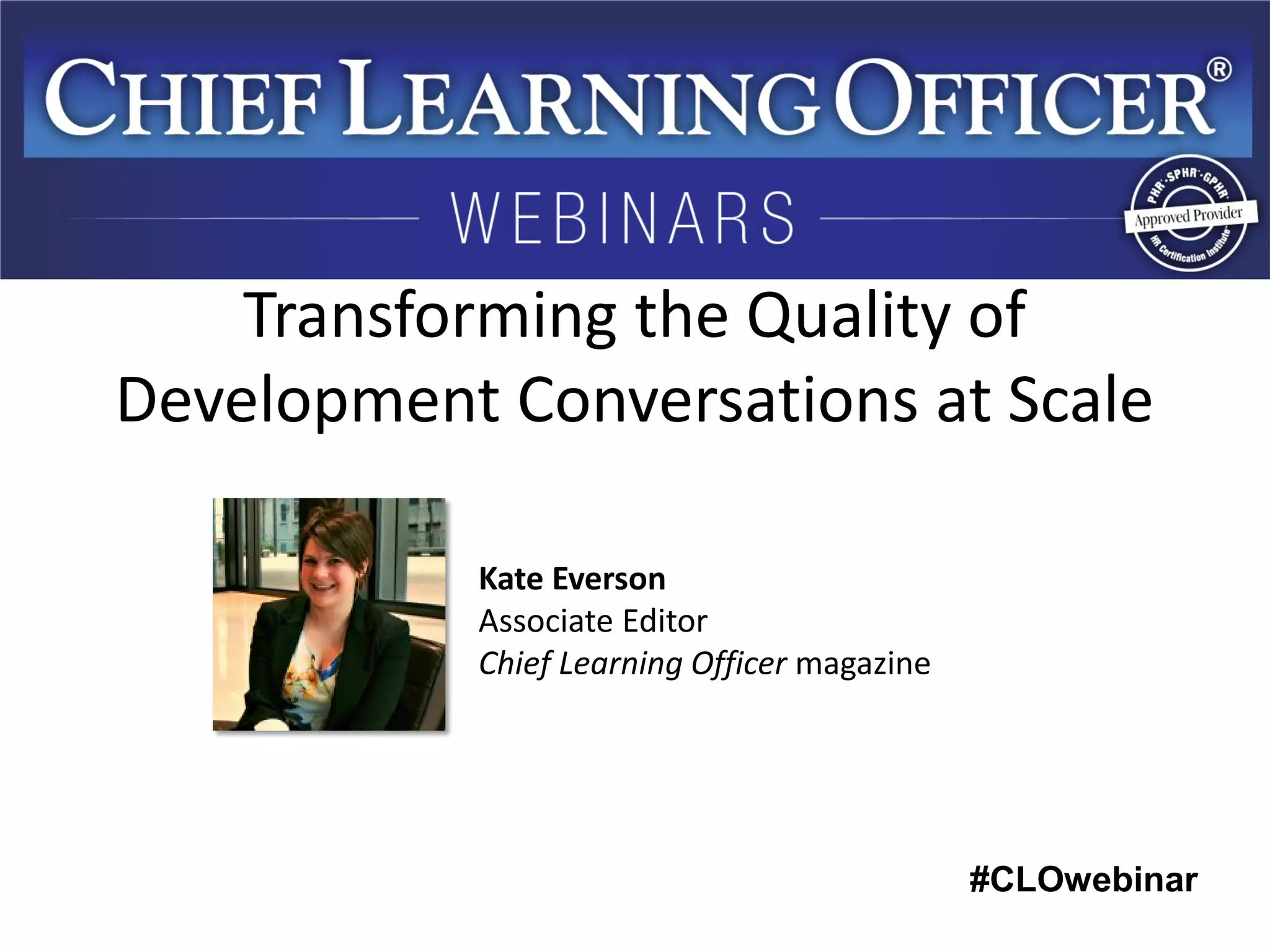
Kate Everson 
Associate Editor 
Chief Learning Officer magazine 
Transforming the Quality of Development Conversations at Scale
#CLOwebinar 
David Rock CEO NeuroLeadership Group 
Transforming the Quality of Development Conversations at Scale
Everyday leadership coaching: day one 
Transform the Quality of 
Development Conversations at Scale 
2014 
Dr. David Rock Director, NLI
Our vision 
Transform Leadership 
Through Neuroscience
A new language for leadership 
Research • Education • Solutions
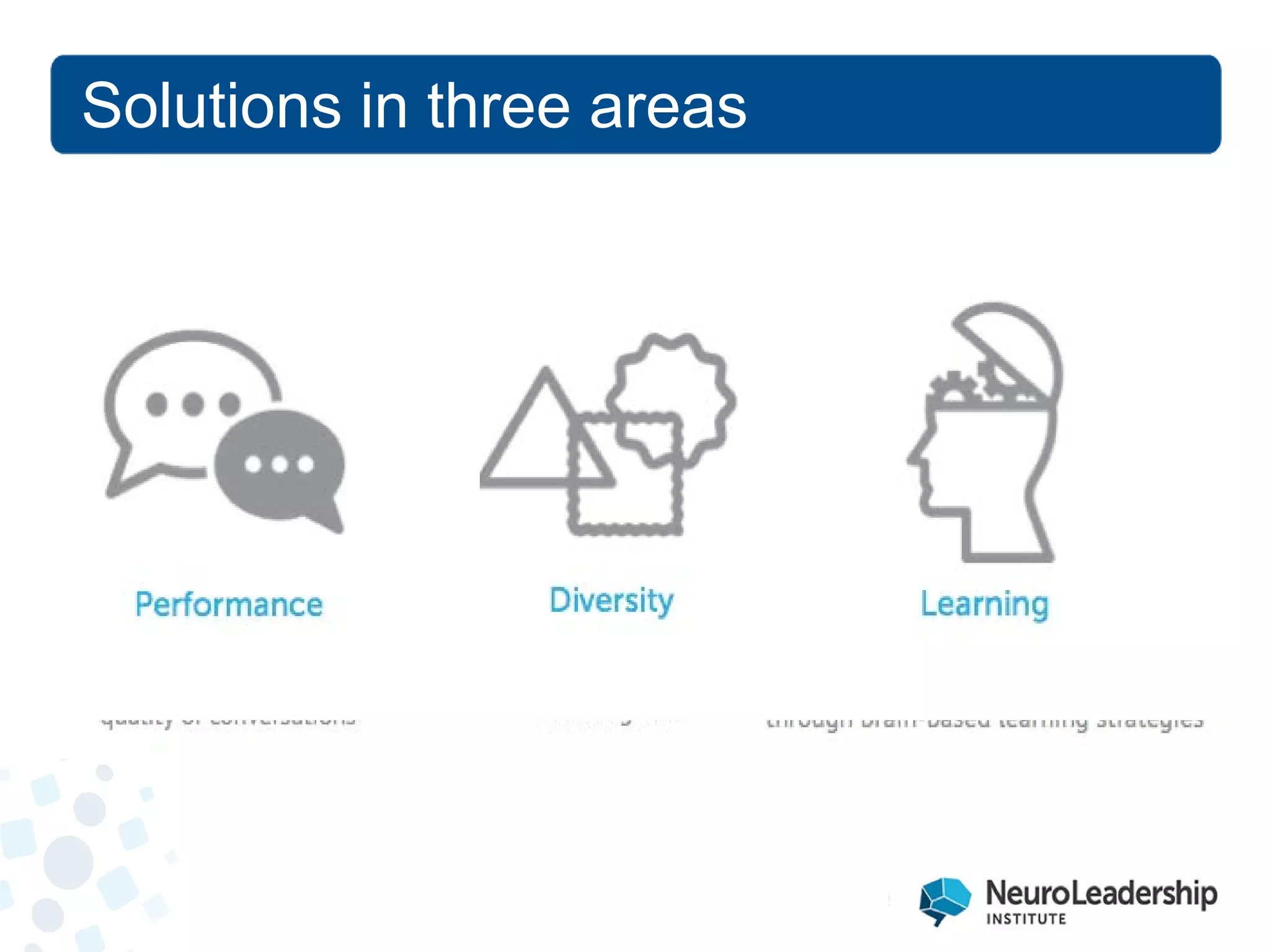
Solutions in three areas
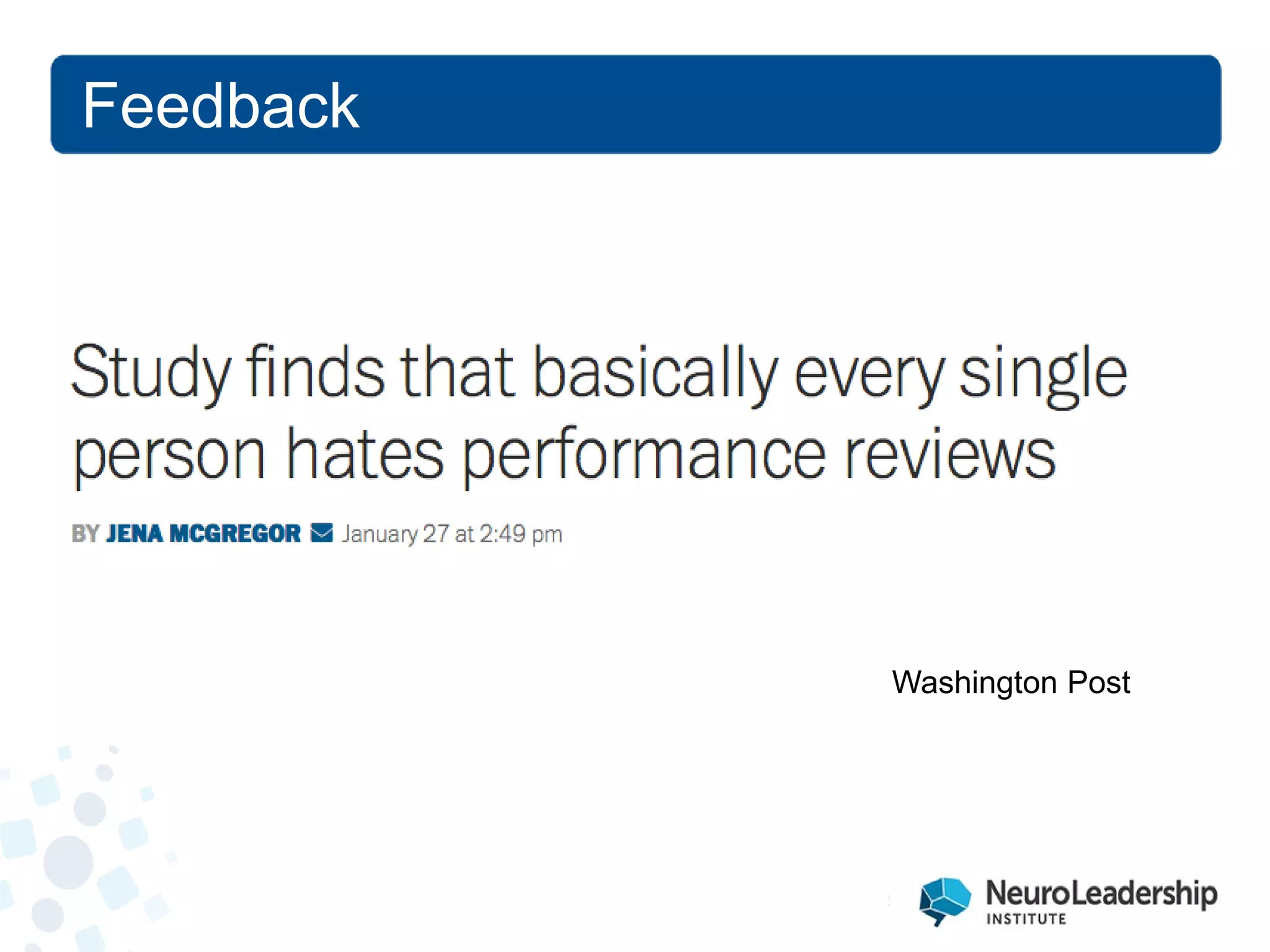
Do you look forward to ‘feedback’? 
“I’d like to give you some feedback” 
“We need to talk” 
“Can I share something I’ve noticed about you”
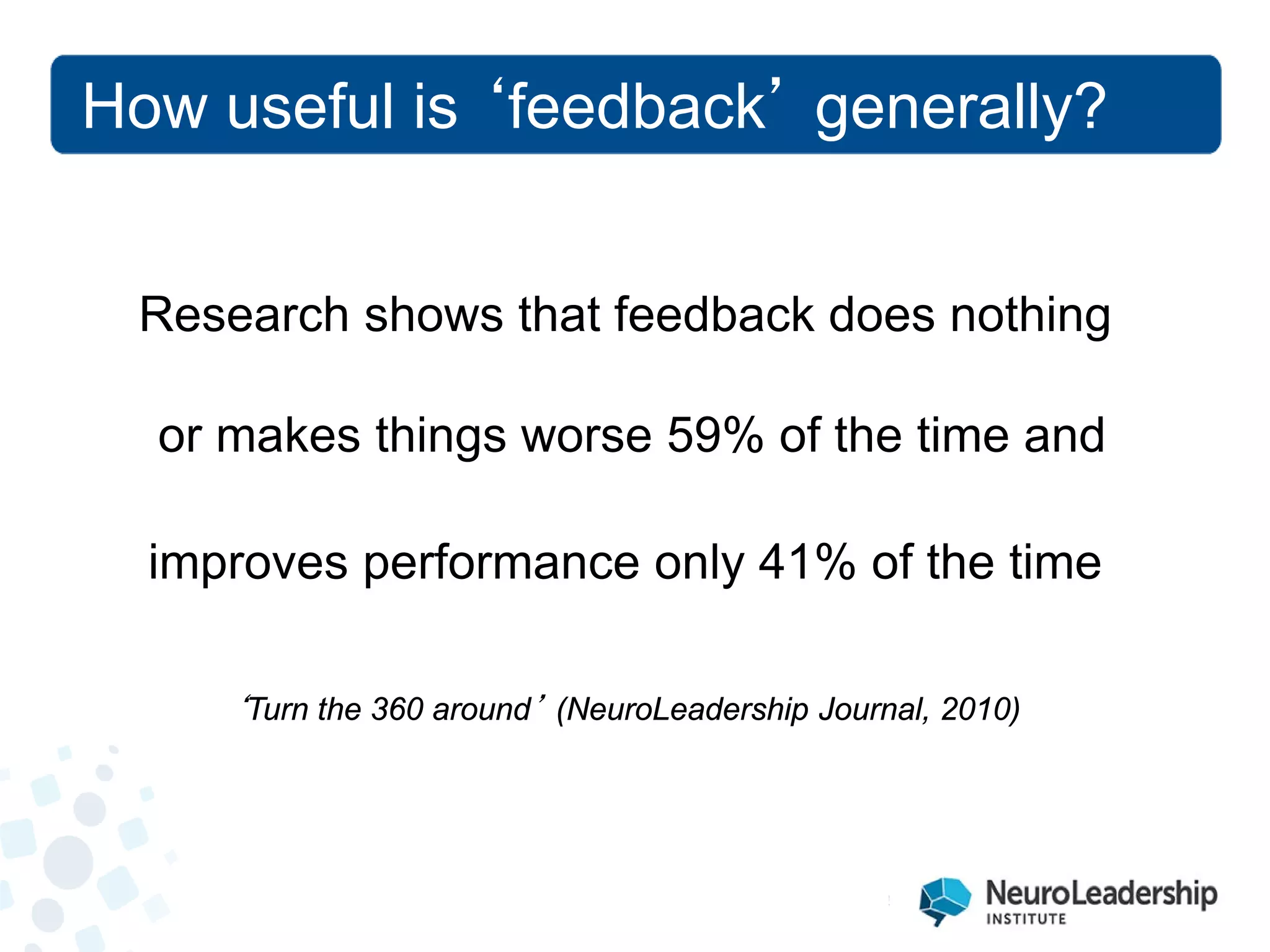
Research shows that feedback does nothing 
or makes things worse 59% of the time and 
improves performance only 41% of the time 
‘Turn the 360 around’ (NeuroLeadership Journal, 2010) 
How useful is ‘feedback’ generally?
A “quality conversation” 
A viable alternative?
• 
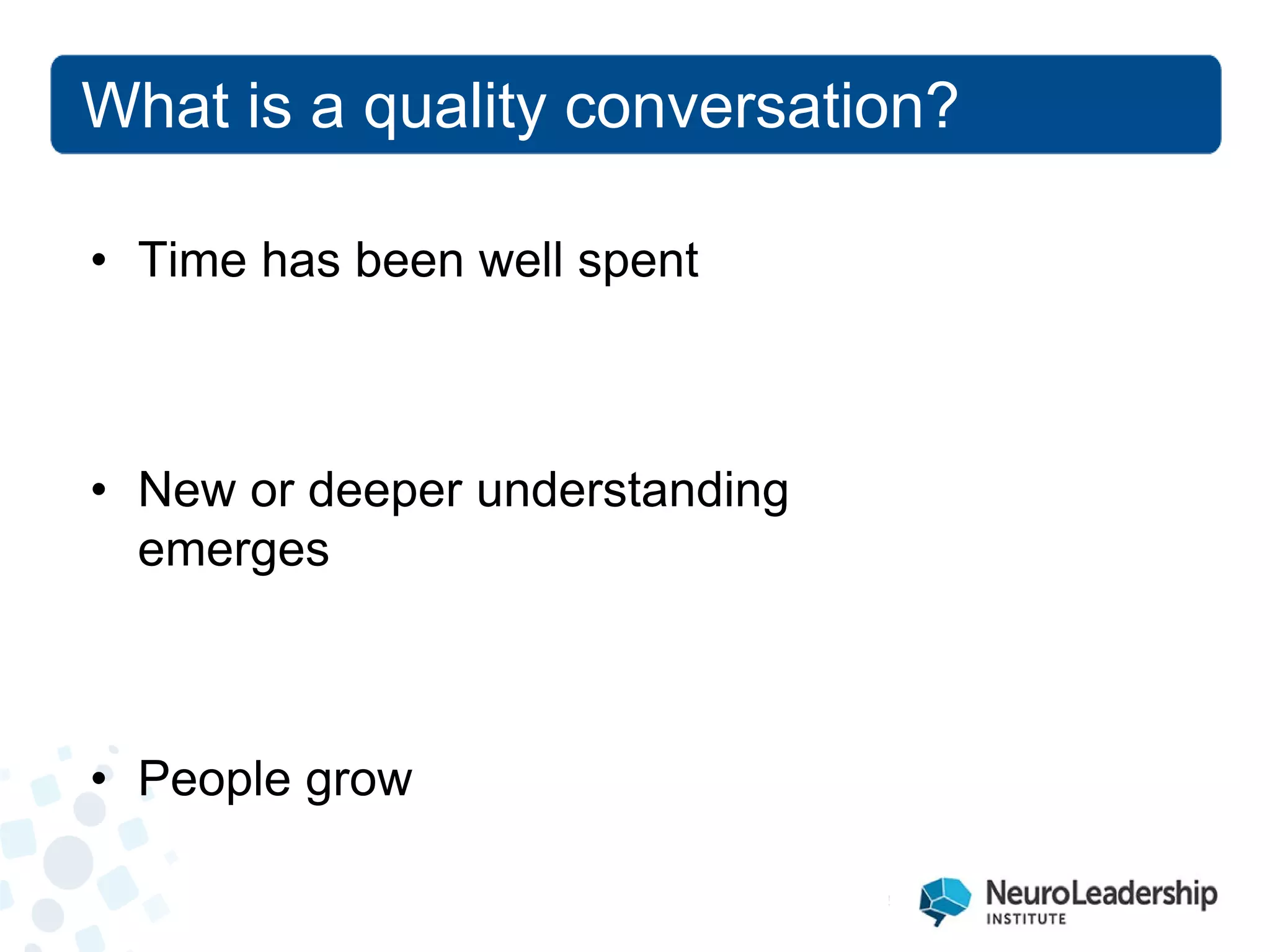
Time has been well spent 
• 
New or deeper understanding emerges 
• 
People grow 
What is a quality conversation?
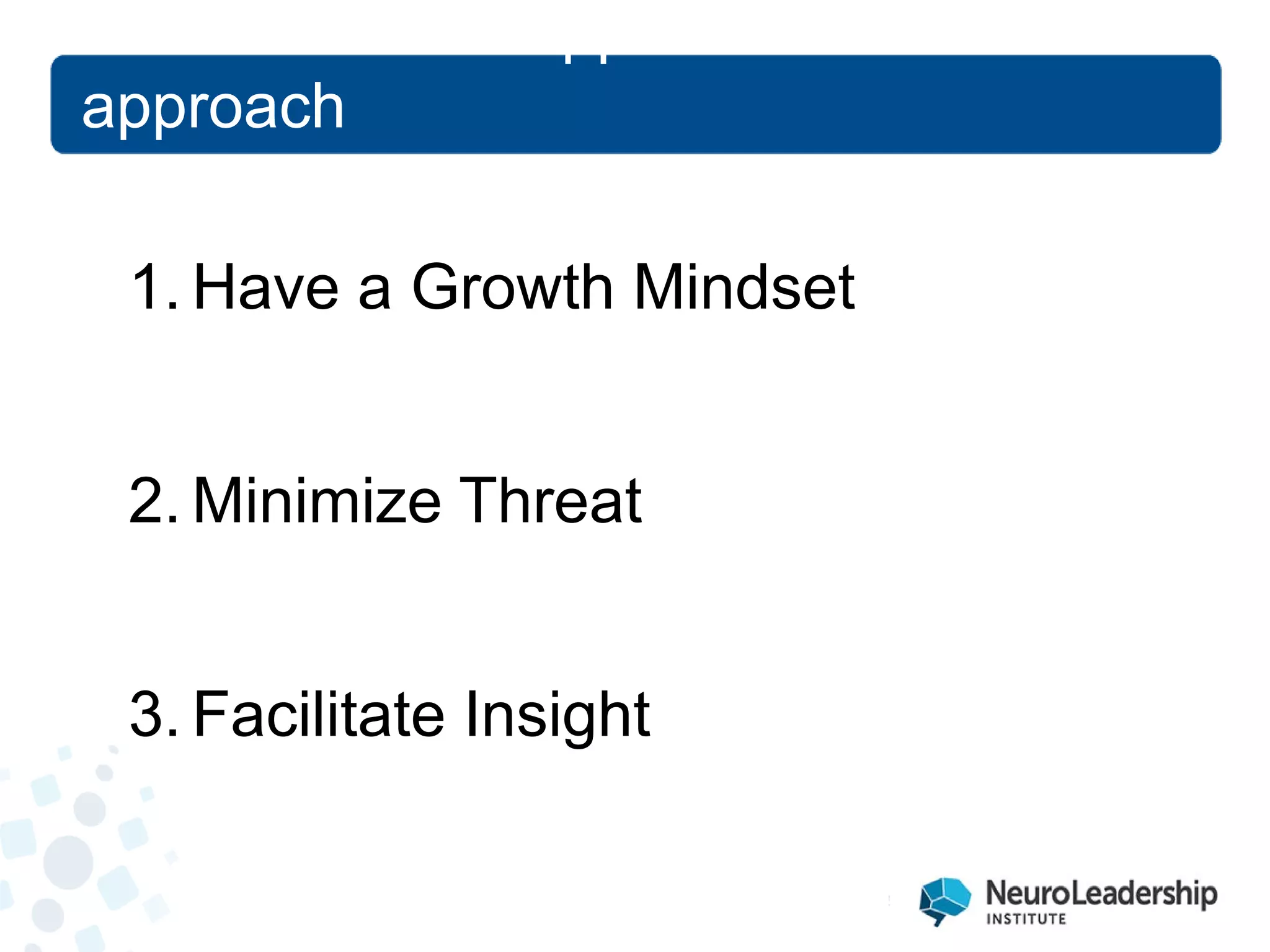
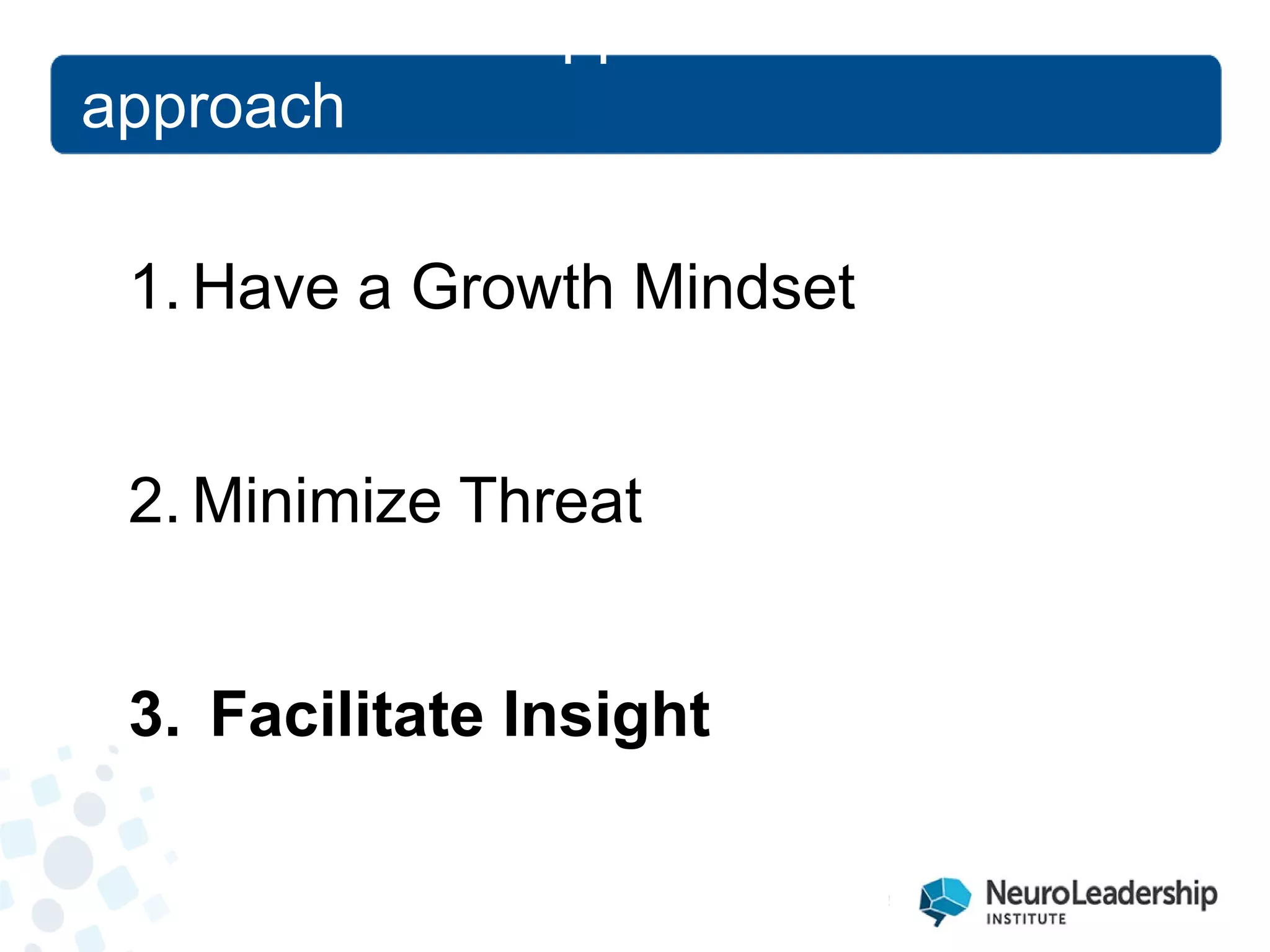
Research that supports a new approach 
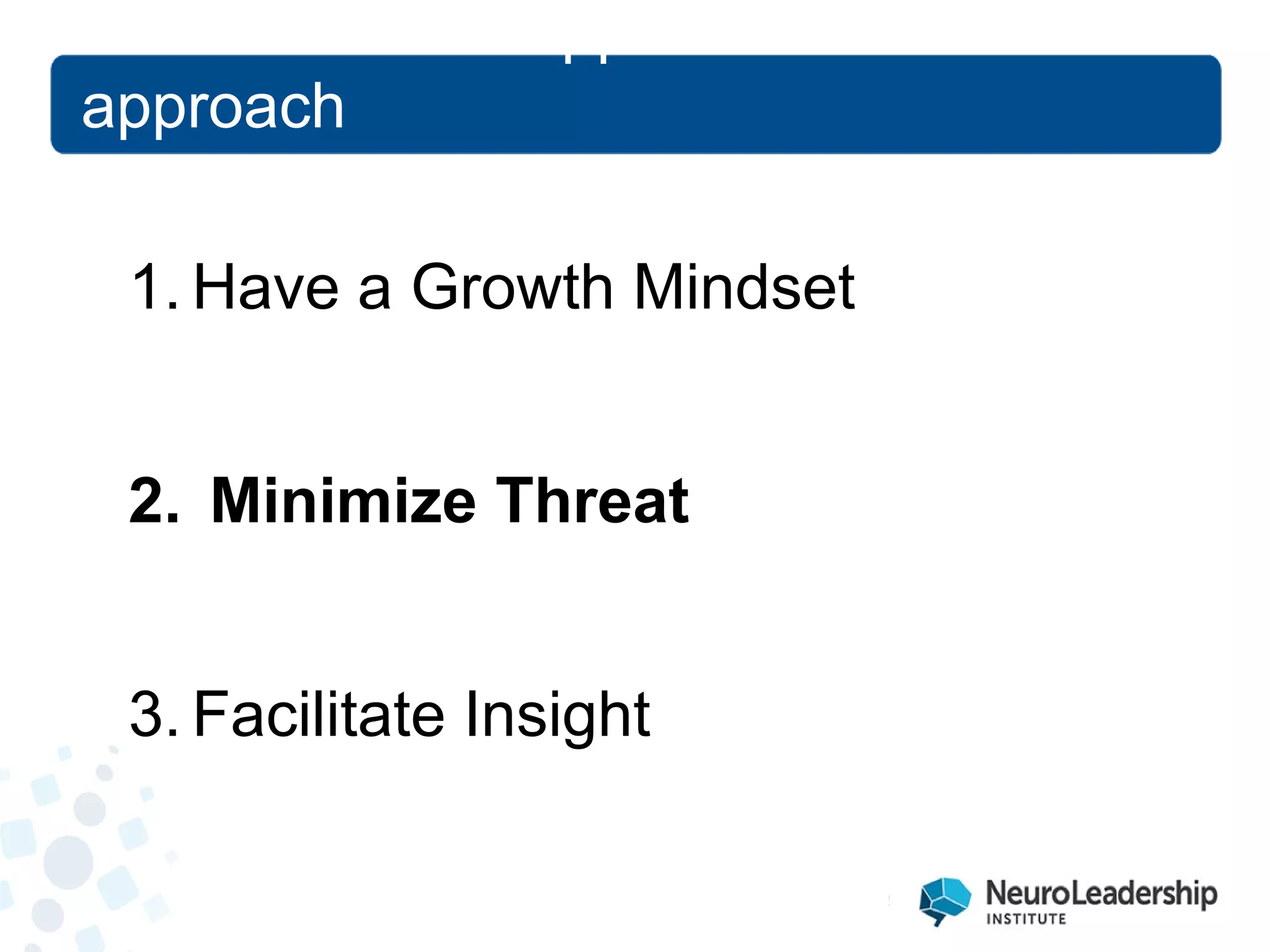
1. 
Have a Growth Mindset 
2. 
Minimize Threat 
3. 
Facilitate Insight
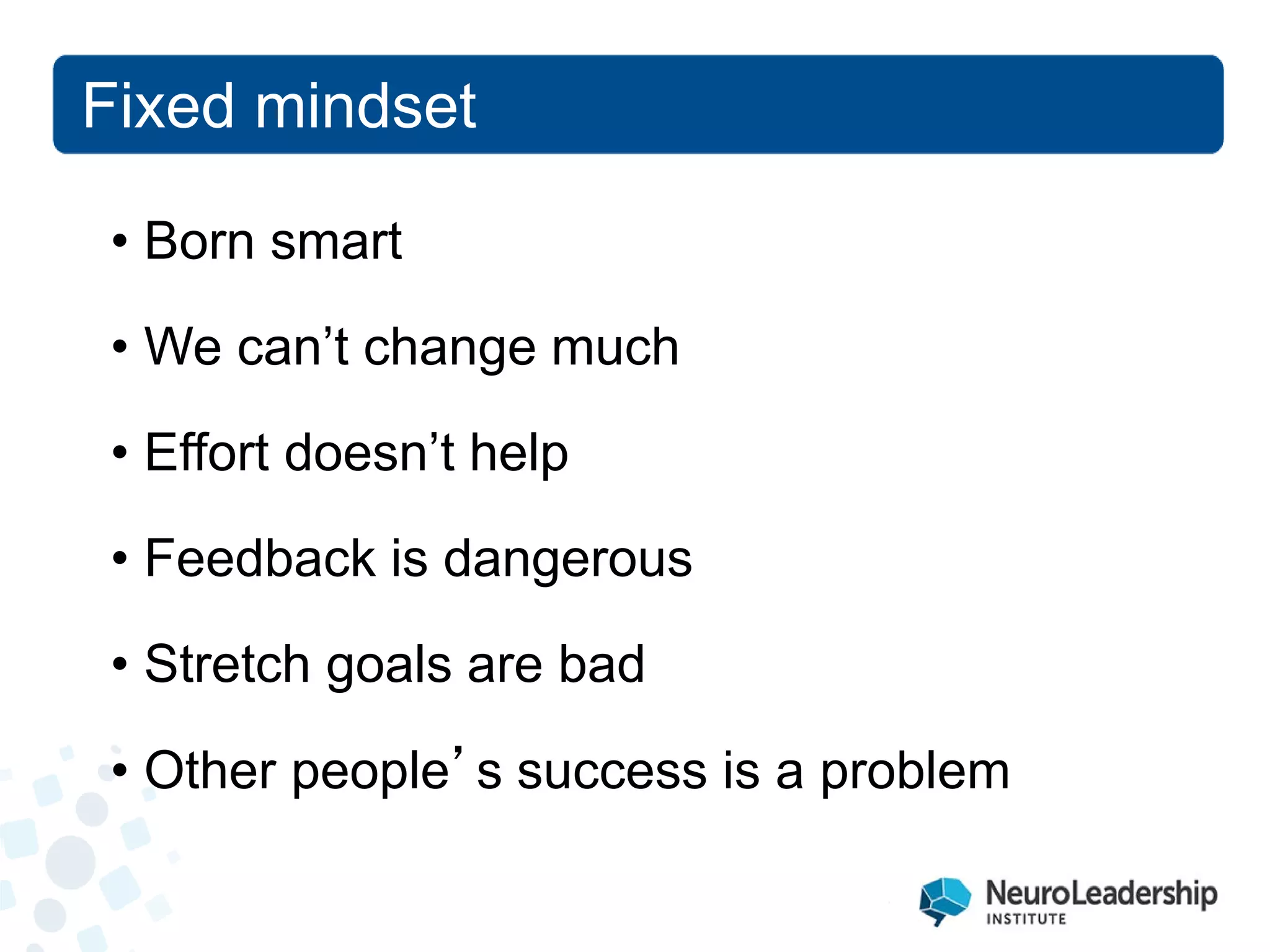
Fixed mindset 
• 
Born smart 
• 
We can’t change much 
• 
Effort doesn’t help 
• 
Feedback is dangerous 
• 
Stretch goals are bad 
• 
Other people’s success is a problem
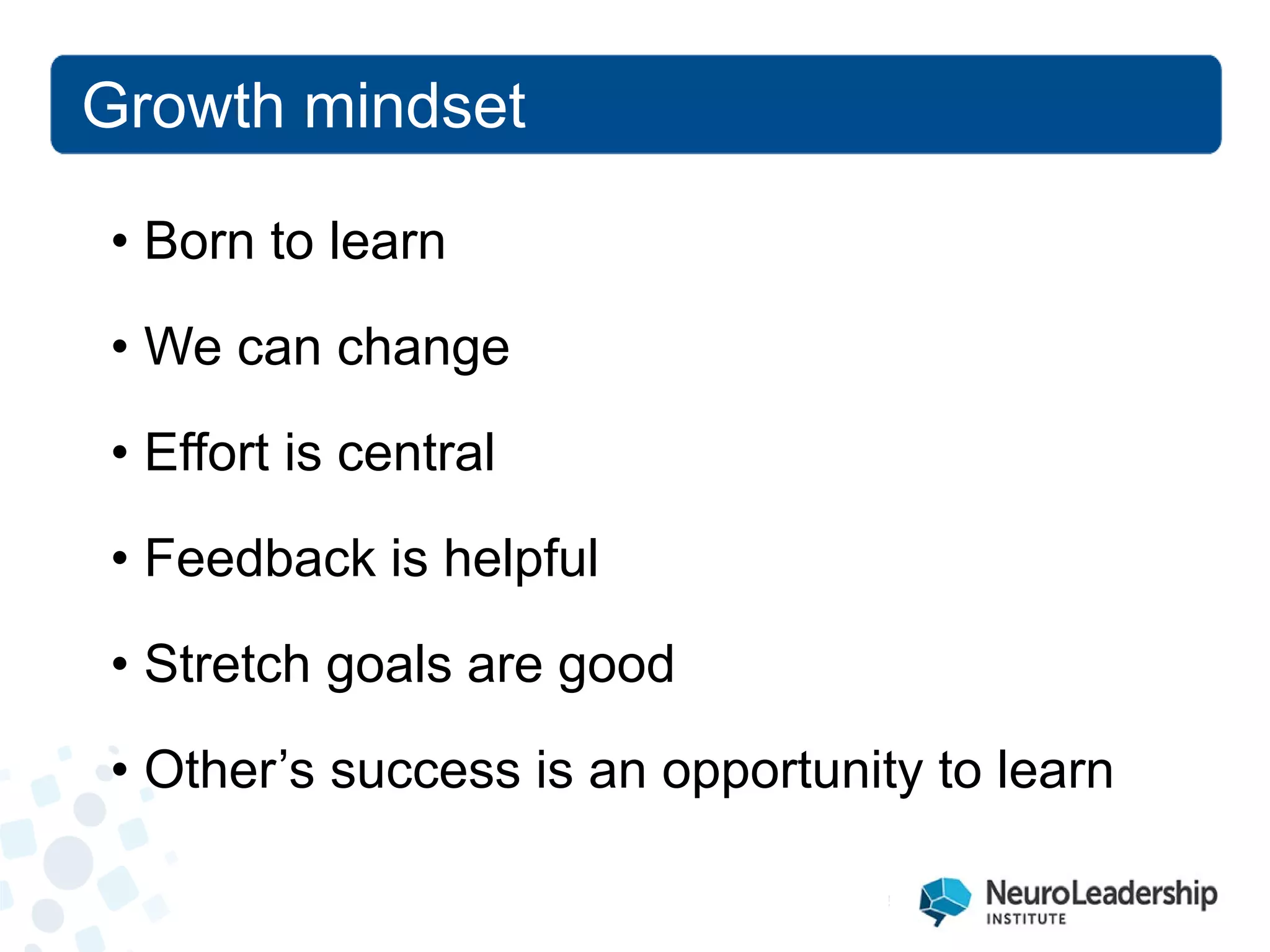
Growth mindset 
• 
Born to learn 
• 
We can change 
• 
Effort is central 
• 
Feedback is helpful 
• 
Stretch goals are good 
• 
Other’s success is an opportunity to learn
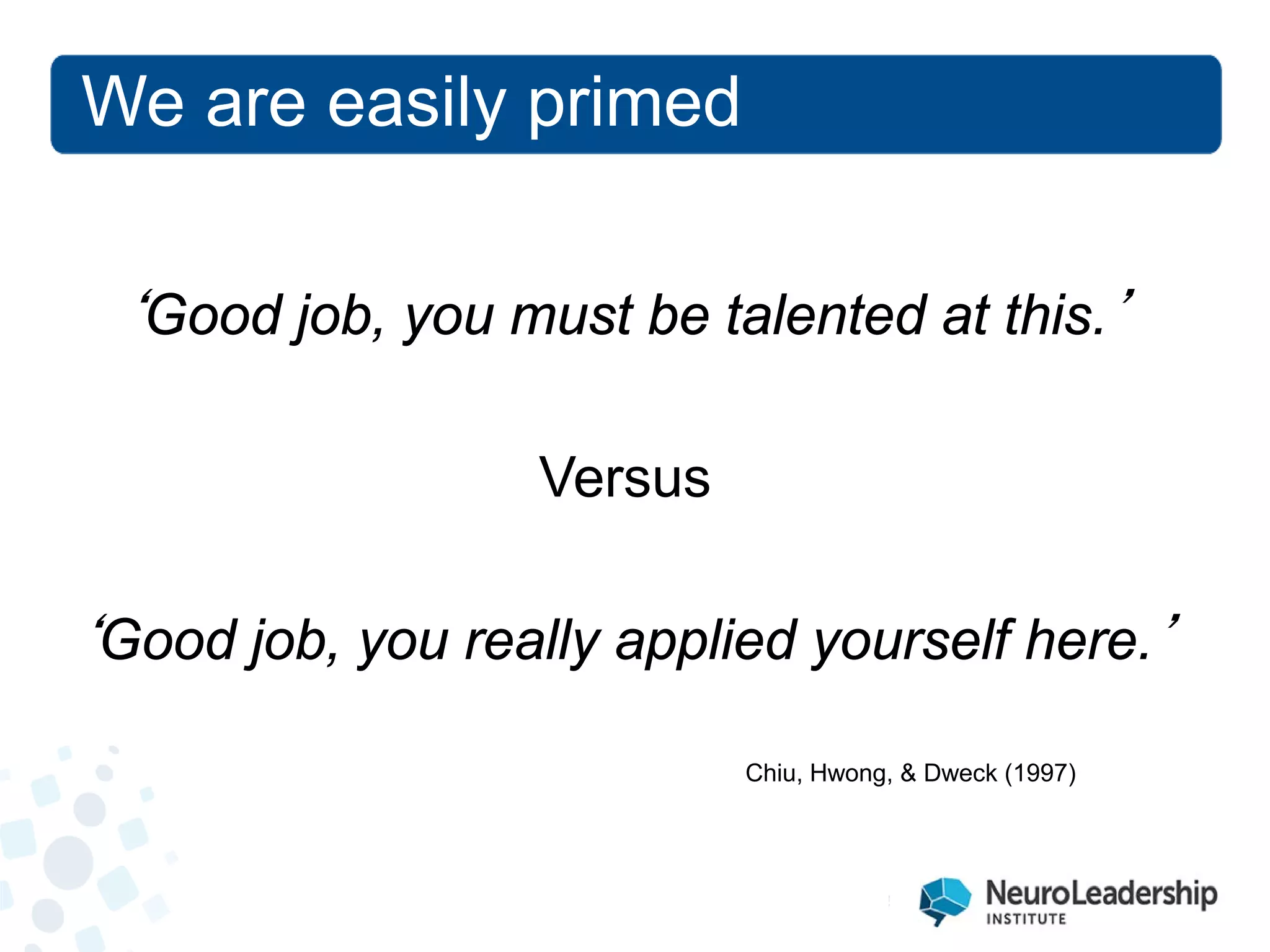
We are easily primed 
‘Good job, you must be talented at this.’ Versus ‘Good job, you really applied yourself here.’ 
Chiu, Hwong, & Dweck (1997)
1. 
Have a Growth Mindset 
2. 
Minimize Threat 
3. 
Facilitate Insight 
Research that supports a new approach
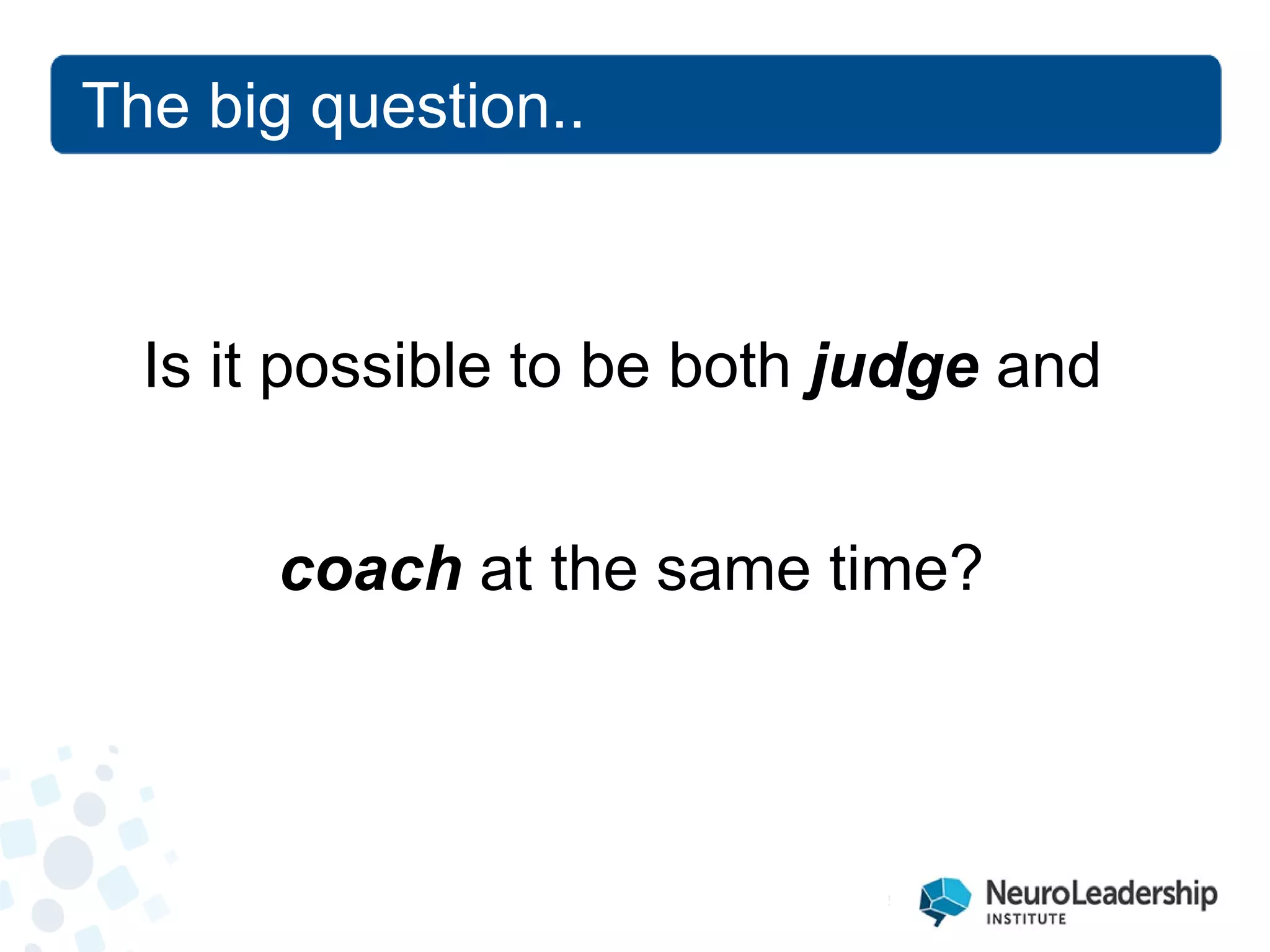
The big question.. 
Is it possible to be both judge and coach at the same time?
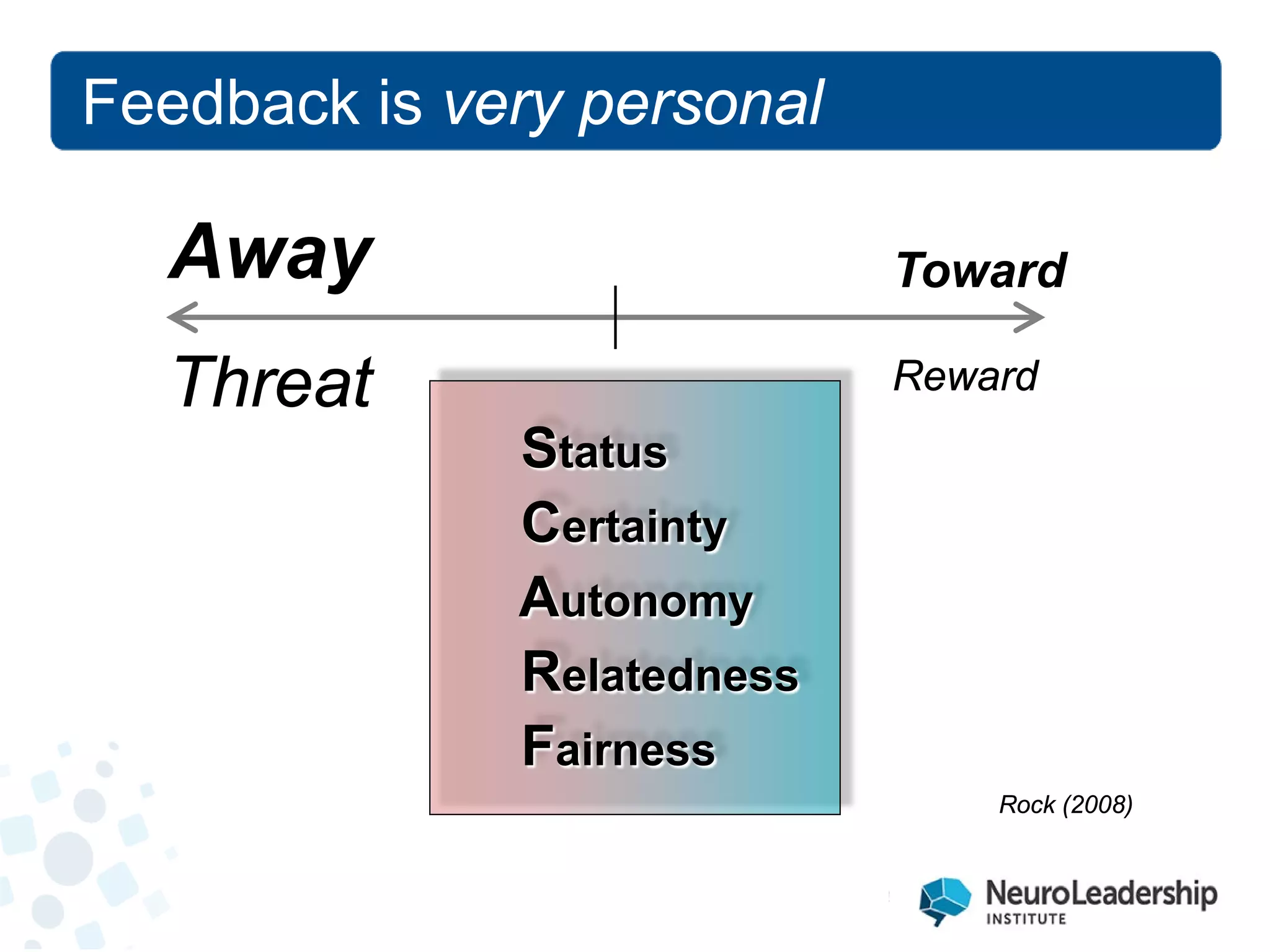
Feedback is very personal 
Away 
Threat 
Toward Reward 
Status Certainty Autonomy Relatedness Fairness 
Rock (2008)
Feedback 
Washington Post
1. 
Have a Growth Mindset 
2. 
Minimize Threat 
3. 
Facilitate Insight 
Research that supports a new approach
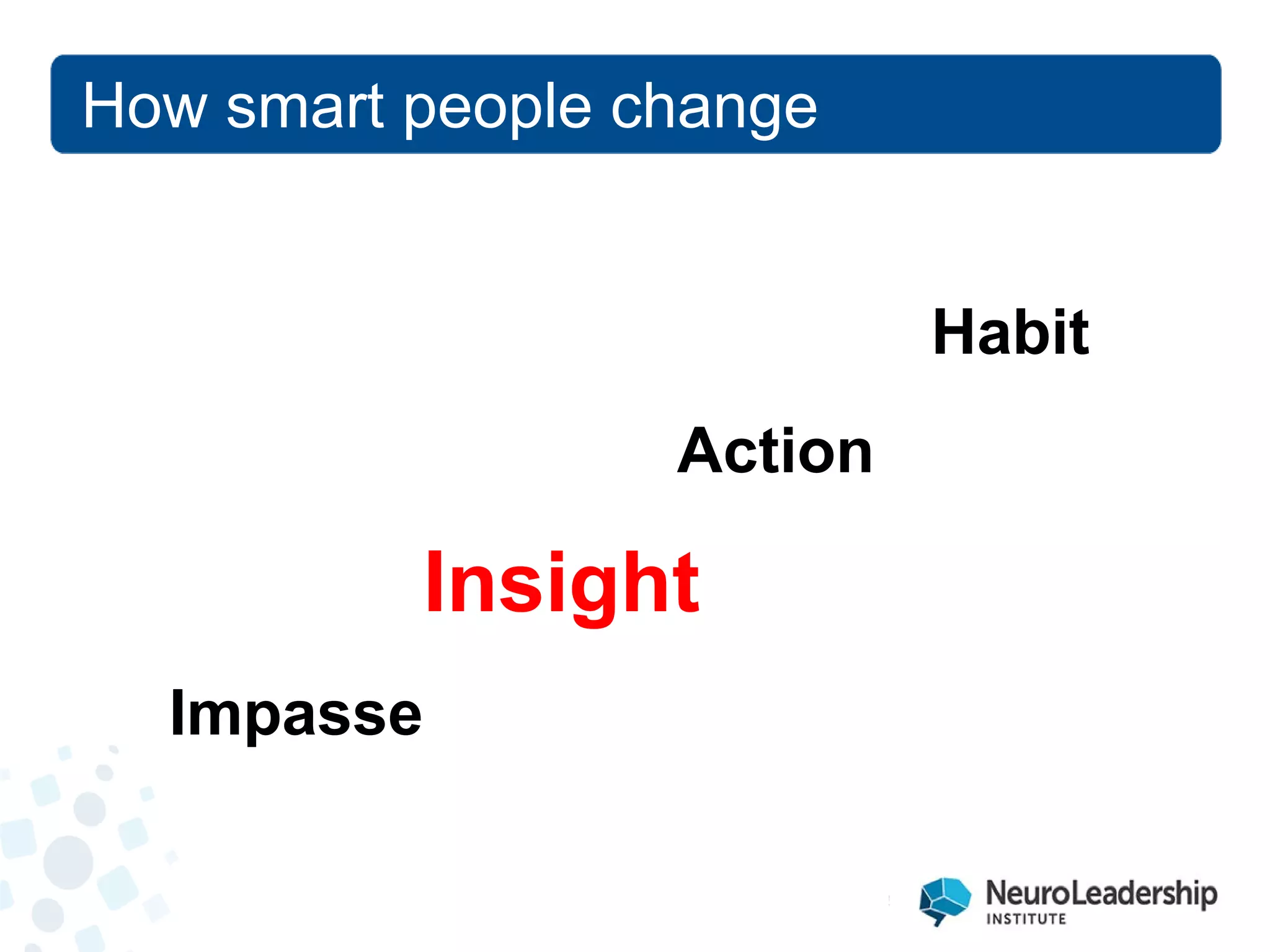
Habit 
Action 
Insight 
Impasse 
How smart people change
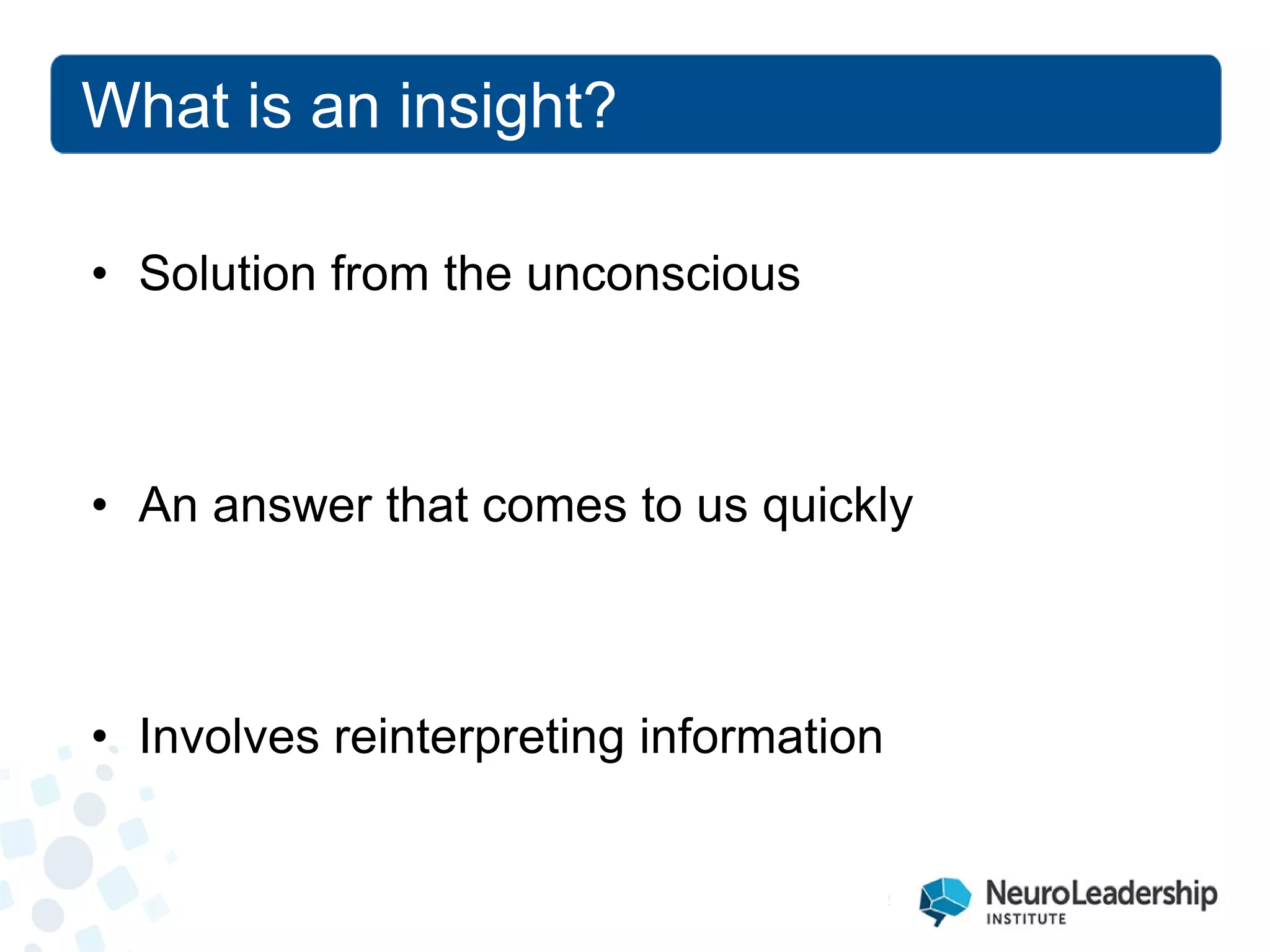
What is an insight? 
• 
Solution from the unconscious 
• 
An answer that comes to us quickly 
• 
Involves reinterpreting information
Ludmer et al. 2011, Neuron
Why do insights matter? 
• 
Learning 
• 
Engagement 
• 
Generalizing of ideas 
• 
Systemic change of the brain
1. 
Have a Growth Mindset 
2. 
Minimize Threat 
3. 
Facilitate Insight 
Research that supports a new approach
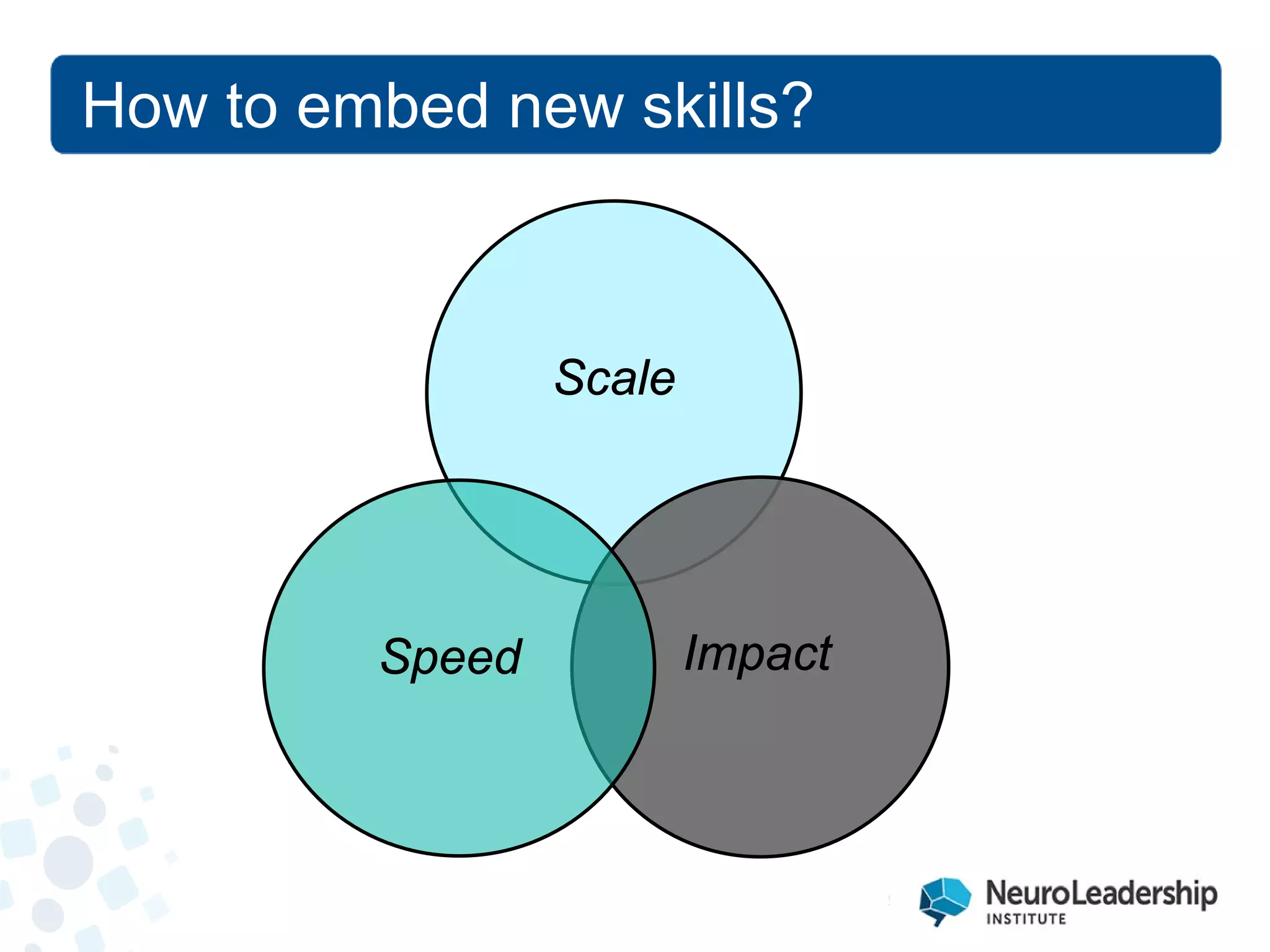
How to embed new skills? 
Scale 
Impact 
Speed
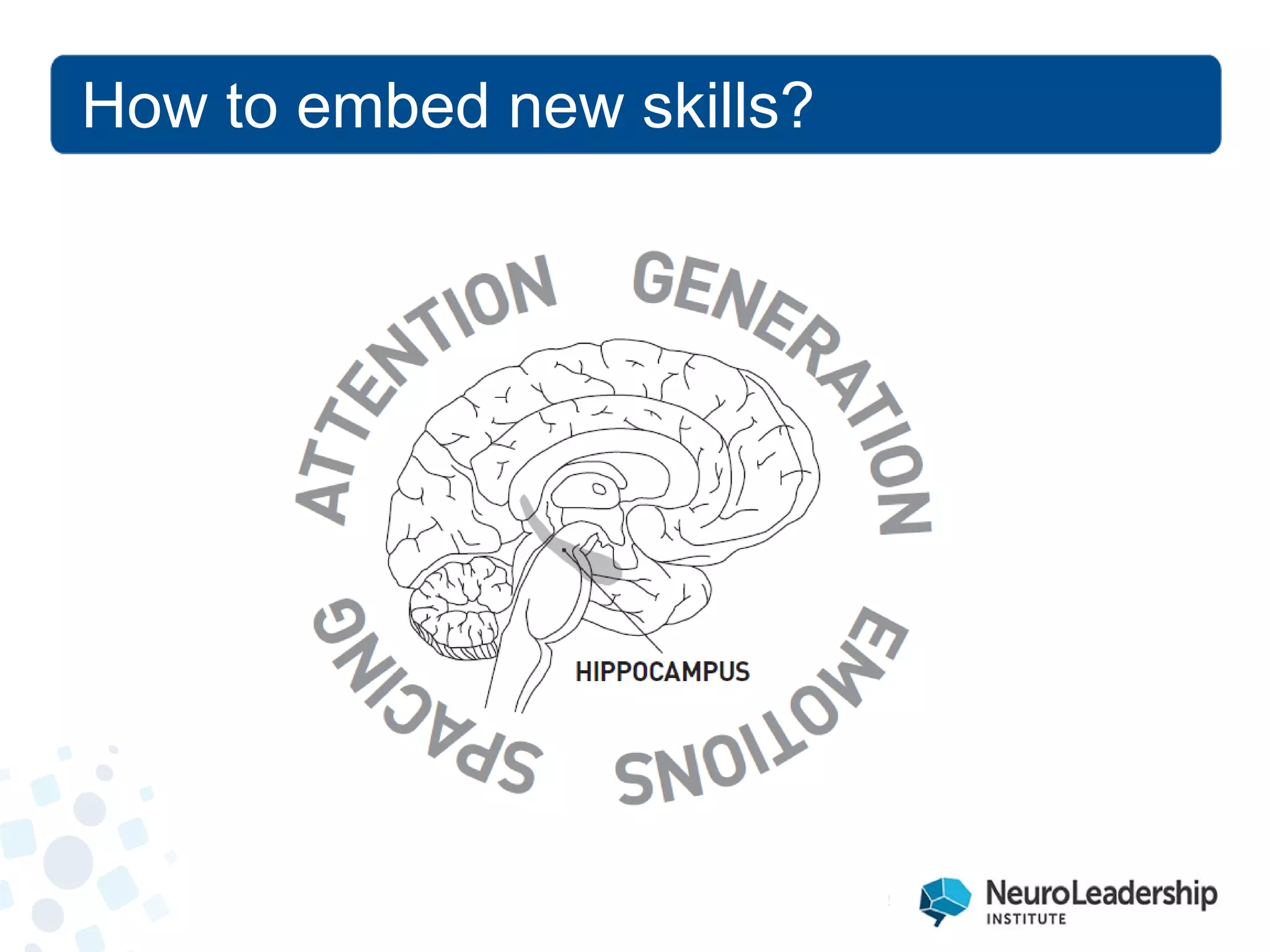
How to embed new skills?
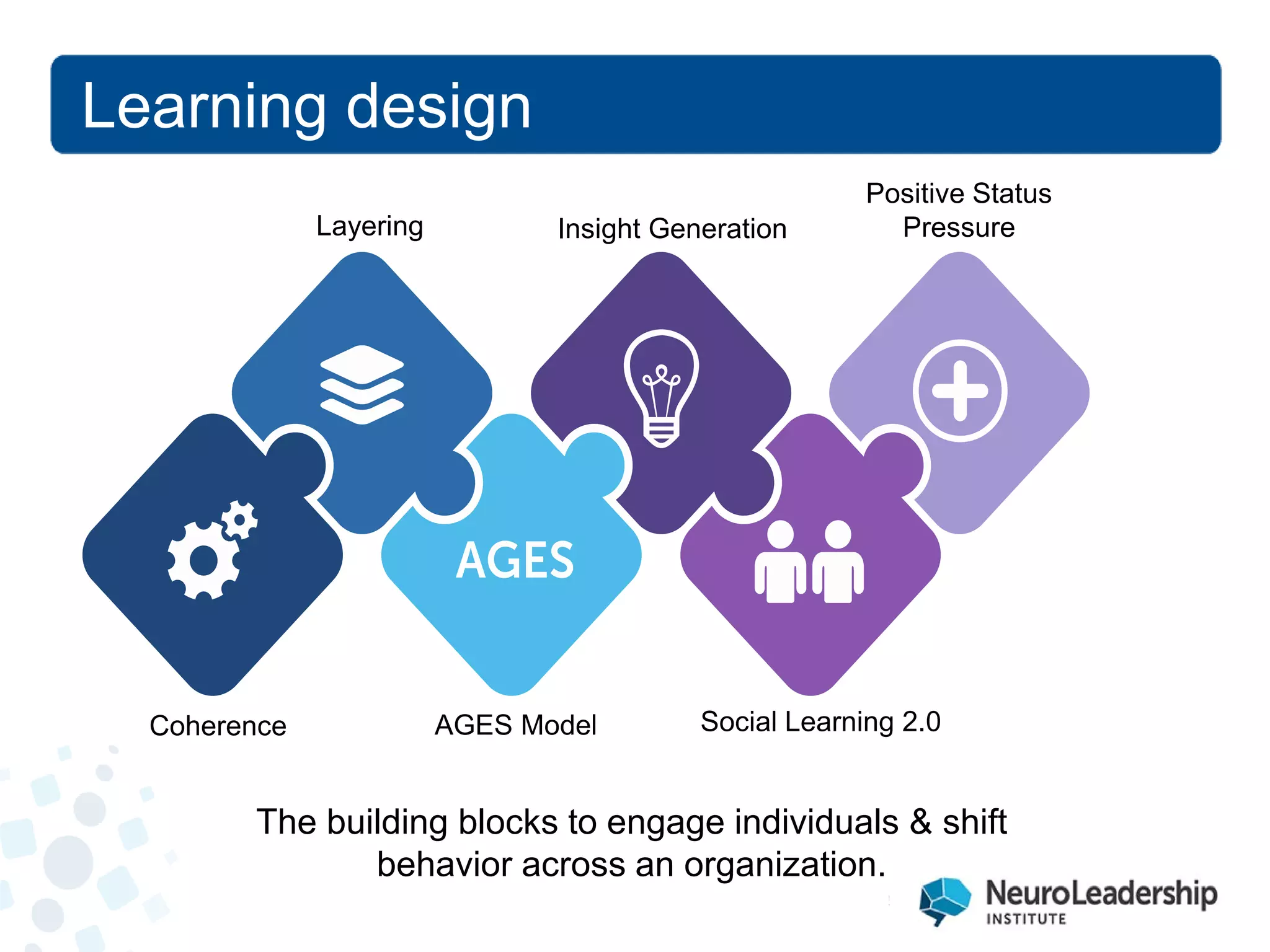
Learning design 
The building blocks to engage individuals & shift behavior across an organization. 
Coherence 
Layering 
AGES Model 
Insight Generation 
Social Learning 2.0 
Positive Status Pressure
Further resources 
• 
NeuroLeadership Summit 2015, NYC November 3-5 
• 
Your Brain at Work, HarperBusiness 2009 
• 
Quiet Leadership, Collins 2006 
• 
SCARF, NeuroLeadership Journal 2008 
• 
Turn the 360 around, NeuroLeadership Journal 2010 
• 
The AHA moment, ASTD 2011 
• 
SCARF in 2012, NeuroLeadership Journal 2012 
• 
One simple idea to transform performance management, HRPS 2013 
• 
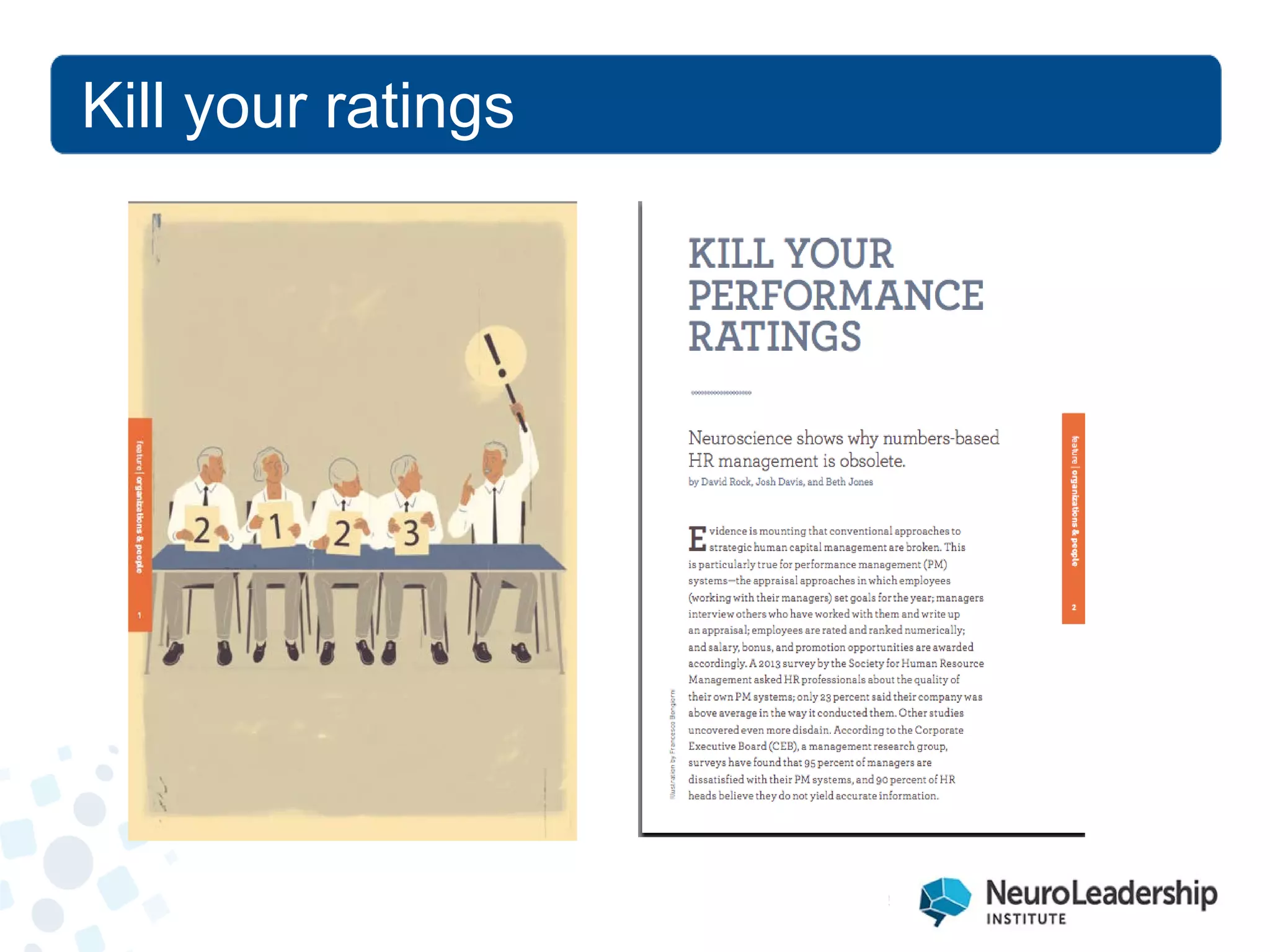
Kill your ratings, strategy + business, Fall 2014 
• 
Contact: David@neuroleadership.org
Kill your ratings
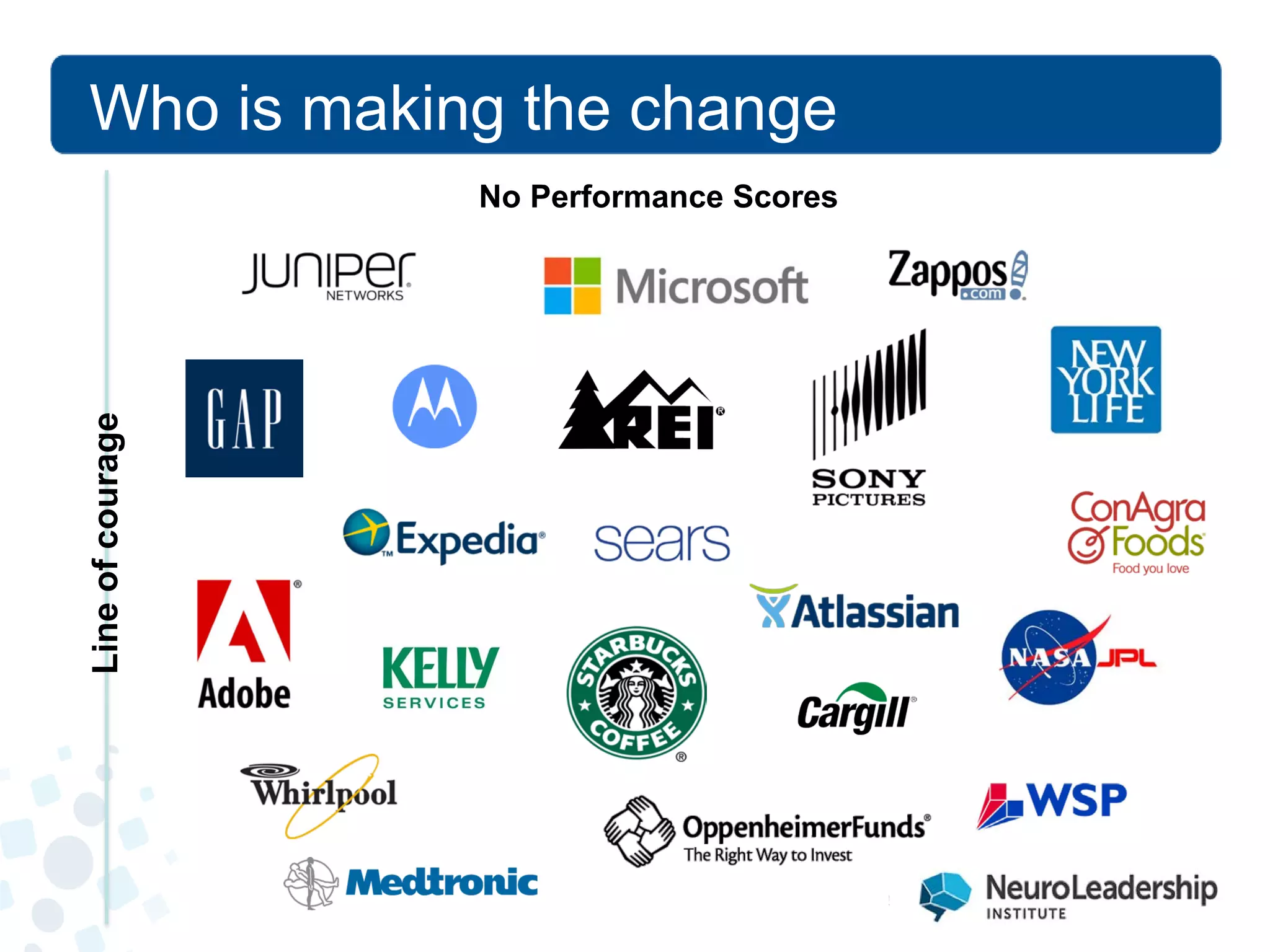
Who is making the change 
No Performance Scores 
Line of courage
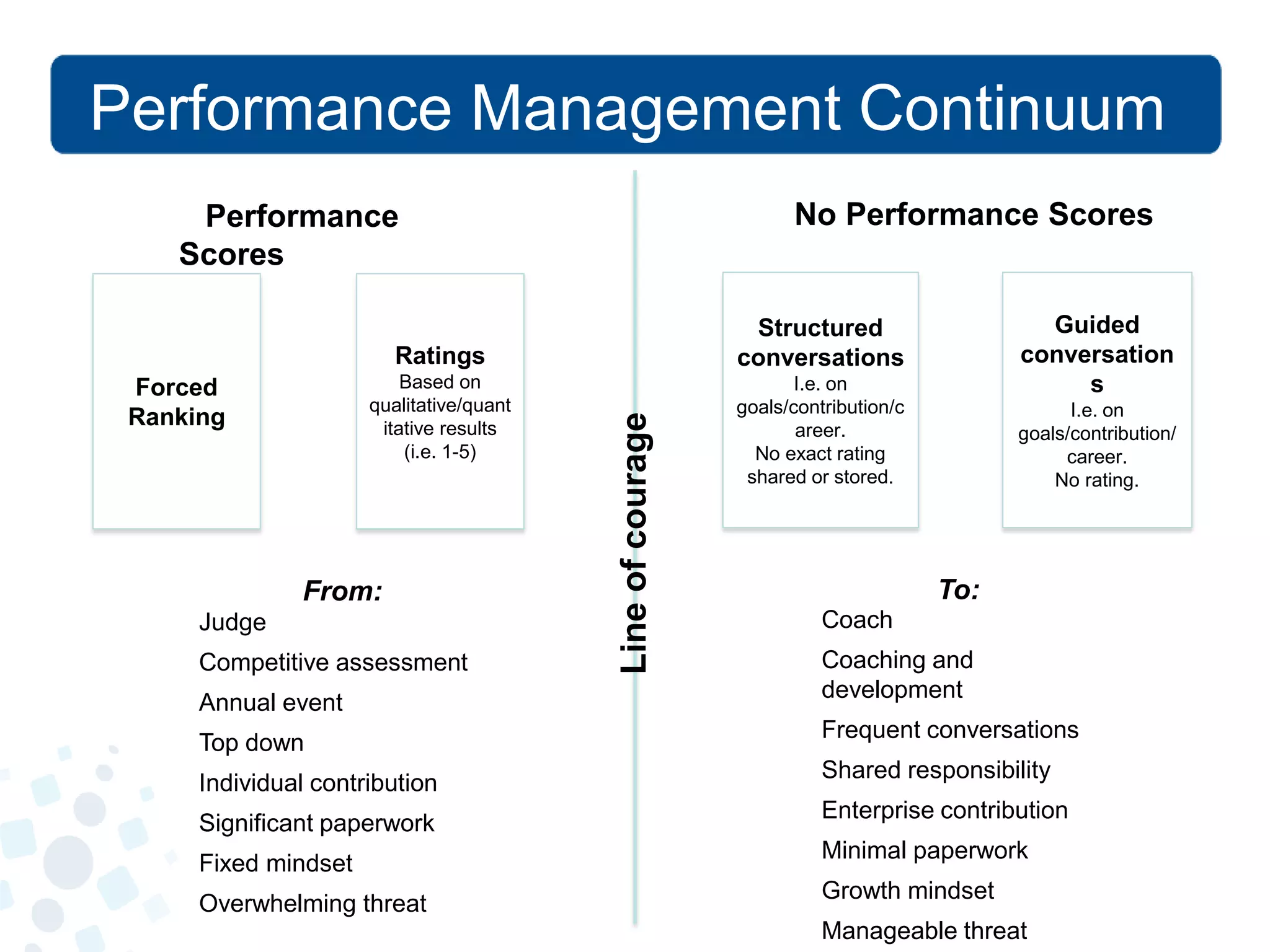
Performance Management Continuum 
To: 
Judge Competitive assessment Annual event Top down Individual contribution Significant paperwork Fixed mindset Overwhelming threat 
Coach 
Coaching and development 
Frequent conversations 
Shared responsibility 
Enterprise contribution 
Minimal paperwork 
Growth mindset 
Manageable threat 
Performance Scores 
No Performance Scores 
Forced Ranking 
Ratings Based on qualitative/quantitative results (i.e. 1-5) 
Structured conversations I.e. on goals/contribution/career. No exact rating shared or stored. 
Guided conversations I.e. on goals/contribution/ career. No rating. 
From: 
Line of courage
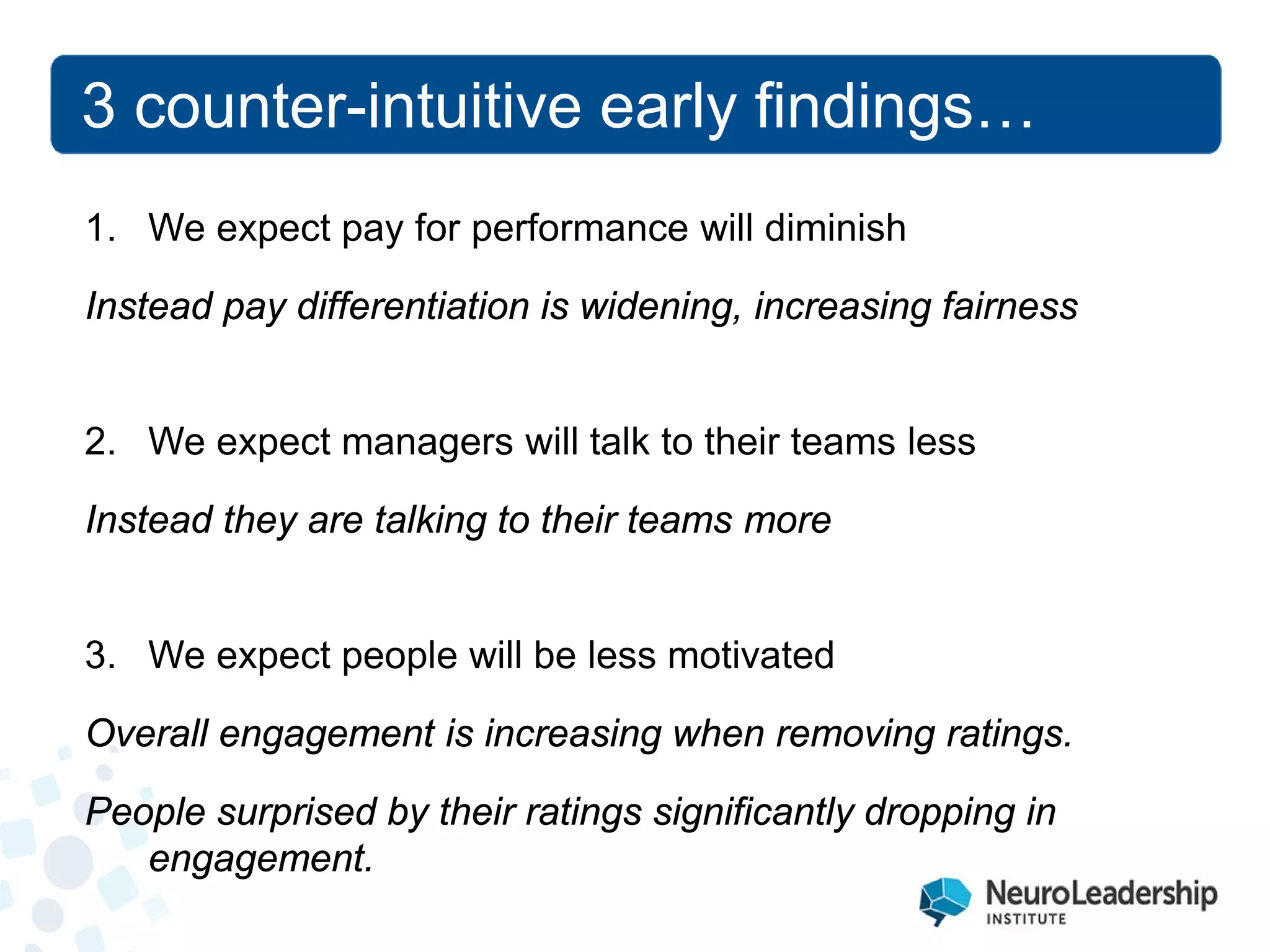
3 counter-intuitive early findings… 
1. 
We expect pay for performance will diminish Instead pay differentiation is widening, increasing fairness 
2. 
We expect managers will talk to their teams less Instead they are talking to their teams more 
3. 
We expect people will be less motivated Overall engagement is increasing when removing ratings. People surprised by their ratings significantly dropping in engagement.
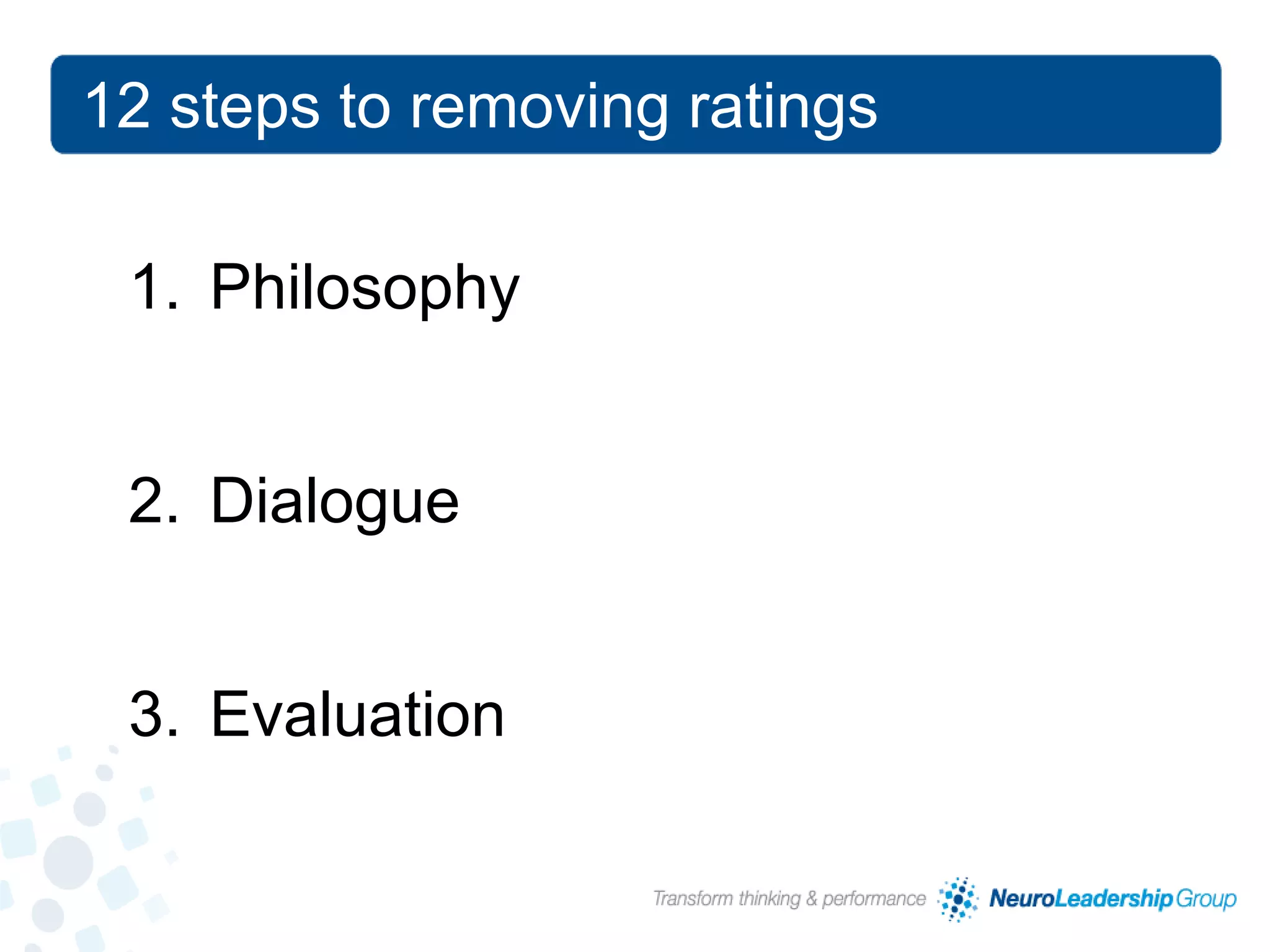
12 steps to removing ratings 
1. 
Philosophy 
2. 
Dialogue 
3. 
Evaluation
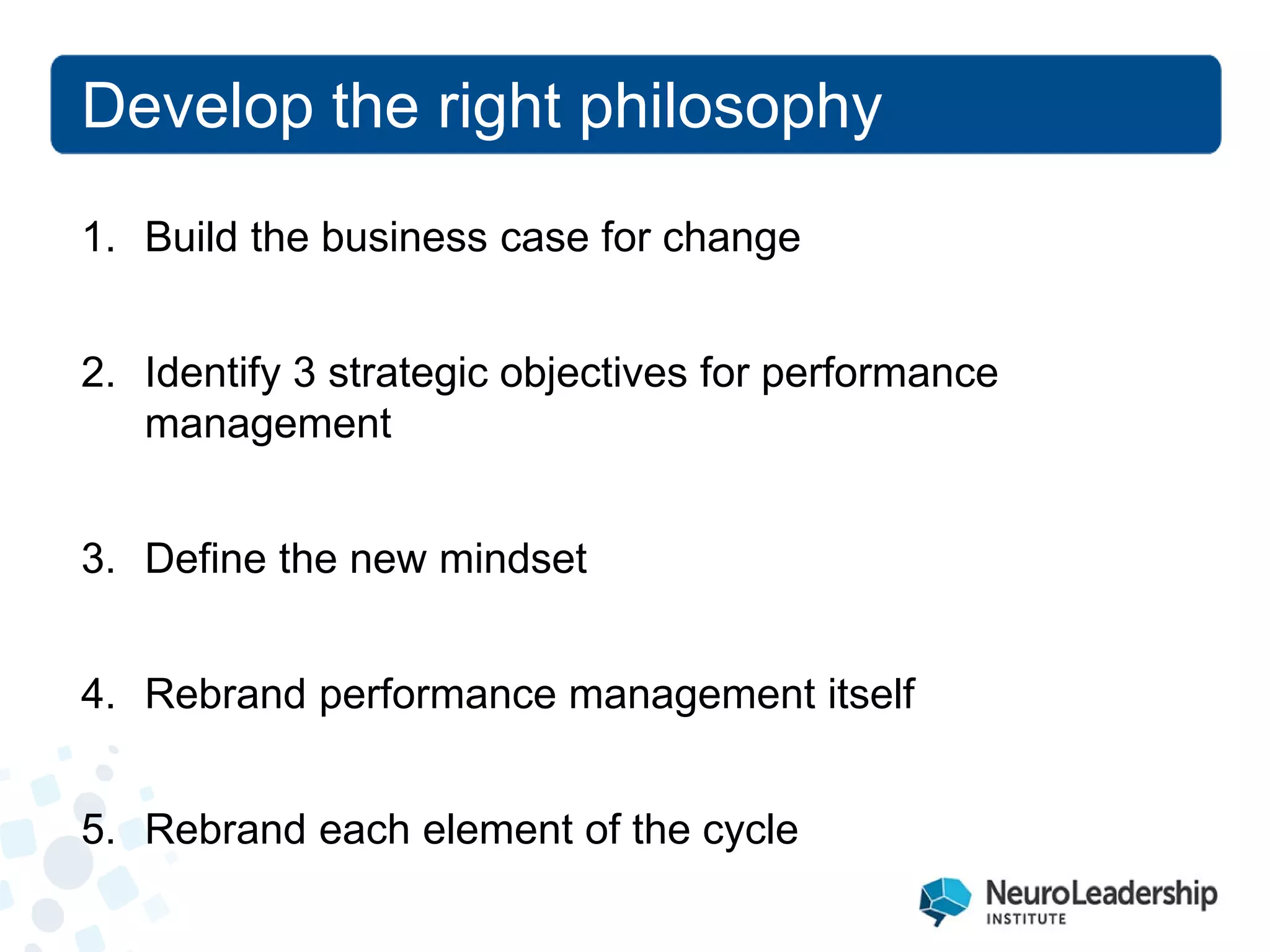
Develop the right philosophy 
1. 
Build the business case for change 
2. 
Identify 3 strategic objectives for performance management 
3. 
Define the new mindset 
4. 
Rebrand performance management itself 
5. 
Rebrand each element of the cycle
6. 
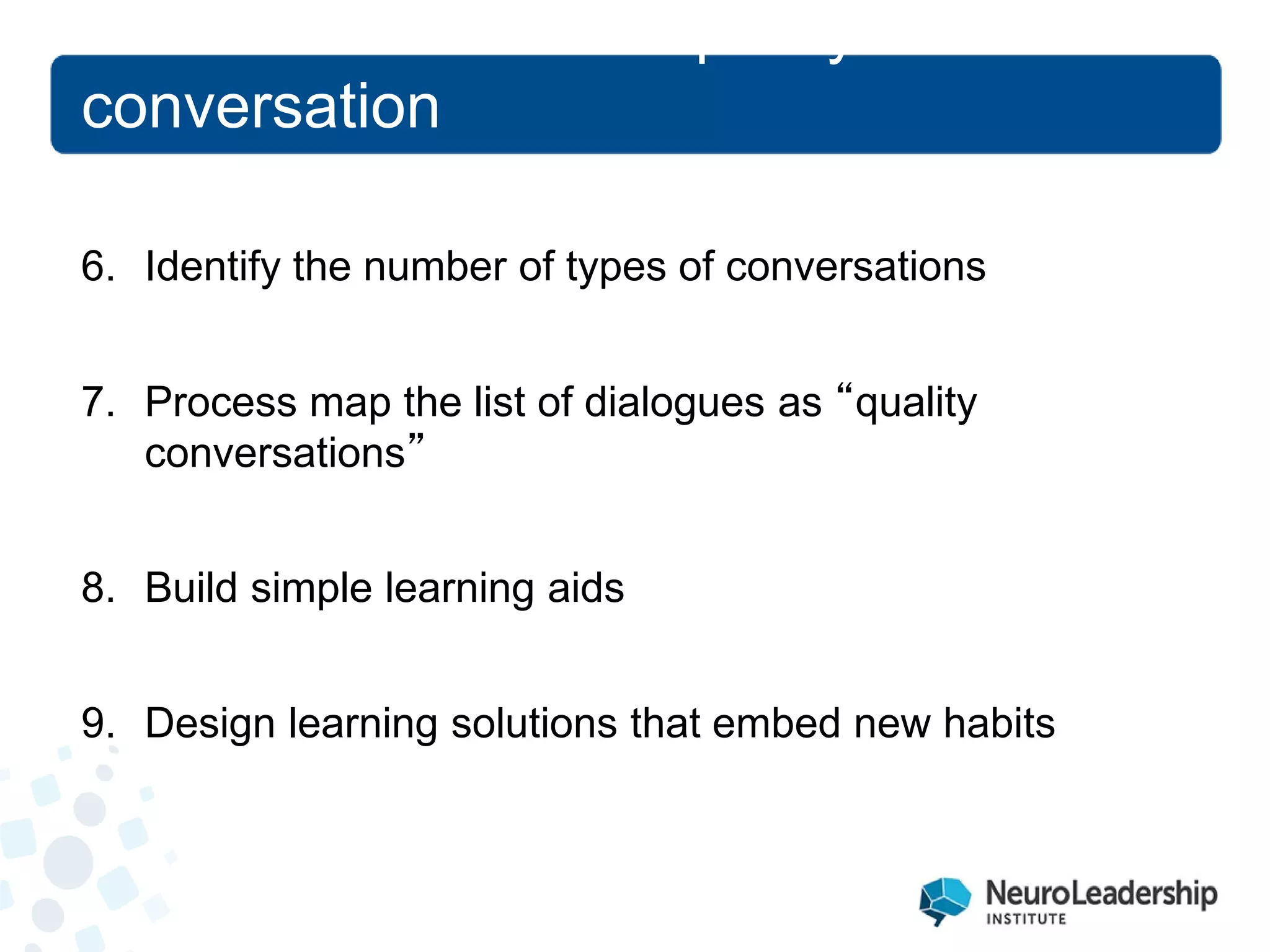
Identify the number of types of conversations 
7. 
Process map the list of dialogues as “quality conversations” 
8. 
Build simple learning aids 
9. 
Design learning solutions that embed new habits 
The neuroscience of quality conversation
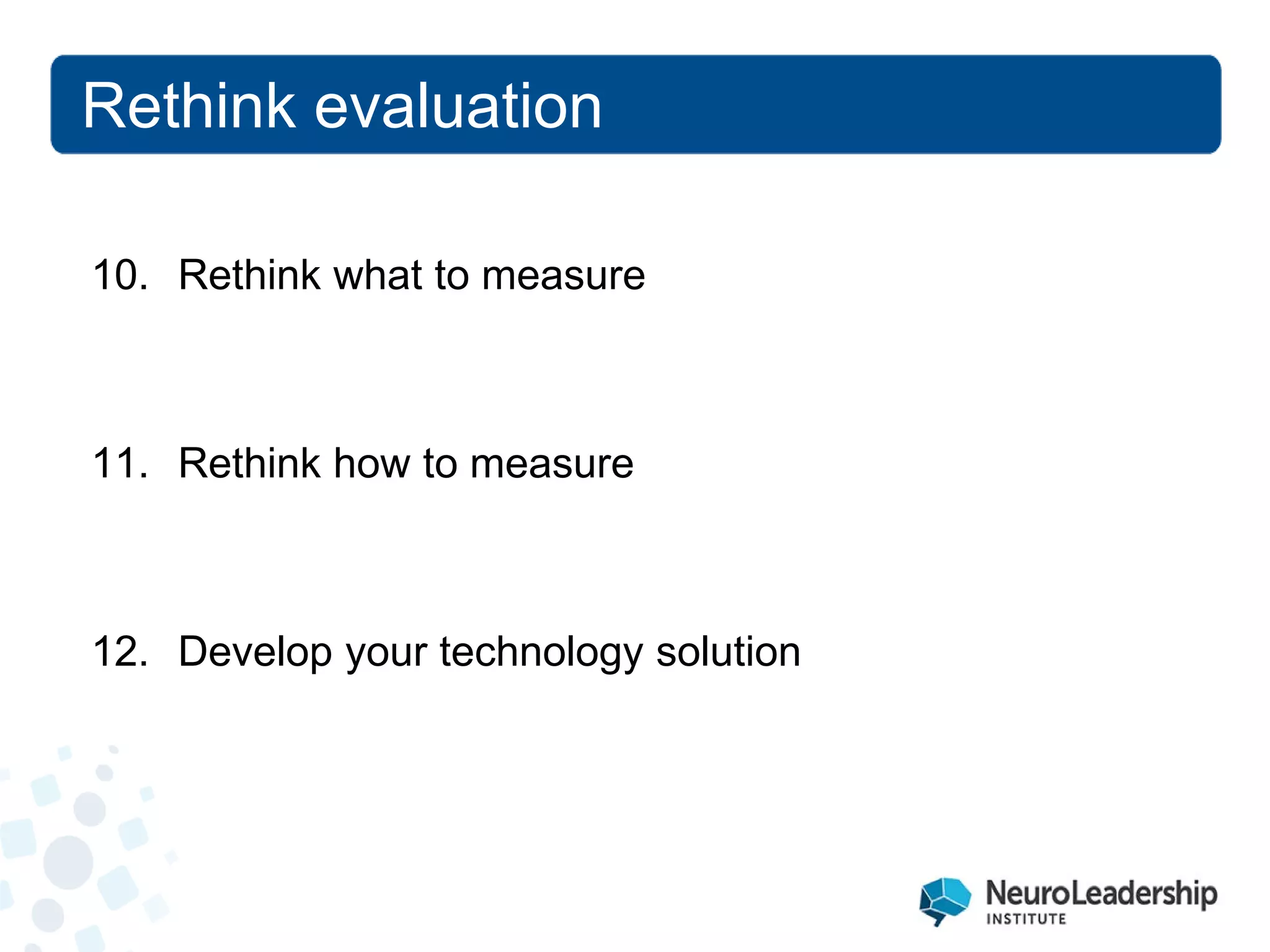
Rethink evaluation 
10. 
Rethink what to measure 
11. 
Rethink how to measure 12. Develop your technology solution
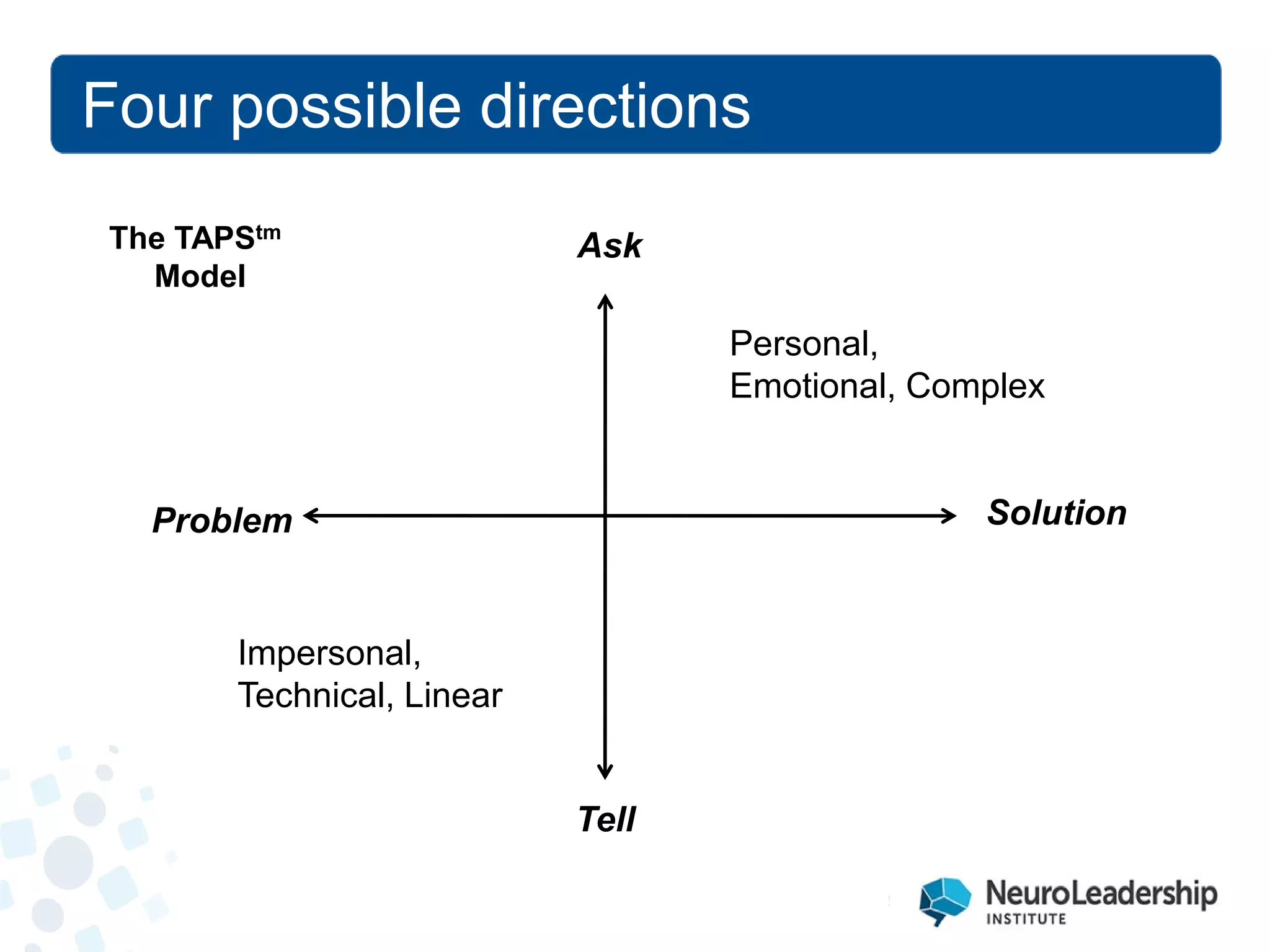
Four possible directions 
Ask 
Tell 
Solution 
Problem 
Impersonal, 
Technical, Linear 
Personal, Emotional, Complex 
The TAPStm Model
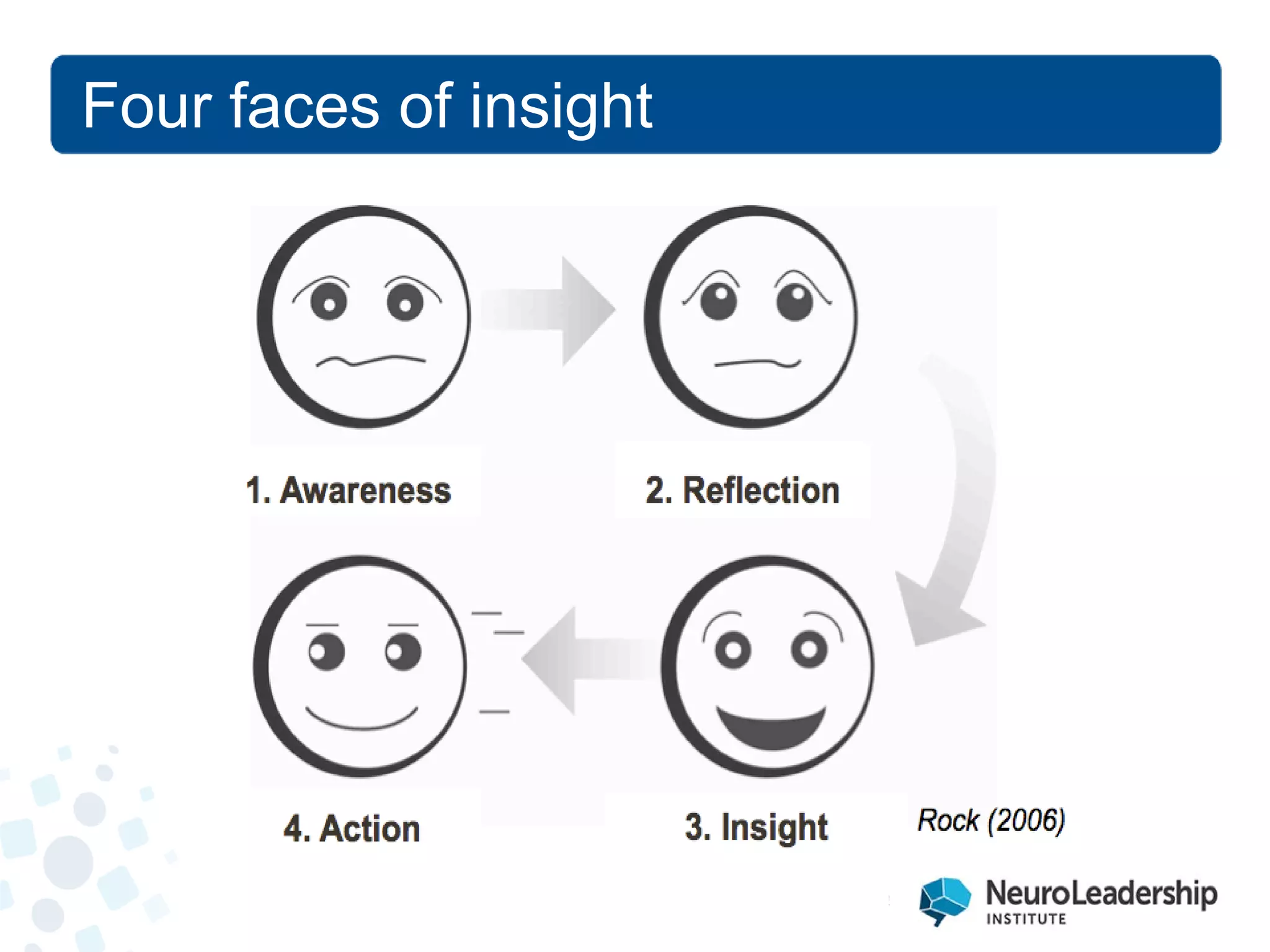
Four faces of insight
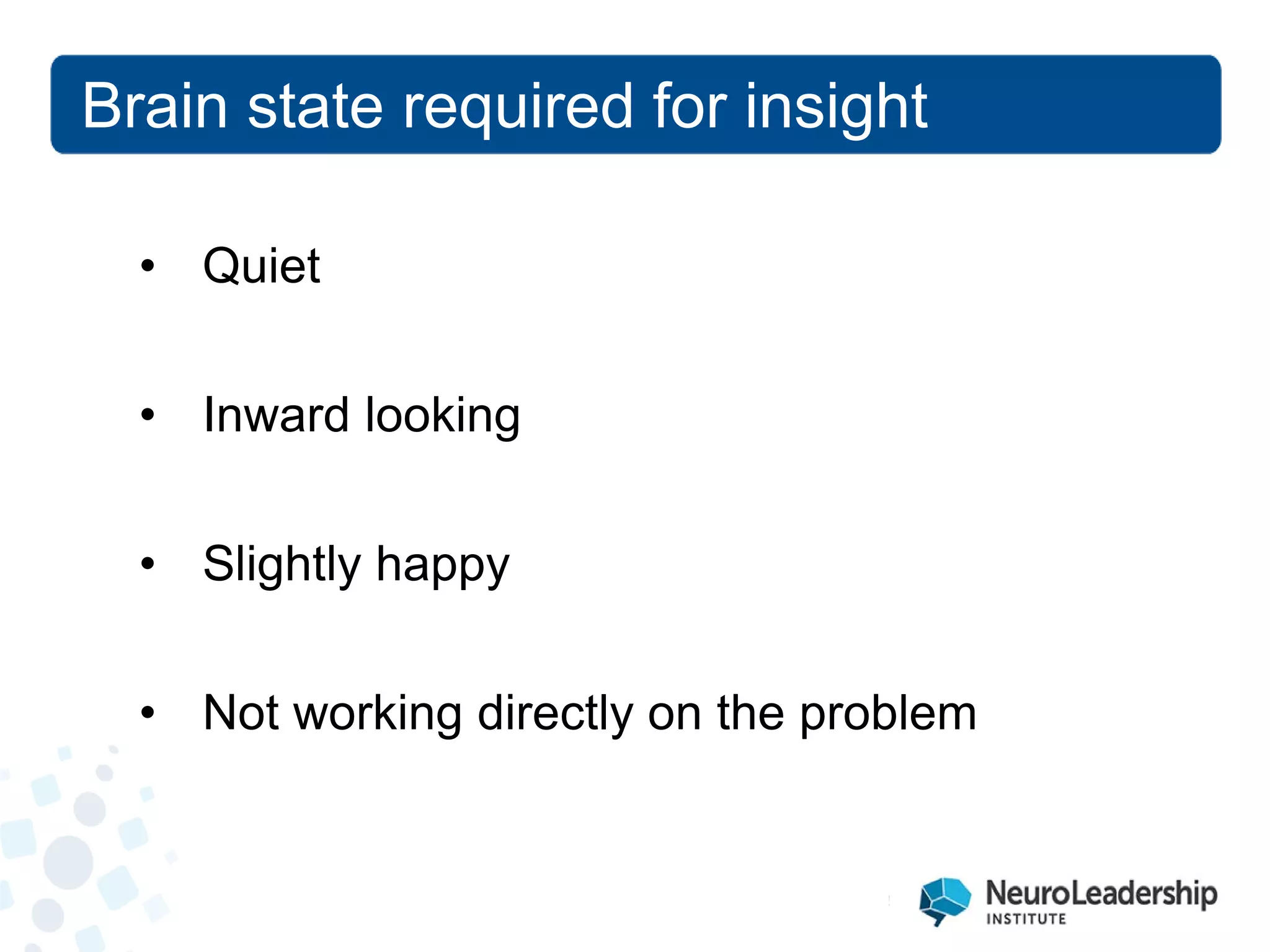
Brain state required for insight 
• 
Quiet 
• 
Inward looking 
• 
Slightly happy 
• 
Not working directly on the problem
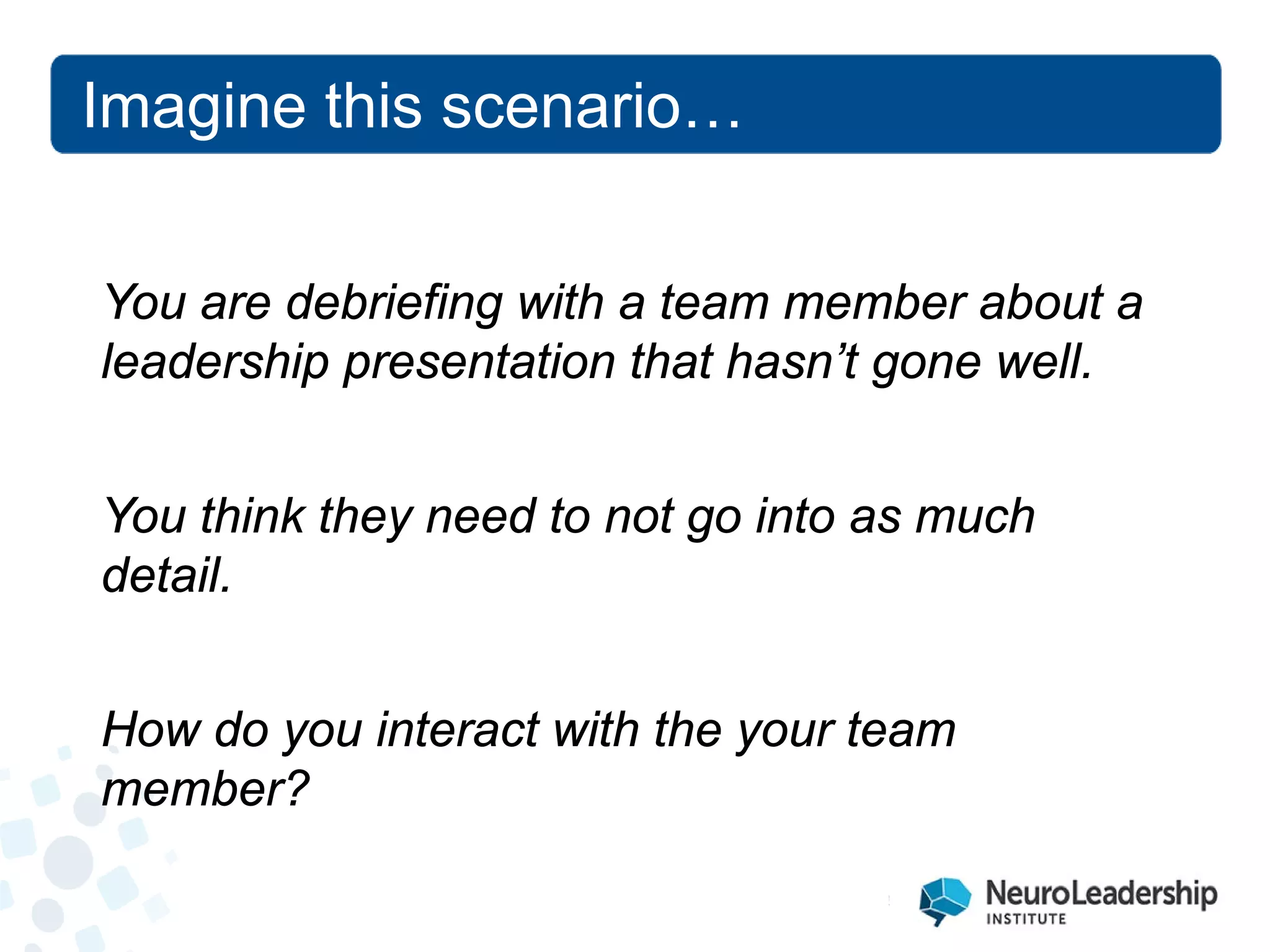
You are debriefing with a team member about a leadership presentation that hasn’t gone well. You think they need to not go into as much detail. How do you interact with the your team member? 
Imagine this scenario…
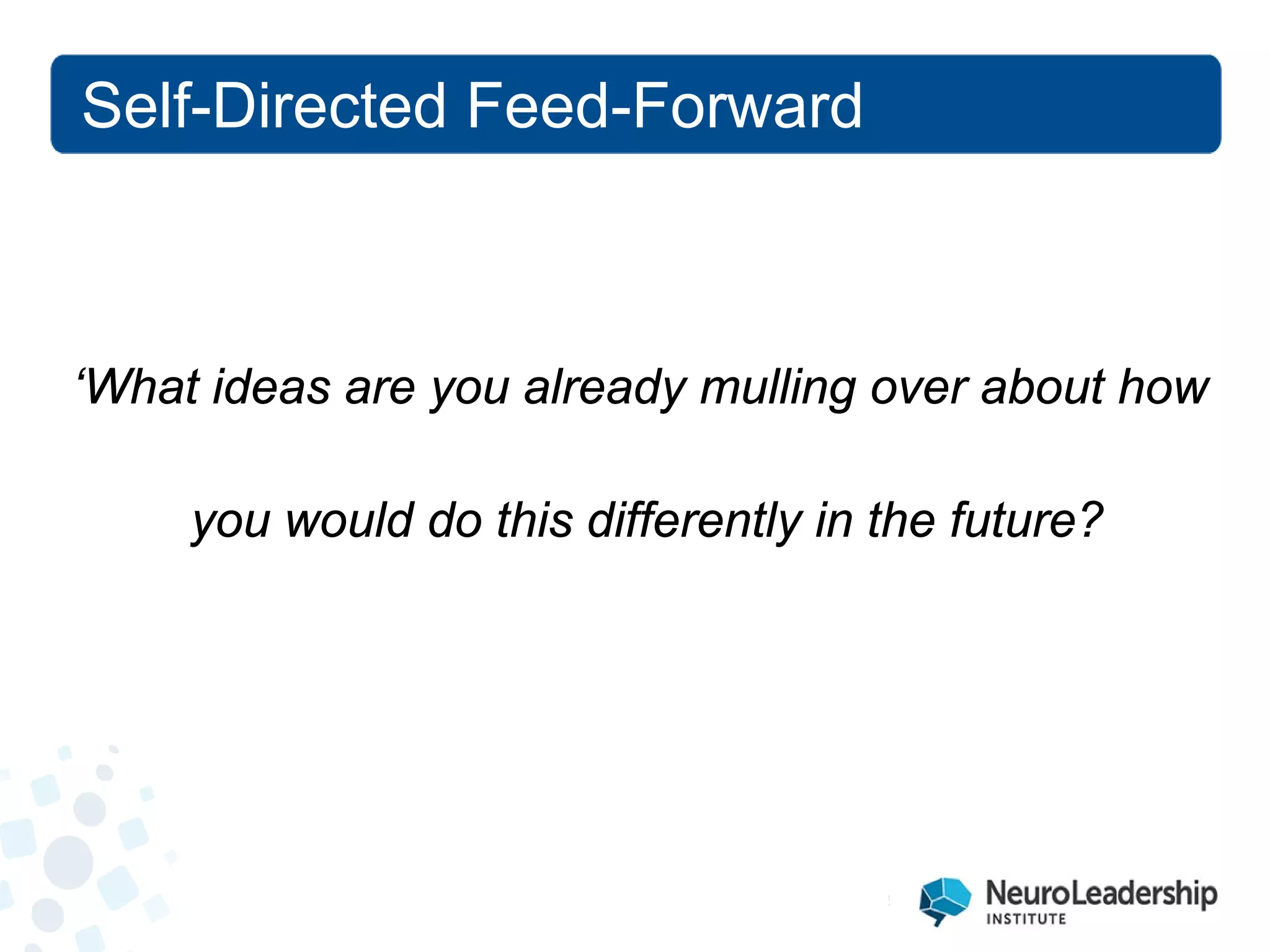
‘What ideas are you already mulling over about how 
you would do this differently in the future? 
Self-Directed Feed-Forward
#CLOwebinar 
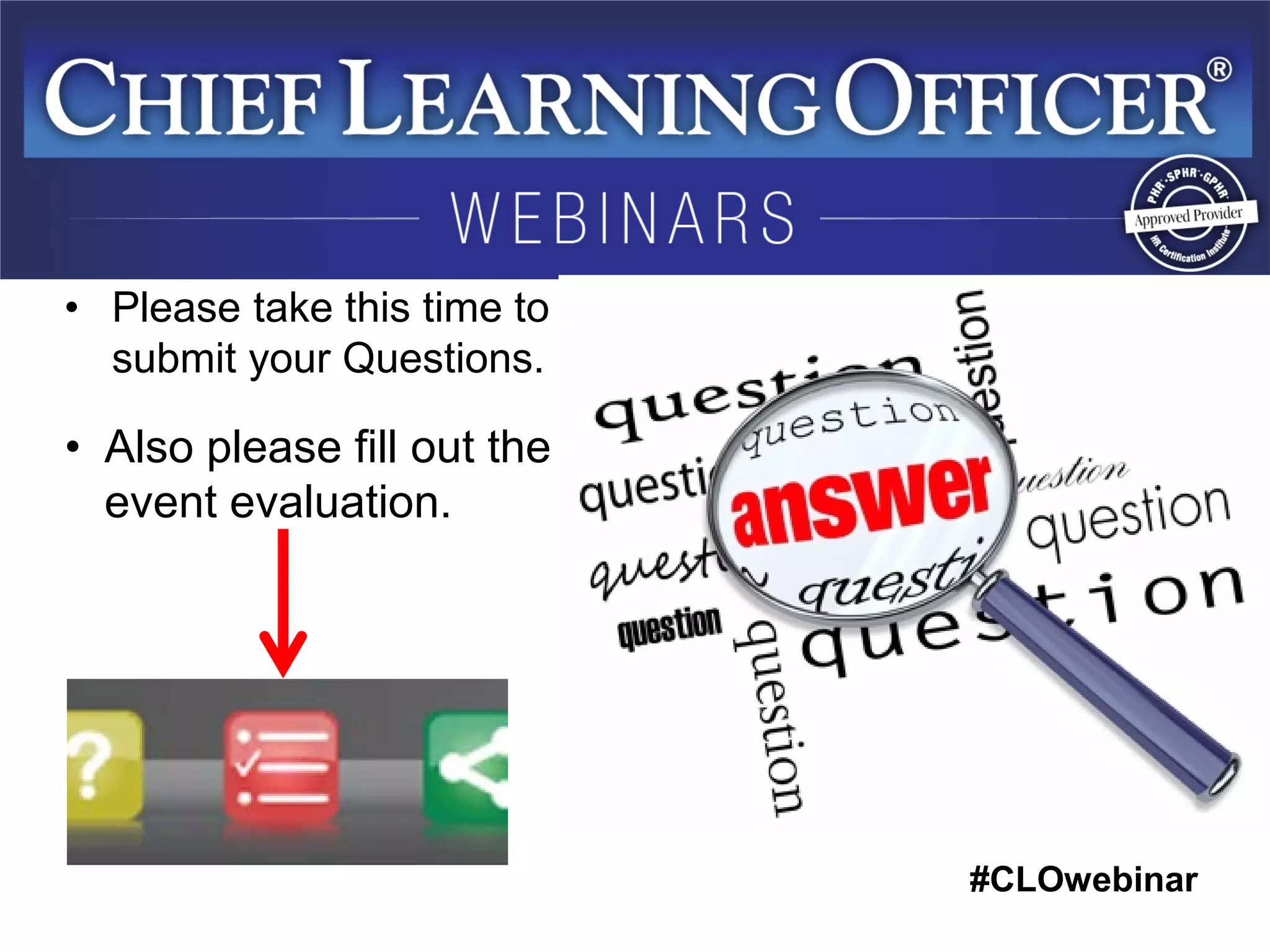
• 
Also please fill out the event evaluation. 
• 
Please take this time to submit your Questions.
#CLOwebinar 
Join our next Webinar! 
Beyond the LMS: Building a Virtual Learning Strategy 
16, December, 2014 
Webinars start at 2 p.m. Eastern / 11 a.m. Pacific 
Register for all upcoming Chief Learning Officer Webinars at www.clomedia.com/webinars

Transforming the quality of development conversations at scale

  • 1.
    #CLOwebinar The presentationwill begin at the top of the hour. A dial in number will not be provided. Listen to today’s webinar using your computer’s speakers or headphones. Transforming the Quality of Development Conversations at Scale
  • 2.
    #CLOwebinar Speaker: DavidRock CEO NeuroLeadership Group Moderator: Kate Everson Associate Editor Chief Learning Officer magazine Transforming the Quality of Development Conversations at Scale
  • 3.
    #CLOwebinar Tools YouCan Use Audio Control –A dial in number will not be provided. –Adjust the volume by sliding the indicator in the Media Player box to the left. –Also check your computer’s volume for external speakers or headsets.
  • 4.
    #CLOwebinar Tools YouCan Use Question & Answer –Type in your question in the “Q&A” box to the left. –These queries are visible by the presenter ONLY. –Type your question in the space at the bottom. –Click “Send.”
  • 5.
    #CLOwebinar Tools YouCan Use Twitter -Click “Post” in the Twitter widget. #CLOwebinar @CLOmedia
  • 6.
    #CLOwebinar Tools YouCan Use Speaker Bios Resources Media Player Q&A Slides Twitter Help Post Event Evaluation Share This
  • 7.
    #CLOwebinar 1. MayI receive a copy of the slides? YES! Click on the resource list located on the top left portion of your screen. 2. May I review the webinar recording at a later date? YES! You may log in again using today’s link to review the presentation on-demand. Frequently Asked Questions
  • 8.
    #CLOwebinar Kate Everson Associate Editor Chief Learning Officer magazine Transforming the Quality of Development Conversations at Scale
  • 9.
    #CLOwebinar David RockCEO NeuroLeadership Group Transforming the Quality of Development Conversations at Scale
  • 10.
    Everyday leadership coaching:day one Transform the Quality of Development Conversations at Scale 2014 Dr. David Rock Director, NLI
  • 11.
    Our vision TransformLeadership Through Neuroscience
  • 12.
    A new languagefor leadership Research • Education • Solutions
  • 13.
  • 14.
    Do you lookforward to ‘feedback’? “I’d like to give you some feedback” “We need to talk” “Can I share something I’ve noticed about you”
  • 15.
    Research shows thatfeedback does nothing or makes things worse 59% of the time and improves performance only 41% of the time ‘Turn the 360 around’ (NeuroLeadership Journal, 2010) How useful is ‘feedback’ generally?
  • 16.
    A “quality conversation” A viable alternative?
  • 17.
    • Time hasbeen well spent • New or deeper understanding emerges • People grow What is a quality conversation?
  • 18.
    Research that supportsa new approach 1. Have a Growth Mindset 2. Minimize Threat 3. Facilitate Insight
  • 19.
    Fixed mindset • Born smart • We can’t change much • Effort doesn’t help • Feedback is dangerous • Stretch goals are bad • Other people’s success is a problem
  • 20.
    Growth mindset • Born to learn • We can change • Effort is central • Feedback is helpful • Stretch goals are good • Other’s success is an opportunity to learn
  • 21.
    We are easilyprimed ‘Good job, you must be talented at this.’ Versus ‘Good job, you really applied yourself here.’ Chiu, Hwong, & Dweck (1997)
  • 22.
    1. Have aGrowth Mindset 2. Minimize Threat 3. Facilitate Insight Research that supports a new approach
  • 23.
    The big question.. Is it possible to be both judge and coach at the same time?
  • 24.
    Feedback is verypersonal Away Threat Toward Reward Status Certainty Autonomy Relatedness Fairness Rock (2008)
  • 25.
  • 26.
    1. Have aGrowth Mindset 2. Minimize Threat 3. Facilitate Insight Research that supports a new approach
  • 27.
    Habit Action Insight Impasse How smart people change
  • 28.
    What is aninsight? • Solution from the unconscious • An answer that comes to us quickly • Involves reinterpreting information
  • 29.
    Ludmer et al.2011, Neuron
  • 31.
    Why do insightsmatter? • Learning • Engagement • Generalizing of ideas • Systemic change of the brain
  • 32.
    1. Have aGrowth Mindset 2. Minimize Threat 3. Facilitate Insight Research that supports a new approach
  • 33.
    How to embednew skills? Scale Impact Speed
  • 34.
    How to embednew skills?
  • 35.
    Learning design Thebuilding blocks to engage individuals & shift behavior across an organization. Coherence Layering AGES Model Insight Generation Social Learning 2.0 Positive Status Pressure
  • 36.
    Further resources • NeuroLeadership Summit 2015, NYC November 3-5 • Your Brain at Work, HarperBusiness 2009 • Quiet Leadership, Collins 2006 • SCARF, NeuroLeadership Journal 2008 • Turn the 360 around, NeuroLeadership Journal 2010 • The AHA moment, ASTD 2011 • SCARF in 2012, NeuroLeadership Journal 2012 • One simple idea to transform performance management, HRPS 2013 • Kill your ratings, strategy + business, Fall 2014 • Contact: David@neuroleadership.org
  • 37.
  • 38.
    Who is makingthe change No Performance Scores Line of courage
  • 39.
    Performance Management Continuum To: Judge Competitive assessment Annual event Top down Individual contribution Significant paperwork Fixed mindset Overwhelming threat Coach Coaching and development Frequent conversations Shared responsibility Enterprise contribution Minimal paperwork Growth mindset Manageable threat Performance Scores No Performance Scores Forced Ranking Ratings Based on qualitative/quantitative results (i.e. 1-5) Structured conversations I.e. on goals/contribution/career. No exact rating shared or stored. Guided conversations I.e. on goals/contribution/ career. No rating. From: Line of courage
  • 40.
    3 counter-intuitive earlyfindings… 1. We expect pay for performance will diminish Instead pay differentiation is widening, increasing fairness 2. We expect managers will talk to their teams less Instead they are talking to their teams more 3. We expect people will be less motivated Overall engagement is increasing when removing ratings. People surprised by their ratings significantly dropping in engagement.
  • 41.
    12 steps toremoving ratings 1. Philosophy 2. Dialogue 3. Evaluation
  • 42.
    Develop the rightphilosophy 1. Build the business case for change 2. Identify 3 strategic objectives for performance management 3. Define the new mindset 4. Rebrand performance management itself 5. Rebrand each element of the cycle
  • 43.
    6. Identify thenumber of types of conversations 7. Process map the list of dialogues as “quality conversations” 8. Build simple learning aids 9. Design learning solutions that embed new habits The neuroscience of quality conversation
  • 44.
    Rethink evaluation 10. Rethink what to measure 11. Rethink how to measure 12. Develop your technology solution
  • 45.
    Four possible directions Ask Tell Solution Problem Impersonal, Technical, Linear Personal, Emotional, Complex The TAPStm Model
  • 46.
  • 47.
    Brain state requiredfor insight • Quiet • Inward looking • Slightly happy • Not working directly on the problem
  • 48.
    You are debriefingwith a team member about a leadership presentation that hasn’t gone well. You think they need to not go into as much detail. How do you interact with the your team member? Imagine this scenario…
  • 49.
    ‘What ideas areyou already mulling over about how you would do this differently in the future? Self-Directed Feed-Forward
  • 50.
    #CLOwebinar • Alsoplease fill out the event evaluation. • Please take this time to submit your Questions.
  • 51.
    #CLOwebinar Join ournext Webinar! Beyond the LMS: Building a Virtual Learning Strategy 16, December, 2014 Webinars start at 2 p.m. Eastern / 11 a.m. Pacific Register for all upcoming Chief Learning Officer Webinars at www.clomedia.com/webinars