THE LEARNING
The problem with learning
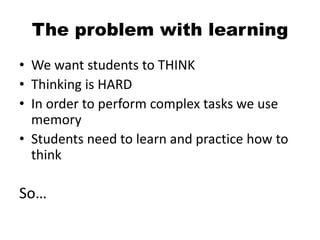
• We want students to THINK
• Thinking is HARD
• In order to perform complex tasks we use
  memory
• Students need to learn and practice how to
  think

So…
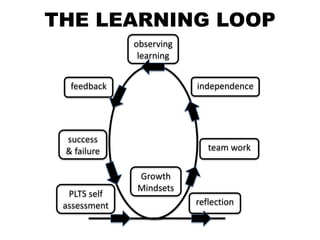
THE LEARNING LOOP
              observing
               learning


  feedback                independence


 success
 & failure                   team work

              Growth
              Mindsets
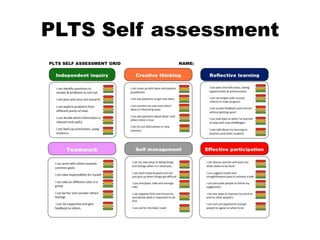
  PLTS self
 assessment               reflection
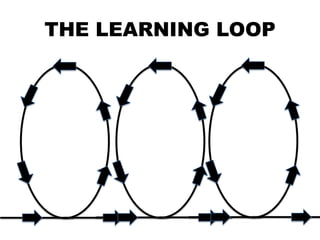
THE LEARNING LOOP
PLTS Self assessment
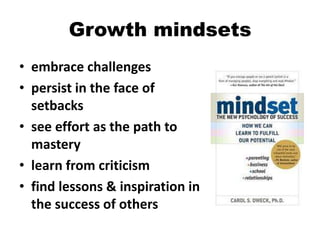
Growth mindsets
• embrace challenges
• persist in the face of
  setbacks
• see effort as the path to
  mastery
• learn from criticism
• find lessons & inspiration in
  the success of others
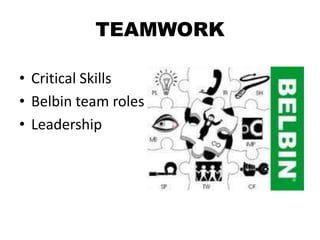
TEAMWORK

• Critical Skills
• Belbin team roles test
• Leadership
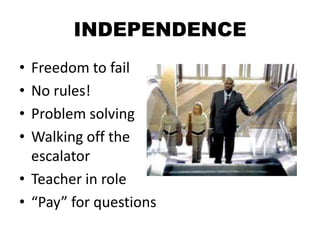
INDEPENDENCE
• Freedom to fail
• No rules!
• Problem solving
• Walking off the
  escalator
• Teacher in role
• “Pay” for questions
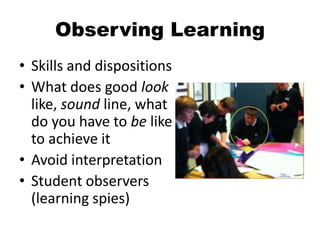
Observing Learning
• Skills and dispositions
• What does good look
  like, sound line, what
  do you have to be like
  to achieve it
• Avoid interpretation
• Student observers
  (learning spies)
FEEDBACK
• Formative assessment
• Quality learning
  conversations
• Having/making the time
• Non judgmental – allow
  students to interpret
  their own behaviour
• Students feedback to
  each other
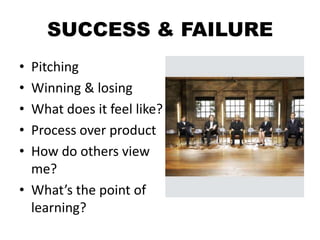
SUCCESS & FAILURE
• Pitching
• Winning & losing
• What does it feel like?
• Process over product
• How do others view
  me?
• What’s the point of
  learning?
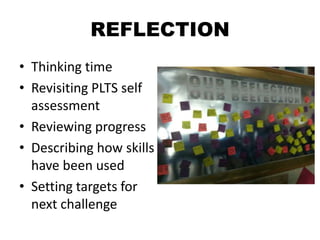
REFLECTION
• Thinking time
• Revisiting PLTS self
  assessment
• Reviewing progress
• Describing how skills
  have been used
• Setting targets for
  next challenge
PCSA scheme of learning
1.   Introduction
2.   Impossible challenge (murder mystery)
3.   Advertising challenge
4.   Aeroplane challenge
5.   Music promotion challenge
6.   Ultimate challenge (presenting to year group)
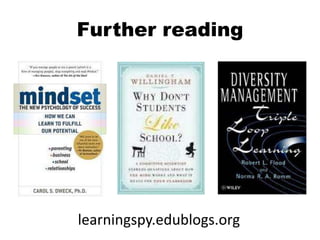
Further reading


learningspy.edublogs.org

The learning loop

  • 1.
  • 2.
    The problem withlearning • We want students to THINK • Thinking is HARD • In order to perform complex tasks we use memory • Students need to learn and practice how to think So…
  • 3.
    THE LEARNING LOOP observing learning feedback independence success & failure team work Growth Mindsets PLTS self assessment reflection
  • 4.
  • 5.
  • 6.
    Growth mindsets • embracechallenges • persist in the face of setbacks • see effort as the path to mastery • learn from criticism • find lessons & inspiration in the success of others
  • 7.
    TEAMWORK • Critical Skills •Belbin team roles test • Leadership
  • 8.
    INDEPENDENCE • Freedom tofail • No rules! • Problem solving • Walking off the escalator • Teacher in role • “Pay” for questions
  • 9.
    Observing Learning • Skillsand dispositions • What does good look like, sound line, what do you have to be like to achieve it • Avoid interpretation • Student observers (learning spies)
  • 10.
    FEEDBACK • Formative assessment •Quality learning conversations • Having/making the time • Non judgmental – allow students to interpret their own behaviour • Students feedback to each other
  • 11.
    SUCCESS & FAILURE •Pitching • Winning & losing • What does it feel like? • Process over product • How do others view me? • What’s the point of learning?
  • 12.
    REFLECTION • Thinking time •Revisiting PLTS self assessment • Reviewing progress • Describing how skills have been used • Setting targets for next challenge
  • 13.
    PCSA scheme oflearning 1. Introduction 2. Impossible challenge (murder mystery) 3. Advertising challenge 4. Aeroplane challenge 5. Music promotion challenge 6. Ultimate challenge (presenting to year group)
  • 14.