FASTING
PHYSIOLOGY


 Sriloy Mohanty, B.N.Y.S
Contents…
   Introduction
   Biochemical cycles in fasting
   Stages of fasting and their physiology
   Physiology according to the systems
          Liver in fasting
          Adipose tissue in fasting
          Skeletal muscles in fasting
          Brain in fasting
          Kidney in fasting
          Endocrine system in fasting
          Cardiovascular system in fasting
          Respiratory system in fasting
          Sleep in fasting
          Urinary system in fasting
Introduction

 Fasting is a complete voluntary
abstinence from taking any kind of
 food for a definite period of time

During a fasting body lives in reserve.
                             (Dr.Herbert
               M.Shelton)
What is fasting ???

   Abstinence from food
   For a limited period of time
   Only water
   Plasma levels of glucose, amino acid, TAG
    falls
   Decline in Insulin secretion
   Increased glucagon secretion
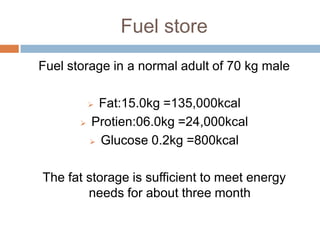
Fuel store
Fuel storage in a normal adult of 70 kg male

          Fat:15.0kg =135,000kcal
        Protien:06.0kg =24,000kcal

          Glucose 0.2kg =800kcal


The fat storage is sufficient to meet energy
        needs for about three month
Stages of fasting
   Stage 1:-gestrointestinal phage
       CHO depleated

   Stage 2:-
       Glycolysis
       Gluconeogenesis
       Fat oxidation
       Ketogenesis

   Stage 3:-
       Does not occurs in fasting
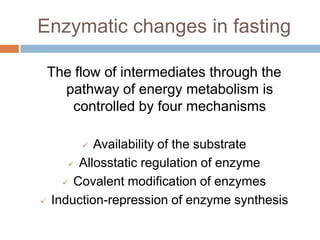
Enzymatic changes in fasting

    The flow of intermediates through the
      pathway of energy metabolism is
       controlled by four mechanisms

           Availability of the substrate
        Allosstatic regulation of enzyme

       Covalent modification of enzymes

   Induction-repression of enzyme synthesis
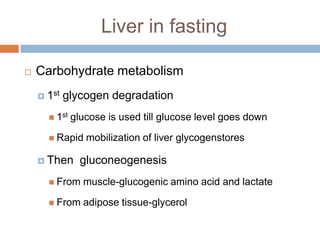
Liver in fasting

   Carbohydrate metabolism
     1st   glycogen degradation
       1st   glucose is used till glucose level goes down

       Rapid    mobilization of liver glycogenstores

     Then      gluconeogenesis
       From    muscle-glucogenic amino acid and lactate

       From    adipose tissue-glycerol
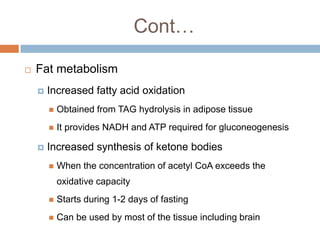
Cont…

   Fat metabolism
       Increased fatty acid oxidation
           Obtained from TAG hydrolysis in adipose tissue
           It provides NADH and ATP required for gluconeogenesis

       Increased synthesis of ketone bodies
           When the concentration of acetyl CoA exceeds the
            oxidative capacity
           Starts during 1-2 days of fasting
           Can be used by most of the tissue including brain
Adipose tissue in fasting
   Carbohydrate metabolism
   Fat metabolism
     Increased   degradation of TAG
       Causeddue to increased catecholamines (nor-
       epinephrine)
     Increased   release of fatty acid
       Hydrolysis of stored TAG
       Bound to albumin
       Glycerol produced from TAG degradation is used as a
        precursor for gluconeogenesis by liver
     Decreased      uptake of fatty acid
       Lipoprotien   lipase activity of adipose tissue is low
Resting skeletal system in
                    fasting
   Fuel source
    i.       Glucose
    ii.      Glycogen stores
    iii.     Fatty acid

   Carbohydrate metabolism
          Glucose to skeletal muscle by GLUT-4 protien
          Glucose metabolism is reduced because of
           depressed circulating insulin
Cont…

   Lipid metabolism
       1st two weeks fatty acid from adipose tissue and
        ketone bodies from liver
       3rd week ketone bodies level increases

   Protein metabolism
       1st few days-rapid break down of muscle protein
       Later the proteolysis decreases as brain start using
        the ketone bodies as a fuel
Brain in fasting

   Day 1
     Glucose   as a fuel

     (blood   glucose maintained by hepatic
     gluconeogenesis)

   2-3 week
     Increased   plasma ketone bodies

     Replaces    glucose as a primary fuel
Endocrine system in fasting

   Increased growth hormone levels
       Mobilizes the fats from adipose tissue

   Decreased thyroid hormones
       Decreased basal metabolic rate
       Decreased erythropoisis rate
       Decreased heart and respiratory rate
       Increased drowzyness
Cont…

   Decreased insulin
       Caused due to low blood sugar and Increased
        glucagon levels
   Increased glucagon
     Increased glycolysis
     Increased gluconeogenesis

     Increased transport of amino acid

     Increased lypolytic and ketogenic action

     Increased free fatty acid in blood

     Increased ketogenesis
Cont…
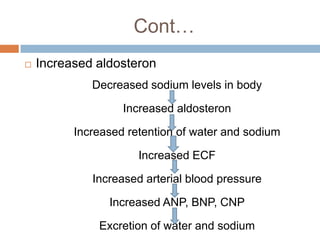
   Increased aldosteron
             Decreased sodium levels in body

                   Increased aldosteron

          Increased retention of water and sodium

                      Increased ECF

             Increased arterial blood pressure

                Increased ANP, BNP, CNP

              Excretion of water and sodium
Cont…

   Increased cortisol
   Increased adrenaline and nor-adrenaine
       Increased urination
       Increased brain activity
       Quick fatique
       Increased sweating
       Increased blood pressure(systolic)
       Increased general vasoconstriction
       Decreased blood coagulation
     But in later stages all the functions alter,there is less
                      sweating, urination,etc.
Cardio-pulmonary system in
fastin
   Increased heart rate
   Increased contractibility
   Increased conductivity
   Increased secretion of
            Arterial natriuretic polypeptide
            Brain natriuretic polypeptide
            C-type natriuretic polypeptide
   Broncho dilatation
   Increased oxygenation
Blood
   Blood volume Increased
   RBC count remains same
   Blood becomes thin
   Decreased blood sugar, amino acid, TAG
   Decreased blood coagulation
   Decreased blood pressure
   General vasoconstriction
   Destruction of lymphocytes and basophils
GIT in fasting

   Increased secretion of GIT hormones

   Increased peristaltic movement

   Increased gherilin secretion

   Increased elimination
Sleep in fasting

   More sleep occures

   Drowzyness is Increased (Increased thyroid)
Urinary system in fasting


   Increased urine formation

   Increased ketouria (later stages)

   Increased sodium excretion

   Increased secretion of erythropoietin
Thank you…

Fasting physiology

  • 1.
  • 2.
    Contents…  Introduction  Biochemical cycles in fasting  Stages of fasting and their physiology  Physiology according to the systems  Liver in fasting  Adipose tissue in fasting  Skeletal muscles in fasting  Brain in fasting  Kidney in fasting  Endocrine system in fasting  Cardiovascular system in fasting  Respiratory system in fasting  Sleep in fasting  Urinary system in fasting
  • 3.
    Introduction Fasting isa complete voluntary abstinence from taking any kind of food for a definite period of time During a fasting body lives in reserve. (Dr.Herbert M.Shelton)
  • 4.
    What is fasting???  Abstinence from food  For a limited period of time  Only water  Plasma levels of glucose, amino acid, TAG falls  Decline in Insulin secretion  Increased glucagon secretion
  • 5.
    Fuel store Fuel storagein a normal adult of 70 kg male  Fat:15.0kg =135,000kcal  Protien:06.0kg =24,000kcal  Glucose 0.2kg =800kcal The fat storage is sufficient to meet energy needs for about three month
  • 6.
    Stages of fasting  Stage 1:-gestrointestinal phage  CHO depleated  Stage 2:-  Glycolysis  Gluconeogenesis  Fat oxidation  Ketogenesis  Stage 3:-  Does not occurs in fasting
  • 7.
    Enzymatic changes infasting The flow of intermediates through the pathway of energy metabolism is controlled by four mechanisms  Availability of the substrate  Allosstatic regulation of enzyme  Covalent modification of enzymes  Induction-repression of enzyme synthesis
  • 8.
    Liver in fasting  Carbohydrate metabolism  1st glycogen degradation  1st glucose is used till glucose level goes down  Rapid mobilization of liver glycogenstores  Then gluconeogenesis  From muscle-glucogenic amino acid and lactate  From adipose tissue-glycerol
  • 9.
    Cont…  Fat metabolism  Increased fatty acid oxidation  Obtained from TAG hydrolysis in adipose tissue  It provides NADH and ATP required for gluconeogenesis  Increased synthesis of ketone bodies  When the concentration of acetyl CoA exceeds the oxidative capacity  Starts during 1-2 days of fasting  Can be used by most of the tissue including brain
  • 10.
    Adipose tissue infasting  Carbohydrate metabolism  Fat metabolism  Increased degradation of TAG  Causeddue to increased catecholamines (nor- epinephrine)  Increased release of fatty acid  Hydrolysis of stored TAG  Bound to albumin  Glycerol produced from TAG degradation is used as a precursor for gluconeogenesis by liver  Decreased uptake of fatty acid  Lipoprotien lipase activity of adipose tissue is low
  • 11.
    Resting skeletal systemin fasting  Fuel source i. Glucose ii. Glycogen stores iii. Fatty acid  Carbohydrate metabolism  Glucose to skeletal muscle by GLUT-4 protien  Glucose metabolism is reduced because of depressed circulating insulin
  • 12.
    Cont…  Lipid metabolism  1st two weeks fatty acid from adipose tissue and ketone bodies from liver  3rd week ketone bodies level increases  Protein metabolism  1st few days-rapid break down of muscle protein  Later the proteolysis decreases as brain start using the ketone bodies as a fuel
  • 13.
    Brain in fasting  Day 1  Glucose as a fuel  (blood glucose maintained by hepatic gluconeogenesis)  2-3 week  Increased plasma ketone bodies  Replaces glucose as a primary fuel
  • 14.
    Endocrine system infasting  Increased growth hormone levels  Mobilizes the fats from adipose tissue  Decreased thyroid hormones  Decreased basal metabolic rate  Decreased erythropoisis rate  Decreased heart and respiratory rate  Increased drowzyness
  • 15.
    Cont…  Decreased insulin  Caused due to low blood sugar and Increased glucagon levels  Increased glucagon  Increased glycolysis  Increased gluconeogenesis  Increased transport of amino acid  Increased lypolytic and ketogenic action  Increased free fatty acid in blood  Increased ketogenesis
  • 16.
    Cont…  Increased aldosteron Decreased sodium levels in body Increased aldosteron Increased retention of water and sodium Increased ECF Increased arterial blood pressure Increased ANP, BNP, CNP Excretion of water and sodium
  • 17.
    Cont…  Increased cortisol  Increased adrenaline and nor-adrenaine  Increased urination  Increased brain activity  Quick fatique  Increased sweating  Increased blood pressure(systolic)  Increased general vasoconstriction  Decreased blood coagulation But in later stages all the functions alter,there is less sweating, urination,etc.
  • 18.
    Cardio-pulmonary system in fastin  Increased heart rate  Increased contractibility  Increased conductivity  Increased secretion of  Arterial natriuretic polypeptide  Brain natriuretic polypeptide  C-type natriuretic polypeptide  Broncho dilatation  Increased oxygenation
  • 19.
    Blood  Blood volume Increased  RBC count remains same  Blood becomes thin  Decreased blood sugar, amino acid, TAG  Decreased blood coagulation  Decreased blood pressure  General vasoconstriction  Destruction of lymphocytes and basophils
  • 20.
    GIT in fasting  Increased secretion of GIT hormones  Increased peristaltic movement  Increased gherilin secretion  Increased elimination
  • 21.
    Sleep in fasting  More sleep occures  Drowzyness is Increased (Increased thyroid)
  • 22.
    Urinary system infasting  Increased urine formation  Increased ketouria (later stages)  Increased sodium excretion  Increased secretion of erythropoietin
  • 23.