FACE
NEGOTIATION
THEORY
Agustinus Sitorus | Gemala Citra | Lulu Hanifah | Ratih Kismie
INTRODUCTION
Stella Ting-Toomey
The Founder
How populations of specific cultures respond to conflict.
How people represent themselves differently to others, when
dealing with conflicts.
The Question
To understand a communication & sociological standpoint.
To have a proper IPC. To be more of “yourself”. To release the stress caused by the need to
maintain a specific face.
To change the way we communicate within our own culture and amongst other cultures.
Why do we learn this?
FACE & CULTURAL ORIENTATION
COLLECTIVISM&INDIVIDUALISM
People from individualistic (low context culture) interact differently from collectivistic (high
context cultures).
Communication is based on maintaining & negotiating face.
Individualistic cultures  Self Oriented Face-Work.
Collectivistic cultures  Other Oriented Face-Work.
FACE & CULTURAL ORIENTATION
THE FACE-WORK
The image of oneself that people want other to see.
Different culture in every side of the world always has a negotiating face.
Face is PROBLEMATIC when you
don’t know another person’s
identities for sure.
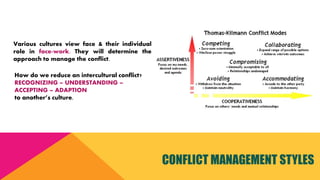
CONFLICT MANAGEMENT STYLES
Various cultures view face & their individual
role in face-work. They will determine the
approach to manage the conflict.
How do we reduce an intercultural conflict?
RECOGNIZING – UNDERSTANDING –
ACCEPTING – ADAPTION
to another’s culture.
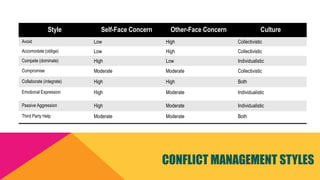
CONFLICT MANAGEMENT STYLES
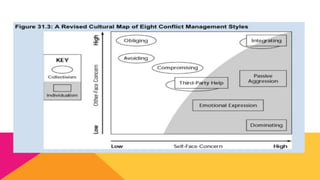
Style Self-Face Concern Other-Face Concern Culture
Avoid Low High Collectivistic
Accomodate (oblige) Low High Collectivistic
Compete (dominate) High Low Individualistic
Compromise Moderate Moderate Collectivistic
Collaborate (integrate) High High Both
Emotional Expression High Moderate Individualistic
Passive Aggression High Moderate Individualistic
Third Party Help Moderate Moderate Both
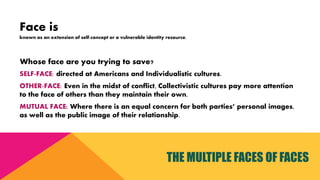
THE MULTIPLE FACES OF FACES
Face is
known as an extension of self-concept or a vulnerable identity resource.
SELF-FACE: directed at Americans and Individualistic cultures.
OTHER-FACE: Even in the midst of conflict, Collectivistic cultures pay more attention
to the face of others than they maintain their own.
MUTUAL FACE: Where there is an equal concern for both parties’ personal images,
as well as the public image of their relationship.
Whose face are you trying to save?
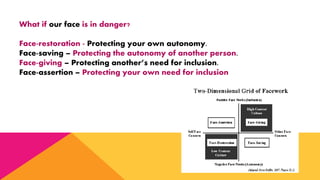
What if our face is in danger?
Face-restoration - Protecting your own autonomy.
Face-saving – Protecting the autonomy of another person.
Face-giving – Protecting another’s need for inclusion.
Face-assertion – Protecting your own need for inclusion
Avoiding : Responding to conflict by withdrawing from open discussion.
Accommodating : Accommodating or giving in to the wishes of another in conflict
situation.
Compromising : Conflict management by negotiating or bargaining; seeking a
middle way.
Dominating : Competing to win when people’s interests conflict.
Integrating : Problem solving through open discussion; collaborating for a
win-win resolution of conflict.
STYLES OF CONFLICT MANAGEMENT
Emotional Expression: Managing conflict by disclosure or venting of feelings
Passive Aggressive: Making indirect accusations, showing resent-ment,
procrastination, and other behaviors aimed at thwarting another’s resolution of
conflict
Third party Help: a method of conflict management in which disputing parties seek
the aid of a mediator, arbitrator, or respected neutral party to help the resolve their
differences.
(ADDITIONAL) STYLES OF CONFLICT MANAGEMENT
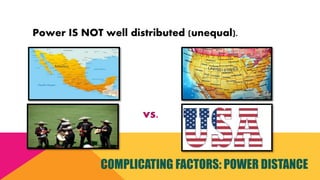
COMPLICATING FACTORS: POWER DISTANCE
vs.
Power IS NOT well distributed (unequal).
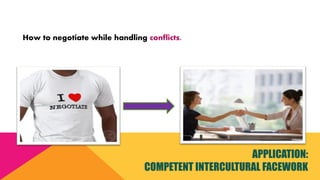
APPLICATION:
COMPETENT INTERCULTURAL FACEWORK
How to negotiate while handling conflicts.
CRITICS
The theory does not explain the actual behavior exhibited by people in these culture.
Most theory has been done in US, Japan, Asia. More research is needed in other
cultures to form more universal ideas about the theory.
THANK YOU

Face negotiation theory

  • 1.
    FACE NEGOTIATION THEORY Agustinus Sitorus |Gemala Citra | Lulu Hanifah | Ratih Kismie
  • 2.
    INTRODUCTION Stella Ting-Toomey The Founder Howpopulations of specific cultures respond to conflict. How people represent themselves differently to others, when dealing with conflicts. The Question To understand a communication & sociological standpoint. To have a proper IPC. To be more of “yourself”. To release the stress caused by the need to maintain a specific face. To change the way we communicate within our own culture and amongst other cultures. Why do we learn this?
  • 3.
    FACE & CULTURALORIENTATION COLLECTIVISM&INDIVIDUALISM People from individualistic (low context culture) interact differently from collectivistic (high context cultures). Communication is based on maintaining & negotiating face. Individualistic cultures  Self Oriented Face-Work. Collectivistic cultures  Other Oriented Face-Work.
  • 4.
    FACE & CULTURALORIENTATION THE FACE-WORK The image of oneself that people want other to see. Different culture in every side of the world always has a negotiating face. Face is PROBLEMATIC when you don’t know another person’s identities for sure.
  • 5.
    CONFLICT MANAGEMENT STYLES Variouscultures view face & their individual role in face-work. They will determine the approach to manage the conflict. How do we reduce an intercultural conflict? RECOGNIZING – UNDERSTANDING – ACCEPTING – ADAPTION to another’s culture.
  • 6.
    CONFLICT MANAGEMENT STYLES StyleSelf-Face Concern Other-Face Concern Culture Avoid Low High Collectivistic Accomodate (oblige) Low High Collectivistic Compete (dominate) High Low Individualistic Compromise Moderate Moderate Collectivistic Collaborate (integrate) High High Both Emotional Expression High Moderate Individualistic Passive Aggression High Moderate Individualistic Third Party Help Moderate Moderate Both
  • 7.
    THE MULTIPLE FACESOF FACES Face is known as an extension of self-concept or a vulnerable identity resource. SELF-FACE: directed at Americans and Individualistic cultures. OTHER-FACE: Even in the midst of conflict, Collectivistic cultures pay more attention to the face of others than they maintain their own. MUTUAL FACE: Where there is an equal concern for both parties’ personal images, as well as the public image of their relationship. Whose face are you trying to save?
  • 8.
    What if ourface is in danger? Face-restoration - Protecting your own autonomy. Face-saving – Protecting the autonomy of another person. Face-giving – Protecting another’s need for inclusion. Face-assertion – Protecting your own need for inclusion
  • 9.
    Avoiding : Respondingto conflict by withdrawing from open discussion. Accommodating : Accommodating or giving in to the wishes of another in conflict situation. Compromising : Conflict management by negotiating or bargaining; seeking a middle way. Dominating : Competing to win when people’s interests conflict. Integrating : Problem solving through open discussion; collaborating for a win-win resolution of conflict. STYLES OF CONFLICT MANAGEMENT
  • 10.
    Emotional Expression: Managingconflict by disclosure or venting of feelings Passive Aggressive: Making indirect accusations, showing resent-ment, procrastination, and other behaviors aimed at thwarting another’s resolution of conflict Third party Help: a method of conflict management in which disputing parties seek the aid of a mediator, arbitrator, or respected neutral party to help the resolve their differences. (ADDITIONAL) STYLES OF CONFLICT MANAGEMENT
  • 12.
    COMPLICATING FACTORS: POWERDISTANCE vs. Power IS NOT well distributed (unequal).
  • 13.
    APPLICATION: COMPETENT INTERCULTURAL FACEWORK Howto negotiate while handling conflicts.
  • 14.
    CRITICS The theory doesnot explain the actual behavior exhibited by people in these culture. Most theory has been done in US, Japan, Asia. More research is needed in other cultures to form more universal ideas about the theory.
  • 15.