Popular Culture
Popular Culture
 Large
 Incorporates heterogeneous populations
 Typically urban
 Experiences quickly changing cultural traits
 Practiced by people across identities and
across the world
 Also encompasses material and
nonmaterial culture
How is popular culture diffused?
 Hierarchical diffusion
 Uses an urban hierarchy (distance decay)
 David Harvey: time-space compression
 Refers to social and psychological effects of living
in a time-space convergence (Donald Janelle)
 Since technology links some places more closely
than others, culture diffuses more quickly rather
than at a constant rate
 Popular culture does not take over the
existing popular culture, rather a process
called reterritorialization of popular
culture occurs
 When people w/in a place start to produce an
aspect of popular culture themselves in the
context of their own culture and making it their
own
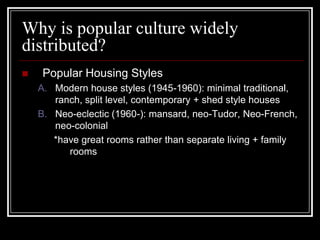
Why is popular culture widely
distributed?
 Popular Housing Styles
A. Modern house styles (1945-1960): minimal traditional,
ranch, split level, contemporary + shed style houses
B. Neo-eclectic (1960-): mansard, neo-Tudor, Neo-French,
neo-colonial
*have great rooms rather than separate living + family
rooms
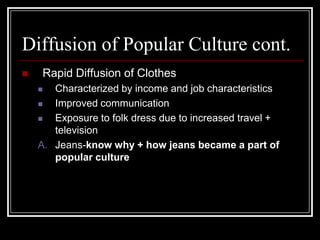
Diffusion of Popular Culture cont.
 Rapid Diffusion of Clothes
 Characterized by income and job characteristics
 Improved communication
 Exposure to folk dress due to increased travel +
television
A. Jeans-know why + how jeans became a part of
popular culture
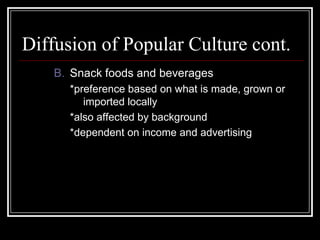
Diffusion of Popular Culture cont.
B. Snack foods and beverages
*preference based on what is made, grown or
imported locally
*also affected by background
*dependent on income and advertising
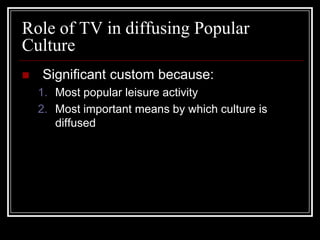
Role of TV in diffusing Popular
Culture
 Significant custom because:
1. Most popular leisure activity
2. Most important means by which culture is
diffused
Why Does Globalization of Popular
Culture Cause Problems?
 Threat to Folk Culture:
 Rising income increases demand for items
valued in popular culture
 Can lead to domination of folk culture
 Loss of traditional values (clothing)
 Change in traditional role of women-How?
 Can also cause problems in less developed
nations-increase in prostitution
Globalization of Popular Culture cont.
 Threat of Foreign Media Imperialism
 Threatens LDC’s independence
 Seen as a new type of economic + cultural
imperialism
 Allow governments of LDC to censor shows
and/or only program shows appropriate to
traditional values
Environmental Impact of Popular
Culture
 Modifies nature
 Uniform landscapes-seen to generate
product recognition + greater consumption
Negative Environmental Impacts
 Increased demand for natural resources
 Depletion of resources and/or extinction of
species
 Inefficient use of resources
 Pollution
 Popular culture produces a lot of waste
 Folk culture can also negatively impact the
environment by ignoring natural processes

Popular culture

  • 1.
  • 2.
    Popular Culture  Large Incorporates heterogeneous populations  Typically urban  Experiences quickly changing cultural traits  Practiced by people across identities and across the world  Also encompasses material and nonmaterial culture
  • 3.
    How is popularculture diffused?  Hierarchical diffusion  Uses an urban hierarchy (distance decay)  David Harvey: time-space compression  Refers to social and psychological effects of living in a time-space convergence (Donald Janelle)  Since technology links some places more closely than others, culture diffuses more quickly rather than at a constant rate
  • 4.
     Popular culturedoes not take over the existing popular culture, rather a process called reterritorialization of popular culture occurs  When people w/in a place start to produce an aspect of popular culture themselves in the context of their own culture and making it their own
  • 5.
    Why is popularculture widely distributed?  Popular Housing Styles A. Modern house styles (1945-1960): minimal traditional, ranch, split level, contemporary + shed style houses B. Neo-eclectic (1960-): mansard, neo-Tudor, Neo-French, neo-colonial *have great rooms rather than separate living + family rooms
  • 6.
    Diffusion of PopularCulture cont.  Rapid Diffusion of Clothes  Characterized by income and job characteristics  Improved communication  Exposure to folk dress due to increased travel + television A. Jeans-know why + how jeans became a part of popular culture
  • 7.
    Diffusion of PopularCulture cont. B. Snack foods and beverages *preference based on what is made, grown or imported locally *also affected by background *dependent on income and advertising
  • 8.
    Role of TVin diffusing Popular Culture  Significant custom because: 1. Most popular leisure activity 2. Most important means by which culture is diffused
  • 9.
    Why Does Globalizationof Popular Culture Cause Problems?  Threat to Folk Culture:  Rising income increases demand for items valued in popular culture  Can lead to domination of folk culture  Loss of traditional values (clothing)  Change in traditional role of women-How?  Can also cause problems in less developed nations-increase in prostitution
  • 10.
    Globalization of PopularCulture cont.  Threat of Foreign Media Imperialism  Threatens LDC’s independence  Seen as a new type of economic + cultural imperialism  Allow governments of LDC to censor shows and/or only program shows appropriate to traditional values
  • 11.
    Environmental Impact ofPopular Culture  Modifies nature  Uniform landscapes-seen to generate product recognition + greater consumption
  • 12.
    Negative Environmental Impacts Increased demand for natural resources  Depletion of resources and/or extinction of species  Inefficient use of resources  Pollution  Popular culture produces a lot of waste  Folk culture can also negatively impact the environment by ignoring natural processes