DEVELOPMENT OF FACE, NOSE AND PALATE
DR NEETA CHHABRA
Development of Face
• Facial development occurs mainly between 4th - 8th week.
• It is induced by migration of neural crest cells.
• NC cells originate in the neuroectoderm of forebrain, midbrain and hind
brain regions and migrate ventrally into the pharyngeal arches and rostrally
around the forebrain and optic cup into the facial region.
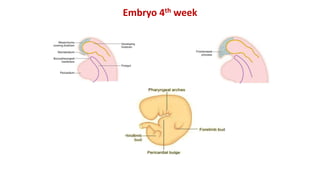
Embryo 4th week
Development of Face
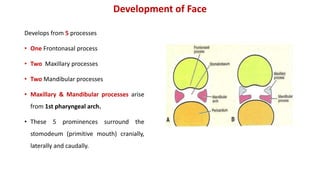
Develops from 5 processes
• One Frontonasal process
• Two Maxillary processes
• Two Mandibular processes
• Maxillary & Mandibular processes arise
from 1st pharyngeal arch.
• These 5 prominences surround the
stomodeum (primitive mouth) cranially,
laterally and caudally.
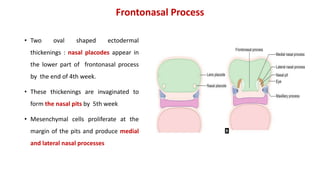
Frontonasal Process
• Two oval shaped ectodermal
thickenings : nasal placodes appear in
the lower part of frontonasal process
by the end of 4th week.
• These thickenings are invaginated to
form the nasal pits by 5th week
• Mesenchymal cells proliferate at the
margin of the pits and produce medial
and lateral nasal processes
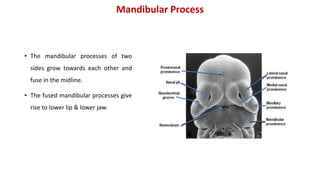
Mandibular Process
• The mandibular processes of two
sides grow towards each other and
fuse in the midline.
• The fused mandibular processes give
rise to lower lip & lower jaw.
Embryo: 6 weeks
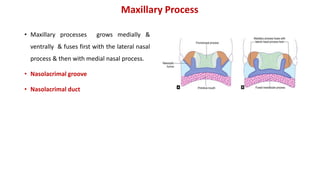
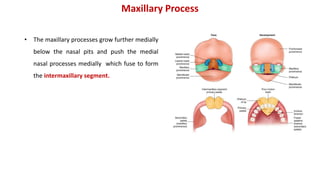
Maxillary Process
• Maxillary processes grows medially &
ventrally & fuses first with the lateral nasal
process & then with medial nasal process.
• Nasolacrimal groove
• Nasolacrimal duct
• The maxillary processes grow further medially
below the nasal pits and push the medial
nasal processes medially which fuse to form
the intermaxillary segment.
Maxillary Process
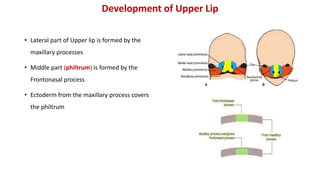
Development of Upper Lip
• Lateral part of Upper lip is formed by the
maxillary processes
• Middle part (philtrum) is formed by the
Frontonasal process
• Ectoderm from the maxillary process covers
the philtrum
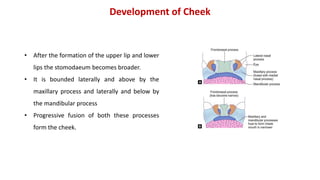
Development of Cheek
• After the formation of the upper lip and lower
lips the stomodaeum becomes broader.
• It is bounded laterally and above by the
maxillary process and laterally and below by
the mandibular process
• Progressive fusion of both these processes
form the cheek.
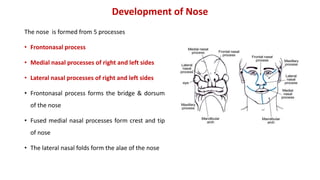
Development of Nose
The nose is formed from 5 processes
• Frontonasal process
• Medial nasal processes of right and left sides
• Lateral nasal processes of right and left sides
• Frontonasal process forms the bridge & dorsum
of the nose
• Fused medial nasal processes form crest and tip
of nose
• The lateral nasal folds form the alae of the nose
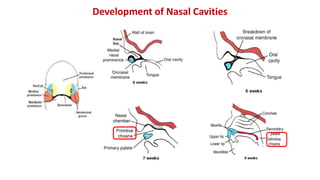
Development of Nasal Cavities
tially the nasal sacs are
parated from the oral
vity by oronasal
embrane.
e oronasal membrane
ptures by the 6th week,
mmunicating the
imitive nasal cavities with
e oral cavity
membrane.
• The oronasal membrane
ruptures by the 6th week,
communicating the
primitive nasal cavities with
the oral cavity
ommunications are called the
e choana and are located
or to the primary palate
• These communications are called the
primitive choana and are located
posterior to the primary palate
• After the development of the
secondary palate, the choana change
their position and become located at
the junction of nasal cavity and the
pharynx
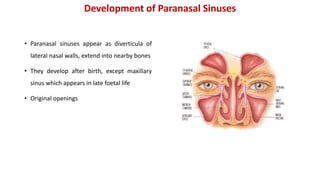
Development of Paranasal Sinuses
• Paranasal sinuses appear as diverticula of
lateral nasal walls, extend into nearby bones
• They develop after birth, except maxillary
sinus which appears in late foetal life
• Original openings
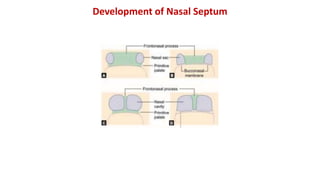
Development of Nasal Septum
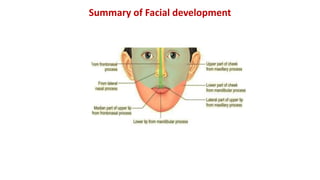
Summary of Facial development
Development of Palate
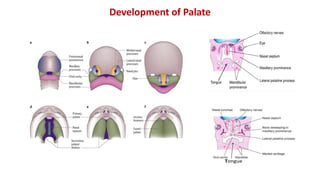
• Begins at the end of the 5th week
• Completed by the end of the 12th week
• The most critical period for the
development of palate is from the end of
6th week to the beginning of 9th week
• Develops from two primordia:
• The Primary palate
• The Secondary palate
Development of Palate
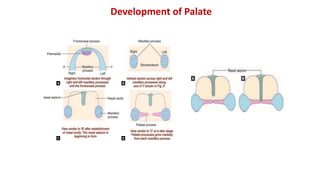
• In the beginning, the lateral
palatine processes project
inferomedially on each side of
the tongue
• With the development of the
jaws, the tongue moves
inferiorly.
• During 7th & 8th weeks, the
lateral palatine processes
elongate and ascend to a
horizontal position above the
tongue
Tongue
• In the beginning, the lateral
palatine processes project
inferomedially on each side of
the tongue
• With the development of the
jaws, the tongue moves
inferiorly.
• During 7th & 8th weeks, the
lateral palatine processes
elongate and ascend to a
horizontal position above the
tongue
Tongue
Development of Palate
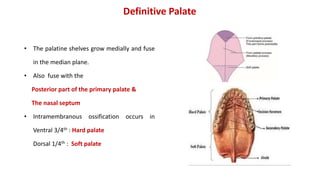
• The palatine shelves grow medially and fuse
in the median plane.
• Also fuse with the
Posterior part of the primary palate &
The nasal septum
• Intramembranous ossification occurs in
Ventral 3/4th : Hard palate
Dorsal 1/4th : Soft palate
Definitive Palate
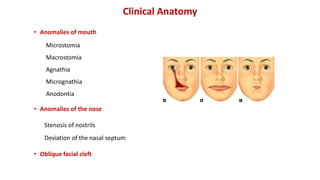
Clinical Anatomy
• Anomalies of mouth
Microstomia
Macrostomia
Agnathia
Micrognathia
Anodontia
• Anomalies of the nose
Stenosis of nostrils
Deviation of the nasal septum
• Oblique facial cleft
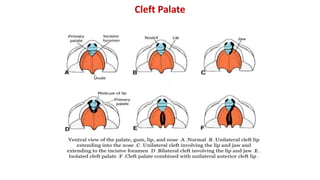
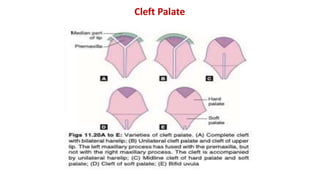
Cleft Lip and Palate
• Cleft lip is more common in males.
Incidence : 1: 1000
• Cleft palate is more common in
females.
Incidence : 1: 2500
80% clefts are Unilateral
20% - Bilateral
Cleft Palate
Cleft Palate
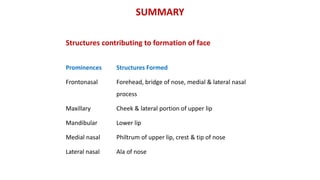
SUMMARY
Prominences Structures Formed
Frontonasal Forehead, bridge of nose, medial & lateral nasal
process
Maxillary Cheek & lateral portion of upper lip
Mandibular Lower lip
Medial nasal Philtrum of upper lip, crest & tip of nose
Lateral nasal Ala of nose
Structures contributing to formation of face
THANKS

Face dev

  • 1.
    DEVELOPMENT OF FACE,NOSE AND PALATE DR NEETA CHHABRA
  • 2.
    Development of Face •Facial development occurs mainly between 4th - 8th week. • It is induced by migration of neural crest cells. • NC cells originate in the neuroectoderm of forebrain, midbrain and hind brain regions and migrate ventrally into the pharyngeal arches and rostrally around the forebrain and optic cup into the facial region.
  • 3.
  • 4.
    Development of Face Developsfrom 5 processes • One Frontonasal process • Two Maxillary processes • Two Mandibular processes • Maxillary & Mandibular processes arise from 1st pharyngeal arch. • These 5 prominences surround the stomodeum (primitive mouth) cranially, laterally and caudally.
  • 5.
    Frontonasal Process • Twooval shaped ectodermal thickenings : nasal placodes appear in the lower part of frontonasal process by the end of 4th week. • These thickenings are invaginated to form the nasal pits by 5th week • Mesenchymal cells proliferate at the margin of the pits and produce medial and lateral nasal processes
  • 6.
    Mandibular Process • Themandibular processes of two sides grow towards each other and fuse in the midline. • The fused mandibular processes give rise to lower lip & lower jaw. Embryo: 6 weeks
  • 7.
    Maxillary Process • Maxillaryprocesses grows medially & ventrally & fuses first with the lateral nasal process & then with medial nasal process. • Nasolacrimal groove • Nasolacrimal duct
  • 8.
    • The maxillaryprocesses grow further medially below the nasal pits and push the medial nasal processes medially which fuse to form the intermaxillary segment. Maxillary Process
  • 9.
    Development of UpperLip • Lateral part of Upper lip is formed by the maxillary processes • Middle part (philtrum) is formed by the Frontonasal process • Ectoderm from the maxillary process covers the philtrum
  • 10.
    Development of Cheek •After the formation of the upper lip and lower lips the stomodaeum becomes broader. • It is bounded laterally and above by the maxillary process and laterally and below by the mandibular process • Progressive fusion of both these processes form the cheek.
  • 11.
    Development of Nose Thenose is formed from 5 processes • Frontonasal process • Medial nasal processes of right and left sides • Lateral nasal processes of right and left sides • Frontonasal process forms the bridge & dorsum of the nose • Fused medial nasal processes form crest and tip of nose • The lateral nasal folds form the alae of the nose
  • 12.
    Development of NasalCavities tially the nasal sacs are parated from the oral vity by oronasal embrane. e oronasal membrane ptures by the 6th week, mmunicating the imitive nasal cavities with e oral cavity membrane. • The oronasal membrane ruptures by the 6th week, communicating the primitive nasal cavities with the oral cavity ommunications are called the e choana and are located or to the primary palate • These communications are called the primitive choana and are located posterior to the primary palate • After the development of the secondary palate, the choana change their position and become located at the junction of nasal cavity and the pharynx
  • 13.
    Development of ParanasalSinuses • Paranasal sinuses appear as diverticula of lateral nasal walls, extend into nearby bones • They develop after birth, except maxillary sinus which appears in late foetal life • Original openings
  • 14.
  • 15.
    Summary of Facialdevelopment
  • 16.
    Development of Palate •Begins at the end of the 5th week • Completed by the end of the 12th week • The most critical period for the development of palate is from the end of 6th week to the beginning of 9th week • Develops from two primordia: • The Primary palate • The Secondary palate
  • 17.
    Development of Palate •In the beginning, the lateral palatine processes project inferomedially on each side of the tongue • With the development of the jaws, the tongue moves inferiorly. • During 7th & 8th weeks, the lateral palatine processes elongate and ascend to a horizontal position above the tongue Tongue • In the beginning, the lateral palatine processes project inferomedially on each side of the tongue • With the development of the jaws, the tongue moves inferiorly. • During 7th & 8th weeks, the lateral palatine processes elongate and ascend to a horizontal position above the tongue Tongue
  • 18.
  • 19.
    • The palatineshelves grow medially and fuse in the median plane. • Also fuse with the Posterior part of the primary palate & The nasal septum • Intramembranous ossification occurs in Ventral 3/4th : Hard palate Dorsal 1/4th : Soft palate Definitive Palate
  • 20.
    Clinical Anatomy • Anomaliesof mouth Microstomia Macrostomia Agnathia Micrognathia Anodontia • Anomalies of the nose Stenosis of nostrils Deviation of the nasal septum • Oblique facial cleft
  • 21.
    Cleft Lip andPalate • Cleft lip is more common in males. Incidence : 1: 1000 • Cleft palate is more common in females. Incidence : 1: 2500 80% clefts are Unilateral 20% - Bilateral
  • 22.
  • 23.
  • 24.
    SUMMARY Prominences Structures Formed FrontonasalForehead, bridge of nose, medial & lateral nasal process Maxillary Cheek & lateral portion of upper lip Mandibular Lower lip Medial nasal Philtrum of upper lip, crest & tip of nose Lateral nasal Ala of nose Structures contributing to formation of face
  • 25.