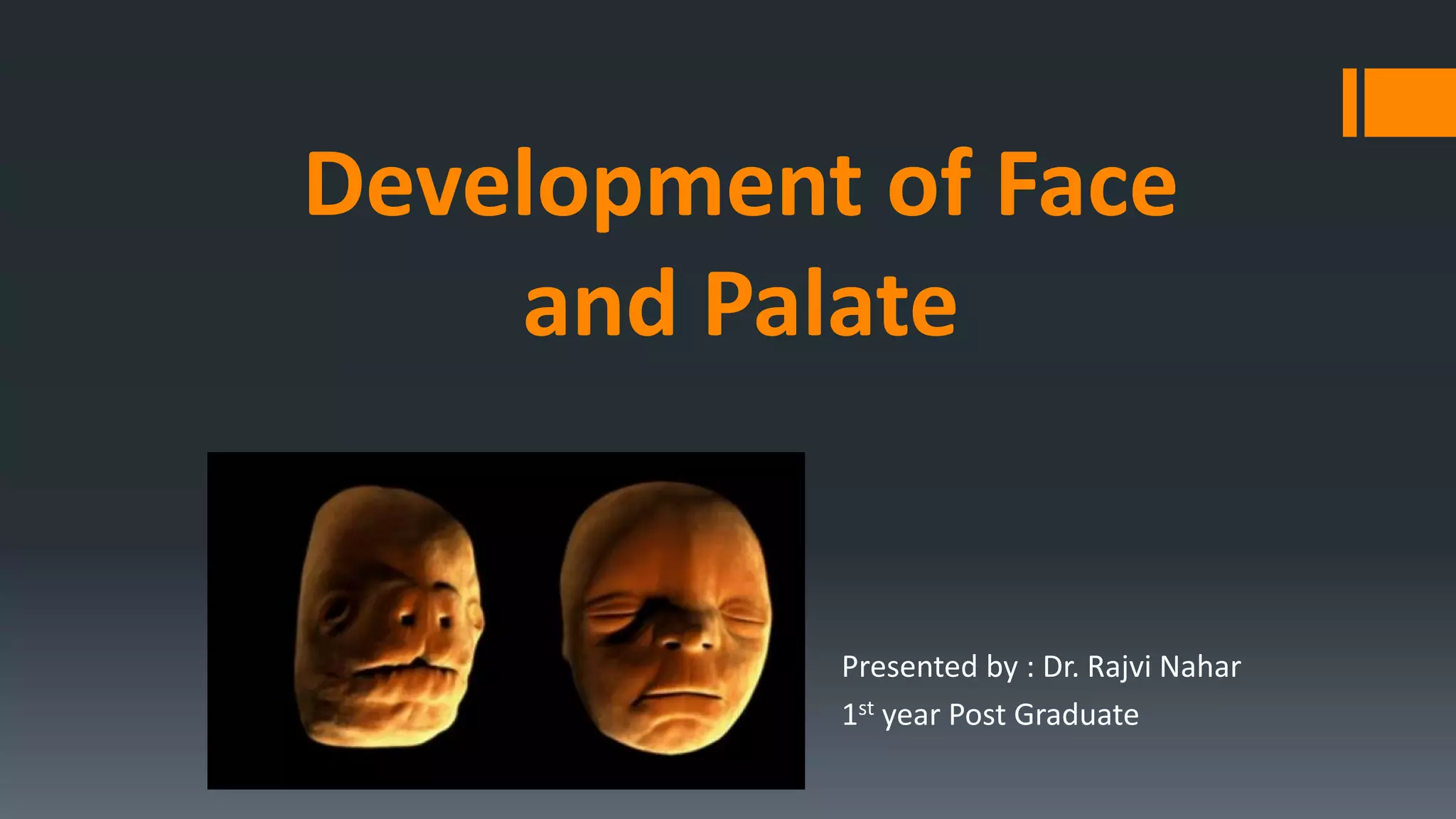
Development of Face
and Palate
Presented by : Dr. Rajvi Nahar
1st year Post Graduate
CONTENTS
Introduction
Development of Face
Development of Palate
Developmental Anomalies
Syndromes associated
Conclusion
References
INTRODUCTION
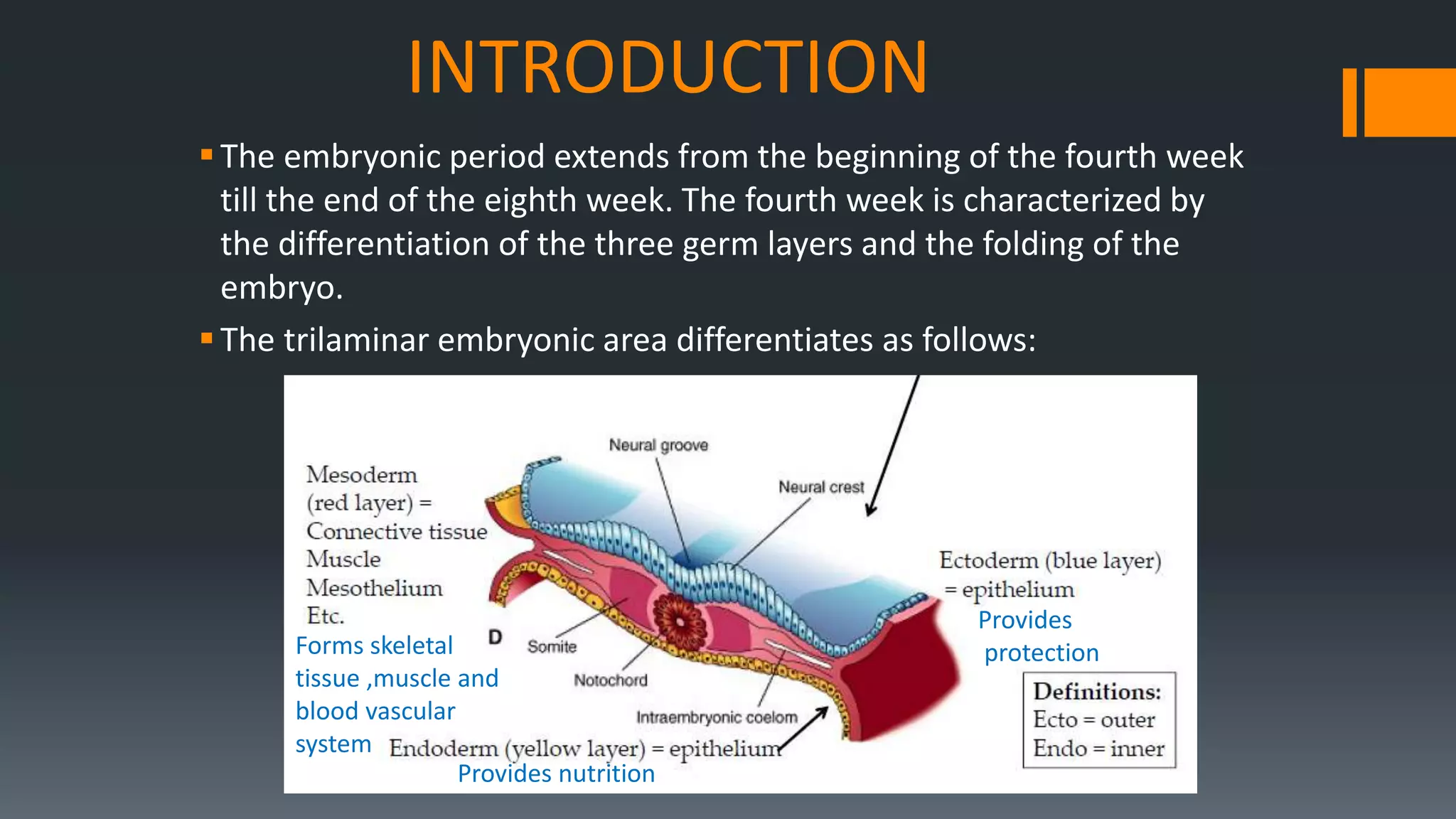
The embryonic period extends from the beginning of the fourth week
till the end of the eighth week. The fourth week is characterized by
the differentiation of the three germ layers and the folding of the
embryo.
The trilaminar embryonic area differentiates as follows:
Provides
protection
Provides nutrition
Forms skeletal
tissue ,muscle and
blood vascular
system
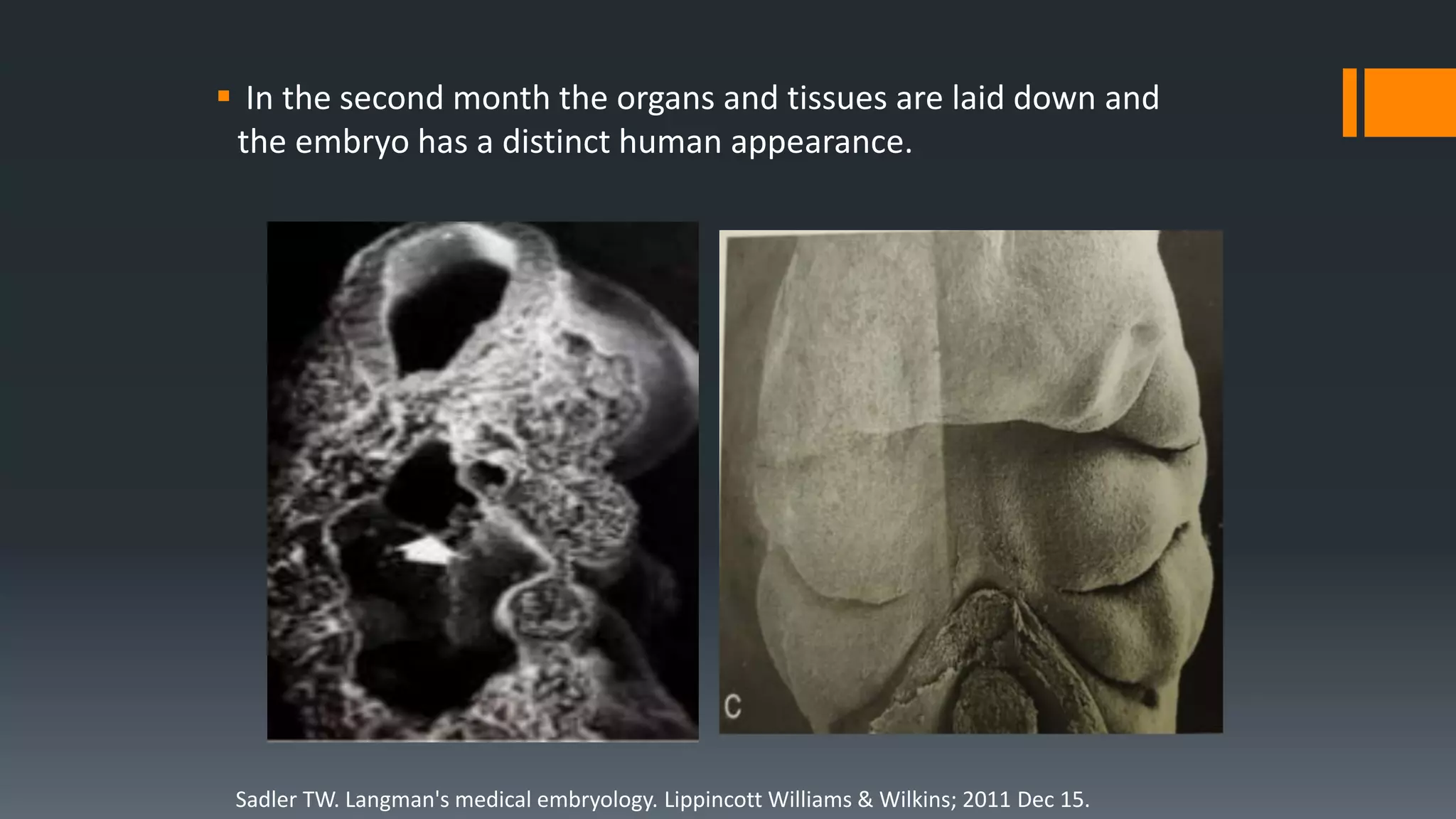
 In the second month the organs and tissues are laid down and
the embryo has a distinct human appearance.
Sadler TW. Langman's medical embryology. Lippincott Williams & Wilkins; 2011 Dec 15.
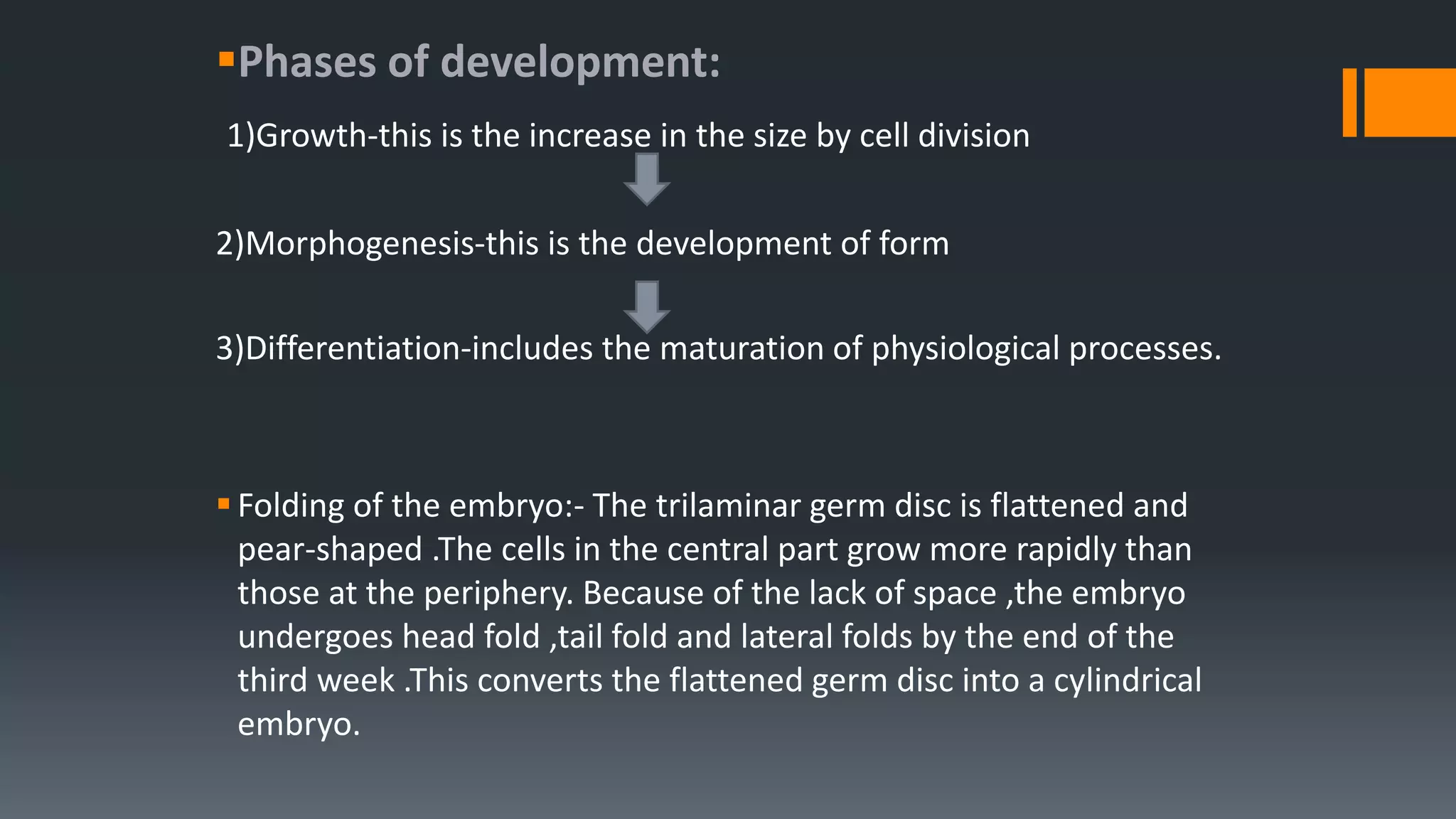
Phases of development:
1)Growth-this is the increase in the size by cell division
2)Morphogenesis-this is the development of form
3)Differentiation-includes the maturation of physiological processes.
Folding of the embryo:- The trilaminar germ disc is flattened and
pear-shaped .The cells in the central part grow more rapidly than
those at the periphery. Because of the lack of space ,the embryo
undergoes head fold ,tail fold and lateral folds by the end of the
third week .This converts the flattened germ disc into a cylindrical
embryo.
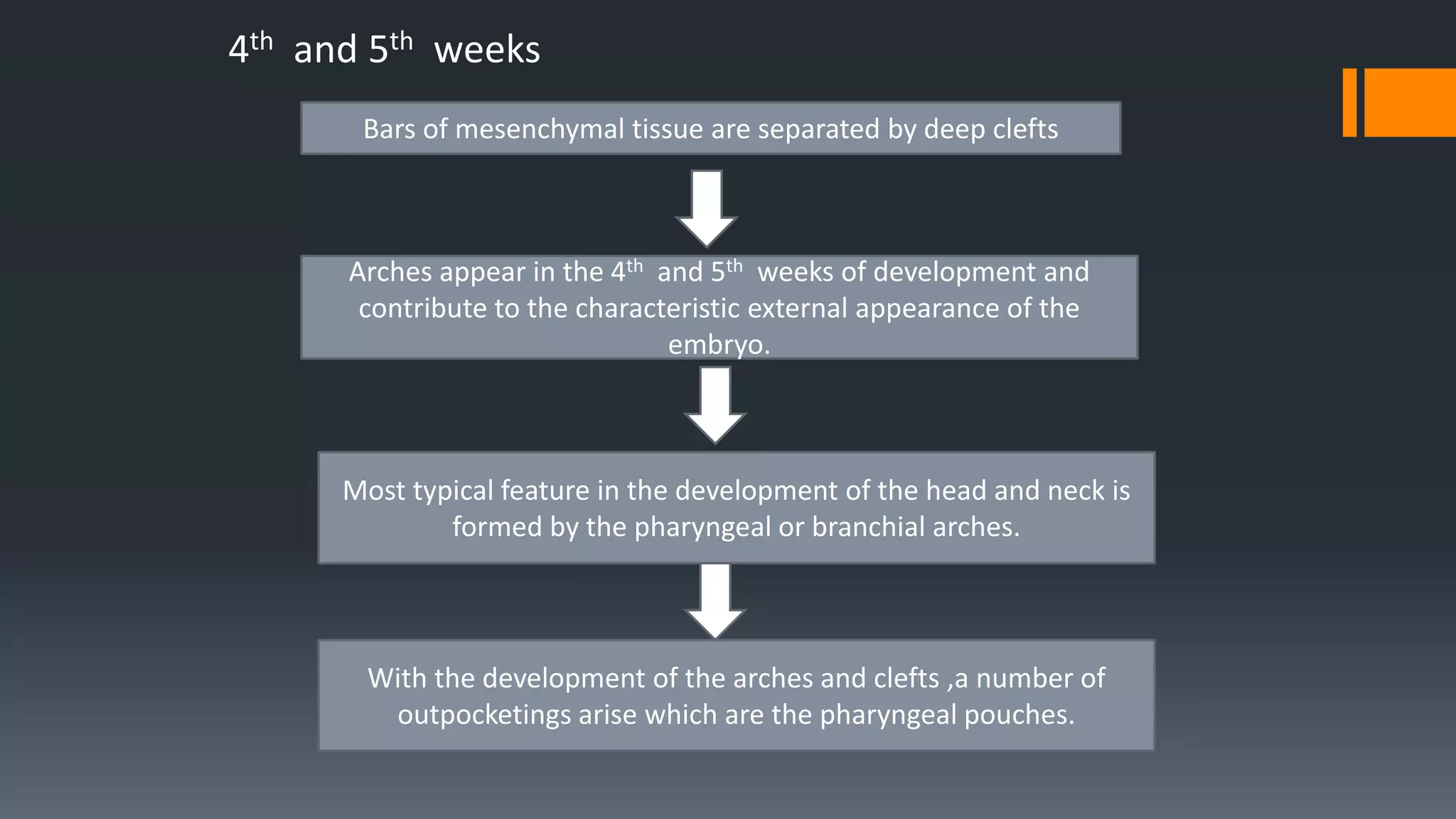
4th and 5th weeks
Bars of mesenchymal tissue are separated by deep clefts
Arches appear in the 4th and 5th weeks of development and
contribute to the characteristic external appearance of the
embryo.
Most typical feature in the development of the head and neck is
formed by the pharyngeal or branchial arches.
With the development of the arches and clefts ,a number of
outpocketings arise which are the pharyngeal pouches.
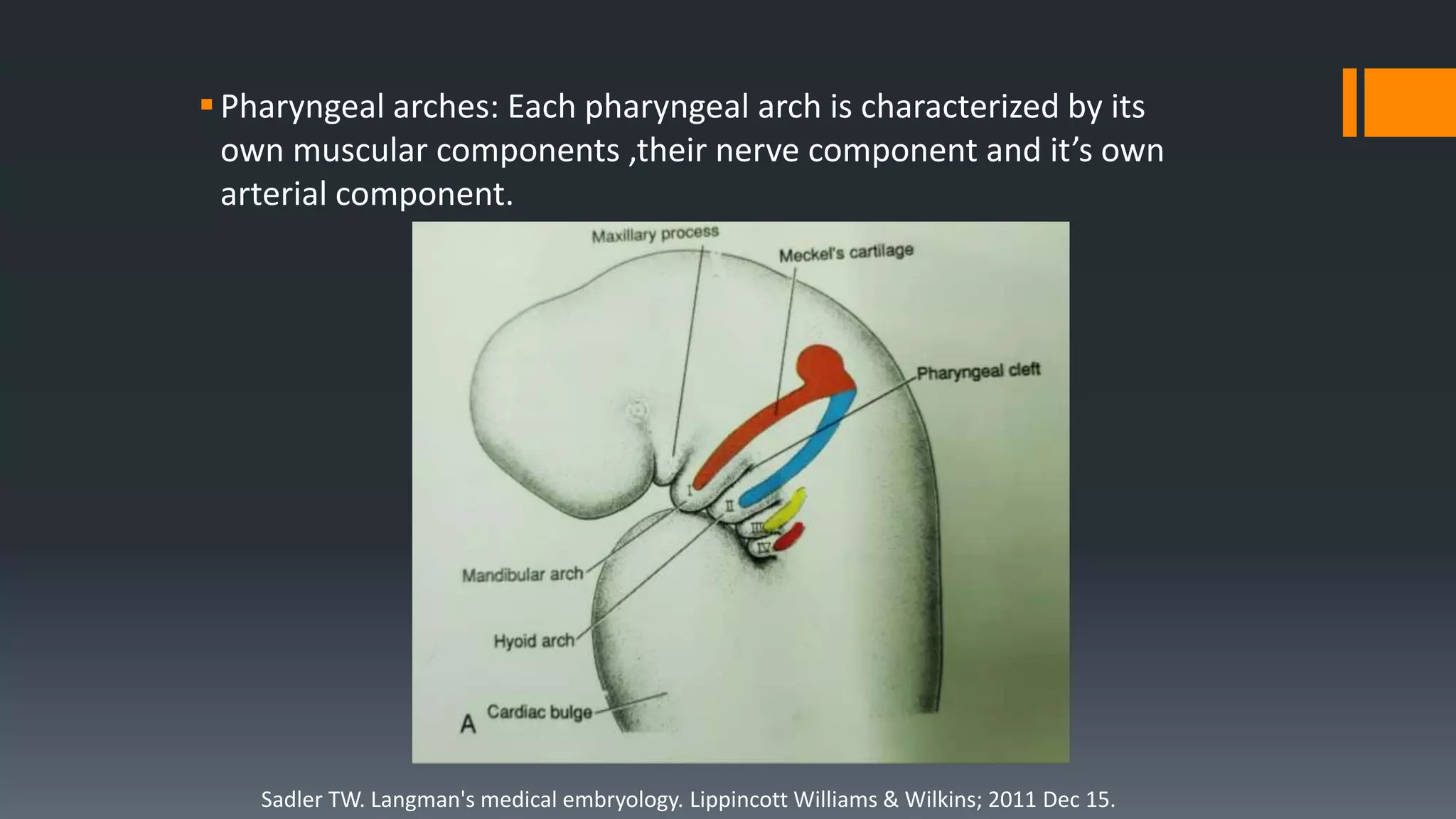
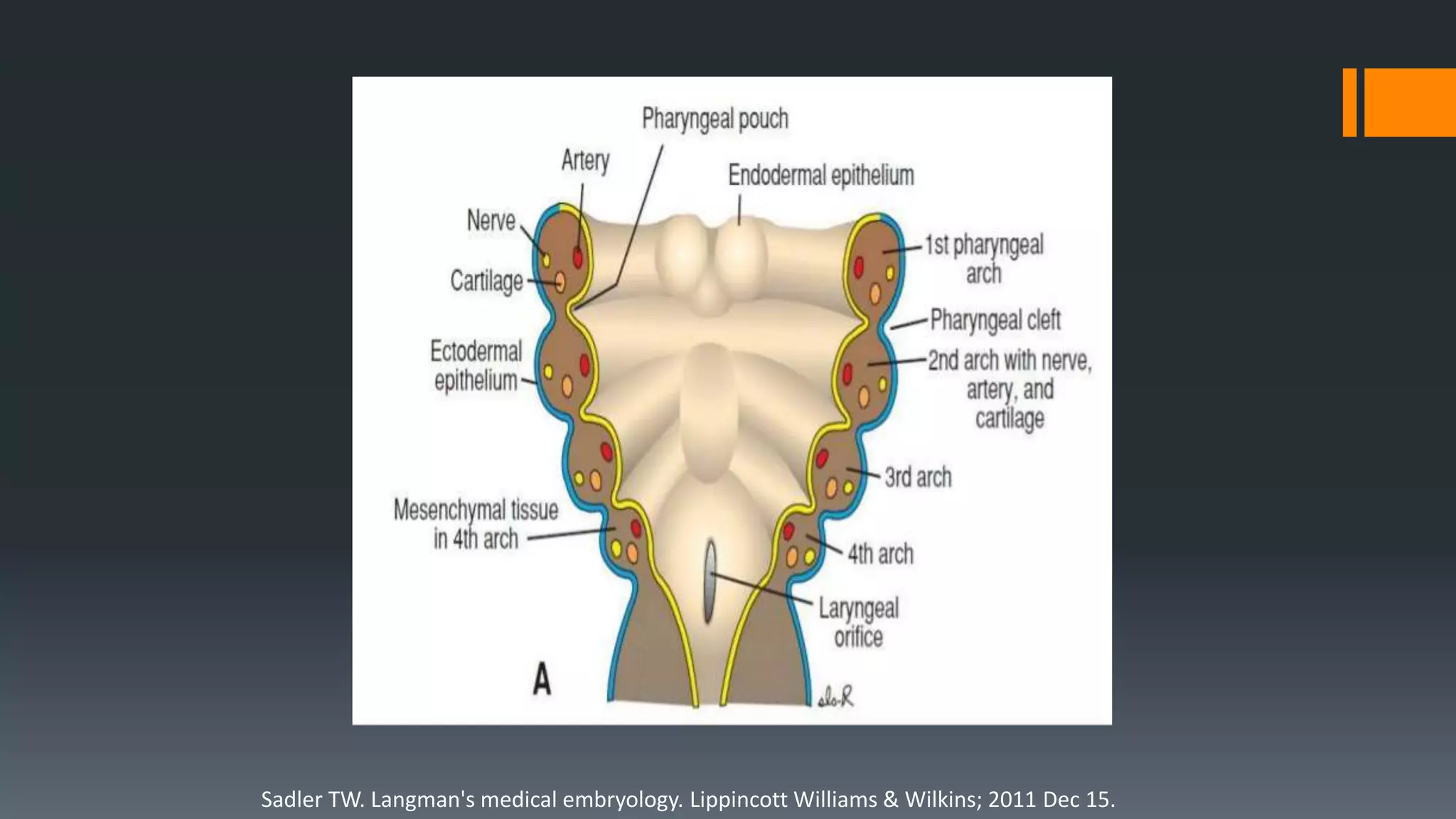
Pharyngeal arches: Each pharyngeal arch is characterized by its
own muscular components ,their nerve component and it’s own
arterial component.
Sadler TW. Langman's medical embryology. Lippincott Williams & Wilkins; 2011 Dec 15.
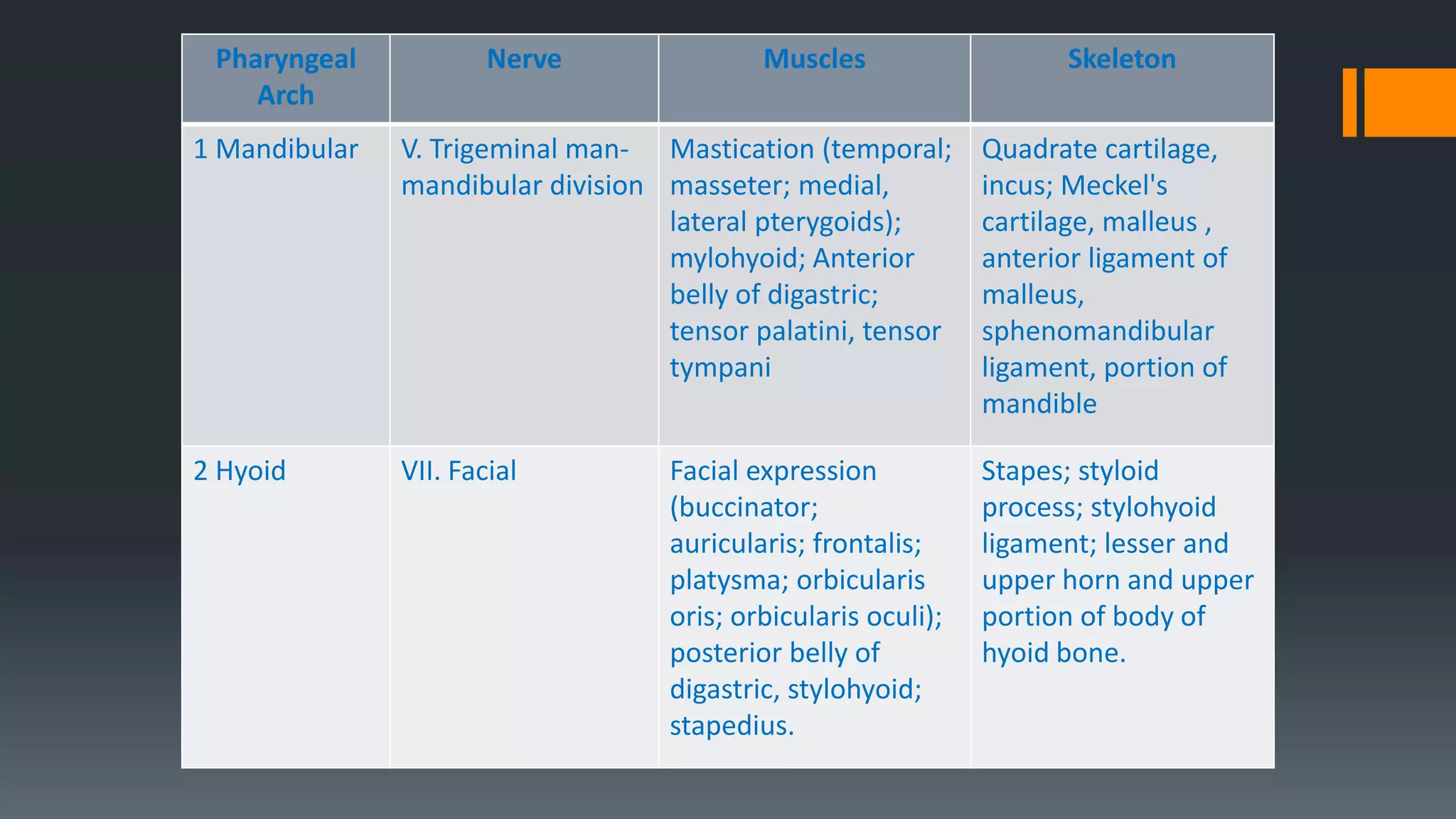
Pharyngeal
Arch
Nerve Muscles Skeleton
1 Mandibular V. Trigeminal man-
mandibular division
Mastication (temporal;
masseter; medial,
lateral pterygoids);
mylohyoid; Anterior
belly of digastric;
tensor palatini, tensor
tympani
Quadrate cartilage,
incus; Meckel's
cartilage, malleus ,
anterior ligament of
malleus,
sphenomandibular
ligament, portion of
mandible
2 Hyoid VII. Facial Facial expression
(buccinator;
auricularis; frontalis;
platysma; orbicularis
oris; orbicularis oculi);
posterior belly of
digastric, stylohyoid;
stapedius.
Stapes; styloid
process; stylohyoid
ligament; lesser and
upper horn and upper
portion of body of
hyoid bone.
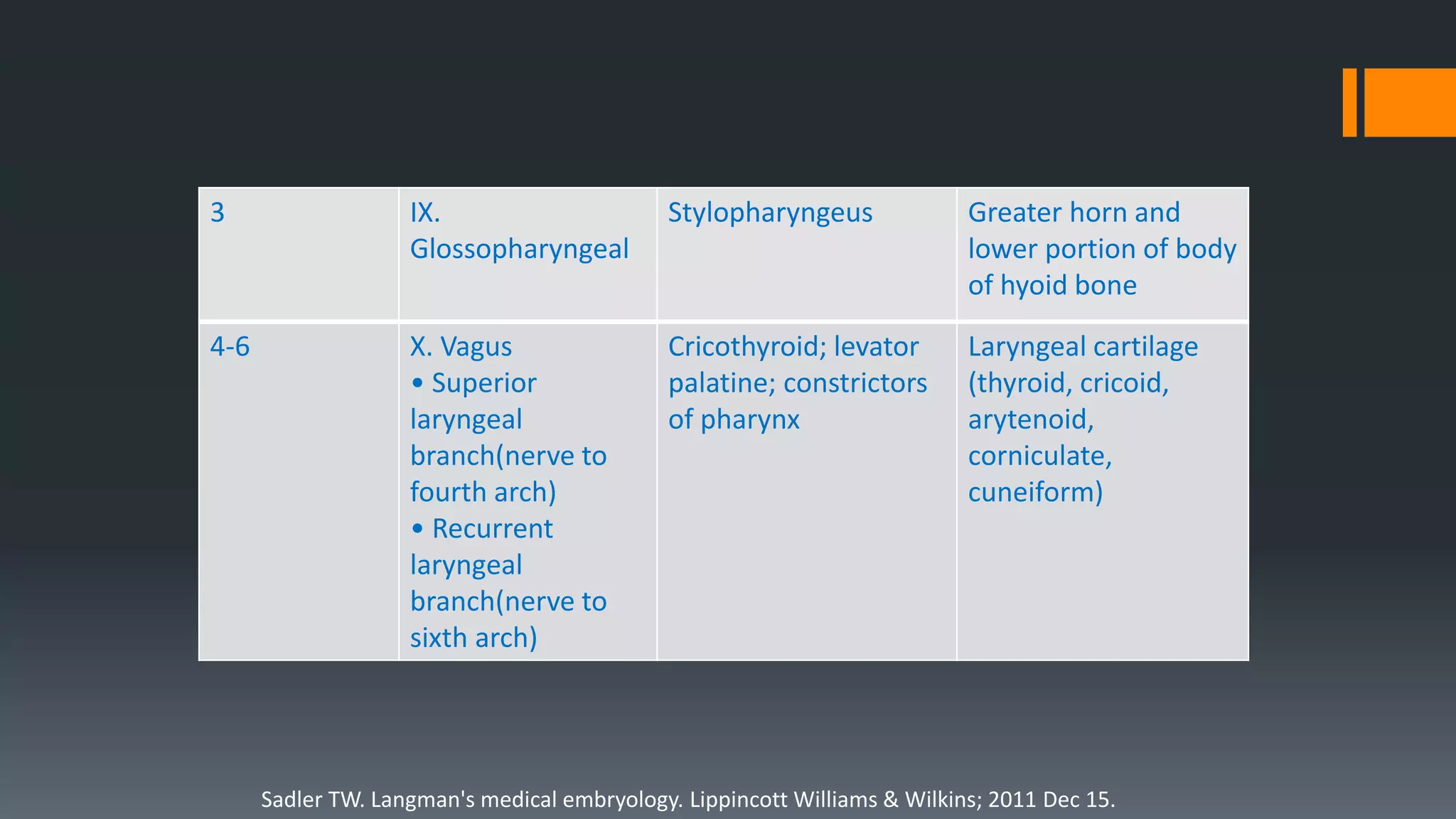
3 IX.
Glossopharyngeal
Stylopharyngeus Greater horn and
lower portion of body
of hyoid bone
4-6 X. Vagus
• Superior
laryngeal
branch(nerve to
fourth arch)
• Recurrent
laryngeal
branch(nerve to
sixth arch)
Cricothyroid; levator
palatine; constrictors
of pharynx
Laryngeal cartilage
(thyroid, cricoid,
arytenoid,
corniculate,
cuneiform)
Sadler TW. Langman's medical embryology. Lippincott Williams & Wilkins; 2011 Dec 15.
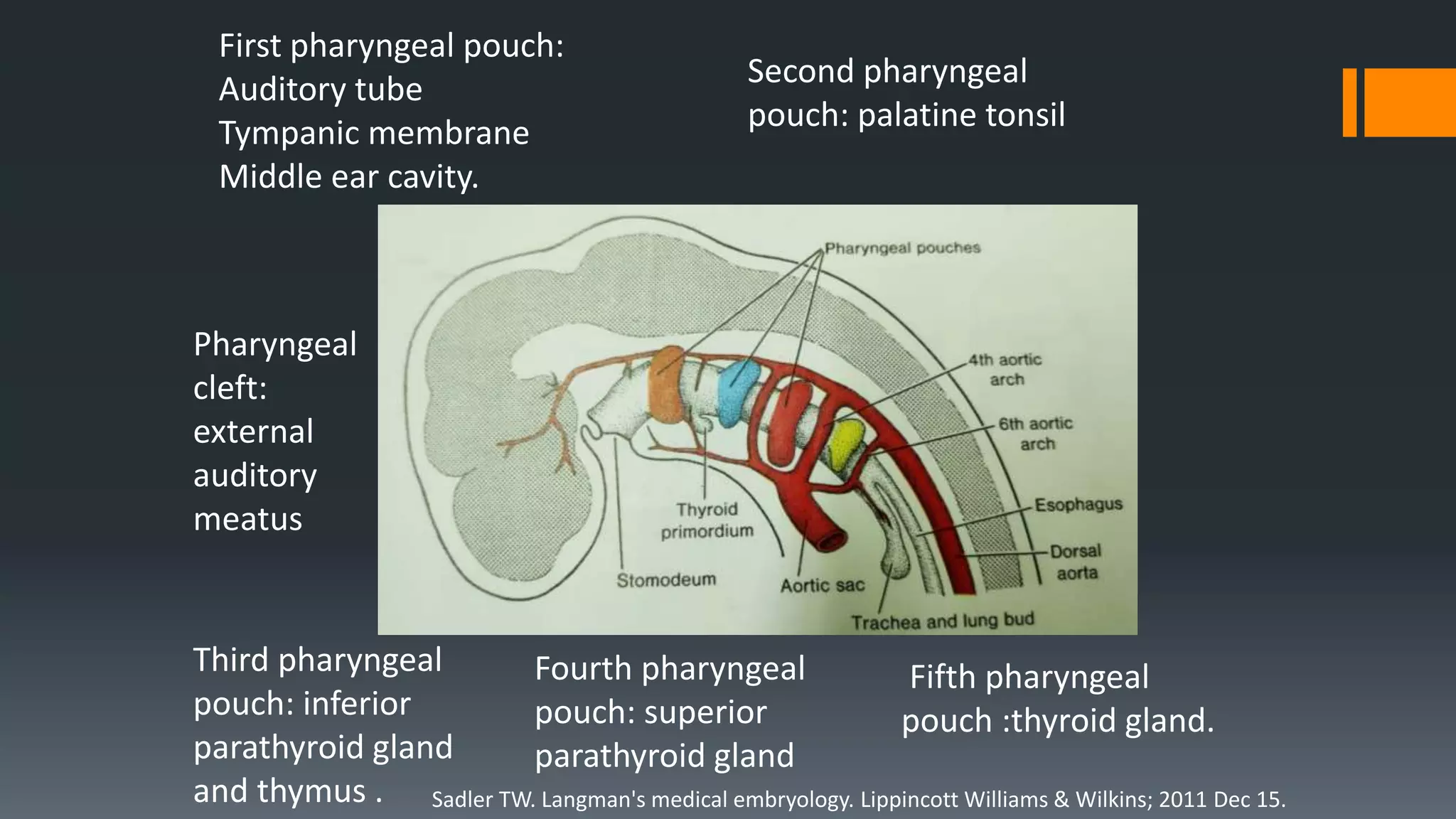
First pharyngeal pouch:
Auditory tube
Tympanic membrane
Middle ear cavity.
Third pharyngeal
pouch: inferior
parathyroid gland
and thymus .
Fifth pharyngeal
pouch :thyroid gland.
Second pharyngeal
pouch: palatine tonsil
Fourth pharyngeal
pouch: superior
parathyroid gland
Sadler TW. Langman's medical embryology. Lippincott Williams & Wilkins; 2011 Dec 15.
Pharyngeal
cleft:
external
auditory
meatus
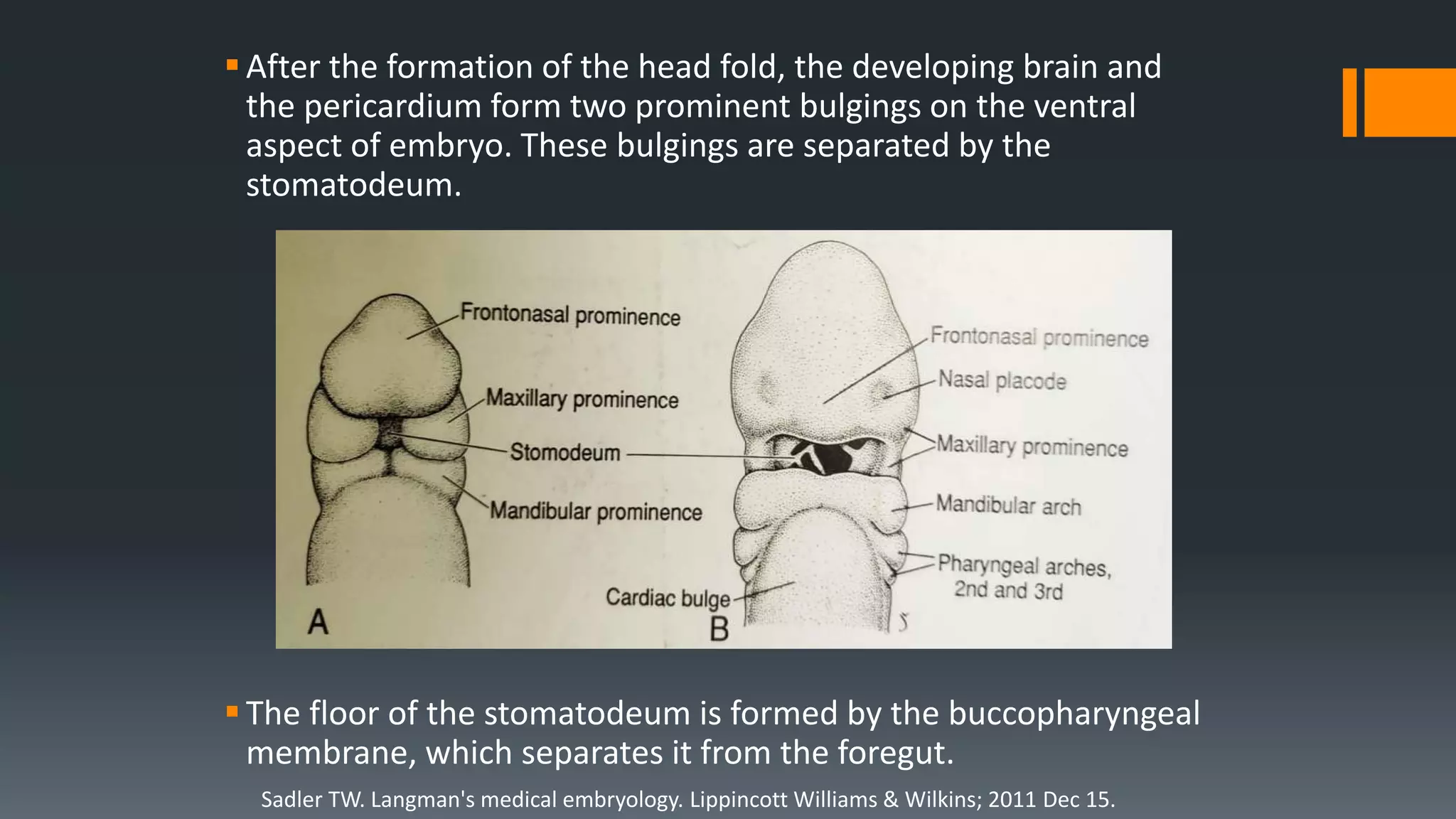
After the formation of the head fold, the developing brain and
the pericardium form two prominent bulgings on the ventral
aspect of embryo. These bulgings are separated by the
stomatodeum.
The floor of the stomatodeum is formed by the buccopharyngeal
membrane, which separates it from the foregut.
Sadler TW. Langman's medical embryology. Lippincott Williams & Wilkins; 2011 Dec 15.
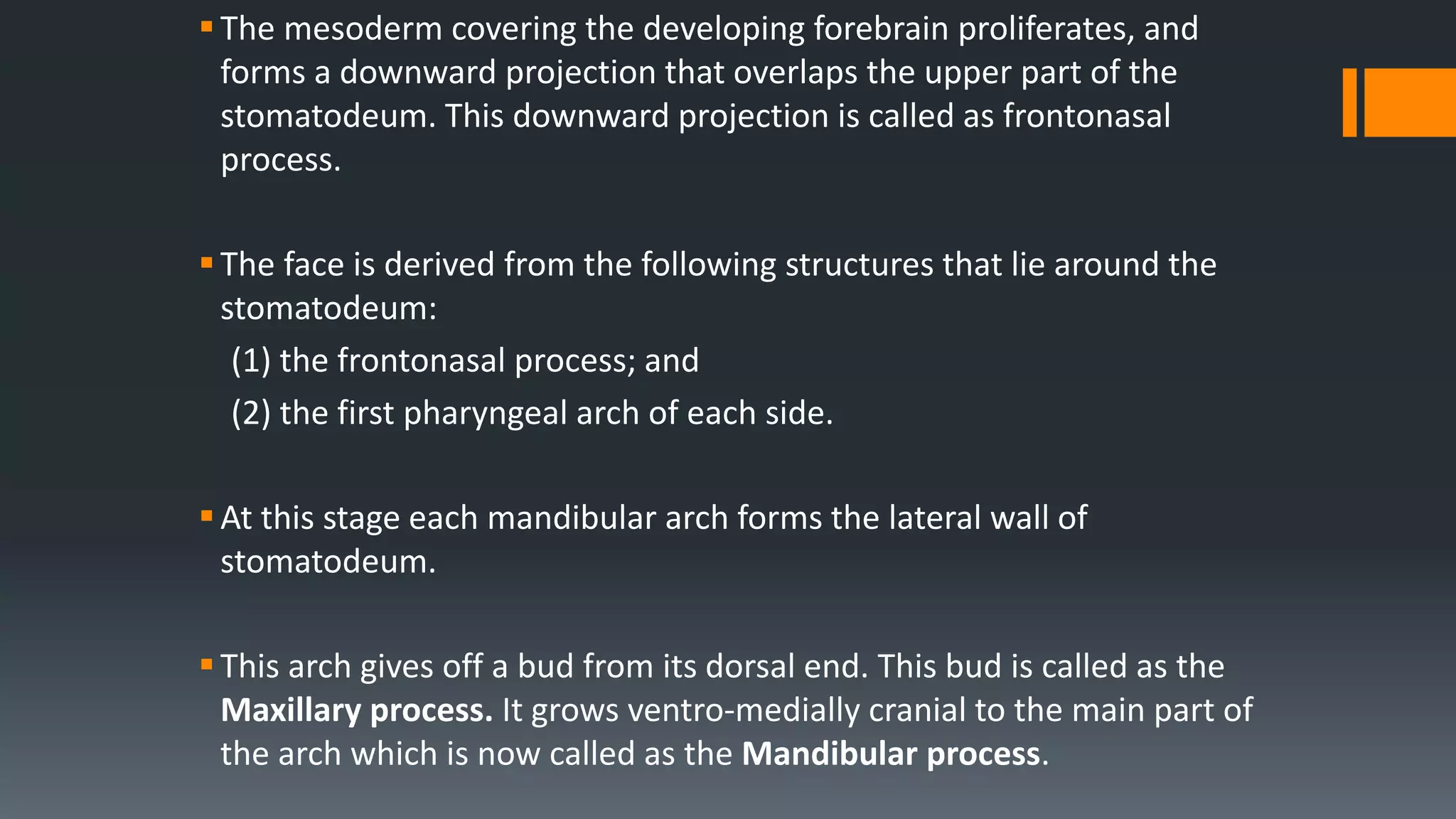
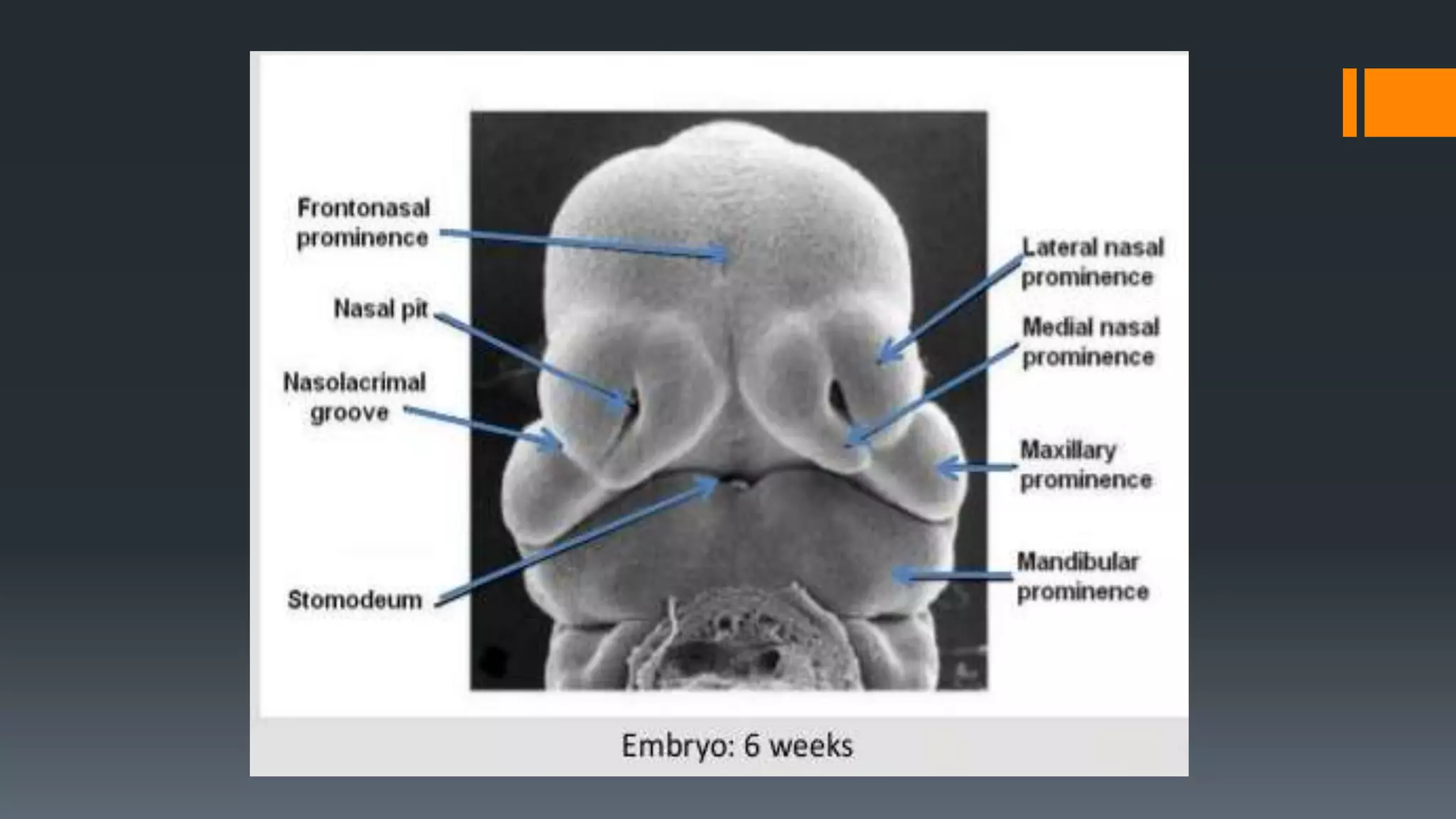
The mesoderm covering the developing forebrain proliferates, and
forms a downward projection that overlaps the upper part of the
stomatodeum. This downward projection is called as frontonasal
process.
The face is derived from the following structures that lie around the
stomatodeum:
(1) the frontonasal process; and
(2) the first pharyngeal arch of each side.
At this stage each mandibular arch forms the lateral wall of
stomatodeum.
This arch gives off a bud from its dorsal end. This bud is called as the
Maxillary process. It grows ventro-medially cranial to the main part of
the arch which is now called as the Mandibular process.
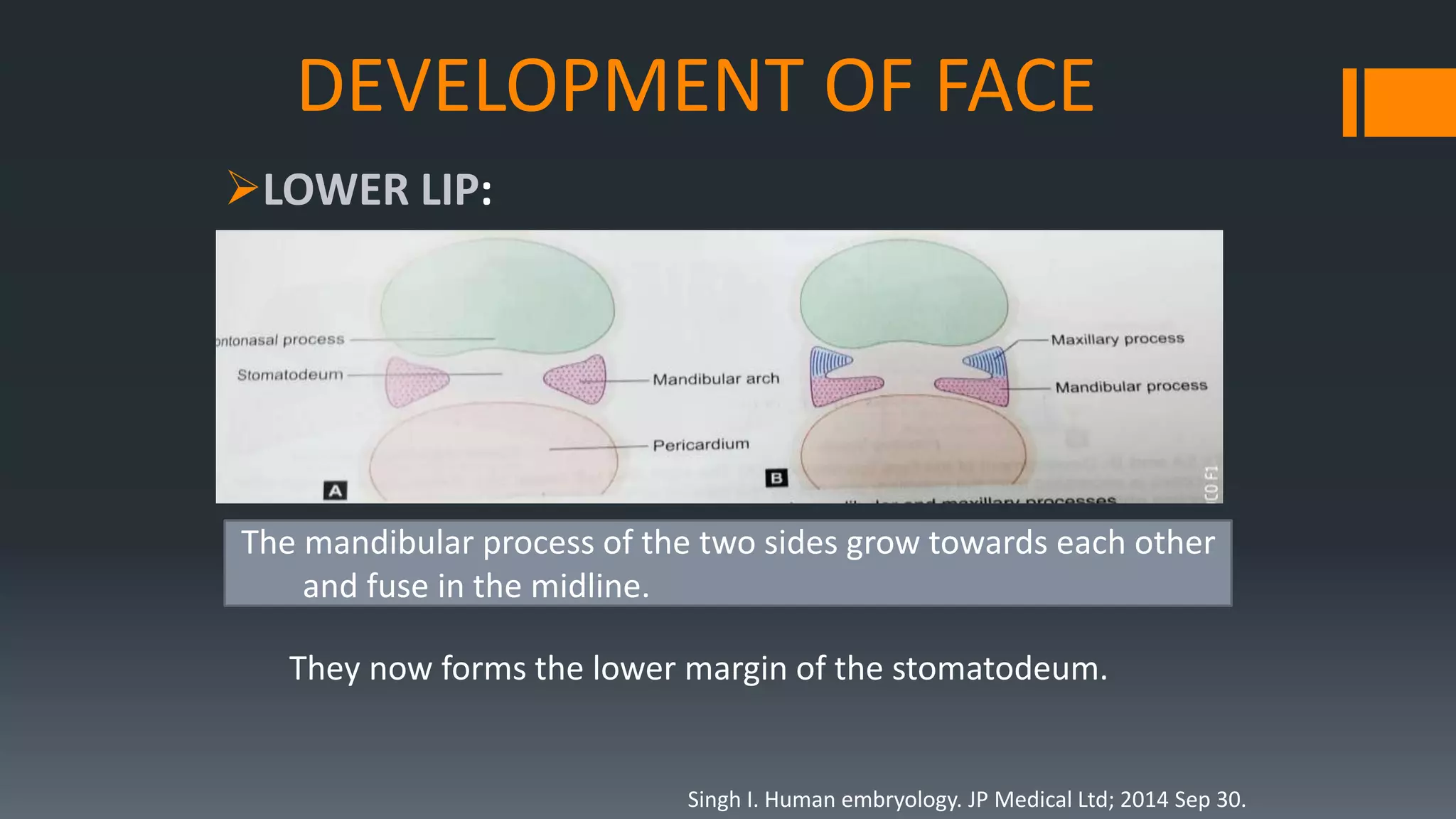
DEVELOPMENT OF FACE
LOWER LIP:
They now forms the lower margin of the stomatodeum.
The mandibular process of the two sides grow towards each other
and fuse in the midline.
Singh I. Human embryology. JP Medical Ltd; 2014 Sep 30.
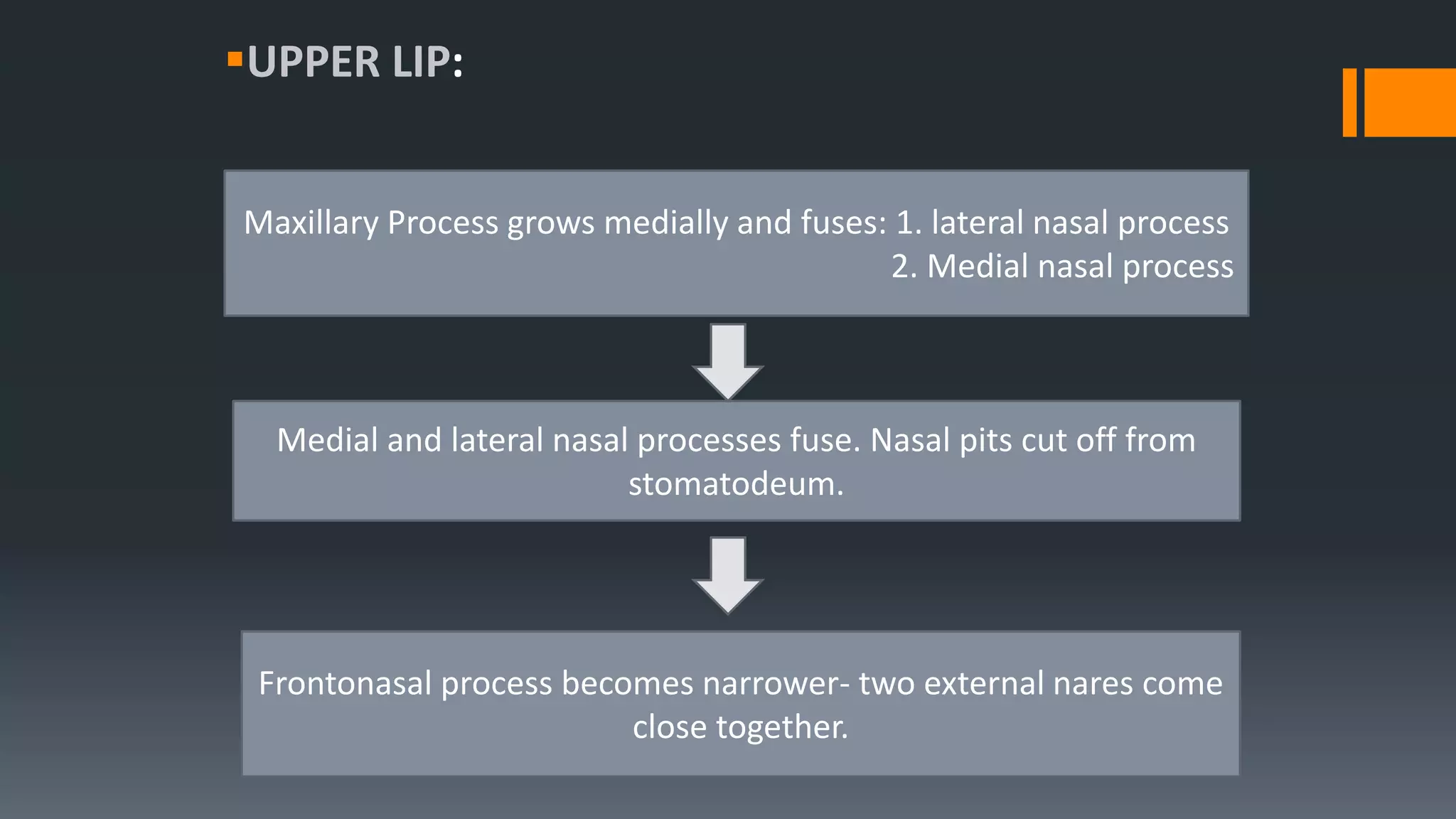
UPPER LIP:
Maxillary Process grows medially and fuses: 1. lateral nasal process
2. Medial nasal process
Medial and lateral nasal processes fuse. Nasal pits cut off from
stomatodeum.
Frontonasal process becomes narrower- two external nares come
close together.
 The stomatodeum is now bounded by upper lip which is
derived as follows:
1. The mesodermal basis of lateral part of the lip is formed from the
maxillary process. The overlying skin is derived from ectoderm
covering this process.
2. The mesodermal basis of the median part of the lip, which is
called as philtrum, is formed from the frontonasal process. The
ectoderm of maxillary process, however overgrows this
mesoderm to meet that of the opposite maxillary process in the
midline. As a result, the skin of the entire upper lip is innervated
by the maxillary nerves.
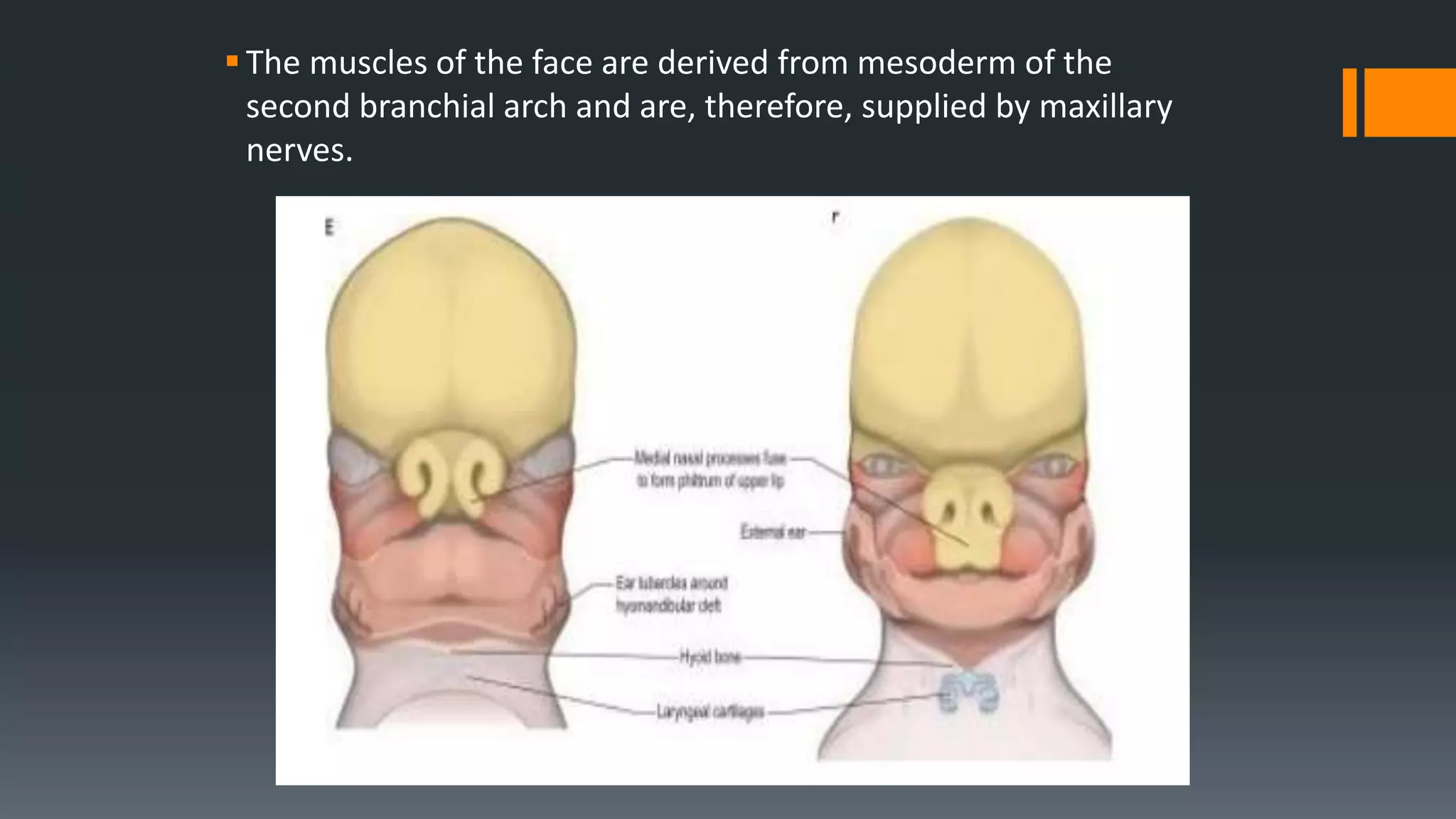
The muscles of the face are derived from mesoderm of the
second branchial arch and are, therefore, supplied by maxillary
nerves.
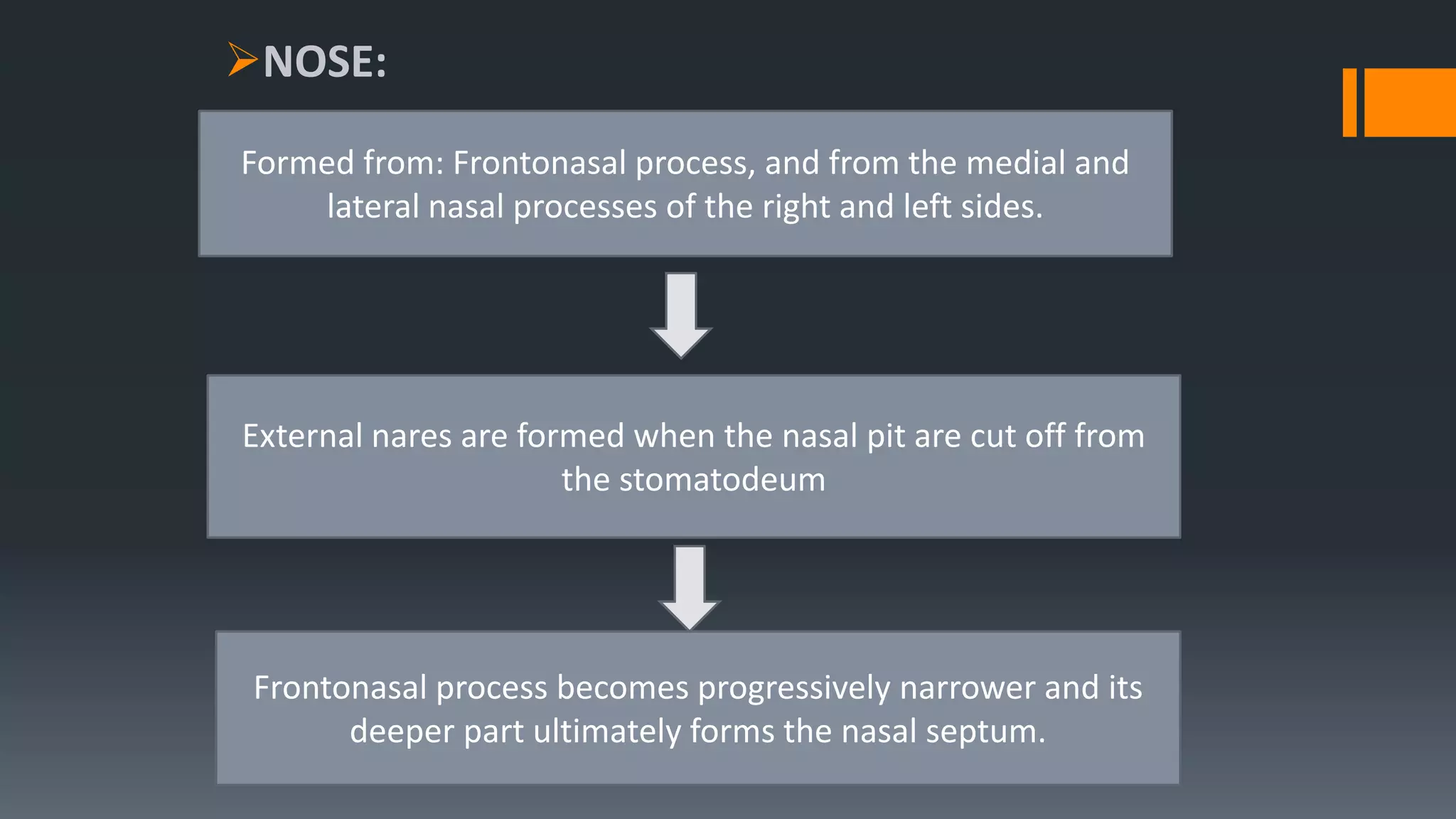
NOSE:
Formed from: Frontonasal process, and from the medial and
lateral nasal processes of the right and left sides.
External nares are formed when the nasal pit are cut off from
the stomatodeum
Frontonasal process becomes progressively narrower and its
deeper part ultimately forms the nasal septum.
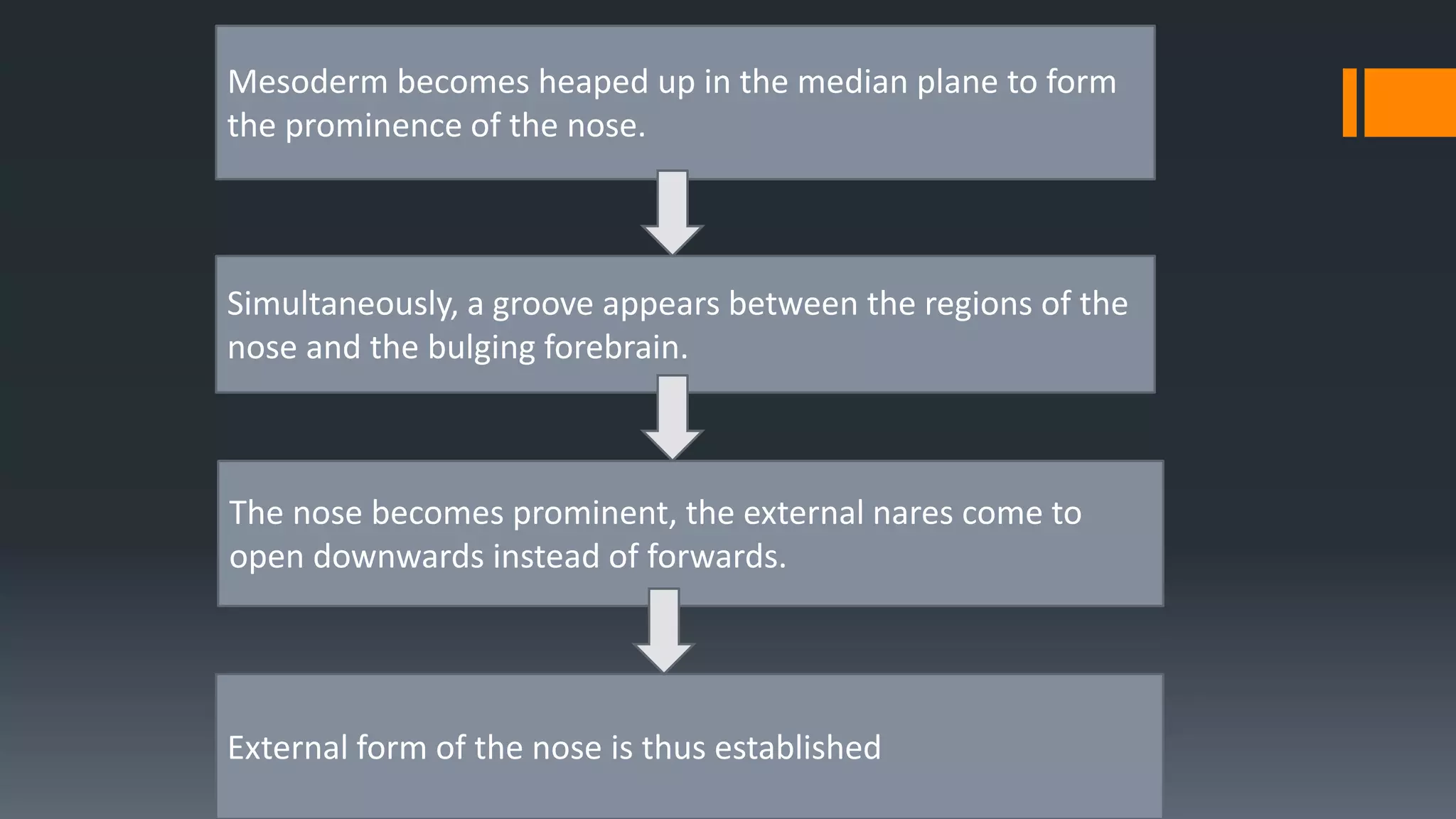
Simultaneously, a groove appears between the regions of the
nose and the bulging forebrain.
Mesoderm becomes heaped up in the median plane to form
the prominence of the nose.
The nose becomes prominent, the external nares come to
open downwards instead of forwards.
External form of the nose is thus established
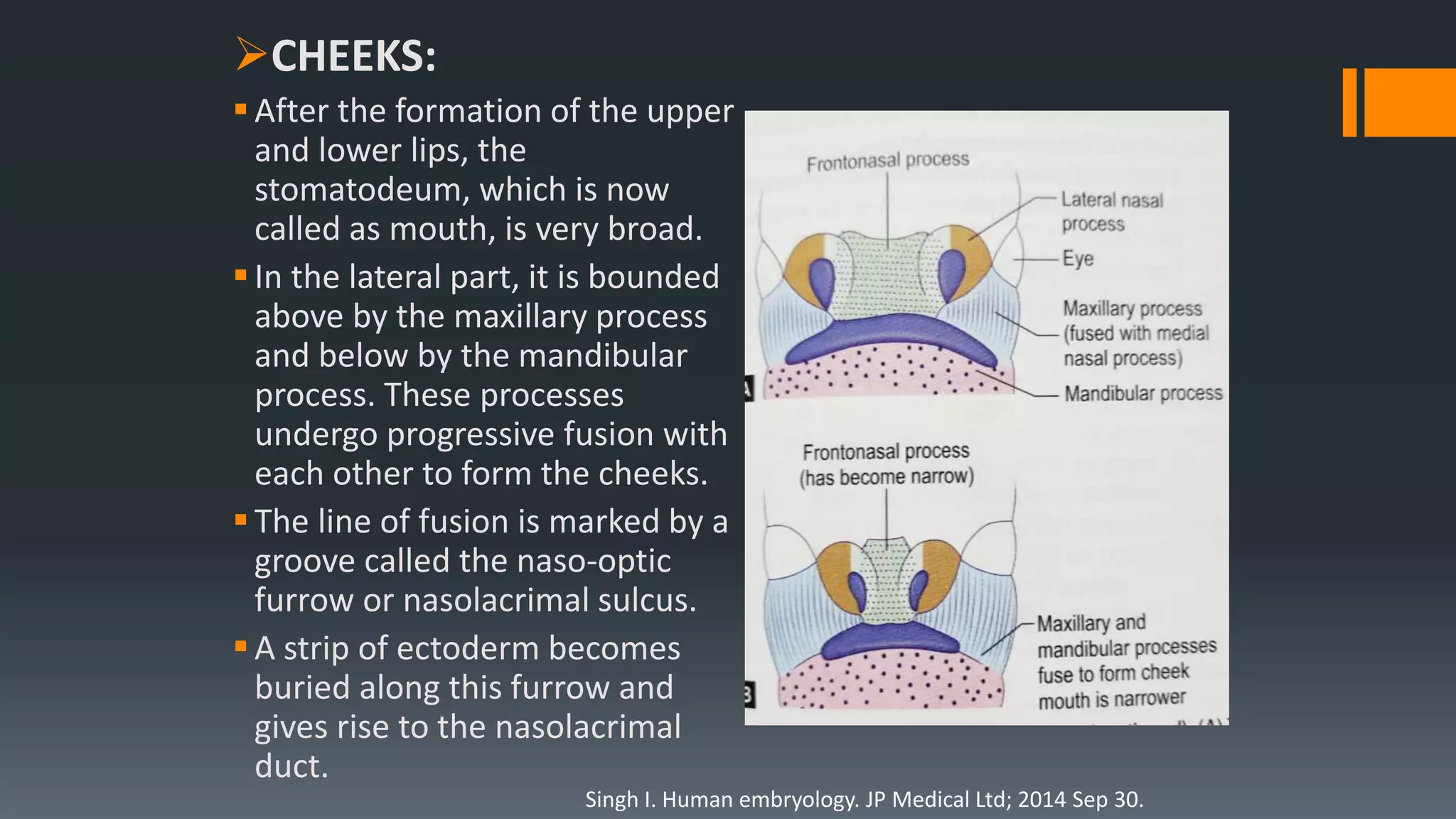
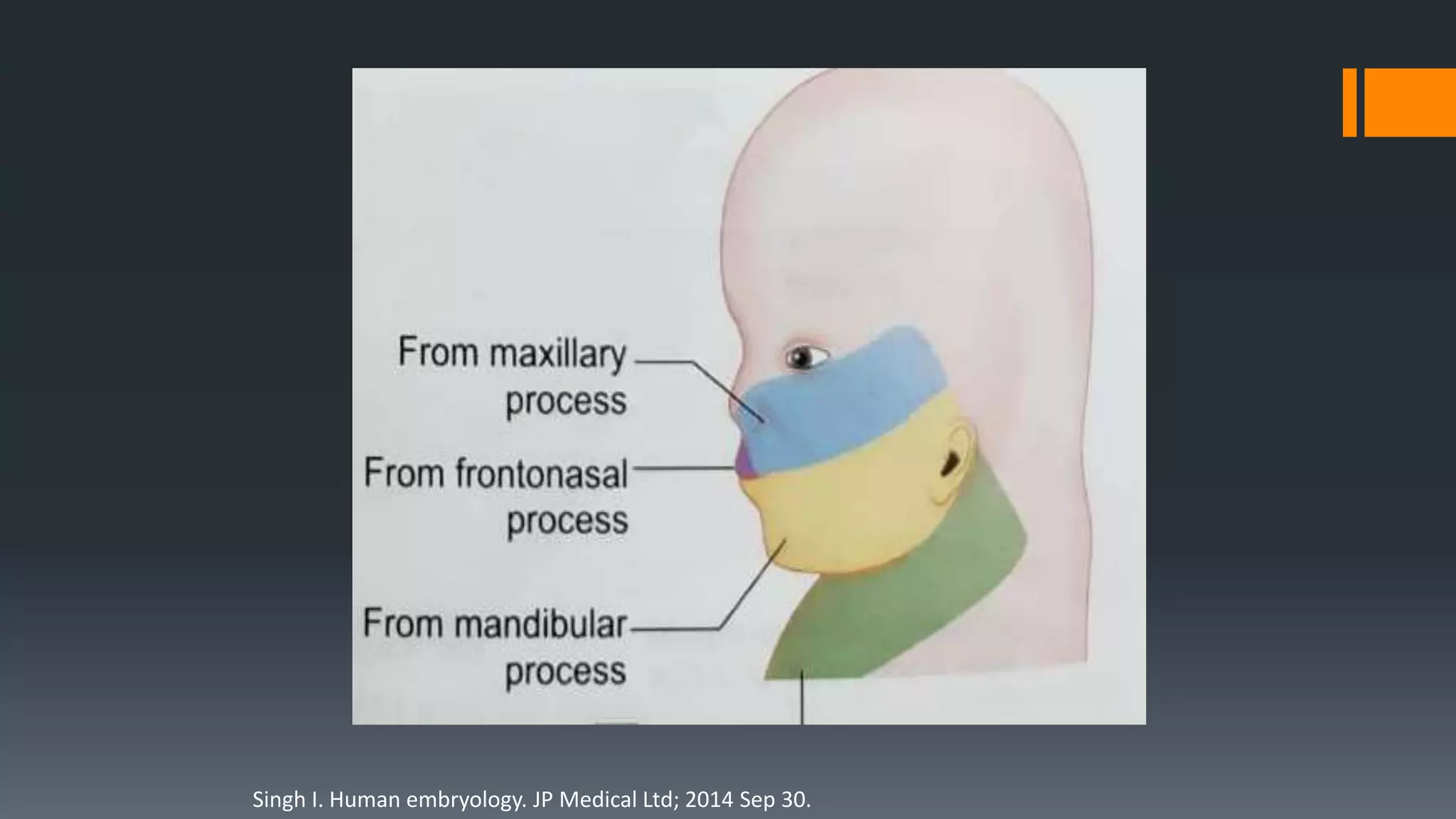
CHEEKS:
After the formation of the upper
and lower lips, the
stomatodeum, which is now
called as mouth, is very broad.
In the lateral part, it is bounded
above by the maxillary process
and below by the mandibular
process. These processes
undergo progressive fusion with
each other to form the cheeks.
The line of fusion is marked by a
groove called the naso-optic
furrow or nasolacrimal sulcus.
A strip of ectoderm becomes
buried along this furrow and
gives rise to the nasolacrimal
duct.
Singh I. Human embryology. JP Medical Ltd; 2014 Sep 30.
EYE:
The region of the eye is first seen as an ectodermal thickening ,
the lens placode, which appears on the ventro-lateral side of the
developing forebrain, lateral and cranial to the nasal placode.
The lens placode sinks below the surface and is eventually cut off
from the surface ectoderm.
The developing eyeball produces a bulging in this situation.
The bulgings of the eyes are at first directed laterally and lie in the
angles between the maxillary processes and the lateral nasal
processes.
With the narrowing of the frontonasal process they come to face
forwards.
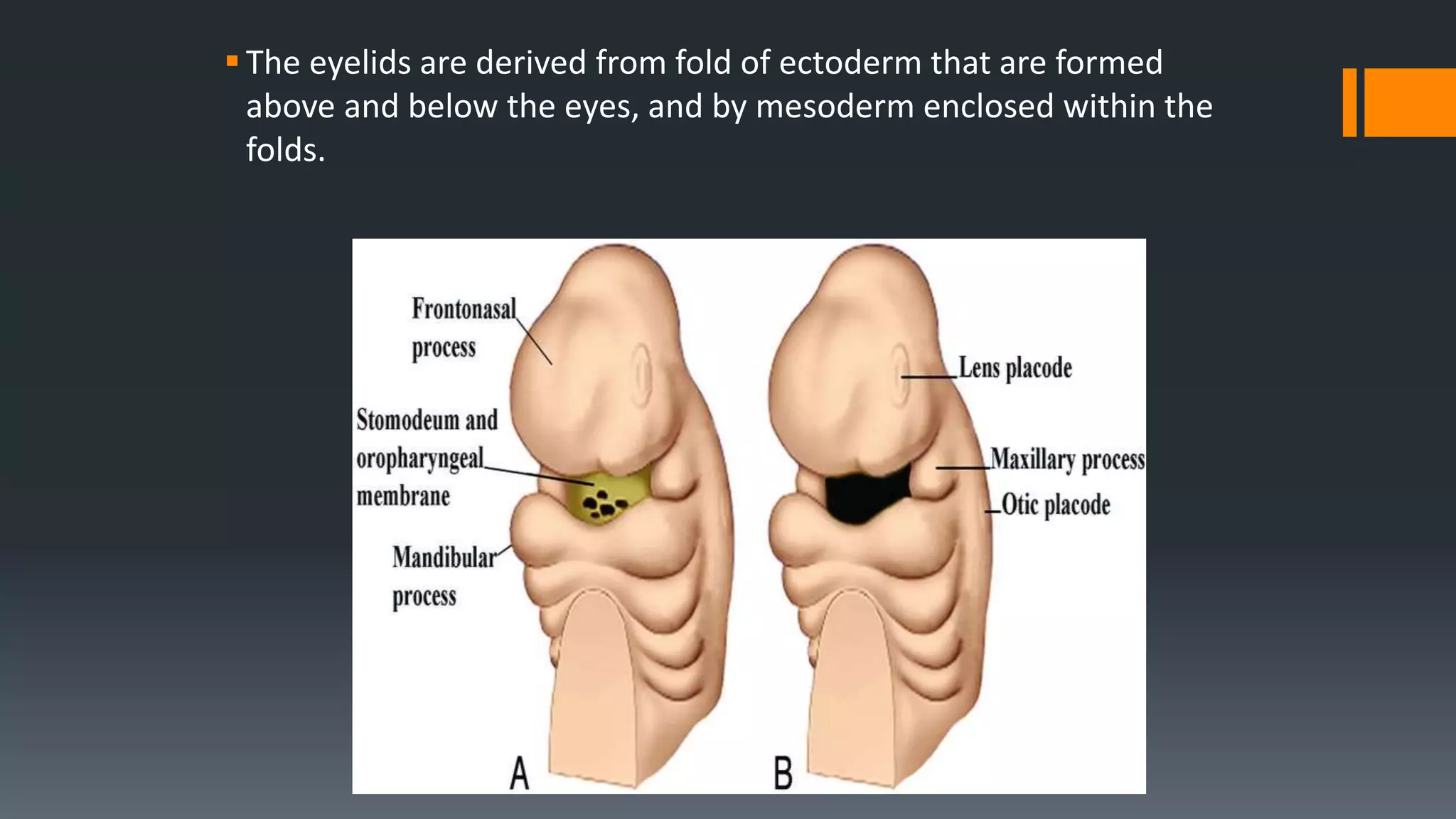
The eyelids are derived from fold of ectoderm that are formed
above and below the eyes, and by mesoderm enclosed within the
folds.
EXTERNAL EAR:
The external ear is formed around the dorsal part of the first
ectodermal cleft.
A series of mesodermal thickenings often called tubercles or
hillocks appear on the mandibular and hyoid arches where they
adjoin this cleft.
The pinna or auricle is formed by fusion of these thickenings.
Singh I. Human embryology. JP Medical Ltd; 2014 Sep 30.
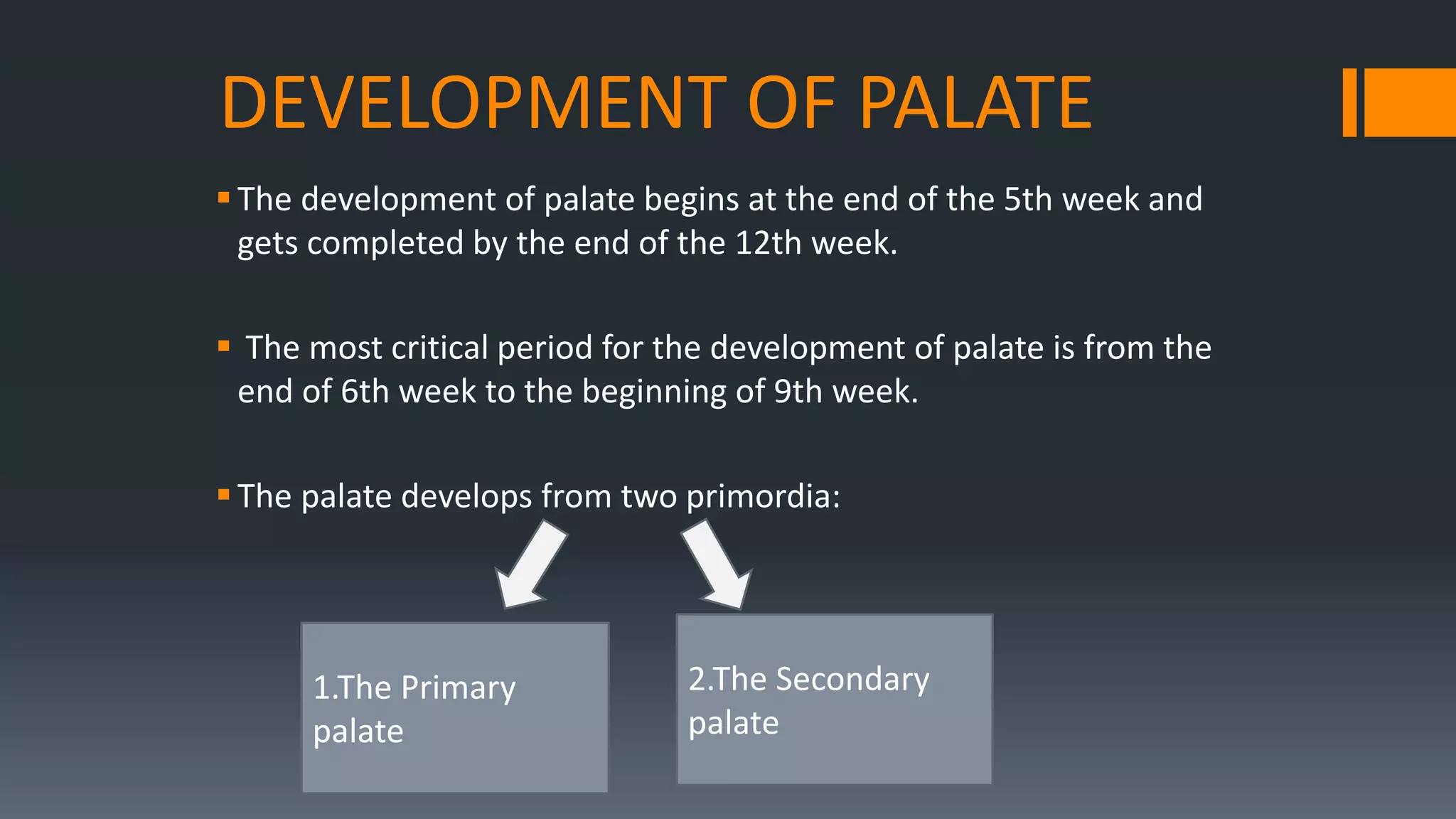
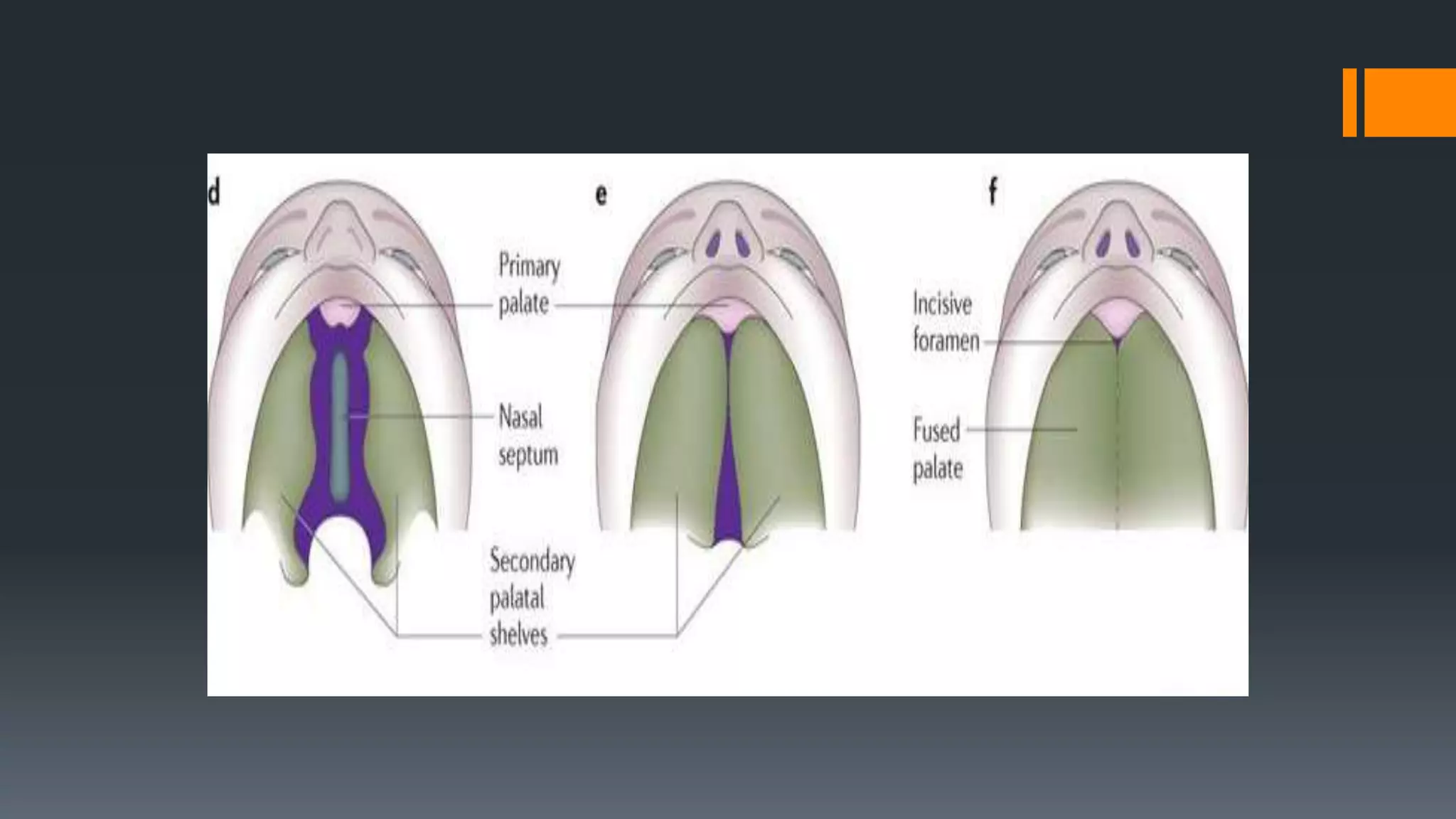
DEVELOPMENT OF PALATE
The development of palate begins at the end of the 5th week and
gets completed by the end of the 12th week.
 The most critical period for the development of palate is from the
end of 6th week to the beginning of 9th week.
The palate develops from two primordia:
1.The Primary
palate
2.The Secondary
palate
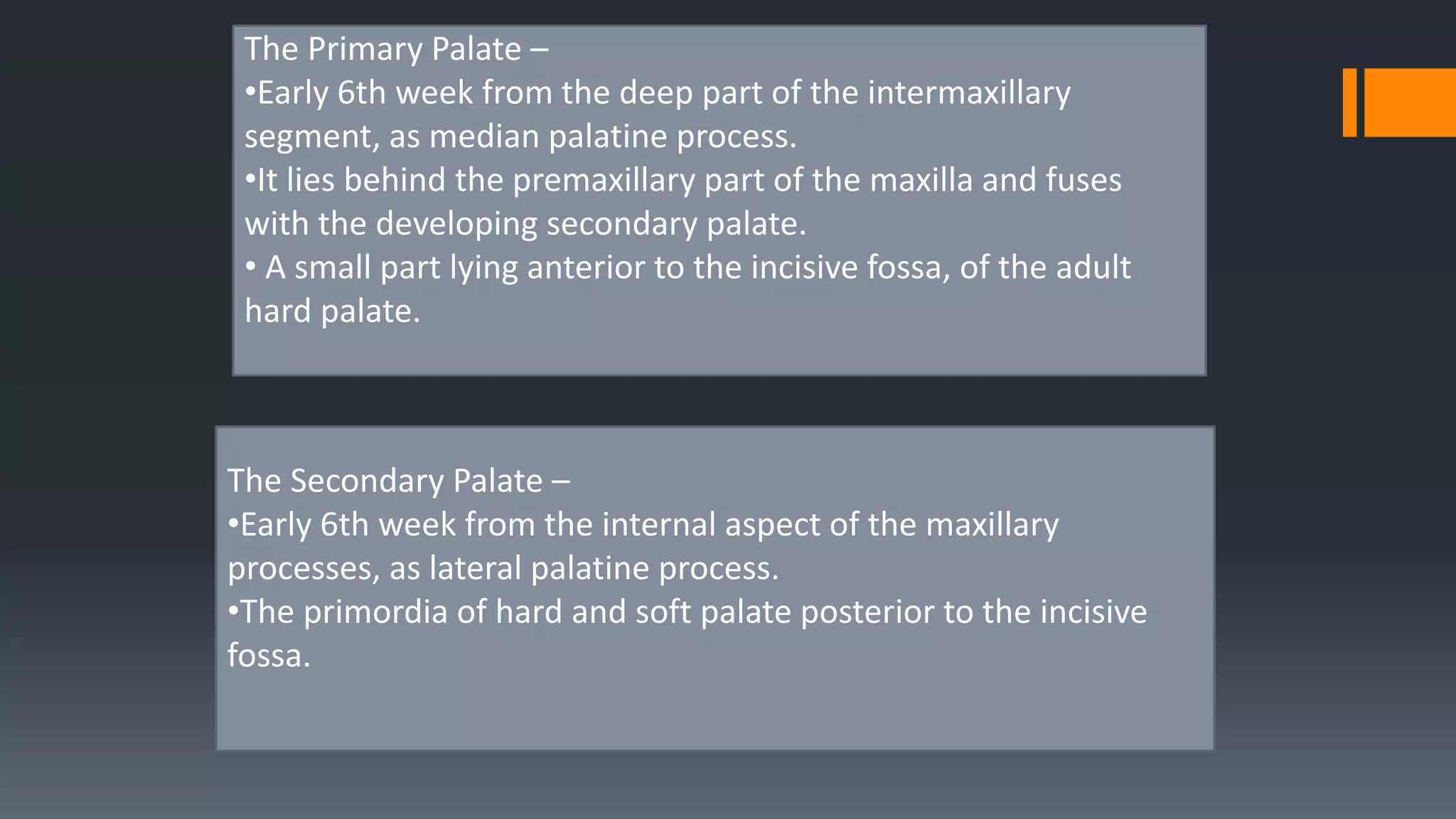
The Primary Palate –
•Early 6th week from the deep part of the intermaxillary
segment, as median palatine process.
•It lies behind the premaxillary part of the maxilla and fuses
with the developing secondary palate.
• A small part lying anterior to the incisive fossa, of the adult
hard palate.
The Secondary Palate –
•Early 6th week from the internal aspect of the maxillary
processes, as lateral palatine process.
•The primordia of hard and soft palate posterior to the incisive
fossa.
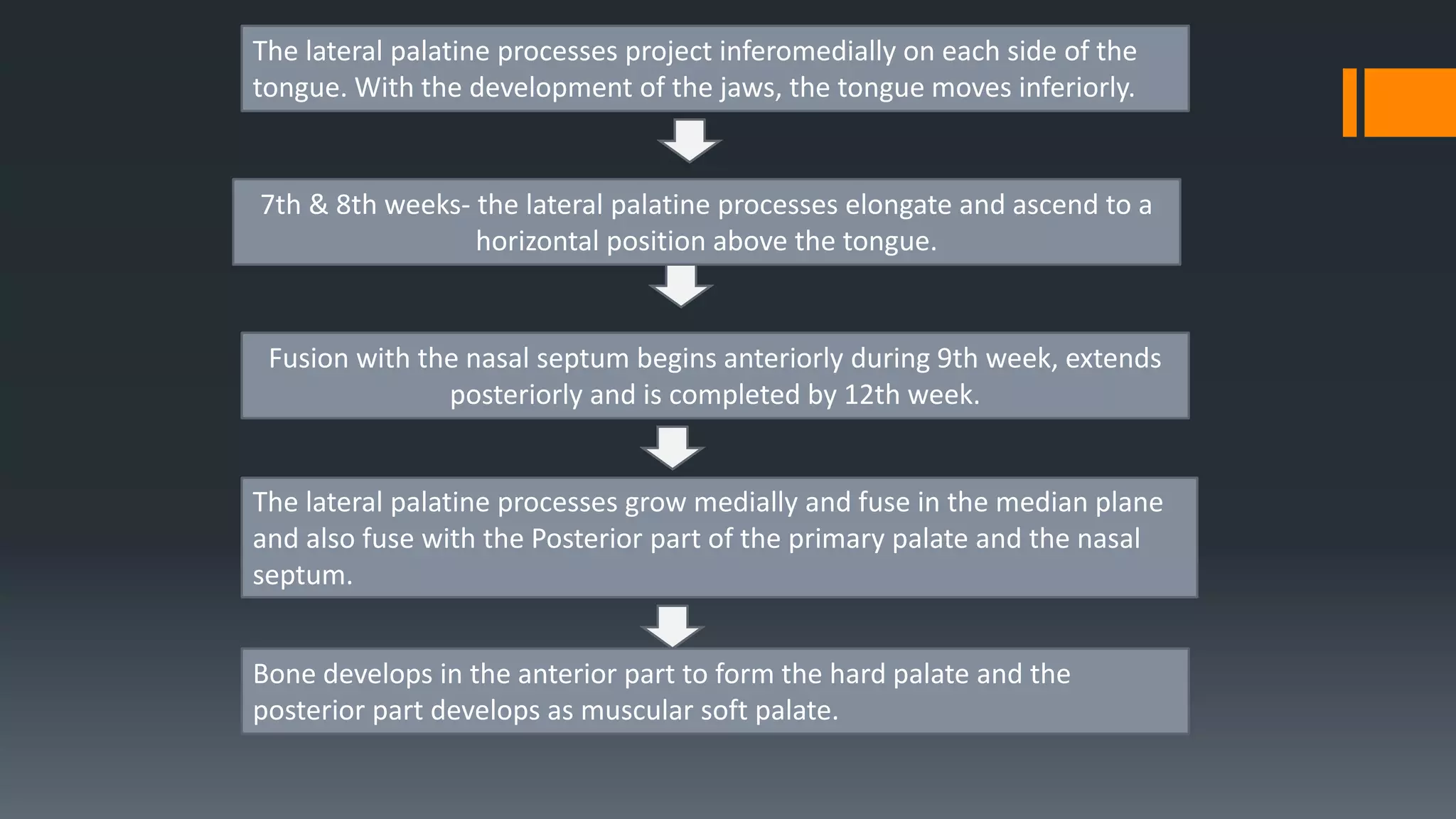
7th & 8th weeks- the lateral palatine processes elongate and ascend to a
horizontal position above the tongue.
The lateral palatine processes project inferomedially on each side of the
tongue. With the development of the jaws, the tongue moves inferiorly.
The lateral palatine processes grow medially and fuse in the median plane
and also fuse with the Posterior part of the primary palate and the nasal
septum.
Fusion with the nasal septum begins anteriorly during 9th week, extends
posteriorly and is completed by 12th week.
Bone develops in the anterior part to form the hard palate and the
posterior part develops as muscular soft palate.
DEVELOPMENTAL ANAMOLIES
OF THE FACE
It has been seen that the formation of various parts of the face
involves fusion of diverse components. This fusion is occasionally
incomplete and gives rise to various anomalies.
There are four clinically significant types of congenital anomaly:
1. Malformation : A morphological defect of an organ, part of an
organ, or larger region of the body that results from an intrinsically
abnormal developmental process.
2. Disruption :A morphological defect of an organ, part of an organ,
or a larger region of the body that results from the extrinsic
breakdown of, or an interference with, an originally normal
developmental process.
3. Deformation : An abnormal form, shape, or position of a part of
the body that results from mechanical forces.
4. Dysplasia : An abnormal organization of cells into tissue and its
morphological result.
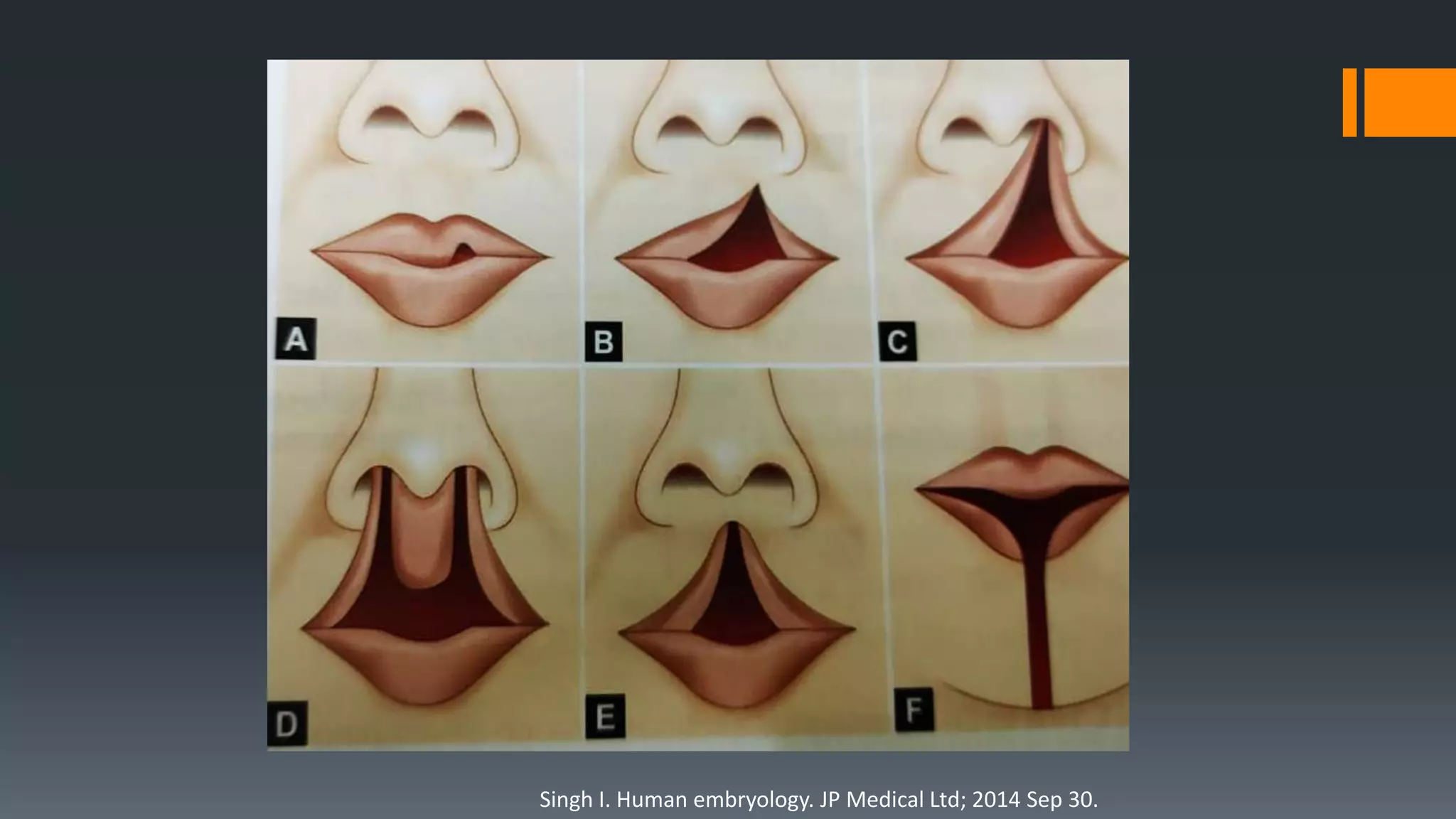
 HARELIP: The upper lip of the hare normally has a cleft.
Hence, the term harelip is used for defects of the lips.
(a) When one or both maxillary processes do not fuse with the
medial nasal process, thus gives rise to defects in the upper lip.
These may vary in degree and may be unilateral or bilateral.
(b) Defective development of the lower-most part of the
frontonasal process may give rise to a midline defect of the
upper lip.
(c) When the two mandibular processes do not fuse with each
other the lower lip shows a defect in the midline. The defect
usually extends into the jaw.
Singh I. Human embryology. JP Medical Ltd; 2014 Sep 30.
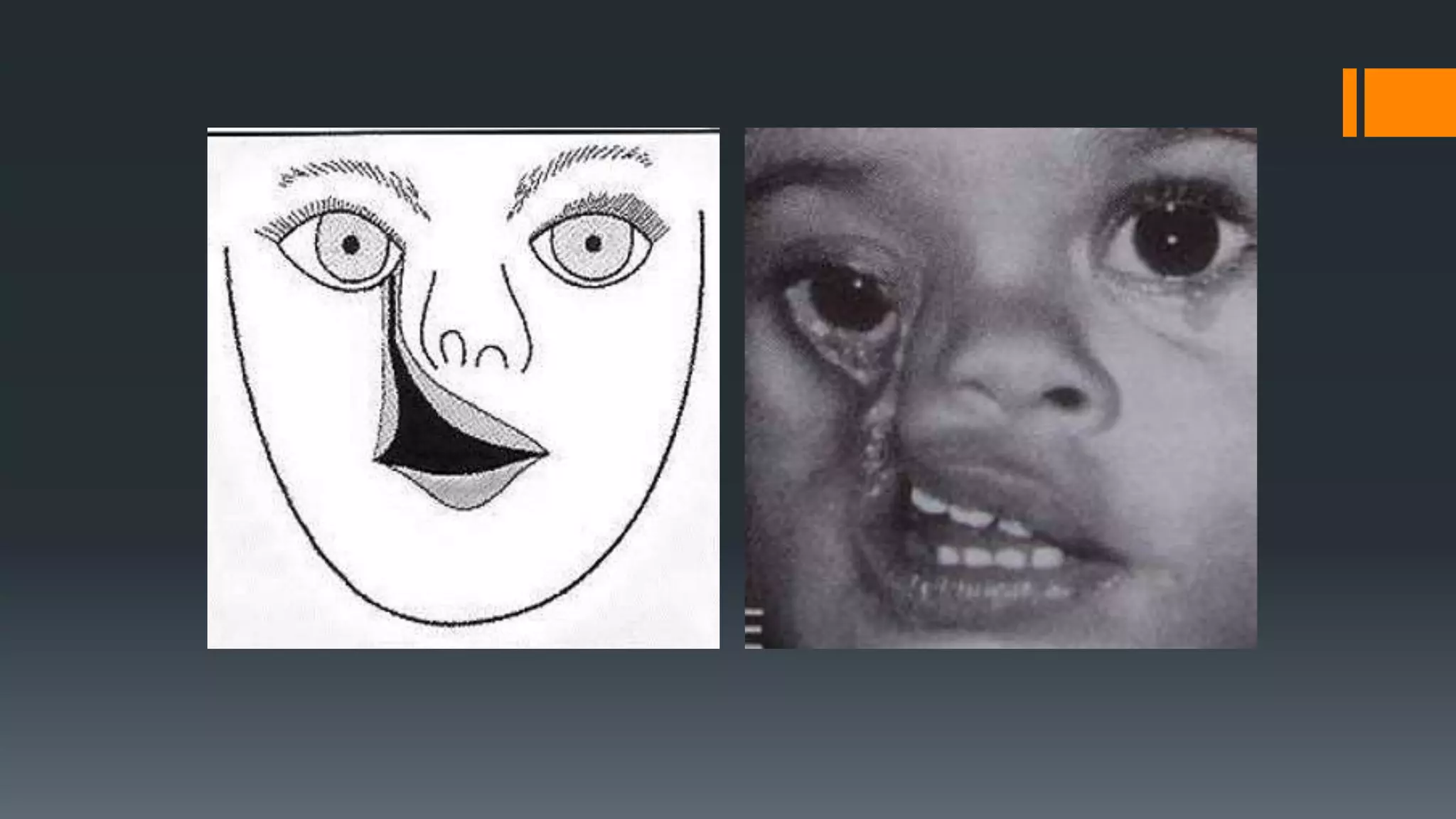
OBLIQUE FACIAL CLEFT: Non-fusion of the maxillary and
lateral nasal processes gives rise to a cleft running from the
medial angle of the eye to the mouth. The nasolacrimal duct is
not formed.
The treatment modalities in orofacial clefts comprise the use of
tissue expanders , rotation and advancement of a flap of the
cheek , bony defect obliteration with autogenous iliac bone graft
chips and soft tissue reconstruction with multiple Z-plasty flaps .
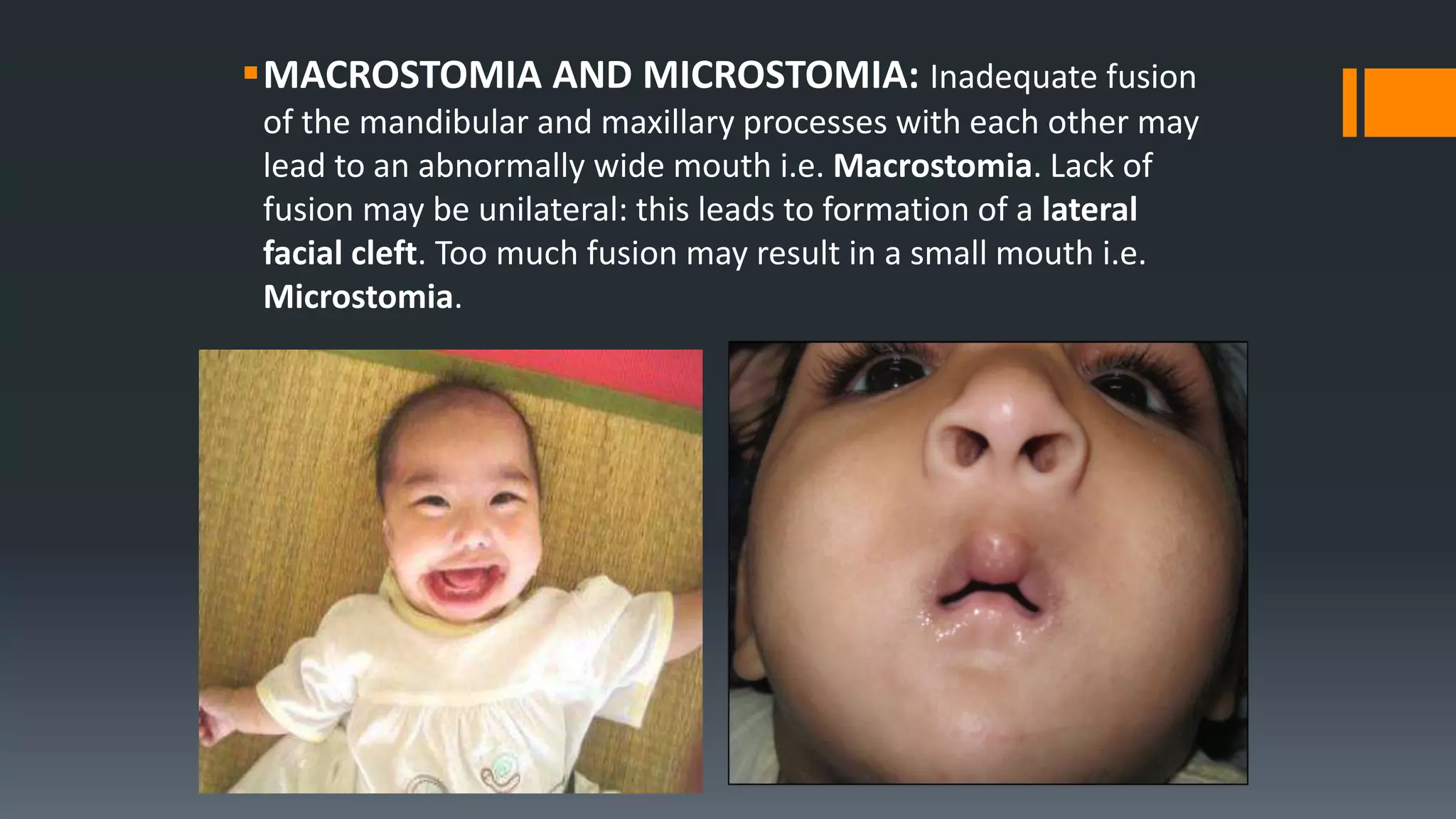
MACROSTOMIA AND MICROSTOMIA: Inadequate fusion
of the mandibular and maxillary processes with each other may
lead to an abnormally wide mouth i.e. Macrostomia. Lack of
fusion may be unilateral: this leads to formation of a lateral
facial cleft. Too much fusion may result in a small mouth i.e.
Microstomia.
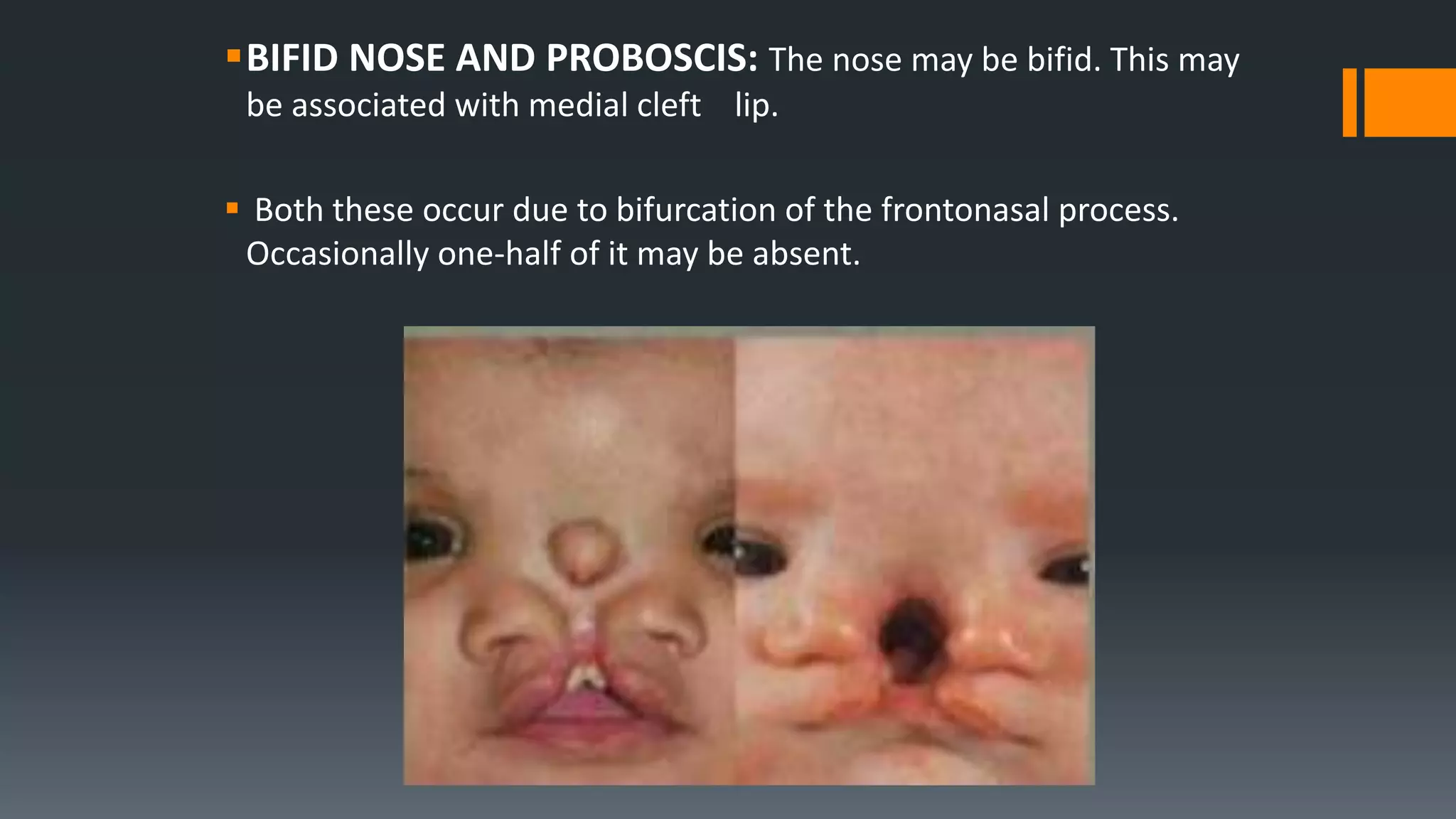
BIFID NOSE AND PROBOSCIS: The nose may be bifid. This may
be associated with medial cleft lip.
 Both these occur due to bifurcation of the frontonasal process.
Occasionally one-half of it may be absent.
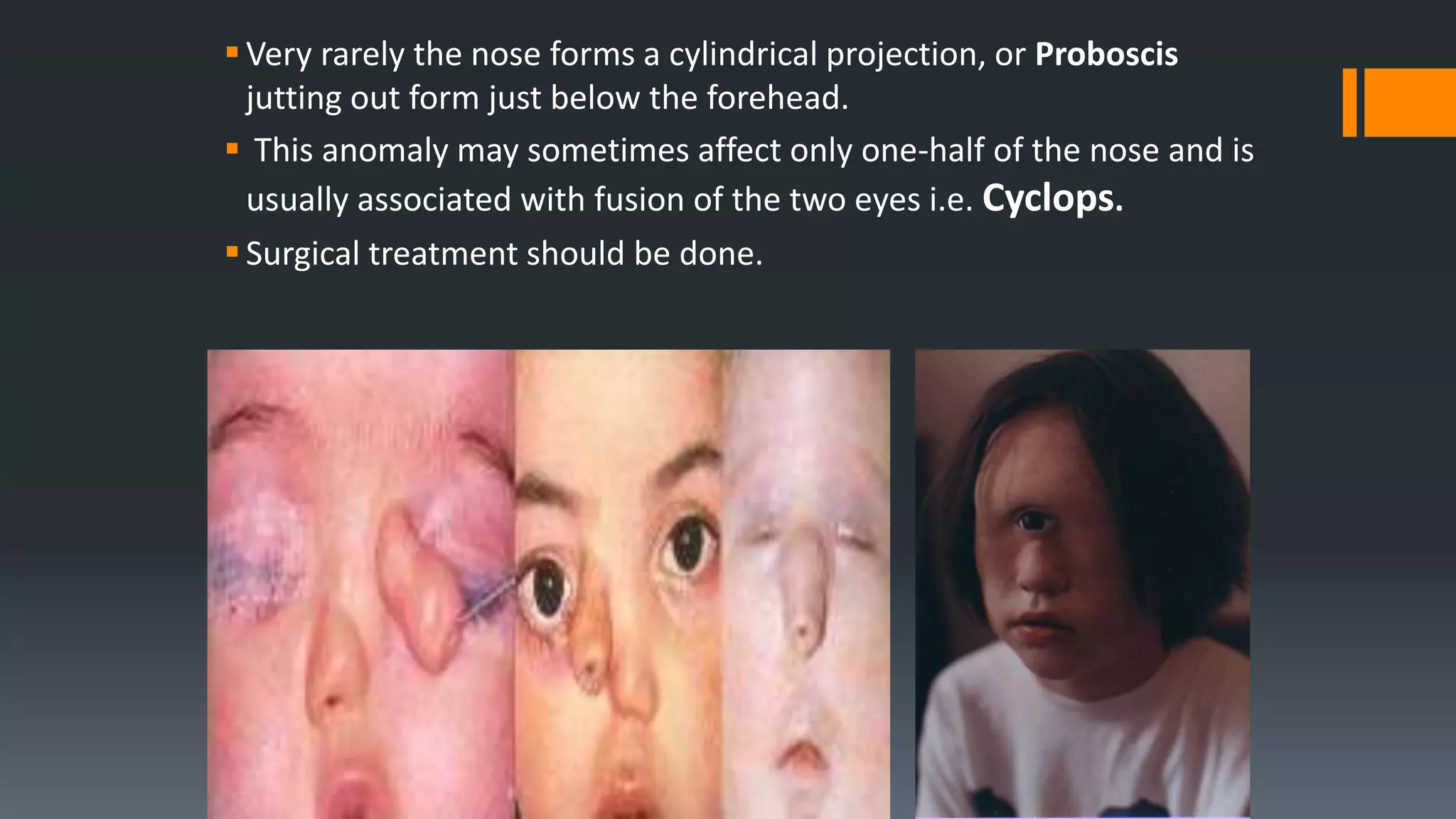
Very rarely the nose forms a cylindrical projection, or Proboscis
jutting out form just below the forehead.
 This anomaly may sometimes affect only one-half of the nose and is
usually associated with fusion of the two eyes i.e. Cyclops.
Surgical treatment should be done.
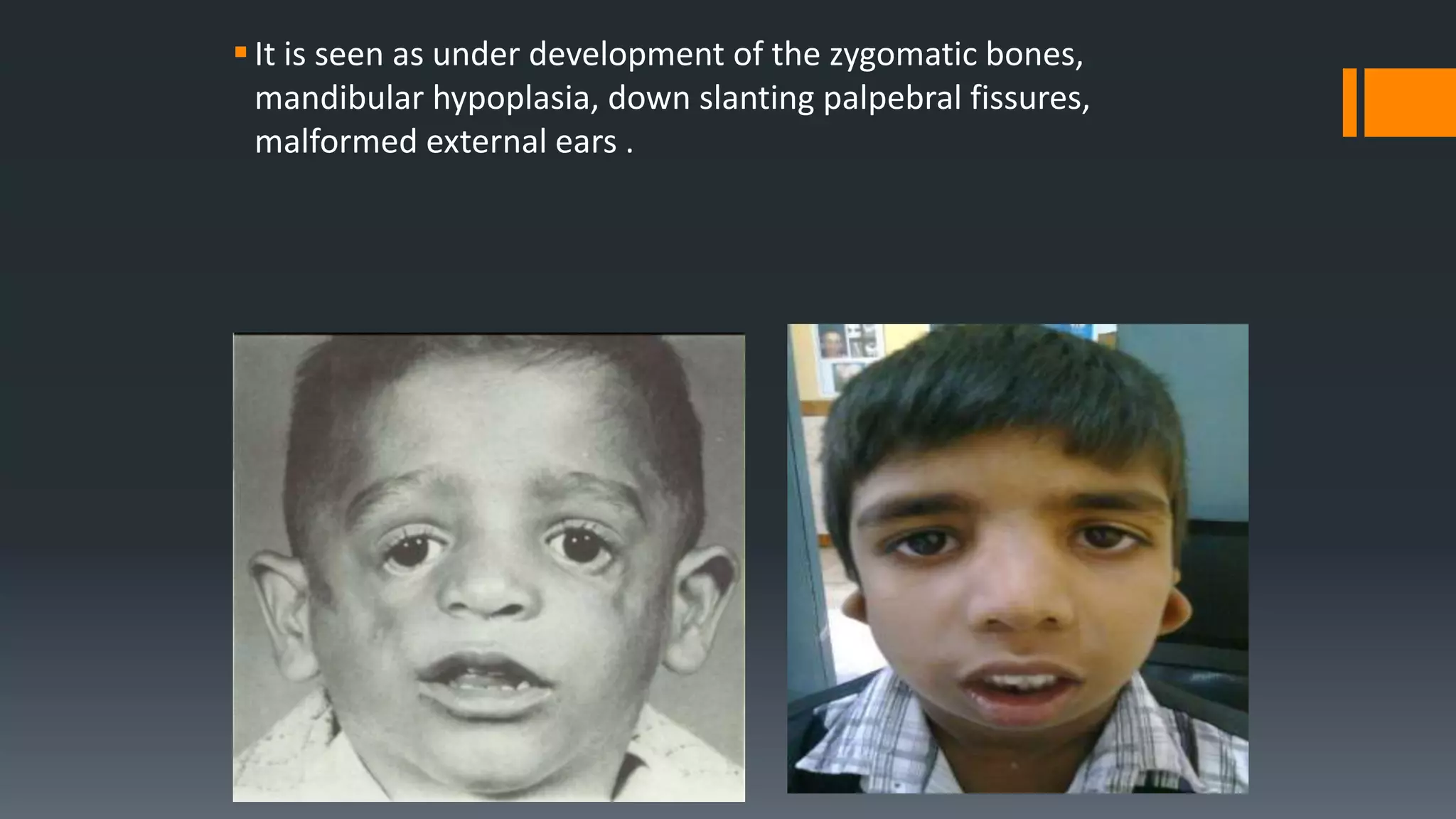
MANDIBULOFACIAL DYSOSTOSIS: The entire first arch may
remain underdeveloped on one or both sides, affecting the lower
eyelid, the maxilla, the mandible and the external ear.
The prominence of the cheek is absent and the ear may be
displaced ventrally and caudally.
There may be presence of cleft palate and of faulty dentition. This
condition is called mandibulofacial dysostosis, Treacher Collins
syndrome or first arch syndrome.
 This is a genetic condition inherited as autosomal dominant.
It is seen as under development of the zygomatic bones,
mandibular hypoplasia, down slanting palpebral fissures,
malformed external ears .
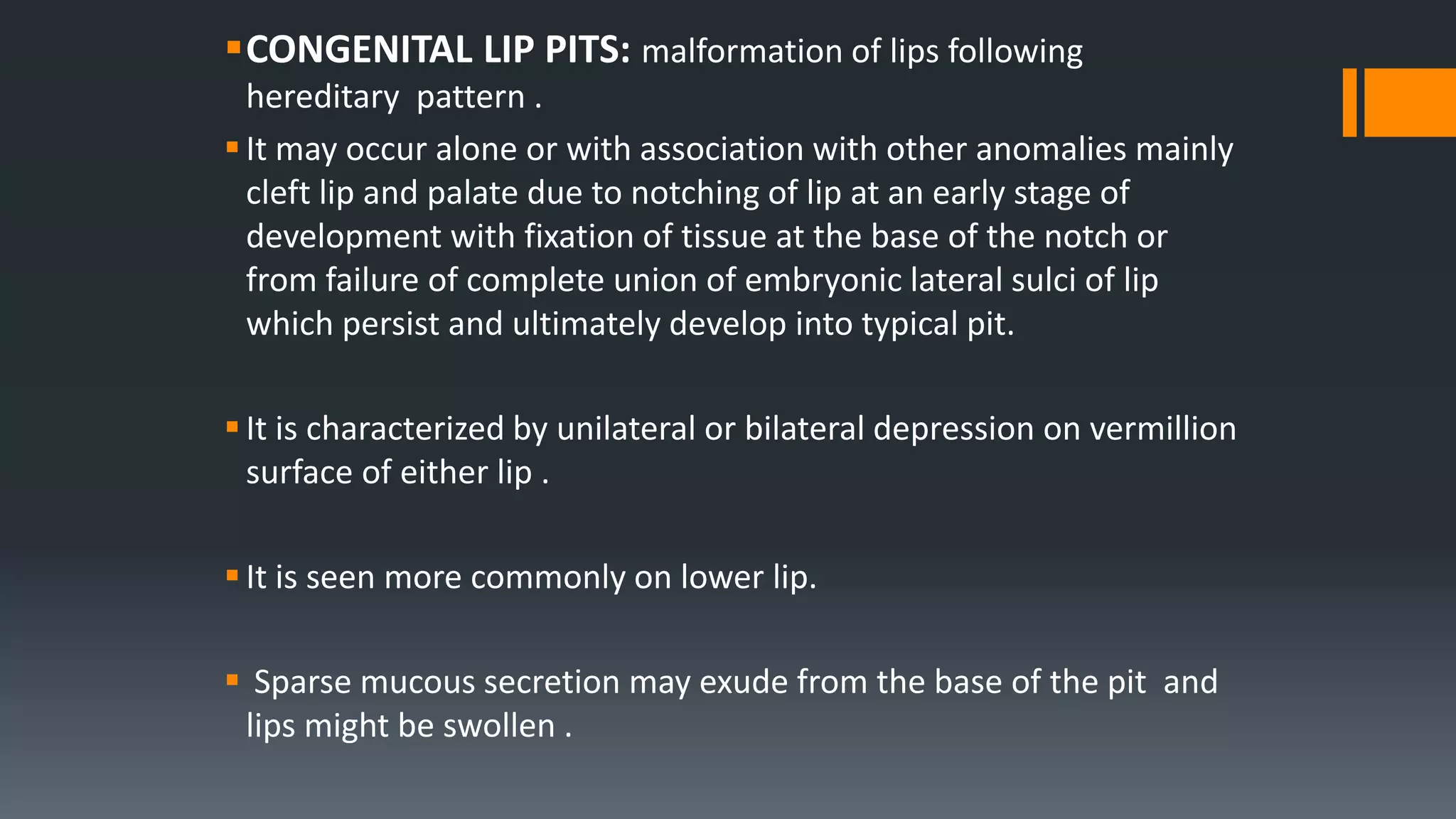
CONGENITAL LIP PITS: malformation of lips following
hereditary pattern .
It may occur alone or with association with other anomalies mainly
cleft lip and palate due to notching of lip at an early stage of
development with fixation of tissue at the base of the notch or
from failure of complete union of embryonic lateral sulci of lip
which persist and ultimately develop into typical pit.
It is characterized by unilateral or bilateral depression on vermillion
surface of either lip .
It is seen more commonly on lower lip.
 Sparse mucous secretion may exude from the base of the pit and
lips might be swollen .
 Surgical intervention for cosmetic purposes may be considered
when lip pits are the only manifestation.
Surgical excision is especially indicated in patients with production
of mucous secretions and/or recurrent inflammation.
 Genetic counseling is crucial for affected parents and patients with
information regarding the pattern of inheritance and the
consequence of these phenotypes emphasized.
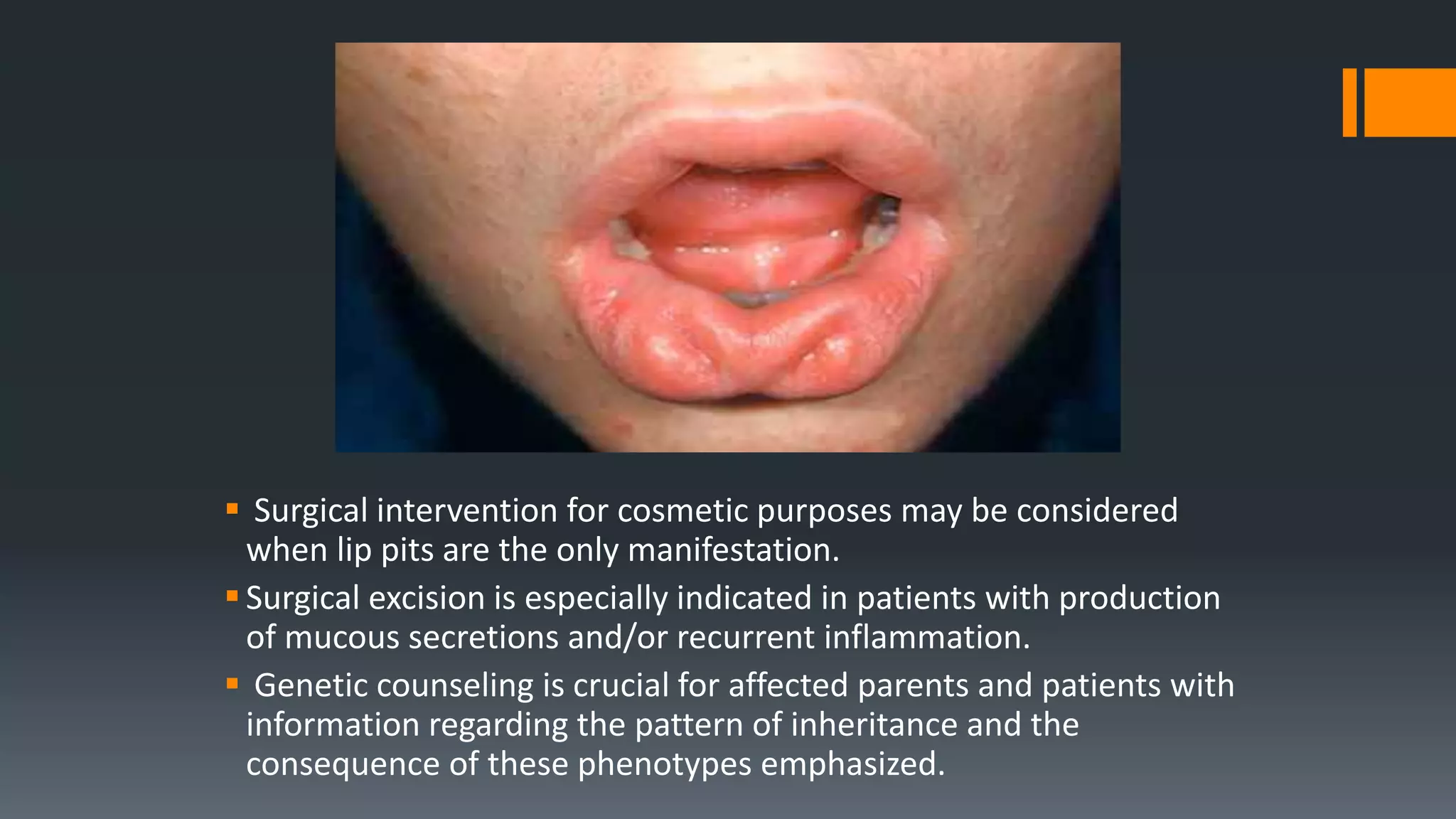
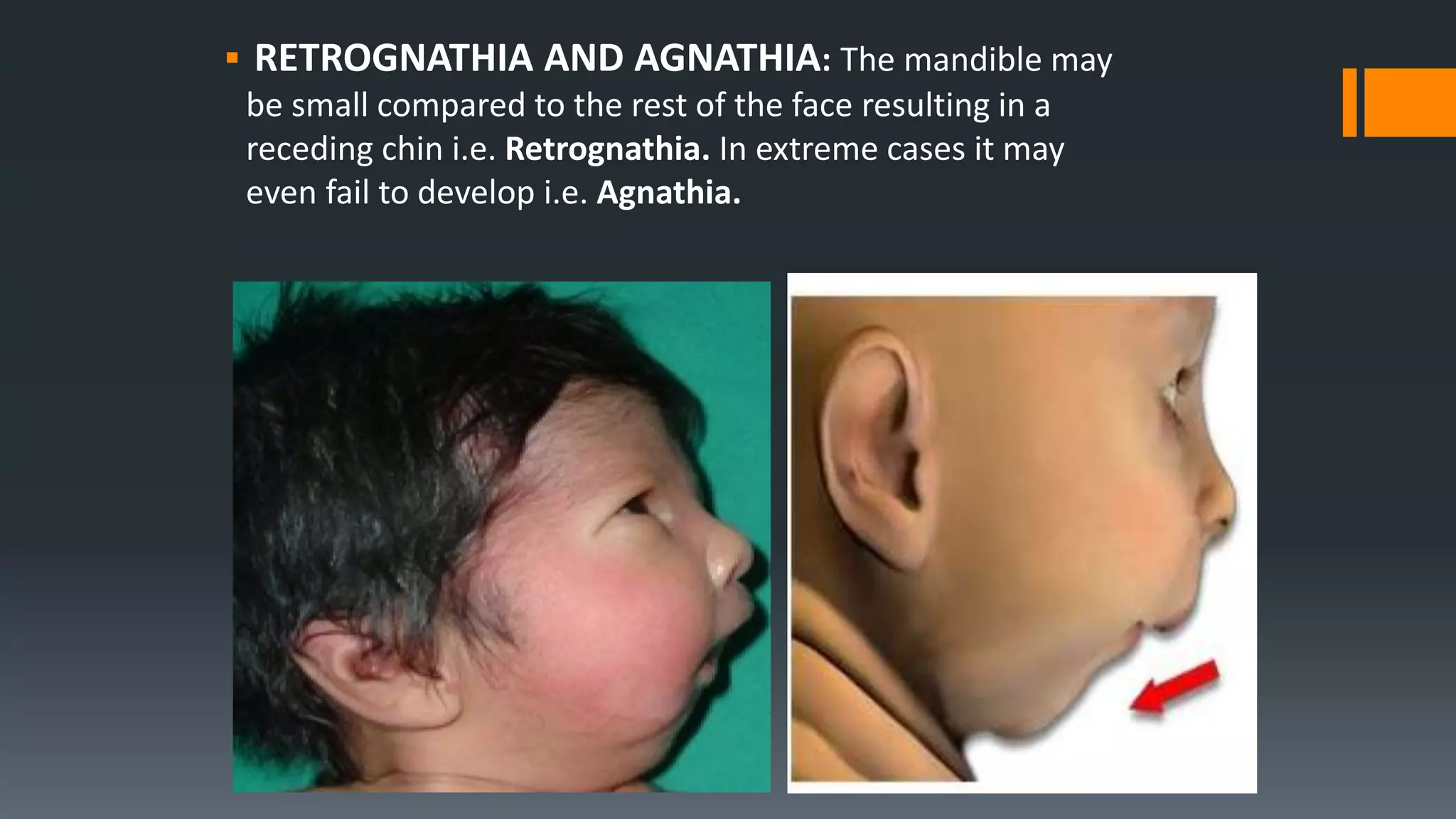
 RETROGNATHIA AND AGNATHIA: The mandible may
be small compared to the rest of the face resulting in a
receding chin i.e. Retrognathia. In extreme cases it may
even fail to develop i.e. Agnathia.
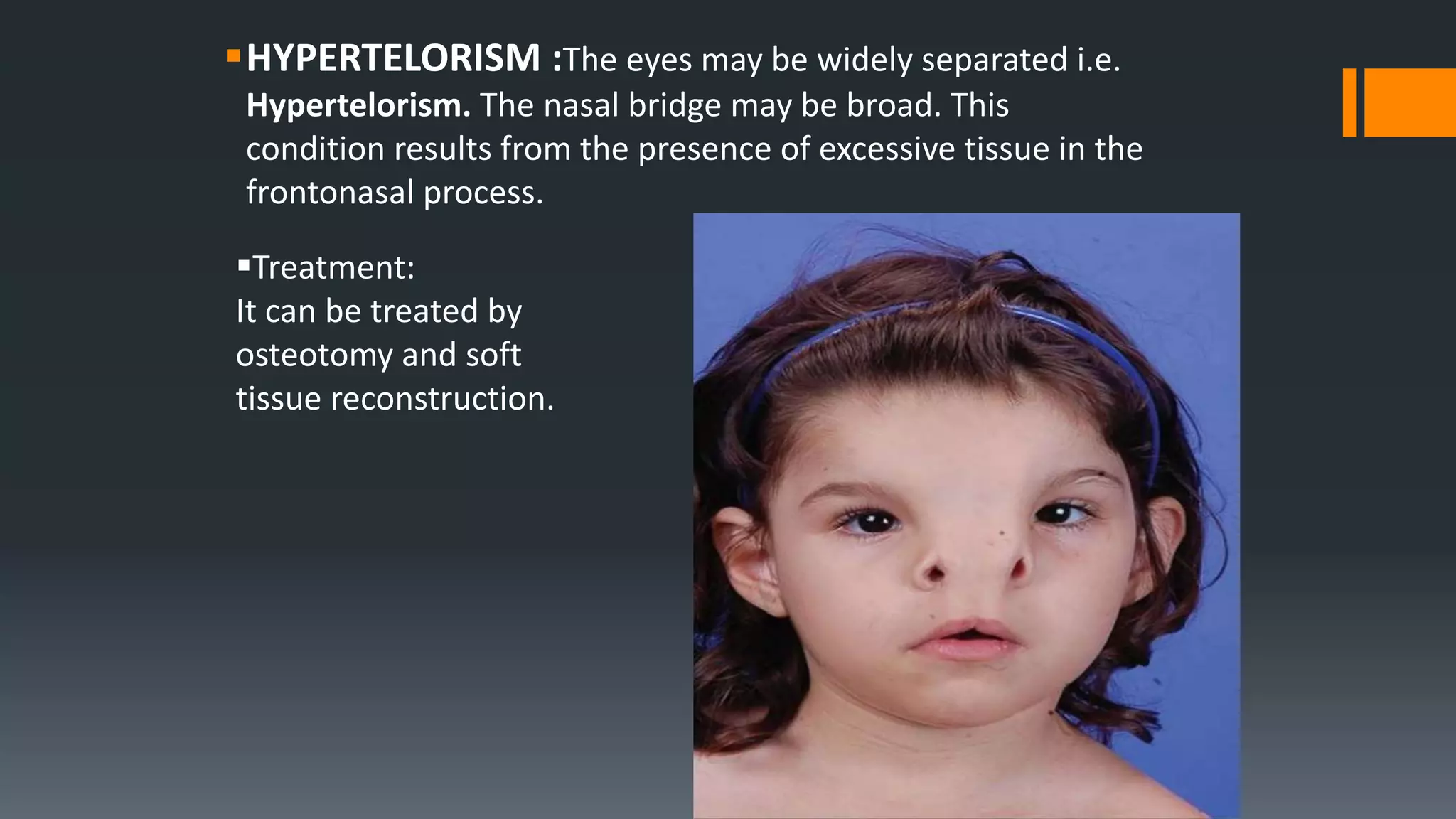
HYPERTELORISM :The eyes may be widely separated i.e.
Hypertelorism. The nasal bridge may be broad. This
condition results from the presence of excessive tissue in the
frontonasal process.
Treatment:
It can be treated by
osteotomy and soft
tissue reconstruction.
CONGENITAL DEAFNESS :
It is the absence of the tympanic cavity and external meatus and
abnormal development of membranes and bony labyrinth .
Malformation of auditory ossicles and ear drum .
Caused by:
1. Rubella virus
2. Poliomyelitis
3. Erythroblastosis fetalis
4. Diabetes
5. Hypothyroidism
6. Toxoplasmosis
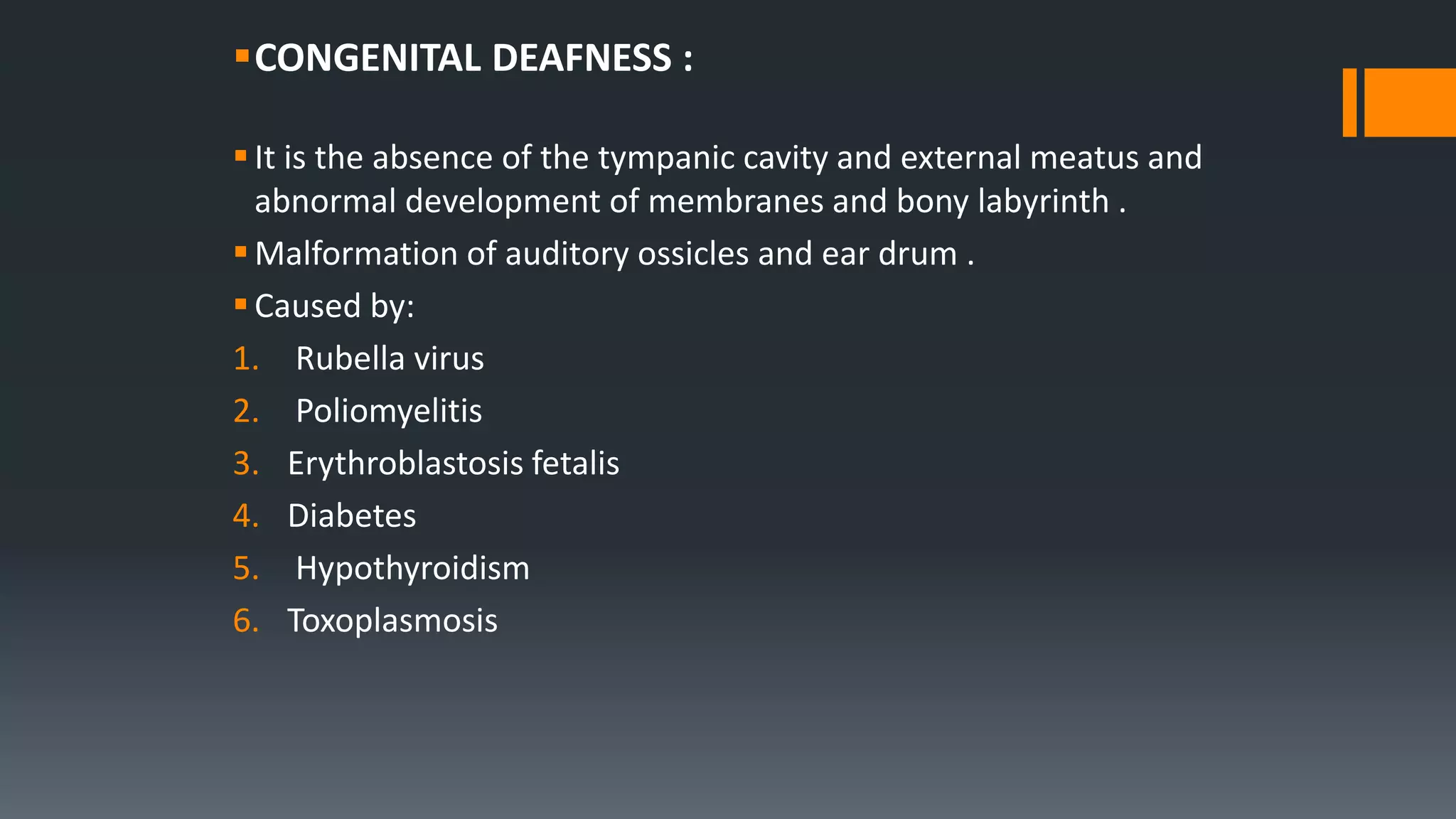
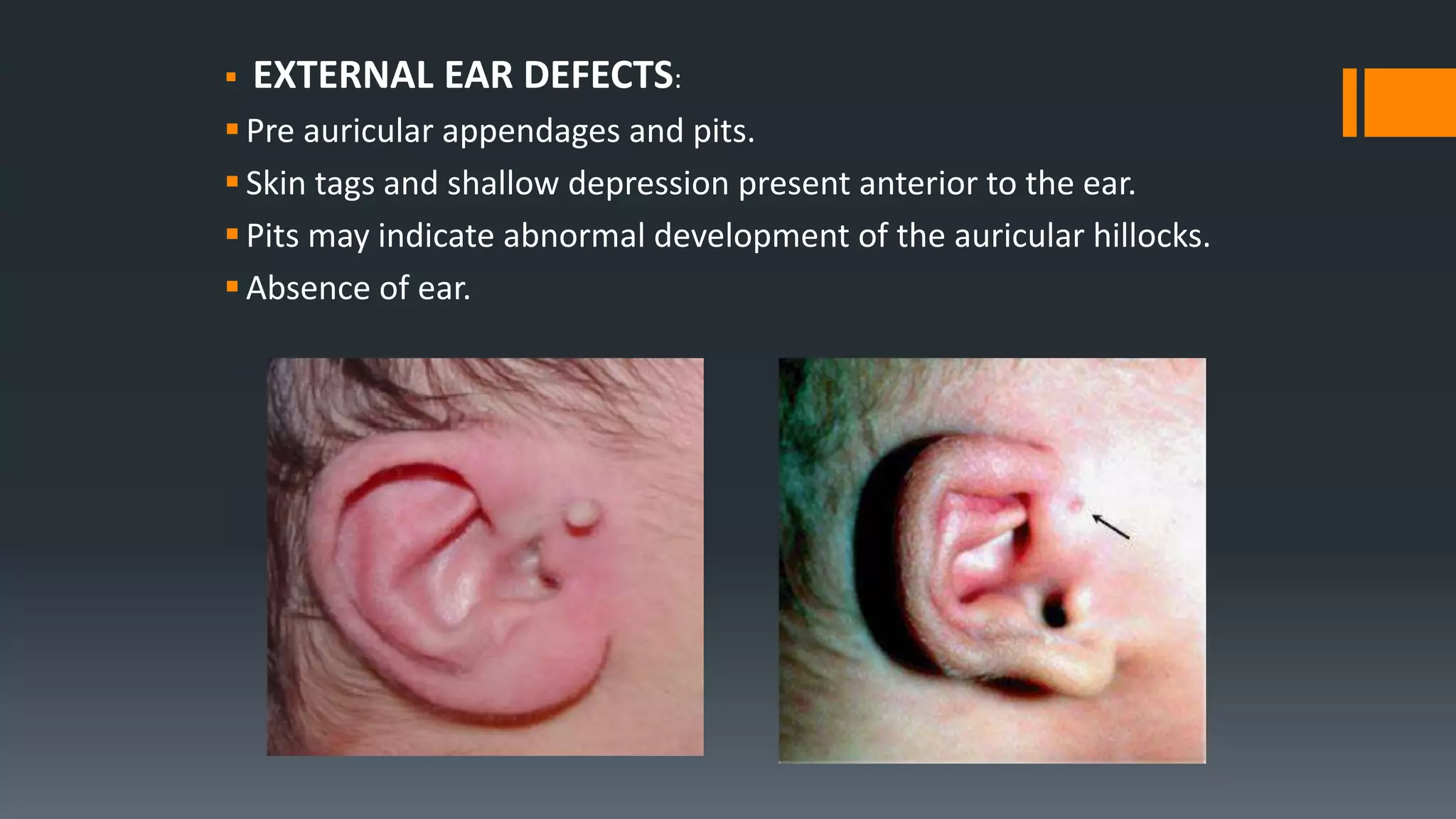
 EXTERNAL EAR DEFECTS:
Pre auricular appendages and pits.
Skin tags and shallow depression present anterior to the ear.
Pits may indicate abnormal development of the auricular hillocks.
Absence of ear.
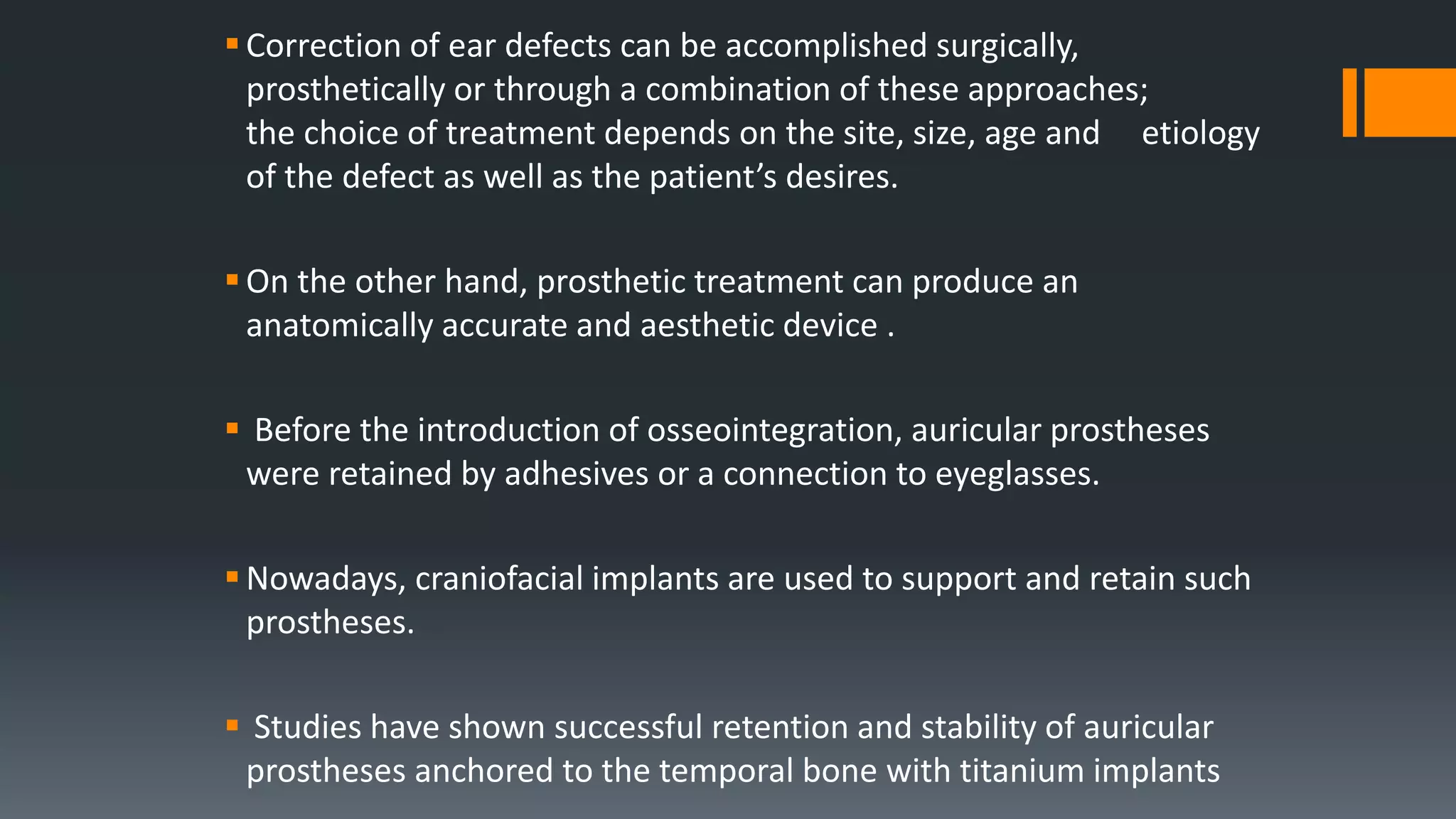
Correction of ear defects can be accomplished surgically,
prosthetically or through a combination of these approaches;
the choice of treatment depends on the site, size, age and etiology
of the defect as well as the patient’s desires.
On the other hand, prosthetic treatment can produce an
anatomically accurate and aesthetic device .
 Before the introduction of osseointegration, auricular prostheses
were retained by adhesives or a connection to eyeglasses.
Nowadays, craniofacial implants are used to support and retain such
prostheses.
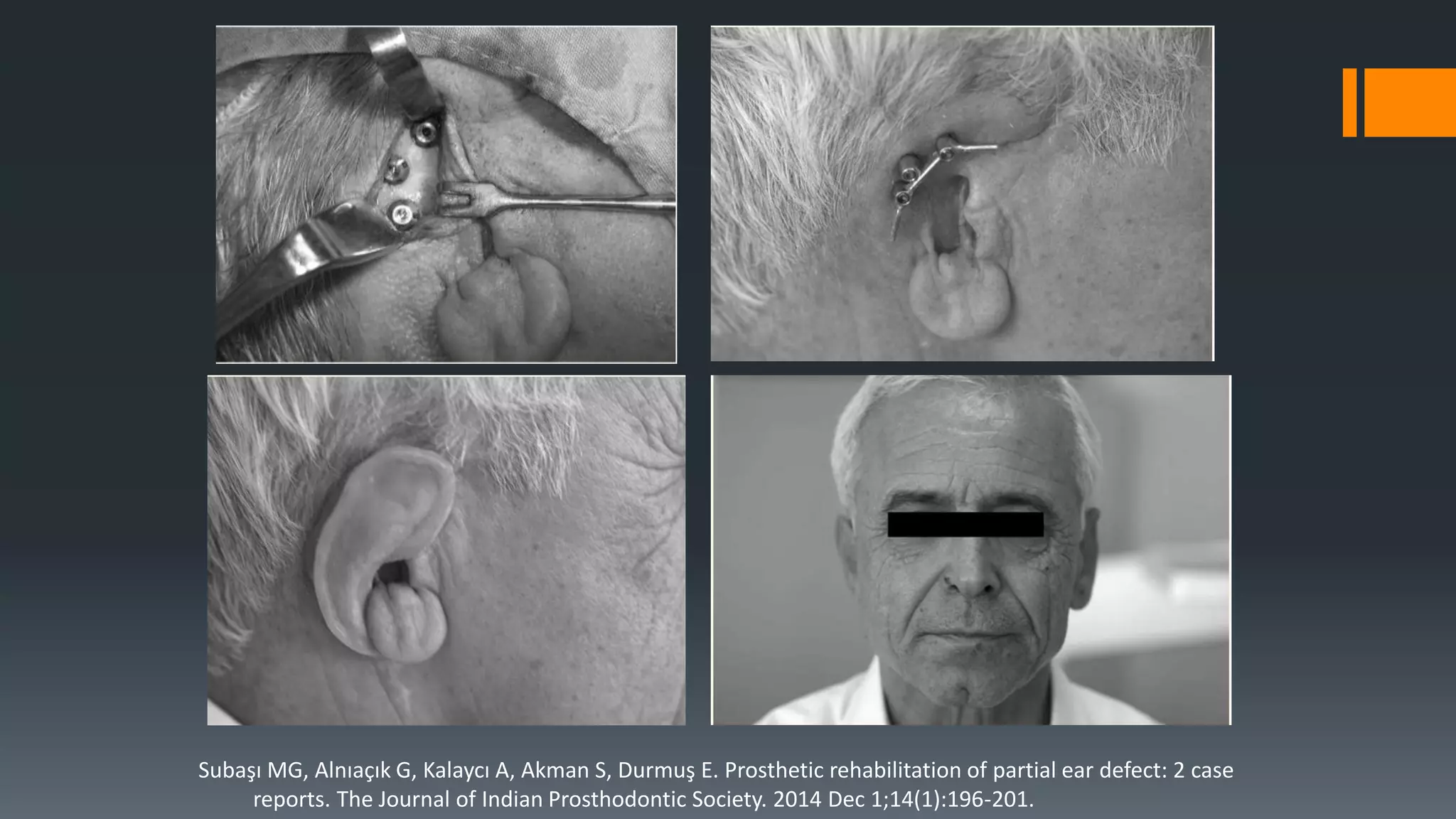
 Studies have shown successful retention and stability of auricular
prostheses anchored to the temporal bone with titanium implants
Subaşı MG, Alnıaçık G, Kalaycı A, Akman S, Durmuş E. Prosthetic rehabilitation of partial ear defect: 2 case
reports. The Journal of Indian Prosthodontic Society. 2014 Dec 1;14(1):196-201.
DEVELOPMENTAL ANOMALY
OF PALATE: CLEFT PALATE
Defective fusion of the various components of the palate gives rise
to clefts in the palate.
These vary considerably in degree.
Clefts of the palate that extend to its anterior end are associated
with the harelip, as both the upper lip and palate are formed by
fusion of the maxillary processes with the frontonasal process.
Clefts of the palate result in anomalous communications between
the mouth and the nose. These may be unilateral and bilateral.
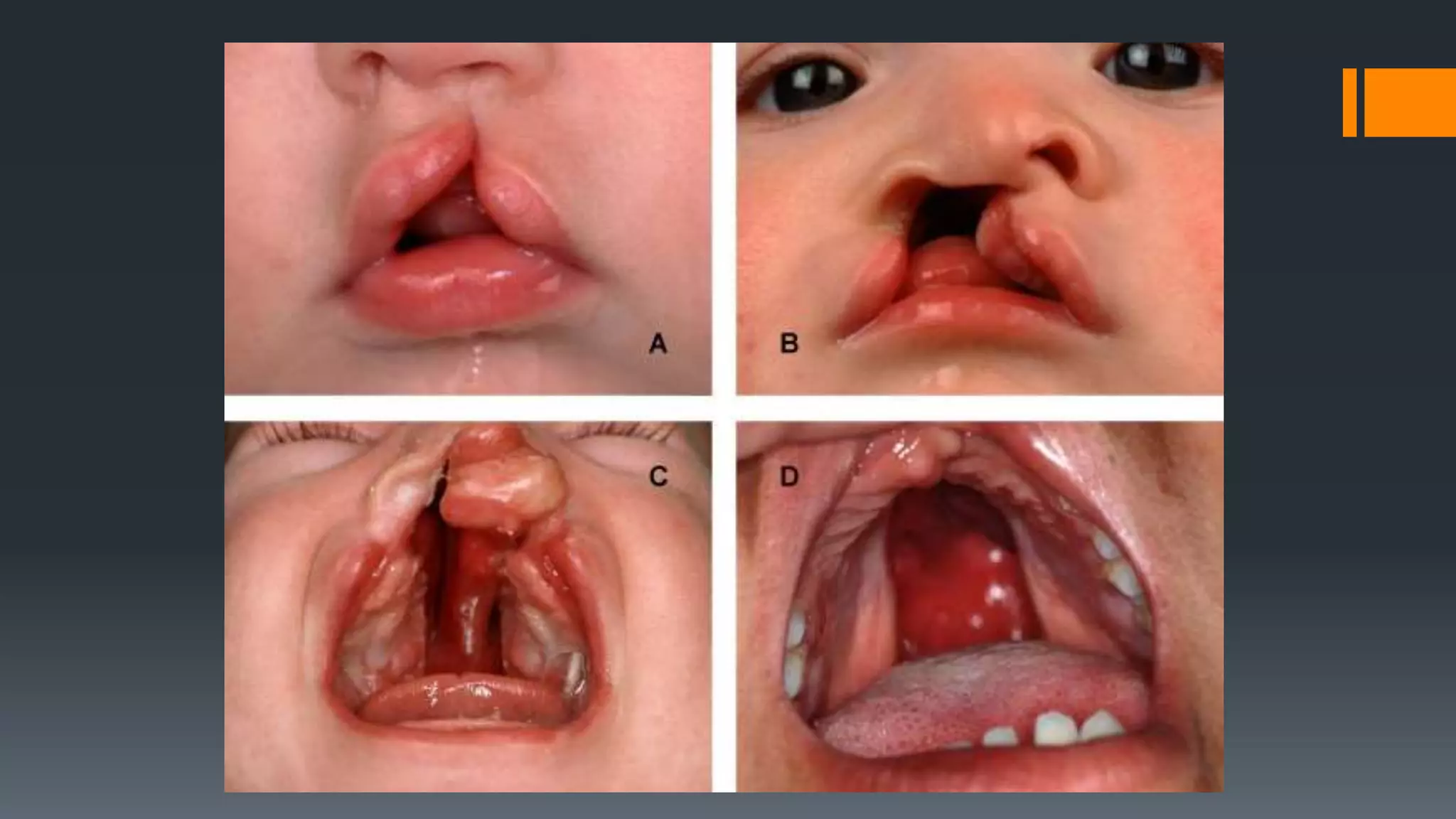
Cleft lip:
Clefts of the upper lip, with or without cleft palate, occur in
approximately 1 in 1000 births; frequency varies among ethnic
groups.
Males are affected twice as frequently as females.
The cleft of the primary palate can be unilateral or bilateral and is
most commonly found on the left side in patients with unilateral
cleft lips.
In a unilateral cleft lip, the maxillary prominence on the affected
side fails to unite with the merged medial nasal prominences.
If the mesenchymal masses do not proliferate and merge, the
overlying lip epithelium is not forced out, and a labial groove will
develop and persist.
As the epithelium in the labial groove becomes stretched , it
ruptures and divides the lip into medial and lateral
components.
With a bilateral cleft lip, the mesenchymal masses of the maxillary
processes do not merge with the mesenchymal masses of the
medial nasal process.
The epithelium in both of the labial grooves stretches and breaks
down, resulting in a bilateral cleft. The degree of clefting can vary
on the two sides.
The failure of medial nasal process to develop and merge results in
a rare cleft, the median cleft lip. This is a characteristic feature of
Mohr syndrome, transmitted as an autosomal recessive trait.
Cleft Palate:
Cleft palate, with or without cleft lip, occurs in about 1 in 2,500
births.
Isolated cleft palate is more common in females than in males.
 The palatine processes fuse about 1 week later in females than in
males, which may explain why isolated clefts of the palate are
more common in females.
The embryologic basis of cleft palate is the failure of the
mesenchymal masses of the lateral palatine processes to meet and
fuse with each other, the nasal septum, and/or with the posterior
margin of the primary palate.
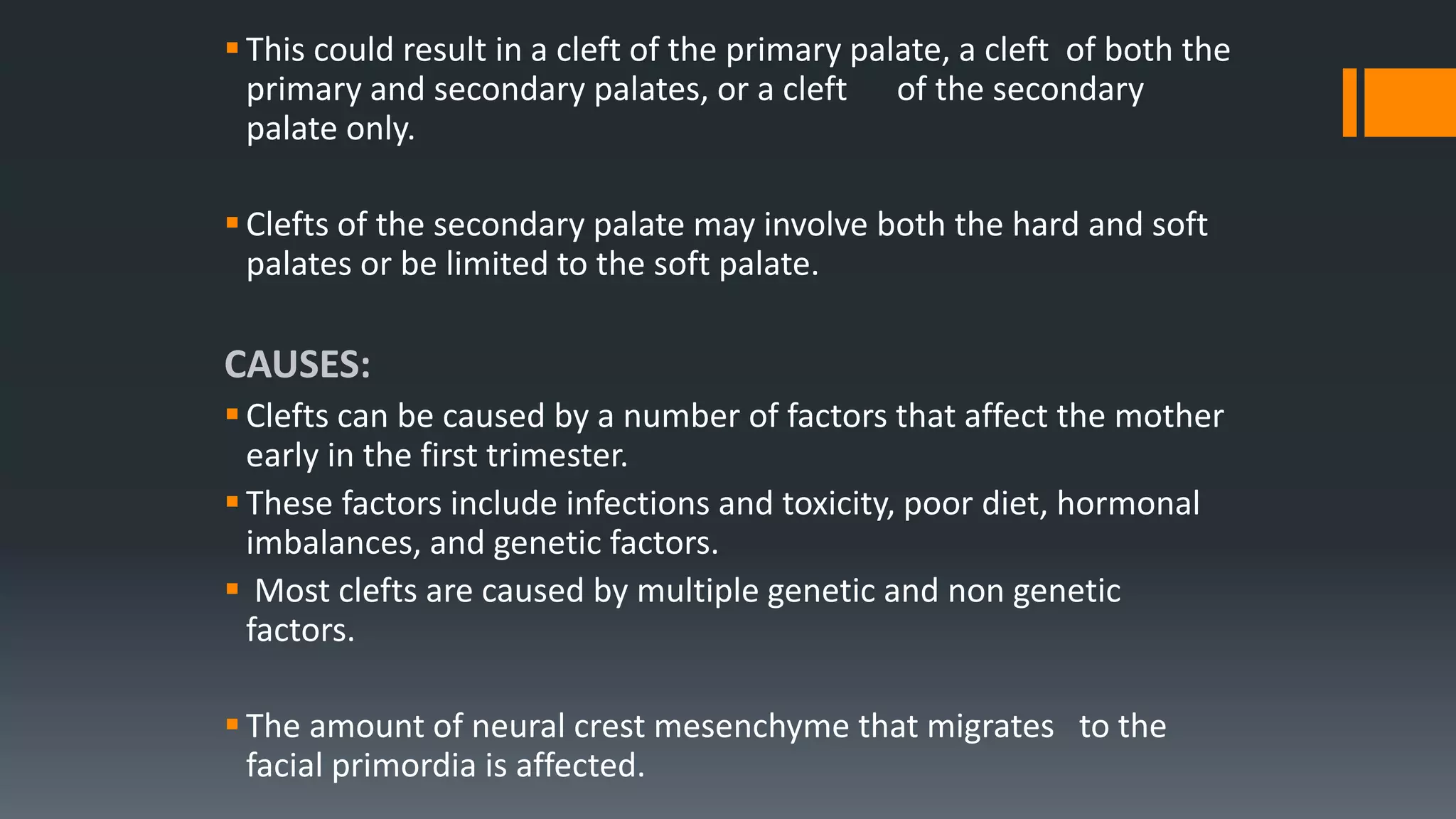
This could result in a cleft of the primary palate, a cleft of both the
primary and secondary palates, or a cleft of the secondary
palate only.
Clefts of the secondary palate may involve both the hard and soft
palates or be limited to the soft palate.
CAUSES:
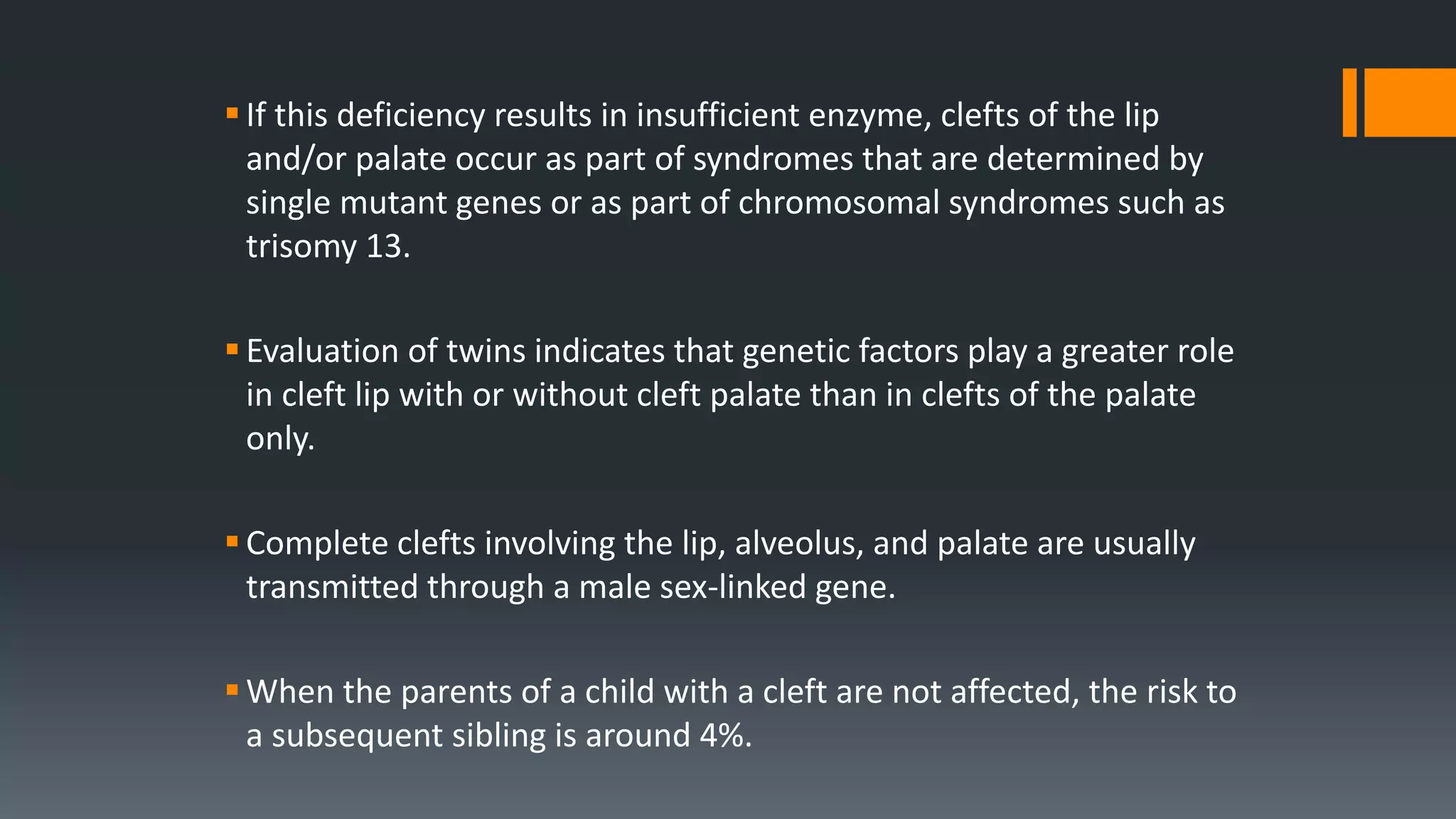
Clefts can be caused by a number of factors that affect the mother
early in the first trimester.
These factors include infections and toxicity, poor diet, hormonal
imbalances, and genetic factors.
 Most clefts are caused by multiple genetic and non genetic
factors.
The amount of neural crest mesenchyme that migrates to the
facial primordia is affected.
If this deficiency results in insufficient enzyme, clefts of the lip
and/or palate occur as part of syndromes that are determined by
single mutant genes or as part of chromosomal syndromes such as
trisomy 13.
Evaluation of twins indicates that genetic factors play a greater role
in cleft lip with or without cleft palate than in clefts of the palate
only.
Complete clefts involving the lip, alveolus, and palate are usually
transmitted through a male sex-linked gene.
When the parents of a child with a cleft are not affected, the risk to
a subsequent sibling is around 4%.
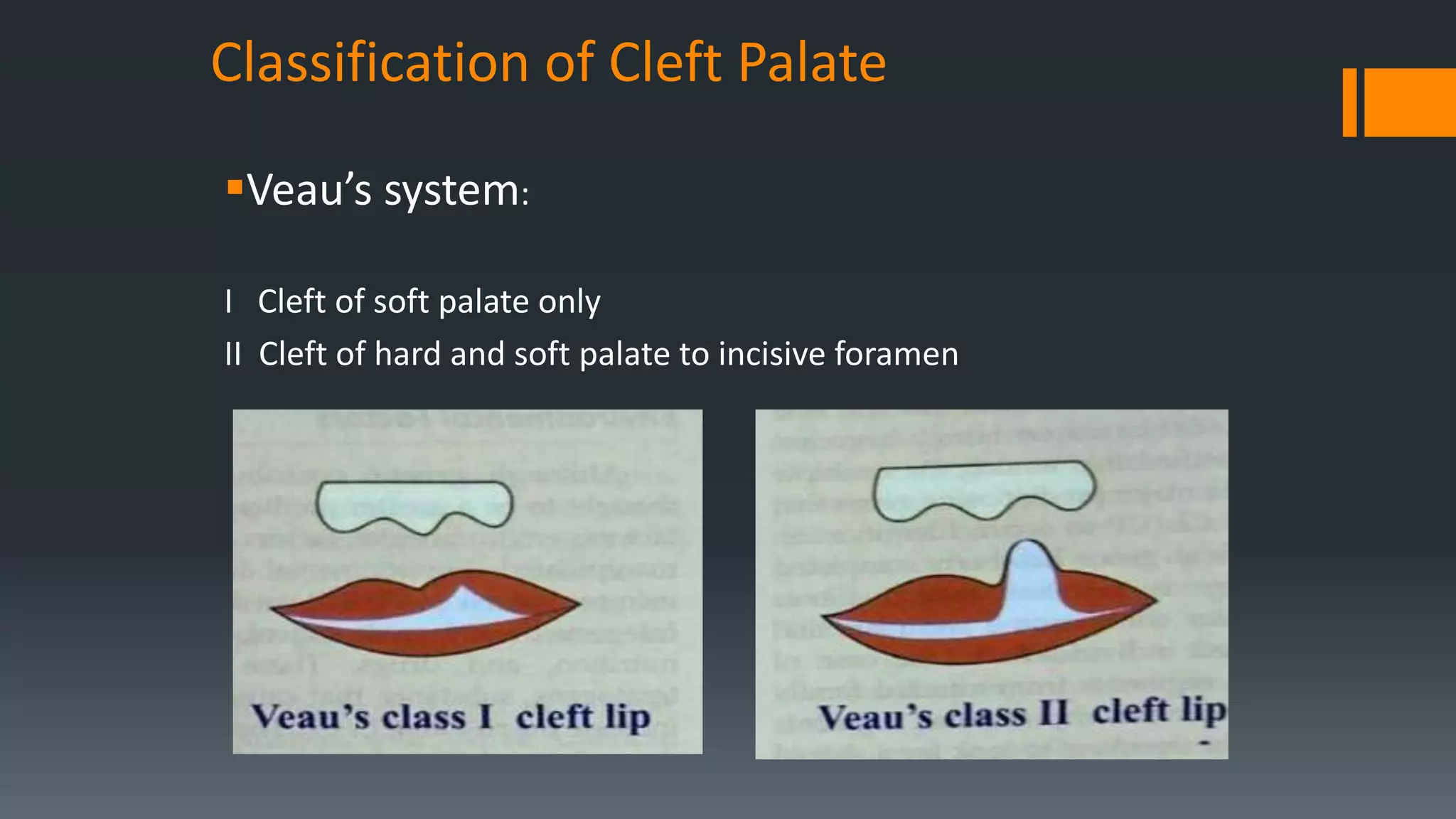
Classification of Cleft Palate
Veau’s system:
I Cleft of soft palate only
II Cleft of hard and soft palate to incisive foramen
III Complete unilateral cleft of soft and hard palate and lip and
alveolar ridge on one side
IV Complete bilateral cleft of soft and hard palate and lip and
alveolar ridge on both sides
Cleft Lip and Palate: Its
Management
Cleft lip and palate is one of the most common congenital
anomalies, but prevention of this malformation is unlikely at this
time.
 A comfortable, cosmetically acceptable prosthesis that restores
the impaired physiological activities of speech, deglutition and
normal mastication is a basic objective of all prosthodontic care.
 DeVan’s statement “The perpetual preservation of what remains
rather than the meticulous restoration of what is missing.” is
considered as the most important objective of the treatment of
the cleft-palate patient.
Impairment of hearing, speech, craniofacial growth and
development of occlusion depend upon the type and extent of
cleft and a planned approach by multidisciplinary team at
appropriate time is required for achievement of integral
rehabilitation.
Prosthetic therapy thus aids the patient in development of normal
speech, promotion of deglutition and mastication and in closing off
the oral cavity from the nasal cavity.
General Treatment for Cleft Palate
Age of 2 to 3 month: surgical treatment so that the protruding
premaxilla shifted to more distal position and aids in sucking.
 Age of 1 to 2 years: cleft palate cleft palate is repaired to reduce the
joint abnormalities associated with speech, eating and drinking.
Early mixed dentition stage: Correction of cross bite, retruded
premaxilla and shallow palate- To reduce the discrepancy in the size of
maxilla and mandible.
 Permanent dentition after the age of 20: No adjustments in the tooth
position- prosthetic management required.
SYNDROMES ASSOCIATED TO
DEVELOPMENTAL ANAMOLIES OF FACE
Treacher Collins Syndrome
Hemifacial Mircosomia
Fetal Alcohol Syndrome
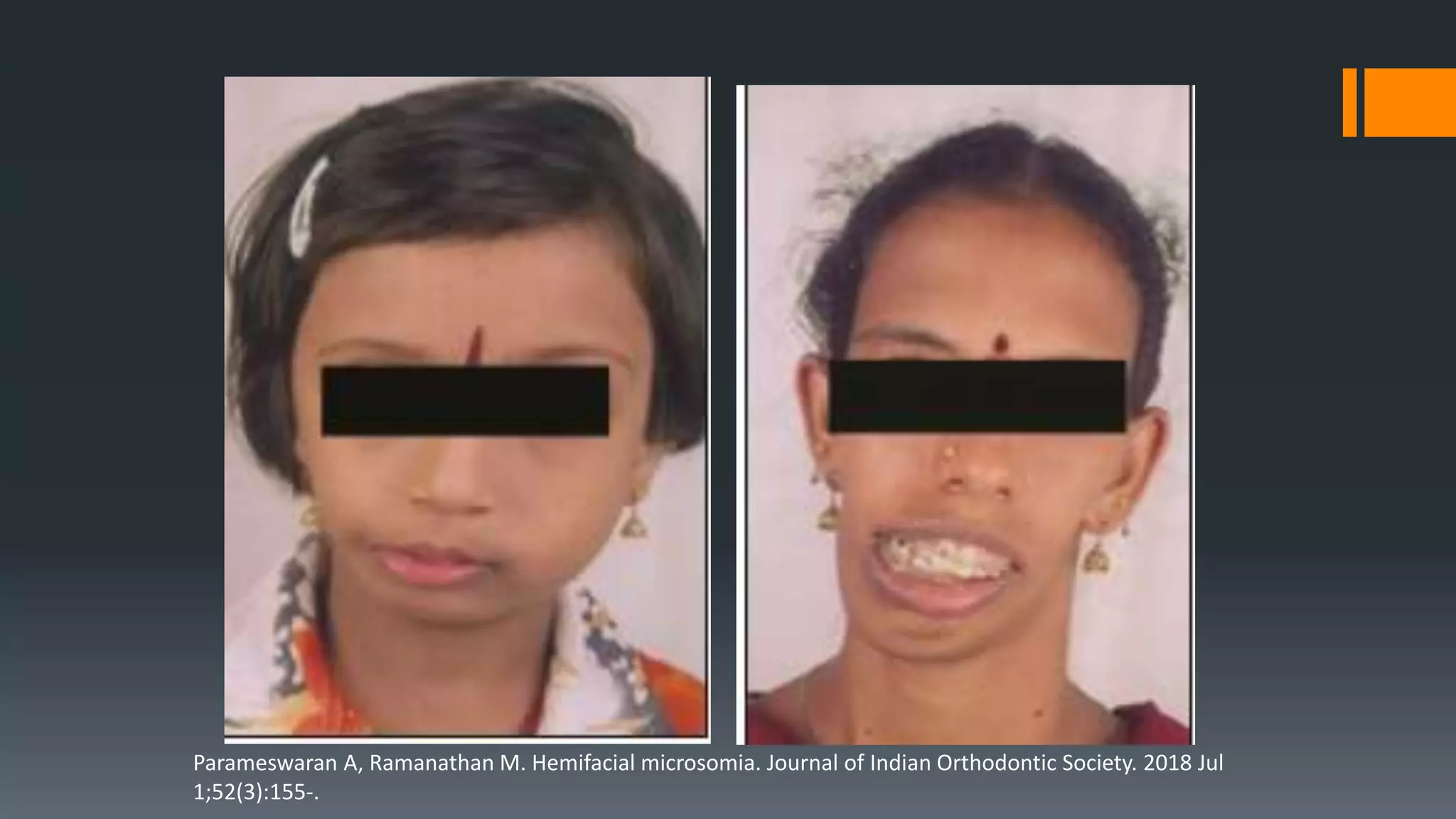
Hemifacial Microsomia
Craniofacial disorder which is characterized by hypoplasia of
structures of the first and second branchial arches.
The etiology of HFM shows genetic heterogeneity.
Teratogenic effects of thalidomide, primidone, ethanol, and
isotretinoin .
The soft tissue deficits can be categorized into four main groups :
(i) Auricular – external ear- anotia, microtia, and dysmorphic ears
(ii) Ocular – eye and associated adnexa- from anophthalmia or
microphthalmia to coloboma of the eyelids, absence of the lateral
canthi, and epibulbar dermoid cysts
(iii) Preauricular – cheek and lips- preauricular skin tags, blind sinus
tracts in the cheek , macrostomia or lateral facial clefts
(iv) Temporal- Temporal hollowing due to hypoplastic temporalis
Parameswaran A, Ramanathan M. Hemifacial microsomia. Journal of Indian Orthodontic Society. 2018 Jul
1;52(3):155-.
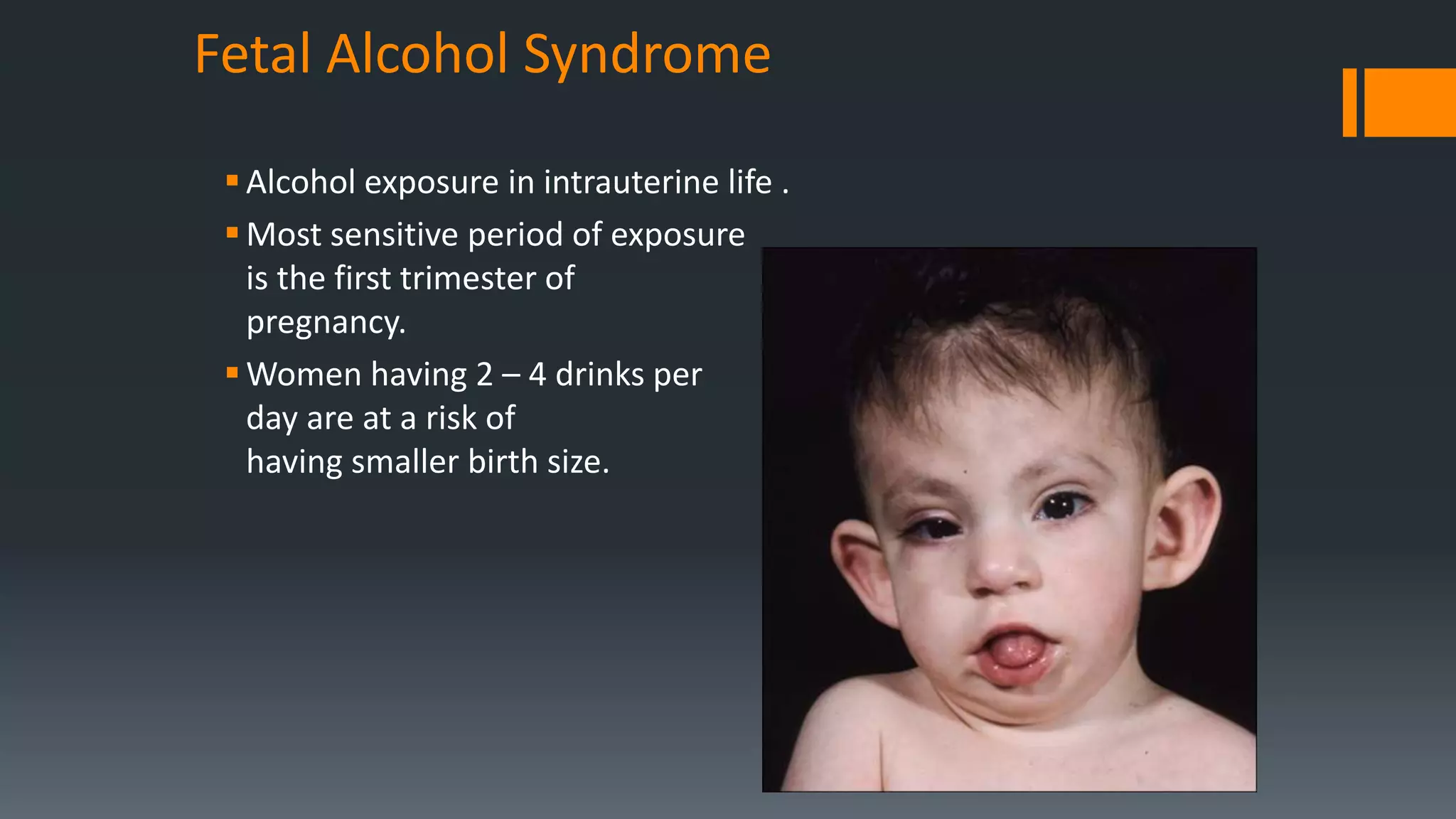
Fetal Alcohol Syndrome
Alcohol exposure in intrauterine life .
Most sensitive period of exposure
is the first trimester of
pregnancy.
Women having 2 – 4 drinks per
day are at a risk of
having smaller birth size.
Clinical features:
1. Short palpebral fissures,
2. Thin vermillion border,
3. Smooth philtrum,
4. In-utero and postnatal growth retardation,
5. Microcephaly,
6. Maxillary hypoplasia,
7. Micrognathia,
8. Decreased interpupillary distance,
9. Structural defects may also occur in the cardiovascular, renal,
musculoskeletal, ocular, and auditory systems.
Vorgias D, Bernstein B. Fetal Alcohol Syndrome. InStatPearls [Internet] 2017 Nov 19.
StatPearls Publishing.
CONCLUSION
The human face is a fascinating study of physiology and psychology.
While the face is complicated, it is also our most useful and most
underestimated tool for communication.
The anomalies can be corrected to some extent with a
multidisciplinary approach.
REFERENCES
1. Singh I. Human embryology. JP Medical Ltd; 2014 Sep 30.
2. Sadler TW. Langman's medical embryology. Lippincott Williams & Wilkins;
2011 Dec 15.
3. Beumer J, Curtis TA, Firtell DN. Maxillofacial rehabilitation. St. Louis: Mosby.
1979:90-169.
4. Ibrahim A, Ajike S. Congenital symmetrical lower lip pits: Van der Woude
syndrome. Oman medical journal. 2015 Jan;30(1):e081.
5. Subaşı MG, Alnıaçık G, Kalaycı A, Akman S, Durmuş E. Prosthetic rehabilitation
of partial ear defect: 2 case reports. The Journal of Indian Prosthodontic
Society. 2014 Dec 1;14(1):196-201.
6. Ranjith Kumar P. et al.: Prosthetic Consideration in Management of Cleft Lip
and Palate Patients
7. Vorgias D, Bernstein B. Fetal Alcohol Syndrome. InStatPearls [Internet] 2017
Nov 19. StatPearls Publishing.
8. Parameswaran A, Ramanathan M. Hemifacial microsomia. Journal of Indian
Orthodontic Society. 2018 Jul 1;52(3):155-.
Development of face and palate

Development of face and palate

  • 1.
    Development of Face andPalate Presented by : Dr. Rajvi Nahar 1st year Post Graduate
  • 2.
    CONTENTS Introduction Development of Face Developmentof Palate Developmental Anomalies Syndromes associated Conclusion References
  • 3.
    INTRODUCTION The embryonic periodextends from the beginning of the fourth week till the end of the eighth week. The fourth week is characterized by the differentiation of the three germ layers and the folding of the embryo. The trilaminar embryonic area differentiates as follows: Provides protection Provides nutrition Forms skeletal tissue ,muscle and blood vascular system
  • 4.
     In thesecond month the organs and tissues are laid down and the embryo has a distinct human appearance. Sadler TW. Langman's medical embryology. Lippincott Williams & Wilkins; 2011 Dec 15.
  • 5.
    Phases of development: 1)Growth-thisis the increase in the size by cell division 2)Morphogenesis-this is the development of form 3)Differentiation-includes the maturation of physiological processes. Folding of the embryo:- The trilaminar germ disc is flattened and pear-shaped .The cells in the central part grow more rapidly than those at the periphery. Because of the lack of space ,the embryo undergoes head fold ,tail fold and lateral folds by the end of the third week .This converts the flattened germ disc into a cylindrical embryo.
  • 6.
    4th and 5thweeks Bars of mesenchymal tissue are separated by deep clefts Arches appear in the 4th and 5th weeks of development and contribute to the characteristic external appearance of the embryo. Most typical feature in the development of the head and neck is formed by the pharyngeal or branchial arches. With the development of the arches and clefts ,a number of outpocketings arise which are the pharyngeal pouches.
  • 7.
    Pharyngeal arches: Eachpharyngeal arch is characterized by its own muscular components ,their nerve component and it’s own arterial component. Sadler TW. Langman's medical embryology. Lippincott Williams & Wilkins; 2011 Dec 15.
  • 8.
    Sadler TW. Langman'smedical embryology. Lippincott Williams & Wilkins; 2011 Dec 15.
  • 9.
    Pharyngeal Arch Nerve Muscles Skeleton 1Mandibular V. Trigeminal man- mandibular division Mastication (temporal; masseter; medial, lateral pterygoids); mylohyoid; Anterior belly of digastric; tensor palatini, tensor tympani Quadrate cartilage, incus; Meckel's cartilage, malleus , anterior ligament of malleus, sphenomandibular ligament, portion of mandible 2 Hyoid VII. Facial Facial expression (buccinator; auricularis; frontalis; platysma; orbicularis oris; orbicularis oculi); posterior belly of digastric, stylohyoid; stapedius. Stapes; styloid process; stylohyoid ligament; lesser and upper horn and upper portion of body of hyoid bone.
  • 10.
    3 IX. Glossopharyngeal Stylopharyngeus Greaterhorn and lower portion of body of hyoid bone 4-6 X. Vagus • Superior laryngeal branch(nerve to fourth arch) • Recurrent laryngeal branch(nerve to sixth arch) Cricothyroid; levator palatine; constrictors of pharynx Laryngeal cartilage (thyroid, cricoid, arytenoid, corniculate, cuneiform) Sadler TW. Langman's medical embryology. Lippincott Williams & Wilkins; 2011 Dec 15.
  • 11.
    First pharyngeal pouch: Auditorytube Tympanic membrane Middle ear cavity. Third pharyngeal pouch: inferior parathyroid gland and thymus . Fifth pharyngeal pouch :thyroid gland. Second pharyngeal pouch: palatine tonsil Fourth pharyngeal pouch: superior parathyroid gland Sadler TW. Langman's medical embryology. Lippincott Williams & Wilkins; 2011 Dec 15. Pharyngeal cleft: external auditory meatus
  • 12.
    After the formationof the head fold, the developing brain and the pericardium form two prominent bulgings on the ventral aspect of embryo. These bulgings are separated by the stomatodeum. The floor of the stomatodeum is formed by the buccopharyngeal membrane, which separates it from the foregut. Sadler TW. Langman's medical embryology. Lippincott Williams & Wilkins; 2011 Dec 15.
  • 13.
    The mesoderm coveringthe developing forebrain proliferates, and forms a downward projection that overlaps the upper part of the stomatodeum. This downward projection is called as frontonasal process. The face is derived from the following structures that lie around the stomatodeum: (1) the frontonasal process; and (2) the first pharyngeal arch of each side. At this stage each mandibular arch forms the lateral wall of stomatodeum. This arch gives off a bud from its dorsal end. This bud is called as the Maxillary process. It grows ventro-medially cranial to the main part of the arch which is now called as the Mandibular process.
  • 15.
    DEVELOPMENT OF FACE LOWERLIP: They now forms the lower margin of the stomatodeum. The mandibular process of the two sides grow towards each other and fuse in the midline. Singh I. Human embryology. JP Medical Ltd; 2014 Sep 30.
  • 16.
    UPPER LIP: Maxillary Processgrows medially and fuses: 1. lateral nasal process 2. Medial nasal process Medial and lateral nasal processes fuse. Nasal pits cut off from stomatodeum. Frontonasal process becomes narrower- two external nares come close together.
  • 17.
     The stomatodeumis now bounded by upper lip which is derived as follows: 1. The mesodermal basis of lateral part of the lip is formed from the maxillary process. The overlying skin is derived from ectoderm covering this process. 2. The mesodermal basis of the median part of the lip, which is called as philtrum, is formed from the frontonasal process. The ectoderm of maxillary process, however overgrows this mesoderm to meet that of the opposite maxillary process in the midline. As a result, the skin of the entire upper lip is innervated by the maxillary nerves.
  • 18.
    The muscles ofthe face are derived from mesoderm of the second branchial arch and are, therefore, supplied by maxillary nerves.
  • 19.
    NOSE: Formed from: Frontonasalprocess, and from the medial and lateral nasal processes of the right and left sides. External nares are formed when the nasal pit are cut off from the stomatodeum Frontonasal process becomes progressively narrower and its deeper part ultimately forms the nasal septum.
  • 20.
    Simultaneously, a grooveappears between the regions of the nose and the bulging forebrain. Mesoderm becomes heaped up in the median plane to form the prominence of the nose. The nose becomes prominent, the external nares come to open downwards instead of forwards. External form of the nose is thus established
  • 21.
    CHEEKS: After the formationof the upper and lower lips, the stomatodeum, which is now called as mouth, is very broad. In the lateral part, it is bounded above by the maxillary process and below by the mandibular process. These processes undergo progressive fusion with each other to form the cheeks. The line of fusion is marked by a groove called the naso-optic furrow or nasolacrimal sulcus. A strip of ectoderm becomes buried along this furrow and gives rise to the nasolacrimal duct. Singh I. Human embryology. JP Medical Ltd; 2014 Sep 30.
  • 22.
    EYE: The region ofthe eye is first seen as an ectodermal thickening , the lens placode, which appears on the ventro-lateral side of the developing forebrain, lateral and cranial to the nasal placode. The lens placode sinks below the surface and is eventually cut off from the surface ectoderm. The developing eyeball produces a bulging in this situation. The bulgings of the eyes are at first directed laterally and lie in the angles between the maxillary processes and the lateral nasal processes. With the narrowing of the frontonasal process they come to face forwards.
  • 23.
    The eyelids arederived from fold of ectoderm that are formed above and below the eyes, and by mesoderm enclosed within the folds.
  • 24.
    EXTERNAL EAR: The externalear is formed around the dorsal part of the first ectodermal cleft. A series of mesodermal thickenings often called tubercles or hillocks appear on the mandibular and hyoid arches where they adjoin this cleft. The pinna or auricle is formed by fusion of these thickenings.
  • 25.
    Singh I. Humanembryology. JP Medical Ltd; 2014 Sep 30.
  • 26.
    DEVELOPMENT OF PALATE Thedevelopment of palate begins at the end of the 5th week and gets completed by the end of the 12th week.  The most critical period for the development of palate is from the end of 6th week to the beginning of 9th week. The palate develops from two primordia: 1.The Primary palate 2.The Secondary palate
  • 27.
    The Primary Palate– •Early 6th week from the deep part of the intermaxillary segment, as median palatine process. •It lies behind the premaxillary part of the maxilla and fuses with the developing secondary palate. • A small part lying anterior to the incisive fossa, of the adult hard palate. The Secondary Palate – •Early 6th week from the internal aspect of the maxillary processes, as lateral palatine process. •The primordia of hard and soft palate posterior to the incisive fossa.
  • 28.
    7th & 8thweeks- the lateral palatine processes elongate and ascend to a horizontal position above the tongue. The lateral palatine processes project inferomedially on each side of the tongue. With the development of the jaws, the tongue moves inferiorly. The lateral palatine processes grow medially and fuse in the median plane and also fuse with the Posterior part of the primary palate and the nasal septum. Fusion with the nasal septum begins anteriorly during 9th week, extends posteriorly and is completed by 12th week. Bone develops in the anterior part to form the hard palate and the posterior part develops as muscular soft palate.
  • 30.
    DEVELOPMENTAL ANAMOLIES OF THEFACE It has been seen that the formation of various parts of the face involves fusion of diverse components. This fusion is occasionally incomplete and gives rise to various anomalies.
  • 31.
    There are fourclinically significant types of congenital anomaly: 1. Malformation : A morphological defect of an organ, part of an organ, or larger region of the body that results from an intrinsically abnormal developmental process. 2. Disruption :A morphological defect of an organ, part of an organ, or a larger region of the body that results from the extrinsic breakdown of, or an interference with, an originally normal developmental process. 3. Deformation : An abnormal form, shape, or position of a part of the body that results from mechanical forces. 4. Dysplasia : An abnormal organization of cells into tissue and its morphological result.
  • 32.
     HARELIP: Theupper lip of the hare normally has a cleft. Hence, the term harelip is used for defects of the lips. (a) When one or both maxillary processes do not fuse with the medial nasal process, thus gives rise to defects in the upper lip. These may vary in degree and may be unilateral or bilateral. (b) Defective development of the lower-most part of the frontonasal process may give rise to a midline defect of the upper lip. (c) When the two mandibular processes do not fuse with each other the lower lip shows a defect in the midline. The defect usually extends into the jaw.
  • 33.
    Singh I. Humanembryology. JP Medical Ltd; 2014 Sep 30.
  • 34.
    OBLIQUE FACIAL CLEFT:Non-fusion of the maxillary and lateral nasal processes gives rise to a cleft running from the medial angle of the eye to the mouth. The nasolacrimal duct is not formed. The treatment modalities in orofacial clefts comprise the use of tissue expanders , rotation and advancement of a flap of the cheek , bony defect obliteration with autogenous iliac bone graft chips and soft tissue reconstruction with multiple Z-plasty flaps .
  • 36.
    MACROSTOMIA AND MICROSTOMIA:Inadequate fusion of the mandibular and maxillary processes with each other may lead to an abnormally wide mouth i.e. Macrostomia. Lack of fusion may be unilateral: this leads to formation of a lateral facial cleft. Too much fusion may result in a small mouth i.e. Microstomia.
  • 37.
    BIFID NOSE ANDPROBOSCIS: The nose may be bifid. This may be associated with medial cleft lip.  Both these occur due to bifurcation of the frontonasal process. Occasionally one-half of it may be absent.
  • 38.
    Very rarely thenose forms a cylindrical projection, or Proboscis jutting out form just below the forehead.  This anomaly may sometimes affect only one-half of the nose and is usually associated with fusion of the two eyes i.e. Cyclops. Surgical treatment should be done.
  • 39.
    MANDIBULOFACIAL DYSOSTOSIS: Theentire first arch may remain underdeveloped on one or both sides, affecting the lower eyelid, the maxilla, the mandible and the external ear. The prominence of the cheek is absent and the ear may be displaced ventrally and caudally. There may be presence of cleft palate and of faulty dentition. This condition is called mandibulofacial dysostosis, Treacher Collins syndrome or first arch syndrome.  This is a genetic condition inherited as autosomal dominant.
  • 40.
    It is seenas under development of the zygomatic bones, mandibular hypoplasia, down slanting palpebral fissures, malformed external ears .
  • 41.
    CONGENITAL LIP PITS:malformation of lips following hereditary pattern . It may occur alone or with association with other anomalies mainly cleft lip and palate due to notching of lip at an early stage of development with fixation of tissue at the base of the notch or from failure of complete union of embryonic lateral sulci of lip which persist and ultimately develop into typical pit. It is characterized by unilateral or bilateral depression on vermillion surface of either lip . It is seen more commonly on lower lip.  Sparse mucous secretion may exude from the base of the pit and lips might be swollen .
  • 42.
     Surgical interventionfor cosmetic purposes may be considered when lip pits are the only manifestation. Surgical excision is especially indicated in patients with production of mucous secretions and/or recurrent inflammation.  Genetic counseling is crucial for affected parents and patients with information regarding the pattern of inheritance and the consequence of these phenotypes emphasized.
  • 43.
     RETROGNATHIA ANDAGNATHIA: The mandible may be small compared to the rest of the face resulting in a receding chin i.e. Retrognathia. In extreme cases it may even fail to develop i.e. Agnathia.
  • 44.
    HYPERTELORISM :The eyesmay be widely separated i.e. Hypertelorism. The nasal bridge may be broad. This condition results from the presence of excessive tissue in the frontonasal process. Treatment: It can be treated by osteotomy and soft tissue reconstruction.
  • 45.
    CONGENITAL DEAFNESS : Itis the absence of the tympanic cavity and external meatus and abnormal development of membranes and bony labyrinth . Malformation of auditory ossicles and ear drum . Caused by: 1. Rubella virus 2. Poliomyelitis 3. Erythroblastosis fetalis 4. Diabetes 5. Hypothyroidism 6. Toxoplasmosis
  • 46.
     EXTERNAL EARDEFECTS: Pre auricular appendages and pits. Skin tags and shallow depression present anterior to the ear. Pits may indicate abnormal development of the auricular hillocks. Absence of ear.
  • 47.
    Correction of eardefects can be accomplished surgically, prosthetically or through a combination of these approaches; the choice of treatment depends on the site, size, age and etiology of the defect as well as the patient’s desires. On the other hand, prosthetic treatment can produce an anatomically accurate and aesthetic device .  Before the introduction of osseointegration, auricular prostheses were retained by adhesives or a connection to eyeglasses. Nowadays, craniofacial implants are used to support and retain such prostheses.  Studies have shown successful retention and stability of auricular prostheses anchored to the temporal bone with titanium implants
  • 48.
    Subaşı MG, AlnıaçıkG, Kalaycı A, Akman S, Durmuş E. Prosthetic rehabilitation of partial ear defect: 2 case reports. The Journal of Indian Prosthodontic Society. 2014 Dec 1;14(1):196-201.
  • 49.
    DEVELOPMENTAL ANOMALY OF PALATE:CLEFT PALATE Defective fusion of the various components of the palate gives rise to clefts in the palate. These vary considerably in degree. Clefts of the palate that extend to its anterior end are associated with the harelip, as both the upper lip and palate are formed by fusion of the maxillary processes with the frontonasal process. Clefts of the palate result in anomalous communications between the mouth and the nose. These may be unilateral and bilateral.
  • 50.
    Cleft lip: Clefts ofthe upper lip, with or without cleft palate, occur in approximately 1 in 1000 births; frequency varies among ethnic groups. Males are affected twice as frequently as females. The cleft of the primary palate can be unilateral or bilateral and is most commonly found on the left side in patients with unilateral cleft lips. In a unilateral cleft lip, the maxillary prominence on the affected side fails to unite with the merged medial nasal prominences. If the mesenchymal masses do not proliferate and merge, the overlying lip epithelium is not forced out, and a labial groove will develop and persist.
  • 51.
    As the epitheliumin the labial groove becomes stretched , it ruptures and divides the lip into medial and lateral components. With a bilateral cleft lip, the mesenchymal masses of the maxillary processes do not merge with the mesenchymal masses of the medial nasal process. The epithelium in both of the labial grooves stretches and breaks down, resulting in a bilateral cleft. The degree of clefting can vary on the two sides. The failure of medial nasal process to develop and merge results in a rare cleft, the median cleft lip. This is a characteristic feature of Mohr syndrome, transmitted as an autosomal recessive trait.
  • 52.
    Cleft Palate: Cleft palate,with or without cleft lip, occurs in about 1 in 2,500 births. Isolated cleft palate is more common in females than in males.  The palatine processes fuse about 1 week later in females than in males, which may explain why isolated clefts of the palate are more common in females. The embryologic basis of cleft palate is the failure of the mesenchymal masses of the lateral palatine processes to meet and fuse with each other, the nasal septum, and/or with the posterior margin of the primary palate.
  • 53.
    This could resultin a cleft of the primary palate, a cleft of both the primary and secondary palates, or a cleft of the secondary palate only. Clefts of the secondary palate may involve both the hard and soft palates or be limited to the soft palate. CAUSES: Clefts can be caused by a number of factors that affect the mother early in the first trimester. These factors include infections and toxicity, poor diet, hormonal imbalances, and genetic factors.  Most clefts are caused by multiple genetic and non genetic factors. The amount of neural crest mesenchyme that migrates to the facial primordia is affected.
  • 54.
    If this deficiencyresults in insufficient enzyme, clefts of the lip and/or palate occur as part of syndromes that are determined by single mutant genes or as part of chromosomal syndromes such as trisomy 13. Evaluation of twins indicates that genetic factors play a greater role in cleft lip with or without cleft palate than in clefts of the palate only. Complete clefts involving the lip, alveolus, and palate are usually transmitted through a male sex-linked gene. When the parents of a child with a cleft are not affected, the risk to a subsequent sibling is around 4%.
  • 56.
    Classification of CleftPalate Veau’s system: I Cleft of soft palate only II Cleft of hard and soft palate to incisive foramen
  • 57.
    III Complete unilateralcleft of soft and hard palate and lip and alveolar ridge on one side IV Complete bilateral cleft of soft and hard palate and lip and alveolar ridge on both sides
  • 58.
    Cleft Lip andPalate: Its Management Cleft lip and palate is one of the most common congenital anomalies, but prevention of this malformation is unlikely at this time.  A comfortable, cosmetically acceptable prosthesis that restores the impaired physiological activities of speech, deglutition and normal mastication is a basic objective of all prosthodontic care.  DeVan’s statement “The perpetual preservation of what remains rather than the meticulous restoration of what is missing.” is considered as the most important objective of the treatment of the cleft-palate patient.
  • 59.
    Impairment of hearing,speech, craniofacial growth and development of occlusion depend upon the type and extent of cleft and a planned approach by multidisciplinary team at appropriate time is required for achievement of integral rehabilitation. Prosthetic therapy thus aids the patient in development of normal speech, promotion of deglutition and mastication and in closing off the oral cavity from the nasal cavity.
  • 60.
    General Treatment forCleft Palate Age of 2 to 3 month: surgical treatment so that the protruding premaxilla shifted to more distal position and aids in sucking.  Age of 1 to 2 years: cleft palate cleft palate is repaired to reduce the joint abnormalities associated with speech, eating and drinking. Early mixed dentition stage: Correction of cross bite, retruded premaxilla and shallow palate- To reduce the discrepancy in the size of maxilla and mandible.  Permanent dentition after the age of 20: No adjustments in the tooth position- prosthetic management required.
  • 61.
    SYNDROMES ASSOCIATED TO DEVELOPMENTALANAMOLIES OF FACE Treacher Collins Syndrome Hemifacial Mircosomia Fetal Alcohol Syndrome
  • 62.
    Hemifacial Microsomia Craniofacial disorderwhich is characterized by hypoplasia of structures of the first and second branchial arches. The etiology of HFM shows genetic heterogeneity. Teratogenic effects of thalidomide, primidone, ethanol, and isotretinoin . The soft tissue deficits can be categorized into four main groups : (i) Auricular – external ear- anotia, microtia, and dysmorphic ears (ii) Ocular – eye and associated adnexa- from anophthalmia or microphthalmia to coloboma of the eyelids, absence of the lateral canthi, and epibulbar dermoid cysts (iii) Preauricular – cheek and lips- preauricular skin tags, blind sinus tracts in the cheek , macrostomia or lateral facial clefts (iv) Temporal- Temporal hollowing due to hypoplastic temporalis
  • 63.
    Parameswaran A, RamanathanM. Hemifacial microsomia. Journal of Indian Orthodontic Society. 2018 Jul 1;52(3):155-.
  • 64.
    Fetal Alcohol Syndrome Alcoholexposure in intrauterine life . Most sensitive period of exposure is the first trimester of pregnancy. Women having 2 – 4 drinks per day are at a risk of having smaller birth size.
  • 65.
    Clinical features: 1. Shortpalpebral fissures, 2. Thin vermillion border, 3. Smooth philtrum, 4. In-utero and postnatal growth retardation, 5. Microcephaly, 6. Maxillary hypoplasia, 7. Micrognathia, 8. Decreased interpupillary distance, 9. Structural defects may also occur in the cardiovascular, renal, musculoskeletal, ocular, and auditory systems. Vorgias D, Bernstein B. Fetal Alcohol Syndrome. InStatPearls [Internet] 2017 Nov 19. StatPearls Publishing.
  • 66.
    CONCLUSION The human faceis a fascinating study of physiology and psychology. While the face is complicated, it is also our most useful and most underestimated tool for communication. The anomalies can be corrected to some extent with a multidisciplinary approach.
  • 67.
    REFERENCES 1. Singh I.Human embryology. JP Medical Ltd; 2014 Sep 30. 2. Sadler TW. Langman's medical embryology. Lippincott Williams & Wilkins; 2011 Dec 15. 3. Beumer J, Curtis TA, Firtell DN. Maxillofacial rehabilitation. St. Louis: Mosby. 1979:90-169. 4. Ibrahim A, Ajike S. Congenital symmetrical lower lip pits: Van der Woude syndrome. Oman medical journal. 2015 Jan;30(1):e081. 5. Subaşı MG, Alnıaçık G, Kalaycı A, Akman S, Durmuş E. Prosthetic rehabilitation of partial ear defect: 2 case reports. The Journal of Indian Prosthodontic Society. 2014 Dec 1;14(1):196-201. 6. Ranjith Kumar P. et al.: Prosthetic Consideration in Management of Cleft Lip and Palate Patients 7. Vorgias D, Bernstein B. Fetal Alcohol Syndrome. InStatPearls [Internet] 2017 Nov 19. StatPearls Publishing. 8. Parameswaran A, Ramanathan M. Hemifacial microsomia. Journal of Indian Orthodontic Society. 2018 Jul 1;52(3):155-.