FACE
FACE
Introduction
• The face is the anterior aspect of the head from the forehead to the
chin and from one ear to the other
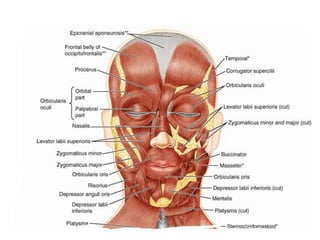
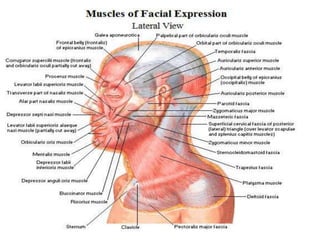
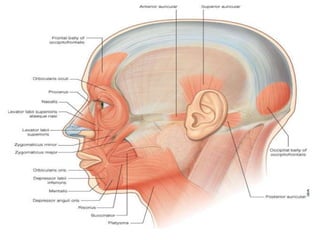
Muscles of facial expression
• They are subcutaneous
They are grouped under the following six heads
1. Muscles of the scalp
 Occipitofrontalis:
• is a flat diagastric muscle with two bellies(frontal and occipital
bellies) which share a common tendon called the epicranial
aponeuroses
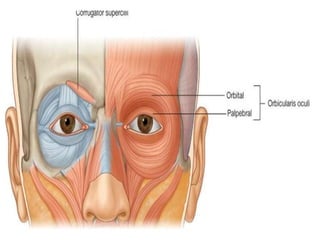
Muscles of the eyelids
 Orbicularis oculi
 Corrugator supercilli
 Levator palpebrae superioris
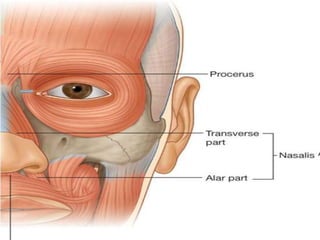
3. Muscles of the nose
 Procerus
 Nasalis muscles
•
Tranverse part of nasalis muscle/ compressor naris
• Alar part of nasalis muscle/ dilator naris
 Depressor septi nasi
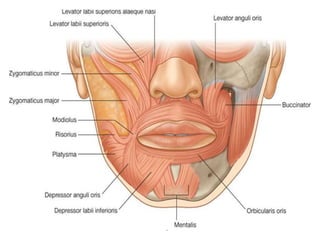
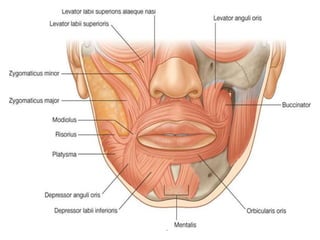
4. Muscles surrounding the mouth
 orbicularis oris
 Zygomaticus major
 Zygomaticus minor
 Levator labii superioris alaeque
 Levator labii superioris
 Levator anguli oris
 Depressor anguli oris
 Depressor labii inferioris
 Mentalis
 Risorius
 Buccinator
5. Muscles of the Auricle
 Aurcularis anterior
 Aurcularis superior
 Aurcularis posterior
6. Muscles of the neck
 platysma
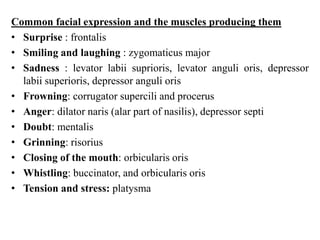
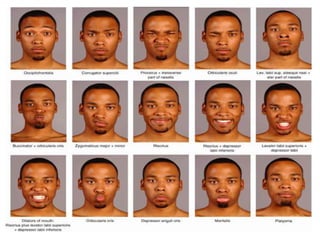
Common facial expression and the muscles producing them
• Surprise : frontalis
• Smiling and laughing : zygomaticus major
• Sadness : levator labii suprioris, levator anguli oris, depressor
labii superioris, depressor anguli oris
• Frowning: corrugator supercili and procerus
• Anger: dilator naris (alar part of nasilis), depressor septi
• Doubt: mentalis
• Grinning: risorius
• Closing of the mouth: orbicularis oris
• Whistling: buccinator, and orbicularis oris
• Tension and stress: platysma
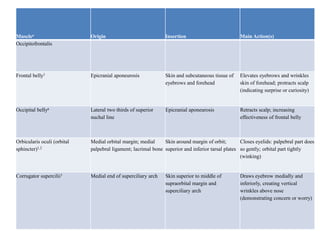
Musclea
Occipitofrontalis

Origin

Insertion

Main Action(s)

Frontal belly1

Epicranial aponeurosis

Skin and subcutaneous tissue of
eyebrows and forehead

Elevates eyebrows and wrinkles
skin of forehead; protracts scalp
(indicating surprise or curiosity)

Occipital bellya

Lateral two thirds of superior
nuchal line

Epicranial aponeurosis

Retracts scalp; increasing
effectiveness of frontal belly

Orbicularis oculi (orbital
sphincter)1,2

Medial orbital margin; medial
Skin around margin of orbit;
Closes eyelids: palpebral part does
palpebral ligament; lacrimal bone superior and inferior tarsal plates so gently; orbital part tightly
(winking)

Corrugator supercilii1

Medial end of superciliary arch

Skin superior to middle of
supraorbital margin and
superciliary arch

Draws eyebrow medially and
inferiorly, creating vertical
wrinkles above nose
(demonstrating concern or worry)
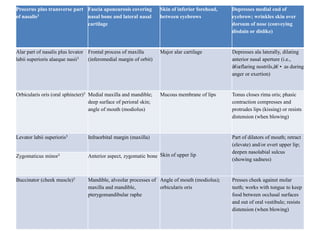
Procerus plus transverse part Fascia aponeurosis covering
of nasalis3
nasal bone and lateral nasal
cartilage

Skin of inferior forehead,
between eyebrows

Depresses medial end of
eyebrow; wrinkles skin over
dorsum of nose (conveying
disdain or dislike)

Alar part of nasalis plus levator Frontal process of maxilla
labii superioris alaeque nasii3
(inferomedial margin of orbit)

Major alar cartilage

Depresses ala laterally, dilating
anterior nasal aperture (i.e.,
“flaring nostrils,― as during
anger or exertion)

Orbicularis oris (oral sphincter)3 Medial maxilla and mandible;
deep surface of perioral skin;
angle of mouth (modiolus)

Mucous membrane of lips

Tonus closes rima oris; phasic
contraction compresses and
protrudes lips (kissing) or resists
distension (when blowing)

Levator labii superioris3

Infraorbital margin (maxilla)

Zygomaticus minor3

Anterior aspect, zygomatic bone Skin of upper lip

Buccinator (cheek muscle)3

Mandible, alveolar processes of Angle of mouth (modiolus);
maxilla and mandible,
orbicularis oris
pterygomandibular raphe

Part of dilators of mouth; retract
(elevate) and/or evert upper lip;
deepen nasolabial sulcus
(showing sadness)

Presses cheek against molar
teeth; works with tongue to keep
food between occlusal surfaces
and out of oral vestibule; resists
distension (when blowing)
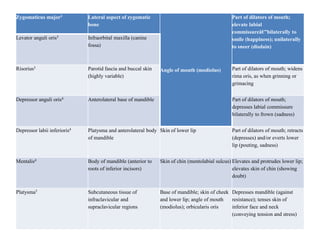
Zygomaticus major3

Lateral aspect of zygomatic
bone

Levator anguli oris3

Infraorbital maxilla (canine
fossa)

Risorius3

Parotid fascia and buccal skin
(highly variable)

Depressor anguli oris4

Anterolateral base of mandible

Part of dilators of mouth;
depresses labial commissure
bilaterally to frown (sadness)

Depressor labii inferioris4

Platysma and anterolateral body Skin of lower lip
of mandible

Part of dilators of mouth; retracts
(depresses) and/or everts lower
lip (pouting, sadness)

Mentalis4

Body of mandible (anterior to
roots of inferior incisors)

Skin of chin (mentolabial sulcus) Elevates and protrudes lower lip;
elevates skin of chin (showing
doubt)

Platysma5

Subcutaneous tissue of
infraclavicular and
supraclavicular regions

Base of mandible; skin of cheek Depresses mandible (against
and lower lip; angle of mouth
resistance); tenses skin of
(modiolus); orbicularis oris
inferior face and neck
(conveying tension and stress)

Part of dilators of mouth;
elevate labial
commissure—bilaterally to
smile (happiness); unilaterally
to sneer (disdain)

Angle of mouth (modiolus)

Part of dilators of mouth; widens
rima oris, as when grinning or
grimacing

Face 111

  • 1.
  • 2.
    FACE Introduction • The faceis the anterior aspect of the head from the forehead to the chin and from one ear to the other Muscles of facial expression • They are subcutaneous They are grouped under the following six heads 1. Muscles of the scalp  Occipitofrontalis: • is a flat diagastric muscle with two bellies(frontal and occipital bellies) which share a common tendon called the epicranial aponeuroses Muscles of the eyelids  Orbicularis oculi  Corrugator supercilli  Levator palpebrae superioris
  • 5.
    3. Muscles ofthe nose  Procerus  Nasalis muscles • Tranverse part of nasalis muscle/ compressor naris • Alar part of nasalis muscle/ dilator naris  Depressor septi nasi 4. Muscles surrounding the mouth  orbicularis oris  Zygomaticus major  Zygomaticus minor  Levator labii superioris alaeque  Levator labii superioris  Levator anguli oris  Depressor anguli oris  Depressor labii inferioris  Mentalis  Risorius  Buccinator
  • 6.
    5. Muscles ofthe Auricle  Aurcularis anterior  Aurcularis superior  Aurcularis posterior 6. Muscles of the neck  platysma
  • 12.
    Common facial expressionand the muscles producing them • Surprise : frontalis • Smiling and laughing : zygomaticus major • Sadness : levator labii suprioris, levator anguli oris, depressor labii superioris, depressor anguli oris • Frowning: corrugator supercili and procerus • Anger: dilator naris (alar part of nasilis), depressor septi • Doubt: mentalis • Grinning: risorius • Closing of the mouth: orbicularis oris • Whistling: buccinator, and orbicularis oris • Tension and stress: platysma
  • 14.
    Musclea Occipitofrontalis Origin Insertion Main Action(s) Frontal belly1 Epicranialaponeurosis Skin and subcutaneous tissue of eyebrows and forehead Elevates eyebrows and wrinkles skin of forehead; protracts scalp (indicating surprise or curiosity) Occipital bellya Lateral two thirds of superior nuchal line Epicranial aponeurosis Retracts scalp; increasing effectiveness of frontal belly Orbicularis oculi (orbital sphincter)1,2 Medial orbital margin; medial Skin around margin of orbit; Closes eyelids: palpebral part does palpebral ligament; lacrimal bone superior and inferior tarsal plates so gently; orbital part tightly (winking) Corrugator supercilii1 Medial end of superciliary arch Skin superior to middle of supraorbital margin and superciliary arch Draws eyebrow medially and inferiorly, creating vertical wrinkles above nose (demonstrating concern or worry)
  • 15.
    Procerus plus transversepart Fascia aponeurosis covering of nasalis3 nasal bone and lateral nasal cartilage Skin of inferior forehead, between eyebrows Depresses medial end of eyebrow; wrinkles skin over dorsum of nose (conveying disdain or dislike) Alar part of nasalis plus levator Frontal process of maxilla labii superioris alaeque nasii3 (inferomedial margin of orbit) Major alar cartilage Depresses ala laterally, dilating anterior nasal aperture (i.e., “flaring nostrils,― as during anger or exertion) Orbicularis oris (oral sphincter)3 Medial maxilla and mandible; deep surface of perioral skin; angle of mouth (modiolus) Mucous membrane of lips Tonus closes rima oris; phasic contraction compresses and protrudes lips (kissing) or resists distension (when blowing) Levator labii superioris3 Infraorbital margin (maxilla) Zygomaticus minor3 Anterior aspect, zygomatic bone Skin of upper lip Buccinator (cheek muscle)3 Mandible, alveolar processes of Angle of mouth (modiolus); maxilla and mandible, orbicularis oris pterygomandibular raphe Part of dilators of mouth; retract (elevate) and/or evert upper lip; deepen nasolabial sulcus (showing sadness) Presses cheek against molar teeth; works with tongue to keep food between occlusal surfaces and out of oral vestibule; resists distension (when blowing)
  • 16.
    Zygomaticus major3 Lateral aspectof zygomatic bone Levator anguli oris3 Infraorbital maxilla (canine fossa) Risorius3 Parotid fascia and buccal skin (highly variable) Depressor anguli oris4 Anterolateral base of mandible Part of dilators of mouth; depresses labial commissure bilaterally to frown (sadness) Depressor labii inferioris4 Platysma and anterolateral body Skin of lower lip of mandible Part of dilators of mouth; retracts (depresses) and/or everts lower lip (pouting, sadness) Mentalis4 Body of mandible (anterior to roots of inferior incisors) Skin of chin (mentolabial sulcus) Elevates and protrudes lower lip; elevates skin of chin (showing doubt) Platysma5 Subcutaneous tissue of infraclavicular and supraclavicular regions Base of mandible; skin of cheek Depresses mandible (against and lower lip; angle of mouth resistance); tenses skin of (modiolus); orbicularis oris inferior face and neck (conveying tension and stress) Part of dilators of mouth; elevate labial commissure—bilaterally to smile (happiness); unilaterally to sneer (disdain) Angle of mouth (modiolus) Part of dilators of mouth; widens rima oris, as when grinning or grimacing