EYE BANDAGING
SUBMITTED TO SUBMITTED BY:
DR.R. DANASU, JESVIN FERNANDEZ
PRINCIPAL, 2ND YEAR BSC
NURSING
SMVNC SMVNC
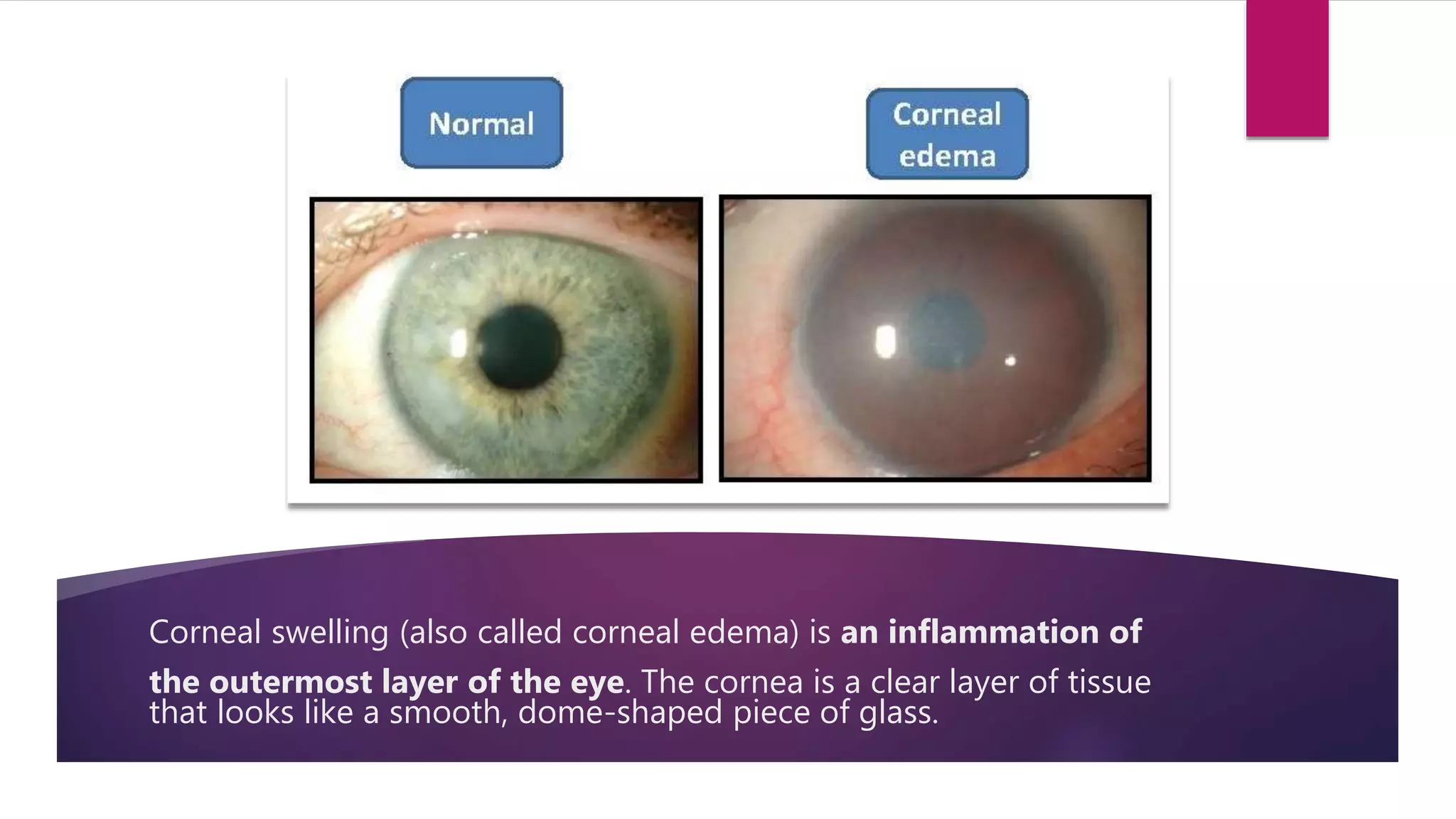
Corneal swelling (also called corneal edema) is an inflammation of
the outermost layer of the eye. The cornea is a clear layer of tissue
that looks like a smooth, dome-shaped piece of glass.
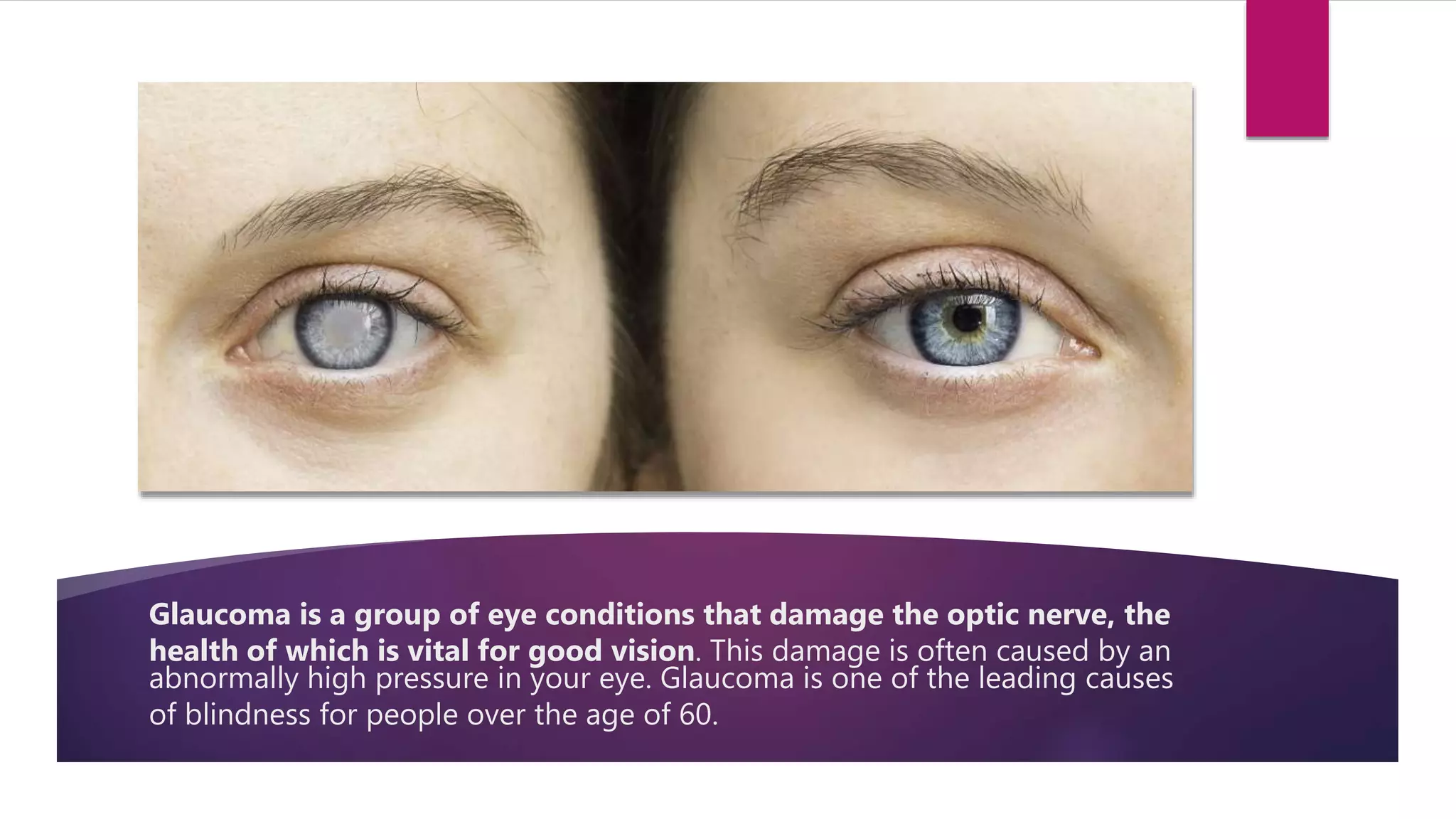
Glaucoma is a group of eye conditions that damage the optic nerve, the
health of which is vital for good vision. This damage is often caused by an
abnormally high pressure in your eye. Glaucoma is one of the leading causes
of blindness for people over the age of 60.
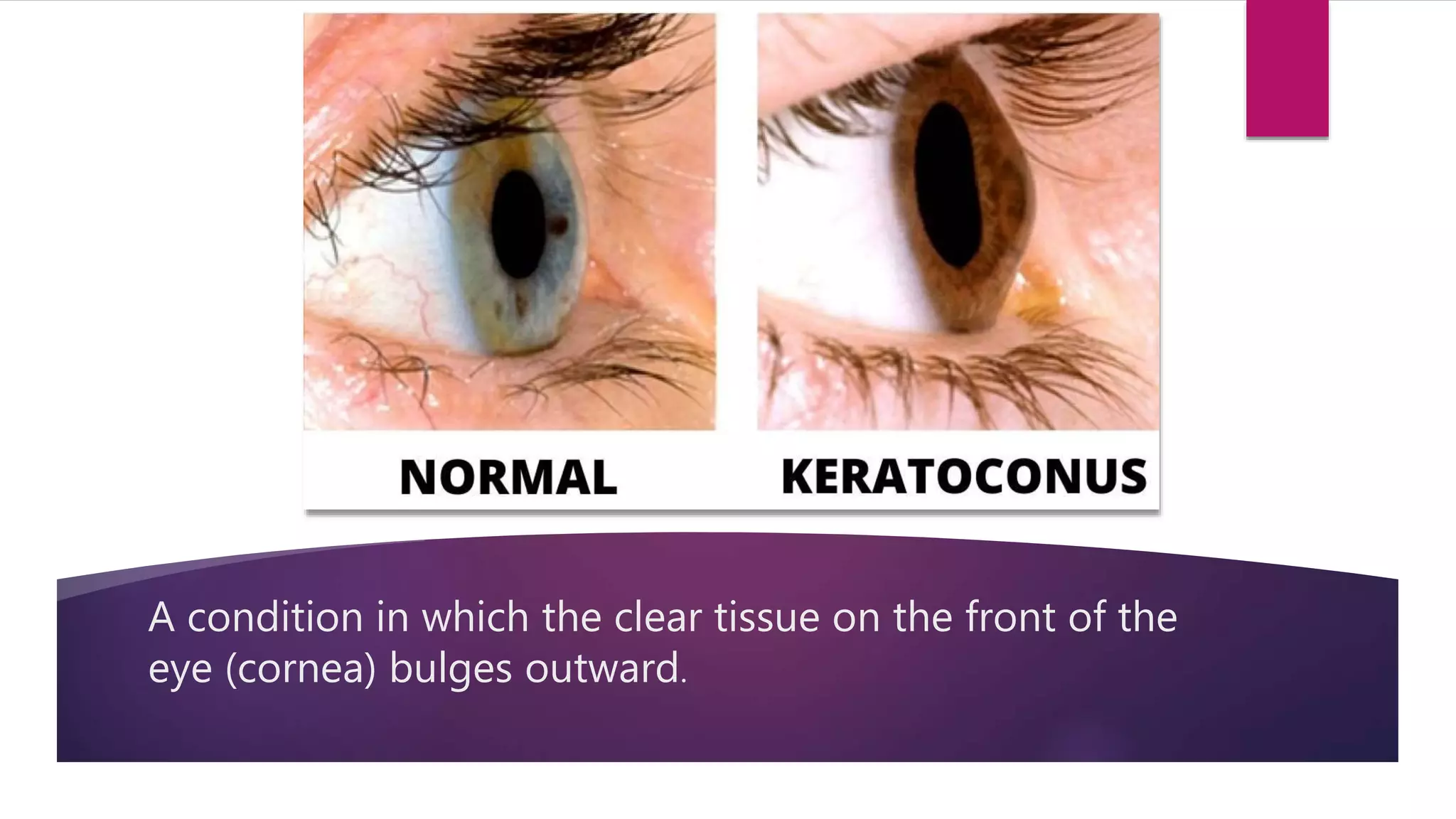
A condition in which the clear tissue on the front of the
eye (cornea) bulges outward.
Explain the
procedure to the
patient.
ENHANCING PATIENT
UNDERSTANDING OF
MEDICAL PROCEDURES
1
Perform hand
hygiene.
TO PREVENT
MICROORGANISM
2
Assemble the
need equipment
at the bedside or
in the dressing as
per policy
FOR EASY PERFORMING
OF PROCEDURE
3
Make sure the
area to be
bandaged is clean
and dry wash and
dry the area
TO REDUCE THE RISK OF
INFECTION AND
ENCOURAGE THE
HEALING PROCESS
4
Stand facing the patient
support the area to be
applied in the normal
alignment position the
bandage role upper most
with the free and above
the side to be bandaged
TO MAINTAIN POSITION
5
A) EYE BANDAGE: (MONOCULAR)
A bandage of 1-1½
wide is required. Place
the bandage at the
temple bone of the
same side of the eye to
be bandaged.
TO HOLD THE DRESSING
INTACT
6
1st turn: Take the
bandage
horizontally around
the head across the
brow to the ear on
the opposite side
HOLD THE DRESSING IN
CORRECT PLACE
7
2nd turn: Carry the
bandage obliquely
across the back of the
head under the ear
over the eye so that
the lower edge of the
bandage covers the
root of the nose
TO GET A CORRECT
ALIGNMENT
8
Take a turn
horizontally around
the head. Repeat
the turns until the
dressings are
covered and turns
are usually
sufficient.
TO HOLD THE BANDAGE
ON TO THE DRESSING
9
A piece of good tape is
placed under the
bandage on the side of
the good eye and tied
so as to prevent the
turns of the bandage
from slipping over the
good eye.
COMPLETELY COVERS
THE SITE OF INJURY
10
B) Bandages for both eyes:
(bioccular)
The figure of eight
bandage is used. Start
from the right temple;
take one turn around the
head down over the left
eye, under the right ear
over the right eye to the
left temple.
TO HOLD THE DRESSING
INTACT
11
Repeat around the head
to the right temple
following previous turn
until the eyes are covered.
The turns should cross
each other at the root of
the nose and the two
turns around the head
must be taken to finish
the bandage.
THIS WILL MAKE THE
BANDAGE MORE LIKELY
TO STAY IN PLACE FOR
MANY HOURS
12
After the
procedure replace
all the article
FOR FURTHER USES
13
Wash hands TO PREVENT CROSS
INFECTION
14
Recording and
Reporting
PERFORMS AS LEGAL
EVIDENCE
15
THANK YOU

Eye Bandaging Nursing Procedure

  • 1.
    EYE BANDAGING SUBMITTED TOSUBMITTED BY: DR.R. DANASU, JESVIN FERNANDEZ PRINCIPAL, 2ND YEAR BSC NURSING SMVNC SMVNC
  • 2.
    Corneal swelling (alsocalled corneal edema) is an inflammation of the outermost layer of the eye. The cornea is a clear layer of tissue that looks like a smooth, dome-shaped piece of glass.
  • 3.
    Glaucoma is agroup of eye conditions that damage the optic nerve, the health of which is vital for good vision. This damage is often caused by an abnormally high pressure in your eye. Glaucoma is one of the leading causes of blindness for people over the age of 60.
  • 4.
    A condition inwhich the clear tissue on the front of the eye (cornea) bulges outward.
  • 5.
    Explain the procedure tothe patient. ENHANCING PATIENT UNDERSTANDING OF MEDICAL PROCEDURES 1
  • 6.
  • 7.
    Assemble the need equipment atthe bedside or in the dressing as per policy FOR EASY PERFORMING OF PROCEDURE 3
  • 8.
    Make sure the areato be bandaged is clean and dry wash and dry the area TO REDUCE THE RISK OF INFECTION AND ENCOURAGE THE HEALING PROCESS 4
  • 9.
    Stand facing thepatient support the area to be applied in the normal alignment position the bandage role upper most with the free and above the side to be bandaged TO MAINTAIN POSITION 5
  • 10.
    A) EYE BANDAGE:(MONOCULAR)
  • 11.
    A bandage of1-1½ wide is required. Place the bandage at the temple bone of the same side of the eye to be bandaged. TO HOLD THE DRESSING INTACT 6
  • 12.
    1st turn: Takethe bandage horizontally around the head across the brow to the ear on the opposite side HOLD THE DRESSING IN CORRECT PLACE 7
  • 13.
    2nd turn: Carrythe bandage obliquely across the back of the head under the ear over the eye so that the lower edge of the bandage covers the root of the nose TO GET A CORRECT ALIGNMENT 8
  • 14.
    Take a turn horizontallyaround the head. Repeat the turns until the dressings are covered and turns are usually sufficient. TO HOLD THE BANDAGE ON TO THE DRESSING 9
  • 15.
    A piece ofgood tape is placed under the bandage on the side of the good eye and tied so as to prevent the turns of the bandage from slipping over the good eye. COMPLETELY COVERS THE SITE OF INJURY 10
  • 16.
    B) Bandages forboth eyes: (bioccular)
  • 17.
    The figure ofeight bandage is used. Start from the right temple; take one turn around the head down over the left eye, under the right ear over the right eye to the left temple. TO HOLD THE DRESSING INTACT 11
  • 18.
    Repeat around thehead to the right temple following previous turn until the eyes are covered. The turns should cross each other at the root of the nose and the two turns around the head must be taken to finish the bandage. THIS WILL MAKE THE BANDAGE MORE LIKELY TO STAY IN PLACE FOR MANY HOURS 12
  • 19.
    After the procedure replace allthe article FOR FURTHER USES 13
  • 20.
    Wash hands TOPREVENT CROSS INFECTION 14
  • 21.
  • 22.