Manufacturing Process-I
Subject Teacher : Dr Tariqure Bhatti
Quaid-e-Awam University College of
Engineering, Science and Technology,
Larkano.
Batch: 14-ME
3rd year, 2nd term
Members:
Muhammad Awais 14ME08
Arsalan Hussain 14ME09
Atique Ahmed 14ME10
 Extrusion
 Direct and Indirect Extrusion
 Hot Extrusion
 Cold Extrusion
 Applications of Hot and Cold extrusion
 Advantages And disadvantages of Hot and cold
extrusion
Topics
3
 Extrusion is the process by which a
block/billet of metal is reduced in cross
section by forcing it to flow through a die
under high pressure.
What is Extrusion
4
What is Extrusion
5
 The process begins by heating the stock
material. It is then loaded into the container
in the press.
 A dummy block is placed behind it where
the ram then presses on the material to push
it out of the die.
Extrusion Process
6
 Afterwards the extrusion is stretched in order
to straighten it. If better properties are
required then it may be heat treated or cold
worked.
 The extrusion process is generally
economical when producing between
several pounds and many tons, depending
on the material being extruded.
Extrusion Process
7
 According To Direction: Direct & Indirect Extrusion
 By Equipment: Horizontal and Vertical Extrusion
 By Operating Temperatures : Hot And Cold Extrusion
Classification of Extrusion Processes
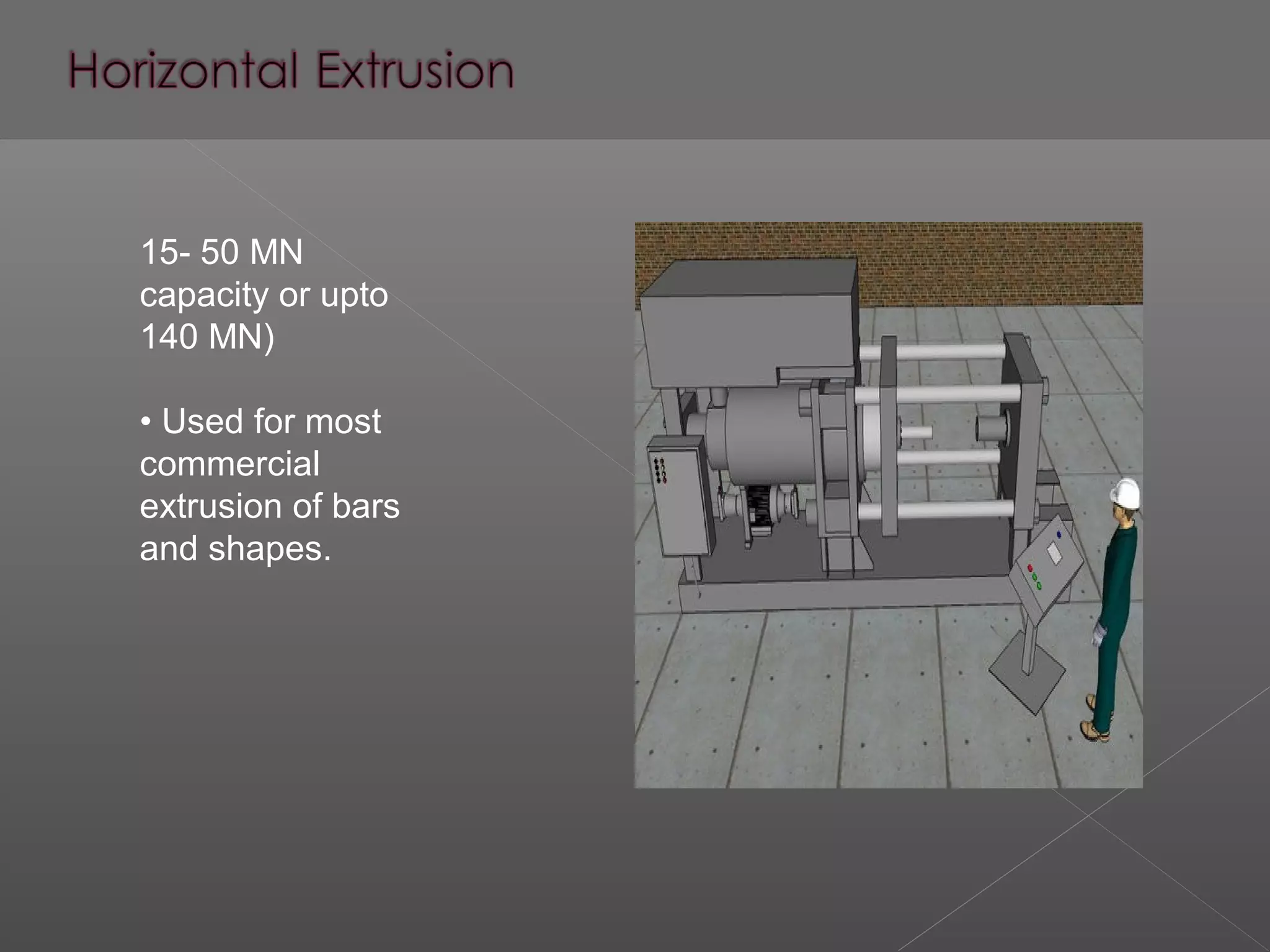
15- 50 MN
capacity or upto
140 MN)
• Used for most
commercial
extrusion of bars
and shapes.
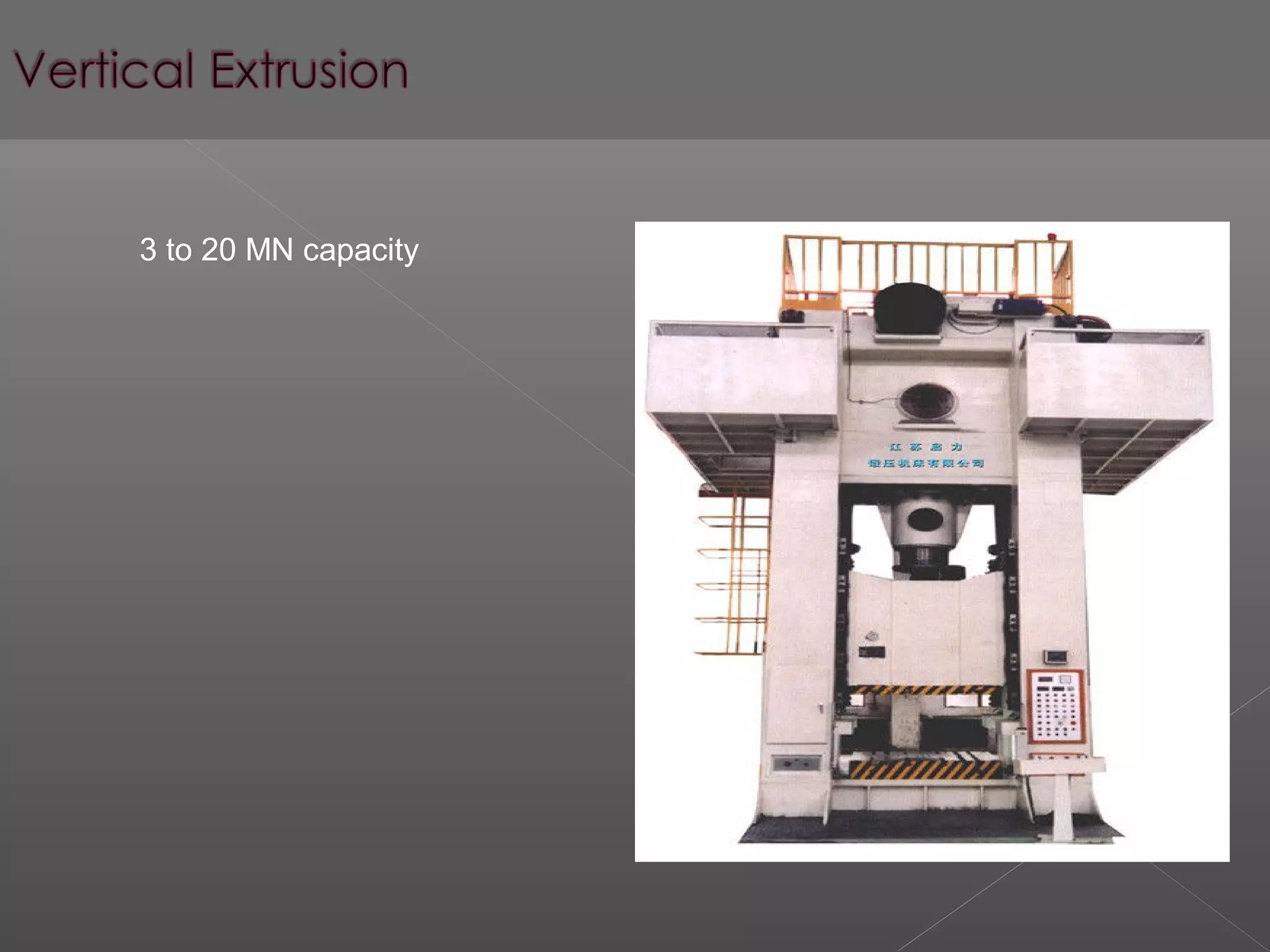
3 to 20 MN capacity
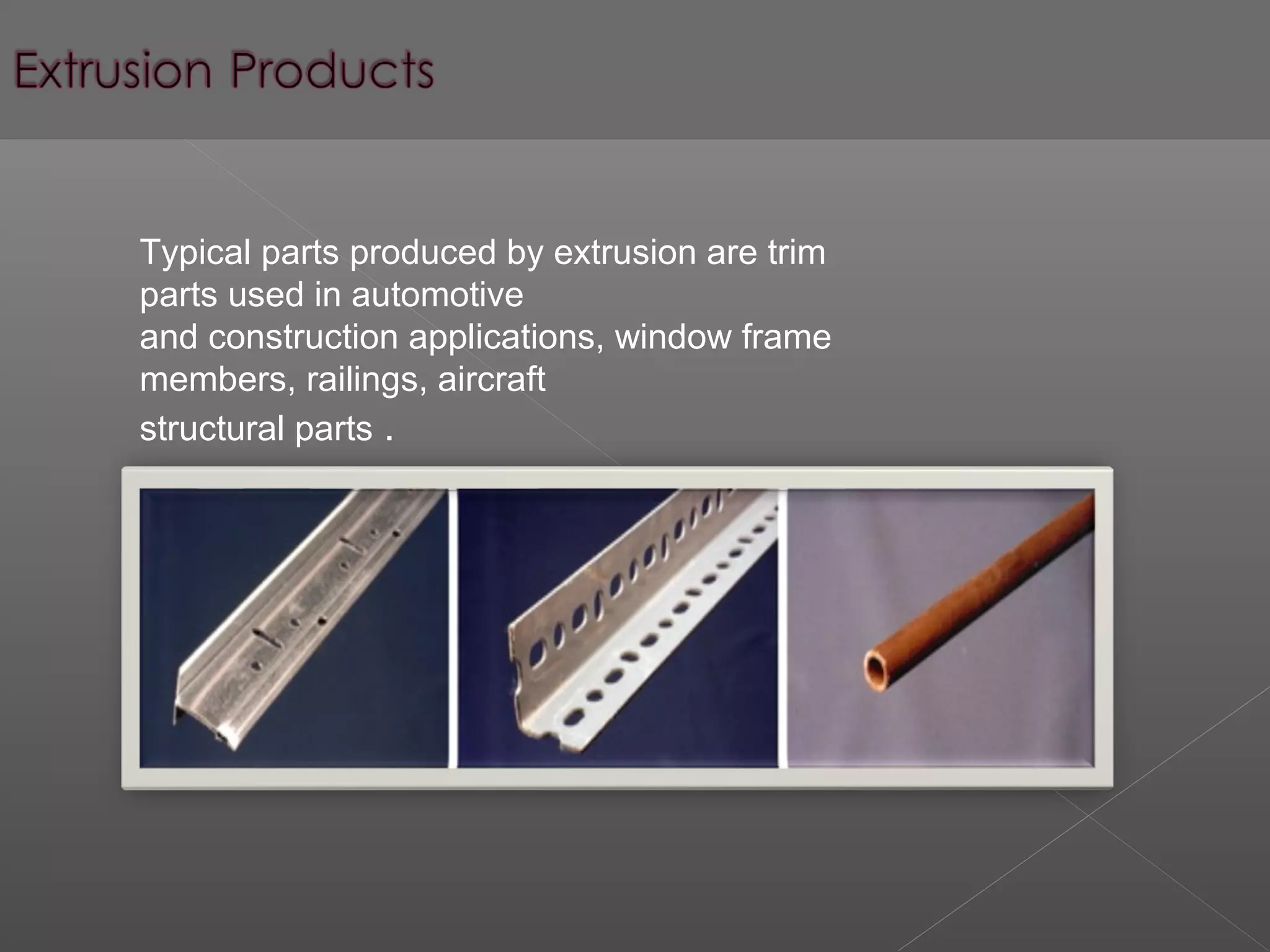
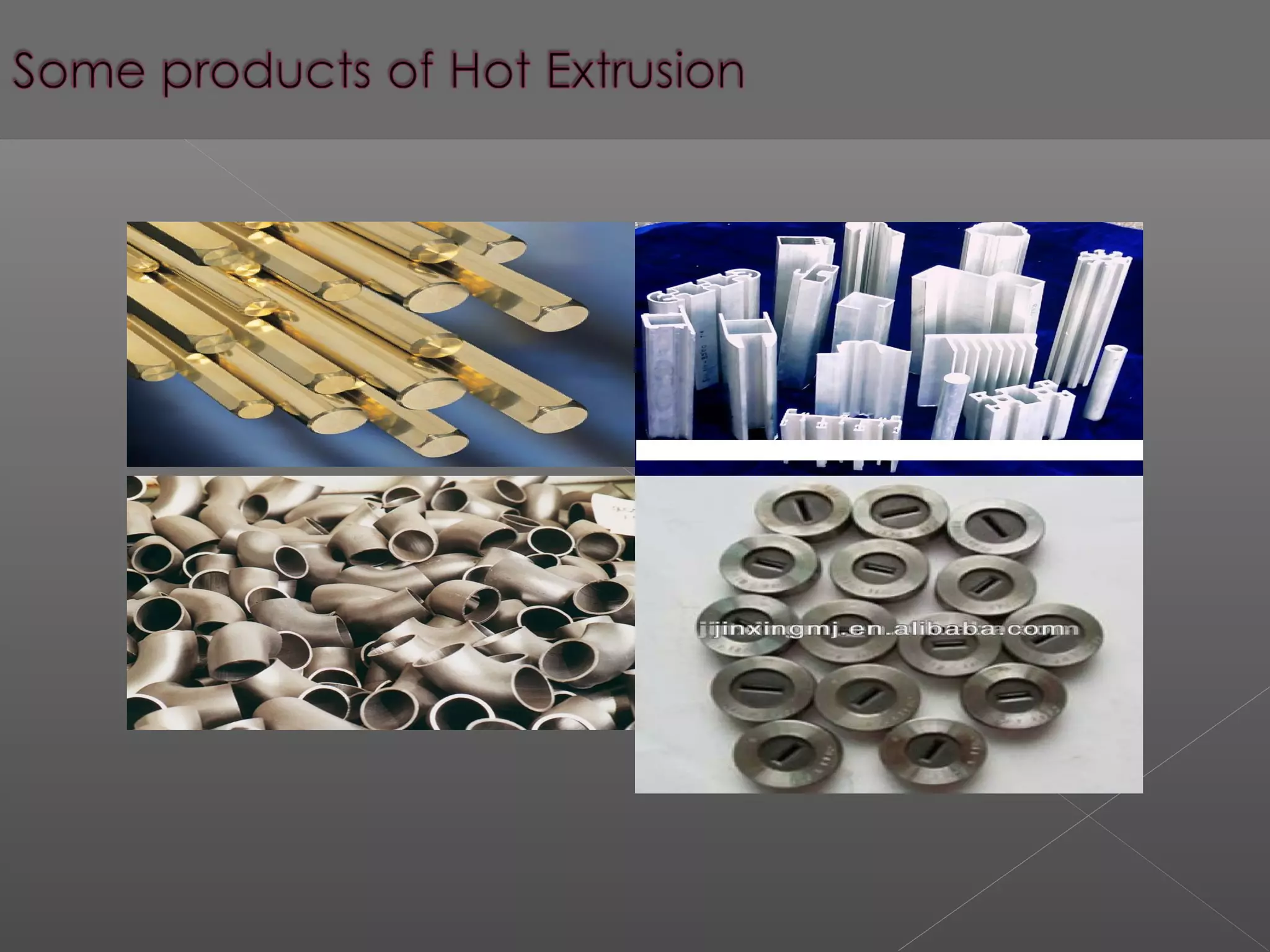
Typical parts produced by extrusion are trim
parts used in automotive
and construction applications, window frame
members, railings, aircraft
structural parts .
•Hot extrusion is done at an elevated temperature to keep
the material from work hardening and to make it easier to
push the material through the die.
•Most hot extrusions are done on horizontal hydraulic
presses that range from 250 to 12,000 tons.
•The biggest disadvantage of this process is its cost for
machinery and its upkeep.
•Typical parts produced by extrusions are trim parts used in
automotive and construction applications, window frame
members, railings, aircraft structural parts.
•Hot extrusion is done at fairly high temperatures,
approximately 50 to 75 % of the melting point of the
metal.
• The pressures can range from 35-700 Mpa.
•The most commonly used extrusion process is the hot
direct process. The cross-sectional shape of the extrusion
is defined by the shape of the die.
•Due to the high temperatures and pressures and its
detrimental effect on the die life as well as other
components, good lubrication is necessary.
•Oil and graphite work at lower temperatures, whereas at
higher
temperatures glass powder is used.
•Complex Solid or hollow shapes can be produced.
•Small Quantities can be economically produced.
• Delivery times are often far shorter than alternative
processes.
•High equipment set up maintenance cost.
•Extrusion process for metals is at very high temperatures.
•Die is Preheated to increase it’s life so there are chances
of oxidation of hot billet.
•Process wastage is higher as compared to rolling.
•The process of cold extrusion is carried out at room temperature or at
marginally elevated temperature, with the assistance of Extruder and
Extrusion Machines. These equipment / machines are specially
developed on the basis of innovative Extrusion Technology.
• Cold extrusion can also be defined as the process of shaping of a
cold metal by striking a slug.
•This striking is done with a punch (in closed cavity), which forces the
metal in upward direction around the punch.
• This process is also called Cold Forging, Cold Pressing, Extrusion
Pressing, and Impact Extrusion.
Cold extrusion is also defined as a compressive forming
process (push-through), where the starting material is
billet / slug and the process is carried out at the room
temperature.
•During the cold extrusion process, deformation heating of
the deforming material takes place at several hundred
degrees.
•Deformation heating is the process of conversion of
deformation work to heat. In general, a punch is used for
applying pressure to the enclosed billet in the stationary
die.
•The cold extrusion process is widely used to manufacture
products from Copper, Lead, Tin, Aluminum Alloys,
Titanium, Molybdenum, Vanadium, Steel, Zirconium, and
Niobium.
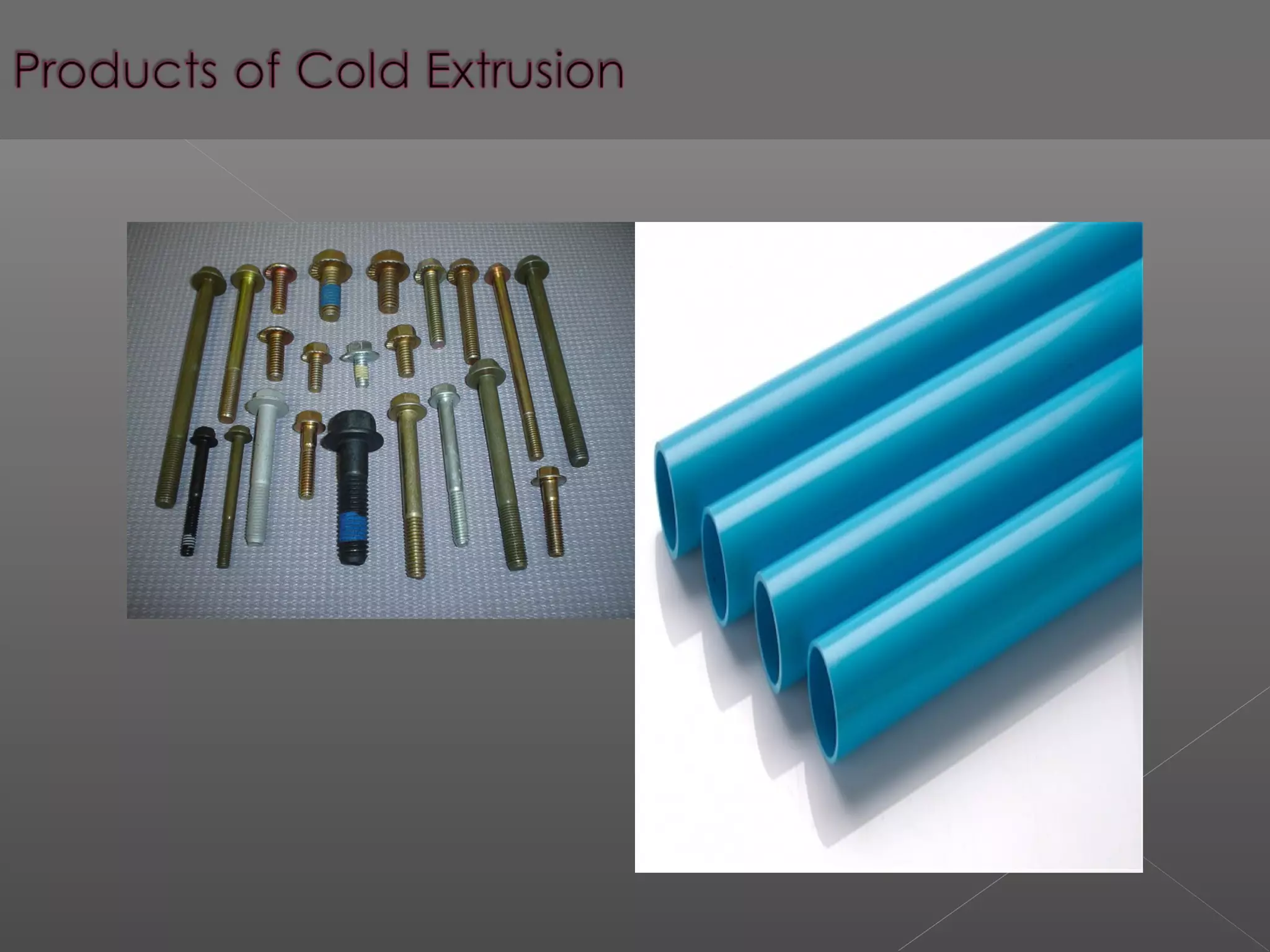
•Some of the products that are developed using this
process include various parts such as Collapsible Tubes,
Gear Blanks, Aluminum Cans, Cylinders, Fire Extinguisher
Cases, Shock Absorber Cylinders, and Automotive Pistons.
Cold Extrusion is also used in the Automobile Sector, in various
applications such as:
•Injection technology
•Engine control
•Fuel supply
•Automatic transmissions
•Seat technology
•Safety systems (restraint systems)
Cold extrusion is highly advantageous as it is used
to withstand all the stresses that are created by the
extrusion process.
There are various advantages of cold extrusion
over the hot extrusion, some of the important ones
are listed below:
•No oxidation process.
• Higher strength due to cold working Good mechanical properties
that are provided the temperatures created, are below the re-
crystallization temperature.
•Closer tolerances
•Good surface finish
•Fast extrusion speeds, in case the material is subjected to hot
shortness
•Dimensional precision
•Net-shaped features
•Lower energy consumption
• Higher production rates
•Clearance Work Environement
Apart from the above-mentioned advantages, there are some
disadvantages as well that are associated with cold extrusion.
These are lubrication cost, higher loads, limited shape complexity, and
limited deformation
Any Questions
Extrusion, DIrect and indirect Extrusoin Hot and Cold extrusion, Application of hot and cold extrusion, advantages and disadvantages of hot and cold extrusion

Extrusion, DIrect and indirect Extrusoin Hot and Cold extrusion, Application of hot and cold extrusion, advantages and disadvantages of hot and cold extrusion

  • 1.
    Manufacturing Process-I Subject Teacher: Dr Tariqure Bhatti Quaid-e-Awam University College of Engineering, Science and Technology, Larkano. Batch: 14-ME 3rd year, 2nd term Members: Muhammad Awais 14ME08 Arsalan Hussain 14ME09 Atique Ahmed 14ME10
  • 2.
     Extrusion  Directand Indirect Extrusion  Hot Extrusion  Cold Extrusion  Applications of Hot and Cold extrusion  Advantages And disadvantages of Hot and cold extrusion Topics
  • 3.
    3  Extrusion isthe process by which a block/billet of metal is reduced in cross section by forcing it to flow through a die under high pressure. What is Extrusion
  • 4.
  • 5.
    5  The processbegins by heating the stock material. It is then loaded into the container in the press.  A dummy block is placed behind it where the ram then presses on the material to push it out of the die. Extrusion Process
  • 6.
    6  Afterwards theextrusion is stretched in order to straighten it. If better properties are required then it may be heat treated or cold worked.  The extrusion process is generally economical when producing between several pounds and many tons, depending on the material being extruded. Extrusion Process
  • 7.
    7  According ToDirection: Direct & Indirect Extrusion  By Equipment: Horizontal and Vertical Extrusion  By Operating Temperatures : Hot And Cold Extrusion Classification of Extrusion Processes
  • 9.
    15- 50 MN capacityor upto 140 MN) • Used for most commercial extrusion of bars and shapes.
  • 10.
    3 to 20MN capacity
  • 11.
    Typical parts producedby extrusion are trim parts used in automotive and construction applications, window frame members, railings, aircraft structural parts .
  • 12.
    •Hot extrusion isdone at an elevated temperature to keep the material from work hardening and to make it easier to push the material through the die. •Most hot extrusions are done on horizontal hydraulic presses that range from 250 to 12,000 tons. •The biggest disadvantage of this process is its cost for machinery and its upkeep.
  • 13.
    •Typical parts producedby extrusions are trim parts used in automotive and construction applications, window frame members, railings, aircraft structural parts. •Hot extrusion is done at fairly high temperatures, approximately 50 to 75 % of the melting point of the metal. • The pressures can range from 35-700 Mpa.
  • 14.
    •The most commonlyused extrusion process is the hot direct process. The cross-sectional shape of the extrusion is defined by the shape of the die. •Due to the high temperatures and pressures and its detrimental effect on the die life as well as other components, good lubrication is necessary. •Oil and graphite work at lower temperatures, whereas at higher temperatures glass powder is used.
  • 15.
    •Complex Solid orhollow shapes can be produced. •Small Quantities can be economically produced. • Delivery times are often far shorter than alternative processes.
  • 16.
    •High equipment setup maintenance cost. •Extrusion process for metals is at very high temperatures. •Die is Preheated to increase it’s life so there are chances of oxidation of hot billet. •Process wastage is higher as compared to rolling.
  • 18.
    •The process ofcold extrusion is carried out at room temperature or at marginally elevated temperature, with the assistance of Extruder and Extrusion Machines. These equipment / machines are specially developed on the basis of innovative Extrusion Technology. • Cold extrusion can also be defined as the process of shaping of a cold metal by striking a slug. •This striking is done with a punch (in closed cavity), which forces the metal in upward direction around the punch. • This process is also called Cold Forging, Cold Pressing, Extrusion Pressing, and Impact Extrusion.
  • 19.
    Cold extrusion isalso defined as a compressive forming process (push-through), where the starting material is billet / slug and the process is carried out at the room temperature. •During the cold extrusion process, deformation heating of the deforming material takes place at several hundred degrees. •Deformation heating is the process of conversion of deformation work to heat. In general, a punch is used for applying pressure to the enclosed billet in the stationary die.
  • 20.
    •The cold extrusionprocess is widely used to manufacture products from Copper, Lead, Tin, Aluminum Alloys, Titanium, Molybdenum, Vanadium, Steel, Zirconium, and Niobium. •Some of the products that are developed using this process include various parts such as Collapsible Tubes, Gear Blanks, Aluminum Cans, Cylinders, Fire Extinguisher Cases, Shock Absorber Cylinders, and Automotive Pistons.
  • 21.
    Cold Extrusion isalso used in the Automobile Sector, in various applications such as: •Injection technology •Engine control •Fuel supply •Automatic transmissions •Seat technology •Safety systems (restraint systems)
  • 22.
    Cold extrusion ishighly advantageous as it is used to withstand all the stresses that are created by the extrusion process. There are various advantages of cold extrusion over the hot extrusion, some of the important ones are listed below:
  • 23.
    •No oxidation process. •Higher strength due to cold working Good mechanical properties that are provided the temperatures created, are below the re- crystallization temperature. •Closer tolerances •Good surface finish •Fast extrusion speeds, in case the material is subjected to hot shortness •Dimensional precision
  • 24.
    •Net-shaped features •Lower energyconsumption • Higher production rates •Clearance Work Environement Apart from the above-mentioned advantages, there are some disadvantages as well that are associated with cold extrusion. These are lubrication cost, higher loads, limited shape complexity, and limited deformation
  • 26.