Business Environment
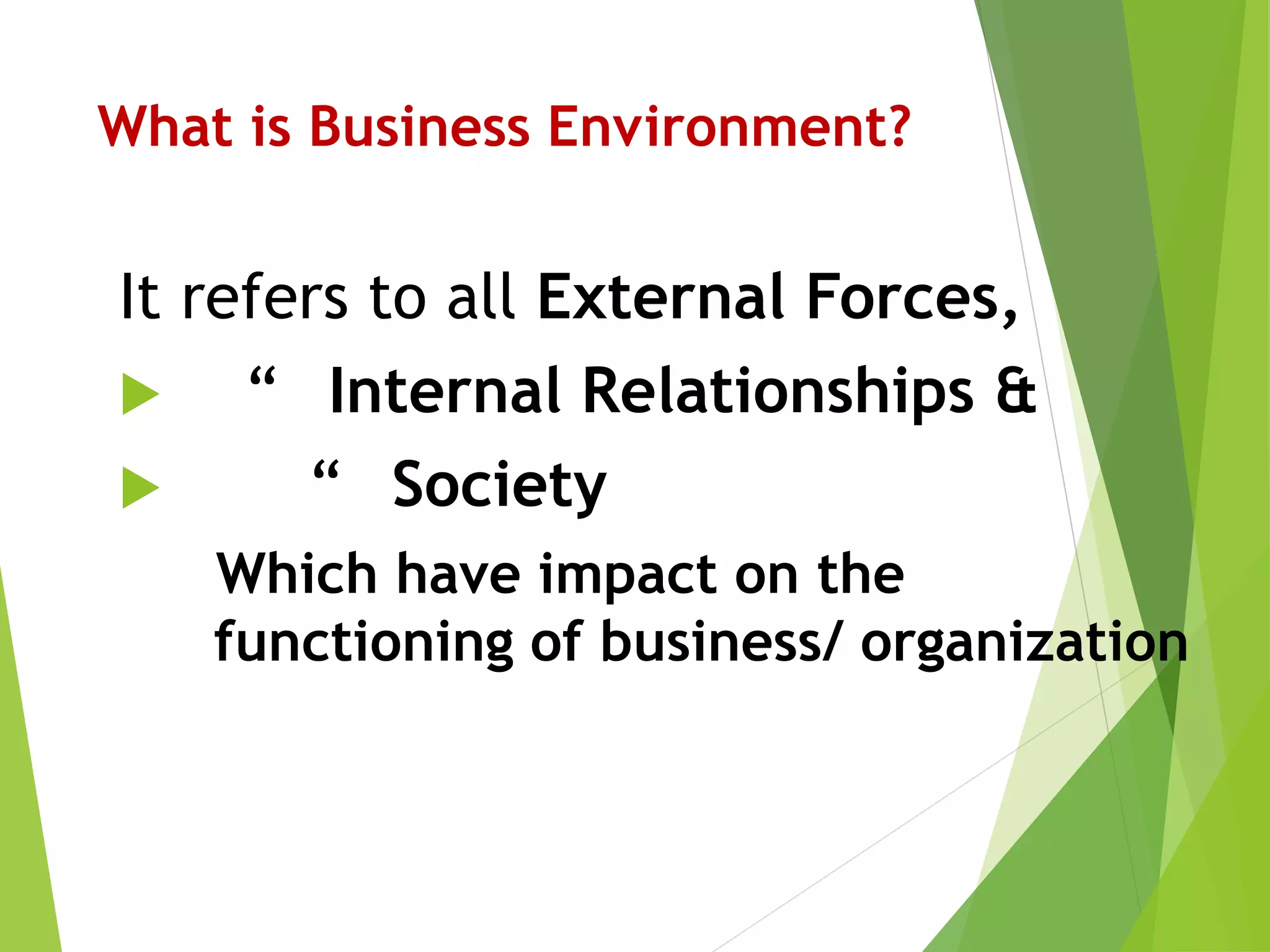
What is Business Environment?
It refers to all External Forces,
 “ Internal Relationships &
 “ Society
Which have impact on the
functioning of business/ organization
Business Environment
Internal Environment (Within
the Company)
External Environment
Micro (Task / operations)
Macro (General / Remote)
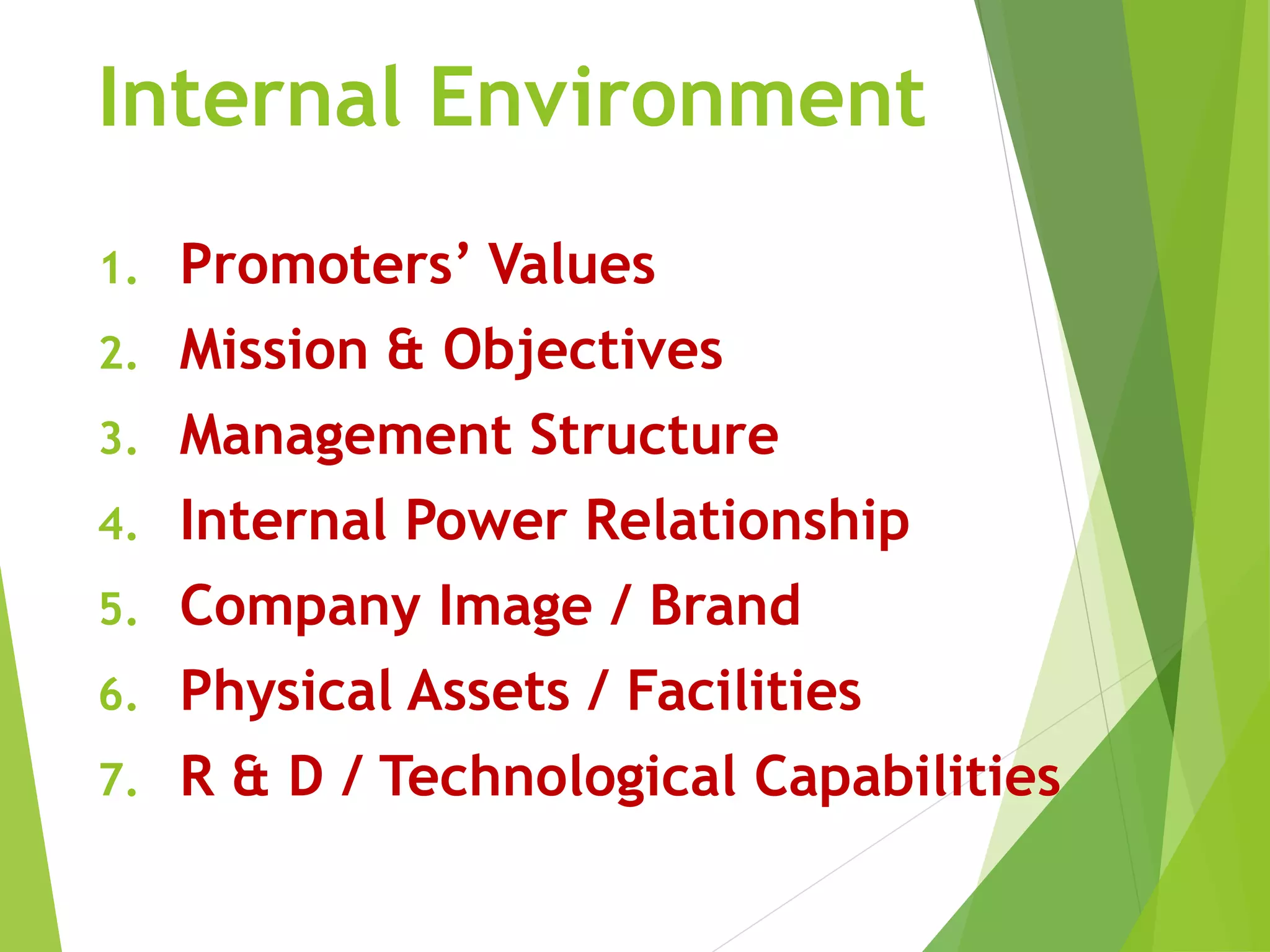
Internal Environment
1. Promoters’ Values
2. Mission & Objectives
3. Management Structure
4. Internal Power Relationship
5. Company Image / Brand
6. Physical Assets / Facilities
7. R & D / Technological Capabilities
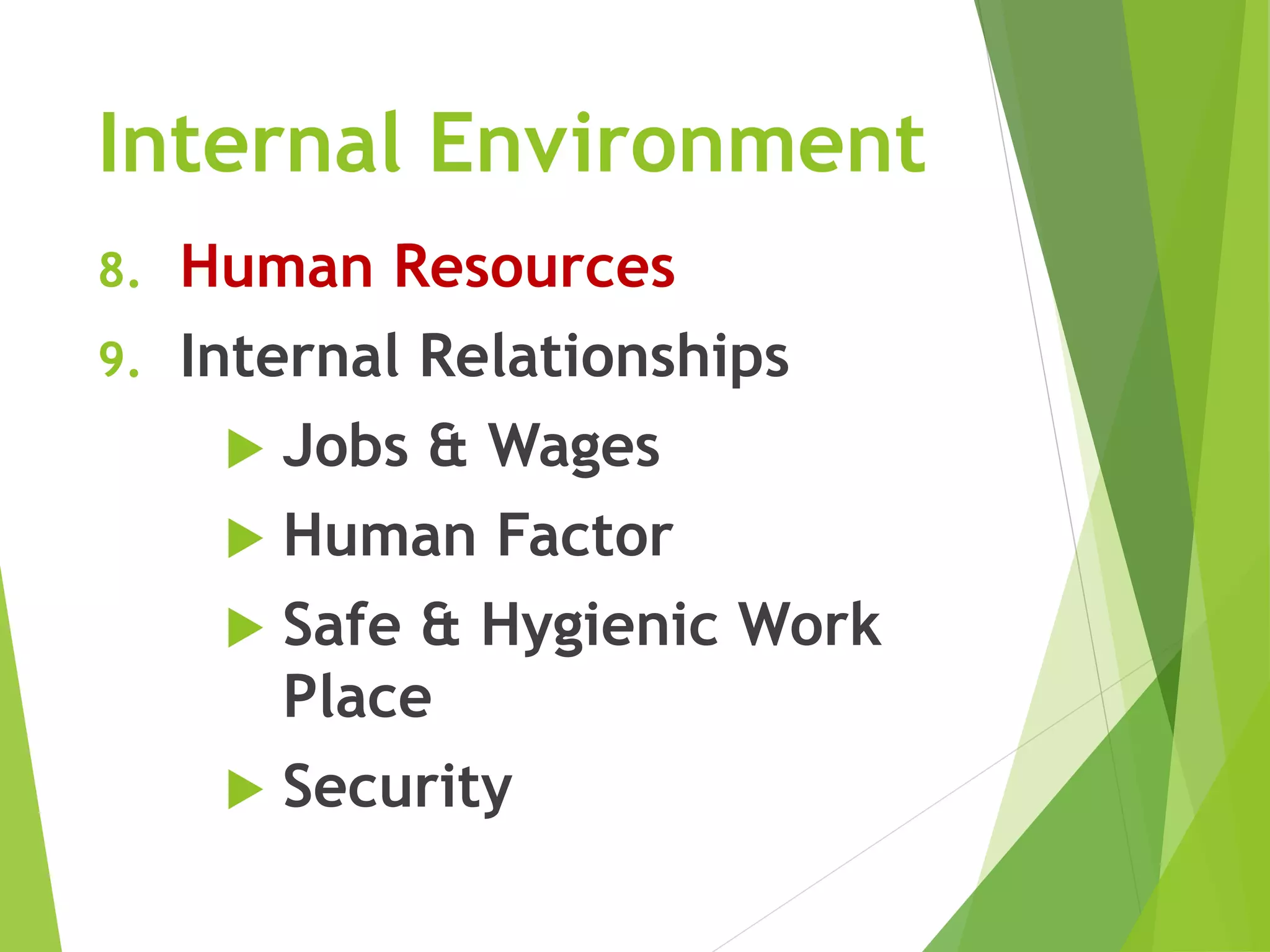
Internal Environment
8. Human Resources
9. Internal Relationships
 Jobs & Wages
 Human Factor
 Safe & Hygienic Work
Place
 Security
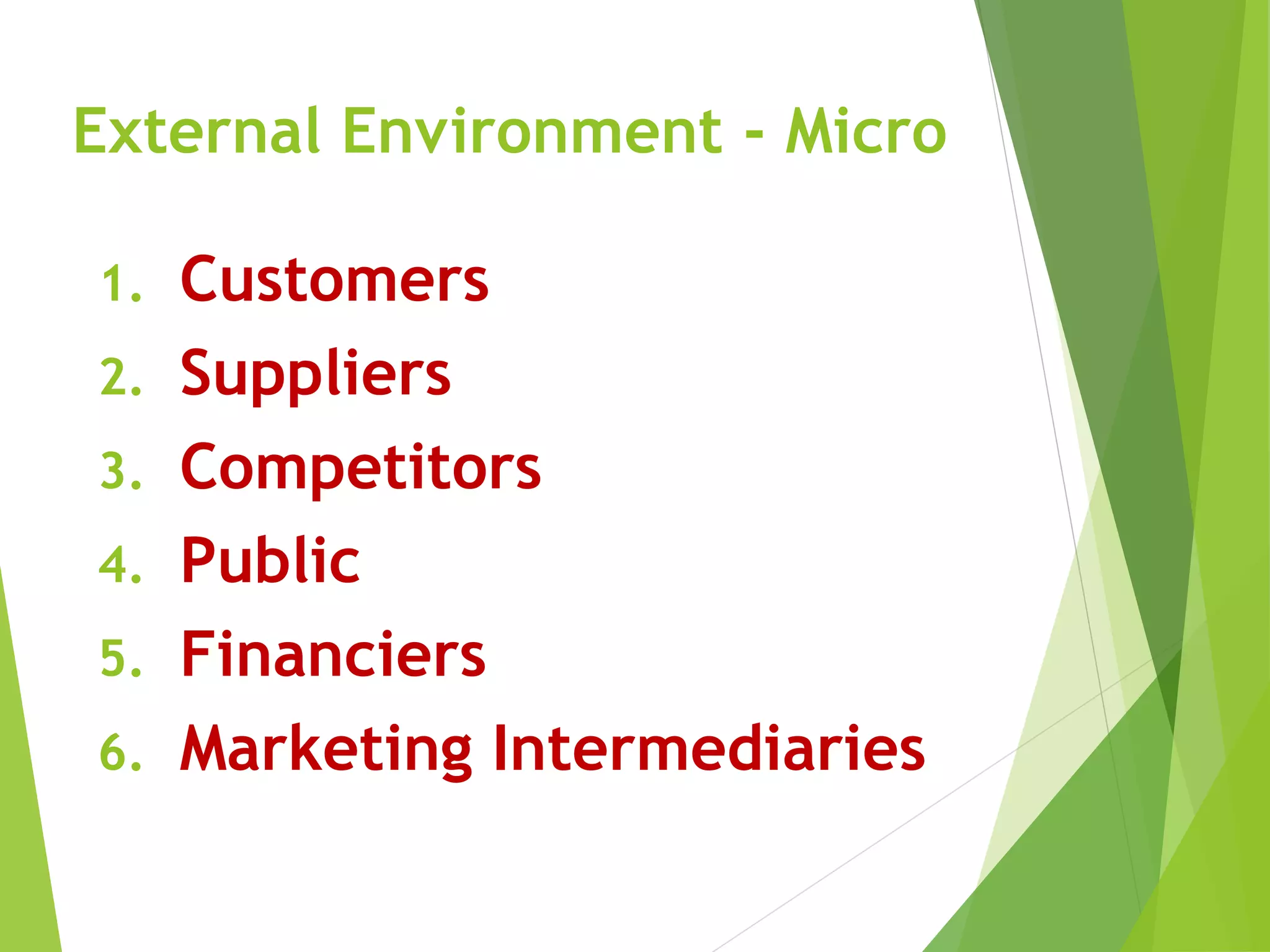
External Environment - Micro
1. Customers
2. Suppliers
3. Competitors
4. Public
5. Financiers
6. Marketing Intermediaries
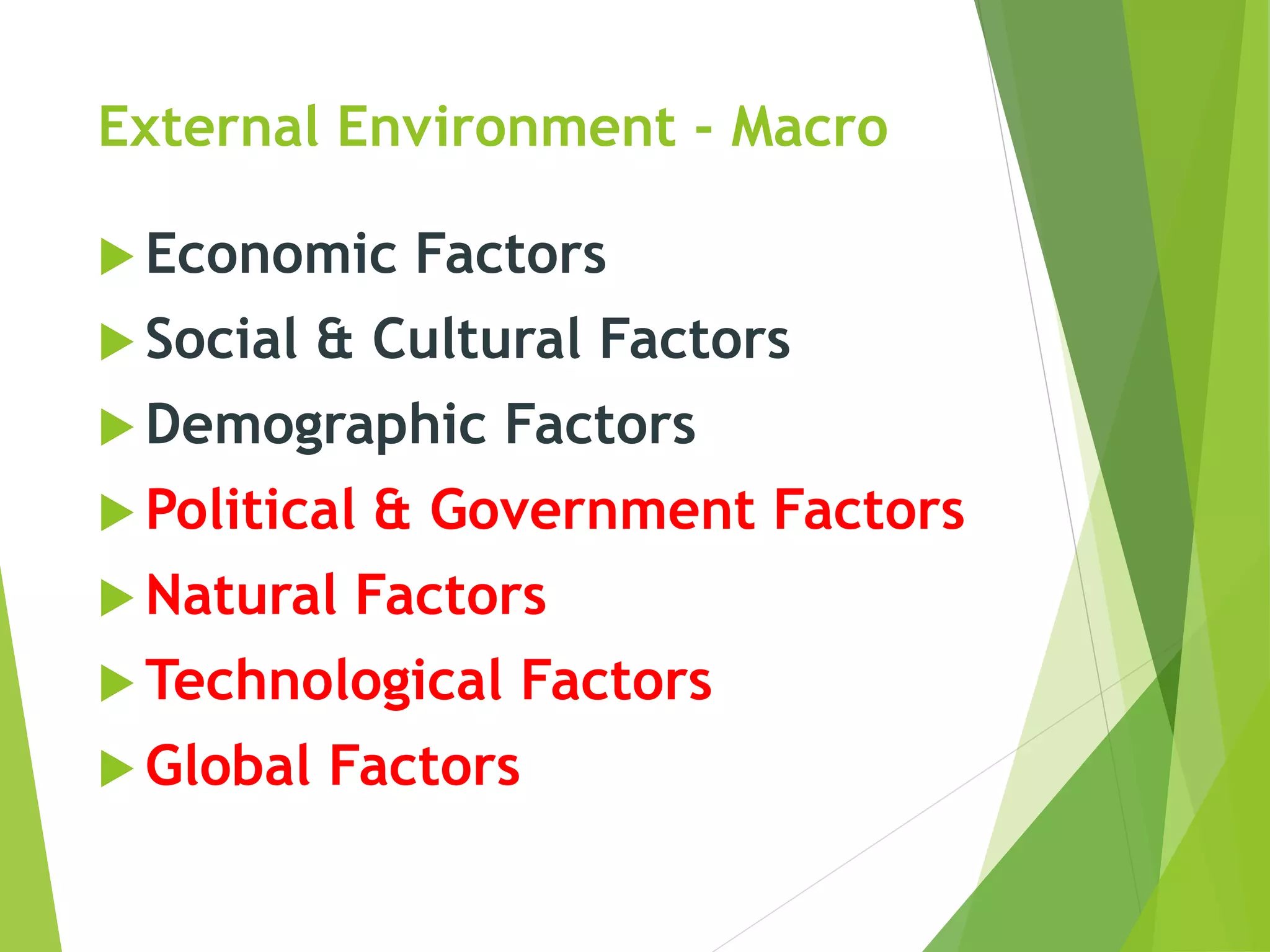
External Environment - Macro
 Economic Factors
 Social & Cultural Factors
 Demographic Factors
 Political & Government Factors
 Natural Factors
 Technological Factors
 Global Factors
Analysis of Environment
PEST
Political
Economic
Social
Technological
PESTEL
Political
Econom
ic
Sociocu
ltural
Technol
ogical
Environ
mental
Legal
Political Factors
 1.How stable is the political environment?
 2.Will government policy influence laws that regulate
or tax businesses?
 3.What is the government’s position on marketing
ethics?
 4. What is the government’s policy on the economy?
 5. Does the government have a view on culture and
religion?
 6. Is the government involved in trading agreements
such as EU, NAFTA, ASEAN, or others?
Source: http://www.marketingteacher.com/pest-analysis/
Economic Factors
1. Interest Rates.
2. The level of inflation, Employment
level
3. Long-term prospects for the
economy – GDP, per capita, and so on.
Source: http://www.marketingteacher.com/pest-analysis/
Sociocultural Factors
 1.What is the dominant religion?
 2.What are attitudes to foreign products and
services?
 3.Does language impact upon the diffusion of
products onto markets?
 4.How much time do consumers have for leisure?
 5.What are the roles of men and women within
society?
 6.How long are the population living? Are the older
generations wealthy?
 7.Do the population have a strong/weak opinion on
green issues?
Source: http://www.marketingteacher.com/pest-analysis/
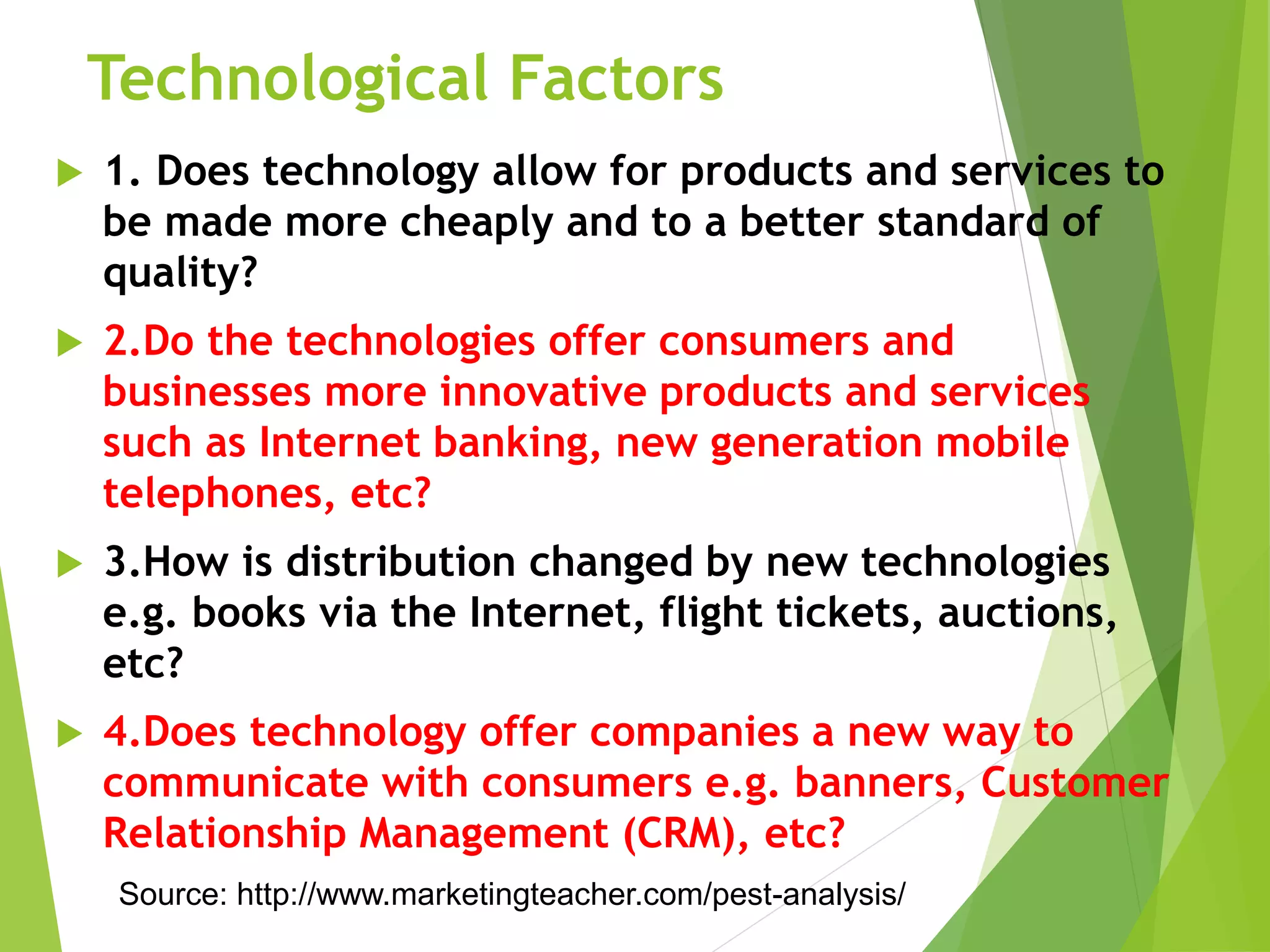
Technological Factors
 1. Does technology allow for products and services to
be made more cheaply and to a better standard of
quality?
 2.Do the technologies offer consumers and
businesses more innovative products and services
such as Internet banking, new generation mobile
telephones, etc?
 3.How is distribution changed by new technologies
e.g. books via the Internet, flight tickets, auctions,
etc?
 4.Does technology offer companies a new way to
communicate with consumers e.g. banners, Customer
Relationship Management (CRM), etc?
Source: http://www.marketingteacher.com/pest-analysis/
Environmental Factors
 These factors have only really come
to the forefront in the last fifteen
years or so.
 They have become important due to
the increasing scarcity of raw
materials, pollution, doing business
as an ethical and sustainable
company, carbon footprint targets set
by governments
Source: https://www.professionalacademy.com/blogs-and-advice/marketing-
theories---pestel-analysis
Legal Factors
 Legal factors include - health and
safety, equal opportunities, advertising
standards, consumer rights and laws,
product labelling and product safety.
 It is clear that companies need to know
what is and what is not legal in order to
trade successfully.
 If an organisation trades globally this
becomes a very tricky area to get right
as each country has its own set of rules
and regulations.
Source: https://www.professionalacademy.com/blogs-and-advice/marketing-
theories---pestel-analysis
After you have completed a
PESTEL analysis you should
be able to use this to help
you identify the strengths
and weaknesses for a SWOT
Analysis
Source: https://www.professionalacademy.com/blogs-and-advice/marketing-
theories---swot-analysis
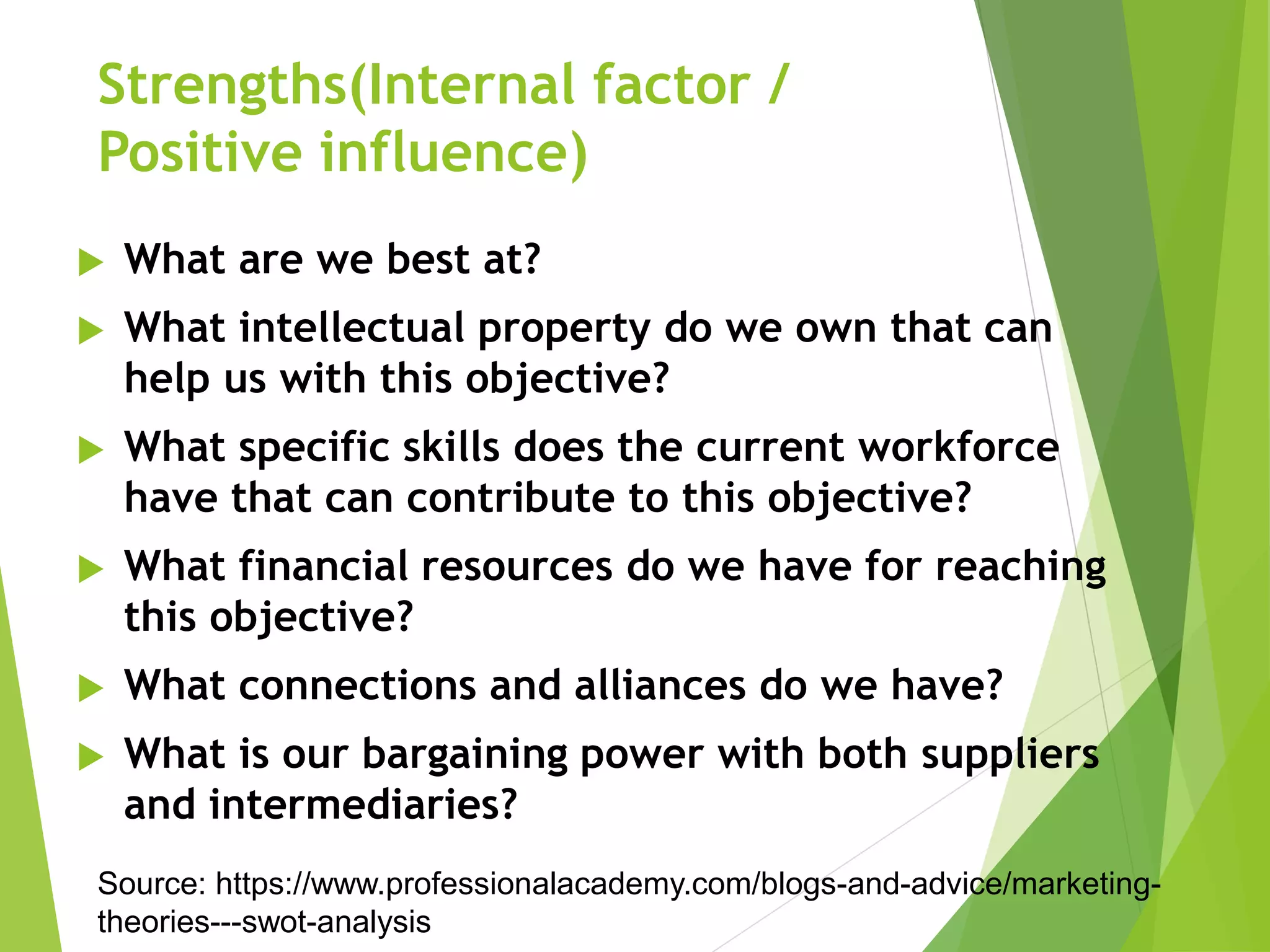
Strengths(Internal factor /
Positive influence)
 What are we best at?
 What intellectual property do we own that can
help us with this objective?
 What specific skills does the current workforce
have that can contribute to this objective?
 What financial resources do we have for reaching
this objective?
 What connections and alliances do we have?
 What is our bargaining power with both suppliers
and intermediaries?
Source: https://www.professionalacademy.com/blogs-and-advice/marketing-
theories---swot-analysis
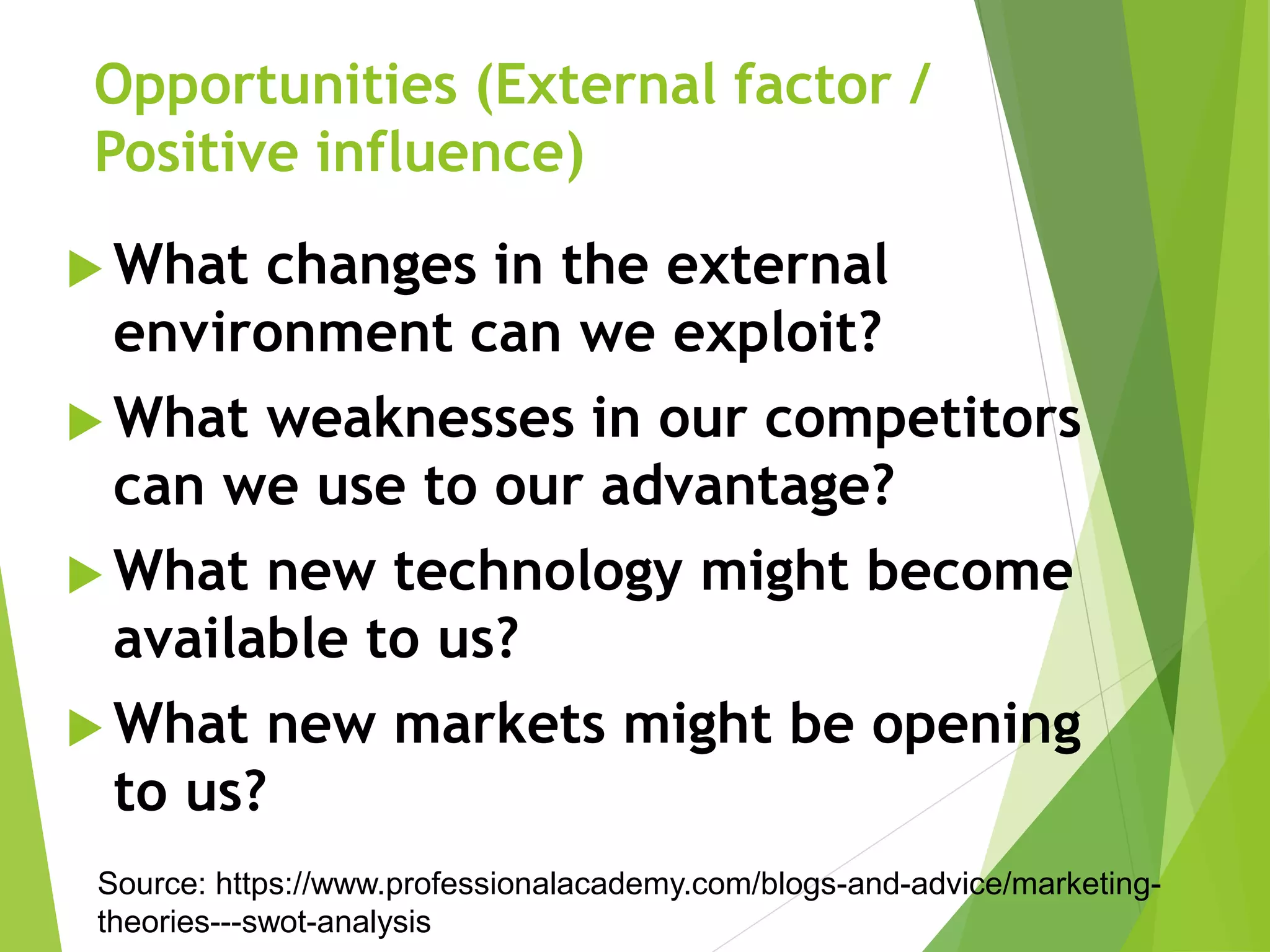
Opportunities (External factor /
Positive influence)
 What changes in the external
environment can we exploit?
 What weaknesses in our competitors
can we use to our advantage?
 What new technology might become
available to us?
 What new markets might be opening
to us?
Source: https://www.professionalacademy.com/blogs-and-advice/marketing-
theories---swot-analysis
Weaknesses (Internal factor /
Negative influence)
 What are we worst at doing?
 Is our intellectual property outdated?
 What training does our workforce
lack?
 What is our financial position?
 What connections and alliances
should we have, but don’t?
Source: https://www.professionalacademy.com/blogs-and-advice/marketing-
theories---swot-analysis
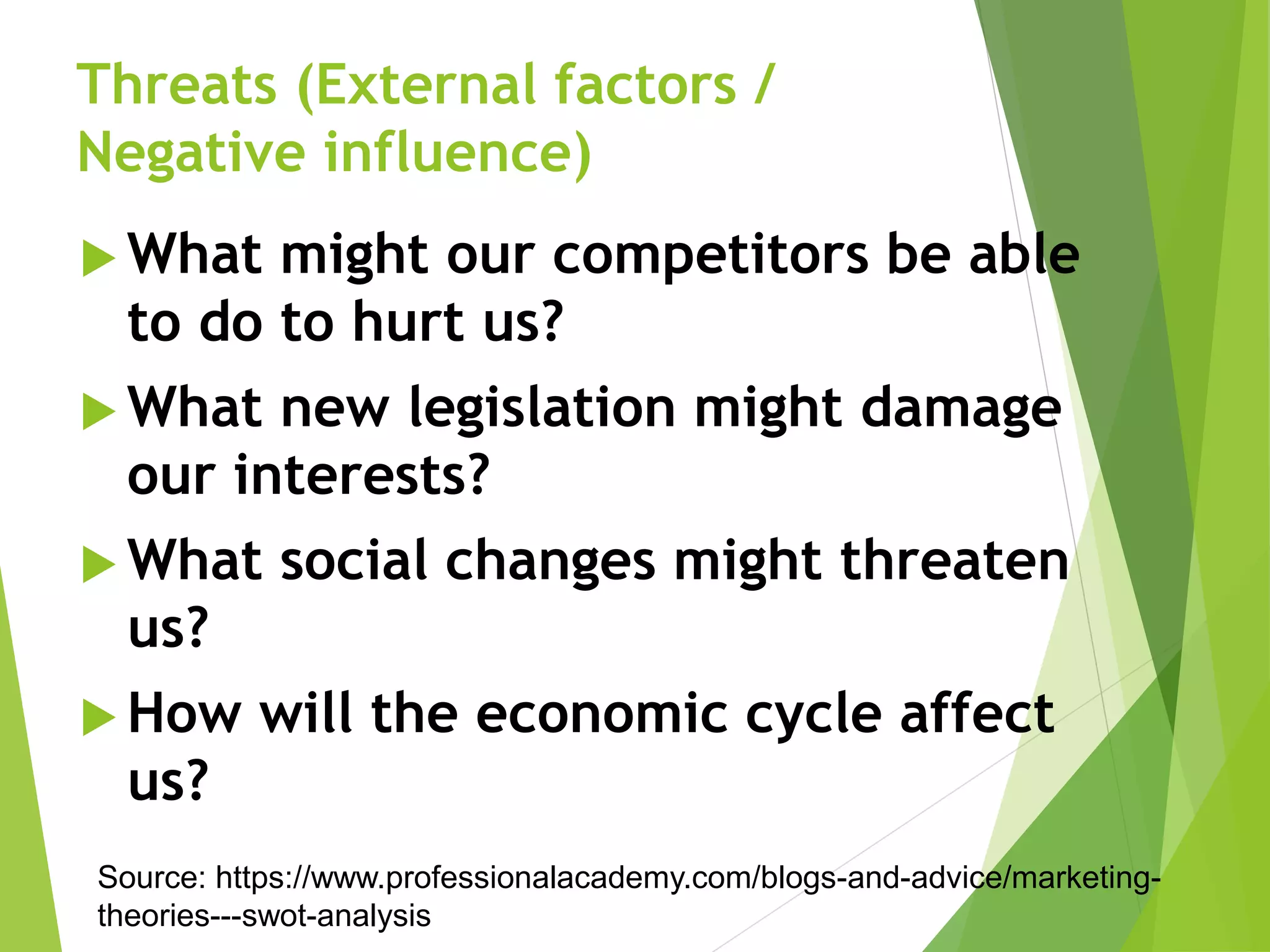
Threats (External factors /
Negative influence)
 What might our competitors be able
to do to hurt us?
 What new legislation might damage
our interests?
 What social changes might threaten
us?
 How will the economic cycle affect
us?
Source: https://www.professionalacademy.com/blogs-and-advice/marketing-
theories---swot-analysis

External & Internal Business Environment

  • 1.
  • 2.
    What is BusinessEnvironment? It refers to all External Forces,  “ Internal Relationships &  “ Society Which have impact on the functioning of business/ organization
  • 3.
    Business Environment Internal Environment(Within the Company) External Environment Micro (Task / operations) Macro (General / Remote)
  • 4.
    Internal Environment 1. Promoters’Values 2. Mission & Objectives 3. Management Structure 4. Internal Power Relationship 5. Company Image / Brand 6. Physical Assets / Facilities 7. R & D / Technological Capabilities
  • 5.
    Internal Environment 8. HumanResources 9. Internal Relationships  Jobs & Wages  Human Factor  Safe & Hygienic Work Place  Security
  • 6.
    External Environment -Micro 1. Customers 2. Suppliers 3. Competitors 4. Public 5. Financiers 6. Marketing Intermediaries
  • 7.
    External Environment -Macro  Economic Factors  Social & Cultural Factors  Demographic Factors  Political & Government Factors  Natural Factors  Technological Factors  Global Factors
  • 8.
  • 9.
  • 10.
  • 11.
    Political Factors  1.Howstable is the political environment?  2.Will government policy influence laws that regulate or tax businesses?  3.What is the government’s position on marketing ethics?  4. What is the government’s policy on the economy?  5. Does the government have a view on culture and religion?  6. Is the government involved in trading agreements such as EU, NAFTA, ASEAN, or others? Source: http://www.marketingteacher.com/pest-analysis/
  • 12.
    Economic Factors 1. InterestRates. 2. The level of inflation, Employment level 3. Long-term prospects for the economy – GDP, per capita, and so on. Source: http://www.marketingteacher.com/pest-analysis/
  • 13.
    Sociocultural Factors  1.Whatis the dominant religion?  2.What are attitudes to foreign products and services?  3.Does language impact upon the diffusion of products onto markets?  4.How much time do consumers have for leisure?  5.What are the roles of men and women within society?  6.How long are the population living? Are the older generations wealthy?  7.Do the population have a strong/weak opinion on green issues? Source: http://www.marketingteacher.com/pest-analysis/
  • 14.
    Technological Factors  1.Does technology allow for products and services to be made more cheaply and to a better standard of quality?  2.Do the technologies offer consumers and businesses more innovative products and services such as Internet banking, new generation mobile telephones, etc?  3.How is distribution changed by new technologies e.g. books via the Internet, flight tickets, auctions, etc?  4.Does technology offer companies a new way to communicate with consumers e.g. banners, Customer Relationship Management (CRM), etc? Source: http://www.marketingteacher.com/pest-analysis/
  • 15.
    Environmental Factors  Thesefactors have only really come to the forefront in the last fifteen years or so.  They have become important due to the increasing scarcity of raw materials, pollution, doing business as an ethical and sustainable company, carbon footprint targets set by governments Source: https://www.professionalacademy.com/blogs-and-advice/marketing- theories---pestel-analysis
  • 16.
    Legal Factors  Legalfactors include - health and safety, equal opportunities, advertising standards, consumer rights and laws, product labelling and product safety.  It is clear that companies need to know what is and what is not legal in order to trade successfully.  If an organisation trades globally this becomes a very tricky area to get right as each country has its own set of rules and regulations. Source: https://www.professionalacademy.com/blogs-and-advice/marketing- theories---pestel-analysis
  • 17.
    After you havecompleted a PESTEL analysis you should be able to use this to help you identify the strengths and weaknesses for a SWOT Analysis
  • 18.
  • 19.
    Strengths(Internal factor / Positiveinfluence)  What are we best at?  What intellectual property do we own that can help us with this objective?  What specific skills does the current workforce have that can contribute to this objective?  What financial resources do we have for reaching this objective?  What connections and alliances do we have?  What is our bargaining power with both suppliers and intermediaries? Source: https://www.professionalacademy.com/blogs-and-advice/marketing- theories---swot-analysis
  • 20.
    Opportunities (External factor/ Positive influence)  What changes in the external environment can we exploit?  What weaknesses in our competitors can we use to our advantage?  What new technology might become available to us?  What new markets might be opening to us? Source: https://www.professionalacademy.com/blogs-and-advice/marketing- theories---swot-analysis
  • 21.
    Weaknesses (Internal factor/ Negative influence)  What are we worst at doing?  Is our intellectual property outdated?  What training does our workforce lack?  What is our financial position?  What connections and alliances should we have, but don’t? Source: https://www.professionalacademy.com/blogs-and-advice/marketing- theories---swot-analysis
  • 22.
    Threats (External factors/ Negative influence)  What might our competitors be able to do to hurt us?  What new legislation might damage our interests?  What social changes might threaten us?  How will the economic cycle affect us? Source: https://www.professionalacademy.com/blogs-and-advice/marketing- theories---swot-analysis