Extension Programme
Planning
Rajinder Kaur Kalra
Professor and Head (Retired)
PAU Ludhiana 9814067709
• Planning: designing a course of action to achieve ends
• Programme: well-organized series of activities to facilitate
change in a well-defined target group.
• Progrmme Planning: the process of making decision about
the direction and intensity of the educational effots required
• Extension Programme: written statement prepared on the
basis of extension programme planning
Extension Programme planning
• a continuous and cooperative activity, involving –
• local people and the
• extension personnel,
where problems are identified, objectives are set forth and
action is taken to reach the objectives
Importance of Extension Programme
Planning
• Avoid wastage of resources
• Provide guidance
• Continuity
• Provide reliable information
• Institutional support
• Leadership development
• Minimize conflicts
• Local Support
• Avoiding future problems
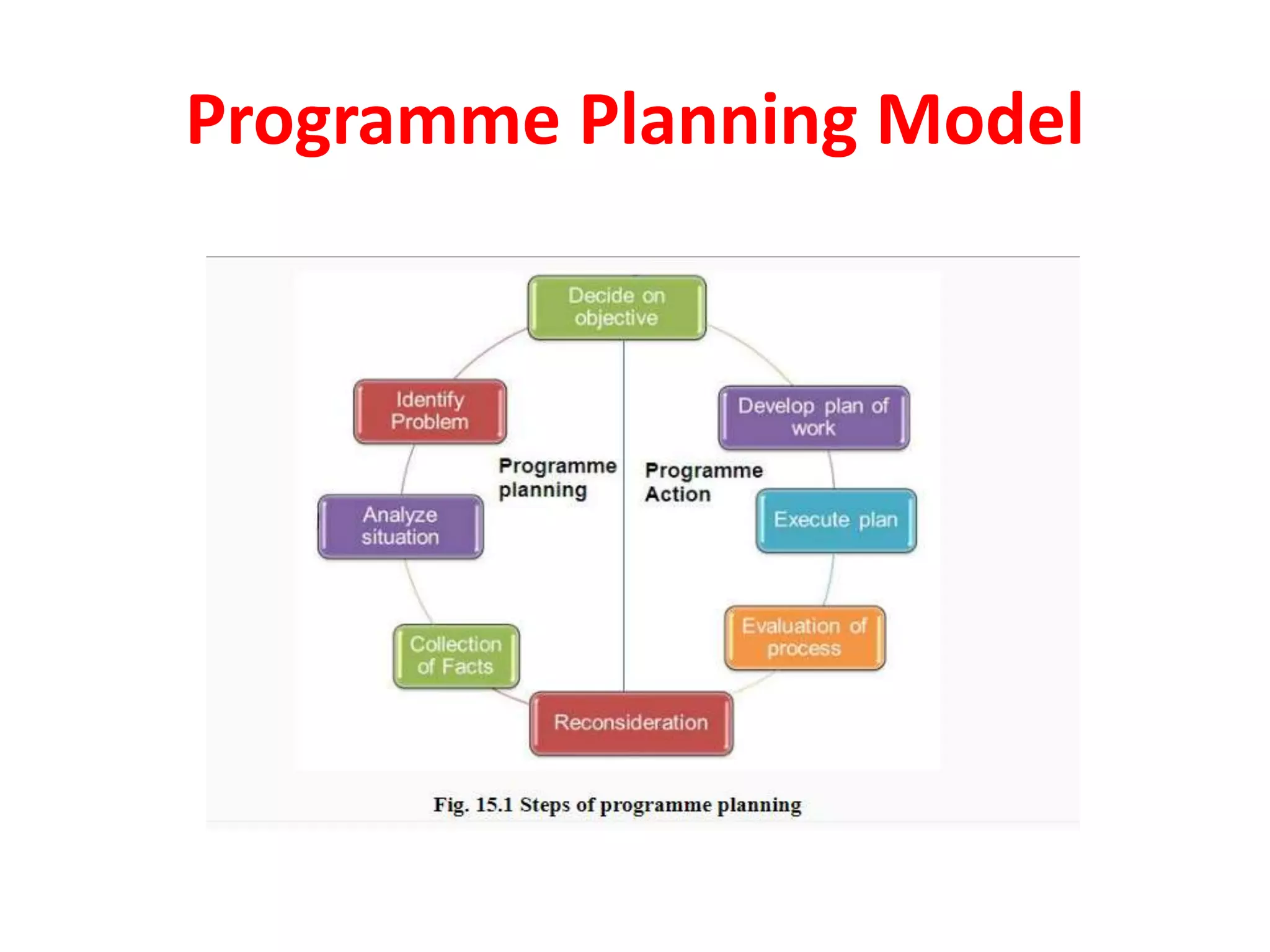
Programme Planning Model
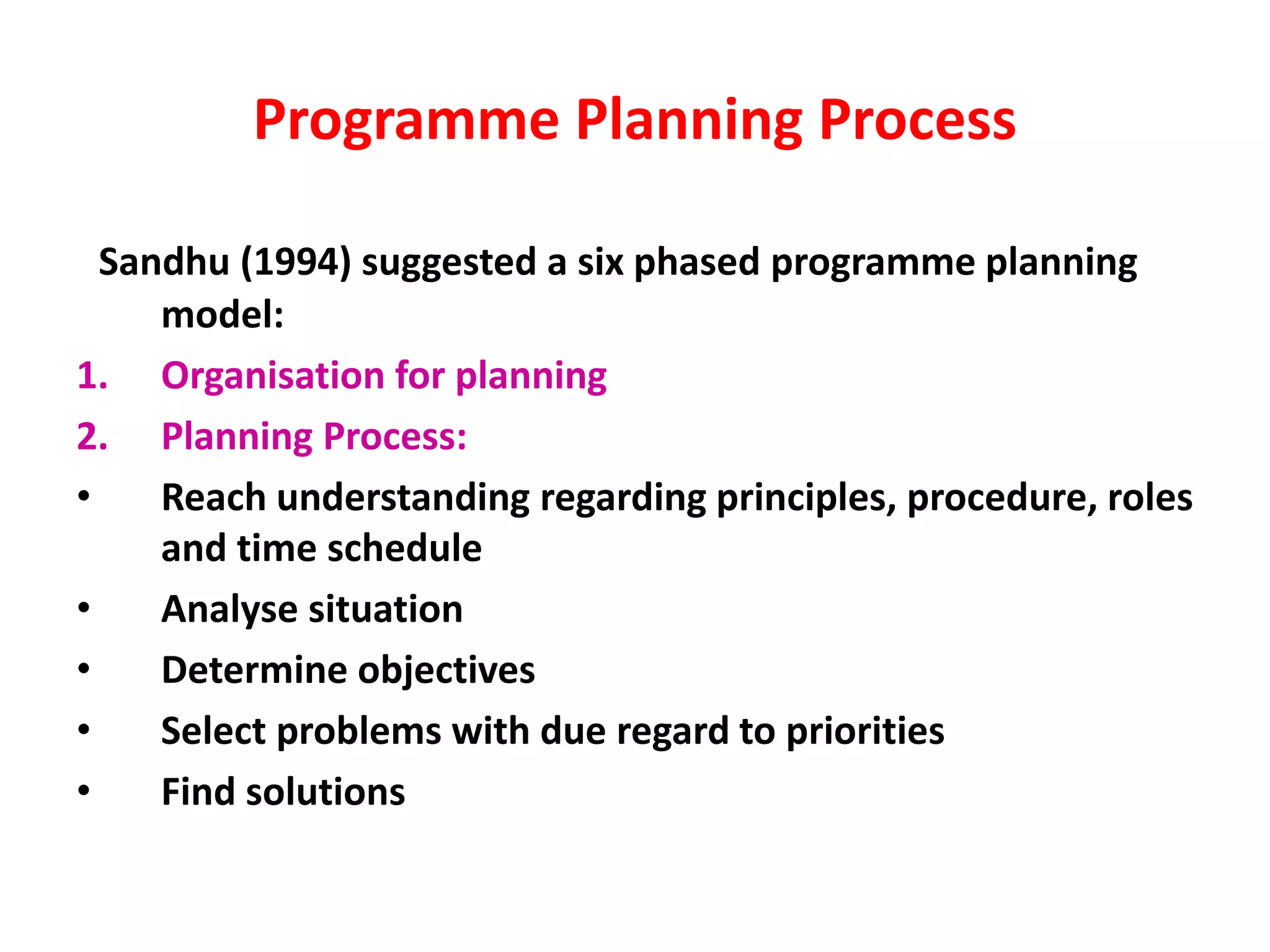
Programme Planning Process
Sandhu (1994) suggested a six phased programme planning
model:
1. Organisation for planning
2. Planning Process:
• Reach understanding regarding principles, procedure, roles
and time schedule
• Analyse situation
• Determine objectives
• Select problems with due regard to priorities
• Find solutions
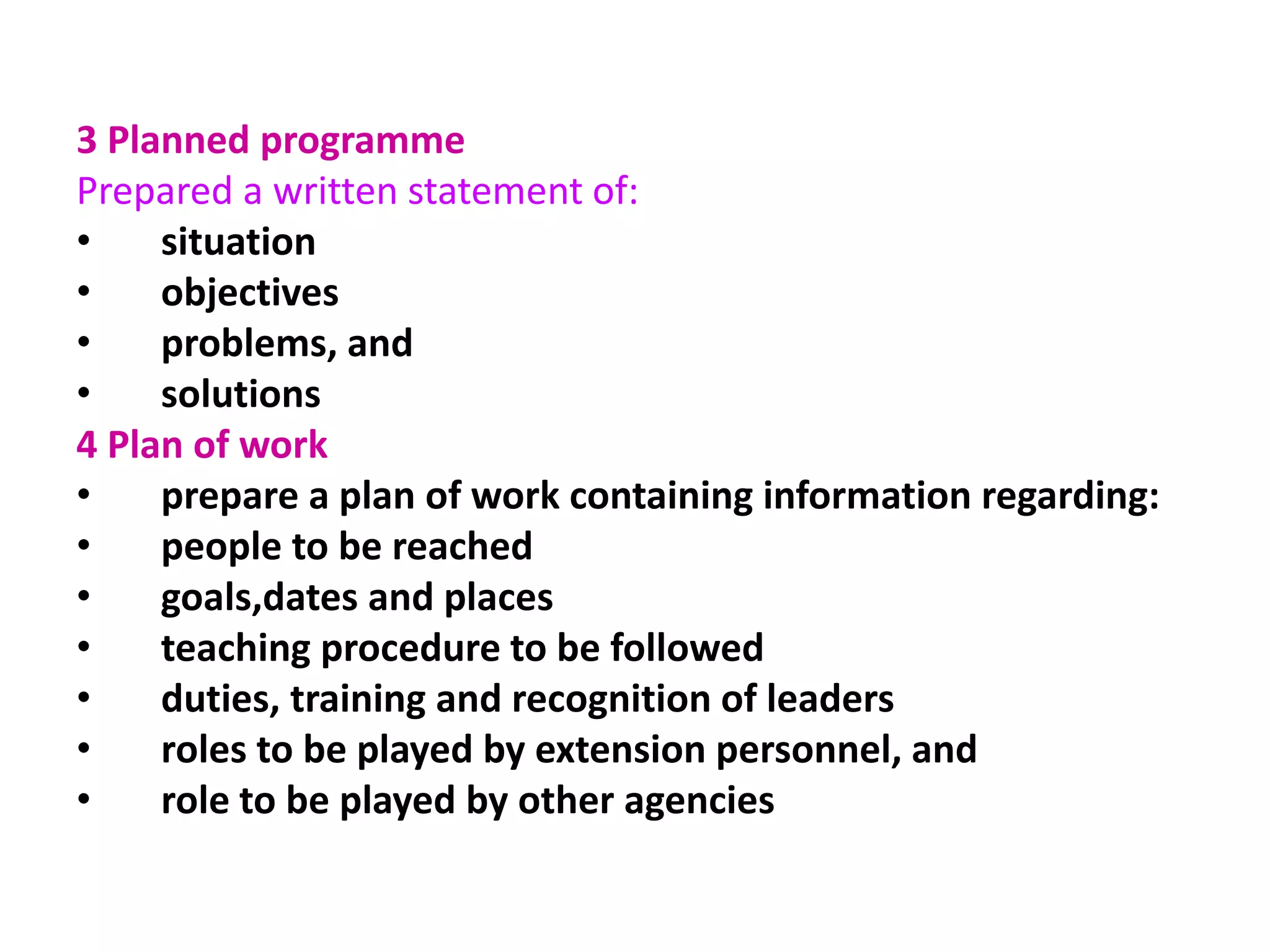
3 Planned programme
Prepared a written statement of:
• situation
• objectives
• problems, and
• solutions
4 Plan of work
• prepare a plan of work containing information regarding:
• people to be reached
• goals,dates and places
• teaching procedure to be followed
• duties, training and recognition of leaders
• roles to be played by extension personnel, and
• role to be played by other agencies
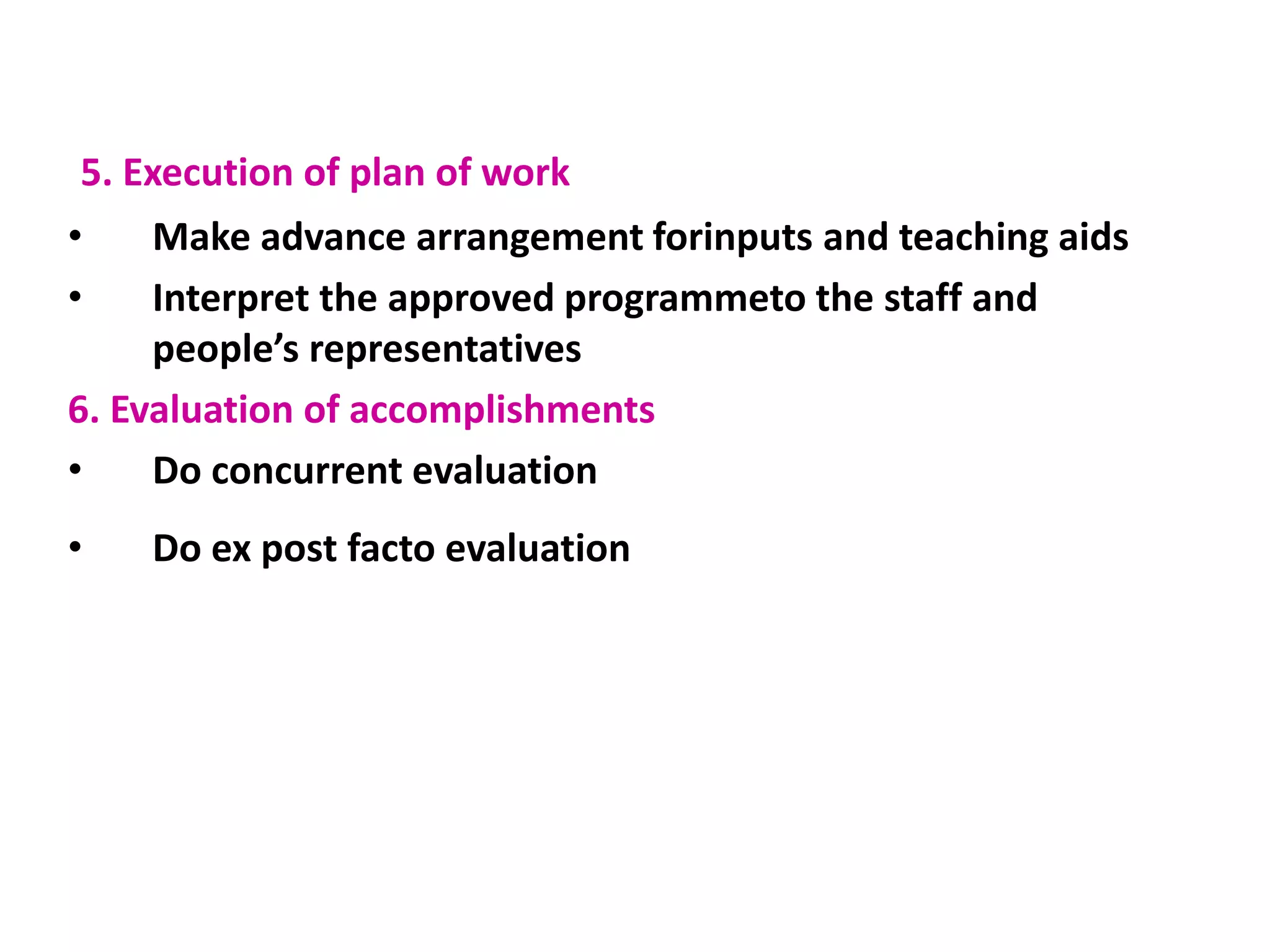
5. Execution of plan of work
• Make advance arrangement forinputs and teaching aids
• Interpret the approved programmeto the staff and
people’s representatives
6. Evaluation of accomplishments
• Do concurrent evaluation
• Do ex post facto evaluation
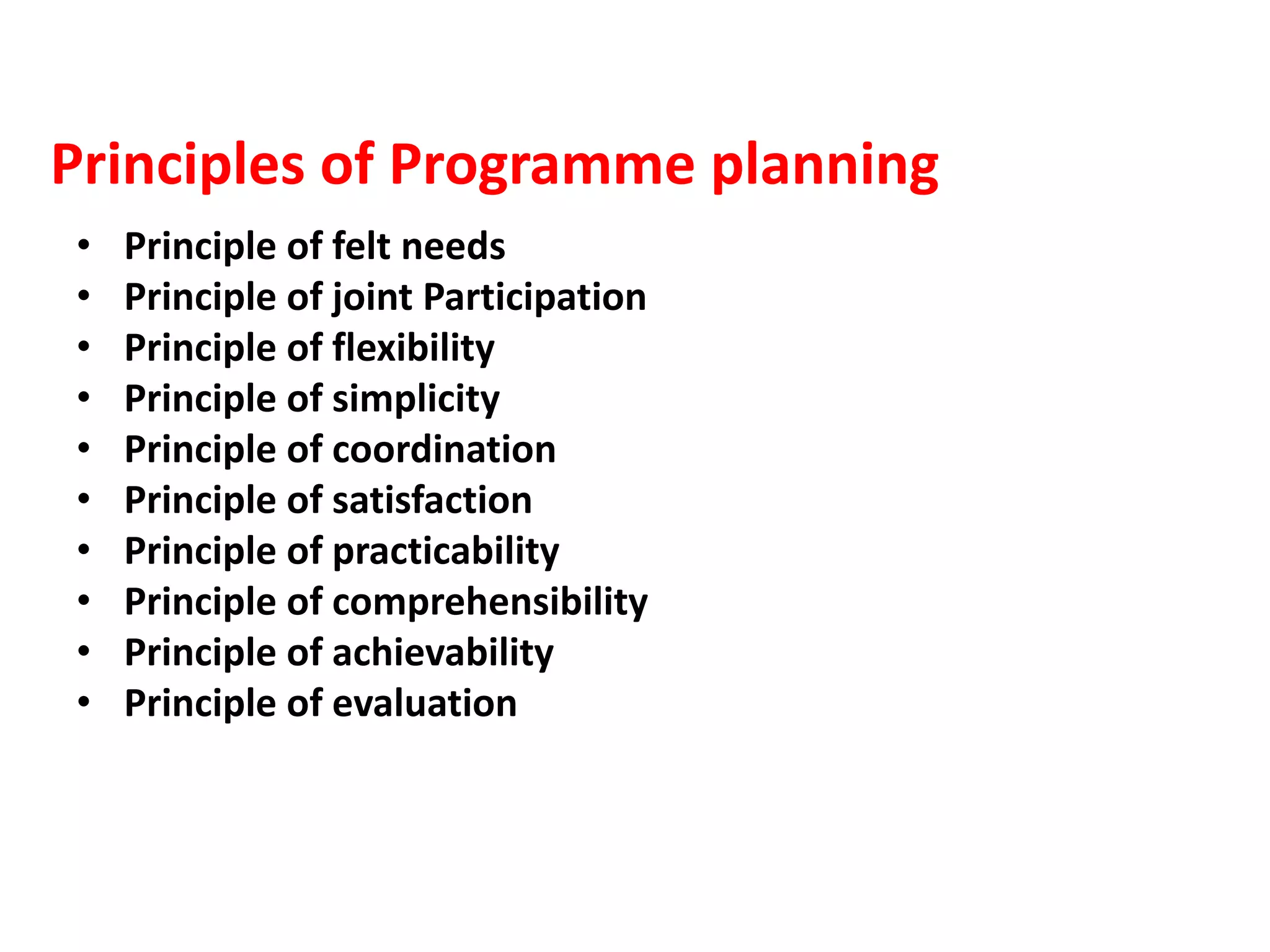
Principles of Programme planning
• Principle of felt needs
• Principle of joint Participation
• Principle of flexibility
• Principle of simplicity
• Principle of coordination
• Principle of satisfaction
• Principle of practicability
• Principle of comprehensibility
• Principle of achievability
• Principle of evaluation
Extension programme planning

Extension programme planning

  • 1.
    Extension Programme Planning Rajinder KaurKalra Professor and Head (Retired) PAU Ludhiana 9814067709
  • 2.
    • Planning: designinga course of action to achieve ends • Programme: well-organized series of activities to facilitate change in a well-defined target group. • Progrmme Planning: the process of making decision about the direction and intensity of the educational effots required • Extension Programme: written statement prepared on the basis of extension programme planning
  • 3.
    Extension Programme planning •a continuous and cooperative activity, involving – • local people and the • extension personnel, where problems are identified, objectives are set forth and action is taken to reach the objectives
  • 4.
    Importance of ExtensionProgramme Planning • Avoid wastage of resources • Provide guidance • Continuity • Provide reliable information • Institutional support • Leadership development • Minimize conflicts • Local Support • Avoiding future problems
  • 5.
  • 6.
    Programme Planning Process Sandhu(1994) suggested a six phased programme planning model: 1. Organisation for planning 2. Planning Process: • Reach understanding regarding principles, procedure, roles and time schedule • Analyse situation • Determine objectives • Select problems with due regard to priorities • Find solutions
  • 7.
    3 Planned programme Prepareda written statement of: • situation • objectives • problems, and • solutions 4 Plan of work • prepare a plan of work containing information regarding: • people to be reached • goals,dates and places • teaching procedure to be followed • duties, training and recognition of leaders • roles to be played by extension personnel, and • role to be played by other agencies
  • 8.
    5. Execution ofplan of work • Make advance arrangement forinputs and teaching aids • Interpret the approved programmeto the staff and people’s representatives 6. Evaluation of accomplishments • Do concurrent evaluation • Do ex post facto evaluation
  • 9.
    Principles of Programmeplanning • Principle of felt needs • Principle of joint Participation • Principle of flexibility • Principle of simplicity • Principle of coordination • Principle of satisfaction • Principle of practicability • Principle of comprehensibility • Principle of achievability • Principle of evaluation