We Tried Something New
• And it didn’t work as we’d hope.
Challenges
• Too many candidates
• Difficulty qualifying them
• Low Conversion %s
Possible Reasons
• Canadian Dollar vs USD
• Losing potential patients between Initial
Contact and Needs Assessments
• Focus is on explaining program and
educating patients, not on what patients
want to know
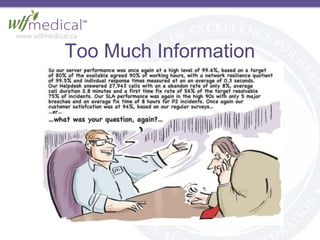
• Giving out too much information,
overwhelming patients too early
Sharing too much can hurt us.
• Some of the questions below require
proof from an independent organization
such as the Mexican College of
Physicians and Surgeons or the Society
of Bariatric Surgeons, which we show
you how directly verify online.
I have found after speaking with our team,
most of our facilitators are finding it is
difficult, they feel like they are avoiding
the truth by not giving the price, and it’s
hard on our facilitators to try to schedule
needs assessments when over half of the
people they are calling don’t even answer
their phone.
Is this how you feel too?
Too Much Information
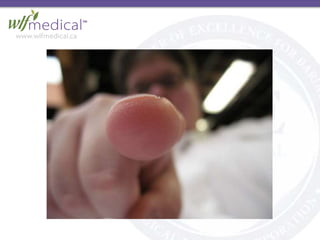
Every time we catch ourselves TELLING
a patient what is important or what our
program is all about and why we are so
great, picture yourself jabbing your finger
in your patient’s face. Trust me – that will
stop us from doing it!
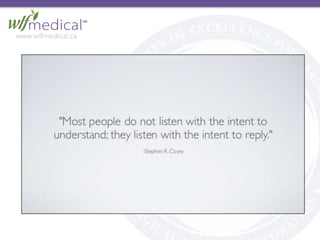
Patient should talk 80% of the
time. We should talk 20%
• We want to know our patients. We want
to understand their story:
– Patients will choose surgery for THEIR
reasons – not ours.
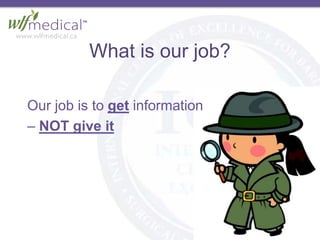
What is our job?
Our job is to get information
– NOT give it
What do People Care About?
– We all are most interested in our own
situation and how things affect US.
– Patients don’t care about the sleeve –
they care about whether it will work for
them.
YOUR “DISCOVERY”
METHOD
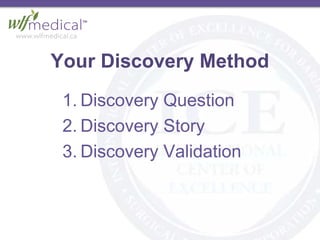
Your Discovery Method
1. Discovery Question
2. Discovery Story
3. Discovery Validation
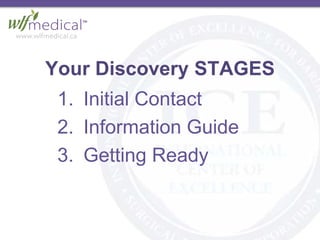
Your Discovery STAGES
1. Initial Contact
2. Information Guide
3. Getting Ready
Discovery METHOD
You will use this METHOD this as your
tool for understanding where patients are
coming from.
Discovery Method
• Discovery Question: The BIG MAIN
question – Discover what THEY want to
know:
• What brought you to fill out that form
yesterday?
• So, I’m curious - what are you MOST
curious about?
•
Discovery Method
• Discovery Story: Listen, and answer
their question with a story:
• Most of my patients think… our
patients usually want this… I find
that most of my patients chose this…
Almost all of my patients want this
because…. Almost all my patients
tell me this…
Discovery Method
• Discovery Validation: Find out how they
feel:
• Is that how you feel too? Is that
where you are at? Is that your
situation too? Does that sound
familiar? Is that pretty close to how
you are thinking?
Discovery Method
((THEN… Rinse and REPEAT))

Discovery method Introduction

  • 1.
    We Tried SomethingNew • And it didn’t work as we’d hope.
  • 2.
    Challenges • Too manycandidates • Difficulty qualifying them • Low Conversion %s
  • 3.
    Possible Reasons • CanadianDollar vs USD • Losing potential patients between Initial Contact and Needs Assessments • Focus is on explaining program and educating patients, not on what patients want to know • Giving out too much information, overwhelming patients too early
  • 4.
    Sharing too muchcan hurt us.
  • 5.
    Sharing too muchcan hurt us. • Some of the questions below require proof from an independent organization such as the Mexican College of Physicians and Surgeons or the Society of Bariatric Surgeons, which we show you how directly verify online.
  • 6.
    I have foundafter speaking with our team, most of our facilitators are finding it is difficult, they feel like they are avoiding the truth by not giving the price, and it’s hard on our facilitators to try to schedule needs assessments when over half of the people they are calling don’t even answer their phone.
  • 7.
    Is this howyou feel too?
  • 8.
  • 9.
    Every time wecatch ourselves TELLING a patient what is important or what our program is all about and why we are so great, picture yourself jabbing your finger in your patient’s face. Trust me – that will stop us from doing it!
  • 11.
    Patient should talk80% of the time. We should talk 20% • We want to know our patients. We want to understand their story: – Patients will choose surgery for THEIR reasons – not ours.
  • 12.
    What is ourjob? Our job is to get information – NOT give it
  • 13.
    What do PeopleCare About? – We all are most interested in our own situation and how things affect US. – Patients don’t care about the sleeve – they care about whether it will work for them.
  • 15.
  • 16.
    Your Discovery Method 1.Discovery Question 2. Discovery Story 3. Discovery Validation
  • 17.
    Your Discovery STAGES 1.Initial Contact 2. Information Guide 3. Getting Ready
  • 18.
    Discovery METHOD You willuse this METHOD this as your tool for understanding where patients are coming from.
  • 19.
    Discovery Method • DiscoveryQuestion: The BIG MAIN question – Discover what THEY want to know: • What brought you to fill out that form yesterday? • So, I’m curious - what are you MOST curious about? •
  • 20.
    Discovery Method • DiscoveryStory: Listen, and answer their question with a story: • Most of my patients think… our patients usually want this… I find that most of my patients chose this… Almost all of my patients want this because…. Almost all my patients tell me this…
  • 21.
    Discovery Method • DiscoveryValidation: Find out how they feel: • Is that how you feel too? Is that where you are at? Is that your situation too? Does that sound familiar? Is that pretty close to how you are thinking?
  • 22.