EXPANDED THE ROLE OF
NURSES
PREPARED BY:
USHA RANI KANDULA,
ASSISTANT PROFESSOR,
DEPARTMENT OF ADULT HEALTH NURSING,
ARSI UNIVERSITY,ASELLA,ETHIOPIA,
SOUTH EAST AFRICA.
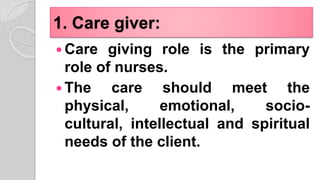
1. Care giver:
 Care giving role is the primary
role of nurses.
 The care should meet the
physical, emotional, socio-
cultural, intellectual and spiritual
needs of the client.
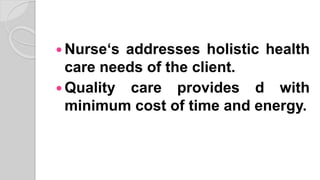
 Nurse‘s addresses holistic health
care needs of the client.
 Quality care provides d with
minimum cost of time and energy.
 Care should be provided to
promote wellness, prevent illness,
restore health, and facilitate
coping with disability or death.
2. Communicator:
 Without clear communication
effective nursing care is
impossible.
 The use of effective interpersonal
and therapeutic communication to
establish and maintain helping
relationship with clients.
3. Teacher:
 As a teacher nurse explains the
concepts and facts about health,
demonstrates the procedures such
as self care activities, reinforces
client‘s behavior, and evaluates
progress in learning, teaching may
be unplanned and informal or
4. Counselor:
 The use of therapeutic interpersonal
communication skills to provide
information, make appropriate
referrals, and facilitate the client‘s
problem solving and decision
making skills.
5. Decision maker:
 To provide effective care nurse uses
decision making skills, throughout
the nursing process.
 The nurse plans the action by
deciding the best approach for each
client, by using decision making
skills.
6. Leader/ manager:
 Nurses manage the time and
resources of the practice setting
when providing care.
 As manager/ leader, nurses
coordinate and delegate care
responsibilities and supervise other
health care workers.
7. Comforter:
 Nurses should care for the whole
person rather than simply the body
comfort and emotional support often
help give the client strength to
recover, while carrying out nursing
activities.
 Provide comfort by demonstrating
care of the client as an individual
with unique feelings and needs.
8. Rehabilitator:
 Rehabilitation program will help the
client to adapt as fully as possible,
by using her or his own knowledge
and skill.
9. Protector and asdvocator:
 As a protector the nurse helps to
maintain the safe environment to
the client and take steps to
prevent injury and protect the
client from possible adverse
effects.
 As an advocate, the nurse
protects client‘s human and legal
rights and provides assistance in
asserting those rights.
CAREER ROLES:
1. Clinical nurse specialist:
 The nurse with advanced degree,
education, experience who is
considered to be an expert in a
specialized area of nursing, carries a
direct client care, consultation,
teaching clients, families and staff
and conduct research.
2. Nurse practitioner:
 Nurse with advanced degree, work
in a variety of health cares settings
or in independent practice to make
health assessment and deliver
primary care.
3. Nurse midwife:
 Nurse who completes a performance
in midwifery provides prenatal, intra-
natal and post natal care.
4. Nurse anethetist:
 A nurse, who completes a course of
studying anestheology, carries out
pre operative visits and
assessments administer and monitor
anesthesia during surgery, and
evaluate post operative status of the
clients.
5. Nurse administrator:
 A nurse who functions at various
levels of management in health care
setting is responsible for
management and administration of
resources and personnel involved in
giving client care.
6. Nurse educator:
 Nurse with advanced degree
teaches in educational or clinical
setting, teaches theoretical
knowledge and clinical skills and
conducts research.
7. Nurse researcher:
 Nurse conducts research for
improvement of nursing practice,
education, administration.
8. Nurse entrepreneur:
 Nurse with advanced degree who
may manage a clinic or health
related business, conduct research,
provide education or serve as an
adviser, consultant to institution or
political agencies.
NURSING OF THE FUTURE:
 History of nursing revealed us how
some learned people have worked
hard to bring and develop nursing as
it is today.
 Every age we need nurses who are
able to share the work for the
progress. They have to:-
 1. Participate in professional
organizations.
 2. Giving expert nursing care where
it is necessary.
 3. Working for welfare of the nation.
 4. Having selfless devotion to the
service of mankind with sympathy
and empathy.
 5. Being loyal to chosen profession.
 6. Showing courage to face any
situation.
 7.Being aware of present trend.
 8. Having dedication to service.
 9. Acquiring inspiration to attain the
goal.
 10. Nursing in 1960, was patient
centered. Quality care became the
concern after 1970.
THANKING YOU

Expanded role of nurses

  • 1.
    EXPANDED THE ROLEOF NURSES PREPARED BY: USHA RANI KANDULA, ASSISTANT PROFESSOR, DEPARTMENT OF ADULT HEALTH NURSING, ARSI UNIVERSITY,ASELLA,ETHIOPIA, SOUTH EAST AFRICA.
  • 2.
    1. Care giver: Care giving role is the primary role of nurses.  The care should meet the physical, emotional, socio- cultural, intellectual and spiritual needs of the client.
  • 3.
     Nurse‘s addressesholistic health care needs of the client.  Quality care provides d with minimum cost of time and energy.
  • 4.
     Care shouldbe provided to promote wellness, prevent illness, restore health, and facilitate coping with disability or death.
  • 5.
    2. Communicator:  Withoutclear communication effective nursing care is impossible.
  • 6.
     The useof effective interpersonal and therapeutic communication to establish and maintain helping relationship with clients.
  • 7.
    3. Teacher:  Asa teacher nurse explains the concepts and facts about health, demonstrates the procedures such as self care activities, reinforces client‘s behavior, and evaluates progress in learning, teaching may be unplanned and informal or
  • 8.
    4. Counselor:  Theuse of therapeutic interpersonal communication skills to provide information, make appropriate referrals, and facilitate the client‘s problem solving and decision making skills.
  • 9.
    5. Decision maker: To provide effective care nurse uses decision making skills, throughout the nursing process.  The nurse plans the action by deciding the best approach for each client, by using decision making skills.
  • 10.
    6. Leader/ manager: Nurses manage the time and resources of the practice setting when providing care.  As manager/ leader, nurses coordinate and delegate care responsibilities and supervise other health care workers.
  • 11.
    7. Comforter:  Nursesshould care for the whole person rather than simply the body comfort and emotional support often help give the client strength to recover, while carrying out nursing activities.
  • 12.
     Provide comfortby demonstrating care of the client as an individual with unique feelings and needs.
  • 13.
    8. Rehabilitator:  Rehabilitationprogram will help the client to adapt as fully as possible, by using her or his own knowledge and skill.
  • 14.
    9. Protector andasdvocator:  As a protector the nurse helps to maintain the safe environment to the client and take steps to prevent injury and protect the client from possible adverse effects.
  • 15.
     As anadvocate, the nurse protects client‘s human and legal rights and provides assistance in asserting those rights.
  • 16.
  • 17.
    1. Clinical nursespecialist:  The nurse with advanced degree, education, experience who is considered to be an expert in a specialized area of nursing, carries a direct client care, consultation, teaching clients, families and staff and conduct research.
  • 18.
    2. Nurse practitioner: Nurse with advanced degree, work in a variety of health cares settings or in independent practice to make health assessment and deliver primary care.
  • 19.
    3. Nurse midwife: Nurse who completes a performance in midwifery provides prenatal, intra- natal and post natal care.
  • 20.
    4. Nurse anethetist: A nurse, who completes a course of studying anestheology, carries out pre operative visits and assessments administer and monitor anesthesia during surgery, and evaluate post operative status of the clients.
  • 21.
    5. Nurse administrator: A nurse who functions at various levels of management in health care setting is responsible for management and administration of resources and personnel involved in giving client care.
  • 22.
    6. Nurse educator: Nurse with advanced degree teaches in educational or clinical setting, teaches theoretical knowledge and clinical skills and conducts research.
  • 23.
    7. Nurse researcher: Nurse conducts research for improvement of nursing practice, education, administration.
  • 24.
    8. Nurse entrepreneur: Nurse with advanced degree who may manage a clinic or health related business, conduct research, provide education or serve as an adviser, consultant to institution or political agencies.
  • 25.
  • 26.
     History ofnursing revealed us how some learned people have worked hard to bring and develop nursing as it is today.  Every age we need nurses who are able to share the work for the progress. They have to:-
  • 27.
     1. Participatein professional organizations.  2. Giving expert nursing care where it is necessary.  3. Working for welfare of the nation.
  • 28.
     4. Havingselfless devotion to the service of mankind with sympathy and empathy.  5. Being loyal to chosen profession.  6. Showing courage to face any situation.
  • 29.
     7.Being awareof present trend.  8. Having dedication to service.  9. Acquiring inspiration to attain the goal.  10. Nursing in 1960, was patient centered. Quality care became the concern after 1970.
  • 30.