Evolution of Computing
From mainframes to SaaS and the impact on computing.


                                                       CONFIDENTIAL AND PROPRIETARY TO REARDEN COMMERCE
IN THE
BEGINNING…
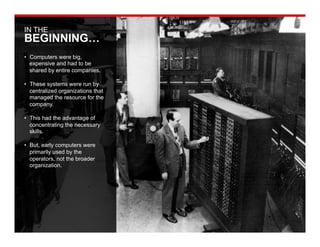
•  Computers were big,
   expensive and had to be
   shared by entire companies.

•  These systems were run by
   centralized organizations that
   managed the resource for the
   company.

•  This had the advantage of
   concentrating the necessary
   skills.

•  But, early computers were
   primarily used by the
   operators, not the broader
   organization.
AND
THEN…
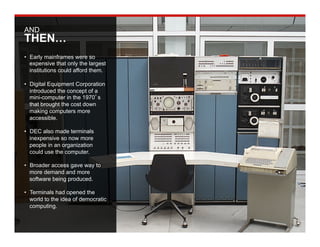
•  Early mainframes were so
   expensive that only the largest
   institutions could afford them.

•  Digital Equipment Corporation
   introduced the concept of a
   mini-computer in the 1970 s
   that brought the cost down
   making computers more
   accessible.

•  DEC also made terminals
   inexpensive so now more
   people in an organization
   could use the computer.

•  Broader access gave way to
   more demand and more
   software being produced.

•  Terminals had opened the
   world to the idea of democratic
   computing.
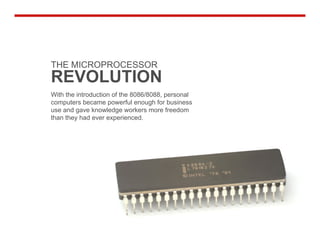
THE MICROPROCESSOR
REVOLUTION
With the introduction of the 8086/8088, personal
computers became powerful enough for business
use and gave knowledge workers more freedom
than they had ever experienced.
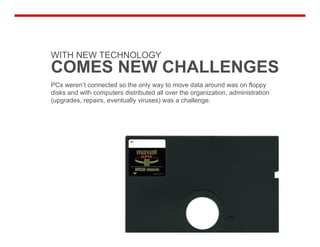
WITH NEW TECHNOLOGY
COMES NEW CHALLENGES
PCs weren’t connected so the only way to move data around was on floppy
disks and with computers distributed all over the organization, administration
(upgrades, repairs, eventually viruses) was a challenge.
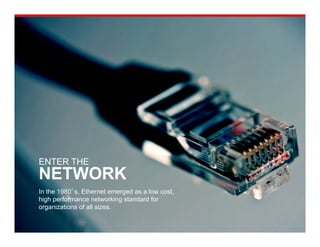
ENTER THE
NETWORK
In the 1980 s, Ethernet emerged as a low cost,
high performance networking standard for
organizations of all sizes.
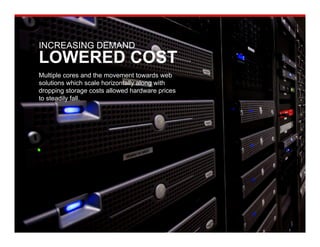
INCREASING DEMAND
LOWERED COST
Multiple cores and the movement towards web
solutions which scale horizontally along with
dropping storage costs allowed hardware prices
to steadily fall.
ENTER
UTILITY COMPUTING
Utility computing allows organizations to buy capacity
on demand and manage the amount of capacity they
need which provides businesses with a better ROI on
their investment.
SIX DEGREES OF
SEPERATION
THE EVOLUTION OF
PROGRAMMING LAUNGUAGES
Programming computers began as a series of binary instructions
entered using switches and has evolved at an unprecedented pace
ever since.
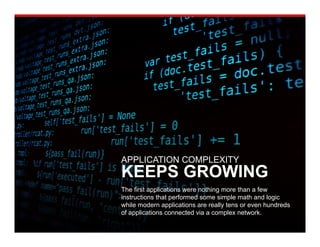
APPLICATION COMPLEXITY
KEEPS GROWING
The first applications were nothing more than a few
instructions that performed some simple math and logic
while modern applications are really tens or even hundreds
of applications connected via a complex network.
SOFTWARE AS A SERVICE
EMERGES
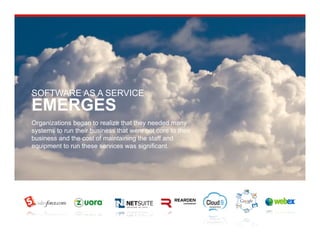
Organizations began to realize that they needed many
systems to run their business that were not core to their
business and the cost of maintaining the staff and
equipment to run these services was significant.
TO PUT IT IN
PERSPECTIVE
In 2007, Jim Gray of Microsoft devised a benchmark.
Sort 10 billion rows, 100 bytes each, with a 10 byte
randomly generated key…
FUTURE USES OF
COMPUTATIONAL POWER
Evolution of Computing

Evolution of Computing

  • 1.
    Evolution of Computing Frommainframes to SaaS and the impact on computing. CONFIDENTIAL AND PROPRIETARY TO REARDEN COMMERCE
  • 2.
    IN THE BEGINNING… •  Computerswere big, expensive and had to be shared by entire companies. •  These systems were run by centralized organizations that managed the resource for the company. •  This had the advantage of concentrating the necessary skills. •  But, early computers were primarily used by the operators, not the broader organization.
  • 3.
    AND THEN… •  Early mainframeswere so expensive that only the largest institutions could afford them. •  Digital Equipment Corporation introduced the concept of a mini-computer in the 1970 s that brought the cost down making computers more accessible. •  DEC also made terminals inexpensive so now more people in an organization could use the computer. •  Broader access gave way to more demand and more software being produced. •  Terminals had opened the world to the idea of democratic computing.
  • 4.
    THE MICROPROCESSOR REVOLUTION With theintroduction of the 8086/8088, personal computers became powerful enough for business use and gave knowledge workers more freedom than they had ever experienced.
  • 5.
    WITH NEW TECHNOLOGY COMESNEW CHALLENGES PCs weren’t connected so the only way to move data around was on floppy disks and with computers distributed all over the organization, administration (upgrades, repairs, eventually viruses) was a challenge.
  • 6.
    ENTER THE NETWORK In the1980 s, Ethernet emerged as a low cost, high performance networking standard for organizations of all sizes.
  • 7.
    INCREASING DEMAND LOWERED COST Multiplecores and the movement towards web solutions which scale horizontally along with dropping storage costs allowed hardware prices to steadily fall.
  • 8.
    ENTER UTILITY COMPUTING Utility computingallows organizations to buy capacity on demand and manage the amount of capacity they need which provides businesses with a better ROI on their investment.
  • 9.
  • 10.
    THE EVOLUTION OF PROGRAMMINGLAUNGUAGES Programming computers began as a series of binary instructions entered using switches and has evolved at an unprecedented pace ever since.
  • 11.
    APPLICATION COMPLEXITY KEEPS GROWING Thefirst applications were nothing more than a few instructions that performed some simple math and logic while modern applications are really tens or even hundreds of applications connected via a complex network.
  • 12.
    SOFTWARE AS ASERVICE EMERGES Organizations began to realize that they needed many systems to run their business that were not core to their business and the cost of maintaining the staff and equipment to run these services was significant.
  • 14.
    TO PUT ITIN PERSPECTIVE In 2007, Jim Gray of Microsoft devised a benchmark. Sort 10 billion rows, 100 bytes each, with a 10 byte randomly generated key…
  • 15.