THE EVOLUTION OF COMPUTING :
A JOURNEY THROUGH TIME
Dr.HASSINA
BOURESSACE
HISTORY
OF
Introduction
Computers have existed for
centuries, but the current form of the
computer is a recent invention.
Computers revolutionized how we
live, work, and interact.
Contents of this template
01-The beginning of Computer History
02-The first programmable computer
03-The early days of computing
04-The rise of personal computing
05-The modern era of computing
06-The future of computing
The beginning of
computer History
Bigginings
Beginnings
The birth of mechanical computing
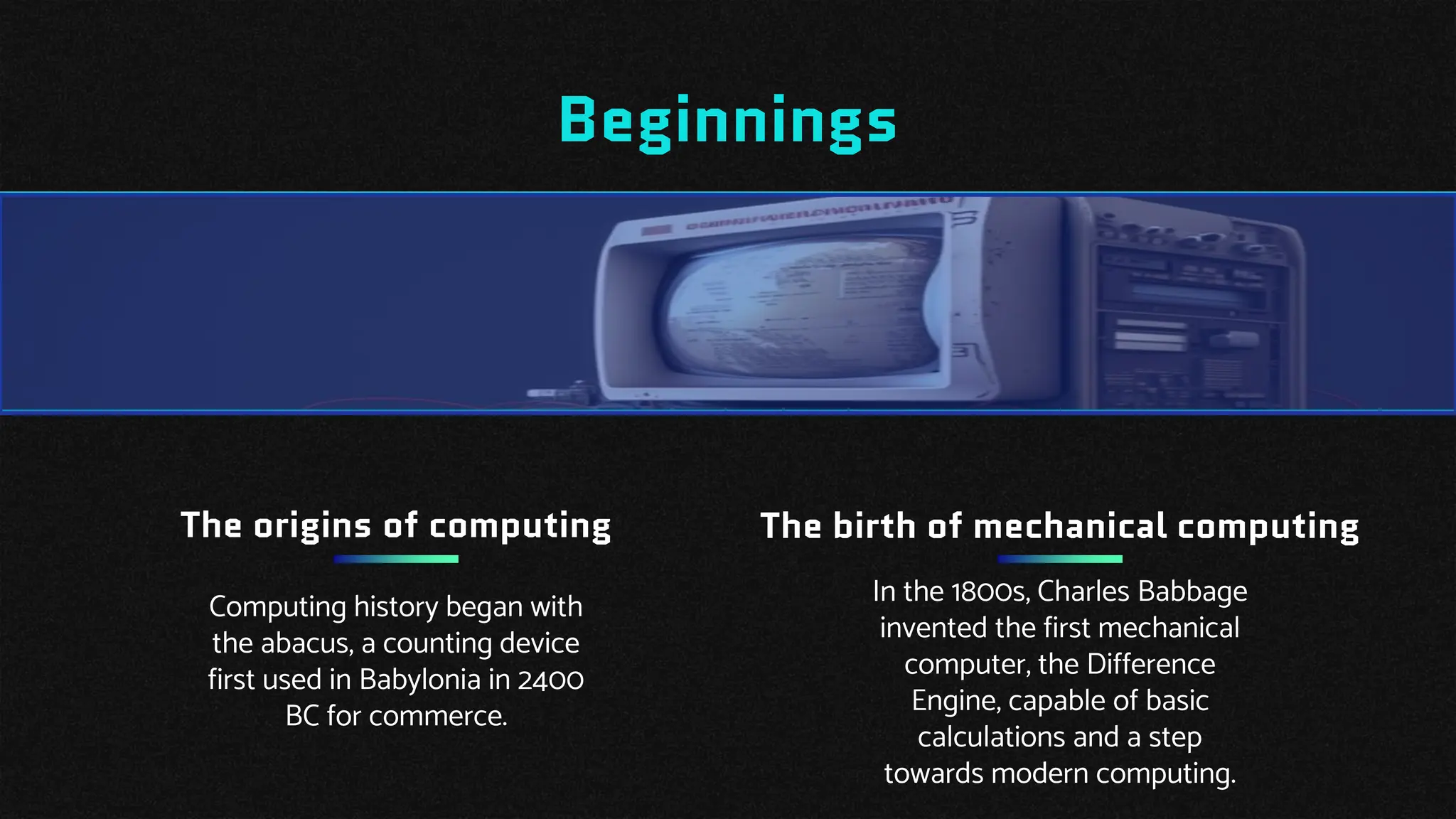
In the 1800s, Charles Babbage
invented the first mechanical
computer, the Difference
Engine, capable of basic
calculations and a step
towards modern computing.
Computing history began with
the abacus, a counting device
first used in Babylonia in 2400
BC for commerce.
The origins of computing
Development
Connecting People and Computers
The 1990s saw the rise of the
internet, revolutionizing
communication and
information access through
connected computers.
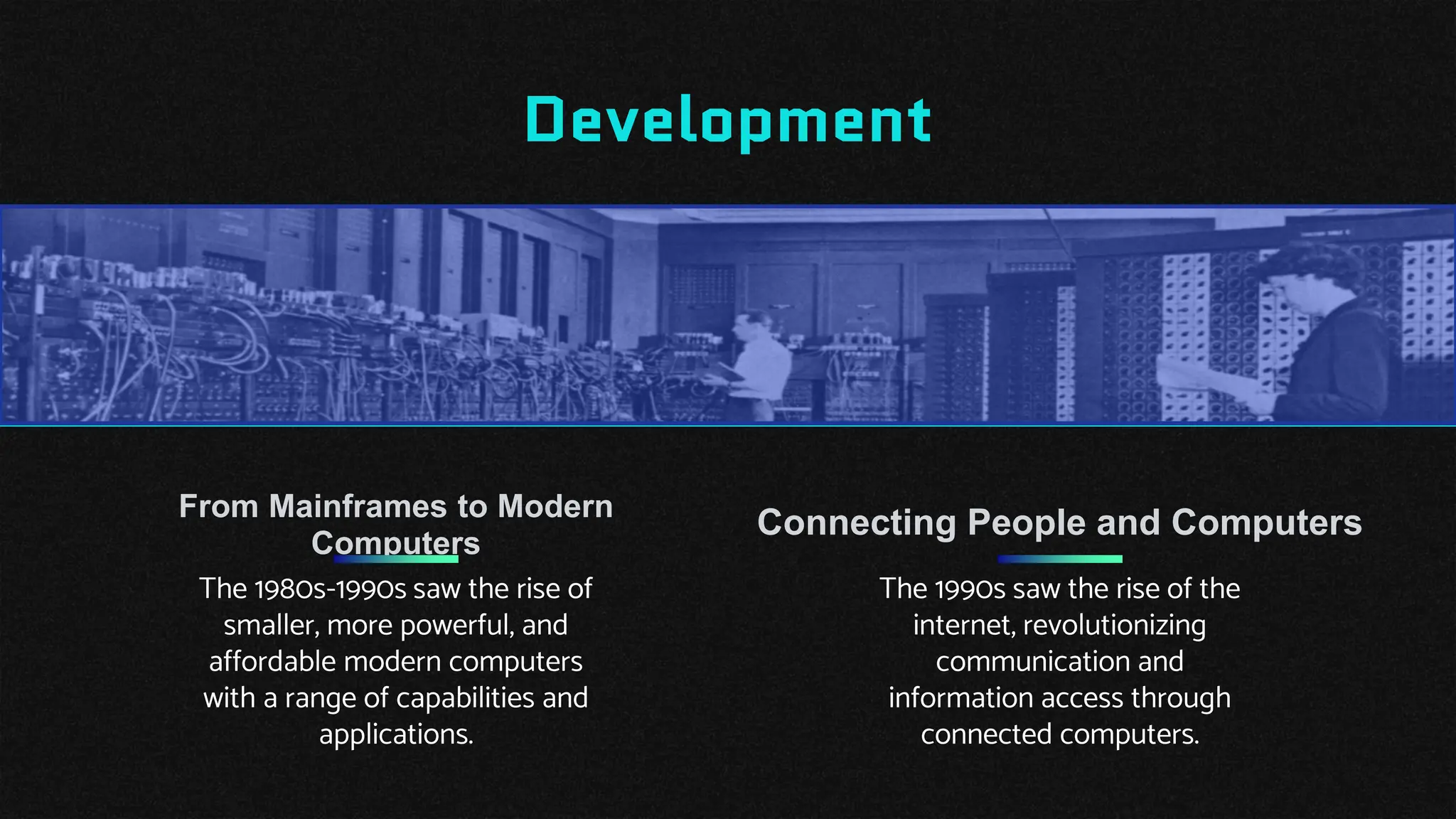
The 1980s-1990s saw the rise of
smaller, more powerful, and
affordable modern computers
with a range of capabilities and
applications.
From Mainframes to Modern
Computers
The first
programmable
Computer
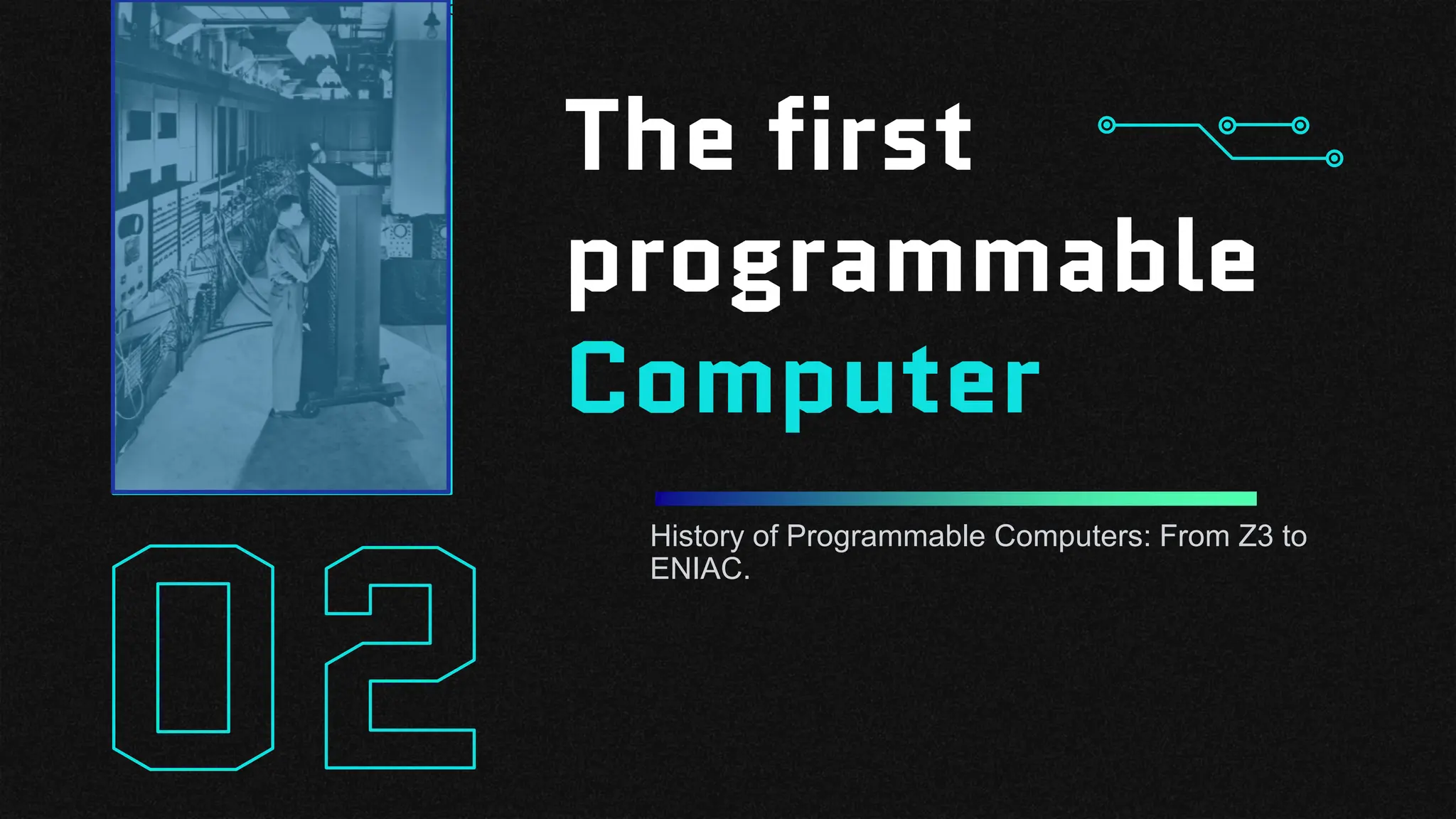
History of Programmable Computers: From Z3 to
ENIAC.
"History of Programmable Computers: From Z3 to ENIAC"
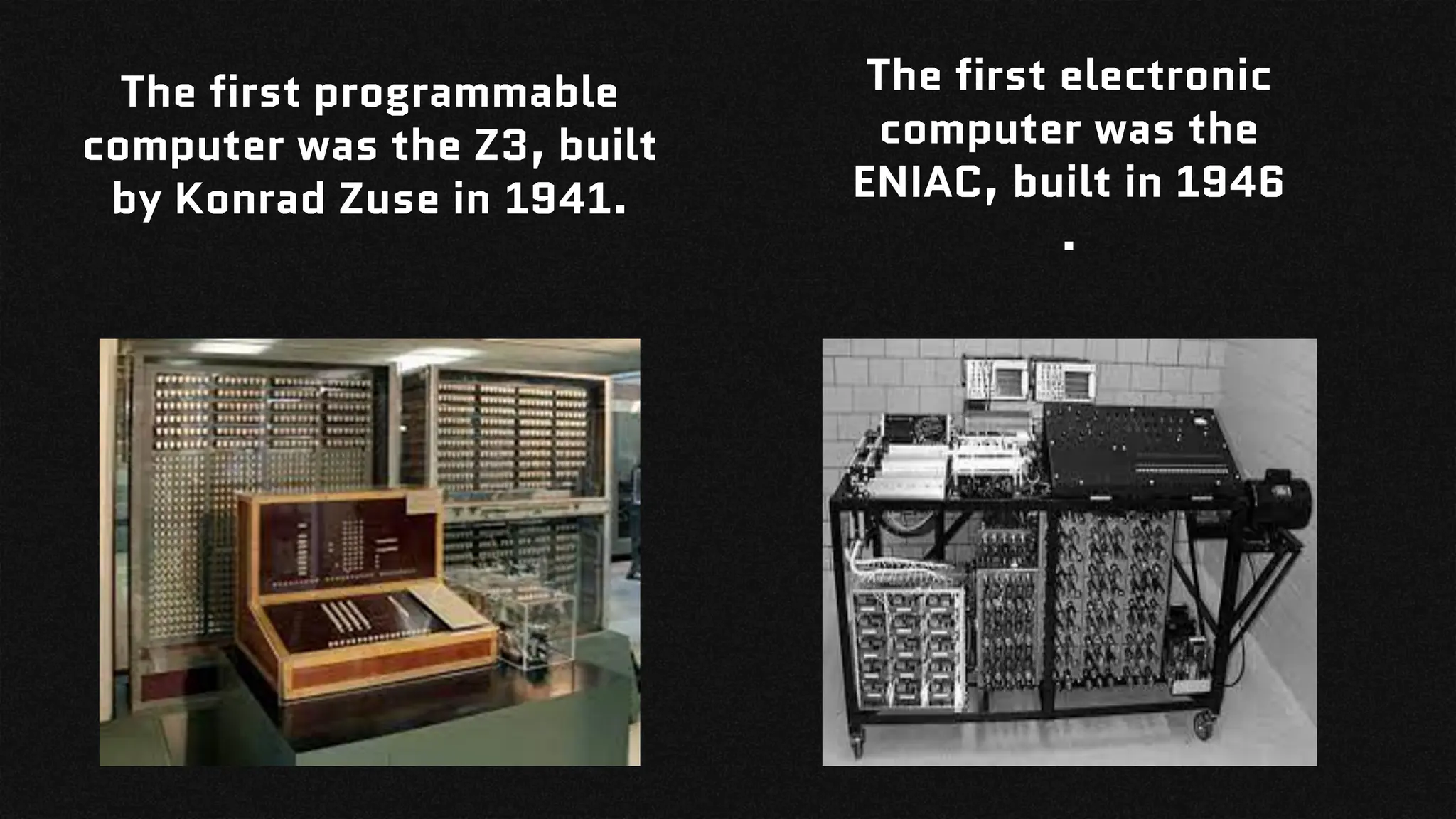
The first programmable
computer was the Z3, built
by Konrad Zuse in 1941.
The first electronic
computer was the
ENIAC, built in 1946
.
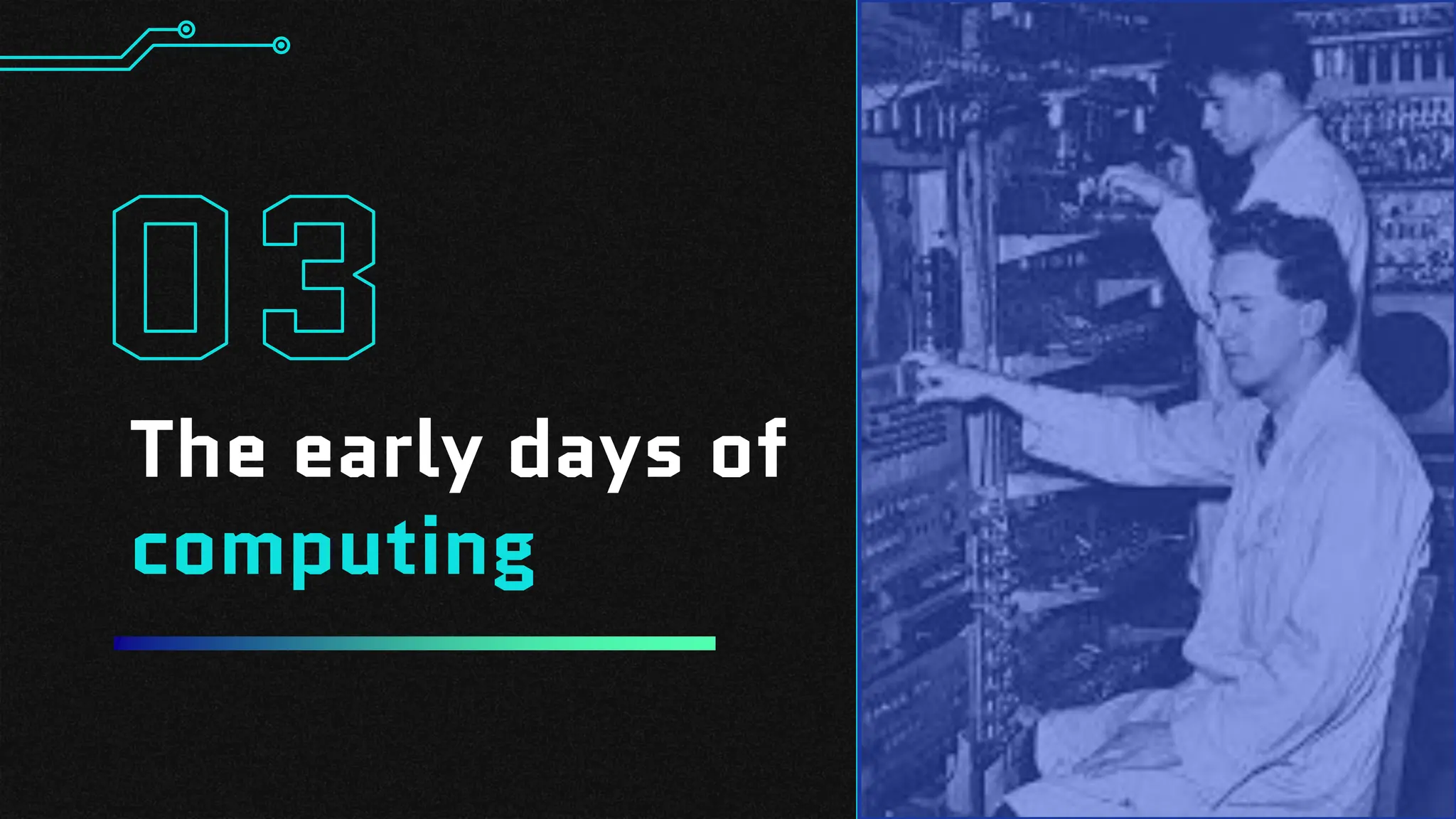
The early days of
computing
Mainframe Computers and Commercial Computing
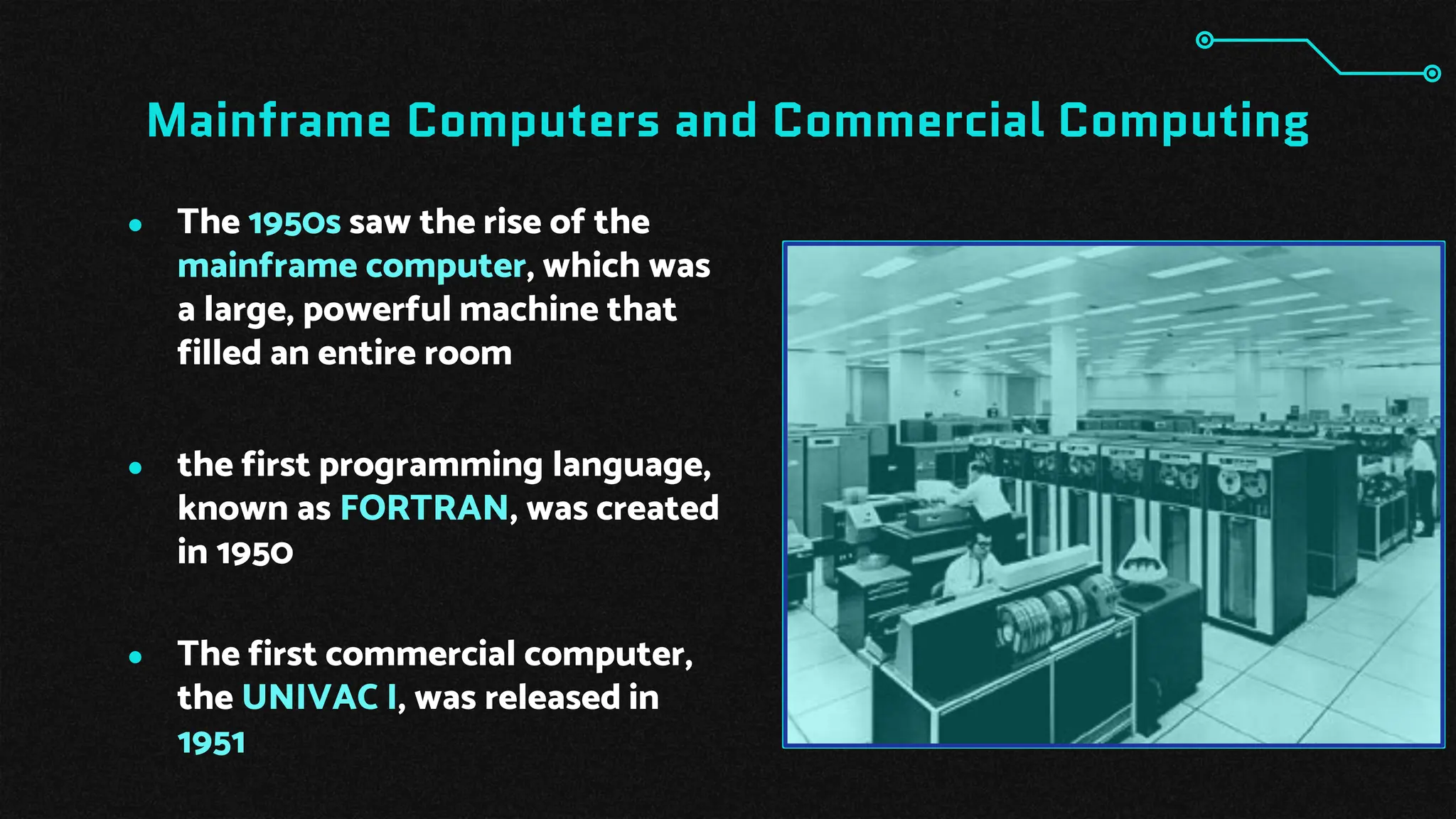
● The 1950s saw the rise of the
mainframe computer, which was
a large, powerful machine that
filled an entire room
● the first programming language,
known as FORTRAN, was created
in 1950
● The first commercial computer,
the UNIVAC I, was released in
1951
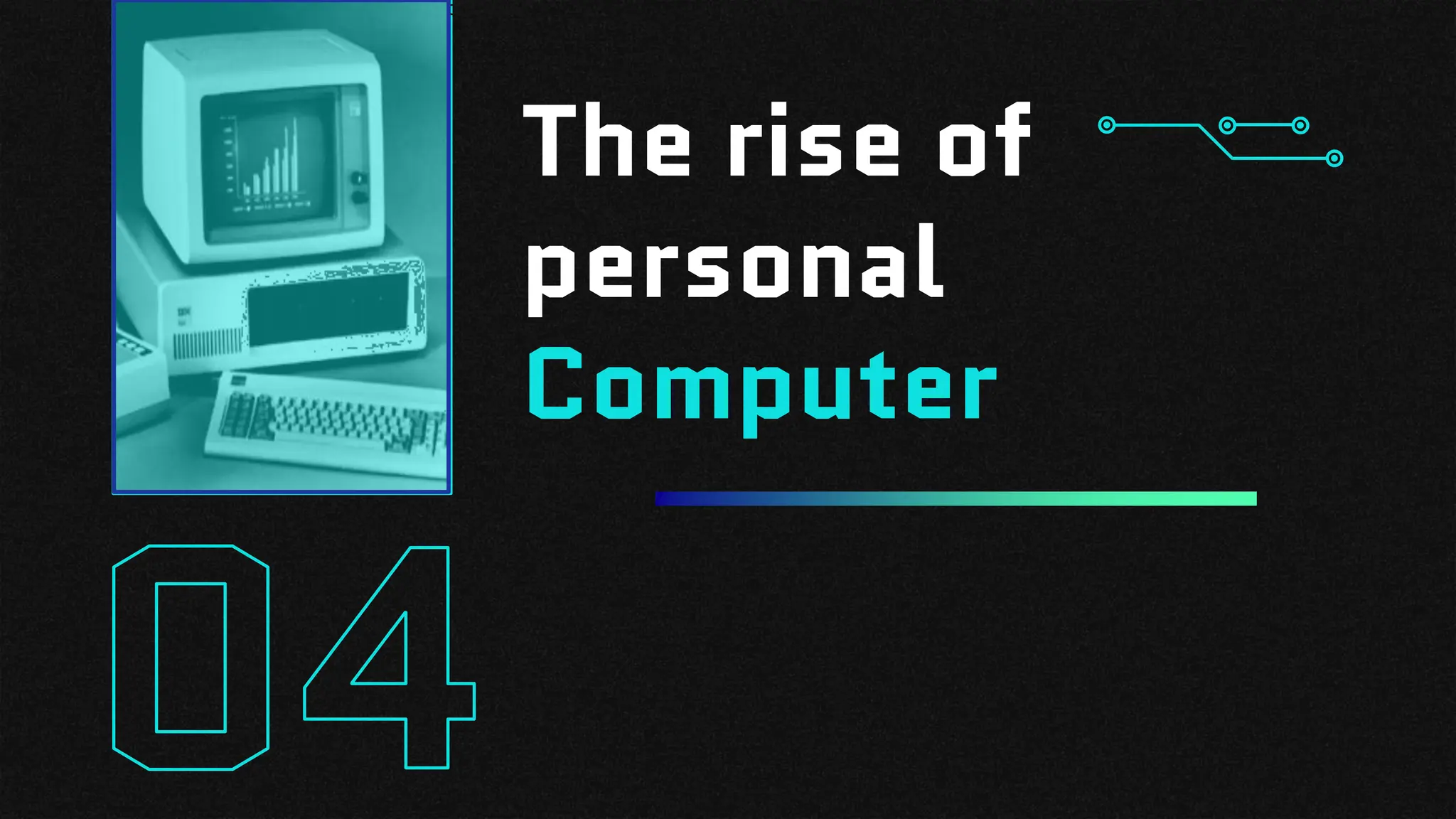
The rise of
personal
Computer
"History of Programmable Computers: From Z3 to ENIAC"
• From1960s to the 1970s, computer
programming began to move away
from the mainframe computers to the
smaller computers that we know today
using different languages of
programmatic.
• The first mass-produced personal computer
was the Apple II, released in 1977.
The modern area
of computing
In the 1980s, the internet began to take off, and with it came
the development of web programming languages such as
HTML, CSS, and JavaScript. This allowed developers to
create dynamic websites and applications, and to create
more interactive experiences for users.
The future of
computing
Mainframe Computers and Commercial Computing
Computer development is continuing to evolve and
change, as new technologies are developed and new
possibilities are explored .
In the future, computers will become even smaller
and more powerful, and will be used in a variety of
ways, from artificial intelligence to virtual reality.
Conclusion
The history of computers is a long and fascinating one, and it has
changed the way we live, work, and play. From the abacus to the
modern computer, computers have come a long way in a short
amount of time. The future of computers is even more exciting,
and it’s sure to bring new and exciting technologies that will
change the way we interact with the world. It’s an exciting time to
be alive, and the possibilities for the future are endless.
THANKS!
CREDITS
● IDRISS CHIHEB
● ROUFIA AFIANE
● LINA NOUR DJERIBI
● TAHER AMINE SIAD

Brief and Description on the History-of-computer-2-Copie.pdf

  • 1.
    THE EVOLUTION OFCOMPUTING : A JOURNEY THROUGH TIME Dr.HASSINA BOURESSACE HISTORY OF
  • 2.
    Introduction Computers have existedfor centuries, but the current form of the computer is a recent invention. Computers revolutionized how we live, work, and interact.
  • 3.
    Contents of thistemplate 01-The beginning of Computer History 02-The first programmable computer 03-The early days of computing 04-The rise of personal computing 05-The modern era of computing 06-The future of computing
  • 5.
    The beginning of computerHistory Bigginings
  • 6.
    Beginnings The birth ofmechanical computing In the 1800s, Charles Babbage invented the first mechanical computer, the Difference Engine, capable of basic calculations and a step towards modern computing. Computing history began with the abacus, a counting device first used in Babylonia in 2400 BC for commerce. The origins of computing
  • 7.
    Development Connecting People andComputers The 1990s saw the rise of the internet, revolutionizing communication and information access through connected computers. The 1980s-1990s saw the rise of smaller, more powerful, and affordable modern computers with a range of capabilities and applications. From Mainframes to Modern Computers
  • 9.
    The first programmable Computer History ofProgrammable Computers: From Z3 to ENIAC. "History of Programmable Computers: From Z3 to ENIAC"
  • 10.
    The first programmable computerwas the Z3, built by Konrad Zuse in 1941. The first electronic computer was the ENIAC, built in 1946 .
  • 11.
    The early daysof computing
  • 12.
    Mainframe Computers andCommercial Computing ● The 1950s saw the rise of the mainframe computer, which was a large, powerful machine that filled an entire room ● the first programming language, known as FORTRAN, was created in 1950 ● The first commercial computer, the UNIVAC I, was released in 1951
  • 13.
    The rise of personal Computer "Historyof Programmable Computers: From Z3 to ENIAC"
  • 14.
    • From1960s tothe 1970s, computer programming began to move away from the mainframe computers to the smaller computers that we know today using different languages of programmatic. • The first mass-produced personal computer was the Apple II, released in 1977.
  • 15.
  • 16.
    In the 1980s,the internet began to take off, and with it came the development of web programming languages such as HTML, CSS, and JavaScript. This allowed developers to create dynamic websites and applications, and to create more interactive experiences for users.
  • 17.
  • 18.
    Mainframe Computers andCommercial Computing Computer development is continuing to evolve and change, as new technologies are developed and new possibilities are explored . In the future, computers will become even smaller and more powerful, and will be used in a variety of ways, from artificial intelligence to virtual reality.
  • 19.
    Conclusion The history ofcomputers is a long and fascinating one, and it has changed the way we live, work, and play. From the abacus to the modern computer, computers have come a long way in a short amount of time. The future of computers is even more exciting, and it’s sure to bring new and exciting technologies that will change the way we interact with the world. It’s an exciting time to be alive, and the possibilities for the future are endless.
  • 20.
  • 21.
    CREDITS ● IDRISS CHIHEB ●ROUFIA AFIANE ● LINA NOUR DJERIBI ● TAHER AMINE SIAD