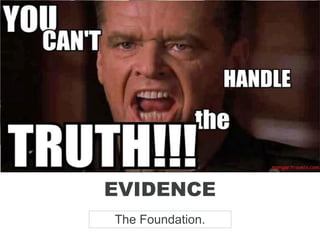
EVIDENCE
The Foundation.
What is Evidence: How
do you know??
 Evidence is the foundation of every and any
argument. It provides supporting material to
strengthen and validate your argument.
 Evidence is one of the elements of proof.
 Evidence has to serve to the benefits of the claim
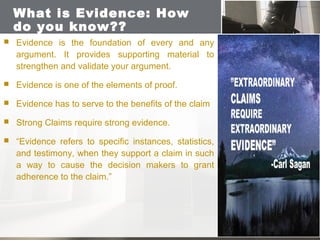
 Strong Claims require strong evidence.
 “Evidence refers to specific instances, statistics,
and testimony, when they support a claim in such
a way to cause the decision makers to grant
adherence to the claim.”
Evidence in the
Courtroom
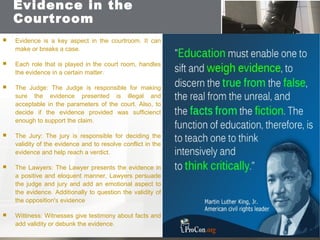
 Evidence is a key aspect in the courtroom. It can
make or breaks a case.
 Each role that is played in the court room, handles
the evidence in a certain matter.
 The Judge: The Judge is responsible for making
sure the evidence presented is illegal and
acceptable in the parameters of the court. Also, to
decide if the evidence provided was sufficienct
enough to support the claim.
 The Jury: The jury is responsible for deciding the
validity of the evidence and to resolve conflict in the
evidence and help reach a verdict.
 The Lawyers: The Lawyer presents the evidence in
a positive and eloquent manner, Lawyers persuade
the judge and jury and add an emotional aspect to
the evidence. Additionally to question the validity of
the opposition's evidence
 Wittiness: Witnesses give testimony about facts and
add validity or debunk the evidence.
The Audience
 The amount of evidence needed and the type of
evidence needed is dictated by the audience.
 In communication one of the most important
aspects is KNOWING YOUR AUDIENCE.
 “The starting point for all communication is
becoming aware of the intended audience and
approaching them on an appropriate level.”
Richard Atkins, The Ladder.com
 There are three types of audiences
 Friendly Audience: This type of audience is ideal
because they are ready to accept the evidence
presented and adhere to your claim.
 Neutral Audience: The Audience is “on the
fence” they haven't decided one way or another
on your claim.
 Hostile Audience: This audience has already
decided against your claim and require the
highest level or evidence and argumentativeness
skill.
Types of Evidence
 Precedent Evidence: These are legal decisions that
become principles and can be used for future claims.
Legal precedent is hard to challenge because the
judicial Institution has already accepted it.
 Statistical Evidence: These types of evidence consist
of studies, polls, surveys and anything that presents
a numerical form of proof.
 Testimonial Evidence: Testimonies are used to
deciding who is responsible and assigning motive.
Eyewitness testimonies is usually presented by the
witness.
 Hearsay Evidence: This is gossip or rumors that are
passed around from person to person. Very hard to
prove and be considered viable.
 Common Knowledge Evidence: When claims are
obviously right and can't be disputed much, this type
of evidence works best,.
“Expert Witness”
 In many court cases they will bring in people who are
specialists in their field to give a testimony.
 These “experts” are used to strength the case and
evidence.
 Expert witnesses have been accused of supporting false
claims for monetary gains.
 Also anybody can become an expert witness. You don't
have to be a real expert.
 So how viable are these sources that might change the
course of a claim.
Sources!!!
 If the validity of the source of the proof can not be
determined or is not strong then by relation the
evidence will suffer.
 There has been a large argument on how accurate
statistic and expert testimony used in courtrooms are.
 When presenting evidence is it a good idea to make
sure your sources and their references are air tight.
 How qualified is the source of the evidence? Will the
claim be strengthen with this source?
 Bias of the source can tamper the validity of the
evidence, since the source isn't providing objective
information.
 Make sure opinions aren't taken as facts and vice
versa.
Accurate Statistics
 Many Companies who produces information
from polls and surveys have been accused of
providing false information.
 Statistics and other evidence can shift the
position of a court case.
 So it is integral it make sure sources check out
or else you could be providing false information
and lying to your audience.
Utilizing Evidence
 Conclusive Proof:
 Using evidence in a way that it cant be
questioned or contradicted is
conclusive.
 This type of evidence will prevent it
from being objected.
 Conclusive evidence is like a statue it
can't be moved.
 Circumstantial Proof:
 This method is when you link various
pieces of evidences.
 The various source that all connect to
each other make a strong argument.
 A single piece is not strong enough
but together they become a strong
argument.
Test of Evidence
 The audience when presented with your evidence
will want to know one thing: is this evidence
accurate. How can the audience trust the
evidence and trust your claim. This is where five
tests of evidence come in.
1) Recency: Is this piece of evidence relevant and is
it still current? Has the evidence been replaced
by new data?
2) Sufficiency: Do you have enough evidence?
3) Logical Relevance: Can the evidence logically
support the conclusion of the claim? Can you
look at the evidence and logically reach the
desired conclusion?
4) External Consistency: Is the claims made by
sources match up with the other set of evidence?
Can it be trumped by general knowledge? If the
consistency of the source is being questioned,
can the source explain the inconsistency,

Evidence powerpoint

  • 1.
  • 2.
    What is Evidence:How do you know??  Evidence is the foundation of every and any argument. It provides supporting material to strengthen and validate your argument.  Evidence is one of the elements of proof.  Evidence has to serve to the benefits of the claim  Strong Claims require strong evidence.  “Evidence refers to specific instances, statistics, and testimony, when they support a claim in such a way to cause the decision makers to grant adherence to the claim.”
  • 3.
    Evidence in the Courtroom Evidence is a key aspect in the courtroom. It can make or breaks a case.  Each role that is played in the court room, handles the evidence in a certain matter.  The Judge: The Judge is responsible for making sure the evidence presented is illegal and acceptable in the parameters of the court. Also, to decide if the evidence provided was sufficienct enough to support the claim.  The Jury: The jury is responsible for deciding the validity of the evidence and to resolve conflict in the evidence and help reach a verdict.  The Lawyers: The Lawyer presents the evidence in a positive and eloquent manner, Lawyers persuade the judge and jury and add an emotional aspect to the evidence. Additionally to question the validity of the opposition's evidence  Wittiness: Witnesses give testimony about facts and add validity or debunk the evidence.
  • 4.
    The Audience  Theamount of evidence needed and the type of evidence needed is dictated by the audience.  In communication one of the most important aspects is KNOWING YOUR AUDIENCE.  “The starting point for all communication is becoming aware of the intended audience and approaching them on an appropriate level.” Richard Atkins, The Ladder.com  There are three types of audiences  Friendly Audience: This type of audience is ideal because they are ready to accept the evidence presented and adhere to your claim.  Neutral Audience: The Audience is “on the fence” they haven't decided one way or another on your claim.  Hostile Audience: This audience has already decided against your claim and require the highest level or evidence and argumentativeness skill.
  • 5.
    Types of Evidence Precedent Evidence: These are legal decisions that become principles and can be used for future claims. Legal precedent is hard to challenge because the judicial Institution has already accepted it.  Statistical Evidence: These types of evidence consist of studies, polls, surveys and anything that presents a numerical form of proof.  Testimonial Evidence: Testimonies are used to deciding who is responsible and assigning motive. Eyewitness testimonies is usually presented by the witness.  Hearsay Evidence: This is gossip or rumors that are passed around from person to person. Very hard to prove and be considered viable.  Common Knowledge Evidence: When claims are obviously right and can't be disputed much, this type of evidence works best,.
  • 6.
    “Expert Witness”  Inmany court cases they will bring in people who are specialists in their field to give a testimony.  These “experts” are used to strength the case and evidence.  Expert witnesses have been accused of supporting false claims for monetary gains.  Also anybody can become an expert witness. You don't have to be a real expert.  So how viable are these sources that might change the course of a claim.
  • 7.
    Sources!!!  If thevalidity of the source of the proof can not be determined or is not strong then by relation the evidence will suffer.  There has been a large argument on how accurate statistic and expert testimony used in courtrooms are.  When presenting evidence is it a good idea to make sure your sources and their references are air tight.  How qualified is the source of the evidence? Will the claim be strengthen with this source?  Bias of the source can tamper the validity of the evidence, since the source isn't providing objective information.  Make sure opinions aren't taken as facts and vice versa.
  • 8.
    Accurate Statistics  ManyCompanies who produces information from polls and surveys have been accused of providing false information.  Statistics and other evidence can shift the position of a court case.  So it is integral it make sure sources check out or else you could be providing false information and lying to your audience.
  • 9.
    Utilizing Evidence  ConclusiveProof:  Using evidence in a way that it cant be questioned or contradicted is conclusive.  This type of evidence will prevent it from being objected.  Conclusive evidence is like a statue it can't be moved.  Circumstantial Proof:  This method is when you link various pieces of evidences.  The various source that all connect to each other make a strong argument.  A single piece is not strong enough but together they become a strong argument.
  • 10.
    Test of Evidence The audience when presented with your evidence will want to know one thing: is this evidence accurate. How can the audience trust the evidence and trust your claim. This is where five tests of evidence come in. 1) Recency: Is this piece of evidence relevant and is it still current? Has the evidence been replaced by new data? 2) Sufficiency: Do you have enough evidence? 3) Logical Relevance: Can the evidence logically support the conclusion of the claim? Can you look at the evidence and logically reach the desired conclusion? 4) External Consistency: Is the claims made by sources match up with the other set of evidence? Can it be trumped by general knowledge? If the consistency of the source is being questioned, can the source explain the inconsistency,