Event Concept
Hevent
M.Aldana
Developing the Concept
• There are numerous elements which need
to be considered in developing an event
concept: purpose/objective, theme, venue,
audience, available resources, timing of
the event and the skills of the team.
• The most important is the purpose,
although it is strongly linked to both the
theme and the venue.
Purpose of the event
• The purpose of the event
should drive all the
planning.
• While for many events
the main purpose is
making a profit, for many
it is not.
Theme of the event
• The theme of the event should be linked to
the purpose.
• It should be completely compatible with
guest needs and consistent in all aspects.
Theme of the event
• When coming up with ideas for a theme, it
is most important to consider the range of
suitable venues available, keeping in mind
the budget and other considerations.
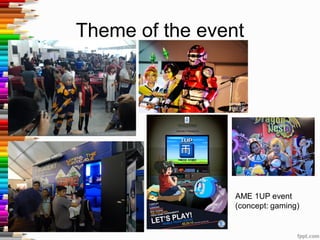
Theme of the event
AME 1UP event
(concept: gaming)
Venue of the event
• The event manager needs to carefully
consider the planning implications of
choosing an unusual venue in preference
to a standard venue requiring decoration
only match the theme.
• Lighting, sound and catering also provide
challenges
Factors to consider (venue)
• Potential to fulfil the purpose of the event
• Ambience
• Location
• Access to public transport
• Parking
• Seating capacity
• Built features (stages)
• Cost of decoration
• Cost of labour
• Logistics of setting up
• Food and beverage facilities
• Safety
Event audience
• When organizing an event, the needs of all
participants must be considered before
finalizing the concept.
Financial considerations
• Finances is an important consideration at
this early stage of event concept and
design.
Timing of the event
• The timing of the event is often linked to
the season or weather.
• The evaluation of an event concept must
take into account the following:
– Season
– Day of the week
– Time of day
– duration
Timing of the event
• Another thing to consider is lead time – the
time available for planning and
implementation.
• The duration of the event is another thing
to consider.
Event team, contractors and
other stakeholders
• The skills of the event team, just as
importantly, the contractors, such as
lighting technicians and catering staff, are
important considerations in terms of
concept development.
ANALYSING THE CONCEPT
Competition
• Prior to involvement in any event, it is
essential to conduct an analysis of your
competition.
• People have limited disposable income
and festivals and events tend to be non
essential items in most family and tourist
budgets.
Regulations
• A wide range of laws and regulations have
an impact on the staging of events and
these can severely limit creativity.
Marketing
• How to sell an event is a very important
part of the initial planning, the timing of
your marketing is very crucial.
Community Impact
• The impact of an event on the local or
wider community and others is a major
consideration of the planning stage.
Risk
• For most events, weather is the greatest
risk to attendance, enjoyment and
success.
• Other risks associated with events:
cancelation of speaker or performer, non-
arrival of equipment, technical failure,
transportation crisis, accidents, etc.
Revenue and expenditure
• Losing money is the fastest way to get out
of the event business.
• For this reason, the event concept needs
very careful analysis.
• In most cases, contractors for catering,
security and other services.
DESIGNING THE CONCEPT
Designing the concept
• The following are the main creative elements
that must be considered:
– Theme
– Layout
– Decor
– Suppliers
– Technical requirements
– Staging
– Entertainment
– Talent
– Catering
Theme
• The theme should ideally appeal to all
senses: tactile, smell, taste, visual and
auditory.
Layout
• Discomfort in events is generally the result
of too much open space, too much light or
the limited opportunity to mix.
• The audience needs to be comfortably fill
the venue to create a positive ambience.
Decor
• Fabrics, decorative items, stage props,
drapes and table settings can all be hired
for the event and it can reduce the cost
Suppliers
• Good relationships with suppliers of all
commodities will ensure that only quality
products will be received.
Technical Requirements
• Technical glitches like speaker’s notes on
the laptop and the screen starts changing
slides rapidly, screensavers pop-up when
the speakers take too long, microphone
not working, etc are some of the things we
encounter during events.
• Technical glitches as such are
unacceptable – thorough rehearsals and a
back-up system is essential.
Staging
• Consider renting stages rather than
making them if the event venue is without
one.
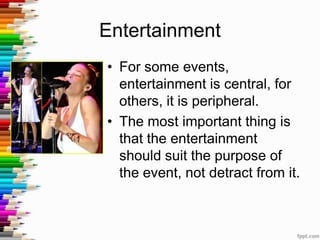
Entertainment
• For some events,
entertainment is central, for
others, it is peripheral.
• The most important thing is
that the entertainment
should suit the purpose of
the event, not detract from it.
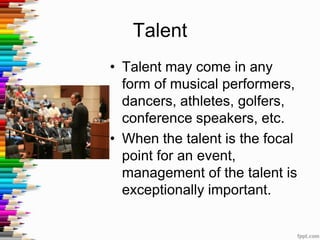
Talent
• Talent may come in any
form of musical performers,
dancers, athletes, golfers,
conference speakers, etc.
• When the talent is the focal
point for an event,
management of the talent is
exceptionally important.
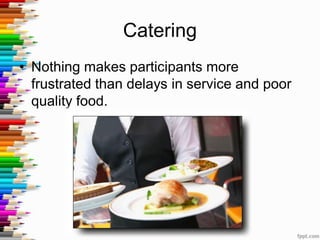
Catering
• Nothing makes participants more
frustrated than delays in service and poor
quality food.
Logistics of the Concept
• The following logistical elements must be
taken into account:
• Access to the site
• Physical limitations
• Dimensions of the site
• Refrigerated storage
• Physical space
• Toilet facilities
Logistics of the Concept
• The following logistical elements must be
taken into account:
• Cleaning
• Catering
• Safety
• Potential damage to the site
• Provision of basic services

Event Concept - mmaldana

  • 1.
  • 2.
    Developing the Concept •There are numerous elements which need to be considered in developing an event concept: purpose/objective, theme, venue, audience, available resources, timing of the event and the skills of the team. • The most important is the purpose, although it is strongly linked to both the theme and the venue.
  • 3.
    Purpose of theevent • The purpose of the event should drive all the planning. • While for many events the main purpose is making a profit, for many it is not.
  • 4.
    Theme of theevent • The theme of the event should be linked to the purpose. • It should be completely compatible with guest needs and consistent in all aspects.
  • 5.
    Theme of theevent • When coming up with ideas for a theme, it is most important to consider the range of suitable venues available, keeping in mind the budget and other considerations.
  • 6.
    Theme of theevent AME 1UP event (concept: gaming)
  • 7.
    Venue of theevent • The event manager needs to carefully consider the planning implications of choosing an unusual venue in preference to a standard venue requiring decoration only match the theme. • Lighting, sound and catering also provide challenges
  • 8.
    Factors to consider(venue) • Potential to fulfil the purpose of the event • Ambience • Location • Access to public transport • Parking • Seating capacity • Built features (stages) • Cost of decoration • Cost of labour • Logistics of setting up • Food and beverage facilities • Safety
  • 9.
    Event audience • Whenorganizing an event, the needs of all participants must be considered before finalizing the concept.
  • 10.
    Financial considerations • Financesis an important consideration at this early stage of event concept and design.
  • 11.
    Timing of theevent • The timing of the event is often linked to the season or weather. • The evaluation of an event concept must take into account the following: – Season – Day of the week – Time of day – duration
  • 12.
    Timing of theevent • Another thing to consider is lead time – the time available for planning and implementation. • The duration of the event is another thing to consider.
  • 13.
    Event team, contractorsand other stakeholders • The skills of the event team, just as importantly, the contractors, such as lighting technicians and catering staff, are important considerations in terms of concept development.
  • 14.
  • 15.
    Competition • Prior toinvolvement in any event, it is essential to conduct an analysis of your competition. • People have limited disposable income and festivals and events tend to be non essential items in most family and tourist budgets.
  • 16.
    Regulations • A widerange of laws and regulations have an impact on the staging of events and these can severely limit creativity.
  • 17.
    Marketing • How tosell an event is a very important part of the initial planning, the timing of your marketing is very crucial.
  • 18.
    Community Impact • Theimpact of an event on the local or wider community and others is a major consideration of the planning stage.
  • 19.
    Risk • For mostevents, weather is the greatest risk to attendance, enjoyment and success. • Other risks associated with events: cancelation of speaker or performer, non- arrival of equipment, technical failure, transportation crisis, accidents, etc.
  • 20.
    Revenue and expenditure •Losing money is the fastest way to get out of the event business. • For this reason, the event concept needs very careful analysis. • In most cases, contractors for catering, security and other services.
  • 21.
  • 22.
    Designing the concept •The following are the main creative elements that must be considered: – Theme – Layout – Decor – Suppliers – Technical requirements – Staging – Entertainment – Talent – Catering
  • 23.
    Theme • The themeshould ideally appeal to all senses: tactile, smell, taste, visual and auditory.
  • 24.
    Layout • Discomfort inevents is generally the result of too much open space, too much light or the limited opportunity to mix. • The audience needs to be comfortably fill the venue to create a positive ambience.
  • 25.
    Decor • Fabrics, decorativeitems, stage props, drapes and table settings can all be hired for the event and it can reduce the cost
  • 26.
    Suppliers • Good relationshipswith suppliers of all commodities will ensure that only quality products will be received.
  • 27.
    Technical Requirements • Technicalglitches like speaker’s notes on the laptop and the screen starts changing slides rapidly, screensavers pop-up when the speakers take too long, microphone not working, etc are some of the things we encounter during events. • Technical glitches as such are unacceptable – thorough rehearsals and a back-up system is essential.
  • 28.
    Staging • Consider rentingstages rather than making them if the event venue is without one.
  • 29.
    Entertainment • For someevents, entertainment is central, for others, it is peripheral. • The most important thing is that the entertainment should suit the purpose of the event, not detract from it.
  • 30.
    Talent • Talent maycome in any form of musical performers, dancers, athletes, golfers, conference speakers, etc. • When the talent is the focal point for an event, management of the talent is exceptionally important.
  • 31.
    Catering • Nothing makesparticipants more frustrated than delays in service and poor quality food.
  • 32.
    Logistics of theConcept • The following logistical elements must be taken into account: • Access to the site • Physical limitations • Dimensions of the site • Refrigerated storage • Physical space • Toilet facilities
  • 33.
    Logistics of theConcept • The following logistical elements must be taken into account: • Cleaning • Catering • Safety • Potential damage to the site • Provision of basic services