Water Related
Pollution
EUTROPHICATION
 Eutrophication is the accumulation of nutrients in aquatic ecosystems. It
alters the dynamics of a number of plant, animal and bacterial
populations; thus, bringing about changes in community structure.
 It is a form of water pollution and like all other forms of pollution is the
result of human activities influencing ecological cycles.
 An increase in chemical nutrients — compounds containing nitrogen or
phosphorus in an ecosystem, and may occur on land or in water.
However, the term is often used to mean the resultant increase in the
ecosystem's primary productivity (excessive plant growth and decay),
and further effects including lack of oxygen and severe reductions in
water quality, fish, and other animal populations.
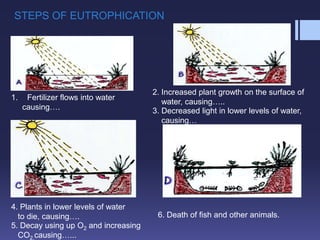
STEPS OF EUTROPHICATION

1.

Fertilizer flows into water
causing….

4. Plants in lower levels of water
to die, causing….
5. Decay using up O2 and increasing
CO2,causing…...

2. Increased plant growth on the surface of
water, causing…..
3. Decreased light in lower levels of water,
causing…

6. Death of fish and other animals.
The rise in eutrophic and
hypoxic events has been
attributed to the rapid
increase in intensive
agricultural practices,
industrial activities, and
population growth which
together have increased
nitrogen and phosphorus
flows in the environment.
The Millennium Ecosystem
Assessment (MA) found
that human activities have
resulted in the near
doubling of nitrogen and
tripling of phosphorus flows
to the environment when
compared to natural
values.
Sources of Eutrophication
Discharge of untreated
municipal sewage
(nitrates and phosphates)

Nitrogen compounds
produced by cars
and factories
Natural runoff
(nitrates and
phosphates
Inorganic fertilizer runoff
(nitrates and phosphates)

Discharge of
detergents
( phosphates)

Discharge of treated
municipal sewage
(primary and secondary
treatment:
nitrates and phosphates)

Dissolving of
nitrogen oxides
(from internal combustion
engines and furnaces)

Manure runoff
from feedlots
(nitrates,
phosphates,
ammonia)

Runoff from streets,
lawns, and construction
Lake ecosystem
lots (nitrates and
nutrient overload
phosphates)
and breakdown of
chemical cycling
Runoff and erosion
(from cultivation,
mining, construction,
and poor land use)
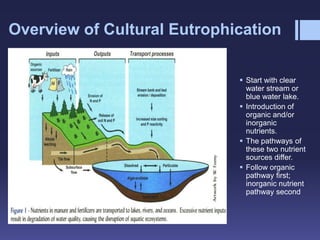
Overview of Cultural Eutrophication
 Start with clear
water stream or
blue water lake.
 Introduction of
organic and/or
inorganic
nutrients.
 The pathways of
these two nutrient
sources differ.
 Follow organic
pathway first;
inorganic nutrient
pathway second
Ecological effects
Increased biomass of phytoplankton
Toxic or inedible phytoplankton species
Increases in blooms of gelatinous zooplankton

Increased biomass of benthic and epiphytic algae
Changes in macrophyte species composition
Decreases in water transparency (increased turbidity)
Colour, smell, and water treatment problems
Dissolved oxygen depletion
Increased incidences of fish kills
Loss of desirable fish species
Reductions in harvestable fish and shellfish
Decreases in perceived aesthetic value of the water

Eutrophication

  • 1.
  • 2.
  • 3.
     Eutrophication isthe accumulation of nutrients in aquatic ecosystems. It alters the dynamics of a number of plant, animal and bacterial populations; thus, bringing about changes in community structure.  It is a form of water pollution and like all other forms of pollution is the result of human activities influencing ecological cycles.  An increase in chemical nutrients — compounds containing nitrogen or phosphorus in an ecosystem, and may occur on land or in water. However, the term is often used to mean the resultant increase in the ecosystem's primary productivity (excessive plant growth and decay), and further effects including lack of oxygen and severe reductions in water quality, fish, and other animal populations.
  • 4.
    STEPS OF EUTROPHICATION 1. Fertilizerflows into water causing…. 4. Plants in lower levels of water to die, causing…. 5. Decay using up O2 and increasing CO2,causing…... 2. Increased plant growth on the surface of water, causing….. 3. Decreased light in lower levels of water, causing… 6. Death of fish and other animals.
  • 5.
    The rise ineutrophic and hypoxic events has been attributed to the rapid increase in intensive agricultural practices, industrial activities, and population growth which together have increased nitrogen and phosphorus flows in the environment. The Millennium Ecosystem Assessment (MA) found that human activities have resulted in the near doubling of nitrogen and tripling of phosphorus flows to the environment when compared to natural values.
  • 6.
    Sources of Eutrophication Dischargeof untreated municipal sewage (nitrates and phosphates) Nitrogen compounds produced by cars and factories Natural runoff (nitrates and phosphates Inorganic fertilizer runoff (nitrates and phosphates) Discharge of detergents ( phosphates) Discharge of treated municipal sewage (primary and secondary treatment: nitrates and phosphates) Dissolving of nitrogen oxides (from internal combustion engines and furnaces) Manure runoff from feedlots (nitrates, phosphates, ammonia) Runoff from streets, lawns, and construction Lake ecosystem lots (nitrates and nutrient overload phosphates) and breakdown of chemical cycling Runoff and erosion (from cultivation, mining, construction, and poor land use)
  • 7.
    Overview of CulturalEutrophication  Start with clear water stream or blue water lake.  Introduction of organic and/or inorganic nutrients.  The pathways of these two nutrient sources differ.  Follow organic pathway first; inorganic nutrient pathway second
  • 8.
    Ecological effects Increased biomassof phytoplankton Toxic or inedible phytoplankton species Increases in blooms of gelatinous zooplankton Increased biomass of benthic and epiphytic algae Changes in macrophyte species composition Decreases in water transparency (increased turbidity) Colour, smell, and water treatment problems Dissolved oxygen depletion Increased incidences of fish kills Loss of desirable fish species Reductions in harvestable fish and shellfish Decreases in perceived aesthetic value of the water

Editor's Notes

  • #2 Clean and plentiful water is the cornerstone of prosperous communities and every society. Yet as we enter the 21st century, swelling demand and changing climate patterns are draining rivers and aquifers and pollution is threatening the quality of what remains. As of the present time dirty water is the world's biggest health risk, and continues to threaten both quality of life and public health. Water pollution or contamination of water with chemicals or other foreign substances that are detrimental to human, plant, or animal health is continuously putting every organisms now at risk. These pollutants include fertilizers and pesticides from agricultural runoff that are used in farming; sewage and food processing waste from the factories and establishments; lead, mercury, and other heavy metals; chemical wastes from industrial discharges; and chemical contamination from hazardous waste sites. Worldwide, nearly 2 billion people drink contaminated water that could be harmful to their health. Water pollution is commonly caused by many other factors within its vicinity like eutrophication, thermal pollution, siltation, red tide phenomenon, and ocean pollution.