CULTURE OF GIANT FRESHWATER PRAWN 
Macrobrachium rosenbergii
Introduction 
 About dozen species of fresh water prawns 
 Atleast, three species, M.rosenbergii, M. 
malcolmsonii & M. birmanium 
 The largest prawn in the world – 300 mm in length; 
400 g weight.
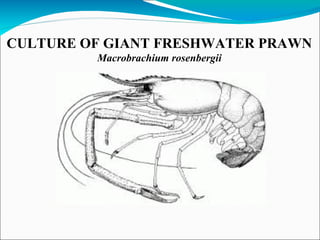
M. rosenbergii Taxonomy
M. rosenbergii is the largest natantian (swimming) prawn in 
the world and belongs to the family 
Palaemonidae (refer to Box 1). The adult prawn can easily be 
identified from other species in the genus by the following 
characteristics: 
• Adult male has a pair of very long legs (chelipeds) 
• The rostrum is long and bent in the middle with 11–13 dorsal 
teeth and 8–10 ventral teeth 
• The movable finger of the leg of the adult male is covered by a 
dense mat of spongy fur 
• Distinct black bands on the dorsal side at the junctions of the 
abdominal segments
The body consists of the head (cephalothorax) and 
tail (abdomen) and is divided into 20 segments. 
Of these segments, 14 are in the head and covered 
by a shield known as the carapace. 
The front portion of the head has 6 segments, and 
features: 
• stalked eyes 
• first antennae 
• second antennae 
• mandible, used to grind food 
• first maxillae, which transfer food into the mouth 
• second maxillae
The rear portion of the head (thorax) has 8 
segments, each of which has a pair of appendages: 
• 3 sets of maxillipeds (function as mouthparts) 
• 5 sets of legs (pereiopods)
Life cycle 
There are four distinct phases in the prawn life cycle: 
Egg, Larva (zoea), postlarva (PL) and adult.
Continue……
CULTURE 
 Nursery pond management 
 Grow-out ponds 
 Feed management
Nursery pond management 
 Nursery tank 
 Preparation of tank 
 Stocking of post larvae 
 Feed 
 Water quality management 
 Harvesting
Grow-out ponds 
 Preparation 
 Stocking of seed 
 Water quality parameters 
 Temp. : 18-34 0C 
 DO : 5-8 ppm 
 pH : 7-7.5 
 Salinity : 6 ppt
fresh water prawn

fresh water prawn

  • 1.
    CULTURE OF GIANTFRESHWATER PRAWN Macrobrachium rosenbergii
  • 2.
    Introduction  Aboutdozen species of fresh water prawns  Atleast, three species, M.rosenbergii, M. malcolmsonii & M. birmanium  The largest prawn in the world – 300 mm in length; 400 g weight.
  • 3.
  • 5.
    M. rosenbergii isthe largest natantian (swimming) prawn in the world and belongs to the family Palaemonidae (refer to Box 1). The adult prawn can easily be identified from other species in the genus by the following characteristics: • Adult male has a pair of very long legs (chelipeds) • The rostrum is long and bent in the middle with 11–13 dorsal teeth and 8–10 ventral teeth • The movable finger of the leg of the adult male is covered by a dense mat of spongy fur • Distinct black bands on the dorsal side at the junctions of the abdominal segments
  • 6.
    The body consistsof the head (cephalothorax) and tail (abdomen) and is divided into 20 segments. Of these segments, 14 are in the head and covered by a shield known as the carapace. The front portion of the head has 6 segments, and features: • stalked eyes • first antennae • second antennae • mandible, used to grind food • first maxillae, which transfer food into the mouth • second maxillae
  • 7.
    The rear portionof the head (thorax) has 8 segments, each of which has a pair of appendages: • 3 sets of maxillipeds (function as mouthparts) • 5 sets of legs (pereiopods)
  • 8.
    Life cycle Thereare four distinct phases in the prawn life cycle: Egg, Larva (zoea), postlarva (PL) and adult.
  • 11.
  • 12.
    CULTURE  Nurserypond management  Grow-out ponds  Feed management
  • 13.
    Nursery pond management  Nursery tank  Preparation of tank  Stocking of post larvae  Feed  Water quality management  Harvesting
  • 14.
    Grow-out ponds Preparation  Stocking of seed  Water quality parameters  Temp. : 18-34 0C  DO : 5-8 ppm  pH : 7-7.5  Salinity : 6 ppt