EUTROPHICATION
By :
BP231520
Sharovardhini.A
Department of Microbiology
Environmental
microbiology
CONTENTS
Introduction
01
03 Effects of Eutrophication
04 Control measures
Causes of
eutrophication
02
Introduction
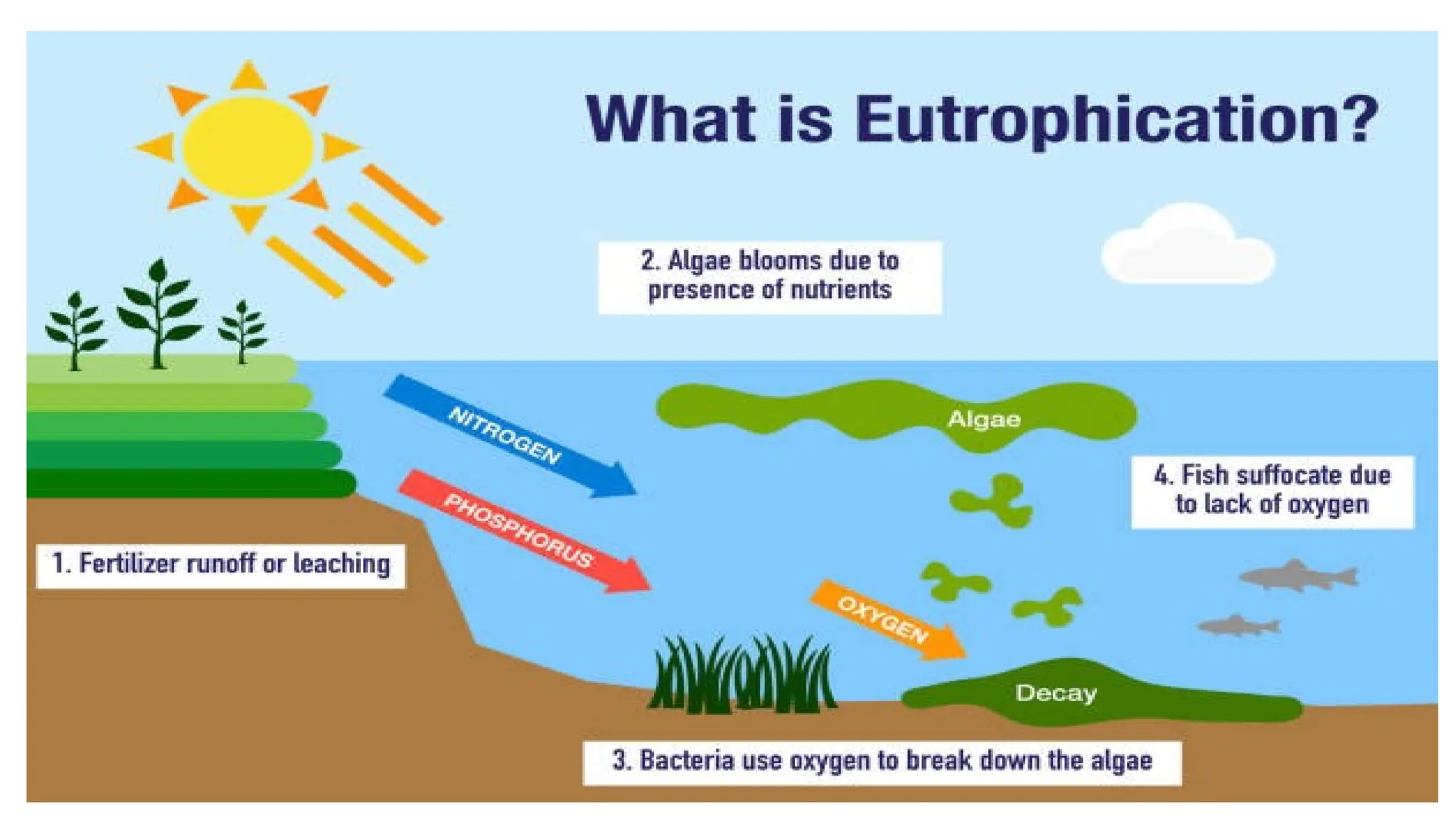
• Eutrophication refers to the process where a body of
water becomes overly enriched with nutrients,
typically nitrogen (N) and phosphorus (p).
• From Greek word “Eu- trophic”
• Means Eu- well , trophic – Nourishment
• This enrichment often leads to excessive growth of
algae and other aquatic plants.
Causes of eutrophication
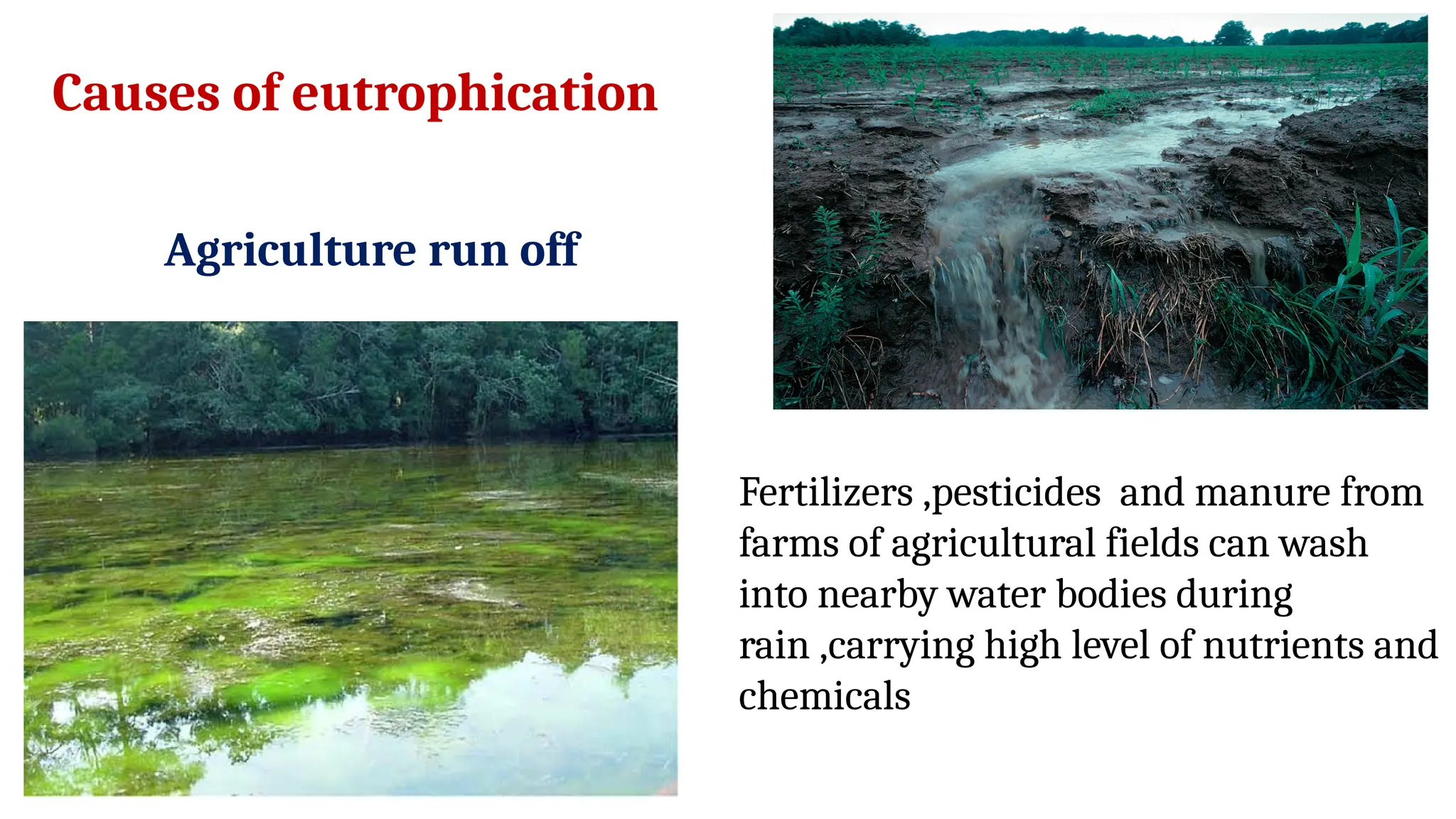
Agriculture run off
Fertilizers ,pesticides and manure from
farms of agricultural fields can wash
into nearby water bodies during
rain ,carrying high level of nutrients and
chemicals
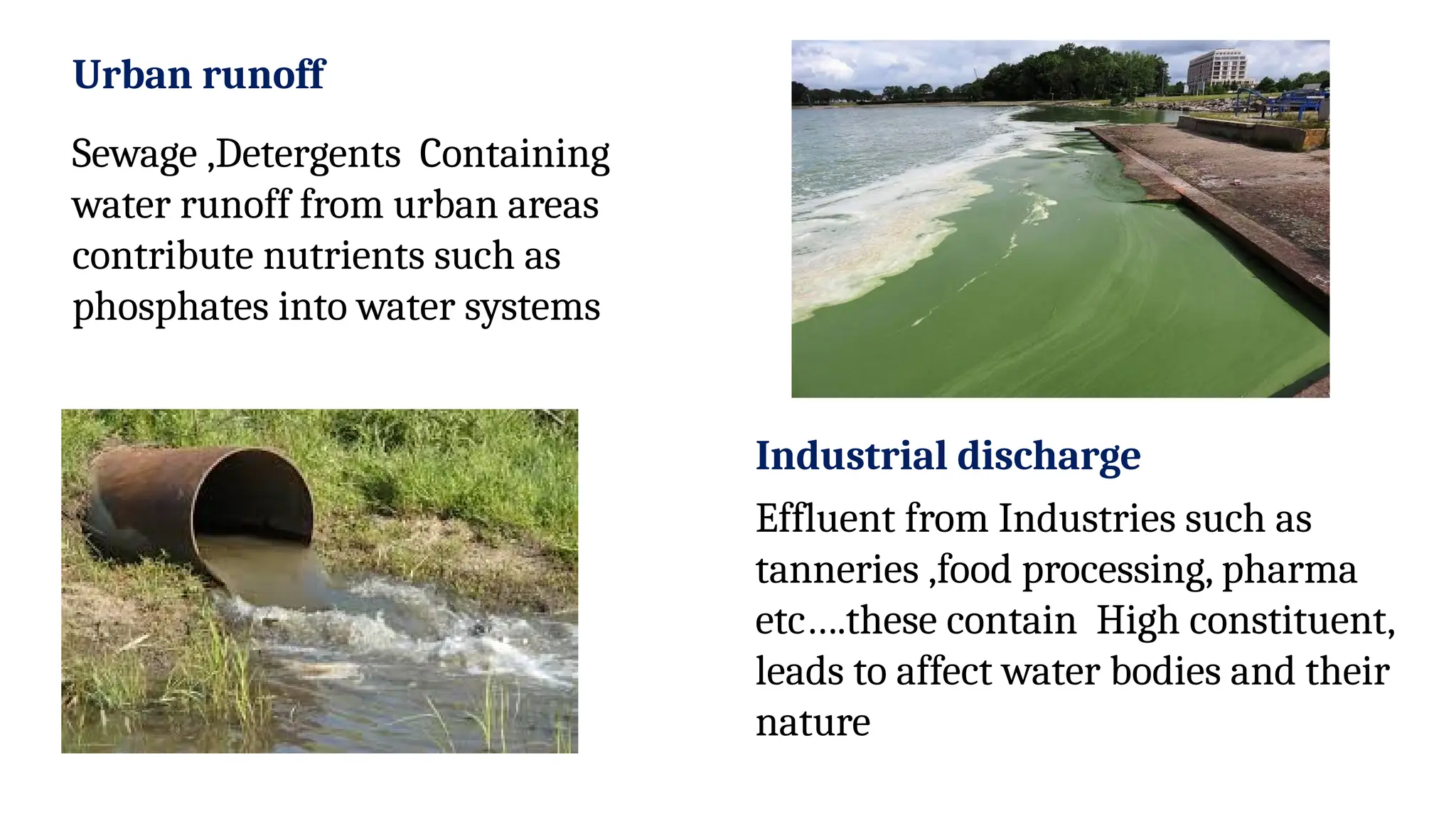
Urban runoff
Sewage ,Detergents Containing
water runoff from urban areas
contribute nutrients such as
phosphates into water systems
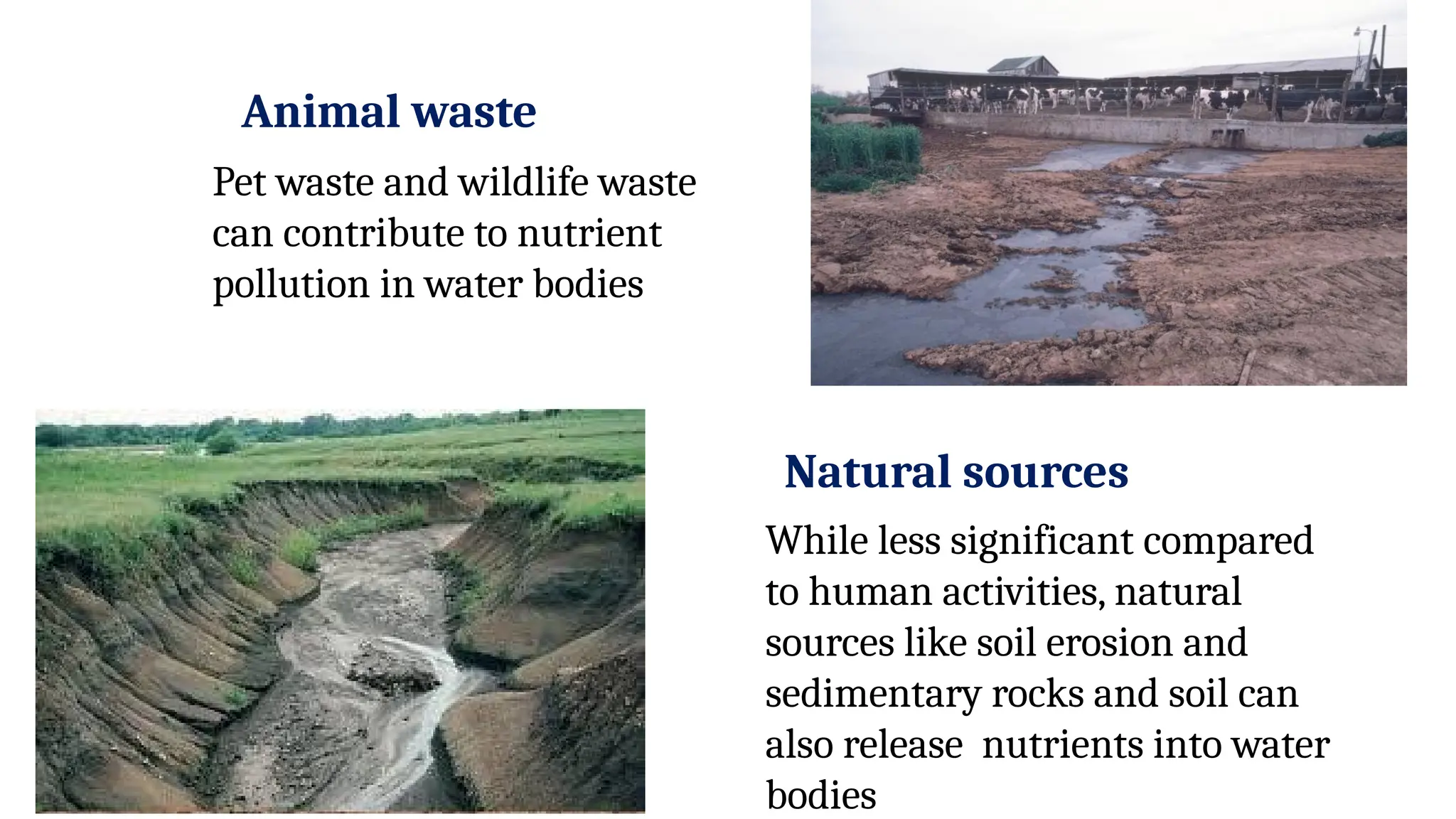
Industrial discharge
Effluent from Industries such as
tanneries ,food processing, pharma
etc….these contain High constituent,
leads to affect water bodies and their
nature
Aquaculture
Atmospheric deposition
Nitrogen compounds from vehicle
emissions and industrial /domestical
process can settle on water surfaces
and enter into aquatic System during
rainfall .
Fish ,shrimp farms place of
cultivating can release nutrients in
excess organic matter into
surrounding matter
Animal waste
Pet waste and wildlife waste
can contribute to nutrient
pollution in water bodies
Natural sources
While less significant compared
to human activities, natural
sources like soil erosion and
sedimentary rocks and soil can
also release nutrients into water
bodies
Effects of Eutrophication
Algal blooms
Excessive nutrients Like N,P induce rapid
growth of algae and phytoplankton leads to
HABs produce toxins.
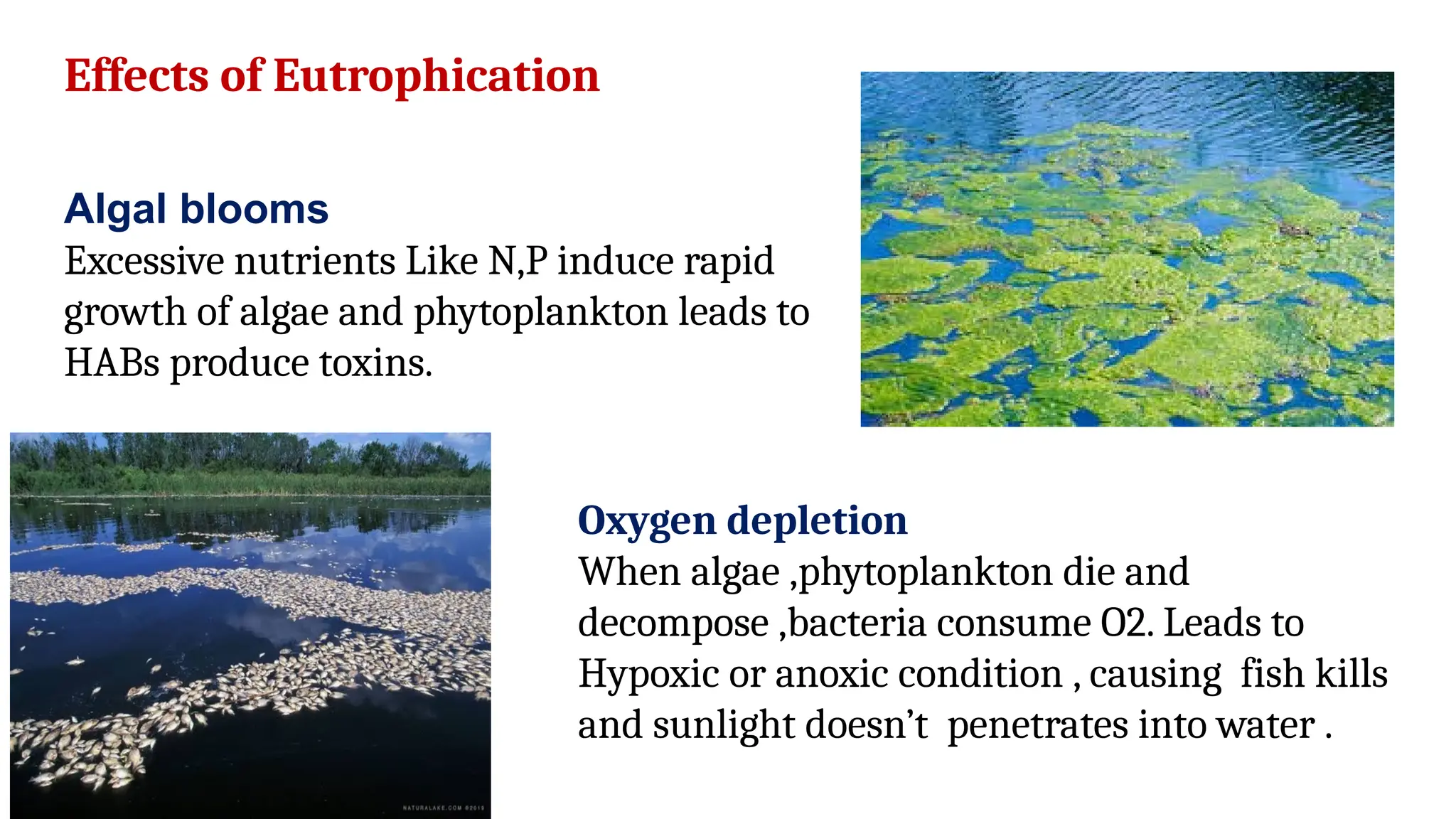
Oxygen depletion
When algae ,phytoplankton die and
decompose ,bacteria consume O2. Leads to
Hypoxic or anoxic condition , causing fish kills
and sunlight doesn’t penetrates into water .
Harmful to human health
When algal blooming dies, they produce
toxin. Cyanotoxin including cytotoxin and
biotoxin acute , chronic and lethal acute
poisoning of wild /domestic animals and
humans
Others Effect include:
• Fish kills
• Loss of biodiversity
• Water clarity
• Economic impact habitat loss
1.Reducing nutrient impact
• Effluent treatment
• Controlled applications of fertilizers
• Riparian zone management
2. Managing agricultural practices
• Crop rotation and crop cover
• Nutrient management planning
• Conservation of tillage
3. Stromwater management
• Green infrastructure
4. Public awareness and education
5. Regulatory and policy measures
Control measures for eutrophication
EUTROPHICATION : Introduction, Causes,Effects and Control measures

EUTROPHICATION : Introduction, Causes,Effects and Control measures

  • 1.
    EUTROPHICATION By : BP231520 Sharovardhini.A Department ofMicrobiology Environmental microbiology
  • 2.
    CONTENTS Introduction 01 03 Effects ofEutrophication 04 Control measures Causes of eutrophication 02
  • 3.
    Introduction • Eutrophication refersto the process where a body of water becomes overly enriched with nutrients, typically nitrogen (N) and phosphorus (p). • From Greek word “Eu- trophic” • Means Eu- well , trophic – Nourishment • This enrichment often leads to excessive growth of algae and other aquatic plants.
  • 5.
    Causes of eutrophication Agriculturerun off Fertilizers ,pesticides and manure from farms of agricultural fields can wash into nearby water bodies during rain ,carrying high level of nutrients and chemicals
  • 6.
    Urban runoff Sewage ,DetergentsContaining water runoff from urban areas contribute nutrients such as phosphates into water systems Industrial discharge Effluent from Industries such as tanneries ,food processing, pharma etc….these contain High constituent, leads to affect water bodies and their nature
  • 7.
    Aquaculture Atmospheric deposition Nitrogen compoundsfrom vehicle emissions and industrial /domestical process can settle on water surfaces and enter into aquatic System during rainfall . Fish ,shrimp farms place of cultivating can release nutrients in excess organic matter into surrounding matter
  • 8.
    Animal waste Pet wasteand wildlife waste can contribute to nutrient pollution in water bodies Natural sources While less significant compared to human activities, natural sources like soil erosion and sedimentary rocks and soil can also release nutrients into water bodies
  • 9.
    Effects of Eutrophication Algalblooms Excessive nutrients Like N,P induce rapid growth of algae and phytoplankton leads to HABs produce toxins. Oxygen depletion When algae ,phytoplankton die and decompose ,bacteria consume O2. Leads to Hypoxic or anoxic condition , causing fish kills and sunlight doesn’t penetrates into water .
  • 10.
    Harmful to humanhealth When algal blooming dies, they produce toxin. Cyanotoxin including cytotoxin and biotoxin acute , chronic and lethal acute poisoning of wild /domestic animals and humans Others Effect include: • Fish kills • Loss of biodiversity • Water clarity • Economic impact habitat loss
  • 11.
    1.Reducing nutrient impact •Effluent treatment • Controlled applications of fertilizers • Riparian zone management 2. Managing agricultural practices • Crop rotation and crop cover • Nutrient management planning • Conservation of tillage 3. Stromwater management • Green infrastructure 4. Public awareness and education 5. Regulatory and policy measures Control measures for eutrophication