How do you feel every time I say
that you are going to do an
experiment?
 When you went in the office
 When you did the word search experiment
Everyone feels a bit like this and researchers must
make sure their participants are not harmed
Possible problems are ethical issues
But….
 Ethics can clash with experimental controls
 We need to explain to participants what they are
about to agree to do
 But sometimes we don’t want to let them know what
the real aim of the study is
 Can you think of an experiment where this might be
the case?
Ethical issues
 Informed consent
 Right to withdraw
Informed consent
 Participants should know what they are about to do
 WHY….imagine volunteering for an experiment on
phobias and being shown spiders if you hate them!
 Participants might want to know:
1. If they are in competition with others
2. What the results are going to be used for
Right to withdraw
 Participants should not feel that they have to carry
on
 ….even if they are being paid!
 Imagine how you would feel if you felt you did badly
in an experiment, would you want to do the second
condition?
Ethical Guidelines
 The British Psychological Society (BPS) give
suggestions (guidelines) for psychologist to deal with
the ethical issues
See the BPS Code of Ethics and Conduct (2006) p. 45
How can you solve these ethical
issues? Discuss with a partner
 Gaining informed consent
 Doing a study where there are lots of people in a
park and you could not possibly ask them all to
consent
 Someone feel trapped in an experiment and unable
to leave
Solving ethical problems
 Informed consent can be got by giving participants a
summary of what is about to happen in a study
 They can then chose whether to take part
 If a study is in a public place like a park, researchers
can ask colleagues whether they think people would
mind
 Participants might feel trapped in a laboratory
situation so the researcher should tell them at the
start that they can leave at any time
You are about to watch a clip of
a psychological experiment that
has now become infamous for
it unethical approach
Milgram Obedience Study
You need to write down any ethical
issues that arise from this study
Evaluating Experiments
Strengths v Weaknesses
Strengths of Experiments
Only the Independent variable affects the
Dependent Variable
 The experimenter sets up the different conditions of
the IV and controls all other variables
 They can be sure that any changes in the DV are
caused by the IV
Strengths of Experiments
Measuring the Dependent Variable accurately
 This can be measured accurately (e.g. in
milliseconds, or the number of items recalled etc.)
Strengths of Experiments
Controls
 In Palmers experiment participants were only
allowed to look at the scene for a short amount of
time
 Each participant saw the scene for the same amount
of time
 You can then be more sure that it was the category
of object (appropriate object or inappropriate similar
object) that caused the object to be identified or not
Strengths of Experiments
Informed consent
 In a laboratory experiment participants can be told
what will happen
 This is ethically good
 But, they usually cannot be told why they are doing
something as they would change how they behave
and alter the results
Strengths of Experiments
Right to withdraw
 Participants can be told about the right to withdraw
when they go into an experiment
 This cannot be done in a more real-life setting where
the participants do not know they are in a study
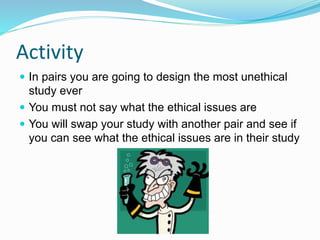
Activity
 In pairs you are going to design the most unethical
study ever
 You must not say what the ethical issues are
 You will swap your study with another pair and see if
you can see what the ethical issues are in their study
Weaknesses of Experiments
Representing real life
 Experiments are often set in laboratories and do not
represent real life
 This is an unfamiliar situation so the participant
might behave different to normal
 The tests in the experiment can be unlike real life
 How often do you find mail boxes in kitchens?
(Palmer)
 This means the findings might not tell us how people
behave in the real world
Weaknesses of Experiments
Hiding the experimental aims
 Knowing the aim of a study might alter the way a
participant might behave
 How would this have affected Bartlett’s War of the
Ghosts experiment?
Weaknesses of Experiments
Deception
An example: Imagine you have decided to take part in
a study you believe is about guilt and innocense. You
find examples of crime distressing but you take part
because you feel that it is important. How would you
feel if you later find out that it is just a memory test?
Weaknesses of Experiments
Deception
 Sometimes deception does need to be used but
harm can be minimised by:
1. Avoiding deception unless it is really necessary
2. Avoiding other ethical problems such as
embarrassment
3. Explaining the real purpose as soon as possible
4. Allowing them to withdraw at any time

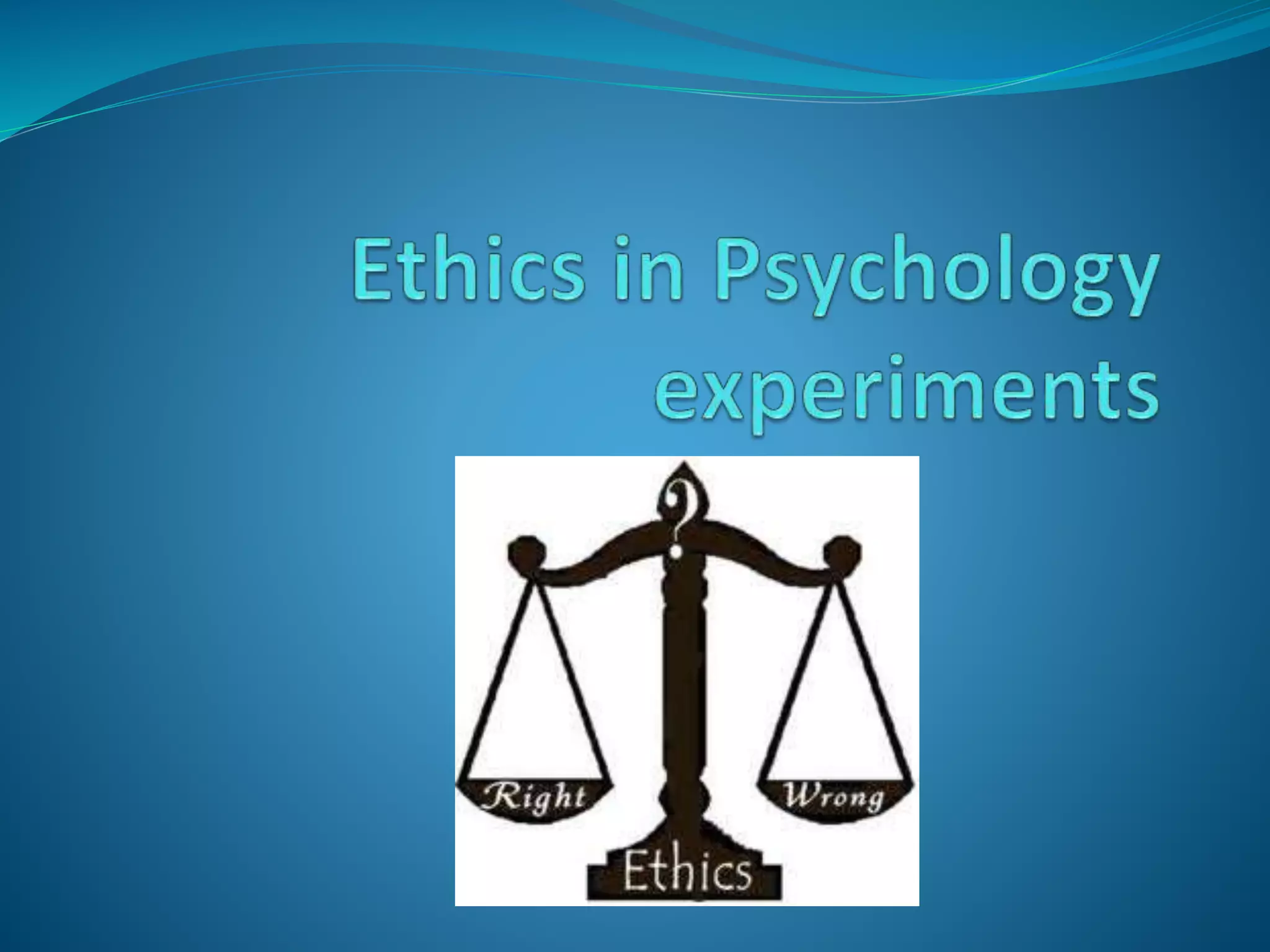
Ethics in psychology experiments

  • 2.
    How do youfeel every time I say that you are going to do an experiment?  When you went in the office  When you did the word search experiment Everyone feels a bit like this and researchers must make sure their participants are not harmed Possible problems are ethical issues
  • 3.
    But….  Ethics canclash with experimental controls  We need to explain to participants what they are about to agree to do  But sometimes we don’t want to let them know what the real aim of the study is  Can you think of an experiment where this might be the case?
  • 4.
    Ethical issues  Informedconsent  Right to withdraw
  • 5.
    Informed consent  Participantsshould know what they are about to do  WHY….imagine volunteering for an experiment on phobias and being shown spiders if you hate them!  Participants might want to know: 1. If they are in competition with others 2. What the results are going to be used for
  • 6.
    Right to withdraw Participants should not feel that they have to carry on  ….even if they are being paid!  Imagine how you would feel if you felt you did badly in an experiment, would you want to do the second condition?
  • 7.
    Ethical Guidelines  TheBritish Psychological Society (BPS) give suggestions (guidelines) for psychologist to deal with the ethical issues See the BPS Code of Ethics and Conduct (2006) p. 45
  • 8.
    How can yousolve these ethical issues? Discuss with a partner  Gaining informed consent  Doing a study where there are lots of people in a park and you could not possibly ask them all to consent  Someone feel trapped in an experiment and unable to leave
  • 9.
    Solving ethical problems Informed consent can be got by giving participants a summary of what is about to happen in a study  They can then chose whether to take part  If a study is in a public place like a park, researchers can ask colleagues whether they think people would mind  Participants might feel trapped in a laboratory situation so the researcher should tell them at the start that they can leave at any time
  • 10.
    You are aboutto watch a clip of a psychological experiment that has now become infamous for it unethical approach
  • 11.
  • 12.
    You need towrite down any ethical issues that arise from this study
  • 13.
  • 14.
    Strengths of Experiments Onlythe Independent variable affects the Dependent Variable  The experimenter sets up the different conditions of the IV and controls all other variables  They can be sure that any changes in the DV are caused by the IV
  • 15.
    Strengths of Experiments Measuringthe Dependent Variable accurately  This can be measured accurately (e.g. in milliseconds, or the number of items recalled etc.)
  • 16.
    Strengths of Experiments Controls In Palmers experiment participants were only allowed to look at the scene for a short amount of time  Each participant saw the scene for the same amount of time  You can then be more sure that it was the category of object (appropriate object or inappropriate similar object) that caused the object to be identified or not
  • 17.
    Strengths of Experiments Informedconsent  In a laboratory experiment participants can be told what will happen  This is ethically good  But, they usually cannot be told why they are doing something as they would change how they behave and alter the results
  • 18.
    Strengths of Experiments Rightto withdraw  Participants can be told about the right to withdraw when they go into an experiment  This cannot be done in a more real-life setting where the participants do not know they are in a study
  • 19.
    Activity  In pairsyou are going to design the most unethical study ever  You must not say what the ethical issues are  You will swap your study with another pair and see if you can see what the ethical issues are in their study
  • 20.
    Weaknesses of Experiments Representingreal life  Experiments are often set in laboratories and do not represent real life  This is an unfamiliar situation so the participant might behave different to normal  The tests in the experiment can be unlike real life  How often do you find mail boxes in kitchens? (Palmer)  This means the findings might not tell us how people behave in the real world
  • 21.
    Weaknesses of Experiments Hidingthe experimental aims  Knowing the aim of a study might alter the way a participant might behave  How would this have affected Bartlett’s War of the Ghosts experiment?
  • 22.
    Weaknesses of Experiments Deception Anexample: Imagine you have decided to take part in a study you believe is about guilt and innocense. You find examples of crime distressing but you take part because you feel that it is important. How would you feel if you later find out that it is just a memory test?
  • 23.
    Weaknesses of Experiments Deception Sometimes deception does need to be used but harm can be minimised by: 1. Avoiding deception unless it is really necessary 2. Avoiding other ethical problems such as embarrassment 3. Explaining the real purpose as soon as possible 4. Allowing them to withdraw at any time