TOPIC- ETHICS IN
FORENSIC SCIENCE
PRESENTED BY- PALLAVI KUMARI
I.D - 19MSFS001
CONTENTS
Introduction
Principle
Why unethical act occur
> Good intention
> ignorance of law, code ,policy and procedures
> recognition
> friendship
> personal gain
> act of stupidity
> going along
Ethical decision making
Teaching ethics to forensic scientists
INTRODUCTION
• The crime laboratory has a unique position the
criminal justice system. It is both hero and villain,
forensic analysis is becoming increasingly more
important in criminal and civil prosecution.
• The burden to prove that the analysis has been
performed properly weighs heavy on forensic
scientists each time that they issue a report and
provide expert testimony. No longer they merely
playing a supporting role in investigations.
PRINCIPLES
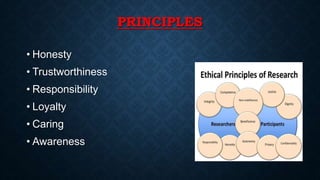
• Honesty
• Trustworthiness
• Responsibility
• Loyalty
• Caring
• Awareness
WHY UNETHICAL ACT OCCUR?
• Ethics is more than just a standard of conduct that
mandates how individuals should behave.
• In addition to recognizing what is the right thing to
do, individuals must also have the conviction and
courage to do the right things. Often unethical
acts result when an individual does not possess
the strength to take the action that they recognize
as being just.
GOOD INTENTION
• Increasingly, crime laboratories are establishing new rule and
policies either as a result of accreditation requirements or
internal quality processes.
• Criminalists are required to conduct time-consuming check
and elaborate documentation to validate their analysis.
• Criminalist may view these policies as a hindrance to the
timely complain of casework.
IGNORANCE OF LAWS, CODES, POLICIES,
AND PROCEDURES
• Because there are always new policies and procedure
that are established policy manual have grown larger.
• A crime laboratory has procedure manuals, quality
assurance manuals, administrative manuals from
several layer of bureaucracy, regulatory agency
guidelines, and many more.
RECOGNITION
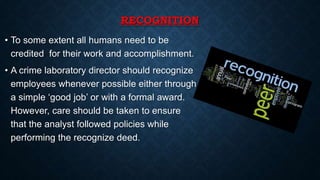
• To some extent all humans need to be
credited for their work and accomplishment.
• A crime laboratory director should recognize
employees whenever possible either through
a simple ‘good job’ or with a formal award.
However, care should be taken to ensure
that the analyst followed policies while
performing the recognize deed.
FRIENDSHIP
• Individual with a strong sense of friends and family
may be tempted to participate in unethical behavior
to help out a friend.
• They may not feel that discussing a case with a
“trusted” one will result in any damage; however, they
risk that the confidante will also discuss it with others.
At some point, the information become public and the
harm is done.
PERSONAL GAIN
• New forensic scientists learn quickly that they do not
do the job for the money . However, there are financial
responsibilities that must be faced in life.
• Many feels that supplemental income is necessary to
fulfil their financial obligations without resorting to
unethical conduct. Others, though, may choose illegal
or unethical routes to obtaining additional resources.
ACT OF STUPIDITY
• Despite training to the country and simply “knowing
better” individuals will perform unethical acts.
• Stupidity may strike at any time during duty hours or
out side of the laboratory.
• For example, a forensic scientist trusted with
performing alcohol quantitation may be arrested for
drunk driving.
ACT OF RETRIBUTION
• Crime laboratory directors make decisions every day that their
employees disagree with. If an employee believes that their
employer is exploiting them, they may seek retribution and as
a result be motivated to perform unethical acts. These acts
could include actively engaging in a “work slowdown” or
spending a considerable time at work doing non-work-related
activities.
GOING ALONG
• Criminalist work beside each other for 40 hours a week .
• When they observe one of their of co-worker performing
an illegal or unethical act, they are faced with an ethical
dilemma.
• How they react will depend on their training.
ETHICAL DECISION MAKING
• Value are the core beliefs that guide individual decision-
making. Often an individual’s values conflict, and decisions are
made based on how they rank their values.
• The Josephson institute of ethics refers to six core ethical
values, trustworthiness, respect, responsibility, fairness, caring,
and citizenship. They teach that “the 6 pillars of character” and
should be used to guide ethical decisions.
Blanchard and Peale (1988) present 5 principles of ethical power for
individuals and organizations:-
The first principle is purpose- on an individual level it refer to the purpose
of an individual’s life.
The second principle is pride- if a person feel pride in their actions, they
don’t need the acceptance of others.
The third principle is patience- practicing patience lead one to accept that
immediate decisions do not mean immediate success.
The fourth principle is persistence- the individuals maintains their ethical
behavior regardless of convenience.
The final principle is perspective- an individual will reflect upon their
actions and feeling to reinforce their ethical behavior.
TEACHING ETHICS TO FORENSIC
SCIENTISTS
• It is important to remember that inherently unethical people cannot be trained
to be ethical.
• The first step to ensuring ethical decision-making in employees is to employ
only those individuals capable of doing so bye including integrity related
questions in the hiring process.
• Further, it is not sufficient to simply employ ethical employees; they must
receive ongoing training to ensure that they continue to make proper
decisions.
THANK YOU

ethics in forensic science.pptx

  • 1.
    TOPIC- ETHICS IN FORENSICSCIENCE PRESENTED BY- PALLAVI KUMARI I.D - 19MSFS001
  • 2.
    CONTENTS Introduction Principle Why unethical actoccur > Good intention > ignorance of law, code ,policy and procedures > recognition > friendship > personal gain > act of stupidity > going along Ethical decision making Teaching ethics to forensic scientists
  • 3.
    INTRODUCTION • The crimelaboratory has a unique position the criminal justice system. It is both hero and villain, forensic analysis is becoming increasingly more important in criminal and civil prosecution. • The burden to prove that the analysis has been performed properly weighs heavy on forensic scientists each time that they issue a report and provide expert testimony. No longer they merely playing a supporting role in investigations.
  • 4.
    PRINCIPLES • Honesty • Trustworthiness •Responsibility • Loyalty • Caring • Awareness
  • 5.
    WHY UNETHICAL ACTOCCUR? • Ethics is more than just a standard of conduct that mandates how individuals should behave. • In addition to recognizing what is the right thing to do, individuals must also have the conviction and courage to do the right things. Often unethical acts result when an individual does not possess the strength to take the action that they recognize as being just.
  • 6.
    GOOD INTENTION • Increasingly,crime laboratories are establishing new rule and policies either as a result of accreditation requirements or internal quality processes. • Criminalists are required to conduct time-consuming check and elaborate documentation to validate their analysis. • Criminalist may view these policies as a hindrance to the timely complain of casework.
  • 7.
    IGNORANCE OF LAWS,CODES, POLICIES, AND PROCEDURES • Because there are always new policies and procedure that are established policy manual have grown larger. • A crime laboratory has procedure manuals, quality assurance manuals, administrative manuals from several layer of bureaucracy, regulatory agency guidelines, and many more.
  • 8.
    RECOGNITION • To someextent all humans need to be credited for their work and accomplishment. • A crime laboratory director should recognize employees whenever possible either through a simple ‘good job’ or with a formal award. However, care should be taken to ensure that the analyst followed policies while performing the recognize deed.
  • 9.
    FRIENDSHIP • Individual witha strong sense of friends and family may be tempted to participate in unethical behavior to help out a friend. • They may not feel that discussing a case with a “trusted” one will result in any damage; however, they risk that the confidante will also discuss it with others. At some point, the information become public and the harm is done.
  • 10.
    PERSONAL GAIN • Newforensic scientists learn quickly that they do not do the job for the money . However, there are financial responsibilities that must be faced in life. • Many feels that supplemental income is necessary to fulfil their financial obligations without resorting to unethical conduct. Others, though, may choose illegal or unethical routes to obtaining additional resources.
  • 11.
    ACT OF STUPIDITY •Despite training to the country and simply “knowing better” individuals will perform unethical acts. • Stupidity may strike at any time during duty hours or out side of the laboratory. • For example, a forensic scientist trusted with performing alcohol quantitation may be arrested for drunk driving.
  • 12.
    ACT OF RETRIBUTION •Crime laboratory directors make decisions every day that their employees disagree with. If an employee believes that their employer is exploiting them, they may seek retribution and as a result be motivated to perform unethical acts. These acts could include actively engaging in a “work slowdown” or spending a considerable time at work doing non-work-related activities.
  • 13.
    GOING ALONG • Criminalistwork beside each other for 40 hours a week . • When they observe one of their of co-worker performing an illegal or unethical act, they are faced with an ethical dilemma. • How they react will depend on their training.
  • 14.
    ETHICAL DECISION MAKING •Value are the core beliefs that guide individual decision- making. Often an individual’s values conflict, and decisions are made based on how they rank their values. • The Josephson institute of ethics refers to six core ethical values, trustworthiness, respect, responsibility, fairness, caring, and citizenship. They teach that “the 6 pillars of character” and should be used to guide ethical decisions.
  • 15.
    Blanchard and Peale(1988) present 5 principles of ethical power for individuals and organizations:- The first principle is purpose- on an individual level it refer to the purpose of an individual’s life. The second principle is pride- if a person feel pride in their actions, they don’t need the acceptance of others. The third principle is patience- practicing patience lead one to accept that immediate decisions do not mean immediate success. The fourth principle is persistence- the individuals maintains their ethical behavior regardless of convenience. The final principle is perspective- an individual will reflect upon their actions and feeling to reinforce their ethical behavior.
  • 16.
    TEACHING ETHICS TOFORENSIC SCIENTISTS • It is important to remember that inherently unethical people cannot be trained to be ethical. • The first step to ensuring ethical decision-making in employees is to employ only those individuals capable of doing so bye including integrity related questions in the hiring process. • Further, it is not sufficient to simply employ ethical employees; they must receive ongoing training to ensure that they continue to make proper decisions.
  • 17.