

UNIVERSITY OF MYSORE
Presented to
Proff . Khaiser Nikham,
Dos in Lib and inf. science,
Manasagangotri,
Mysore.
Seminar on:
Professional Ethics
Presented by
Nagendra .N
First Mlisc
Dos in library and inf. Science
Manasagangotri,
Mysore
definition
• Professionally accepted standards of personal and
business behavior, values and guiding principles.
Codes of professional ethics are often established by
professional organizations to help guide members in
performing their job functions according to sound
and consistent ethical principles.
Purpose of the Ethical
Code
•Provide framework for ethical behavior
•Set standards for practice
•Protect clients, communities, and the profession
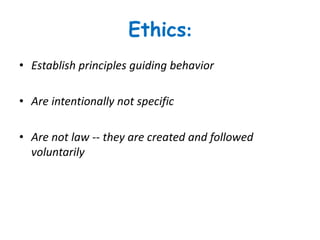
Ethics:
• Establish principles guiding behavior
• Are intentionally not specific
• Are not law -- they are created and followed
voluntarily
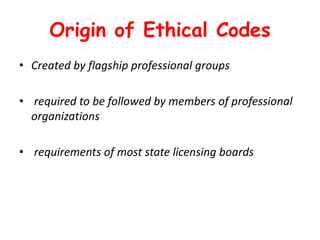
Origin of Ethical Codes
• Created by flagship professional groups
• required to be followed by members of professional
organizations
• requirements of most state licensing boards
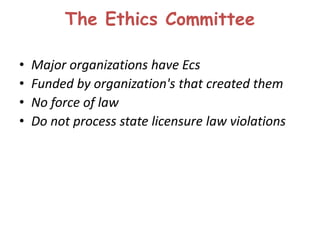
The Ethics Committee
• Major organizations have Ecs
• Funded by organization's that created them
• No force of law
• Do not process state licensure law violations
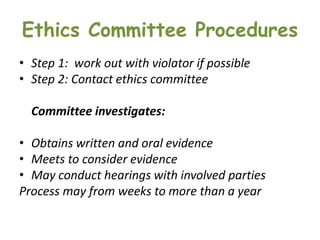
Ethics Committee Procedures
• Step 1: work out with violator if possible
• Step 2: Contact ethics committee
Committee investigates:
• Obtains written and oral evidence
• Meets to consider evidence
• May conduct hearings with involved parties
Process may from weeks to more than a year
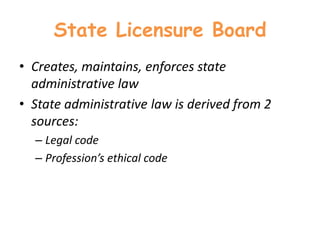
State Licensure Board
• Creates, maintains, enforces state
administrative law
• State administrative law is derived from 2
sources:
– Legal code
– Profession’s ethical code
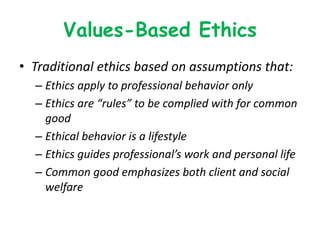
Values-Based Ethics
• Traditional ethics based on assumptions that:
– Ethics apply to professional behavior only
– Ethics are “rules” to be complied with for common
good
– Ethical behavior is a lifestyle
– Ethics guides professional’s work and personal life
– Common good emphasizes both client and social
welfare
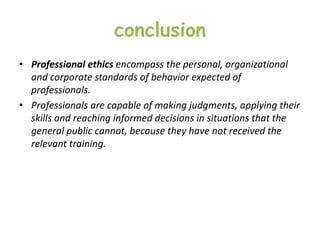
conclusion
• Professional ethics encompass the personal, organizational
and corporate standards of behavior expected of
professionals.
• Professionals are capable of making judgments, applying their
skills and reaching informed decisions in situations that the
general public cannot, because they have not received the
relevant training.
Proffessional ethics

Proffessional ethics

  • 1.
    UNIVERSITY OF MYSORE Presentedto Proff . Khaiser Nikham, Dos in Lib and inf. science, Manasagangotri, Mysore. Seminar on: Professional Ethics Presented by Nagendra .N First Mlisc Dos in library and inf. Science Manasagangotri, Mysore
  • 3.
    definition • Professionally acceptedstandards of personal and business behavior, values and guiding principles. Codes of professional ethics are often established by professional organizations to help guide members in performing their job functions according to sound and consistent ethical principles.
  • 4.
    Purpose of theEthical Code •Provide framework for ethical behavior •Set standards for practice •Protect clients, communities, and the profession
  • 5.
    Ethics: • Establish principlesguiding behavior • Are intentionally not specific • Are not law -- they are created and followed voluntarily
  • 6.
    Origin of EthicalCodes • Created by flagship professional groups • required to be followed by members of professional organizations • requirements of most state licensing boards
  • 7.
    The Ethics Committee •Major organizations have Ecs • Funded by organization's that created them • No force of law • Do not process state licensure law violations
  • 8.
    Ethics Committee Procedures •Step 1: work out with violator if possible • Step 2: Contact ethics committee Committee investigates: • Obtains written and oral evidence • Meets to consider evidence • May conduct hearings with involved parties Process may from weeks to more than a year
  • 9.
    State Licensure Board •Creates, maintains, enforces state administrative law • State administrative law is derived from 2 sources: – Legal code – Profession’s ethical code
  • 10.
    Values-Based Ethics • Traditionalethics based on assumptions that: – Ethics apply to professional behavior only – Ethics are “rules” to be complied with for common good – Ethical behavior is a lifestyle – Ethics guides professional’s work and personal life – Common good emphasizes both client and social welfare
  • 11.
    conclusion • Professional ethicsencompass the personal, organizational and corporate standards of behavior expected of professionals. • Professionals are capable of making judgments, applying their skills and reaching informed decisions in situations that the general public cannot, because they have not received the relevant training.