Ethics and CSR"What does ethics mean to you?“
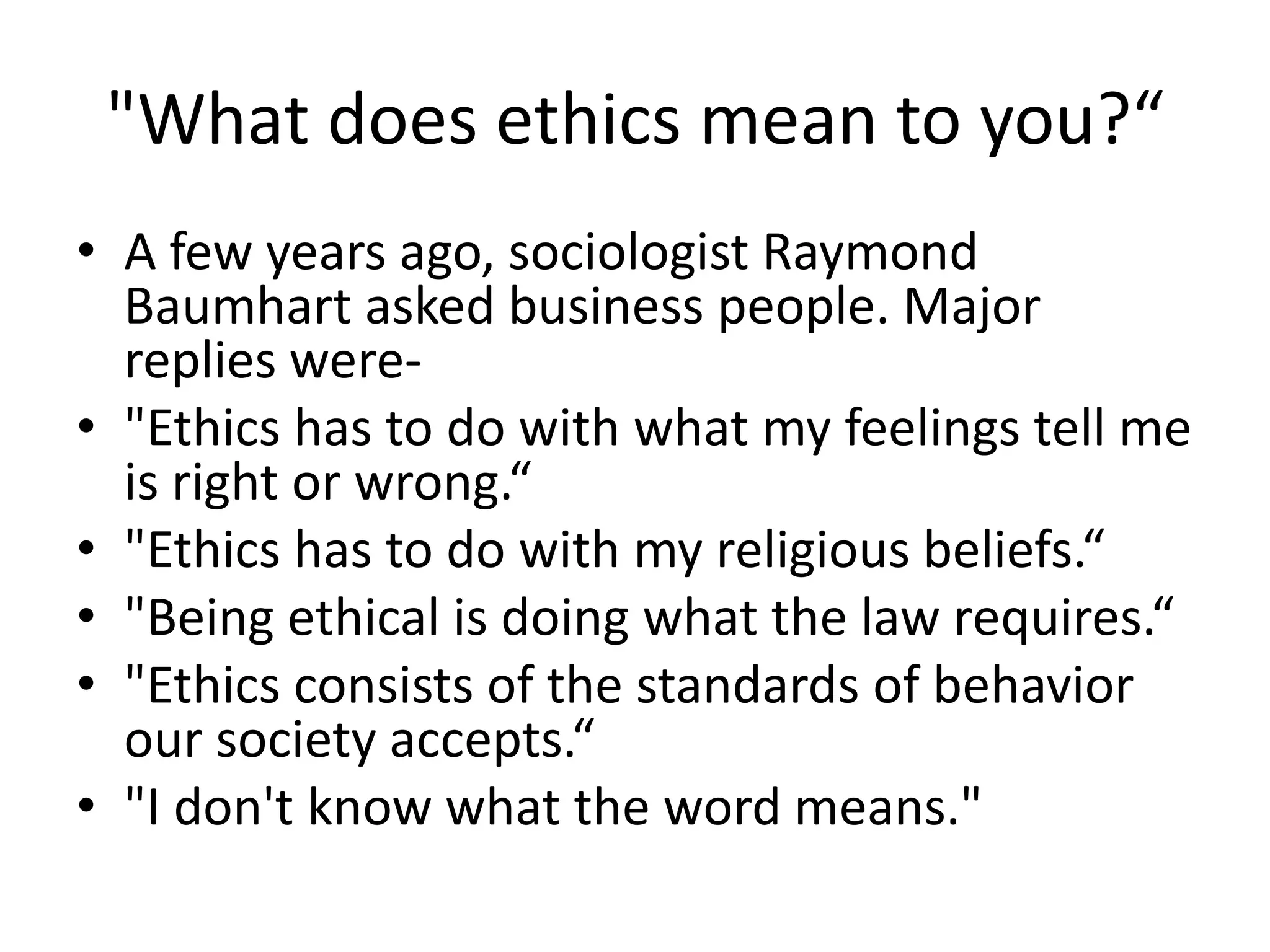
"What does ethics mean to you?“A few years ago, sociologist Raymond Baumhart asked business people. Major replies were-"Ethics has to do with what my feelings tell me is right or wrong.“"Ethics has to do with my religious beliefs.“"Being ethical is doing what the law requires.“"Ethics consists of the standards of behavior our society accepts.“"I don't know what the word means."
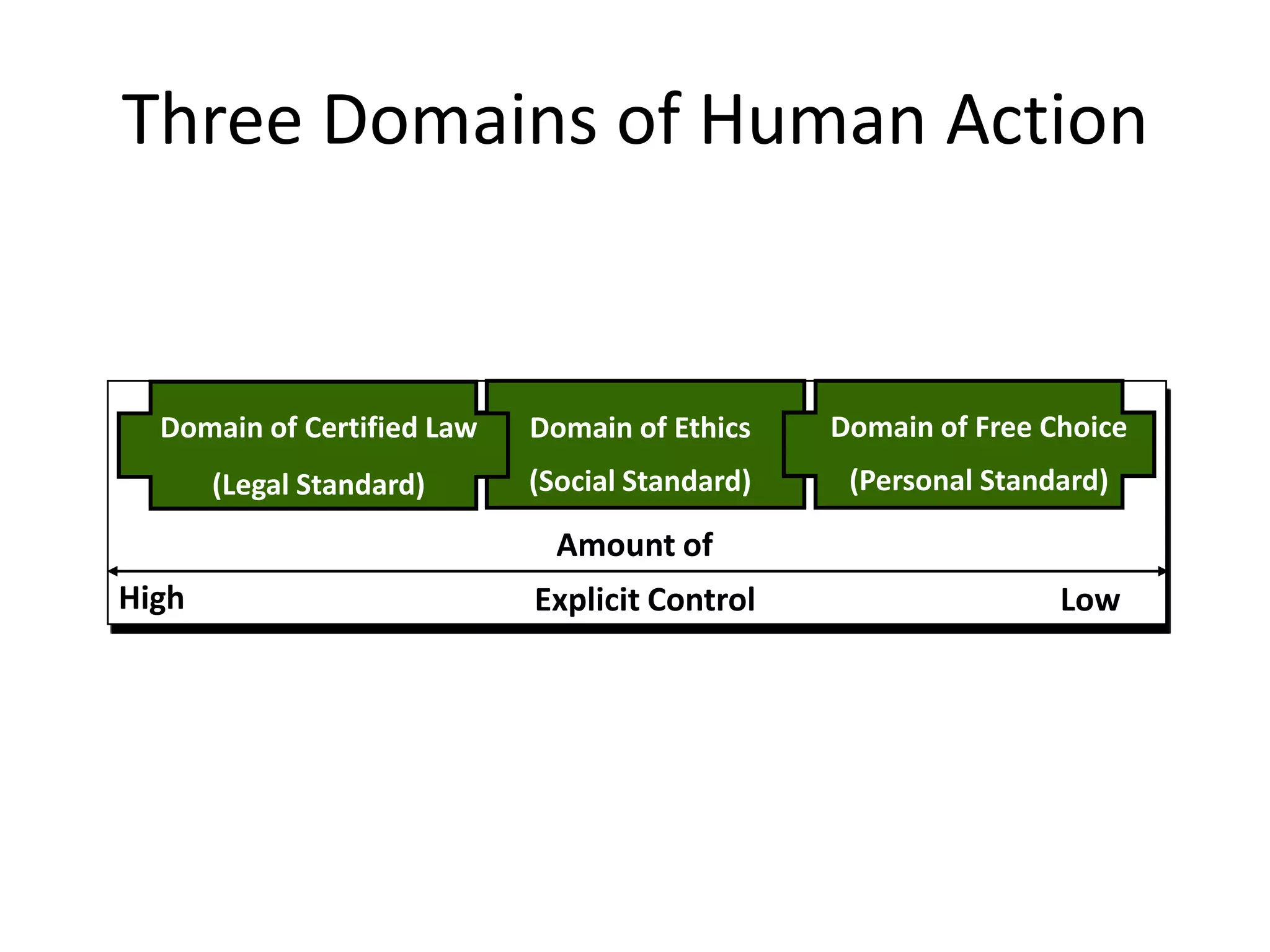
Three Domains of Human ActionDomain of Certified Law(Legal Standard)Domain of Free Choice(Personal Standard)Domain of Ethics(Social Standard)Amount ofHighExplicit ControlLow
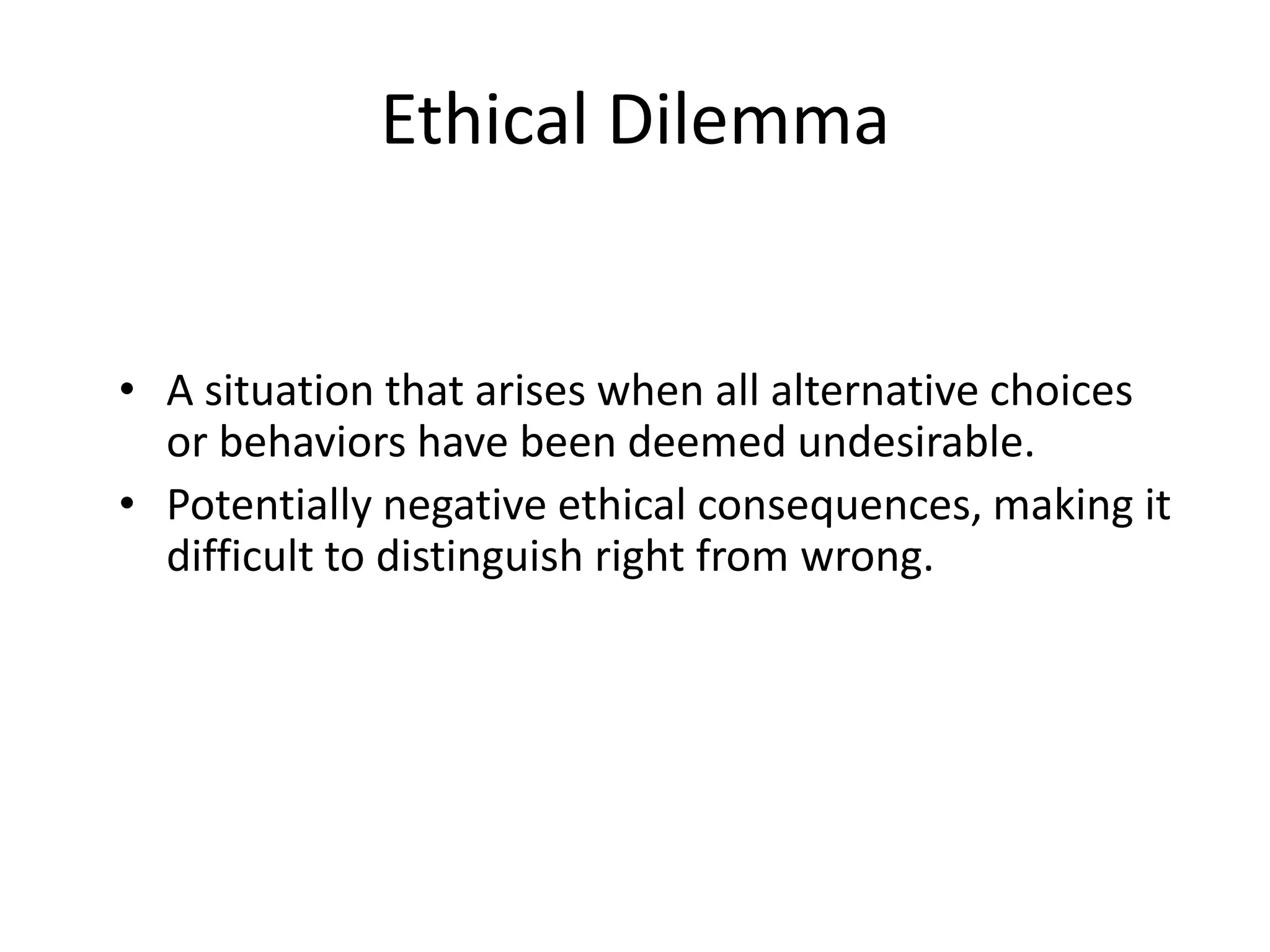
Ethical DilemmaA situation that arises when all alternative choices or behaviors have been deemed undesirable. Potentially negative ethical consequences, making it difficult to distinguish right from wrong.
EthicsThe code of moral principles and values that govern the behaviors of a person or group with respect to what is right or wrong.
Criteria for Ethical Decision MakingMost ethical dilemmas involveA conflict between needs of the part & whole.
The individual versus the organization.
The organization versus society as a whole.
What will be your take for above???Four Considerations inEthical Decision MakingUtilitarian Approach
Individualism Approach
Moral-Rights Approach
Justice ApproachUtilitarian ApproachMoral behavior produces the greatest good for the greatest number.
Computations can be very complex, simplifying them is considered appropriate.
Critics fear a “Big Brother” approach and ask if the common good is squeezing the life out of the individual.Individualism ApproachActs are moral when they promote the individual's best long-term interests.
Individual self-direction paramount.
Individualism is believed to lead to honesty & integrity since that works best in the long run.Moral-Rights ApproachAsserts human beings have fundamental rights and liberties.Moral decisions are those that best maintain the rights of those people affected by them.An ethical decision is one that avoids interfering with the fundamental rights of others.
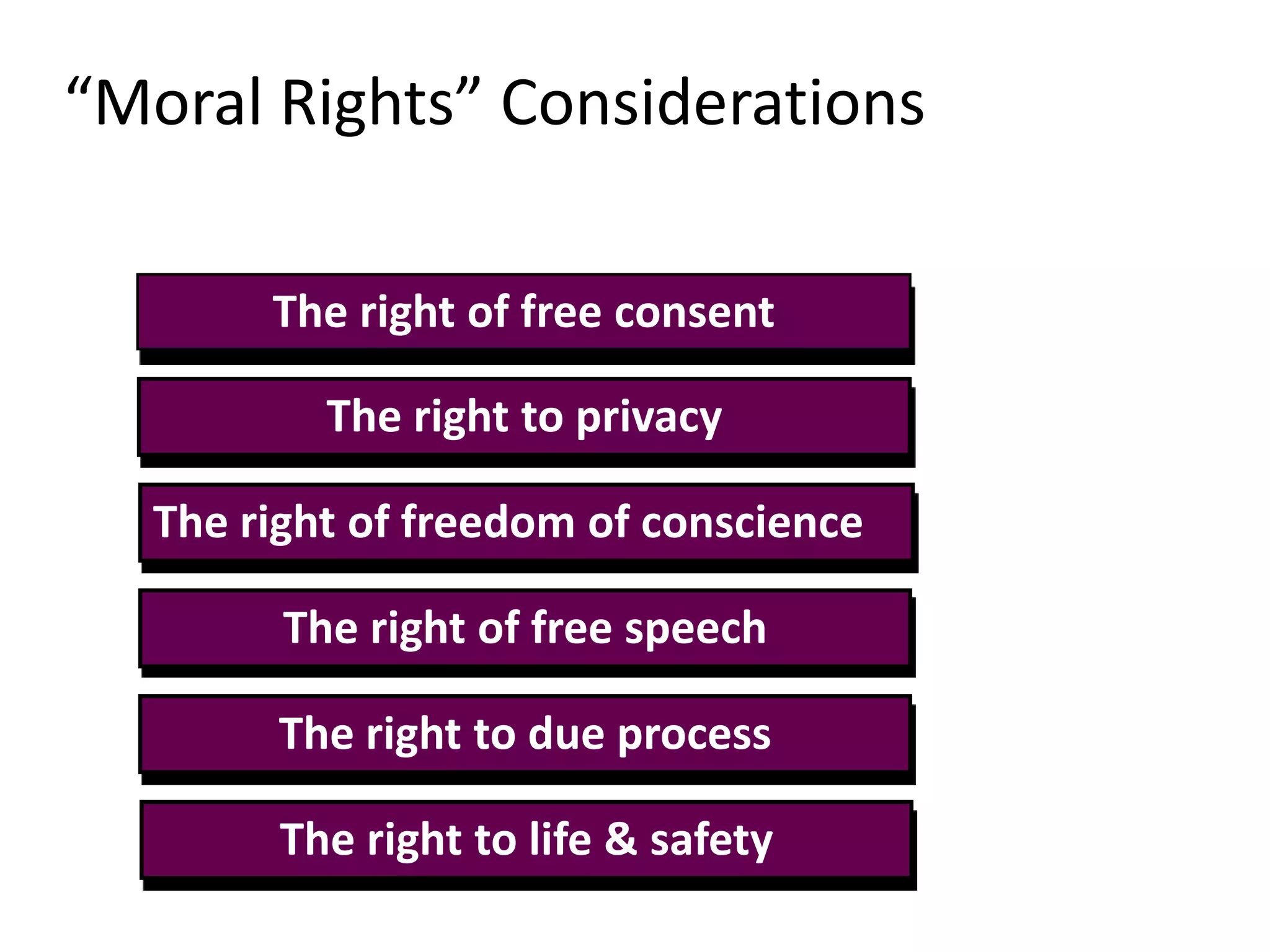
 “Moral Rights” ConsiderationsThe right of free consentThe right to privacyThe right of freedom of conscienceThe right of free speechThe right to due processThe right to life & safety
Justice ApproachMoral Decisions must be based on standards of equity, fairness, and impartiality.Treatment of individuals should not be based on arbitrary characteristics.Organizations and individuals could draft code of conduct, make it known to all and implement equally on allCloset thinking to codified law.
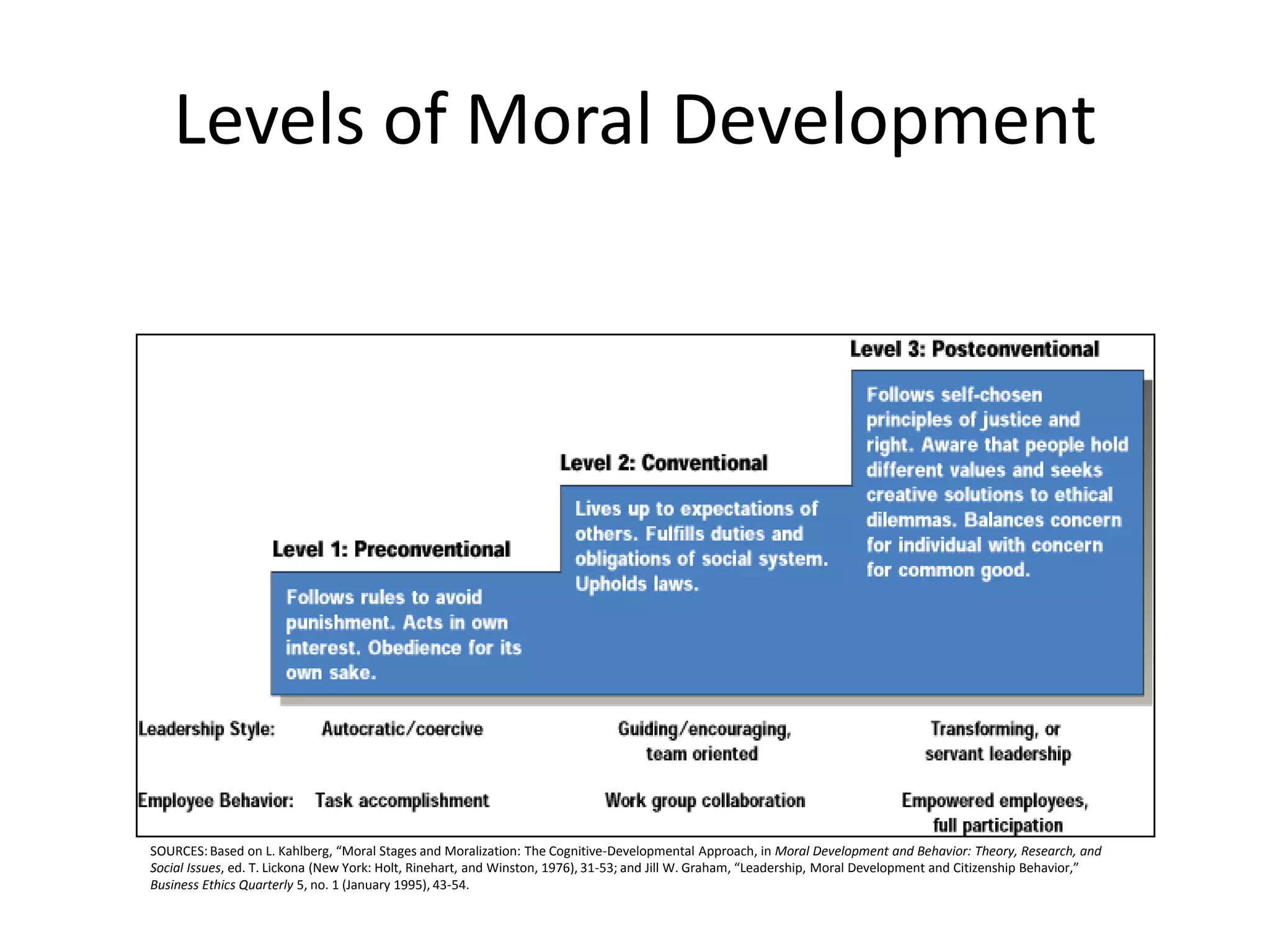
Levels of Moral DevelopmentSOURCES: Based on L. Kahlberg, “Moral Stages and Moralization: The Cognitive-Developmental Approach, in Moral Development and Behavior: Theory, Research, and Social Issues, ed. T. Lickona (New York: Holt, Rinehart, and Winston, 1976), 31-53; and Jill W. Graham, “Leadership, Moral Development and Citizenship Behavior,” Business Ethics Quarterly 5, no. 1 (January 1995), 43-54.

Ethics & csr

  • 1.
    Ethics and CSR"Whatdoes ethics mean to you?“
  • 2.
    "What does ethicsmean to you?“A few years ago, sociologist Raymond Baumhart asked business people. Major replies were-"Ethics has to do with what my feelings tell me is right or wrong.“"Ethics has to do with my religious beliefs.“"Being ethical is doing what the law requires.“"Ethics consists of the standards of behavior our society accepts.“"I don't know what the word means."
  • 3.
    Three Domains ofHuman ActionDomain of Certified Law(Legal Standard)Domain of Free Choice(Personal Standard)Domain of Ethics(Social Standard)Amount ofHighExplicit ControlLow
  • 4.
    Ethical DilemmaA situationthat arises when all alternative choices or behaviors have been deemed undesirable. Potentially negative ethical consequences, making it difficult to distinguish right from wrong.
  • 5.
    EthicsThe code ofmoral principles and values that govern the behaviors of a person or group with respect to what is right or wrong.
  • 6.
    Criteria for EthicalDecision MakingMost ethical dilemmas involveA conflict between needs of the part & whole.
  • 7.
    The individual versusthe organization.
  • 8.
    The organization versussociety as a whole.
  • 9.
    What will beyour take for above???Four Considerations inEthical Decision MakingUtilitarian Approach
  • 10.
  • 11.
  • 12.
    Justice ApproachUtilitarian ApproachMoralbehavior produces the greatest good for the greatest number.
  • 13.
    Computations can bevery complex, simplifying them is considered appropriate.
  • 14.
    Critics fear a“Big Brother” approach and ask if the common good is squeezing the life out of the individual.Individualism ApproachActs are moral when they promote the individual's best long-term interests.
  • 15.
  • 16.
    Individualism is believedto lead to honesty & integrity since that works best in the long run.Moral-Rights ApproachAsserts human beings have fundamental rights and liberties.Moral decisions are those that best maintain the rights of those people affected by them.An ethical decision is one that avoids interfering with the fundamental rights of others.
  • 17.
    “Moral Rights”ConsiderationsThe right of free consentThe right to privacyThe right of freedom of conscienceThe right of free speechThe right to due processThe right to life & safety
  • 18.
    Justice ApproachMoral Decisionsmust be based on standards of equity, fairness, and impartiality.Treatment of individuals should not be based on arbitrary characteristics.Organizations and individuals could draft code of conduct, make it known to all and implement equally on allCloset thinking to codified law.
  • 19.
    Levels of MoralDevelopmentSOURCES: Based on L. Kahlberg, “Moral Stages and Moralization: The Cognitive-Developmental Approach, in Moral Development and Behavior: Theory, Research, and Social Issues, ed. T. Lickona (New York: Holt, Rinehart, and Winston, 1976), 31-53; and Jill W. Graham, “Leadership, Moral Development and Citizenship Behavior,” Business Ethics Quarterly 5, no. 1 (January 1995), 43-54.
  • 20.
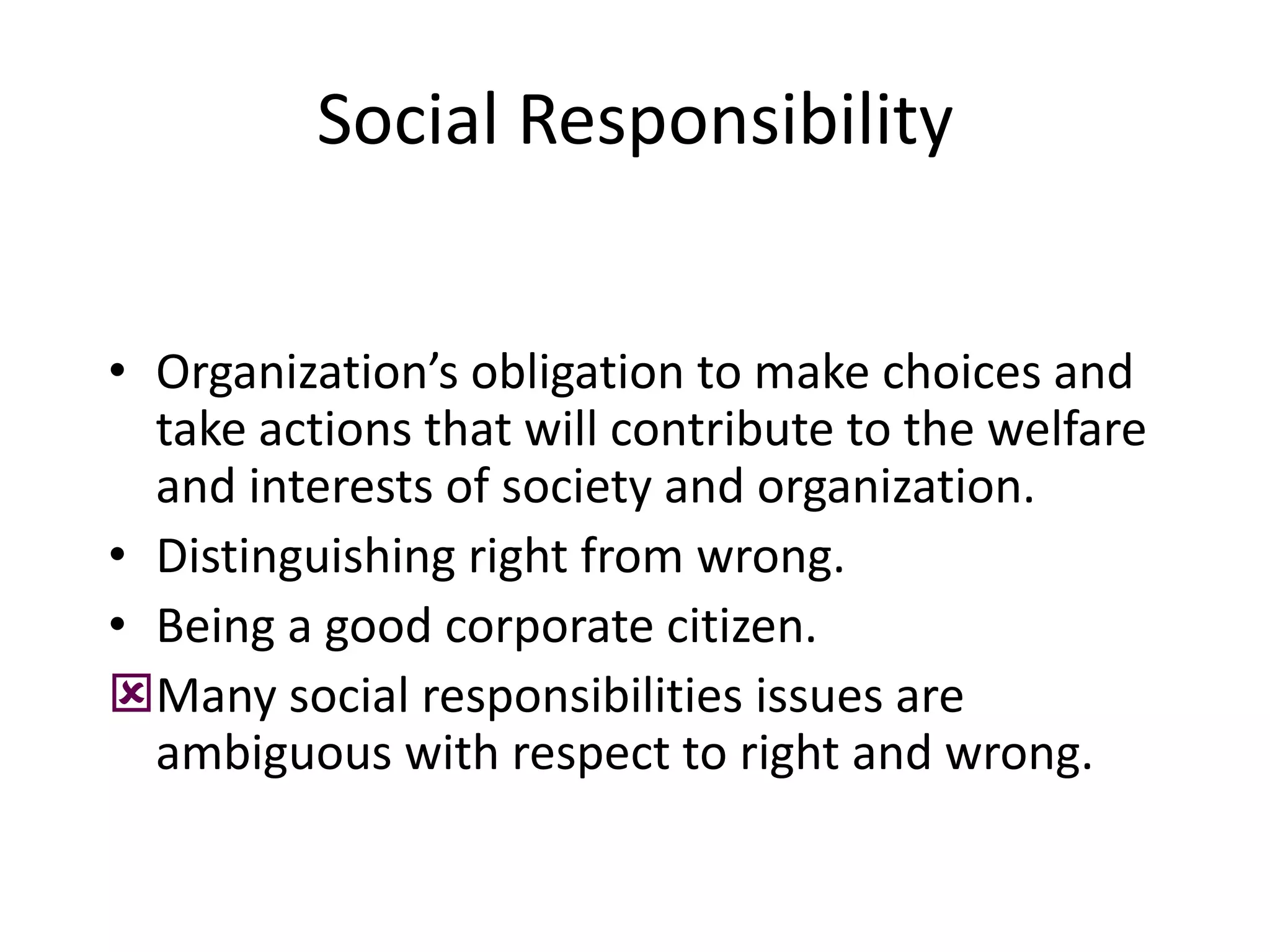
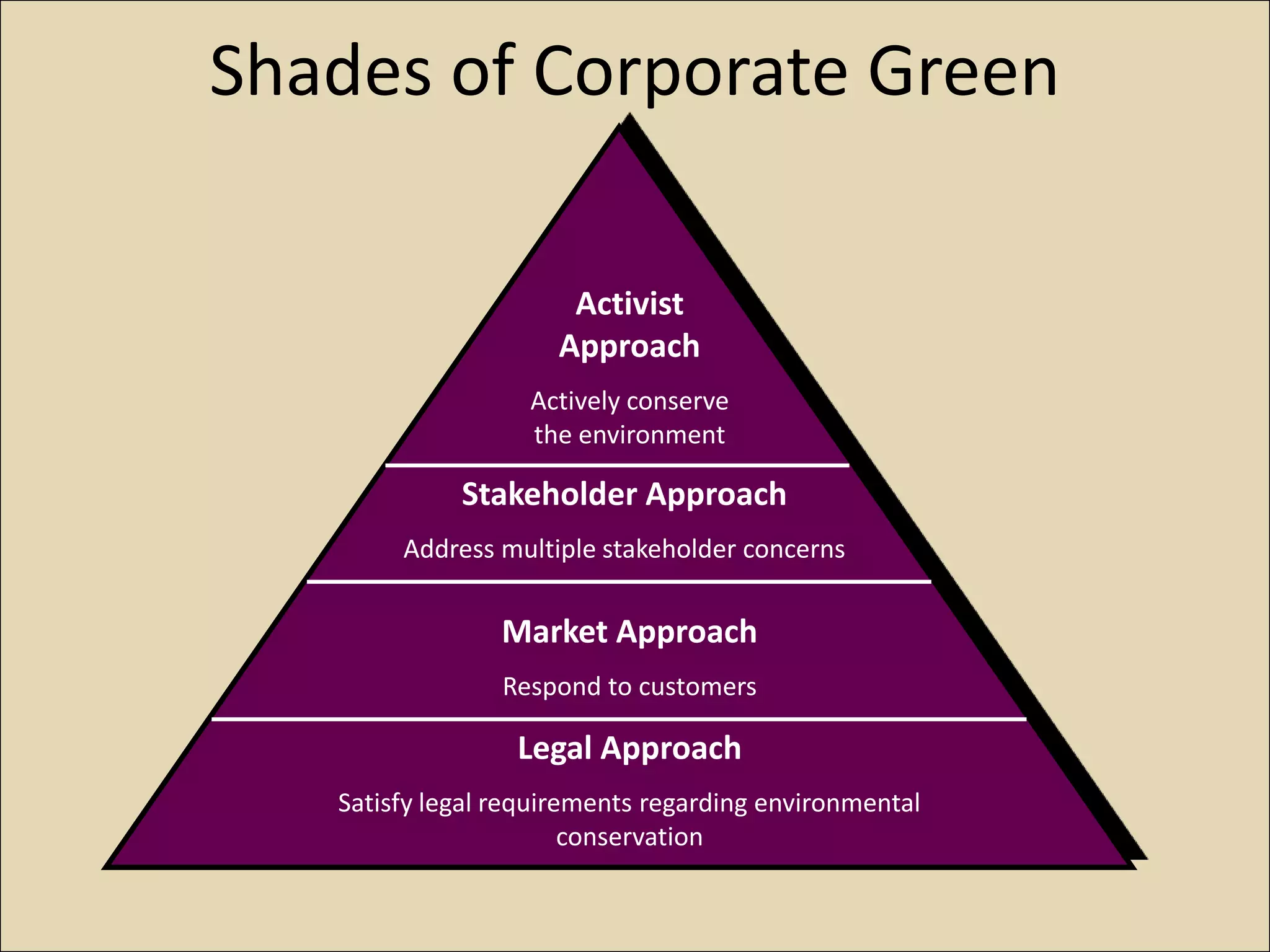
    Social ResponsibilityOrganization’s obligationto make choices and take actions that will contribute to the welfare and interests of society and organization.Distinguishing right from wrong.Being a good corporate citizen.Many social responsibilities issues are ambiguous with respect to right and wrong.Shades of Corporate GreenActivist ApproachActively conserve the environmentStakeholder ApproachAddress multiple stakeholder concernsMarket ApproachRespond to customersLegal ApproachSatisfy legal requirements regarding environmental conservation
  • 21.
  • 22.
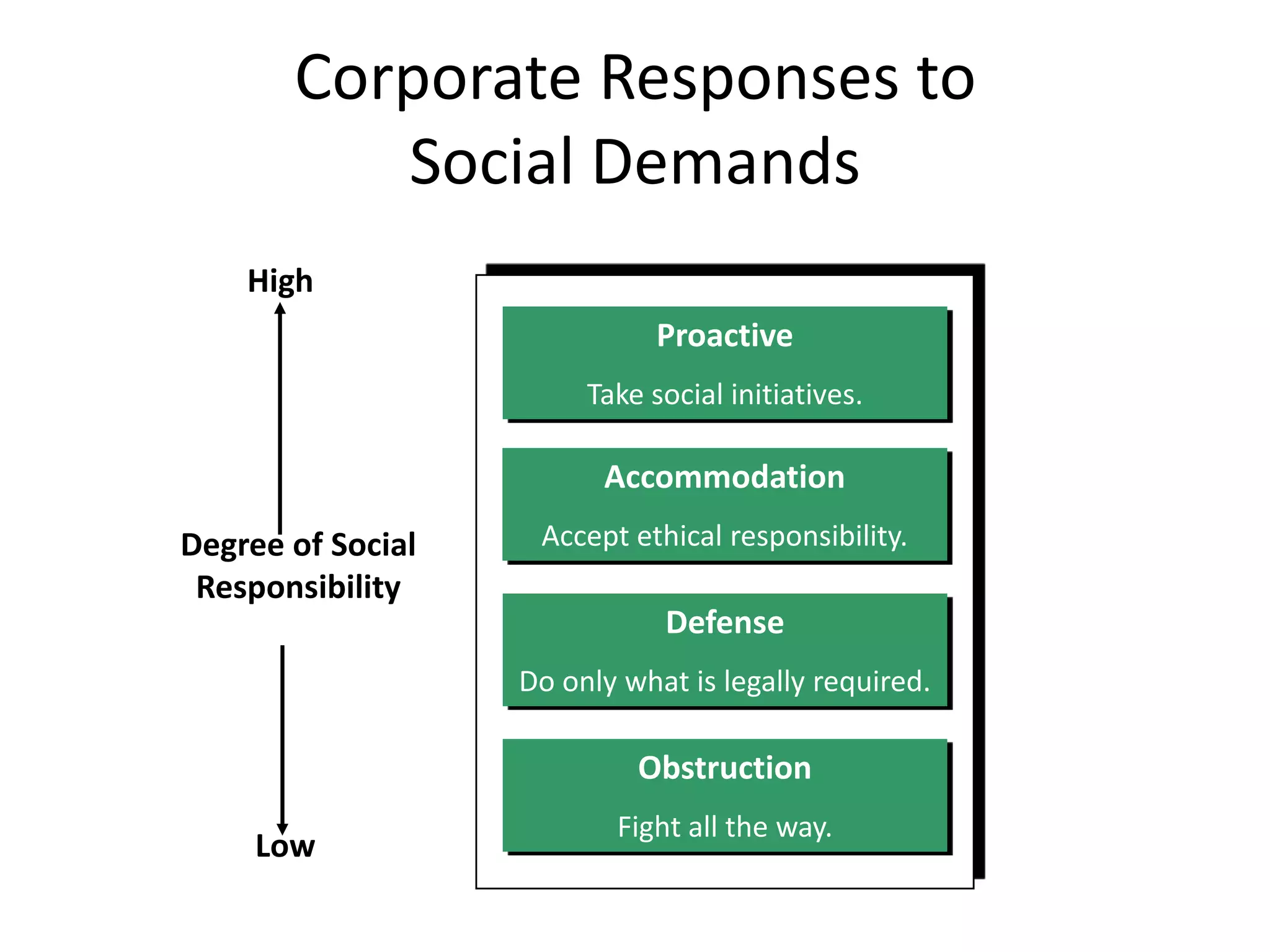
    Corporate Responses toSocialDemandsHighDegree of Social ResponsibilityLowProactiveTake social initiatives.AccommodationAccept ethical responsibility.DefenseDo only what is legally required.ObstructionFight all the way.
  • 23.
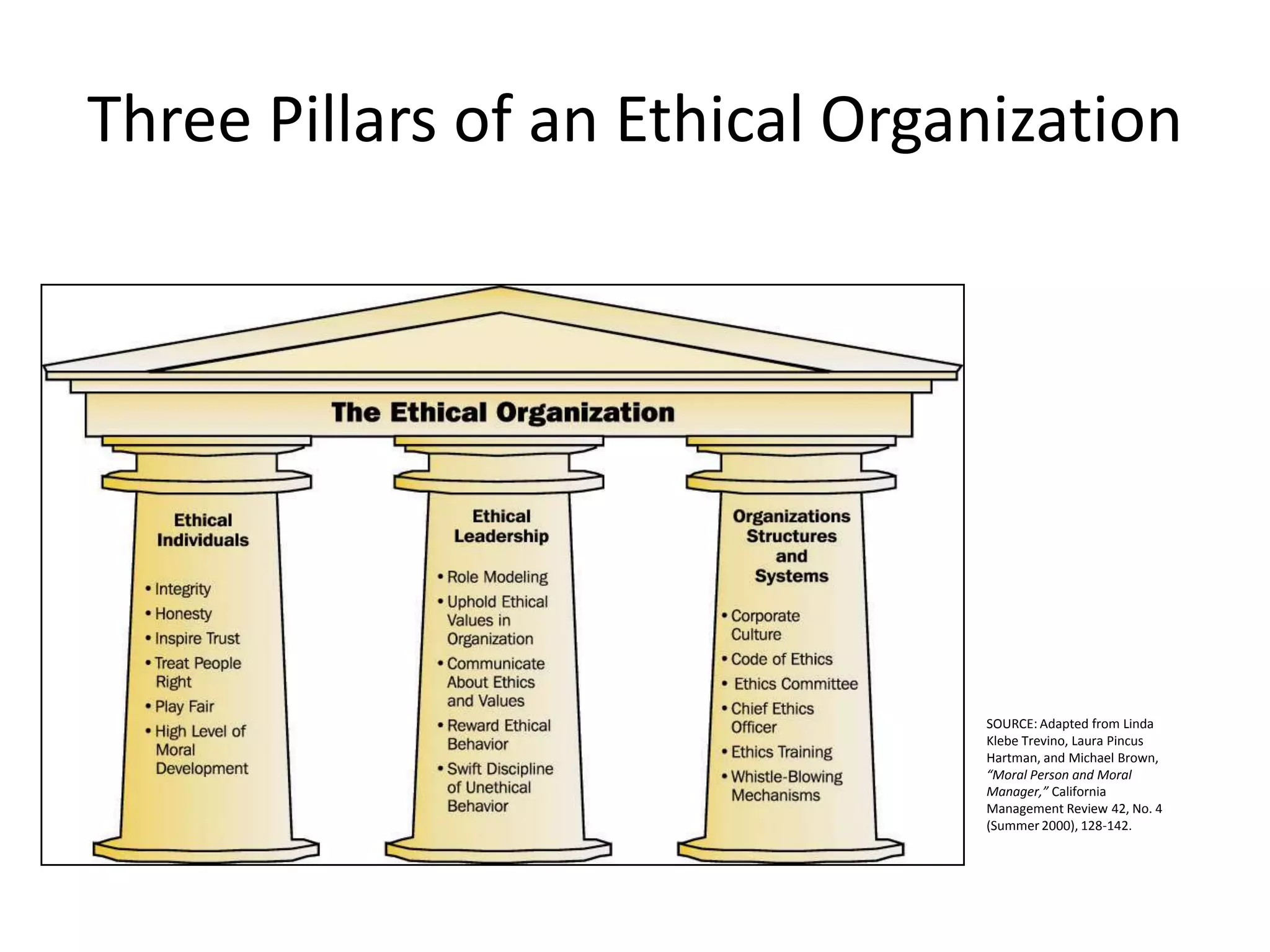
    Three Pillars ofan Ethical OrganizationSOURCE: Adapted from Linda Klebe Trevino, Laura Pincus Hartman, and Michael Brown, “Moral Person and Moral Manager,” California Management Review 42, No. 4 (Summer 2000), 128-142.
  • 24.
    Enlightened CompaniesRealize theimportance of:integritytrust