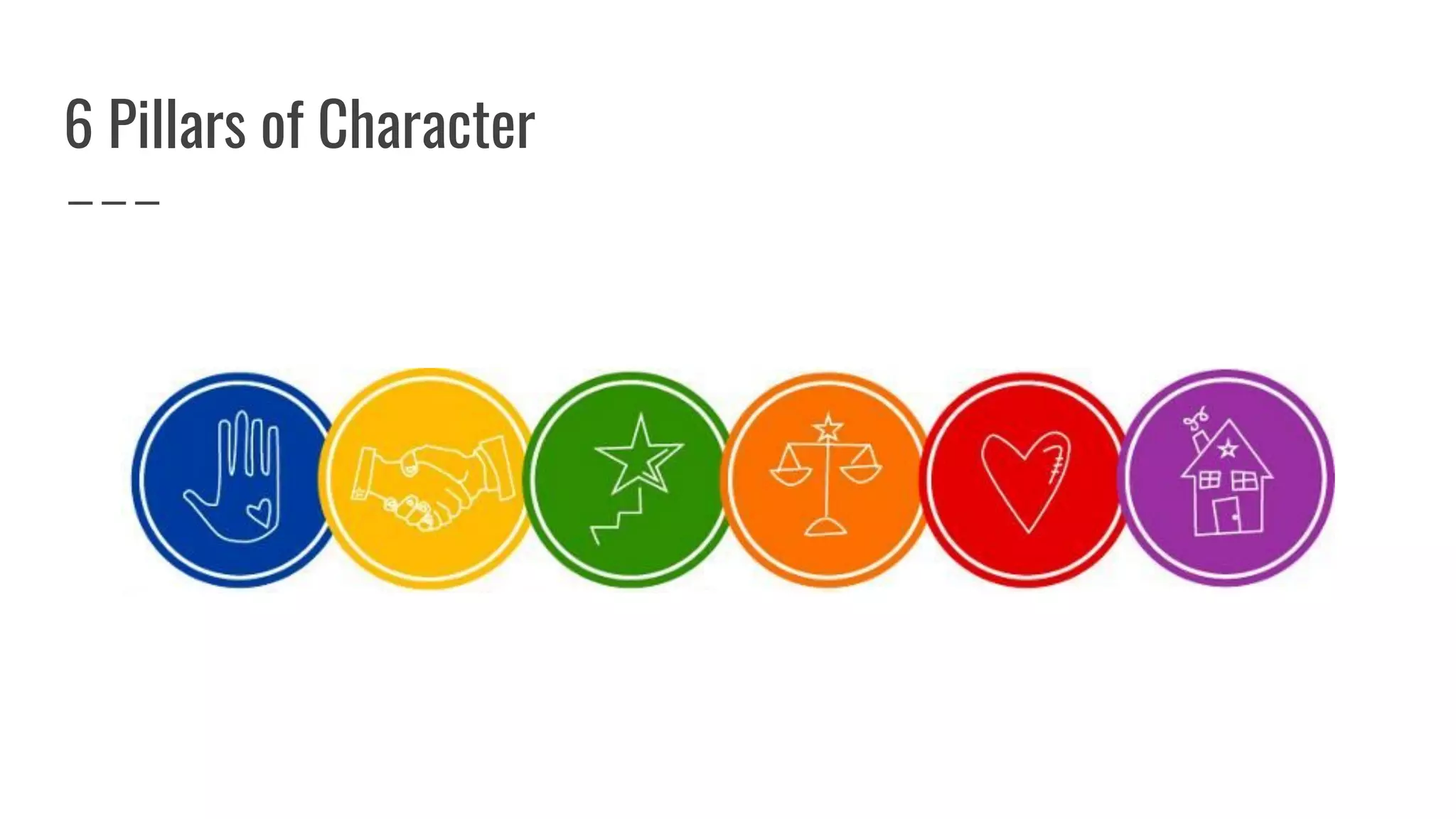
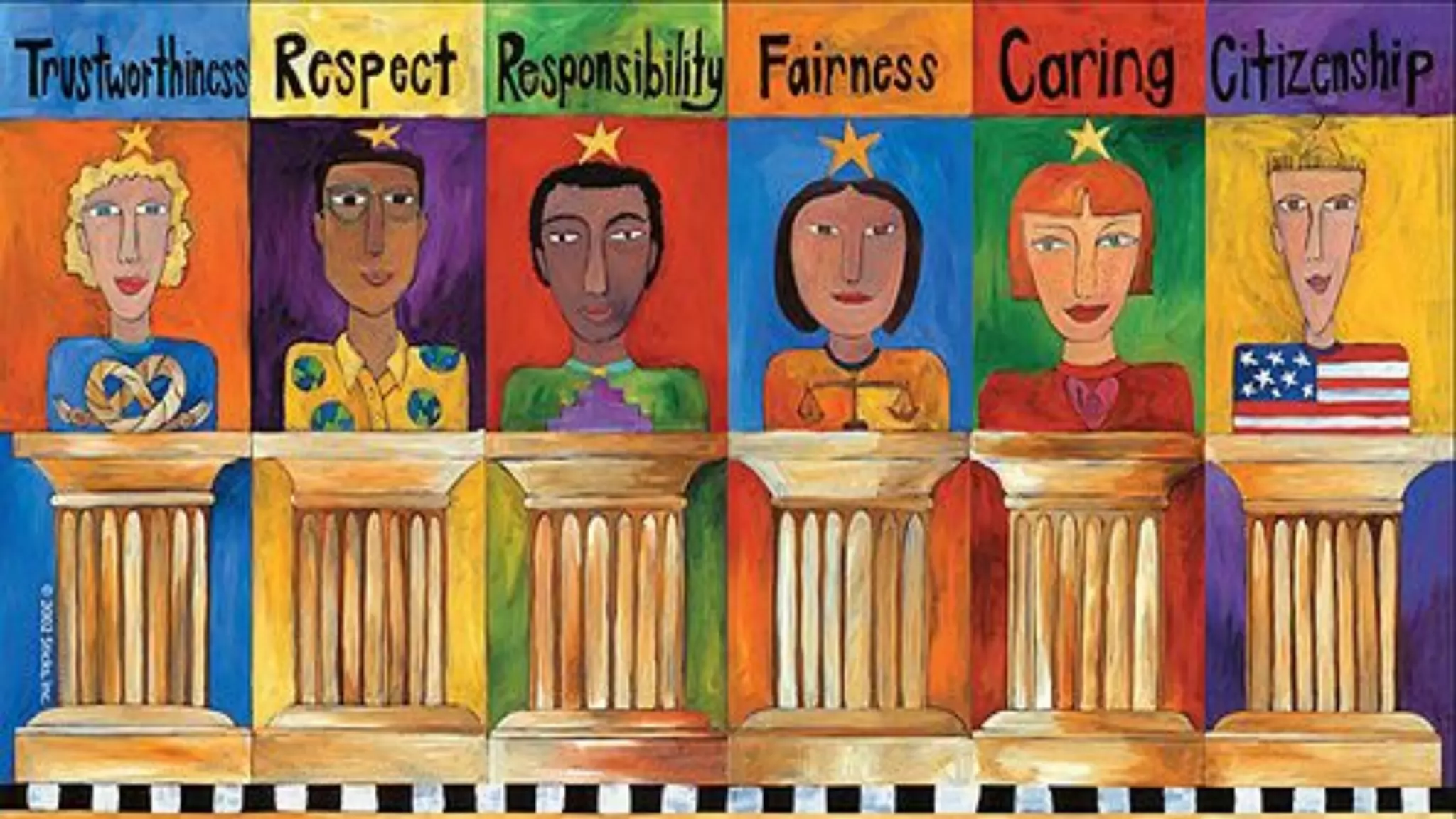
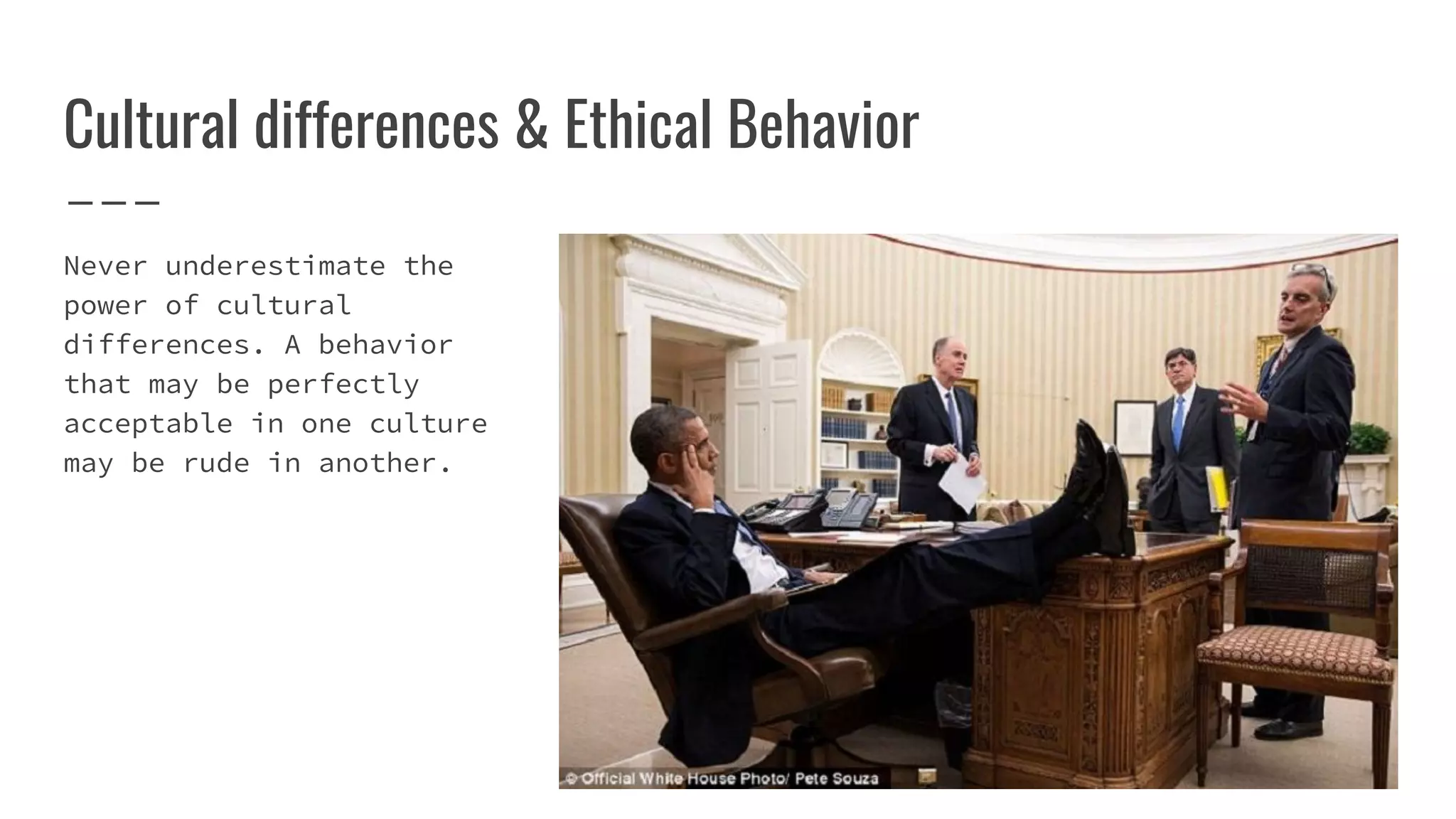
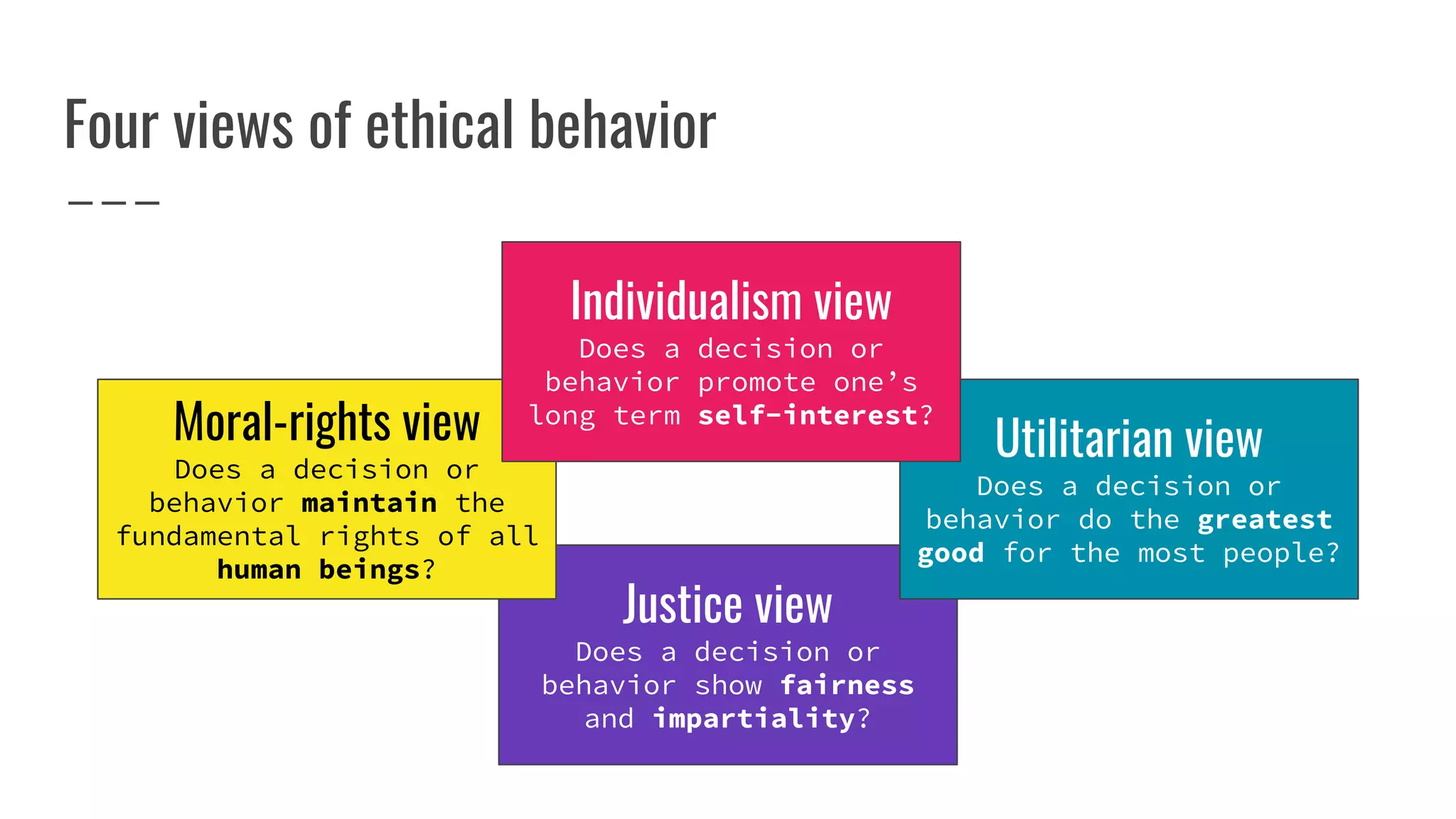
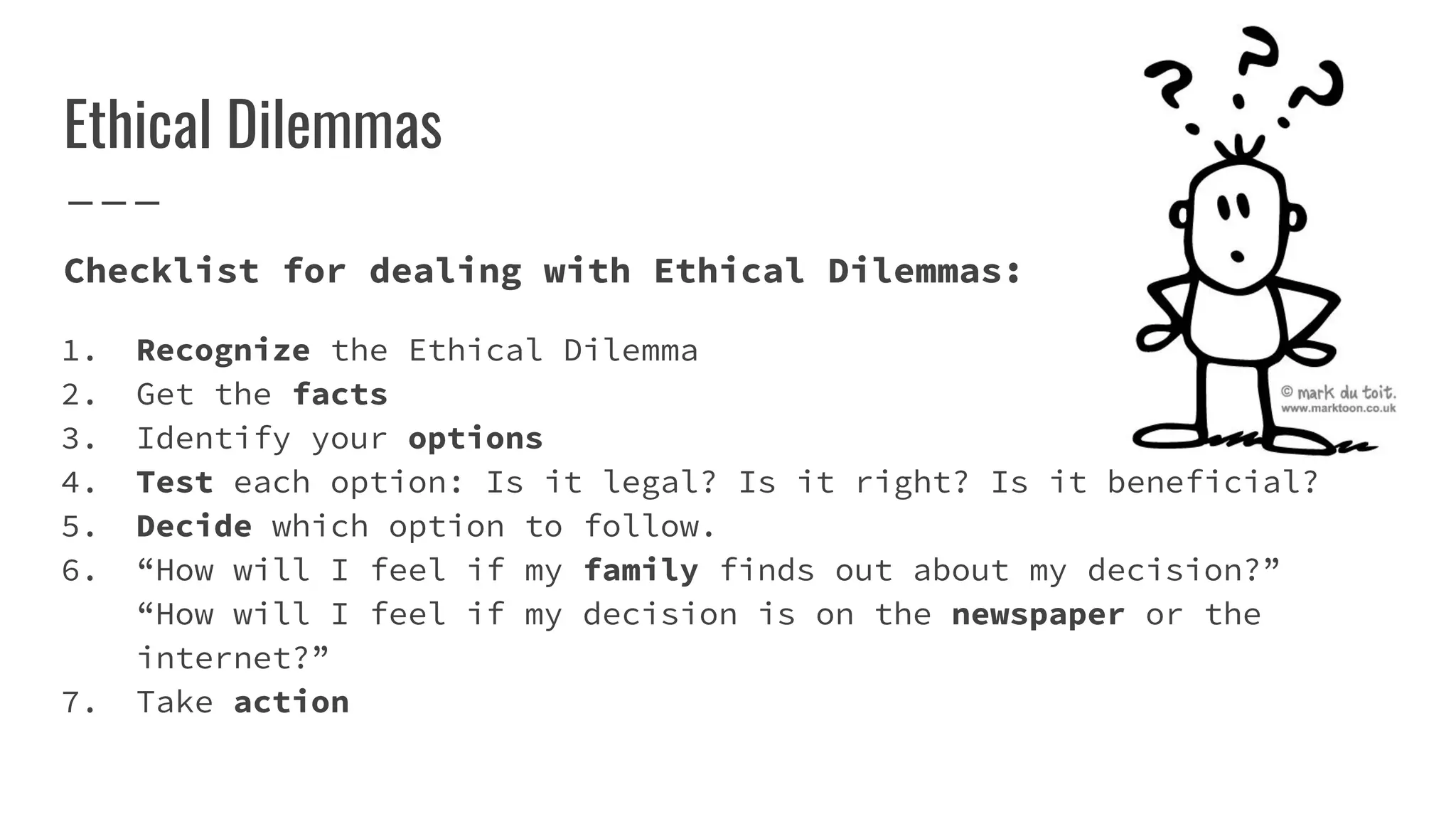
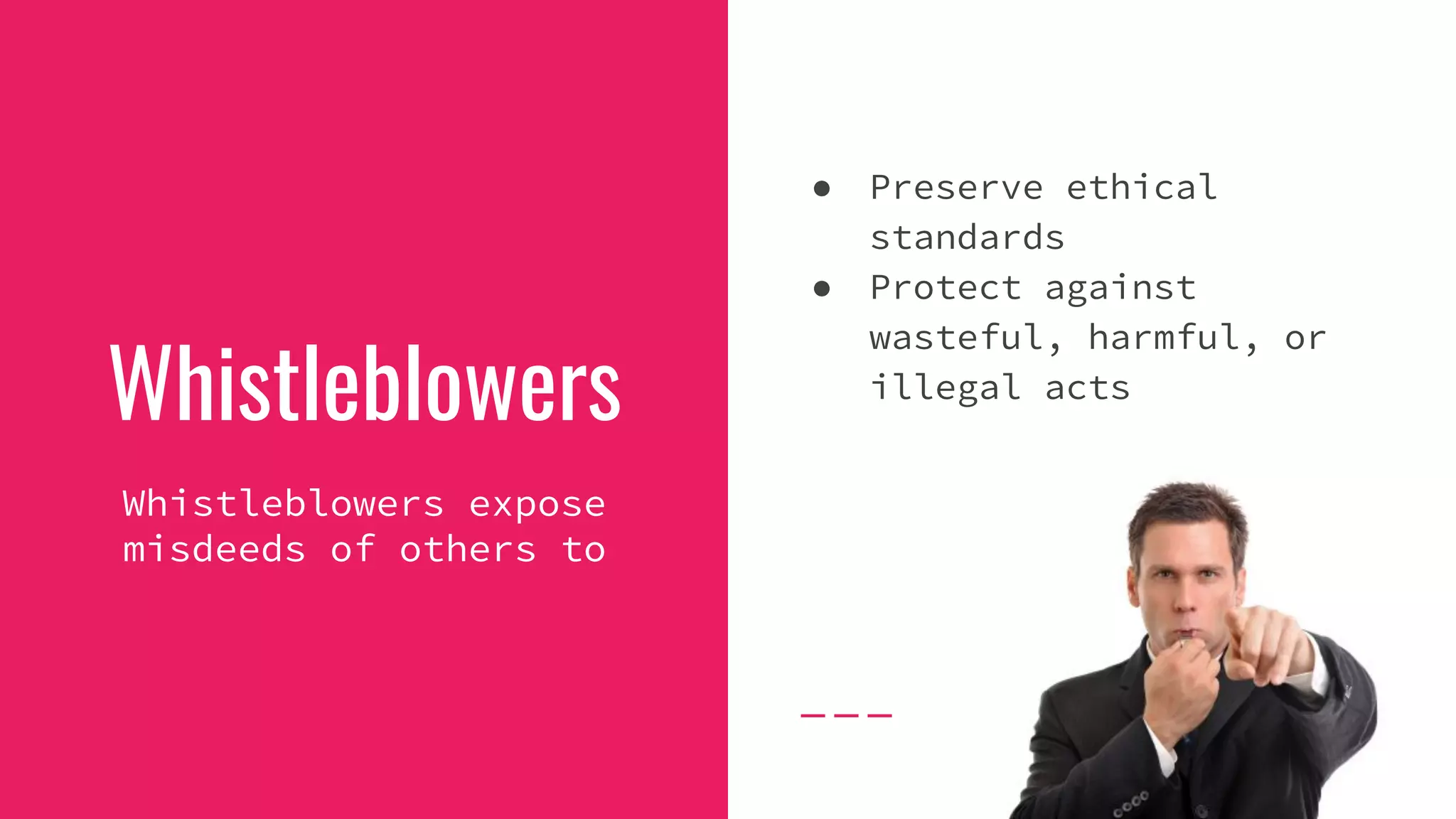
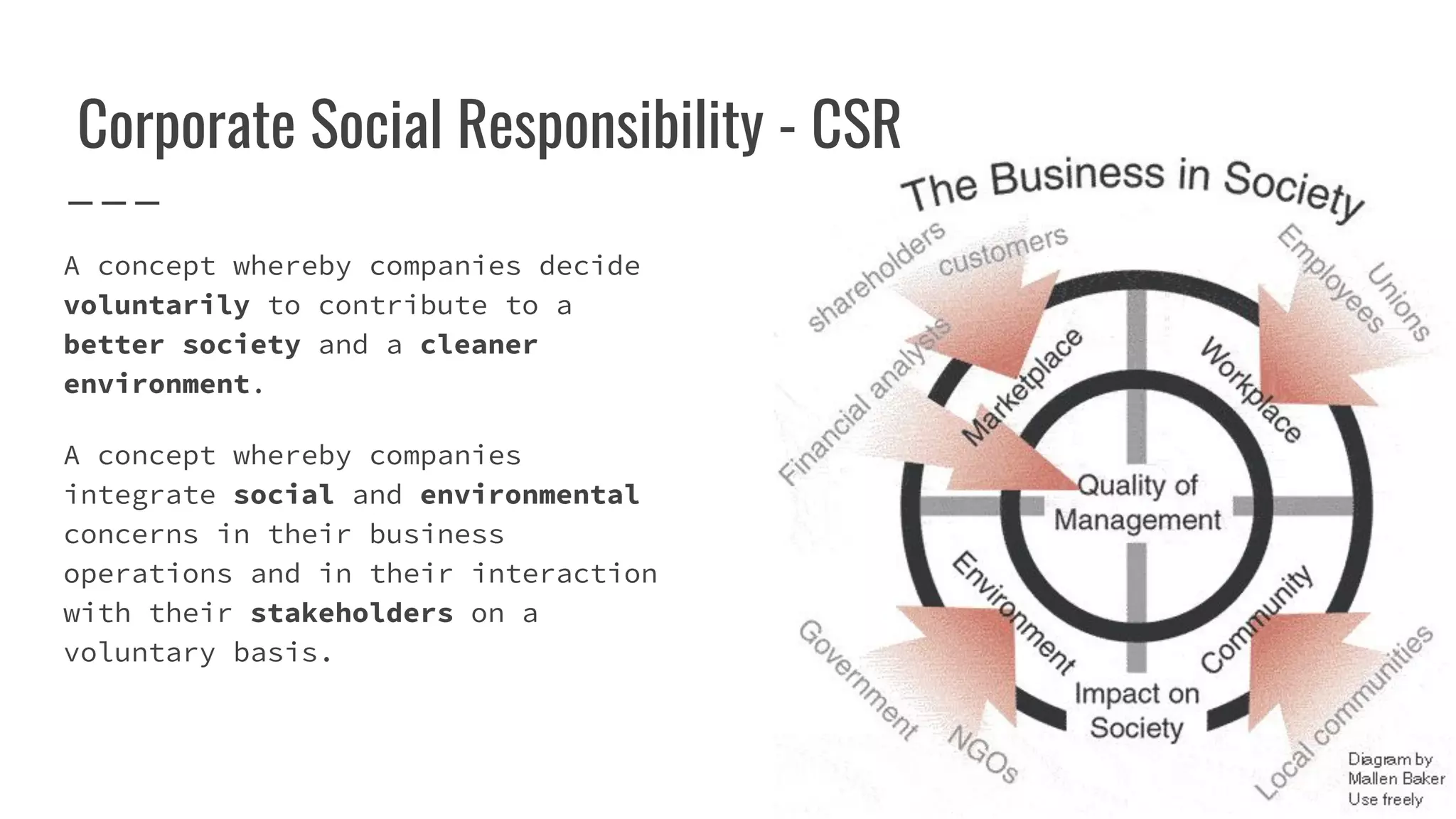
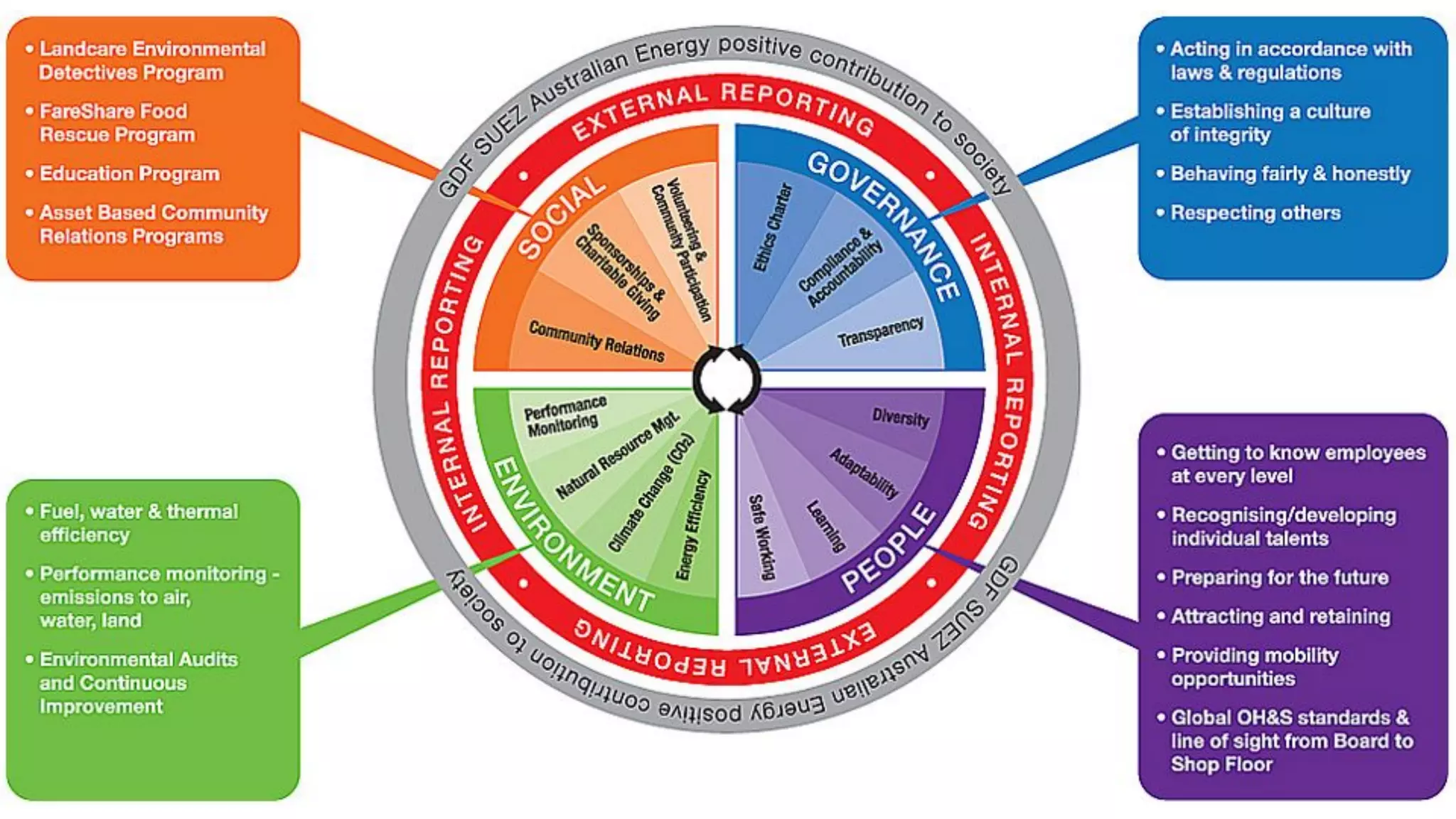
The document discusses ethical behavior and social responsibility. It begins by outlining the six pillars of character - trustworthiness, respect, responsibility, fairness, caring, and citizenship. It then defines ethics and ethical behavior. Personal values like being honest and helpful can influence individual ethical decisions. Cultural differences also impact what is considered appropriate behavior. There are different views on ethics like the justice view and utilitarian view. Managers can improve ethics through actions like leading by example and establishing codes of conduct. Ethical dilemmas present situations where potential benefits conflict with ethics. Whistleblowers help uphold standards by exposing wrongdoing. Corporate social responsibility involves companies voluntarily contributing to social and environmental issues.