BUSINESS ETHICS:
AN OVERVIEW
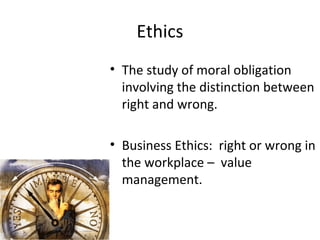
Ethics
• The study of moral obligation
involving the distinction between
right and wrong.
• Business Ethics: right or wrong in
the workplace – value
management.
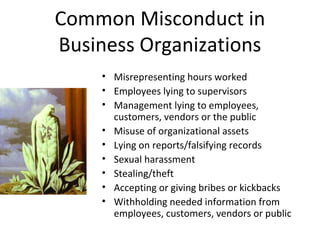
Common Misconduct in
Business Organizations
• Misrepresenting hours worked
• Employees lying to supervisors
• Management lying to employees,
customers, vendors or the public
• Misuse of organizational assets
• Lying on reports/falsifying records
• Sexual harassment
• Stealing/theft
• Accepting or giving bribes or kickbacks
• Withholding needed information from
employees, customers, vendors or public
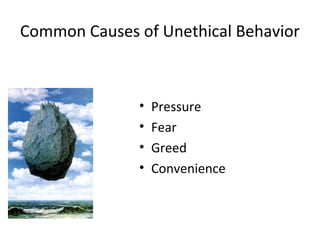
Common Causes of Unethical Behavior
• Pressure
• Fear
• Greed
• Convenience
Ethical Tips for Organizations
• Develop a code of ethics.
• Communicate code and bake it
into culture top-down.
• Treat ethics as a process.
• Create open lines of
communication.
• Set good examples.
• Educate employees – frame
issues through storytelling.
• Value forgiveness.
Benefits of Managing Ethics in the
Workplace
• Improves society.
• Maintains a moral course in
turbulent times.
• Cultivates employee teamwork,
productivity, morale and
development.
• Acts as an insurance policy.
Benefits of Managing Ethics in the
Workplace (cont’d)
• Establishes values for quality management,
strategic planning and diversity management.
• Promotes strong public image.
• It is the RIGHT thing to do!
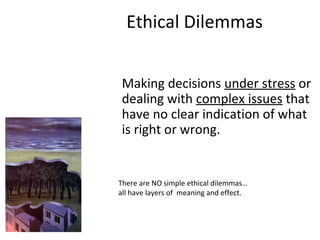
Ethical Dilemmas
Making decisions under stress or
dealing with complex issues that
have no clear indication of what
is right or wrong.
There are NO simple ethical dilemmas…
all have layers of meaning and effect.
9
Ethical Dilemma
• A situation that arises when all alternative
choices or behaviors have been deemed
undesirable because...
• potentially of negative ethical consequences,
making it difficult to distinguish right from
wrong
10
Criteria For
Ethical Decision Making
Most ethical dilemmas involve
Conflict between needs of the part & whole
- Individual versus the organization
- Organization versus society as a whole
Managers use normative strategies to guide
their decision making - norms and values
11
Ethical Decision Making
Approaches
• Utilitarian Approach
• Individualism Approach
• Moral-Rights Approach
• Justice Approach
12
Utilitarian Approach
● Moral behavior produces the greatest good for the
greatest number
● Critics fear a “Big Brother” approach and ask if the
common good is squeezing the life out of the individual
● Example – Oregon’s decision to extend Medicaid to
400,000 previously ineligible recipients by refusing to
pay for high-cost, high-risk procedures
13
Individualism Approach
● Acts are moral when they promote the individual's best
long-term interests, which ultimately leads to the greater
good
● Individual self-direction paramount
● Individualism is believed to lead to honesty & integrity
since that works best in the long run
● Examples: Top executives from WorldCom, Enron, Tyco
demonstrate flaws of approach
14
Moral-Rights Approach
• Moral decisions are those that best
maintain the rights of those people
affected by them.
• An ethical decision is one that avoids
interfering with the fundamental rights
of others
15
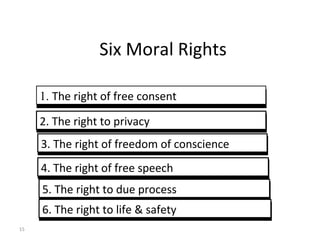
Six Moral Rights
1. The right of free consent1. The right of free consent
2. The right to privacy2. The right to privacy
3. The right of freedom of conscience3. The right of freedom of conscience
4. The right of free speech4. The right of free speech
5. The right to due process5. The right to due process
6. The right to life & safety6. The right to life & safety
The right of free consent
. Individuals are to be treated only as they knowingly and freely consent to be
treated.
2. The right to privacy, Individuals can choose to do as they please away from
work
and have control of information about their private life.
3.The right of freedom of conscience. Individuals may refrain from carrying out
any order that violates their moral or religious norms.
4.The right of free speech. Individuals may criticize truthfully the ethics or
legality of
actions of others.
5.The right to due process. Individuals have a right to an impartial hearing and
fair treatment.
6.The right to life and safety. Individuals have a right to live without
endangerment or violation of their health and safety.
17
Justice Approach
• Moral Decisions must be based on
standards of equity, fairness, impartiality
Three types of Justice Approaches:
 Distributive Justice
 Procedural Justice
 Compensatory Justice
18
Distributive Justice
• Different treatment of people should not be
based on arbitrary characteristics
• In case of substantive differences, people
should be treated differently in proportion to
the differences among them
19
Procedural Justice
• Rules should be clearly stated
• Rules should be consistently and
impartially enforced
20
Compensatory Justice
● Individuals should be compensated for the
cost of their injuries by the party responsible
● Individuals should not be held responsible for
matters they have no control over
21
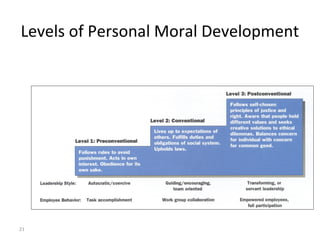
Levels of Personal Moral Development
22
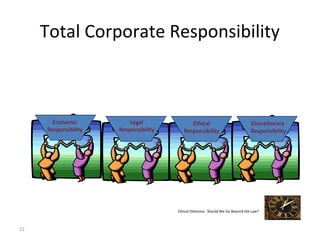
Total Corporate Responsibility
Economic
Responsibility
Legal
Responsibility
Ethical
Responsibility
Discretionary
Responsibility
Ethical Dilemma: Should We Go Beyond the Law?
• Read on the importance of tourism ethics

BUSINESS ETHICS

  • 1.
  • 2.
    Ethics • The studyof moral obligation involving the distinction between right and wrong. • Business Ethics: right or wrong in the workplace – value management.
  • 3.
    Common Misconduct in BusinessOrganizations • Misrepresenting hours worked • Employees lying to supervisors • Management lying to employees, customers, vendors or the public • Misuse of organizational assets • Lying on reports/falsifying records • Sexual harassment • Stealing/theft • Accepting or giving bribes or kickbacks • Withholding needed information from employees, customers, vendors or public
  • 4.
    Common Causes ofUnethical Behavior • Pressure • Fear • Greed • Convenience
  • 5.
    Ethical Tips forOrganizations • Develop a code of ethics. • Communicate code and bake it into culture top-down. • Treat ethics as a process. • Create open lines of communication. • Set good examples. • Educate employees – frame issues through storytelling. • Value forgiveness.
  • 6.
    Benefits of ManagingEthics in the Workplace • Improves society. • Maintains a moral course in turbulent times. • Cultivates employee teamwork, productivity, morale and development. • Acts as an insurance policy.
  • 7.
    Benefits of ManagingEthics in the Workplace (cont’d) • Establishes values for quality management, strategic planning and diversity management. • Promotes strong public image. • It is the RIGHT thing to do!
  • 8.
    Ethical Dilemmas Making decisionsunder stress or dealing with complex issues that have no clear indication of what is right or wrong. There are NO simple ethical dilemmas… all have layers of meaning and effect.
  • 9.
    9 Ethical Dilemma • Asituation that arises when all alternative choices or behaviors have been deemed undesirable because... • potentially of negative ethical consequences, making it difficult to distinguish right from wrong
  • 10.
    10 Criteria For Ethical DecisionMaking Most ethical dilemmas involve Conflict between needs of the part & whole - Individual versus the organization - Organization versus society as a whole Managers use normative strategies to guide their decision making - norms and values
  • 11.
    11 Ethical Decision Making Approaches •Utilitarian Approach • Individualism Approach • Moral-Rights Approach • Justice Approach
  • 12.
    12 Utilitarian Approach ● Moralbehavior produces the greatest good for the greatest number ● Critics fear a “Big Brother” approach and ask if the common good is squeezing the life out of the individual ● Example – Oregon’s decision to extend Medicaid to 400,000 previously ineligible recipients by refusing to pay for high-cost, high-risk procedures
  • 13.
    13 Individualism Approach ● Actsare moral when they promote the individual's best long-term interests, which ultimately leads to the greater good ● Individual self-direction paramount ● Individualism is believed to lead to honesty & integrity since that works best in the long run ● Examples: Top executives from WorldCom, Enron, Tyco demonstrate flaws of approach
  • 14.
    14 Moral-Rights Approach • Moraldecisions are those that best maintain the rights of those people affected by them. • An ethical decision is one that avoids interfering with the fundamental rights of others
  • 15.
    15 Six Moral Rights 1.The right of free consent1. The right of free consent 2. The right to privacy2. The right to privacy 3. The right of freedom of conscience3. The right of freedom of conscience 4. The right of free speech4. The right of free speech 5. The right to due process5. The right to due process 6. The right to life & safety6. The right to life & safety
  • 16.
    The right offree consent . Individuals are to be treated only as they knowingly and freely consent to be treated. 2. The right to privacy, Individuals can choose to do as they please away from work and have control of information about their private life. 3.The right of freedom of conscience. Individuals may refrain from carrying out any order that violates their moral or religious norms. 4.The right of free speech. Individuals may criticize truthfully the ethics or legality of actions of others. 5.The right to due process. Individuals have a right to an impartial hearing and fair treatment. 6.The right to life and safety. Individuals have a right to live without endangerment or violation of their health and safety.
  • 17.
    17 Justice Approach • MoralDecisions must be based on standards of equity, fairness, impartiality Three types of Justice Approaches:  Distributive Justice  Procedural Justice  Compensatory Justice
  • 18.
    18 Distributive Justice • Differenttreatment of people should not be based on arbitrary characteristics • In case of substantive differences, people should be treated differently in proportion to the differences among them
  • 19.
    19 Procedural Justice • Rulesshould be clearly stated • Rules should be consistently and impartially enforced
  • 20.
    20 Compensatory Justice ● Individualsshould be compensated for the cost of their injuries by the party responsible ● Individuals should not be held responsible for matters they have no control over
  • 21.
    21 Levels of PersonalMoral Development
  • 22.
  • 23.
    • Read onthe importance of tourism ethics