+
Integrated Marketing
Communications –
Unethcal Issues on
McDonalds Advertising
+
 Ethics
 Ethics is a branch of philosophy which seeks to address
questions about morality; that is, about concepts such as good
and bad, right and wrong, justice, and virtue.
 Advertising
 Advertising is the promotion of a company’s products and
services carried out primarily to drive sales of the products and
services but also to build a brand identity and communicate
changes or new product /services to the customers. Advertising
has become an essential element of the corporate world and
hence the companies allot a considerable amount of revenues
as their advertising budget.
+ Reasons for Advertising
 Increasing the sales of the product/service
 Creating and maintaining a brand identity or
brand image.
 Communicating a change in the existing product
line.
 Introduction of a new product or service.
 Increasing the buzz-value of the brand or the
company
+
Unethical advertising
 Advertisement is considered unethical in the following
situations;
 o When it has degraded or underestimated the substitute
or rival's product.
 o When it gives false or misleading information on the
value of the product.
 o When it fails to give useful information on the possible
reaction or side effects of the product. And
 o When it is immoral.
+
Ways of unethical advertisement
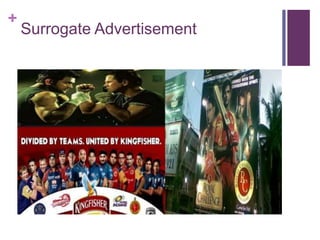
• Surrogate advertisement
• Puffery
• Exaggeration
• Unverified claims
• Women stereotyping
• Women used as sex symbols for promoting products
• Comparative advertisements
• Use of children in advertising
+
Surrogate Advertisement
+
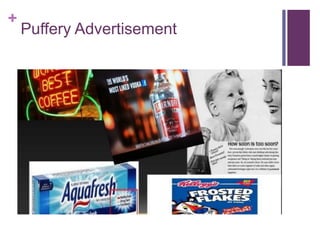
Puffery Advertisement
+
Exaggeration Advertisment
+
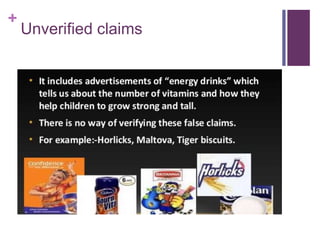
Unverified claims
+
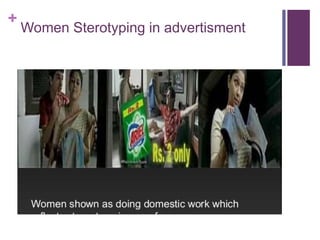
Women Sterotyping in advertisment
+
+
+
Improper Brand Comparision
+
Mc Donalds Ad
 Deceptive advertising refers to the use of confusing or untrue
statements by advertisers in an attempt to mislead the
consumer. It is also known as false advertising.
 While it's generally deceptive for an advertisement to mislead
consumers about price or availability, advertisements also
cannot make statements about quality or origin that cannot be
substantiated.
 Similarly, advertisements may be deceptive if the product has
defects in quality that are not fully disclosed, or if the
advertisements imply that the product may be used for a
purpose it is not adequately designed for.
+
Solution
 CONTROLLED BY THE FTC (FEDERAL TRADE
COMMISSION)
 The Federal Trade Commission (FTC) officially defines
deceptive advertising as "a representation, omission or practice
that is likely to mislead the consumer" and "practices that have
been found misleading or deceptive in specific cases include
false oral or written representations, misleading price claims,
sales of hazardous or systematically defective products or
services without adequate disclosures, failure to disclose
information regarding pyramid sales, use of bait and switch
techniques, failure to perform promised services, and failure to
meet warranty obligations.
+
 DETERMINING WHETHER A CLAIM WILL MISLEAD
CONSUMERS:
 USUALLY BEGINS WITH COMPLAINT(S)
 FTC SURVEY
 IF APPROXIMATELY 20% COMPREHEND THE AD AS MAKING A
CLAIM THAT IS NOT TRUE, THE FTC CONSIDERS THIS
SUFFICIENT PROOF TO DECLARE IT DECEPTIVE
+

imc

  • 1.
  • 2.
    +  Ethics  Ethicsis a branch of philosophy which seeks to address questions about morality; that is, about concepts such as good and bad, right and wrong, justice, and virtue.  Advertising  Advertising is the promotion of a company’s products and services carried out primarily to drive sales of the products and services but also to build a brand identity and communicate changes or new product /services to the customers. Advertising has become an essential element of the corporate world and hence the companies allot a considerable amount of revenues as their advertising budget.
  • 3.
    + Reasons forAdvertising  Increasing the sales of the product/service  Creating and maintaining a brand identity or brand image.  Communicating a change in the existing product line.  Introduction of a new product or service.  Increasing the buzz-value of the brand or the company
  • 4.
    + Unethical advertising  Advertisementis considered unethical in the following situations;  o When it has degraded or underestimated the substitute or rival's product.  o When it gives false or misleading information on the value of the product.  o When it fails to give useful information on the possible reaction or side effects of the product. And  o When it is immoral.
  • 5.
    + Ways of unethicaladvertisement • Surrogate advertisement • Puffery • Exaggeration • Unverified claims • Women stereotyping • Women used as sex symbols for promoting products • Comparative advertisements • Use of children in advertising
  • 6.
  • 7.
  • 8.
  • 9.
  • 10.
  • 11.
  • 12.
  • 13.
  • 14.
    + Mc Donalds Ad Deceptive advertising refers to the use of confusing or untrue statements by advertisers in an attempt to mislead the consumer. It is also known as false advertising.  While it's generally deceptive for an advertisement to mislead consumers about price or availability, advertisements also cannot make statements about quality or origin that cannot be substantiated.  Similarly, advertisements may be deceptive if the product has defects in quality that are not fully disclosed, or if the advertisements imply that the product may be used for a purpose it is not adequately designed for.
  • 15.
    + Solution  CONTROLLED BYTHE FTC (FEDERAL TRADE COMMISSION)  The Federal Trade Commission (FTC) officially defines deceptive advertising as "a representation, omission or practice that is likely to mislead the consumer" and "practices that have been found misleading or deceptive in specific cases include false oral or written representations, misleading price claims, sales of hazardous or systematically defective products or services without adequate disclosures, failure to disclose information regarding pyramid sales, use of bait and switch techniques, failure to perform promised services, and failure to meet warranty obligations.
  • 16.
    +  DETERMINING WHETHERA CLAIM WILL MISLEAD CONSUMERS:  USUALLY BEGINS WITH COMPLAINT(S)  FTC SURVEY  IF APPROXIMATELY 20% COMPREHEND THE AD AS MAKING A CLAIM THAT IS NOT TRUE, THE FTC CONSIDERS THIS SUFFICIENT PROOF TO DECLARE IT DECEPTIVE
  • 17.