Downloaded 114 times








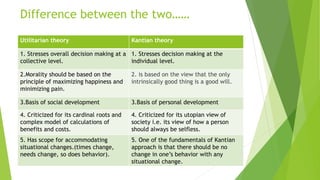
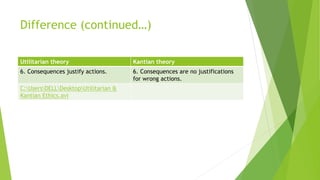


This document discusses and compares utilitarian and Kantian ethical theories. Utilitarianism, proposed by Jeremy Bentham and John Stuart Mill, asserts that an action is morally right if it maximizes happiness and minimizes pain for all affected. It is consequentialist and advocates weighing costs and benefits to determine the greatest good. Kantian ethics, developed by Immanuel Kant, holds that an action is only good if it is done from duty rather than consequences. It focuses on having a good will and respecting individual rights and autonomy. The theories differ in their levels of analysis, bases for morality, views on consequences, and ability to accommodate change.


