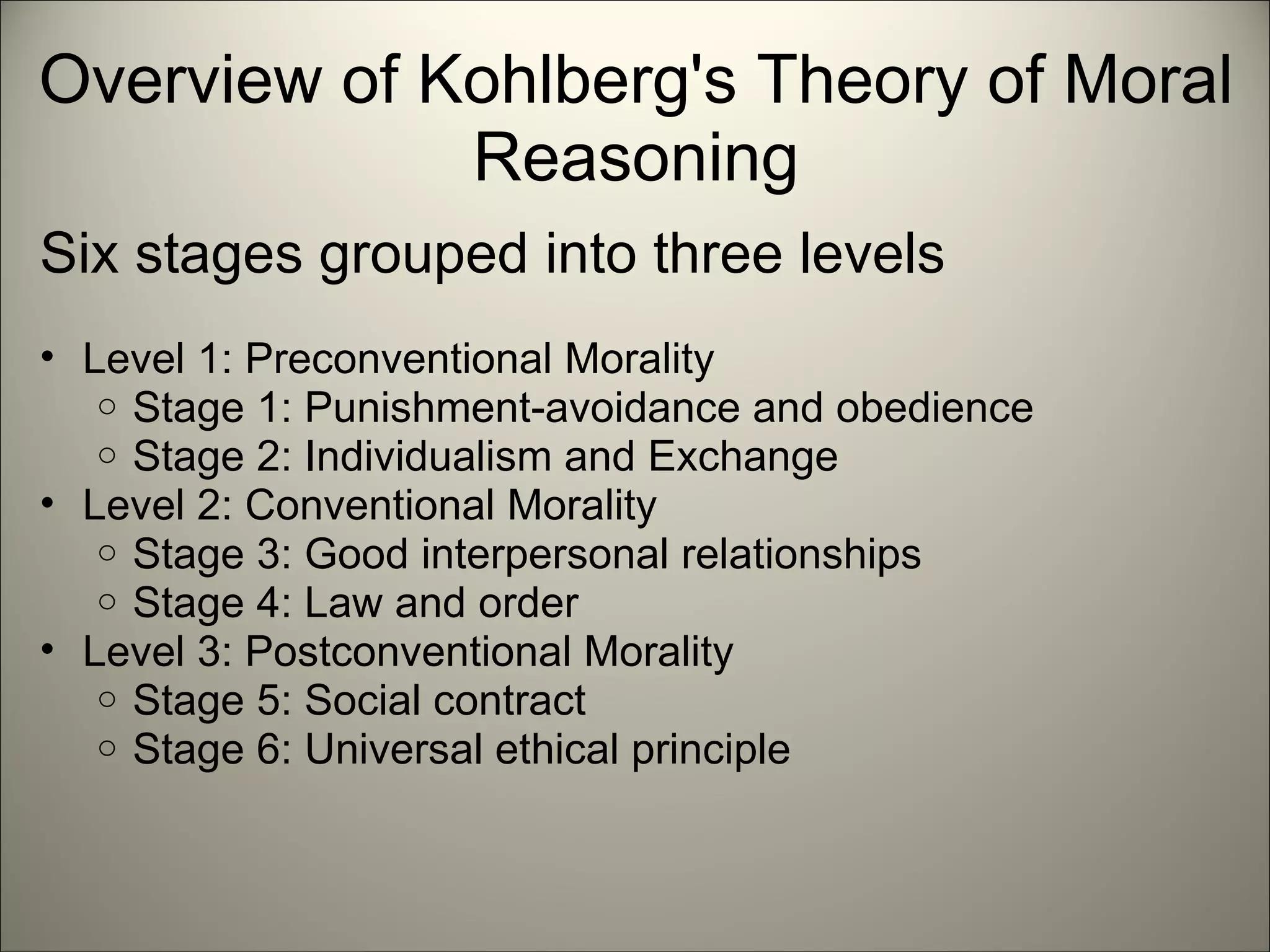
Kohlberg's theory of moral development proposes 6 stages grouped into 3 levels of moral reasoning:
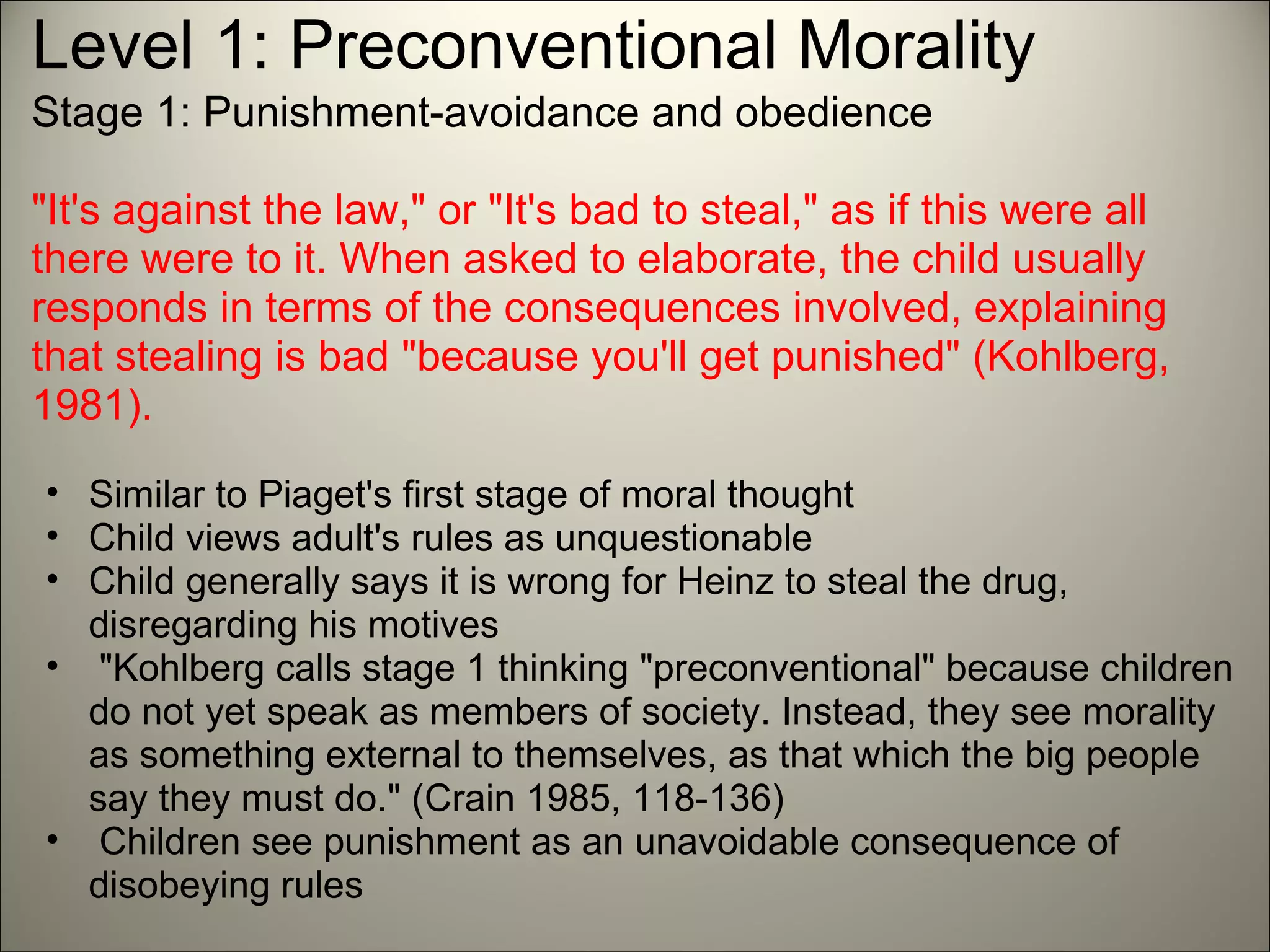
1) Pre-conventional morality focuses on obedience and self-interest.
2) Conventional morality emphasizes maintaining social order and relationships.
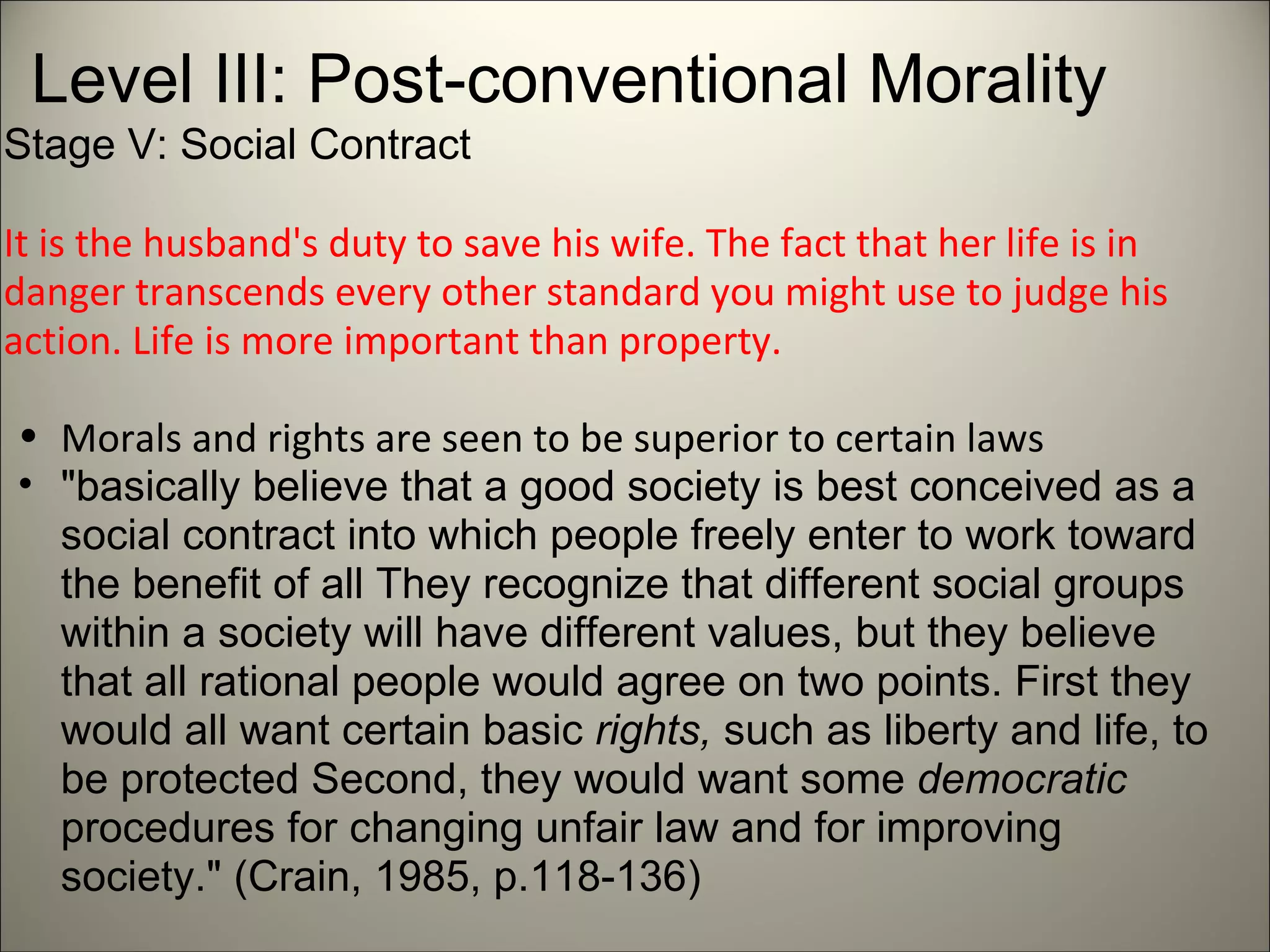
3) Post-conventional morality prioritizes social contracts and universal ethical principles.
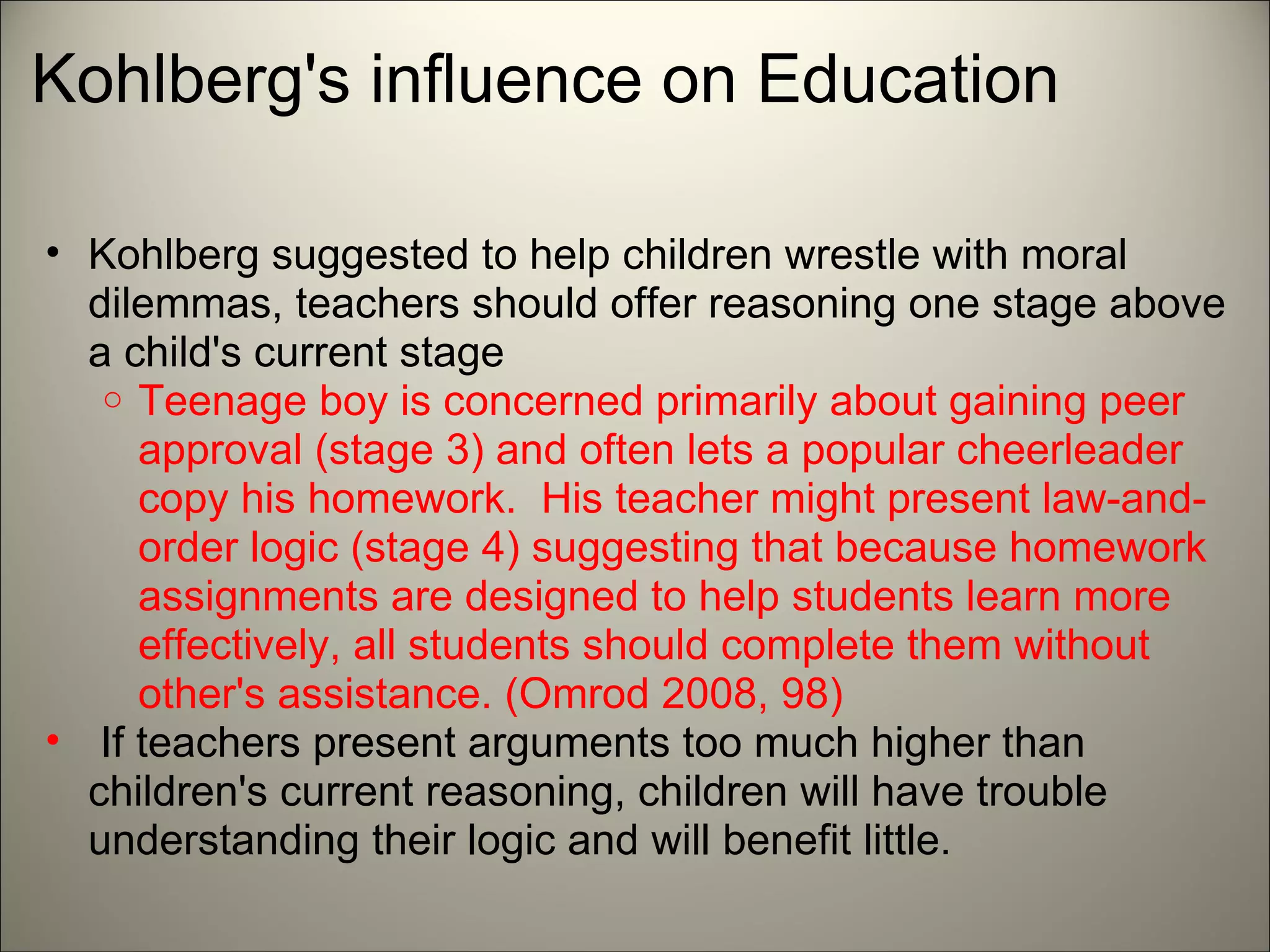
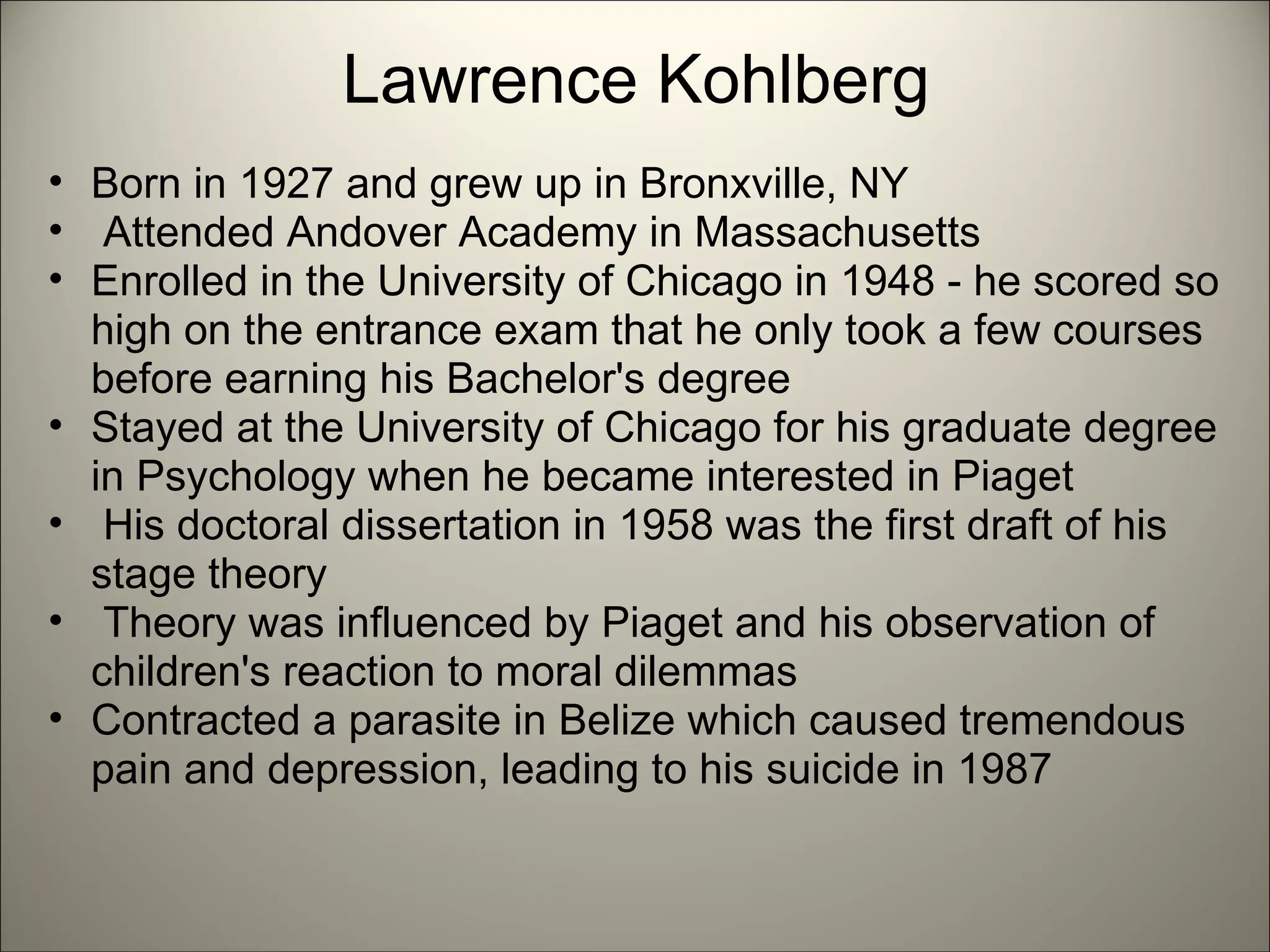
Kohlberg studied how children reason through moral dilemmas like the Heinz dilemma. His work influenced education by suggesting teachers encourage perspective-taking and discussions that are slightly above students' current stage of reasoning. While criticized, Kohlberg's theory highlighted the role of environment and experience in developing morality.




![Level II: Conventional Morality
Stage IV: Law and Order
If everybody did as he wanted to do, set up his own beliefs as
to right and wrong, then I think you would have chaos. The only
thing I think we have in civilization nowadays is some sort of
legal structure which people are sort of bound to follow. [Society
needs] a centralizing framework. (Crain, 1985, p. 118-136)
• Individuals are making decisions based on the implications
on society, showing they now see themselves as members
of a group
• emphasis is on maintaining social order through fulfilling
responsibilities and obeying the law](https://image.slidesharecdn.com/kohlbergmoralreasoning1-090711185929-phpapp02/75/Kohlberg-s-theory-of-moral-reasoning-10-2048.jpg)