Education
The research context
Methods in Context
• On the exam paper, you will be asked a methods in context question
• You will have to apply your knowledge of research methods specifically to the research of
education
• You will be given an issue in education such as pupil subcultures or ethnicity and
achievement
• You will discuss the advantages/disadvantages of a given research method to this issue
5 areas of research
1. Pupils
2. Teachers
3. Parents
4. Classrooms
5. Schools
Pupils
Within a school pupils have less power and status than adults
More difficult to state their opinions honestly
School is hierarchical
• One to one interviews
• Pupil may feel intimidated and may not answer honestly for fear of
challenging adult opinions
• Group Interviews
• May allow pupils to be more honest as they can be ‘backed up’ by other
pupils
Power and status
Which ever method is used, some power imbalance will remain
Power and status
Pupils may have limited :
o Vocabulary
o Self expression
o Thinking skills
o Confidence
Why would there be a problem giving a questionnaire to reception
children?
Is it possible to get informed consent
if the child cannot properly understand
the nature of the research ?
Vulnerability
Informed consent:
Consent should be gained from the pupils themselves as well as
parents/teachers
children may not understand the nature of the research,
children may not be mature enough to make a moral choice.
Child protection
Personal data should not be kept unless it is vital
Personal data should be kept confidential
Stress
Questioning/Interviewing children
for a long period of time would be
inappropriate
Is the research necessary, do the benefits
outweigh the costs ?
• Time: may take more time to understand questions
• Rapport: more important to establish trust due to vulnerability
• Maybe more important to match gender/ethnicity of the young person
Teachers
Power
Power relationships are not equal in schools
Hierarchy
Teachers may see the researcher as a Tresspasser
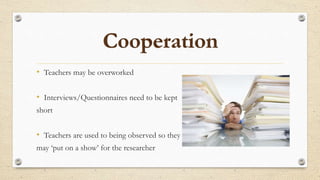
• Teachers may be overworked
• Interviews/Questionnaires need to be kept
short
• Teachers are used to being observed so they
may ‘put on a show’ for the researcher
Classrooms
• Classrooms are highly controlled social settings (mostly)
• Clear boundaries/ behaviour
• Interactions – both teachers and students are used to hiding their real
thoughts and feelings in this situation.
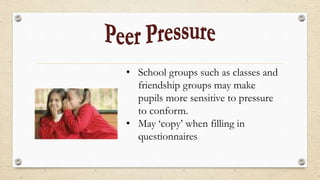
• School groups such as classes and
friendship groups may make
pupils more sensitive to pressure
to conform.
• May ‘copy’ when filling in
questionnaires
Schools
• Schools have formal rules/hierarchies
• Researcher may be seen as part of hierarchy
• May even be seen as ‘the enemy’ (like OFSTED inspectors)
• Head teachers act as gatekeepers
• Head teachers may not wish research to be done
• It may interfere with the day-to-day running of the school
• The research may reflect badly on the school
• (Roland Meighan 1981)
• Schools have a legal obligation to collect certain information about students
• This could be used by researchers
• Legal duties of protection may limit the research that can be carried out
• There is a lot of publicly available data on schools
• Schools also produce large numbers of personal documents (eg reports)
• These may not be easy to access though
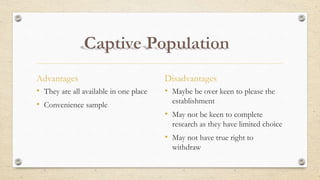
Advantages
• They are all available in one place
• Convenience sample
Disadvantages
• Maybe be over keen to please the
establishment
• May not be keen to complete
research as they have limited choice
• May not have true right to
withdraw
Parents
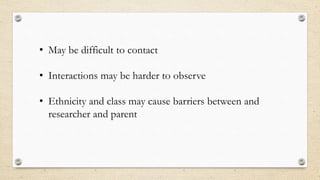
• May be difficult to contact
• Interactions may be harder to observe
• Ethnicity and class may cause barriers between and
researcher and parent
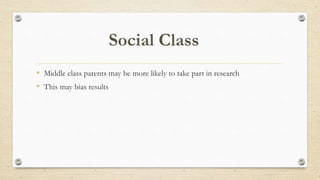
• Middle class parents may be more likely to take part in research
• This may bias results

Research setting: education

  • 1.
  • 2.
    Methods in Context •On the exam paper, you will be asked a methods in context question • You will have to apply your knowledge of research methods specifically to the research of education • You will be given an issue in education such as pupil subcultures or ethnicity and achievement • You will discuss the advantages/disadvantages of a given research method to this issue
  • 3.
    5 areas ofresearch 1. Pupils 2. Teachers 3. Parents 4. Classrooms 5. Schools
  • 4.
  • 5.
    Within a schoolpupils have less power and status than adults More difficult to state their opinions honestly School is hierarchical
  • 6.
    • One toone interviews • Pupil may feel intimidated and may not answer honestly for fear of challenging adult opinions • Group Interviews • May allow pupils to be more honest as they can be ‘backed up’ by other pupils Power and status
  • 7.
    Which ever methodis used, some power imbalance will remain Power and status
  • 8.
    Pupils may havelimited : o Vocabulary o Self expression o Thinking skills o Confidence Why would there be a problem giving a questionnaire to reception children?
  • 9.
    Is it possibleto get informed consent if the child cannot properly understand the nature of the research ?
  • 10.
    Vulnerability Informed consent: Consent shouldbe gained from the pupils themselves as well as parents/teachers children may not understand the nature of the research, children may not be mature enough to make a moral choice.
  • 11.
    Child protection Personal datashould not be kept unless it is vital Personal data should be kept confidential
  • 12.
    Stress Questioning/Interviewing children for along period of time would be inappropriate
  • 13.
    Is the researchnecessary, do the benefits outweigh the costs ?
  • 14.
    • Time: maytake more time to understand questions • Rapport: more important to establish trust due to vulnerability • Maybe more important to match gender/ethnicity of the young person
  • 15.
  • 16.
    Power Power relationships arenot equal in schools Hierarchy Teachers may see the researcher as a Tresspasser
  • 17.
    • Teachers maybe overworked • Interviews/Questionnaires need to be kept short • Teachers are used to being observed so they may ‘put on a show’ for the researcher
  • 18.
  • 19.
    • Classrooms arehighly controlled social settings (mostly) • Clear boundaries/ behaviour • Interactions – both teachers and students are used to hiding their real thoughts and feelings in this situation.
  • 20.
    • School groupssuch as classes and friendship groups may make pupils more sensitive to pressure to conform. • May ‘copy’ when filling in questionnaires
  • 21.
  • 22.
    • Schools haveformal rules/hierarchies • Researcher may be seen as part of hierarchy • May even be seen as ‘the enemy’ (like OFSTED inspectors)
  • 23.
    • Head teachersact as gatekeepers • Head teachers may not wish research to be done • It may interfere with the day-to-day running of the school • The research may reflect badly on the school • (Roland Meighan 1981)
  • 24.
    • Schools havea legal obligation to collect certain information about students • This could be used by researchers • Legal duties of protection may limit the research that can be carried out
  • 25.
    • There isa lot of publicly available data on schools • Schools also produce large numbers of personal documents (eg reports) • These may not be easy to access though
  • 26.
    Advantages • They areall available in one place • Convenience sample Disadvantages • Maybe be over keen to please the establishment • May not be keen to complete research as they have limited choice • May not have true right to withdraw
  • 27.
  • 28.
    • May bedifficult to contact • Interactions may be harder to observe • Ethnicity and class may cause barriers between and researcher and parent
  • 29.
    • Middle classparents may be more likely to take part in research • This may bias results