Psy1170
Brett Blackburn
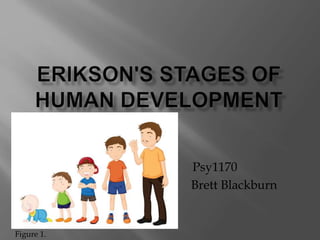
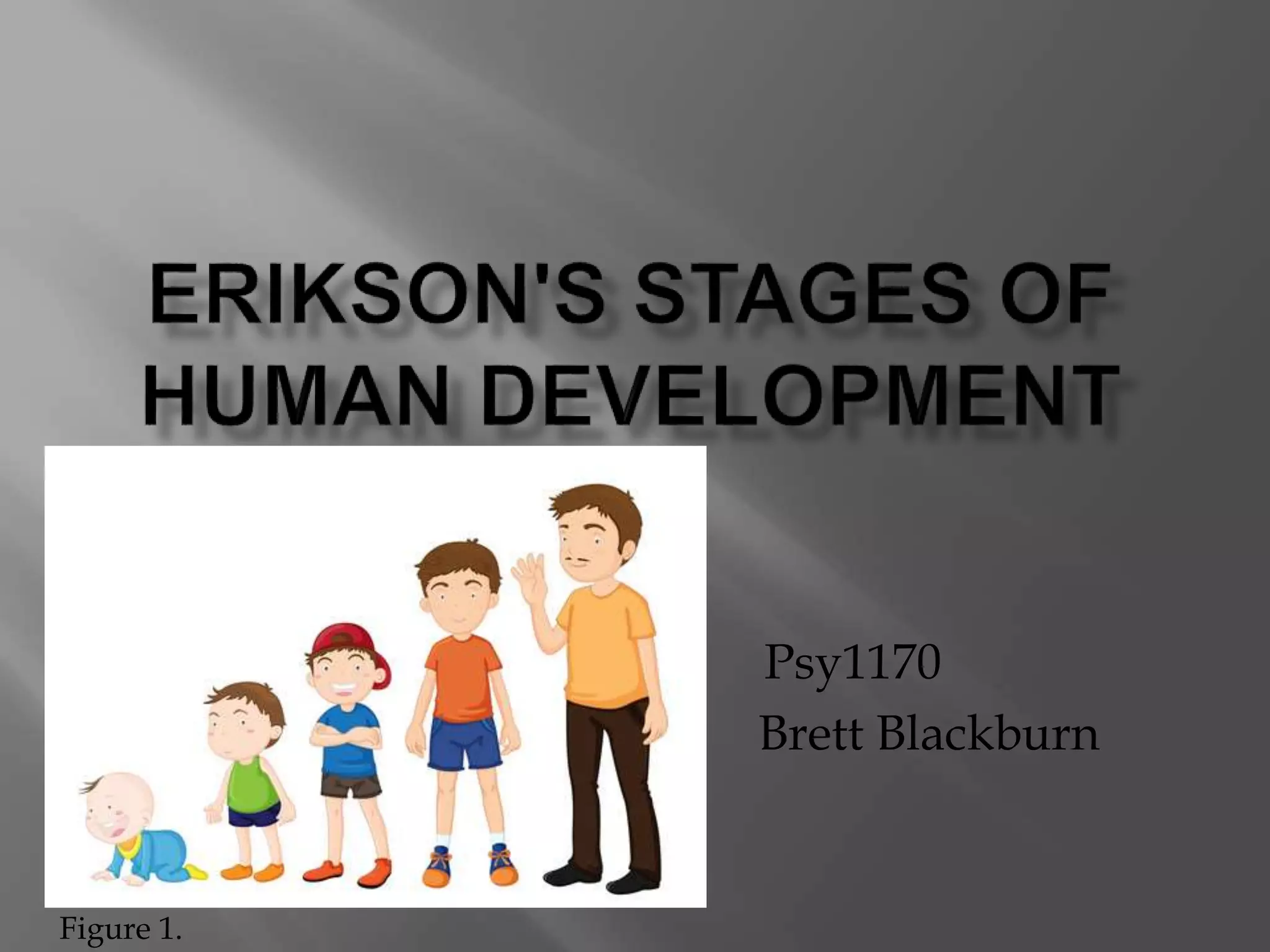
Figure 1.
 Based off of Freud's theory of development
 Has eight distinct stages
 Like Freud this theory assumes that a crises
happens at each stage
 If one completes a stage they will accomplish
a greater sense of self and live a healthy life
 If one does not complete a stage (can be
completed later in life) one will struggle and
have an unhealthy life.
 Virtue: (upon successful completion of the
stage said person receives the good life quality)
 Hope
 Psychosocial crisis – Trust vs Mistrust
 In this stage one is learning to trust or mistrust the
world around them.
 up to the parents to provide safe, reliable, consistent
care for infant to develop trust.
 Significant relationship
 Parents (traditionally more Mother)
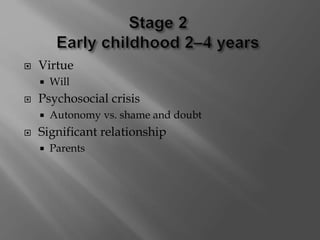
 Virtue
 Will
 Psychosocial crisis
 Autonomy vs. shame and doubt
 Significant relationship
 Parents
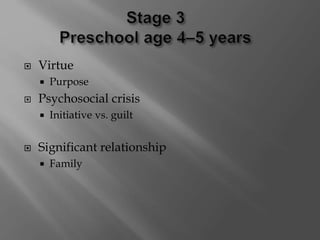
 Virtue
 Purpose
 Psychosocial crisis
 Initiative vs. guilt
 Significant relationship
 Family
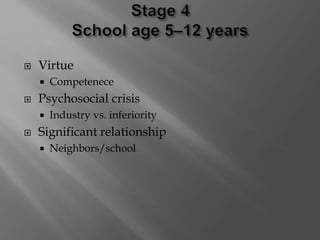
 Virtue
 Competenece
 Psychosocial crisis
 Industry vs. inferiority
 Significant relationship
 Neighbors/school
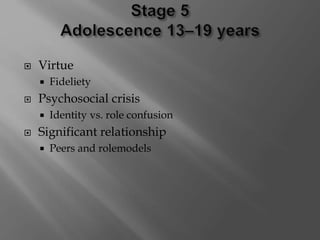
 Virtue
 Fideliety
 Psychosocial crisis
 Identity vs. role confusion
 Significant relationship
 Peers and rolemodels
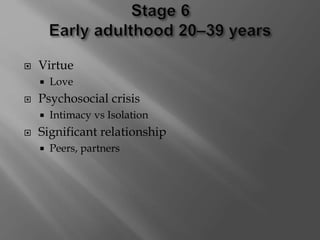
 Virtue
 Love
 Psychosocial crisis
 Intimacy vs Isolation
 Significant relationship
 Peers, partners
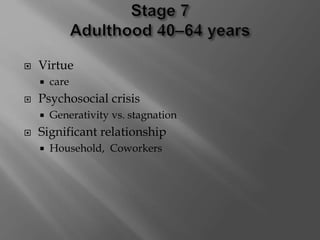
 Virtue
 care
 Psychosocial crisis
 Generativity vs. stagnation
 Significant relationship
 Household, Coworkers
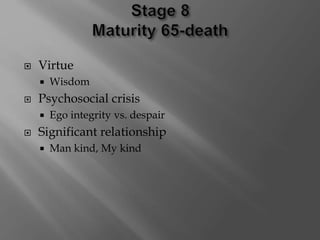
 Virtue
 Wisdom
 Psychosocial crisis
 Ego integrity vs. despair
 Significant relationship
 Man kind, My kind
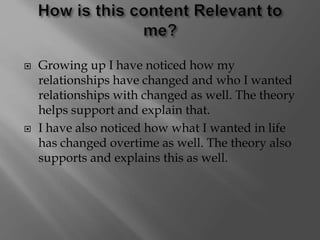
 Growing up I have noticed how my
relationships have changed and who I wanted
relationships with changed as well. The theory
helps support and explain that.
 I have also noticed how what I wanted in life
has changed overtime as well. The theory also
supports and explains this as well.
 In nursing I will be dealing with people of all ages,
genders, upbringings. Realizing that if your
upbringing was lacking in some area it can affect
your future and the daily things one would do as a
Nurse. Ex. A young man comes into the hospital
with an ailment and was hardly spoken to as a
child thus cannot communicate the issue and that
alone will prolong the visit and affect his care.
 Not only will it help in identifying the issue,
knowing my patient may have had a lacking
upbringing may cause me to act slightly differently
to help that or even help at an earlier stage.
 Boyd, D., Johnson P., Bee, H, (2015) Lifespan Development . (5th Canadian Ed.) Toronto, ON;
Prentice Hall Canada Inc.
 Figure 1. Stages of Deelopement. [online image]. Retrieved from http://childdevelopment
info.com/ages-stages/

Erikson's stages of human development

  • 1.
  • 2.
     Based offof Freud's theory of development  Has eight distinct stages  Like Freud this theory assumes that a crises happens at each stage  If one completes a stage they will accomplish a greater sense of self and live a healthy life  If one does not complete a stage (can be completed later in life) one will struggle and have an unhealthy life.
  • 3.
     Virtue: (uponsuccessful completion of the stage said person receives the good life quality)  Hope  Psychosocial crisis – Trust vs Mistrust  In this stage one is learning to trust or mistrust the world around them.  up to the parents to provide safe, reliable, consistent care for infant to develop trust.  Significant relationship  Parents (traditionally more Mother)
  • 4.
     Virtue  Will Psychosocial crisis  Autonomy vs. shame and doubt  Significant relationship  Parents
  • 5.
     Virtue  Purpose Psychosocial crisis  Initiative vs. guilt  Significant relationship  Family
  • 6.
     Virtue  Competenece Psychosocial crisis  Industry vs. inferiority  Significant relationship  Neighbors/school
  • 7.
     Virtue  Fideliety Psychosocial crisis  Identity vs. role confusion  Significant relationship  Peers and rolemodels
  • 8.
     Virtue  Love Psychosocial crisis  Intimacy vs Isolation  Significant relationship  Peers, partners
  • 9.
     Virtue  care Psychosocial crisis  Generativity vs. stagnation  Significant relationship  Household, Coworkers
  • 10.
     Virtue  Wisdom Psychosocial crisis  Ego integrity vs. despair  Significant relationship  Man kind, My kind
  • 11.
     Growing upI have noticed how my relationships have changed and who I wanted relationships with changed as well. The theory helps support and explain that.  I have also noticed how what I wanted in life has changed overtime as well. The theory also supports and explains this as well.
  • 12.
     In nursingI will be dealing with people of all ages, genders, upbringings. Realizing that if your upbringing was lacking in some area it can affect your future and the daily things one would do as a Nurse. Ex. A young man comes into the hospital with an ailment and was hardly spoken to as a child thus cannot communicate the issue and that alone will prolong the visit and affect his care.  Not only will it help in identifying the issue, knowing my patient may have had a lacking upbringing may cause me to act slightly differently to help that or even help at an earlier stage.
  • 13.
     Boyd, D.,Johnson P., Bee, H, (2015) Lifespan Development . (5th Canadian Ed.) Toronto, ON; Prentice Hall Canada Inc.  Figure 1. Stages of Deelopement. [online image]. Retrieved from http://childdevelopment info.com/ages-stages/