DOLLARDDOLLARD
AND MILLERAND MILLER
Psychoanalytic LearningPsychoanalytic Learning
TheoryTheory
CHAPTER
11
Four Fundamental ConceptsFour Fundamental Concepts
about Learningabout Learning

Drive: Wanting SomethingDrive: Wanting Something

Cue: Noticing SomethingCue: Noticing Something

Response: Doing SomethingResponse: Doing Something

Reward: Getting SomethingReward: Getting Something
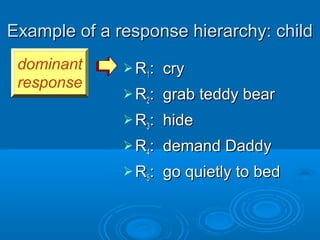
Example of a response hierarchy: childExample of a response hierarchy: child
 RR11: cry: cry
 RR22: grab teddy bear: grab teddy bear
 RR33: hide: hide
 RR44: demand Daddy: demand Daddy
 RR55: go quietly to bed: go quietly to bed
dominant
response
learning dilemmalearning dilemma
a situation ina situation in
which existingwhich existing
responses are notresponses are not
rewardedrewarded
How would these concepts play aHow would these concepts play a
part in teaching the 2-year-old topart in teaching the 2-year-old to
go quietly to bed?go quietly to bed?
punishmentpunishment
extinctionextinction
spontaneous recoveryspontaneous recovery
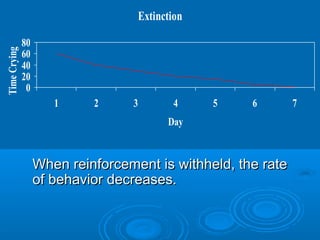
Extinction
0
20
40
60
80
1 2 3 4 5 6 7
Day
TimeCrying
When reinforcement is withheld, the rateWhen reinforcement is withheld, the rate
of behavior decreases.of behavior decreases.
When cues signal the appropriateWhen cues signal the appropriate
response, we must also considerresponse, we must also consider
 stimulus generalizationstimulus generalization
 discriminationdiscrimination
gradient of rewardgradient of reward
The more closely the responseThe more closely the response
is followed by reward, theis followed by reward, the
more it is strengthened.more it is strengthened.
LanguageLanguage can influence thiscan influence this
by making a response "close"by making a response "close"
by talking about it.by talking about it.
Four Critical Periods of ChildhoodFour Critical Periods of Childhood
FeedingFeeding
Cleanliness TrainingCleanliness Training
Early Sex TrainingEarly Sex Training
Anger-Anxiety ConflictsAnger-Anxiety Conflicts
ConflictConflict

Gradients of Approach andGradients of Approach and
Avoidance ResponsesAvoidance Responses

Four Types of ConflictFour Types of Conflict
Types of ConflictTypes of Conflict
approach-avoidanceapproach-avoidance
avoidance-avoidanceavoidance-avoidance
approach-approachapproach-approach
double approach-avoidancedouble approach-avoidance
Frustration and AggressionFrustration and Aggression

The Frustration-AggressionThe Frustration-Aggression
HypothesisHypothesis

Individual Differences in AggressiveIndividual Differences in Aggressive
ResponsesResponses
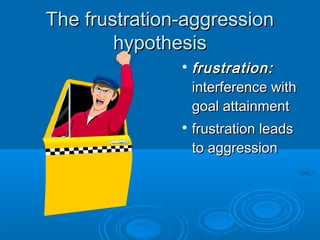
The frustration-aggressionThe frustration-aggression
hypothesishypothesis

frustration:frustration:
interference withinterference with
goal attainmentgoal attainment

frustration leadsfrustration leads
to aggressionto aggression
People learn responses toPeople learn responses to
frustration, which may befrustration, which may be
aggressive or nonaggressiveaggressive or nonaggressive
responses.responses.
displacementdisplacement
 cultural scapegoatscultural scapegoats
(women, minorities,(women, minorities,
children)children)
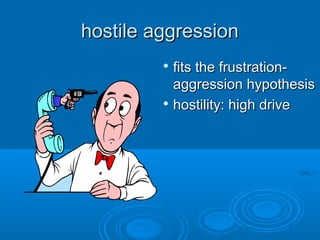
hostile aggressionhostile aggression

fits the frustration-fits the frustration-
aggression hypothesisaggression hypothesis

hostility: high drivehostility: high drive
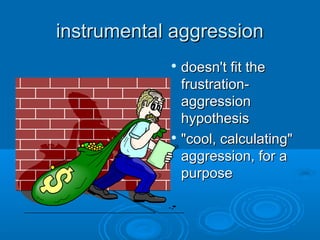
instrumental aggressioninstrumental aggression

doesn't fit thedoesn't fit the
frustration-frustration-
aggressionaggression
hypothesishypothesis

"cool, calculating""cool, calculating"
aggression, for aaggression, for a
purposepurpose
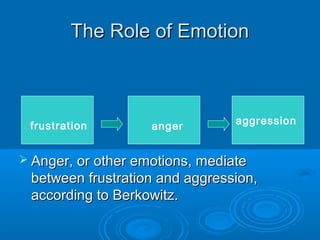
The Role of EmotionThe Role of Emotion
frustration aggression
anger
 Anger, or other emotions, mediateAnger, or other emotions, mediate
between frustration and aggression,between frustration and aggression,
according to Berkowitz.according to Berkowitz.
Individual Differences inIndividual Differences in
Aggressive ResponsesAggressive Responses
 Impact of early experience (childImpact of early experience (child
abuse) and failure of egoabuse) and failure of ego
development.development.
 Impact of learning.Impact of learning.
 Impact of brain development.Impact of brain development.
PsychotherapyPsychotherapy
teaching behavioral copingteaching behavioral coping
teaching discrimination of cuesteaching discrimination of cues
teaching relaxation (driveteaching relaxation (drive
reduction)reduction)
language as mediator of learninglanguage as mediator of learning

Ch11 Dollard

  • 1.
    DOLLARDDOLLARD AND MILLERAND MILLER PsychoanalyticLearningPsychoanalytic Learning TheoryTheory CHAPTER 11
  • 2.
    Four Fundamental ConceptsFourFundamental Concepts about Learningabout Learning  Drive: Wanting SomethingDrive: Wanting Something  Cue: Noticing SomethingCue: Noticing Something  Response: Doing SomethingResponse: Doing Something  Reward: Getting SomethingReward: Getting Something
  • 3.
    Example of aresponse hierarchy: childExample of a response hierarchy: child  RR11: cry: cry  RR22: grab teddy bear: grab teddy bear  RR33: hide: hide  RR44: demand Daddy: demand Daddy  RR55: go quietly to bed: go quietly to bed dominant response
  • 4.
    learning dilemmalearning dilemma asituation ina situation in which existingwhich existing responses are notresponses are not rewardedrewarded
  • 5.
    How would theseconcepts play aHow would these concepts play a part in teaching the 2-year-old topart in teaching the 2-year-old to go quietly to bed?go quietly to bed? punishmentpunishment extinctionextinction spontaneous recoveryspontaneous recovery
  • 6.
    Extinction 0 20 40 60 80 1 2 34 5 6 7 Day TimeCrying When reinforcement is withheld, the rateWhen reinforcement is withheld, the rate of behavior decreases.of behavior decreases.
  • 7.
    When cues signalthe appropriateWhen cues signal the appropriate response, we must also considerresponse, we must also consider  stimulus generalizationstimulus generalization  discriminationdiscrimination
  • 8.
    gradient of rewardgradientof reward The more closely the responseThe more closely the response is followed by reward, theis followed by reward, the more it is strengthened.more it is strengthened. LanguageLanguage can influence thiscan influence this by making a response "close"by making a response "close" by talking about it.by talking about it.
  • 9.
    Four Critical Periodsof ChildhoodFour Critical Periods of Childhood FeedingFeeding Cleanliness TrainingCleanliness Training Early Sex TrainingEarly Sex Training Anger-Anxiety ConflictsAnger-Anxiety Conflicts
  • 10.
    ConflictConflict  Gradients of ApproachandGradients of Approach and Avoidance ResponsesAvoidance Responses  Four Types of ConflictFour Types of Conflict
  • 11.
    Types of ConflictTypesof Conflict approach-avoidanceapproach-avoidance avoidance-avoidanceavoidance-avoidance approach-approachapproach-approach double approach-avoidancedouble approach-avoidance
  • 12.
    Frustration and AggressionFrustrationand Aggression  The Frustration-AggressionThe Frustration-Aggression HypothesisHypothesis  Individual Differences in AggressiveIndividual Differences in Aggressive ResponsesResponses
  • 13.
    The frustration-aggressionThe frustration-aggression hypothesishypothesis  frustration:frustration: interferencewithinterference with goal attainmentgoal attainment  frustration leadsfrustration leads to aggressionto aggression
  • 14.
    People learn responsestoPeople learn responses to frustration, which may befrustration, which may be aggressive or nonaggressiveaggressive or nonaggressive responses.responses.
  • 15.
    displacementdisplacement  cultural scapegoatsculturalscapegoats (women, minorities,(women, minorities, children)children)
  • 16.
    hostile aggressionhostile aggression  fitsthe frustration-fits the frustration- aggression hypothesisaggression hypothesis  hostility: high drivehostility: high drive
  • 17.
    instrumental aggressioninstrumental aggression  doesn'tfit thedoesn't fit the frustration-frustration- aggressionaggression hypothesishypothesis  "cool, calculating""cool, calculating" aggression, for aaggression, for a purposepurpose
  • 18.
    The Role ofEmotionThe Role of Emotion frustration aggression anger  Anger, or other emotions, mediateAnger, or other emotions, mediate between frustration and aggression,between frustration and aggression, according to Berkowitz.according to Berkowitz.
  • 19.
    Individual Differences inIndividualDifferences in Aggressive ResponsesAggressive Responses  Impact of early experience (childImpact of early experience (child abuse) and failure of egoabuse) and failure of ego development.development.  Impact of learning.Impact of learning.  Impact of brain development.Impact of brain development.
  • 20.
    PsychotherapyPsychotherapy teaching behavioral copingteachingbehavioral coping teaching discrimination of cuesteaching discrimination of cues teaching relaxation (driveteaching relaxation (drive reduction)reduction) language as mediator of learninglanguage as mediator of learning

Editor's Notes

  • #3 header, text p. 33
  • #7 <number> Figure 10.1, text page 320
  • #11 header, text p. 33
  • #13 header, text p. 33
  • #19 <number> text, page 331.