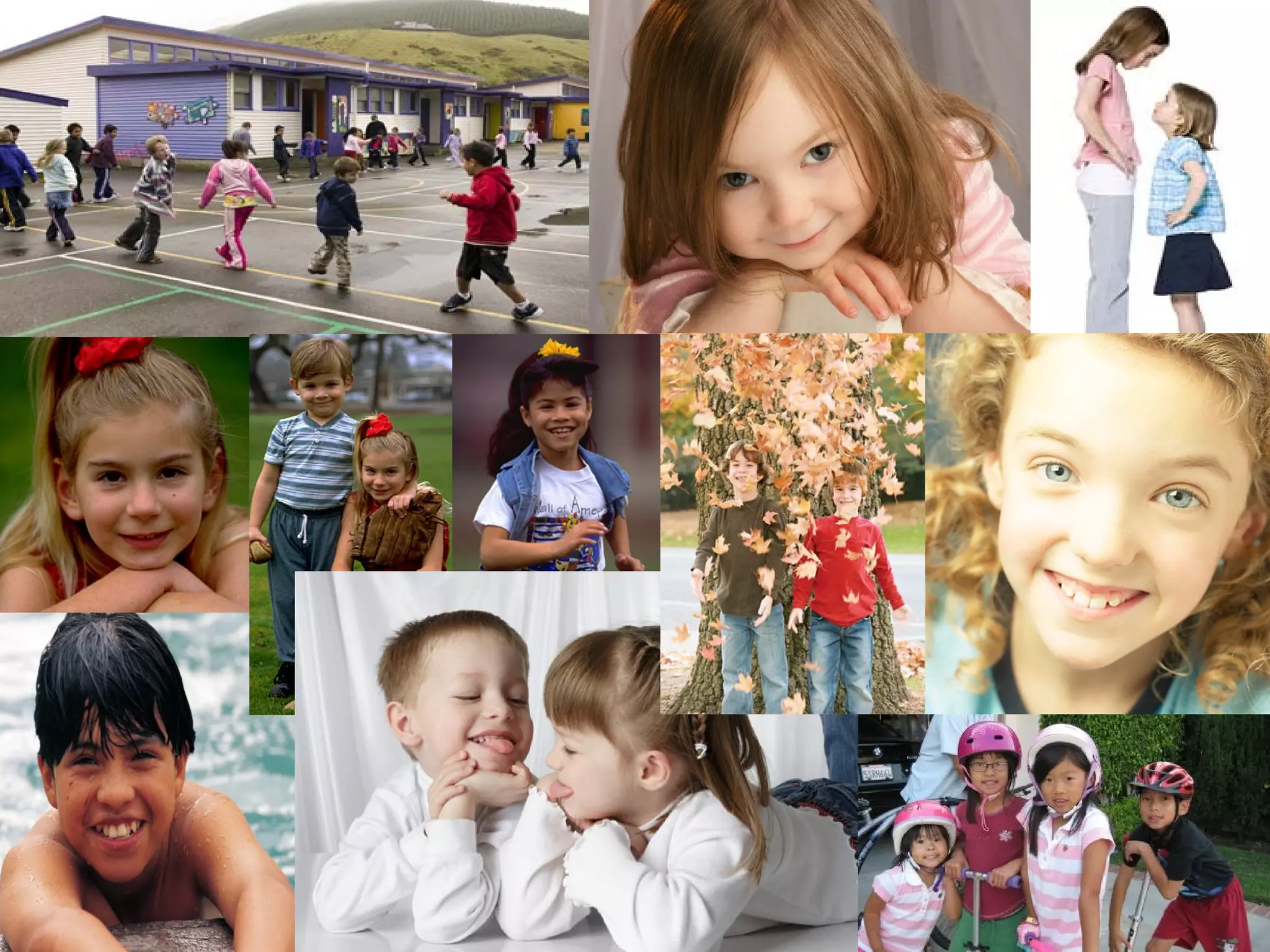
MIDDLE CHILDHOOD
6 – 11 YEARS OLD
3
PHYSICAL DEVELOPMENT
What gains in growth,
brain development,
and motor development
occur in school-age children,
and what are their nutritional
and sleep needs?
4
PHYSICAL DEVELOPMENT
1. HEIGHT & WEIGHT
 less rapid than in earlier years
 each year grows about 2 to 3 inches
 lower portion of body growing
fastest
 bones lengthen
 muscles become flexible
5
ASPECTS OF PHYSICAL DEVELOPMENT
6
2. NUTRITION & SLEEP
essential for normal growth and health
 2, 400 calories each day
 5 years old – 11 hours
 9 years old – 10 hours
 13 years old – 9 hours
Nutrition Problems in Middle
Childhood
 Little focus on eating
 Fewer meals with family
 Too few fruits and vegetables
 Too many fried foods
and soft drinks
• Poverty - lack of nutritional food
7
Nutrition Problems cont.
• By middle childhood, the effects of prolonged
and serious malnutrition are apparent in:
1. retarded physical growth
2. low intelligence test scores
3. poor motor coordination
4. inattention
• Malnutrition for many years - permanent
damage
8
3. BRAIN DEVELOPMENT
The brain structure is complex. It
is the product of the interaction
between genetic, epigenetic, and
environmental factors
9
BRAIN DEVELOPMENT
• As children acquire more complex abilities,
stimulated neurons increase in synaptic
connections and their neural fibers become
more elaborate and myelinated
• Loss in the density of gray matter
(closely –packed neural bodies)
–reflects pruning of unused dendrites.
• Balanced by a steady increase in white
matter
–axons or nerve fibers that transmit
information between neurons to distant
regions of the brain
10
11
• Cortex of temporal lobes thickens, at the
same time, thinning occurs in the rear
portion of the frontal and parietal cortex in
the brain’s left hemisphere.
• The corpus callosum thickens - leads to
improved communication between the two
cortical hemispheres.
• Lateralization of the cerebral hemispheres
increases over the school years.
Brain Development
• Brain functioning may also change
because of an increase in androgens
(male sex hormones) that occurs in
both boys and girls around age 7 to 8.
12
4. MOTOR DEVELOPMENT
IN MIDDLE CHILDHOOD
 Gross Motor Skills Improvements
1. Flexibility
2. Balance
3. Agility
4. Force
 Fine Motor Skills Gains
1. Writing
2. Drawing
13
Fine Motor Development
– Writing tends to be large at first, and legibility
gradually increases.
– Drawings show gains in
1. organization
2. detail
3. representation of depth
– School-age children not only
– (1) depict objects in considerable detail, they
also
– (2) relate them to one another as part of an
organized whole.
14
Six-Year Old’s Drawing
15
Eight-Year Old’s Drawing
16
Ten-Year Old’s Drawing
17
Individual Differences
in Motor Skills
 Body build
 Family encouragement, expectations
 School & community lessons
available
18
Rough and Tumble Play
 Friendly chasing and play-fighting
(wrestling, kicking, tumbling,
grappling) accompanied by laughing
and screaming
 Boys play more physically active
games
 Girls favor games that include verbal
expression
19
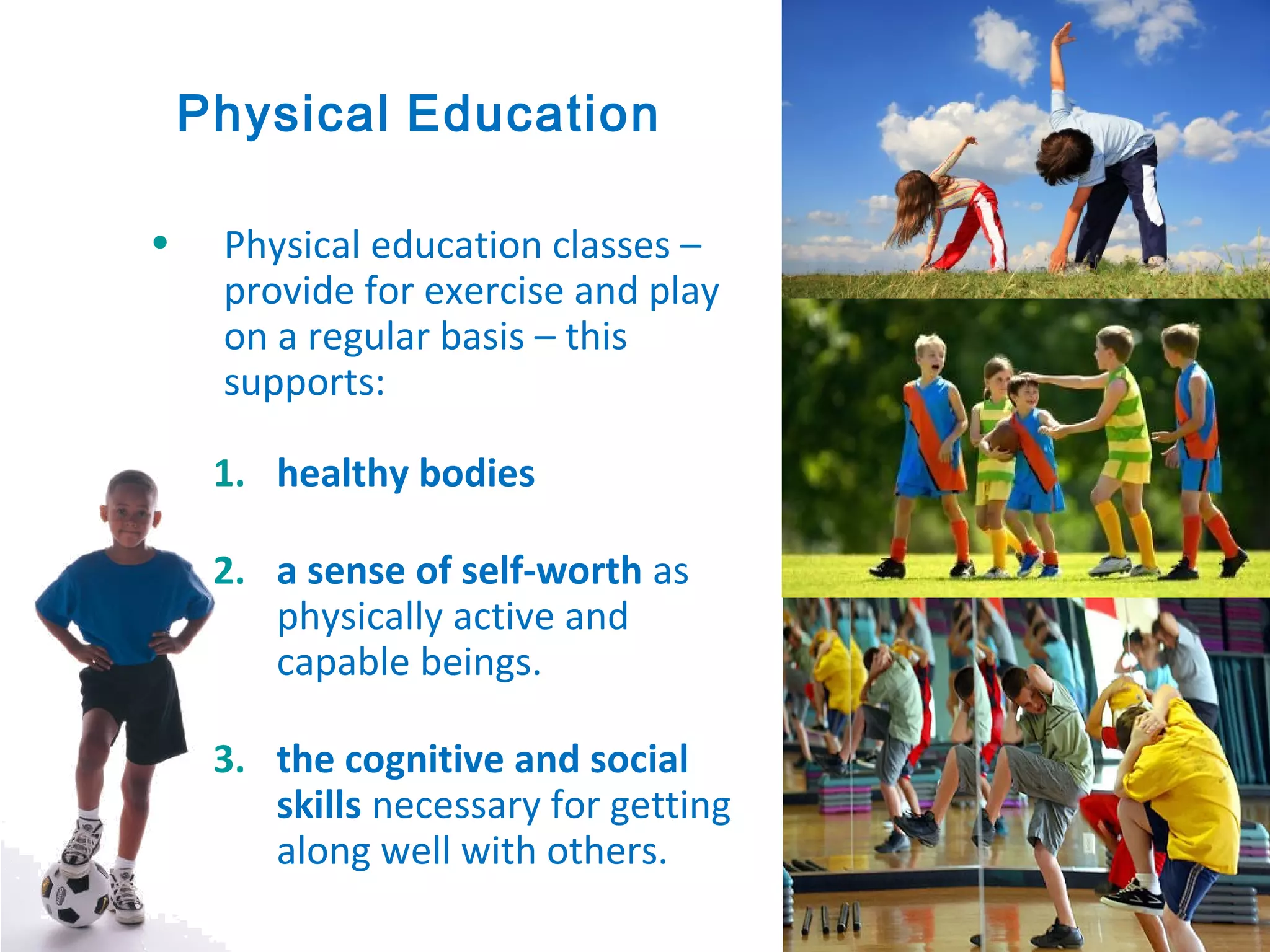
Physical Education
• Physical education classes –
provide for exercise and play
on a regular basis – this
supports:
1. healthy bodies
2. a sense of self-worth as
physically active and
capable beings.
3. the cognitive and social
skills necessary for getting
along well with others.
20
Accidents in Middle Childhood
 Most common types:
 Motor vehicle
 Bicycle
 Pedestrian
 Prevention
 Teach safety
 Model safe behavior
 Require helmets
 Watch high-risk children more
21
22
EVOLUTIONARY STANDPOINT:
As the child gets older (11 years old), he hones
skeletal & muscle development that may channel
aggression & competition, &becomes a way to establish
dominance within the peer group.
END
OF
PHYSICAL
DEVELOPMENT
23

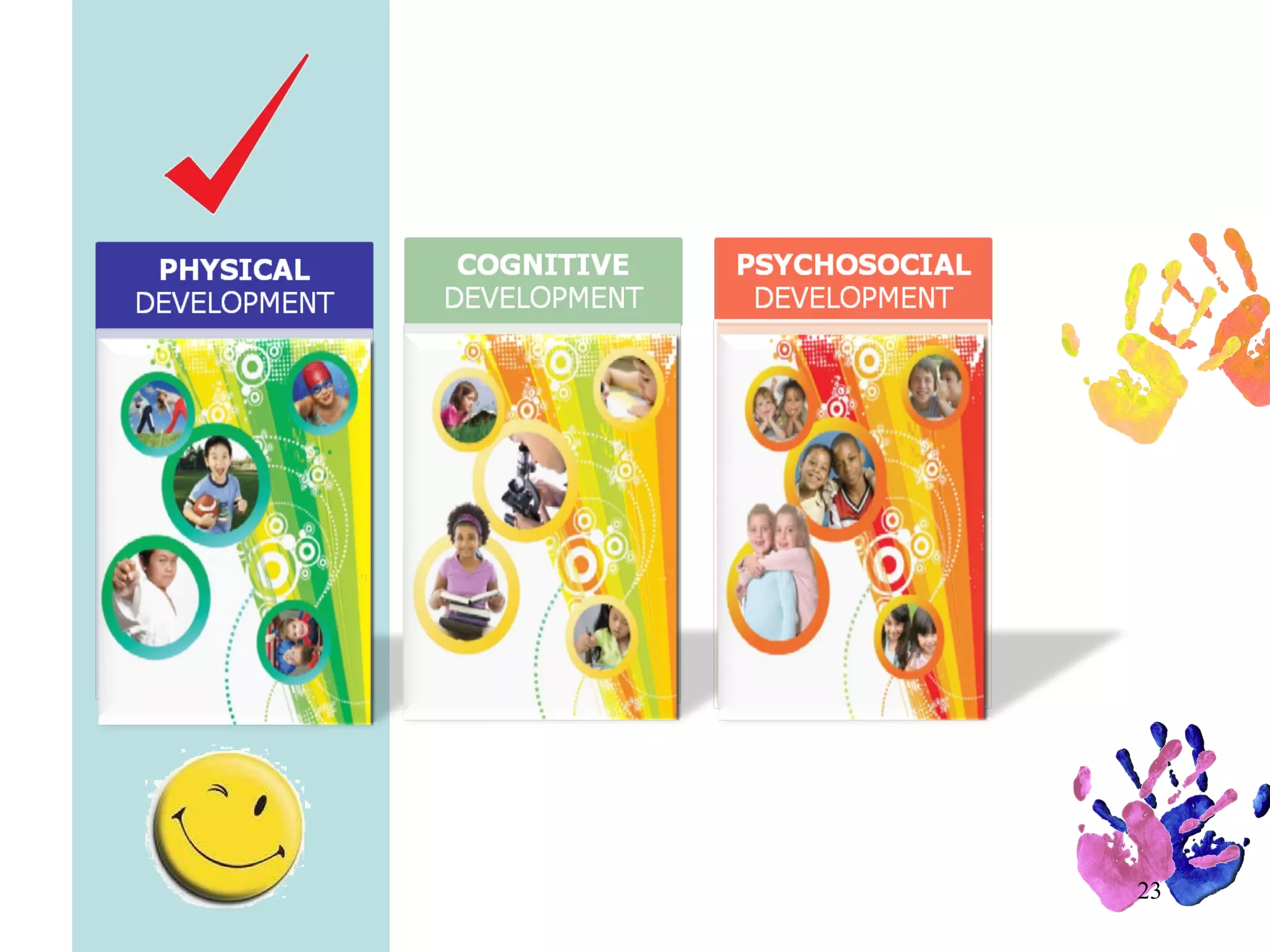
Middle Childhood: Physical Development

  • 2.
  • 3.
  • 4.
    PHYSICAL DEVELOPMENT What gainsin growth, brain development, and motor development occur in school-age children, and what are their nutritional and sleep needs? 4
  • 5.
    PHYSICAL DEVELOPMENT 1. HEIGHT& WEIGHT  less rapid than in earlier years  each year grows about 2 to 3 inches  lower portion of body growing fastest  bones lengthen  muscles become flexible 5 ASPECTS OF PHYSICAL DEVELOPMENT
  • 6.
    6 2. NUTRITION &SLEEP essential for normal growth and health  2, 400 calories each day  5 years old – 11 hours  9 years old – 10 hours  13 years old – 9 hours
  • 7.
    Nutrition Problems inMiddle Childhood  Little focus on eating  Fewer meals with family  Too few fruits and vegetables  Too many fried foods and soft drinks • Poverty - lack of nutritional food 7
  • 8.
    Nutrition Problems cont. •By middle childhood, the effects of prolonged and serious malnutrition are apparent in: 1. retarded physical growth 2. low intelligence test scores 3. poor motor coordination 4. inattention • Malnutrition for many years - permanent damage 8
  • 9.
    3. BRAIN DEVELOPMENT Thebrain structure is complex. It is the product of the interaction between genetic, epigenetic, and environmental factors 9
  • 10.
    BRAIN DEVELOPMENT • Aschildren acquire more complex abilities, stimulated neurons increase in synaptic connections and their neural fibers become more elaborate and myelinated • Loss in the density of gray matter (closely –packed neural bodies) –reflects pruning of unused dendrites. • Balanced by a steady increase in white matter –axons or nerve fibers that transmit information between neurons to distant regions of the brain 10
  • 11.
    11 • Cortex oftemporal lobes thickens, at the same time, thinning occurs in the rear portion of the frontal and parietal cortex in the brain’s left hemisphere. • The corpus callosum thickens - leads to improved communication between the two cortical hemispheres. • Lateralization of the cerebral hemispheres increases over the school years.
  • 12.
    Brain Development • Brainfunctioning may also change because of an increase in androgens (male sex hormones) that occurs in both boys and girls around age 7 to 8. 12
  • 13.
    4. MOTOR DEVELOPMENT INMIDDLE CHILDHOOD  Gross Motor Skills Improvements 1. Flexibility 2. Balance 3. Agility 4. Force  Fine Motor Skills Gains 1. Writing 2. Drawing 13
  • 14.
    Fine Motor Development –Writing tends to be large at first, and legibility gradually increases. – Drawings show gains in 1. organization 2. detail 3. representation of depth – School-age children not only – (1) depict objects in considerable detail, they also – (2) relate them to one another as part of an organized whole. 14
  • 15.
  • 16.
  • 17.
  • 18.
    Individual Differences in MotorSkills  Body build  Family encouragement, expectations  School & community lessons available 18
  • 19.
    Rough and TumblePlay  Friendly chasing and play-fighting (wrestling, kicking, tumbling, grappling) accompanied by laughing and screaming  Boys play more physically active games  Girls favor games that include verbal expression 19
  • 20.
    Physical Education • Physicaleducation classes – provide for exercise and play on a regular basis – this supports: 1. healthy bodies 2. a sense of self-worth as physically active and capable beings. 3. the cognitive and social skills necessary for getting along well with others. 20
  • 21.
    Accidents in MiddleChildhood  Most common types:  Motor vehicle  Bicycle  Pedestrian  Prevention  Teach safety  Model safe behavior  Require helmets  Watch high-risk children more 21
  • 22.
    22 EVOLUTIONARY STANDPOINT: As thechild gets older (11 years old), he hones skeletal & muscle development that may channel aggression & competition, &becomes a way to establish dominance within the peer group. END OF PHYSICAL DEVELOPMENT
  • 23.