MRSA
Syn ORSA / CRSA
Introduction
• Any strain of S. Aureus that has developed resistance to Beta-
Lactam Antibiotics
• Natural Selection
• No change in Virulence ; ‘Difficult-to-treat’
• HA vs CA
• Known since 1963 ; Outbreak investigation by CDC in LA County
Prison in 2001
• Commonly colonizes Ant Nares, Respiratory Tract, Urinary Tract,
open wounds, IV catheters
Genetic Basis for Resistance
Acquisition of Extrachromosomal Genetic Elements
via Plasmids, TGEs in MSSA of :
– mecA (Resistance Genes for Transpeptidases)
– SCCmec (Genomic Island / Staphylococcal Cassette
Chromosome)
– ACME (Virulence factor / Arginine Catabolic Mobile
Element)
– Strains : EMRSA15/16 & ST5/250 MRSA I-IV
Predisposition
• Hospitals (Nosocomial)
– Open wounds
– Invasive devices
– Immunocompromised indls
– Diabetics
– Institutionalization
• Prisons
• Old-age homes / Orphanages
• Children
• Contact & Team Sports (‘Turf Burns’ / Shared Eq)
• IVDUs
• Unregulated Antibiotic usage (esp Quinolones)
• Veterinarians, livestock handlers (CC398 var), and pet owners
Clinical Features
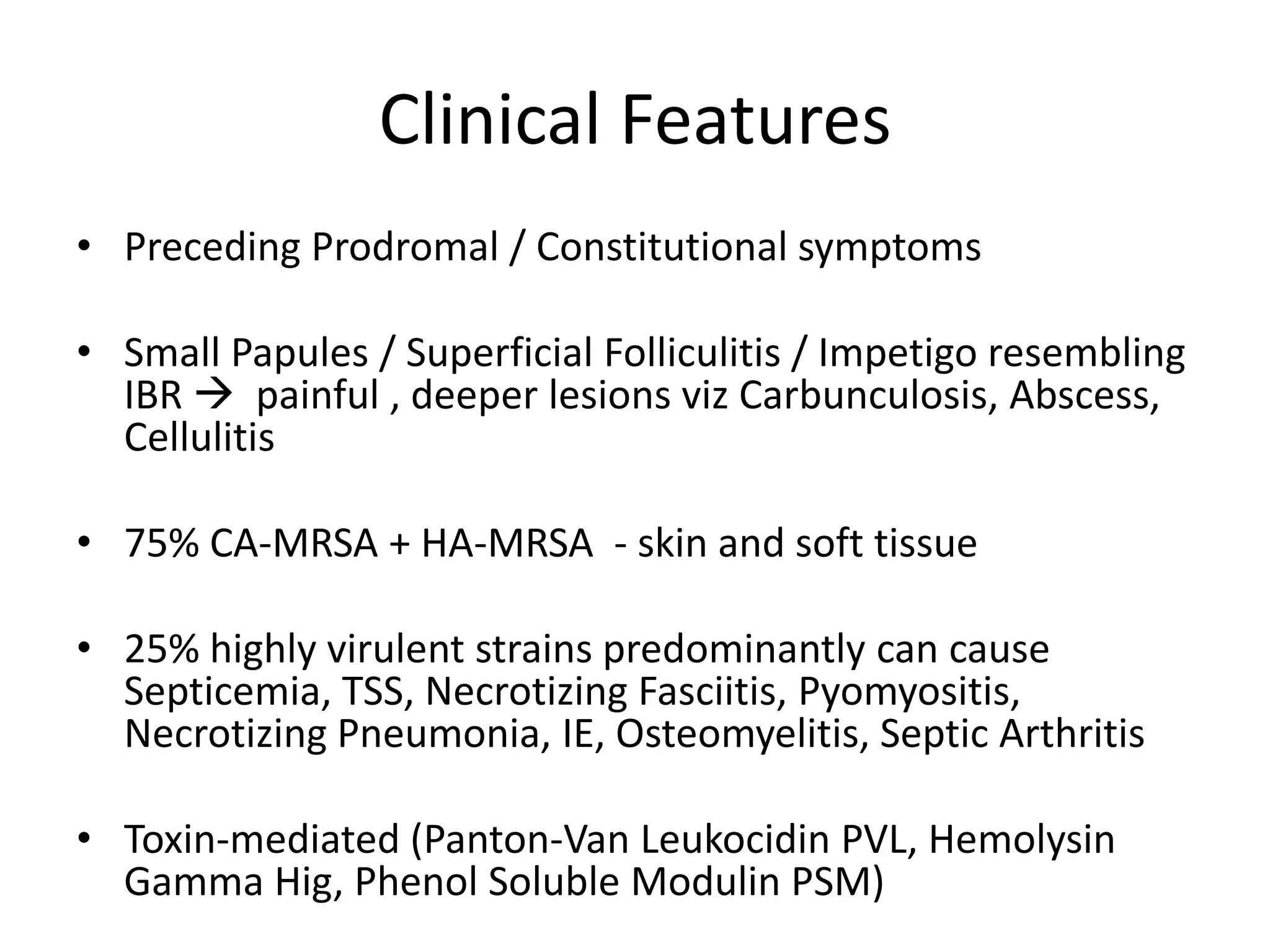
• Preceding Prodromal / Constitutional symptoms
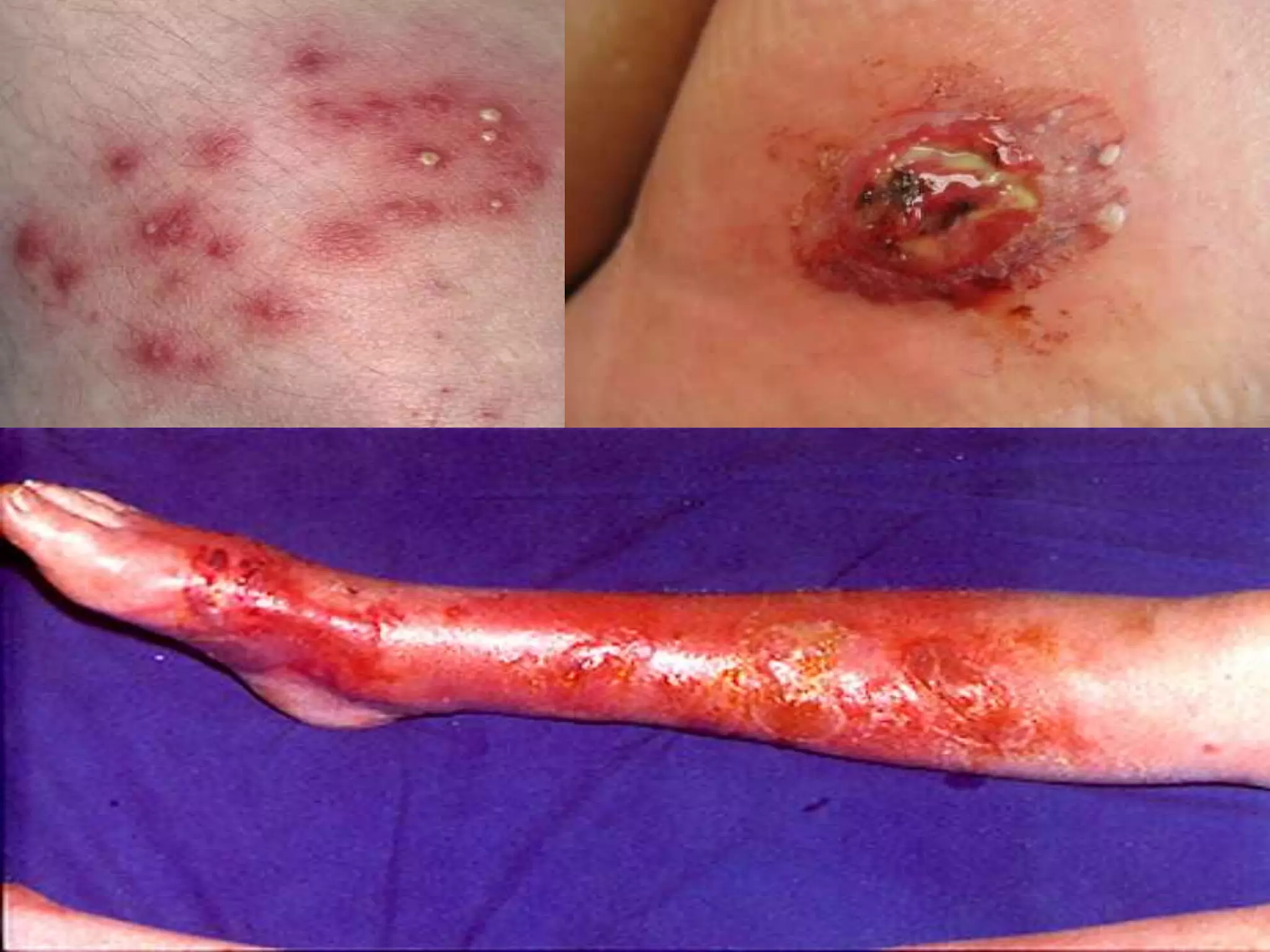
• Small Papules / Superficial Folliculitis / Impetigo resembling
IBR  painful , deeper lesions viz Carbunculosis, Abscess,
Cellulitis
• 75% CA-MRSA + HA-MRSA - skin and soft tissue
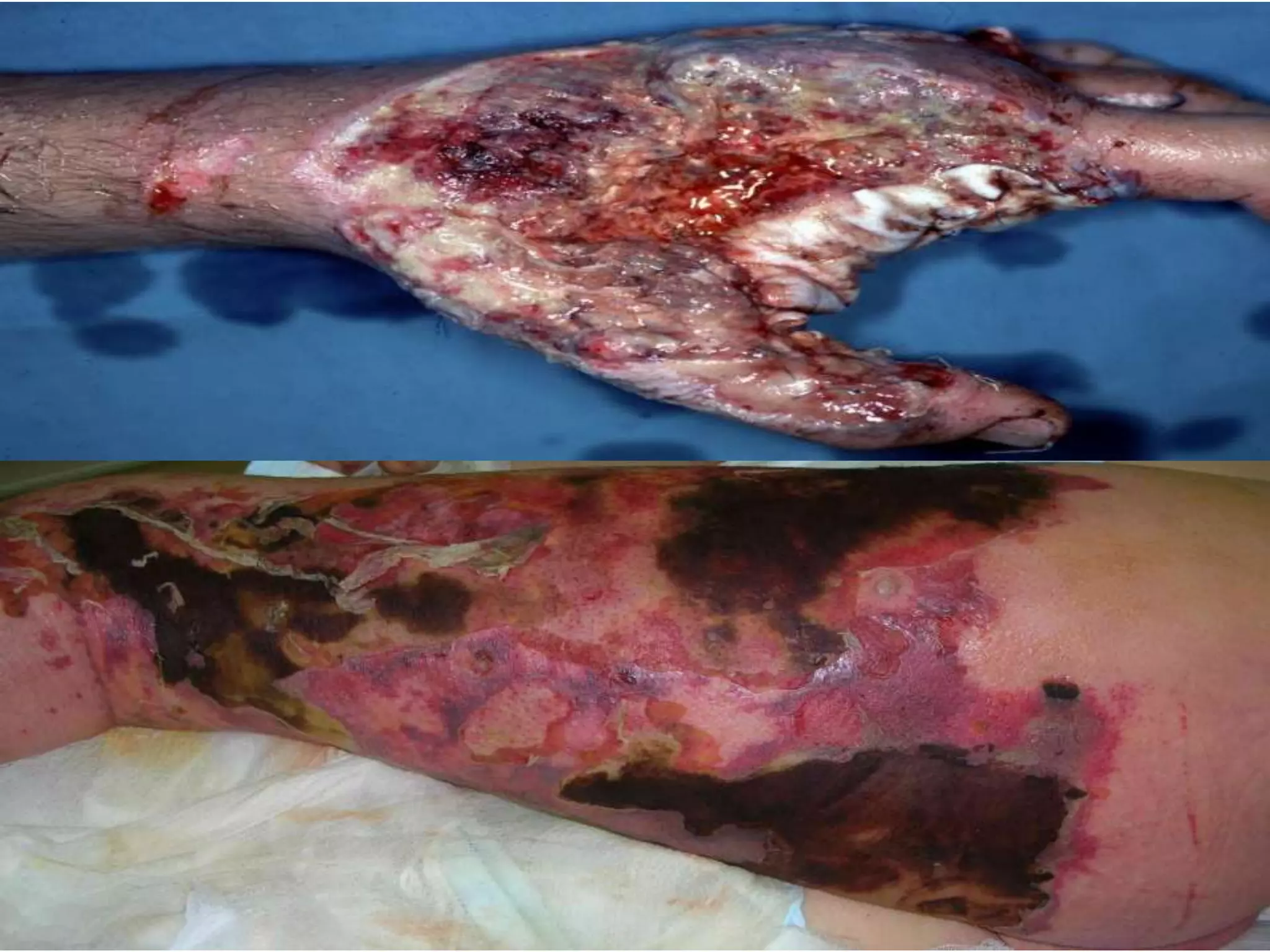
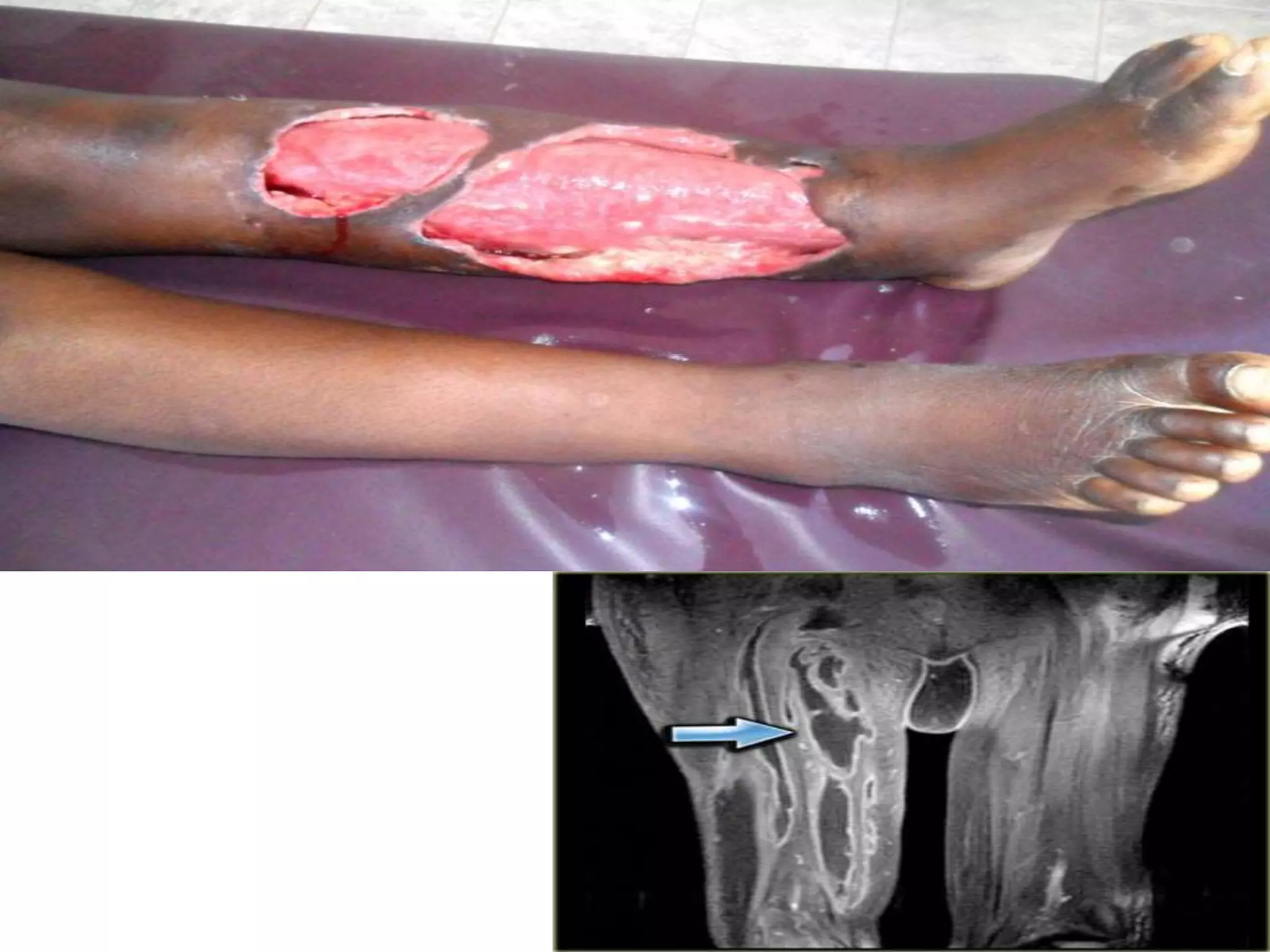
• 25% highly virulent strains predominantly can cause
Septicemia, TSS, Necrotizing Fasciitis, Pyomyositis,
Necrotizing Pneumonia, IE, Osteomyelitis, Septic Arthritis
• Toxin-mediated (Panton-Van Leukocidin PVL, Hemolysin
Gamma Hig, Phenol Soluble Modulin PSM)
• a
• aa
• aa
Diagnosis
• Clinical (High index of suspicion)
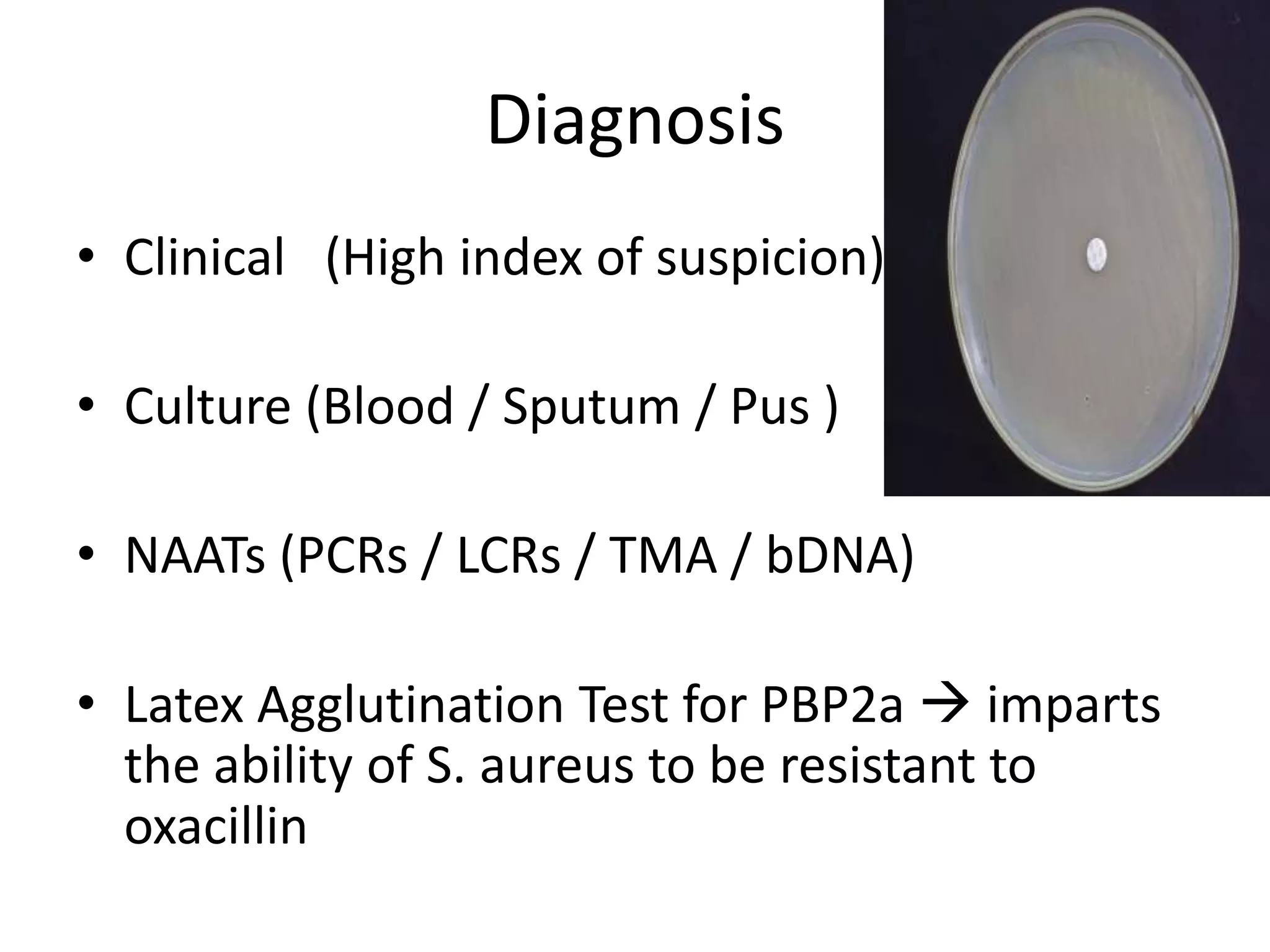
• Culture (Blood / Sputum / Pus )
• NAATs (PCRs / LCRs / TMA / bDNA)
• Latex Agglutination Test for PBP2a  imparts
the ability of S. aureus to be resistant to
oxacillin
Treatment
CA-MRSA > HA-MRSA (S)
• SULPHA DRUGS (SEPTRAN)
• TETRACYCLINES (DOXYCYCLINES)
• LINCOSAMIDES (CLINDAMYCIN)
• GLYCOPEPTIDES (VANCOMYCIN / TEICOPLANIN)  VISA
• OXAZOLIDINONES (LINEZOLID)
• PRISTINAMYCINS (QUINPRISTIN+DALFOPRISTIN)
• LIPOPEPTIDES (DAPTOMYCIN)
• GLYCYLCLINES (TIGICYCLINE)
RESEARCH / EXPERIMENTAL
• Antibiotics under trial :
TELAVANCIN, DALBAVANCIN,
CEFTAROLENE, CEFTABAPROLENE,
TOREZOLID, NEMONOXACIN
• PLATENSIMYCIN , a natural antibiotic, under
investigation 2006 ; from Streptomyces)
• Medical grade Honey viz ULMO 90 / MANUKA 25
tried in 2010 (activity of hydrogen peroxide,
methylglyoxal, and a novel compound named Bee
Defensin-1)
• Ocean-dwelling living sponges produce compounds 
make MRSA more susceptible to antibiotics
• Semi-toxic fungi/mushrooms excrete broad spectrum
antibiotics
– The psychedelic mushroom Psilocybe Semilanteacae has
been shown to strongly inhibit the growth of
Staphylococcus aureus
• Cannabinoids
– Cannabidiol (CBD) Tetrahydrocannabinol (THC)
– Cannabinol (CBN), Cannabichromene (CBC)
• Phage therapy
• MDT
Prevention
• Screening (Nasal Cultures)
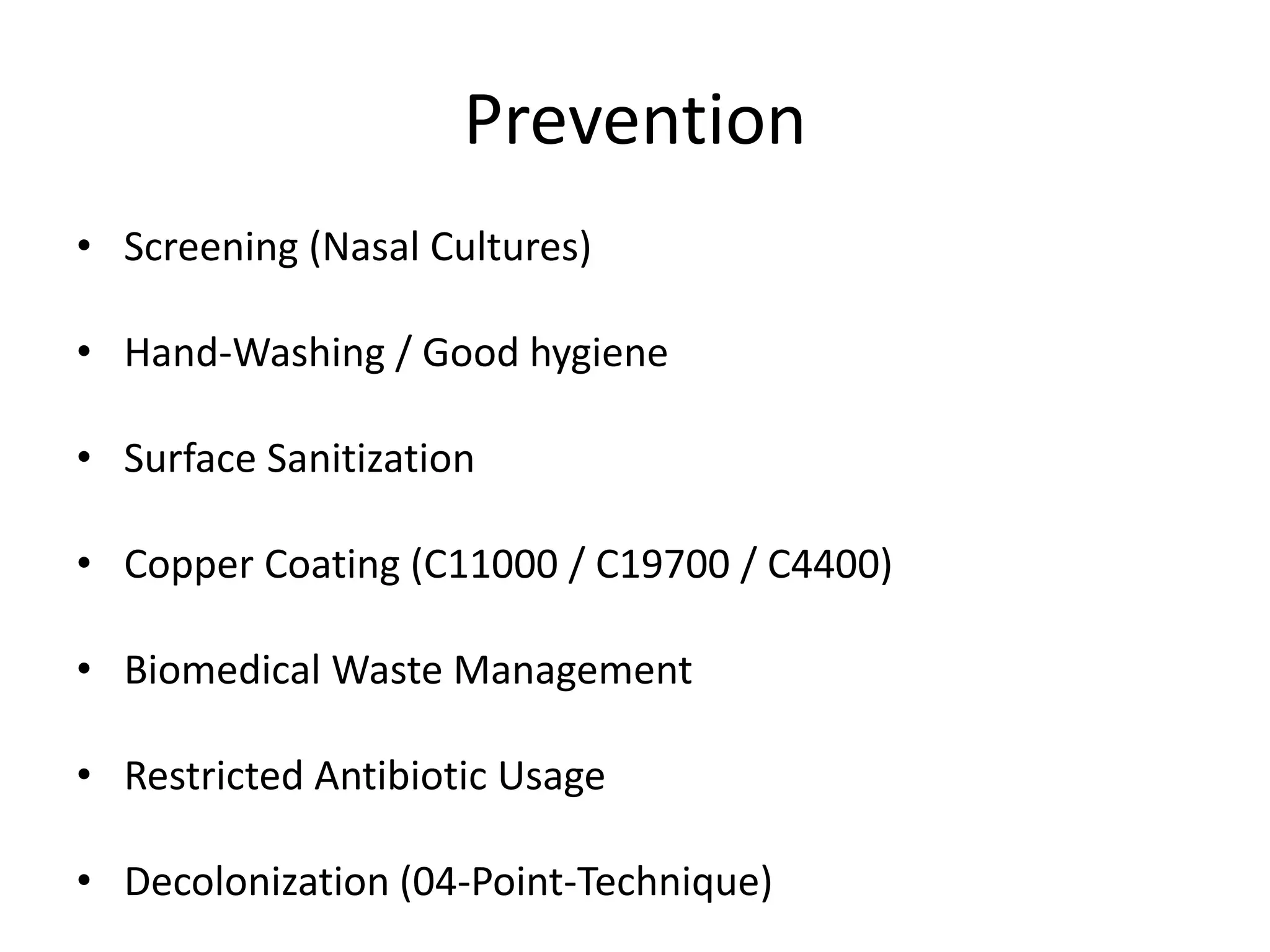
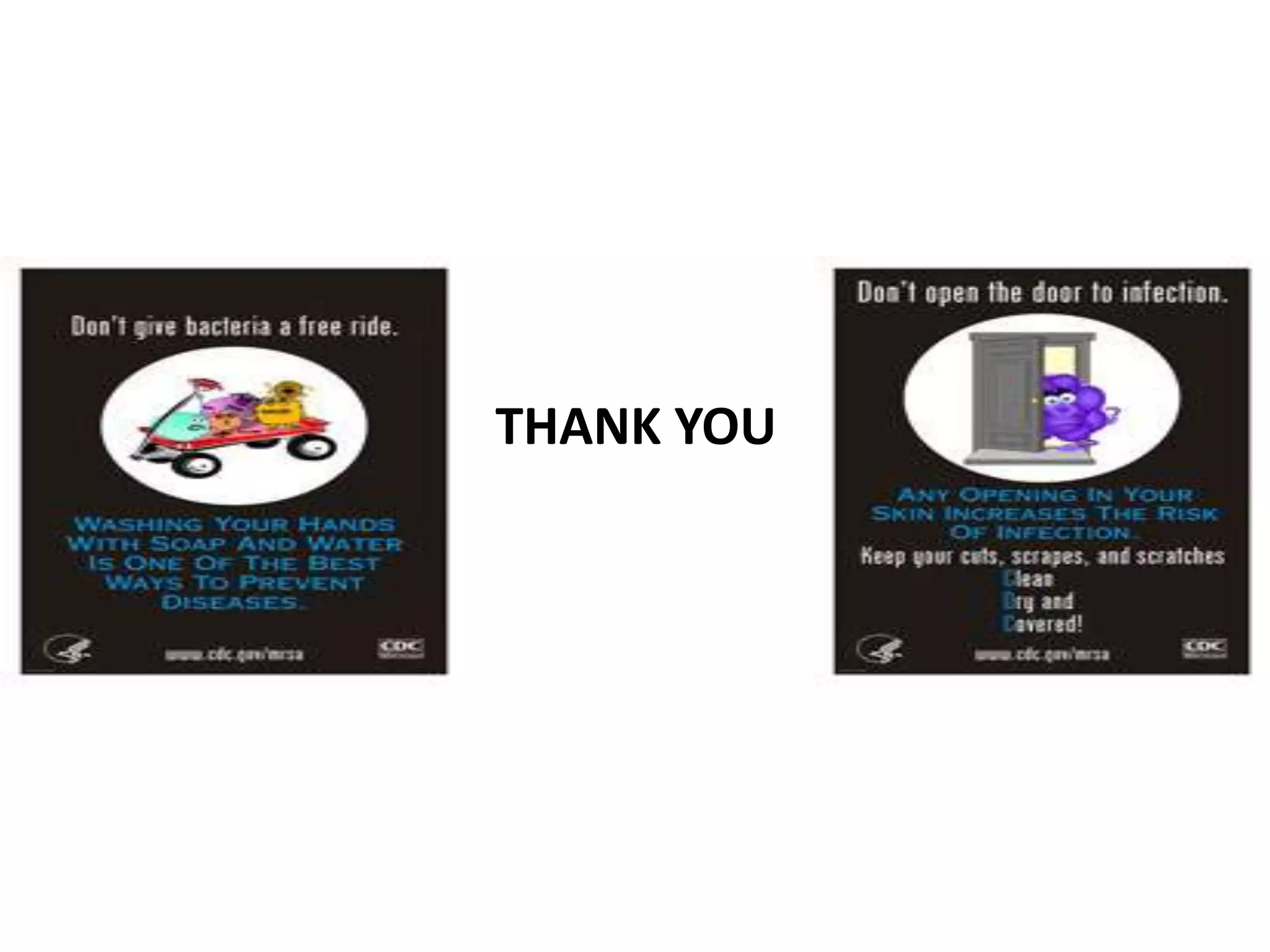
• Hand-Washing / Good hygiene
• Surface Sanitization
• Copper Coating (C11000 / C19700 / C4400)
• Biomedical Waste Management
• Restricted Antibiotic Usage
• Decolonization (04-Point-Technique)
THANK YOU

Mrsa by aseem

  • 1.
  • 2.
    Introduction • Any strainof S. Aureus that has developed resistance to Beta- Lactam Antibiotics • Natural Selection • No change in Virulence ; ‘Difficult-to-treat’ • HA vs CA • Known since 1963 ; Outbreak investigation by CDC in LA County Prison in 2001 • Commonly colonizes Ant Nares, Respiratory Tract, Urinary Tract, open wounds, IV catheters
  • 3.
    Genetic Basis forResistance Acquisition of Extrachromosomal Genetic Elements via Plasmids, TGEs in MSSA of : – mecA (Resistance Genes for Transpeptidases) – SCCmec (Genomic Island / Staphylococcal Cassette Chromosome) – ACME (Virulence factor / Arginine Catabolic Mobile Element) – Strains : EMRSA15/16 & ST5/250 MRSA I-IV
  • 4.
    Predisposition • Hospitals (Nosocomial) –Open wounds – Invasive devices – Immunocompromised indls – Diabetics – Institutionalization • Prisons • Old-age homes / Orphanages • Children • Contact & Team Sports (‘Turf Burns’ / Shared Eq) • IVDUs • Unregulated Antibiotic usage (esp Quinolones) • Veterinarians, livestock handlers (CC398 var), and pet owners
  • 5.
    Clinical Features • PrecedingProdromal / Constitutional symptoms • Small Papules / Superficial Folliculitis / Impetigo resembling IBR  painful , deeper lesions viz Carbunculosis, Abscess, Cellulitis • 75% CA-MRSA + HA-MRSA - skin and soft tissue • 25% highly virulent strains predominantly can cause Septicemia, TSS, Necrotizing Fasciitis, Pyomyositis, Necrotizing Pneumonia, IE, Osteomyelitis, Septic Arthritis • Toxin-mediated (Panton-Van Leukocidin PVL, Hemolysin Gamma Hig, Phenol Soluble Modulin PSM)
  • 6.
  • 7.
  • 8.
  • 9.
    Diagnosis • Clinical (Highindex of suspicion) • Culture (Blood / Sputum / Pus ) • NAATs (PCRs / LCRs / TMA / bDNA) • Latex Agglutination Test for PBP2a  imparts the ability of S. aureus to be resistant to oxacillin
  • 10.
    Treatment CA-MRSA > HA-MRSA(S) • SULPHA DRUGS (SEPTRAN) • TETRACYCLINES (DOXYCYCLINES) • LINCOSAMIDES (CLINDAMYCIN) • GLYCOPEPTIDES (VANCOMYCIN / TEICOPLANIN)  VISA • OXAZOLIDINONES (LINEZOLID) • PRISTINAMYCINS (QUINPRISTIN+DALFOPRISTIN) • LIPOPEPTIDES (DAPTOMYCIN) • GLYCYLCLINES (TIGICYCLINE)
  • 11.
    RESEARCH / EXPERIMENTAL •Antibiotics under trial : TELAVANCIN, DALBAVANCIN, CEFTAROLENE, CEFTABAPROLENE, TOREZOLID, NEMONOXACIN • PLATENSIMYCIN , a natural antibiotic, under investigation 2006 ; from Streptomyces) • Medical grade Honey viz ULMO 90 / MANUKA 25 tried in 2010 (activity of hydrogen peroxide, methylglyoxal, and a novel compound named Bee Defensin-1)
  • 12.
    • Ocean-dwelling livingsponges produce compounds  make MRSA more susceptible to antibiotics • Semi-toxic fungi/mushrooms excrete broad spectrum antibiotics – The psychedelic mushroom Psilocybe Semilanteacae has been shown to strongly inhibit the growth of Staphylococcus aureus • Cannabinoids – Cannabidiol (CBD) Tetrahydrocannabinol (THC) – Cannabinol (CBN), Cannabichromene (CBC) • Phage therapy • MDT
  • 13.
    Prevention • Screening (NasalCultures) • Hand-Washing / Good hygiene • Surface Sanitization • Copper Coating (C11000 / C19700 / C4400) • Biomedical Waste Management • Restricted Antibiotic Usage • Decolonization (04-Point-Technique)
  • 14.