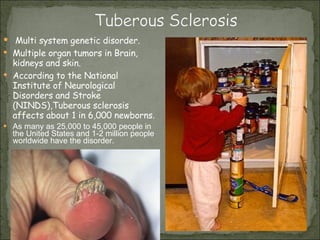
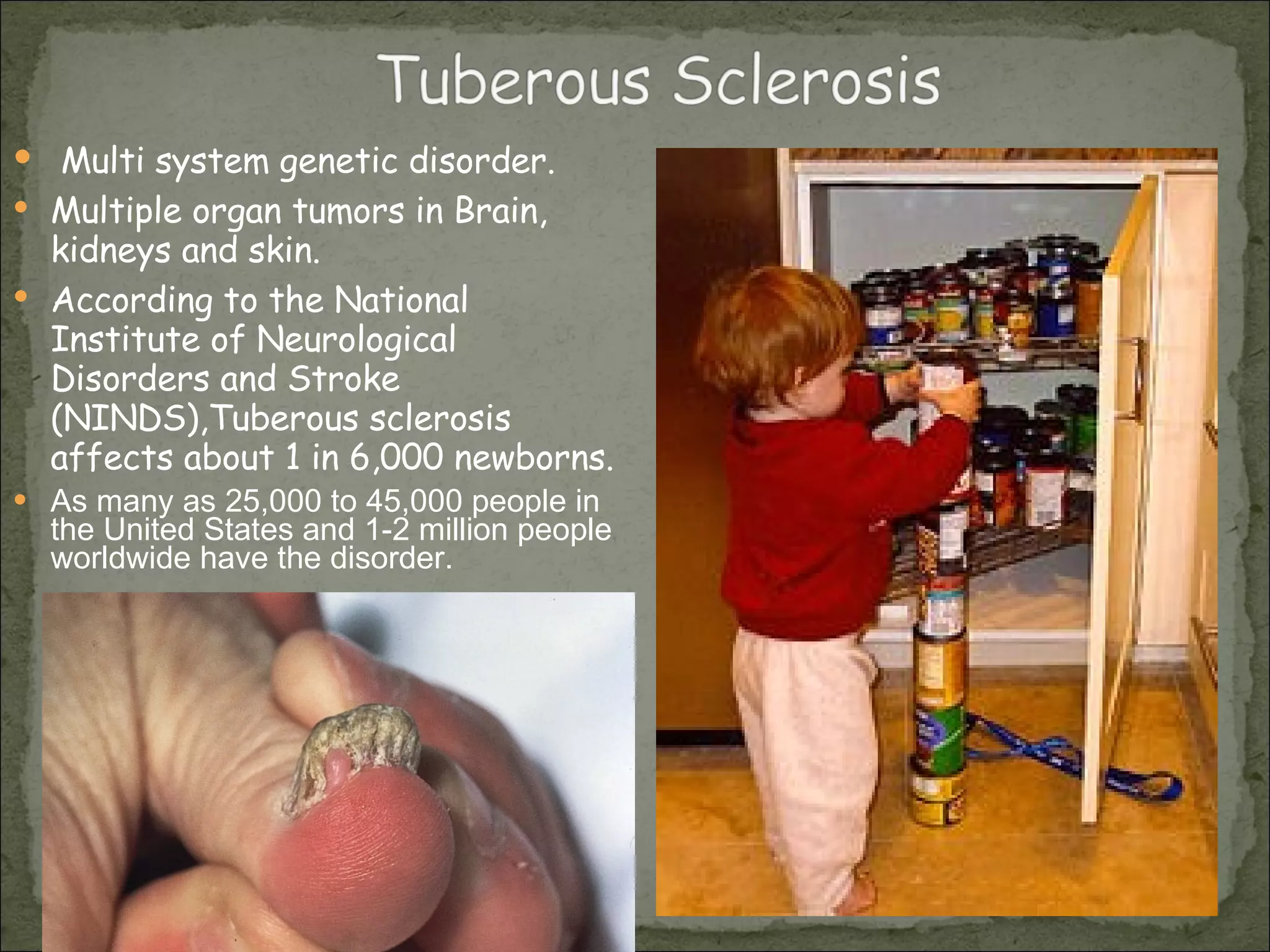
Multi system genetic disorder. Multiple organ tumors in Brain, kidneys and skin.  According to the National Institute of Neurological Disorders and Stroke (NINDS),Tuberous sclerosis affects about 1 in 6,000 newborns.  As many as 25,000 to 45,000 people in the United States and 1-2 million people worldwide have the disorder.
Symptoms include: Seizures Developmental Delay Skin abnormalities Diseases in lungs, kidneys Autism Benign tumors in the organs. Seizures: 70% Learning disability, Autism etc. : 40% Eyes: Almost 50% Kidneys : 80% Heart: 50-60% [tumor called rhabdomyomas]
Tumor Suppressor Genes: TSC1 [Tuberous sclerosis Complex 1] TSC 2[Tuberous Sclerosis Complex 2] These genes usually are activated when there is a tumorous  growth. Act as a complex suppressing the tumor growth by acting on mTOR. Code for proteins  that repress cell cycle or even induce apoptosis. TSC1 codes for a 130 kDa protein called “ hamartin ” and TSC2 codes for the 200 kDa protein known as “ tuberin ”.
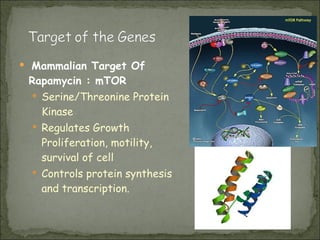
Mammalian Target Of Rapamycin : mTOR Serine/Threonine Protein Kinase Regulates Growth Proliferation, motility, survival of cell Controls protein synthesis and transcription.
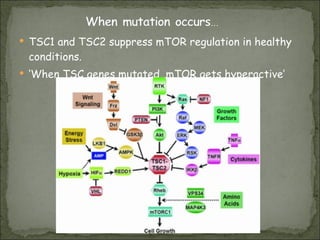
TSC1 and TSC2 suppress mTOR regulation in healthy conditions. ‘ When TSC genes mutated, mTOR gets hyperactive’
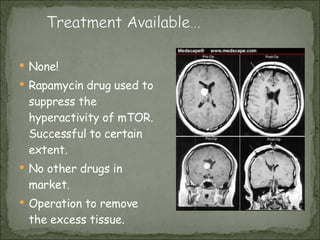
None! Rapamycin drug used to suppress the hyperactivity of mTOR. Successful to certain extent. No other drugs in market. Operation to remove the excess tissue.
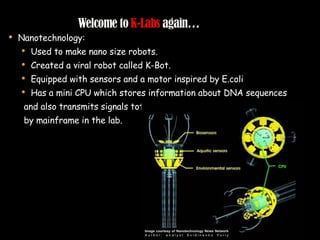
Nanotechnology: Used to make nano size robots. Created a viral robot called K-Bot. Equipped with sensors and a motor inspired by E.coli Has a mini CPU which stores information about DNA sequences and also transmits signals totarget molecules and is controlled by mainframe in the lab.
Administered along with the viruses containing the healthy TSC genes – K-Virus  -K-Virus acts like Gene therapy! -K-Bot attaches to the cell and “tower” protrudes into the nucleus interacting with DNA. -Identifies the TSC gene [mutated sequence- compares with the database] -Cleaves and activates DNA Pol and ligase. -Reconstructs DNA. Moves onto other cell.
 

Tuberous SClerosis

  • 1.
    Multi system geneticdisorder. Multiple organ tumors in Brain, kidneys and skin. According to the National Institute of Neurological Disorders and Stroke (NINDS),Tuberous sclerosis affects about 1 in 6,000 newborns. As many as 25,000 to 45,000 people in the United States and 1-2 million people worldwide have the disorder.
  • 2.
    Symptoms include: SeizuresDevelopmental Delay Skin abnormalities Diseases in lungs, kidneys Autism Benign tumors in the organs. Seizures: 70% Learning disability, Autism etc. : 40% Eyes: Almost 50% Kidneys : 80% Heart: 50-60% [tumor called rhabdomyomas]
  • 3.
    Tumor Suppressor Genes:TSC1 [Tuberous sclerosis Complex 1] TSC 2[Tuberous Sclerosis Complex 2] These genes usually are activated when there is a tumorous growth. Act as a complex suppressing the tumor growth by acting on mTOR. Code for proteins that repress cell cycle or even induce apoptosis. TSC1 codes for a 130 kDa protein called “ hamartin ” and TSC2 codes for the 200 kDa protein known as “ tuberin ”.
  • 4.
    Mammalian Target OfRapamycin : mTOR Serine/Threonine Protein Kinase Regulates Growth Proliferation, motility, survival of cell Controls protein synthesis and transcription.
  • 5.
    TSC1 and TSC2suppress mTOR regulation in healthy conditions. ‘ When TSC genes mutated, mTOR gets hyperactive’
  • 6.
    None! Rapamycin drugused to suppress the hyperactivity of mTOR. Successful to certain extent. No other drugs in market. Operation to remove the excess tissue.
  • 7.
    Nanotechnology: Used tomake nano size robots. Created a viral robot called K-Bot. Equipped with sensors and a motor inspired by E.coli Has a mini CPU which stores information about DNA sequences and also transmits signals totarget molecules and is controlled by mainframe in the lab.
  • 8.
    Administered along withthe viruses containing the healthy TSC genes – K-Virus -K-Virus acts like Gene therapy! -K-Bot attaches to the cell and “tower” protrudes into the nucleus interacting with DNA. -Identifies the TSC gene [mutated sequence- compares with the database] -Cleaves and activates DNA Pol and ligase. -Reconstructs DNA. Moves onto other cell.
  • 9.