YAP CHOE HOONG
[Student ID : 0323161]
[Effective Public
Communication]
[FNBEMarch2015]
Historical Background of
Japan
Teachings and ideas
were taken from
China from the 6th
to 9th century
Historical Background
-Japanese Architecture-
• Asuka and Nara period of
architecture -period of
blossoming art and culture in
Japan.
• The Heian period (9th
century) - continuation of this
and also the period where
the Chinese influence began
as one of the premier
architects of the time learned
the design in China and brought
his ideas back to Japan.
• Wooden temples were rising in
greater numbers - different
Historical background of Kyoto
-Japanese Architecture-
• Nara was the first centralized
capital of the nation
established in the late 8th
century.
• The layout of the capital city
was influenced by Chang’an,
the capital of China during that
time.
• The Nara period was the last
time that political power was
held by the emperor. The
following Heian period was
characterized by an affluent
aristocracy with eccentric
social customs, and the
Strucure and layout of
Japanese Architecture
• Japanese exteriors and
interiors stress on space
and form, with
decoration and
furnishing limited to
essentials.
* The forms of Japanese
architecture and furniture
were also a factor in the
early development of the
Structure and layout
• Japanese architecture is a
blend of Chinese influences
and Japanese innovation.
• The traditional methods of
Japanese architecture are
very based on Chinese
methods of timber
construction.
• Surviving structures from
the Nara period were found
resembling Chinese
architecture.
• Japanese architecture, like
other arts, is more
preoccupied with form
• These were very different
from the medieval castles
of Europe though-they were
built in the style of the
shrines with the wooden
powers and out cropping
roofs.
• They were meant to house
feudal lords and their
soldiers, while still
Structure and layout
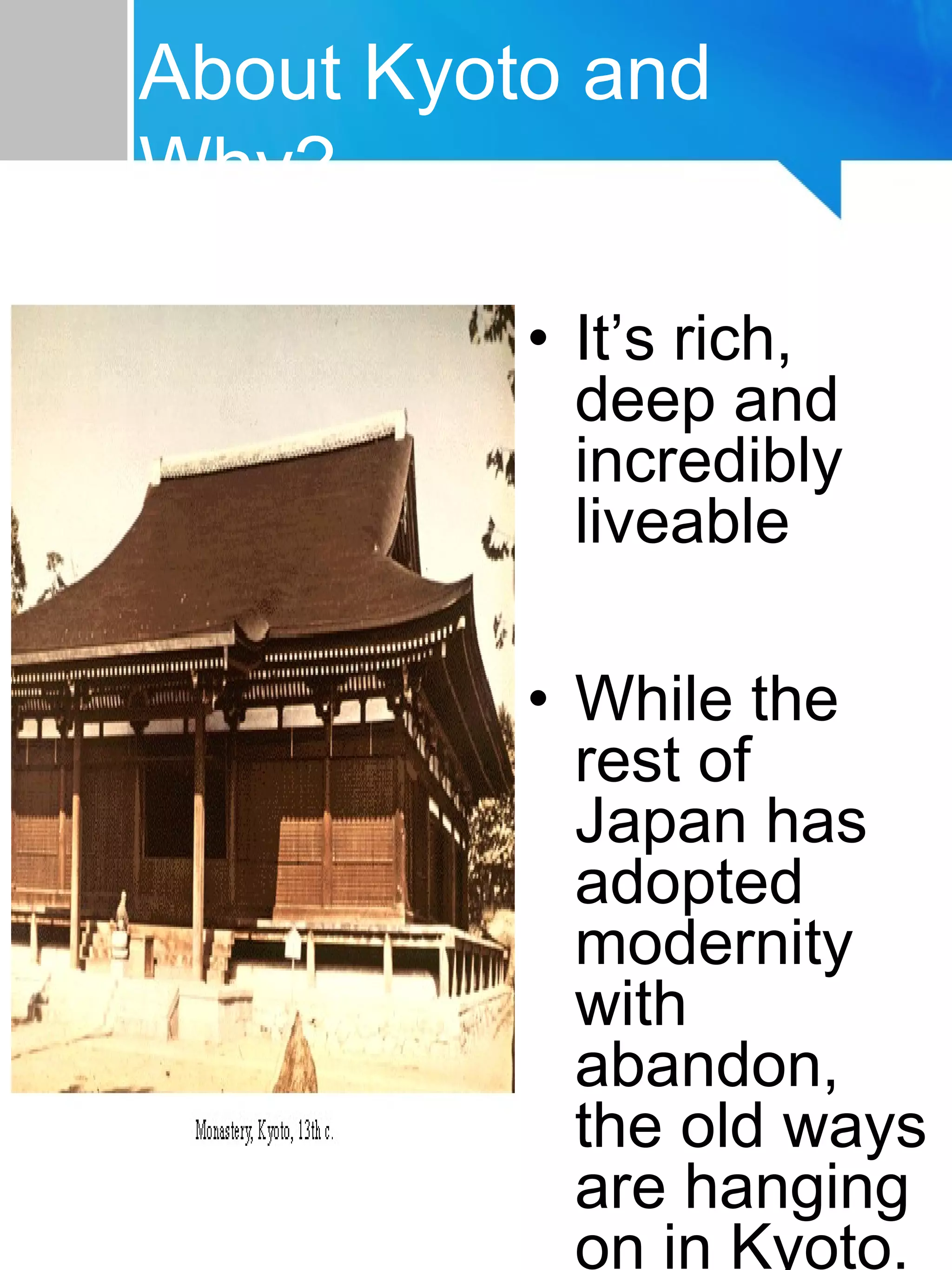
About Kyoto
• It’s rich,
deep and
incredibly
liveable
• While the
rest of
Japan has
adopted
modernity
with
abandon,
the old ways
are hanging
on in Kyoto.
About Kyoto and
Why?
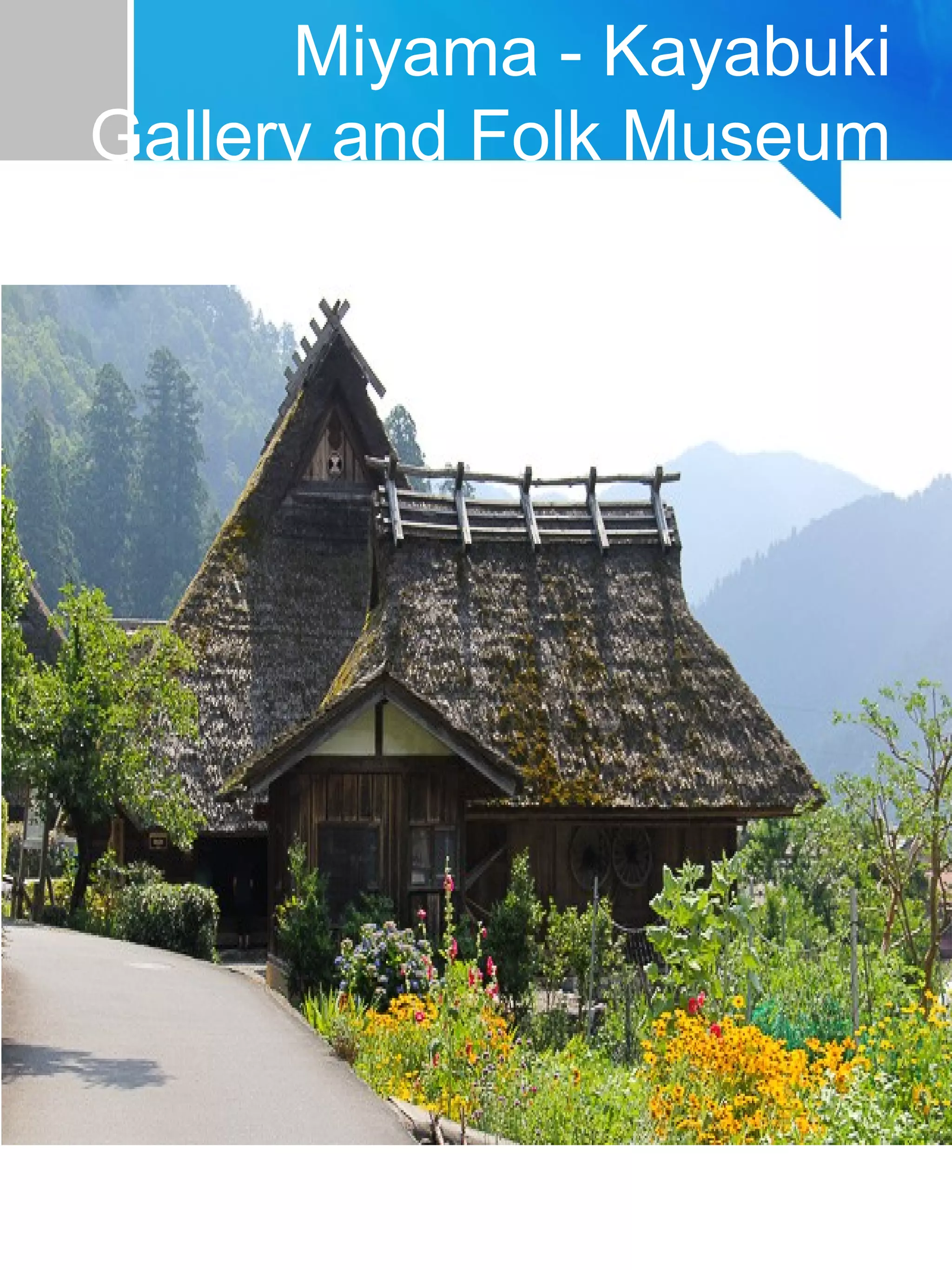
Miyama - Kayabuki
Gallery and Folk Museum
Miyama, Kyoto
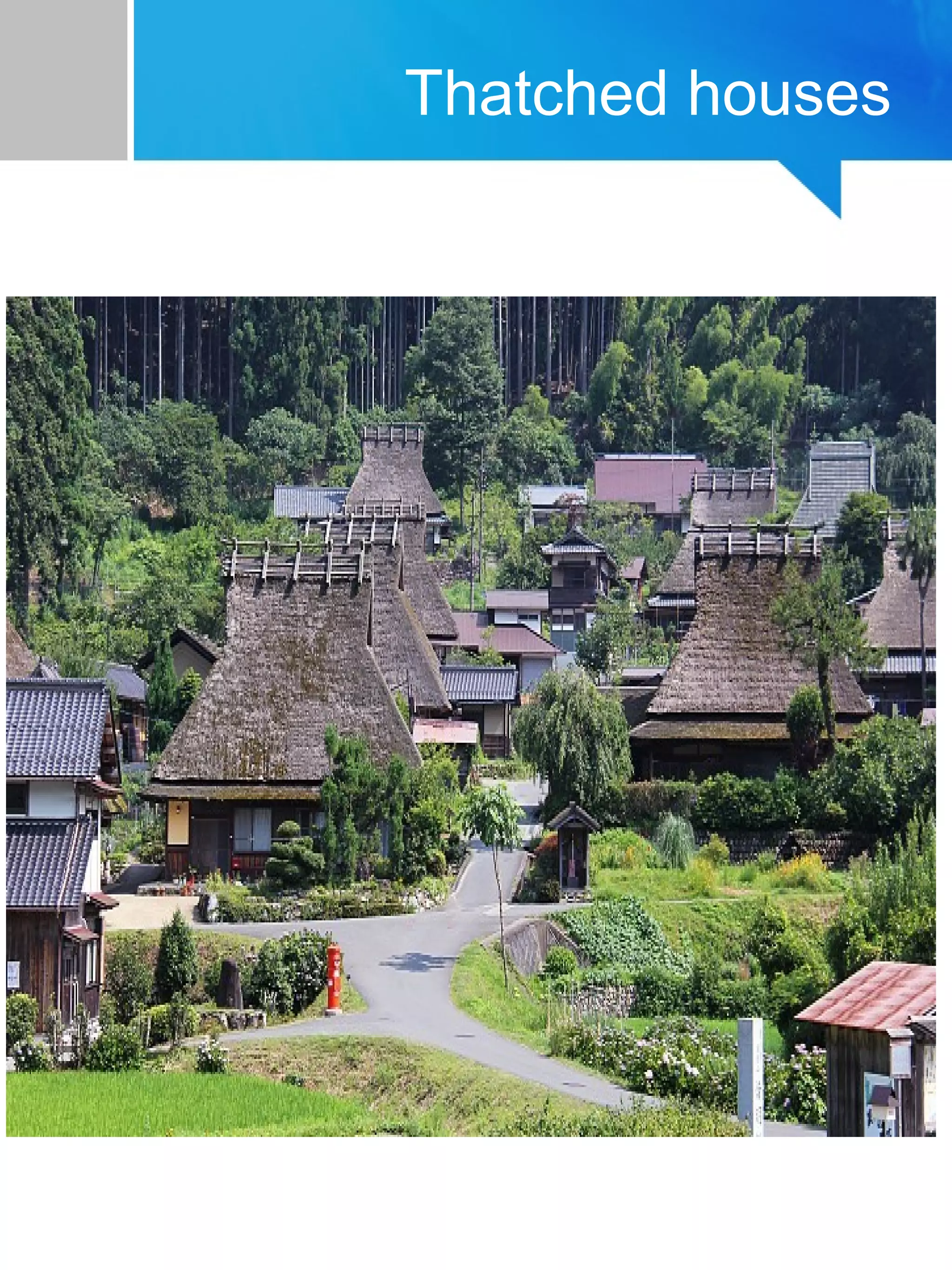
• It was where the old thatched
roof houses were scattered
along Miyama River,
• This part of the town is called
"Kayabuki no Sato"
(Thatched Roof Village)
• Unlike any other historic
towns and districts
around the country, the
majority of Miyama's
old houses survive
as residential
dwellings
• Creates a very nostalgic
atmosphere to the area,
and gives visitors an
opportunity to
experience the
Miyama, Kyoto
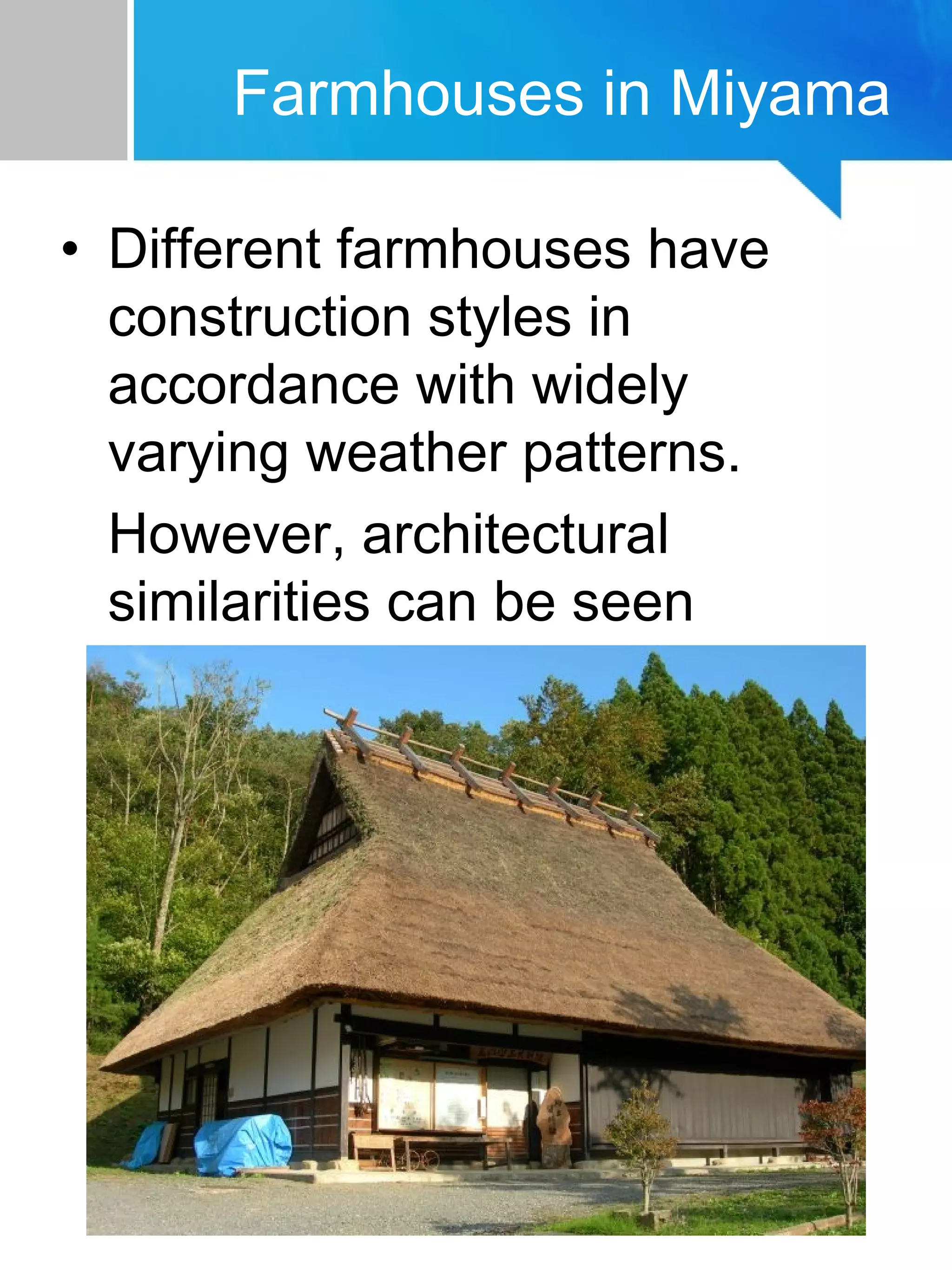
Farmhouses in Miyama
• Different farmhouses have
construction styles in
accordance with widely
varying weather patterns.
However, architectural
similarities can be seen
between dwellings across the
country.
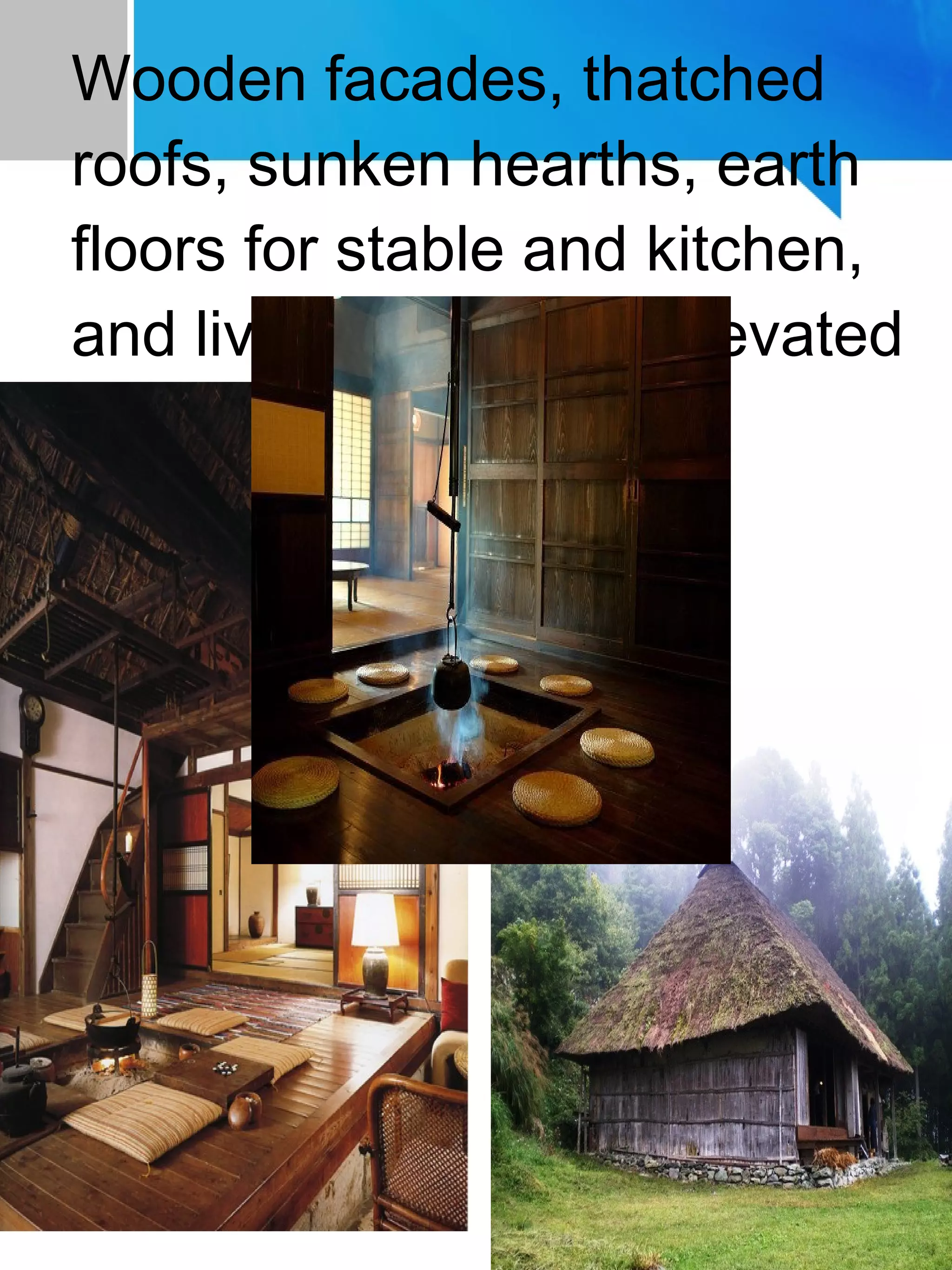
Wooden facades, thatched
roofs, sunken hearths, earth
floors for stable and kitchen,
and living spaces on elevated
wooden floors
Thatched houses
• During the period of
widespread rice farming, the
result was the appearance of
permanent settlements with
bigger populations.
• Communities became
organized in villages as a
whole, with areas demarcated
for granaries, storehouses and
living quarters.
• Houses, especially the
Structure and Layout
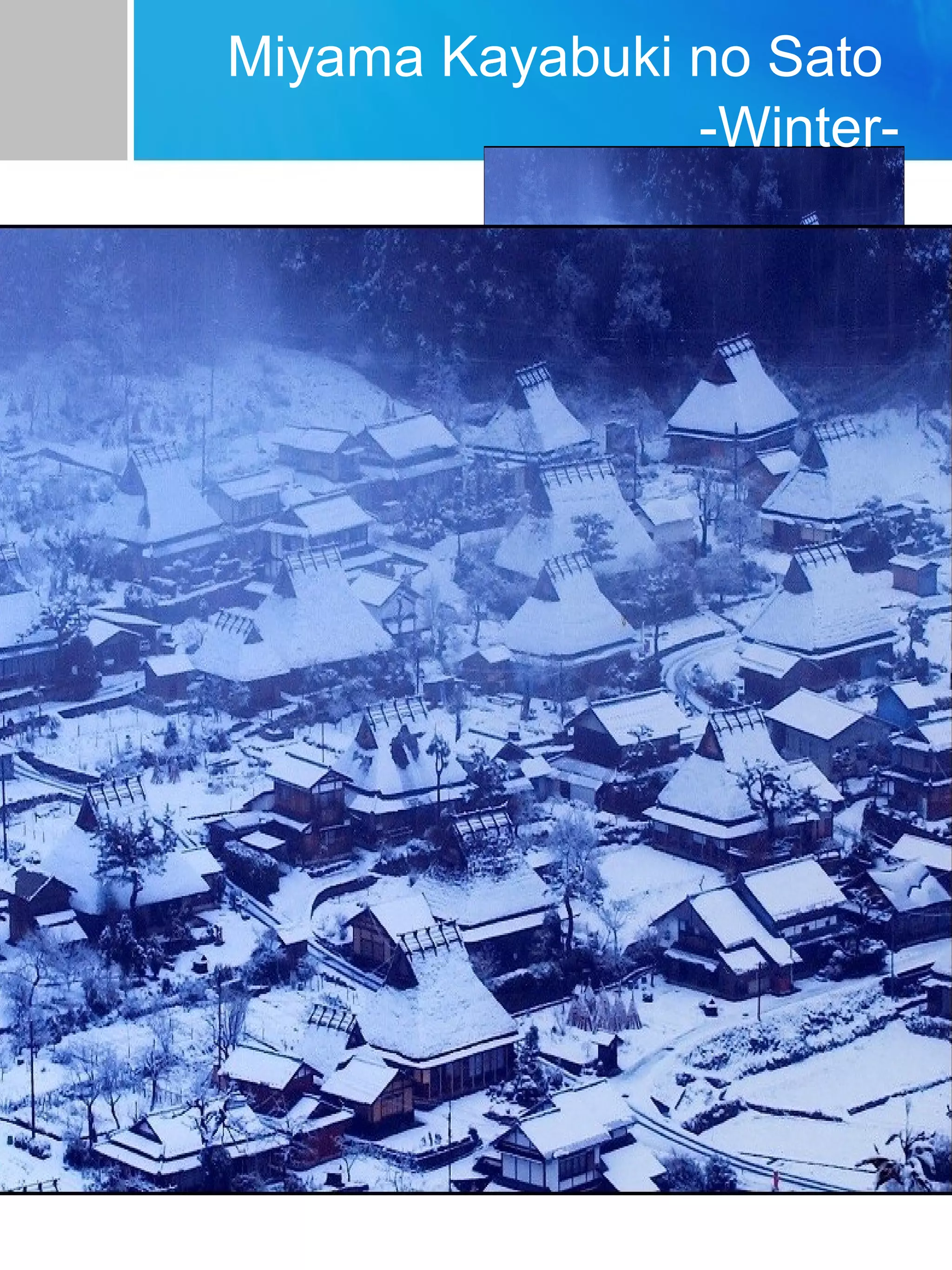
Miyama Kayabuki no Sato
-Winter-
Structure and Layout
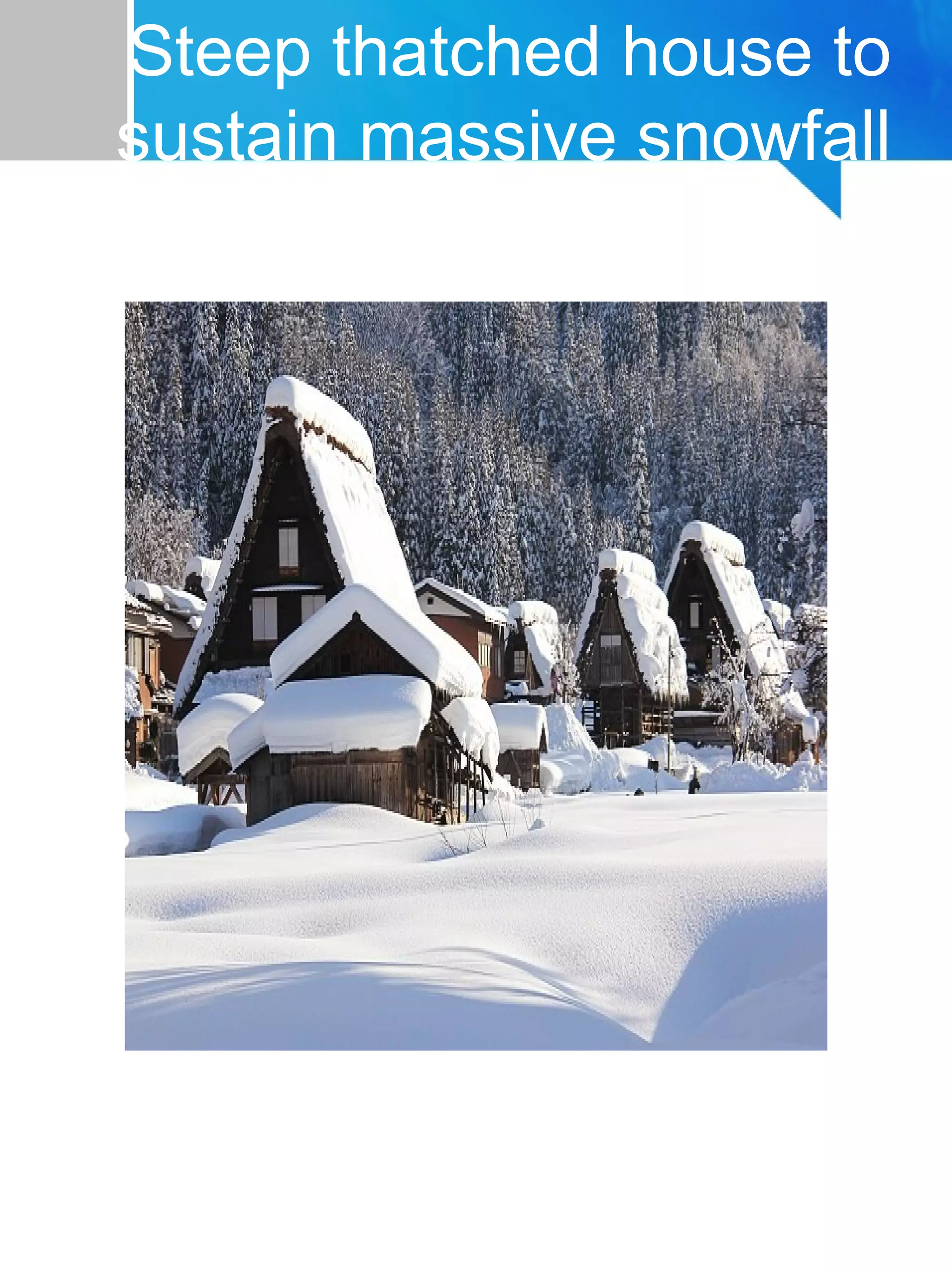
• Gassho-zukuri means
"constructed like hands in
prayer", as the farmhouses'
steep thatched roofs
resemble the hands of
Buddhist monks pressed
together in prayer.
• The architectural style
developed over many
generations and is
designed to withstand
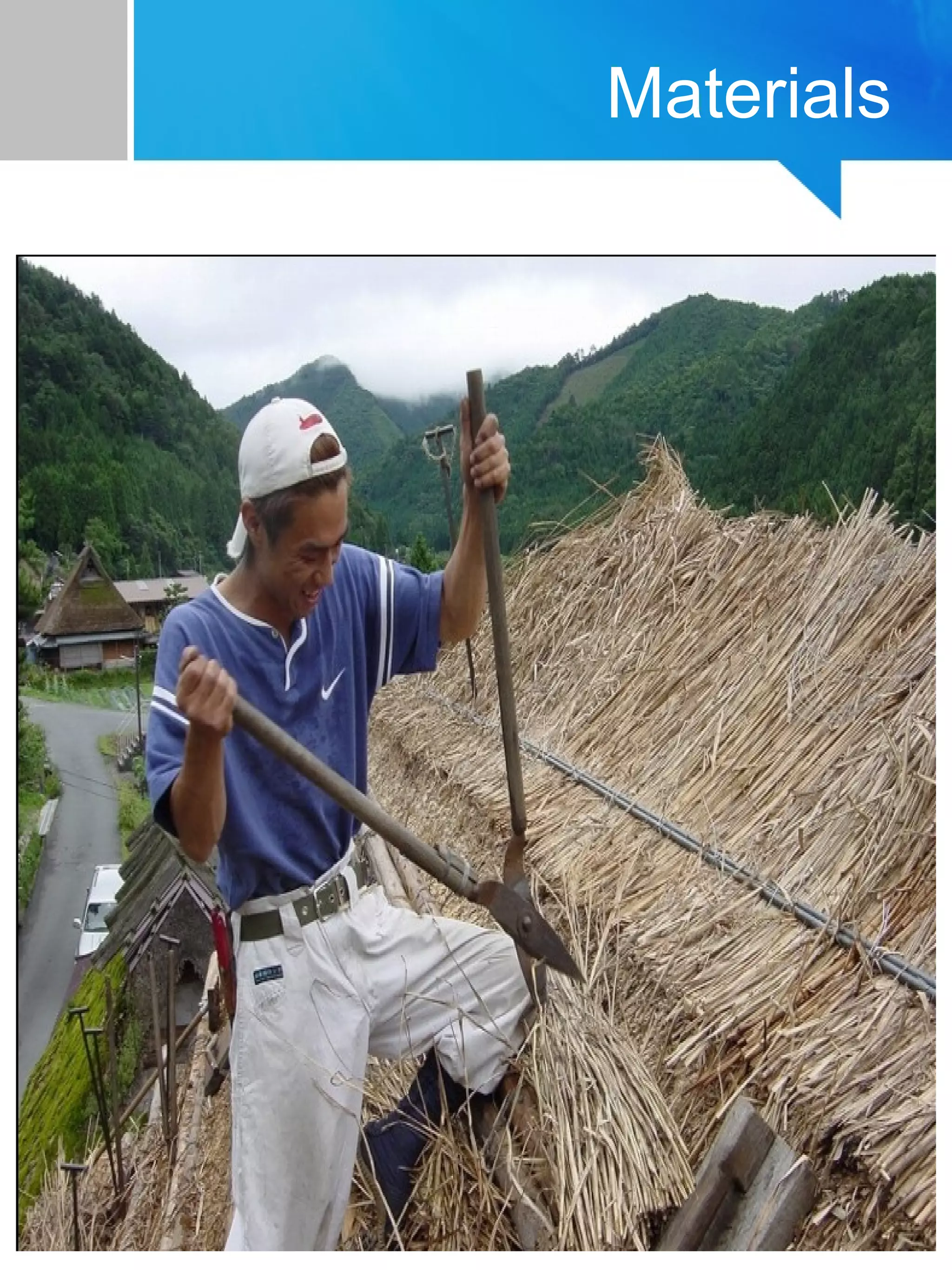
• The roofs, made without nails,
provided a large attic space
used for cultivating
silkworms.
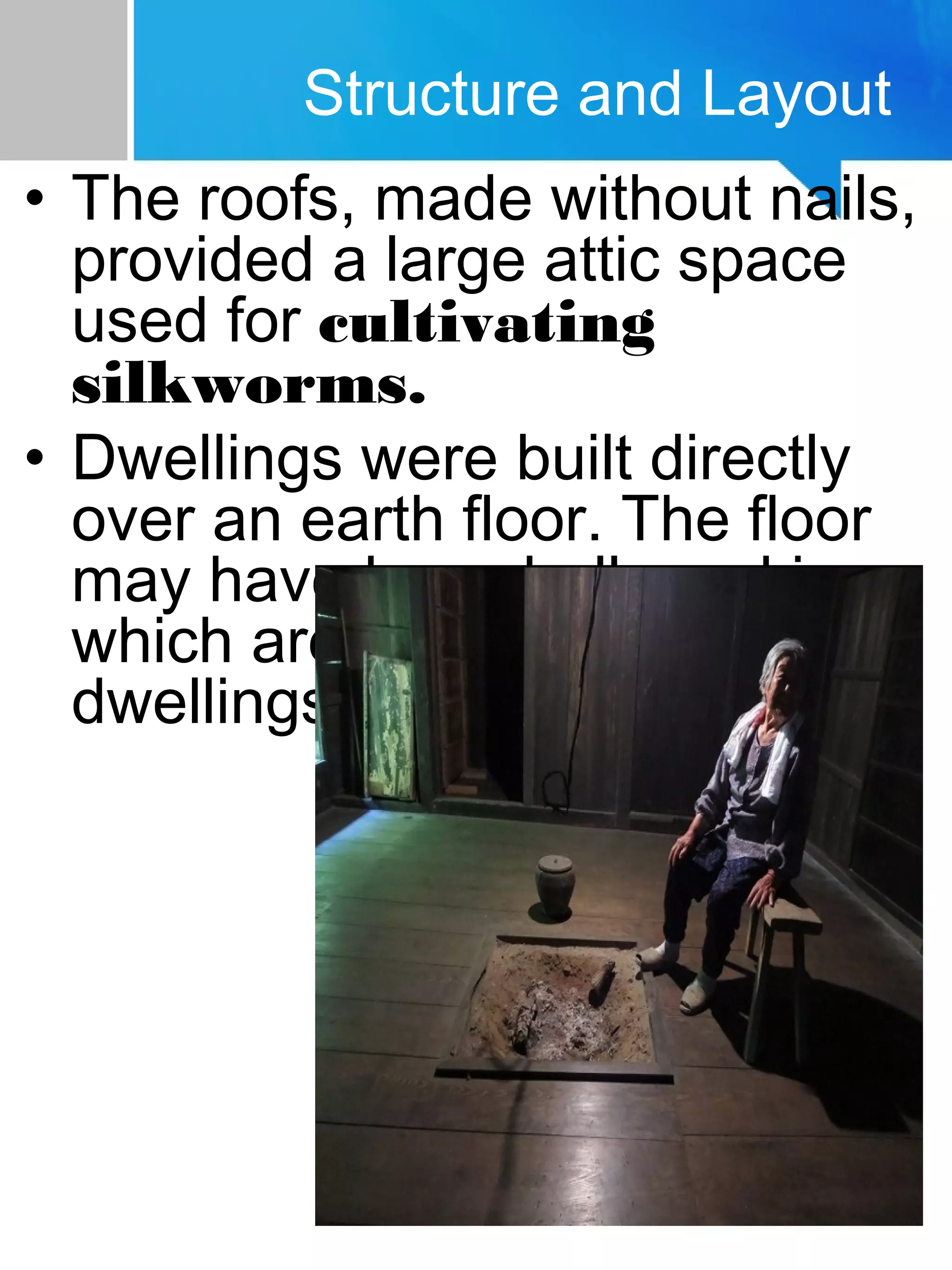
• Dwellings were built directly
over an earth floor. The floor
may have been hollowed in,
which are often called "pit
dwellings"
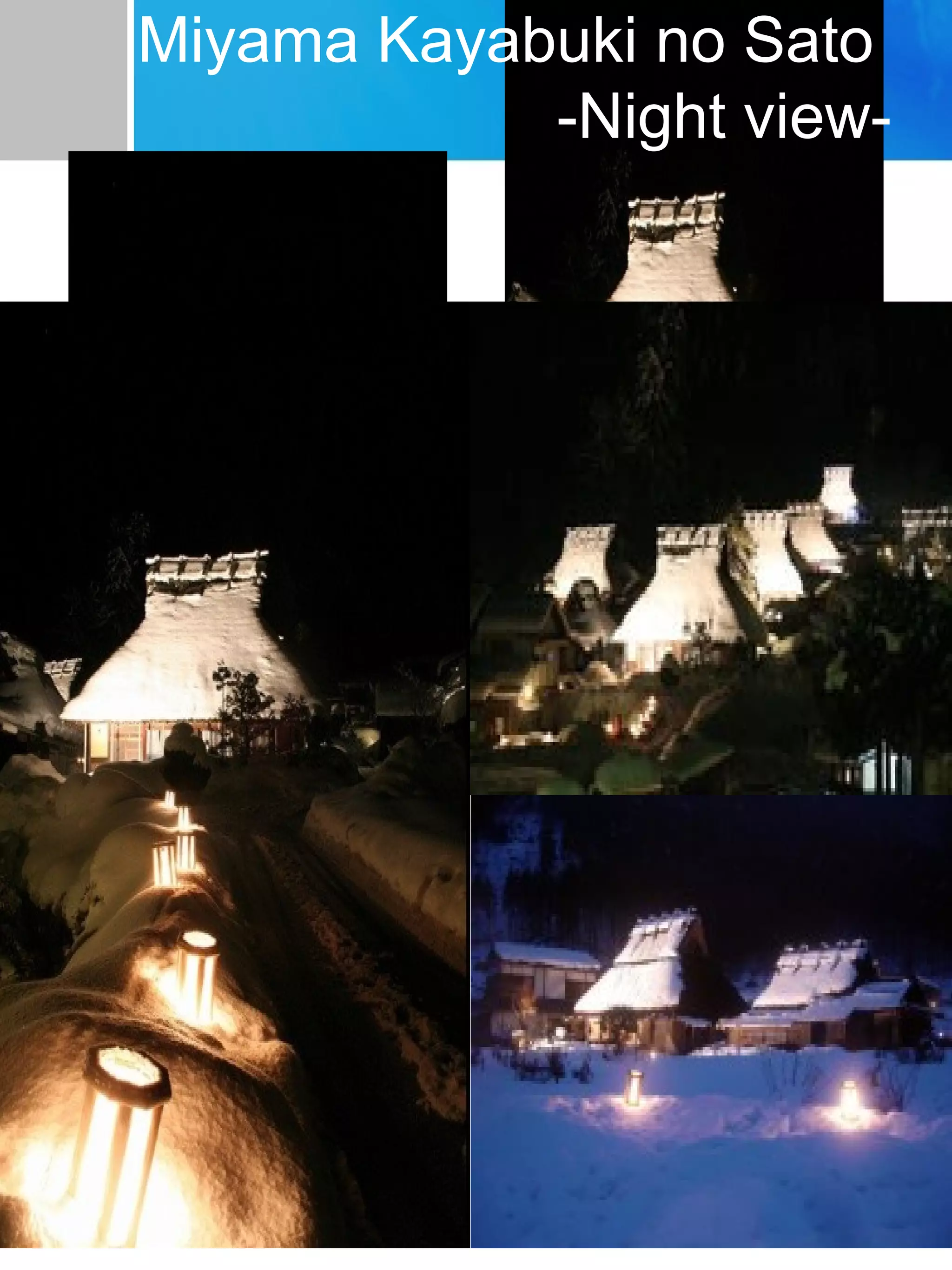
Structure and Layout
Miyama Kayabuki no Sato
-Night view-
Materials
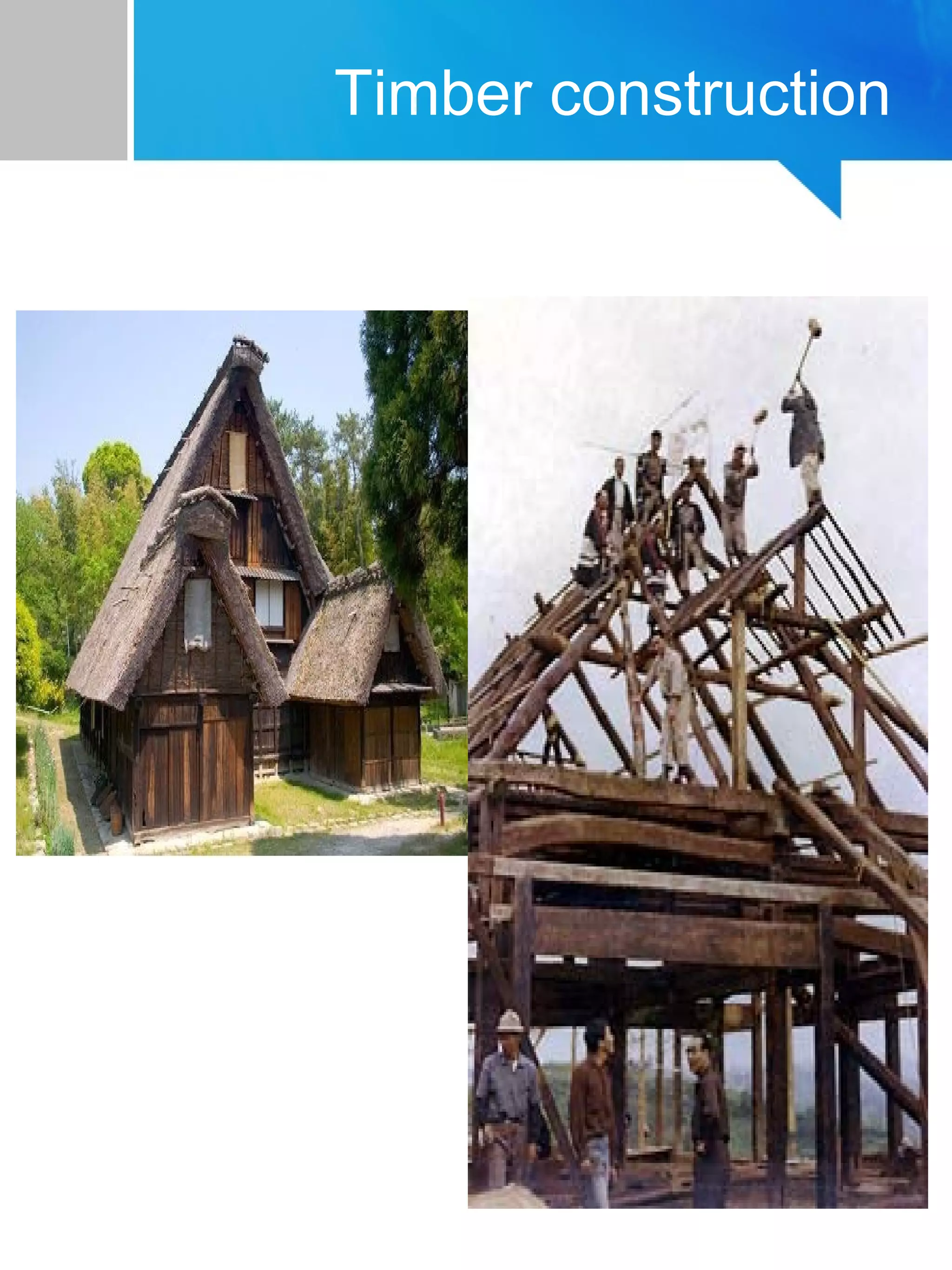
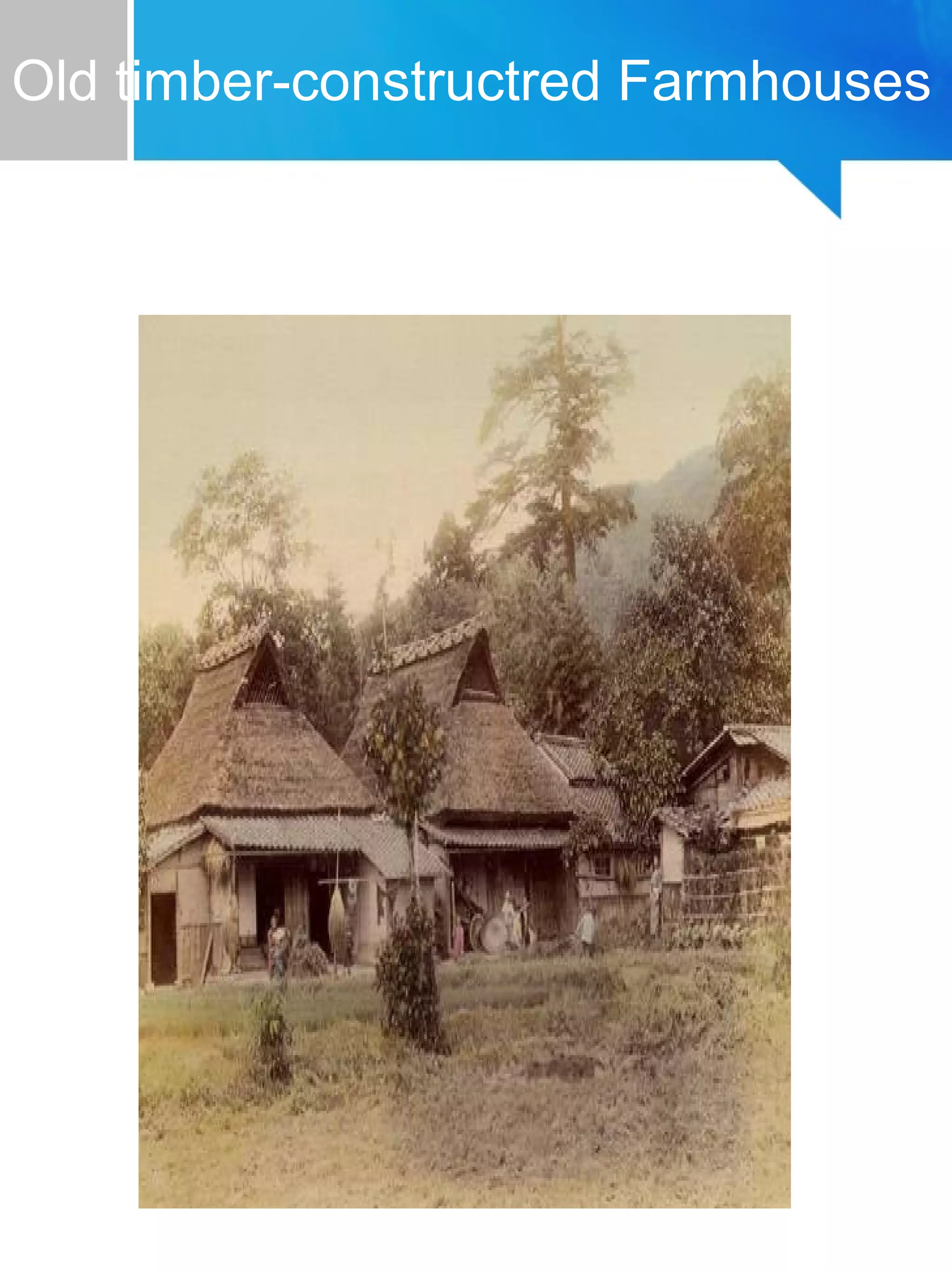
Timber construction
Old timber-constructred Farmhouses
• Architects in Japan were also
at a point influenced by the
Koreans; buildings were
made from stone and
timber and though most of
these early structures are long
gone, they live on in
manuscripts and paintings.
• However, wood is the most
important material in
Japanese architecture
because the volcanic nature
Materials
Steep thatched house to
sustain massive snowfall
Ornaments
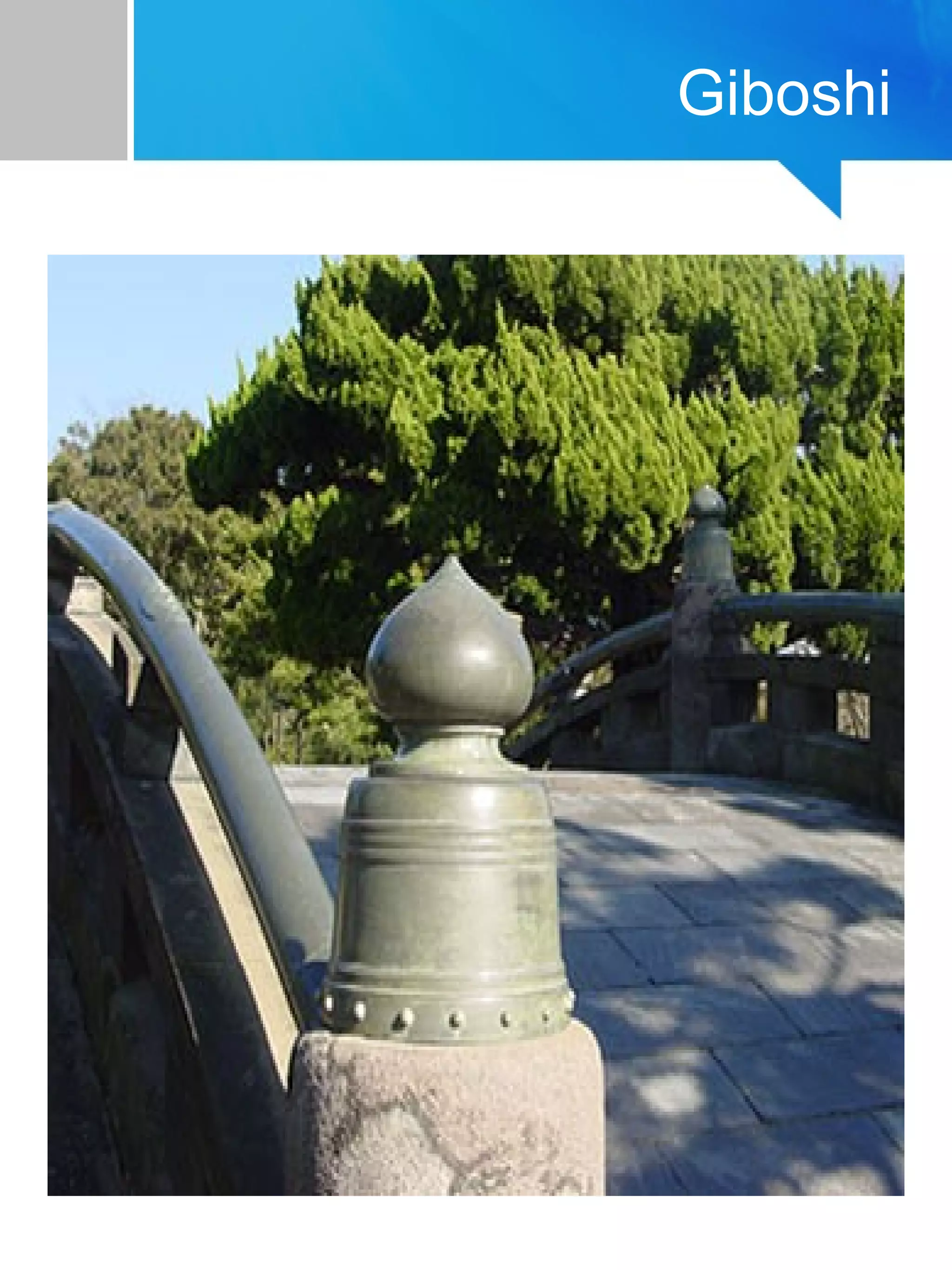
• Giboshi is a kind of
ornament used on holder
Japanese bridges.
• Giboshi bridge ornaments
are said to resemble the
bulbous flower of the onion.
• The ends of giboshi are
bulbous and come to a
point, resembling the onion
domes in Western culture.
• They are often found in
older Japanese bridges,
• Most commonly made of
bronze, they are also made of
wood, tile, brass and iron
• The giboshi consists of a
cylindrical column, broken by
horizontal bands. Above the
column is a rounded base,
supporting what is called the
jewel pedestal
• The jewel pedestal has a narrow
neck
Ornaments
Giboshi
• Japan has an interesting
variety of buildings that exhibit
different architectural forms
from humble farm houses to
grand imperial palaces
• Buildings were traditionally
built in wood - because of
the abundance of timber
and due to the material's
relatively good resistance to
earthquakes
• Houses were then built fire-
insulated with earthen
Architecture of Japanese
Traditional Dwellings
• Unfortunately, many
buildings were lost through
the years to natural
disasters, the humid climate,
fires and wars.
• Efforts have been made to
preserve some
monumental buildings
including temples, shrines,
palaces and castles, of
which many are very old
and require periodic
renovations.
• Furthermore, efforts are
Architecture of Japanese
Traditional Dwellings
History, Materials, Structure & Layout
-Influences of Japanese Architecture-
• After World War II, Japan
architecture was rapidly
modernized with Western's
creation and influence,
leading to some truly
inspiring buildings of metal
and concrete like the
Tokyo Metropolitan
Government Building.
• Japanese architectural
design is unique from the
architecture of the west,
partially because of the
materials that were
References
• http://www.country-data.com/cgi-
bin/query/r-7139.html
• http://www.lonelyplanet.com/japan/kansai
/kyoto#ixzz3xc4pmCvi
• http://www.architecturecourses.org/histor
y-traditional-japanese-architecture
• http://char.txa.cornell.edu/nonwest/japan/j
apanhis.htm
• http://www.aisf.or.jp/~jaanus/deta/g/gibos
hi.htm
• http://www.japan-guide.com/e/e2111.html
• http://www.japan-
guide.com/g10/destination_miyama_top.j
pg
• http://www.miyama-kyoto-
kajikaso.com/english/miyama-region-1/
• https://s-media-cache-
ak0.pinimg.com/736x/a2/ae/ca/a2aeca62
32dce511d90b361586634cb3.jpg
• http://farm4.static.flickr.com/3552/340582
5728_3a4b9e08c0_o.jpg
• http://www.miyama-kyoto-

EPC Final Assignment Presentation

  • 1.
    YAP CHOE HOONG [StudentID : 0323161] [Effective Public Communication] [FNBEMarch2015]
  • 2.
    Historical Background of Japan Teachingsand ideas were taken from China from the 6th to 9th century
  • 3.
    Historical Background -Japanese Architecture- •Asuka and Nara period of architecture -period of blossoming art and culture in Japan. • The Heian period (9th century) - continuation of this and also the period where the Chinese influence began as one of the premier architects of the time learned the design in China and brought his ideas back to Japan. • Wooden temples were rising in greater numbers - different
  • 4.
    Historical background ofKyoto -Japanese Architecture- • Nara was the first centralized capital of the nation established in the late 8th century. • The layout of the capital city was influenced by Chang’an, the capital of China during that time. • The Nara period was the last time that political power was held by the emperor. The following Heian period was characterized by an affluent aristocracy with eccentric social customs, and the
  • 5.
    Strucure and layoutof Japanese Architecture • Japanese exteriors and interiors stress on space and form, with decoration and furnishing limited to essentials. * The forms of Japanese architecture and furniture were also a factor in the early development of the
  • 6.
    Structure and layout •Japanese architecture is a blend of Chinese influences and Japanese innovation. • The traditional methods of Japanese architecture are very based on Chinese methods of timber construction. • Surviving structures from the Nara period were found resembling Chinese architecture. • Japanese architecture, like other arts, is more preoccupied with form
  • 7.
    • These werevery different from the medieval castles of Europe though-they were built in the style of the shrines with the wooden powers and out cropping roofs. • They were meant to house feudal lords and their soldiers, while still Structure and layout
  • 8.
    About Kyoto • It’srich, deep and incredibly liveable • While the rest of Japan has adopted modernity with abandon, the old ways are hanging on in Kyoto. About Kyoto and Why?
  • 9.
  • 10.
    Miyama, Kyoto • Itwas where the old thatched roof houses were scattered along Miyama River, • This part of the town is called "Kayabuki no Sato" (Thatched Roof Village)
  • 11.
    • Unlike anyother historic towns and districts around the country, the majority of Miyama's old houses survive as residential dwellings • Creates a very nostalgic atmosphere to the area, and gives visitors an opportunity to experience the Miyama, Kyoto
  • 12.
    Farmhouses in Miyama •Different farmhouses have construction styles in accordance with widely varying weather patterns. However, architectural similarities can be seen between dwellings across the country.
  • 13.
    Wooden facades, thatched roofs,sunken hearths, earth floors for stable and kitchen, and living spaces on elevated wooden floors
  • 14.
  • 15.
    • During theperiod of widespread rice farming, the result was the appearance of permanent settlements with bigger populations. • Communities became organized in villages as a whole, with areas demarcated for granaries, storehouses and living quarters. • Houses, especially the Structure and Layout
  • 16.
    Miyama Kayabuki noSato -Winter-
  • 17.
    Structure and Layout •Gassho-zukuri means "constructed like hands in prayer", as the farmhouses' steep thatched roofs resemble the hands of Buddhist monks pressed together in prayer. • The architectural style developed over many generations and is designed to withstand
  • 18.
    • The roofs,made without nails, provided a large attic space used for cultivating silkworms. • Dwellings were built directly over an earth floor. The floor may have been hollowed in, which are often called "pit dwellings" Structure and Layout
  • 19.
    Miyama Kayabuki noSato -Night view-
  • 20.
  • 21.
  • 22.
  • 23.
    • Architects inJapan were also at a point influenced by the Koreans; buildings were made from stone and timber and though most of these early structures are long gone, they live on in manuscripts and paintings. • However, wood is the most important material in Japanese architecture because the volcanic nature Materials
  • 24.
    Steep thatched houseto sustain massive snowfall
  • 25.
    Ornaments • Giboshi isa kind of ornament used on holder Japanese bridges. • Giboshi bridge ornaments are said to resemble the bulbous flower of the onion. • The ends of giboshi are bulbous and come to a point, resembling the onion domes in Western culture. • They are often found in older Japanese bridges,
  • 26.
    • Most commonlymade of bronze, they are also made of wood, tile, brass and iron • The giboshi consists of a cylindrical column, broken by horizontal bands. Above the column is a rounded base, supporting what is called the jewel pedestal • The jewel pedestal has a narrow neck Ornaments
  • 27.
  • 28.
    • Japan hasan interesting variety of buildings that exhibit different architectural forms from humble farm houses to grand imperial palaces • Buildings were traditionally built in wood - because of the abundance of timber and due to the material's relatively good resistance to earthquakes • Houses were then built fire- insulated with earthen Architecture of Japanese Traditional Dwellings
  • 29.
    • Unfortunately, many buildingswere lost through the years to natural disasters, the humid climate, fires and wars. • Efforts have been made to preserve some monumental buildings including temples, shrines, palaces and castles, of which many are very old and require periodic renovations. • Furthermore, efforts are Architecture of Japanese Traditional Dwellings
  • 30.
    History, Materials, Structure& Layout -Influences of Japanese Architecture- • After World War II, Japan architecture was rapidly modernized with Western's creation and influence, leading to some truly inspiring buildings of metal and concrete like the Tokyo Metropolitan Government Building. • Japanese architectural design is unique from the architecture of the west, partially because of the materials that were
  • 31.
    References • http://www.country-data.com/cgi- bin/query/r-7139.html • http://www.lonelyplanet.com/japan/kansai /kyoto#ixzz3xc4pmCvi •http://www.architecturecourses.org/histor y-traditional-japanese-architecture • http://char.txa.cornell.edu/nonwest/japan/j apanhis.htm • http://www.aisf.or.jp/~jaanus/deta/g/gibos hi.htm • http://www.japan-guide.com/e/e2111.html • http://www.japan- guide.com/g10/destination_miyama_top.j pg • http://www.miyama-kyoto- kajikaso.com/english/miyama-region-1/ • https://s-media-cache- ak0.pinimg.com/736x/a2/ae/ca/a2aeca62 32dce511d90b361586634cb3.jpg • http://farm4.static.flickr.com/3552/340582 5728_3a4b9e08c0_o.jpg • http://www.miyama-kyoto-