TRADITIONAL CHINEESE AND JAPANEESE
CHINEESE SUBCONTINENT AND HISTORY
The country is mountainous with vast fertile valleys in the center of SE and great plains
in the north.
The centre plain lies between the two rivers Hwang ho and Yangtse, hence thick
deposit of soil was found abundantly which helped agriculture to large extent.
It has many harbours which promoted trade and commerce as well as art and culture.
Coal is abundant, Red sand stone , lime stone and timber were the prominent
materials. Mulbery tree produced silk industry. Timber was used for roof and columns .
Silk Road became a thoroughfare exporting the luxuary thread to all parts of the world.
Taoism, Confuciamism and Buddism are the three religions followed.
The climate varies, cold in winter but hot in summer. Rainfall is heavy. Therefore
climatic conditions have partly affected the chineese character of buildings. Houses
have Ting roof and IRIMOYA gable which slightly bends upwards.
China has a long and interesting history, and in all ages the Chinese decorating is
connected with its culture that is to be harmonious with nature.
Chinese culture is one of the world’s oldest cultures. The area in which the culture is
dominant covers a large geographical region in eastern Asia with customs and
traditions varying greatly between provinces, cities, and even towns.
Luxury, classic, peaceful, elegant and simple, these are the words that can come to
your mind thinking of Chinese cultural interior.
Chinese society, basically agricultural, has always laid great stress on understanding
the pattern of nature and living in accordance with it. As it developed, the purpose
of Chinese art turned from propitiation and sacrifice to the expression of human
understanding of these forces, in the form of painting of landscapes, bamboo, birds,
and flowers.
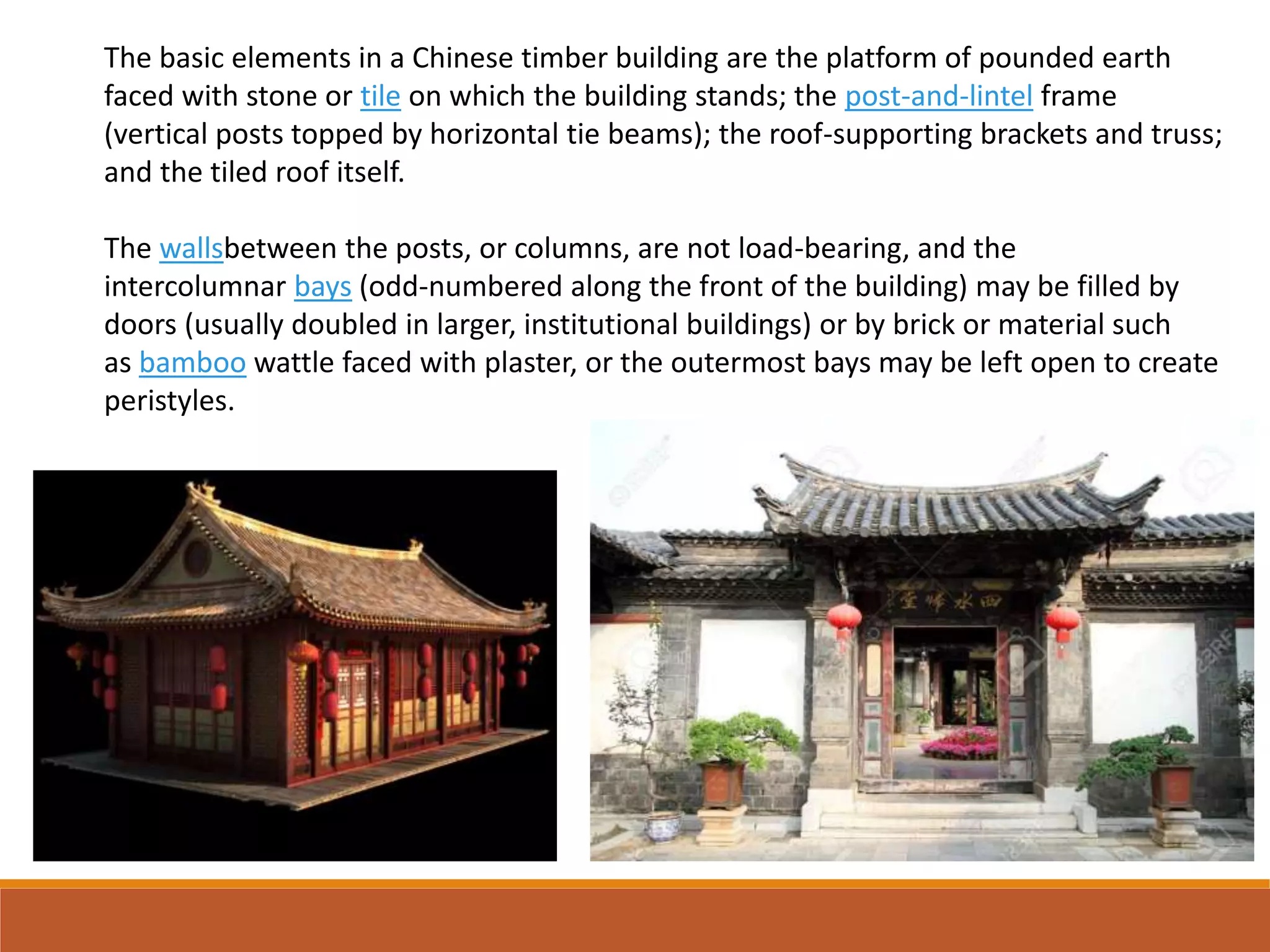
The basic elements in a Chinese timber building are the platform of pounded earth
faced with stone or tile on which the building stands; the post-and-lintel frame
(vertical posts topped by horizontal tie beams); the roof-supporting brackets and truss;
and the tiled roof itself.
The wallsbetween the posts, or columns, are not load-bearing, and the
intercolumnar bays (odd-numbered along the front of the building) may be filled by
doors (usually doubled in larger, institutional buildings) or by brick or material such
as bamboo wattle faced with plaster, or the outermost bays may be left open to create
peristyles.
The characteristics largely depend on Budhhist architecture. The temple, tombs
followed the plan similar to Indian buildings.
Walls were built of timber and brick.
The Chinese built chiefly in timber, which is vulnerable to moisture, fire, insects, and
the ravages of time, very little ancient architecture has survived.
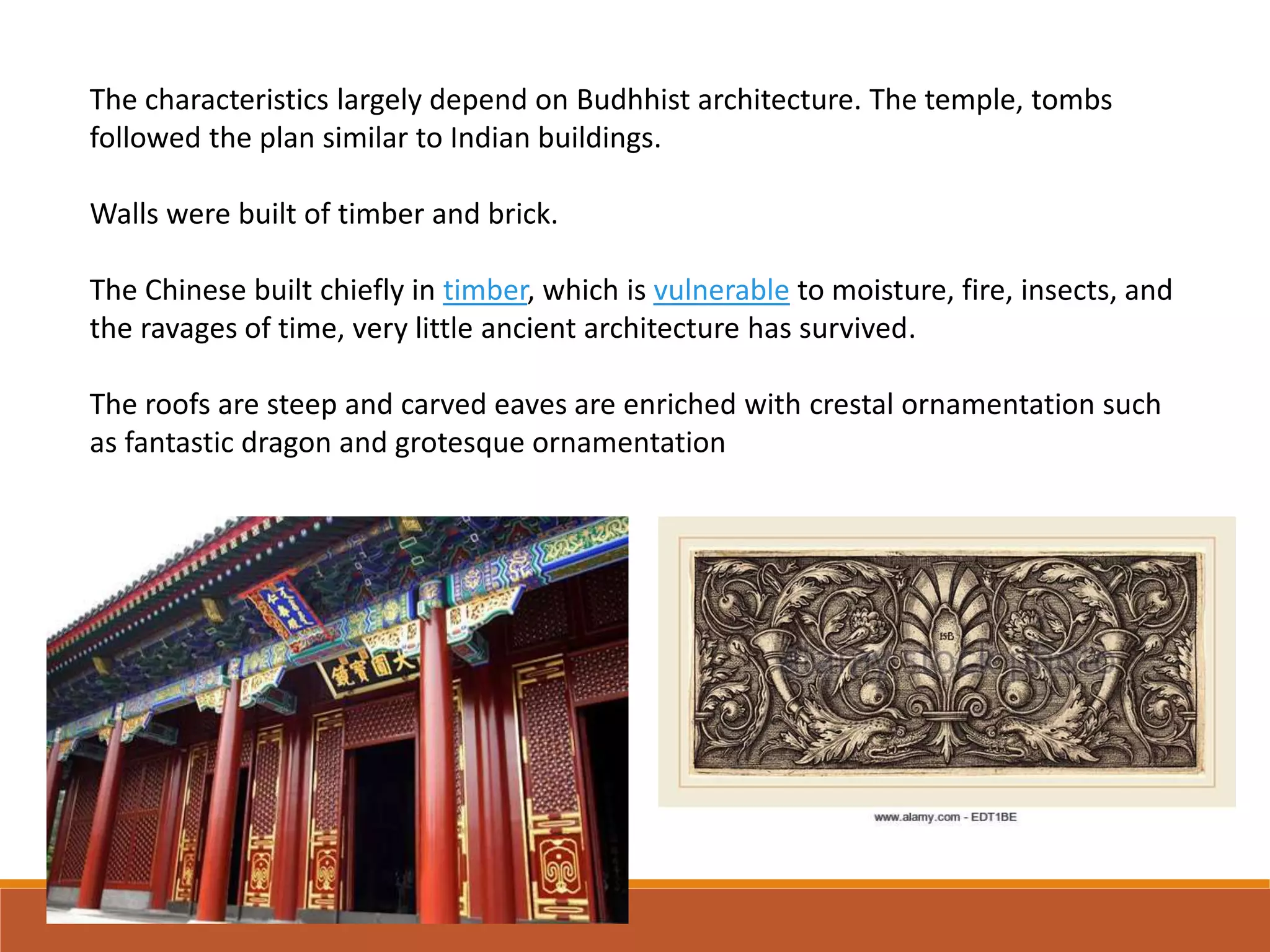
The roofs are steep and carved eaves are enriched with crestal ornamentation such
as fantastic dragon and grotesque ornamentation
One of the most basic principles in Chinese interior design is simplicity.
For them, a room should not be filled with all sorts of common décor. What is important is
the proper placement of a few valuable and beautiful objects in a room to achieve optimal
effects.
The design in Chinese culture is something exotic and emitted something spiritual even
magic with room layout, furniture, and color scheme.
Modern Chinese designs are evolving and these images are beautiful, because they strike a
fine balance by combining tradition and contemporary designs.
Chinese interior design is an art of combining simplicity, contemporary, modern, nature
and power to make an environment of harmony and serenity, using colorful fabrics of
upholstery as well as out-of-box items like saris for home décor.
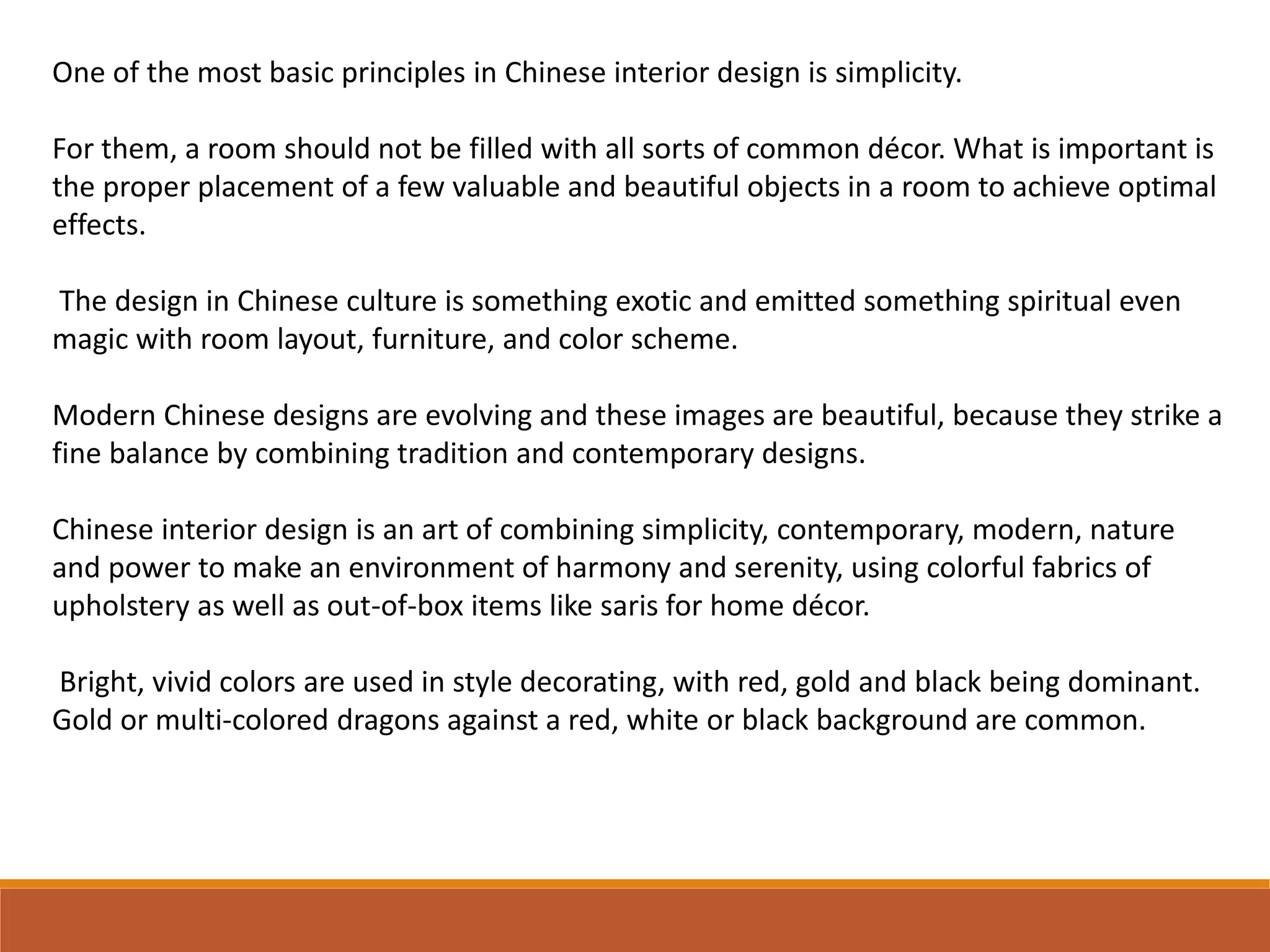
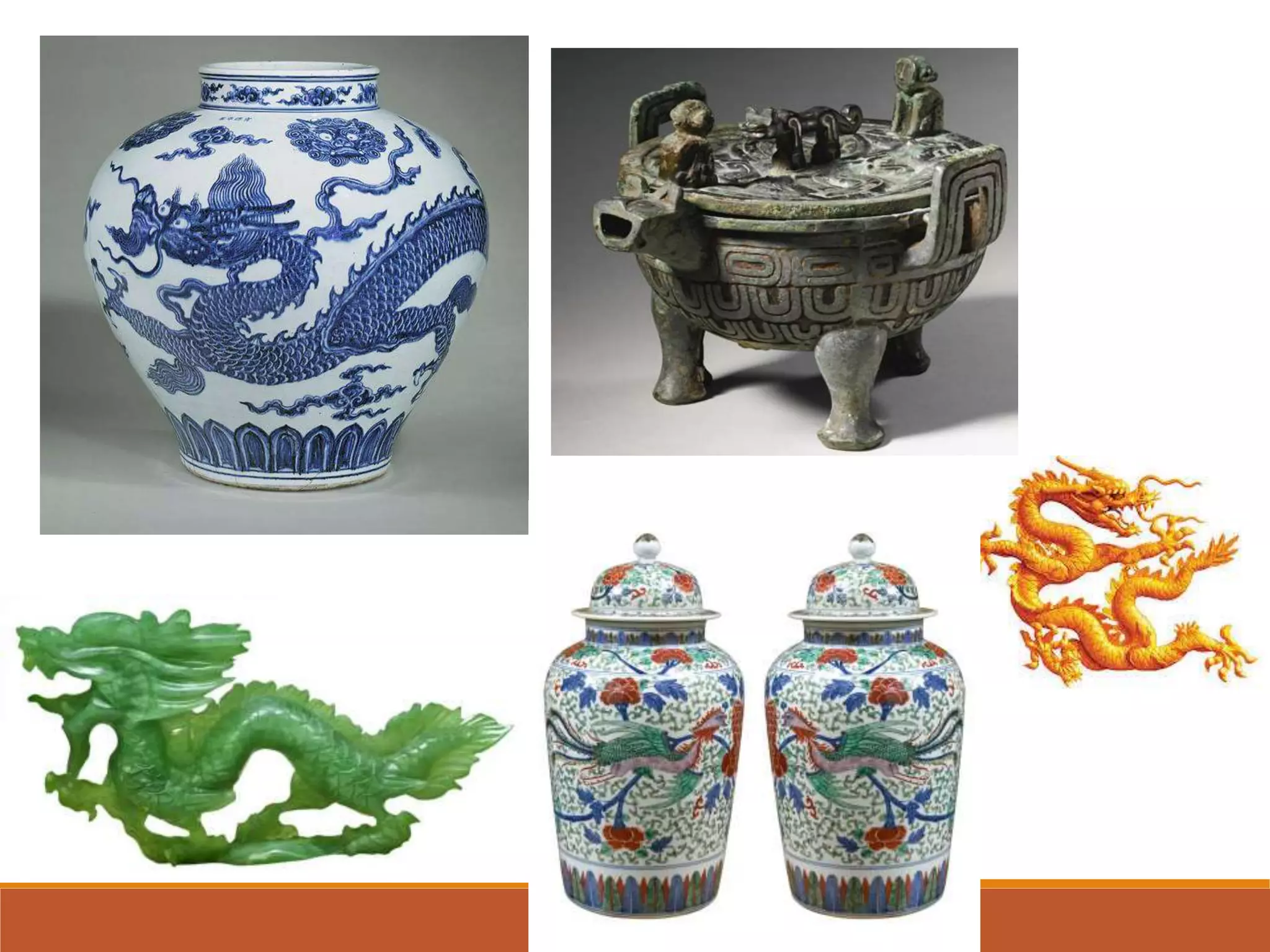
Bright, vivid colors are used in style decorating, with red, gold and black being dominant.
Gold or multi-colored dragons against a red, white or black background are common.
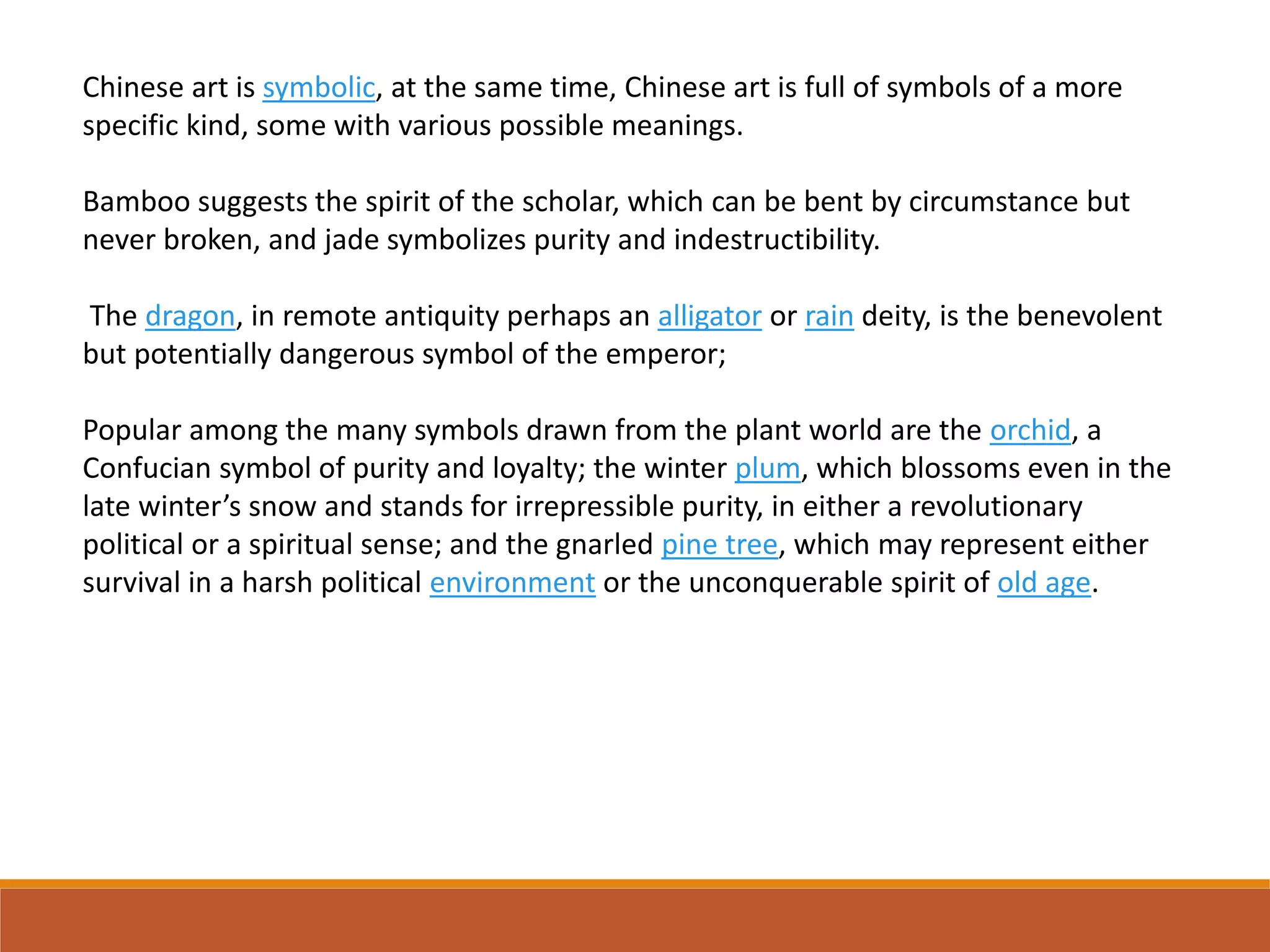
Chinese art is symbolic, at the same time, Chinese art is full of symbols of a more
specific kind, some with various possible meanings.
Bamboo suggests the spirit of the scholar, which can be bent by circumstance but
never broken, and jade symbolizes purity and indestructibility.
The dragon, in remote antiquity perhaps an alligator or rain deity, is the benevolent
but potentially dangerous symbol of the emperor;
Popular among the many symbols drawn from the plant world are the orchid, a
Confucian symbol of purity and loyalty; the winter plum, which blossoms even in the
late winter’s snow and stands for irrepressible purity, in either a revolutionary
political or a spiritual sense; and the gnarled pine tree, which may represent either
survival in a harsh political environment or the unconquerable spirit of old age.
JAPANEESE SUBCONTINENT AND HISTORY
The country lies to the east coast of Asia and is covered by Passific ocean on eastern
shores. It has a numbers of Harbours.
The country lies in the earthquake area which had great influence on buiding
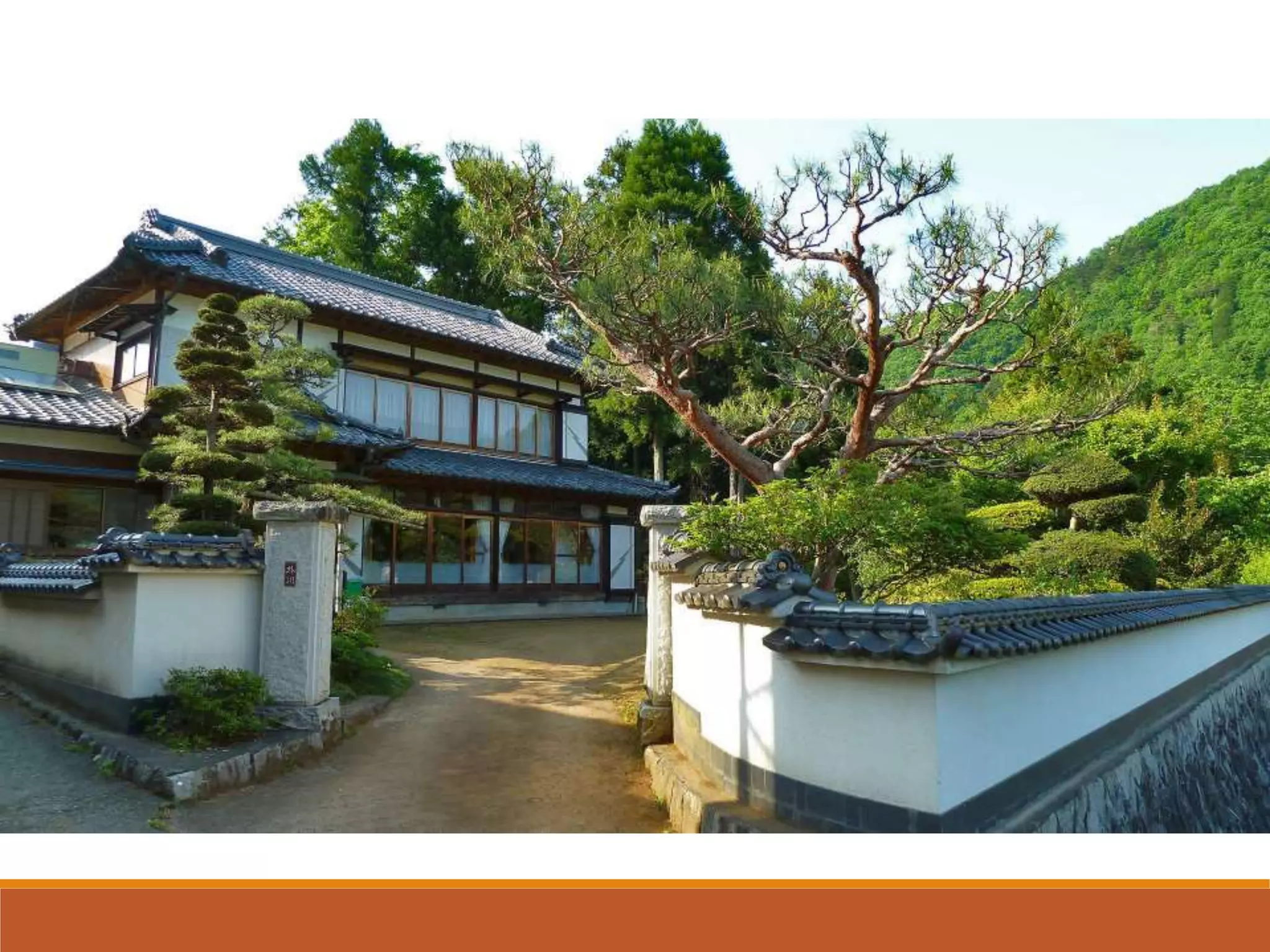
development. All about three fourth of Japan is covered by forest and wild vegetation
Bamboo is available in plents and widely used as construction material. Stone was
used on the foundations.
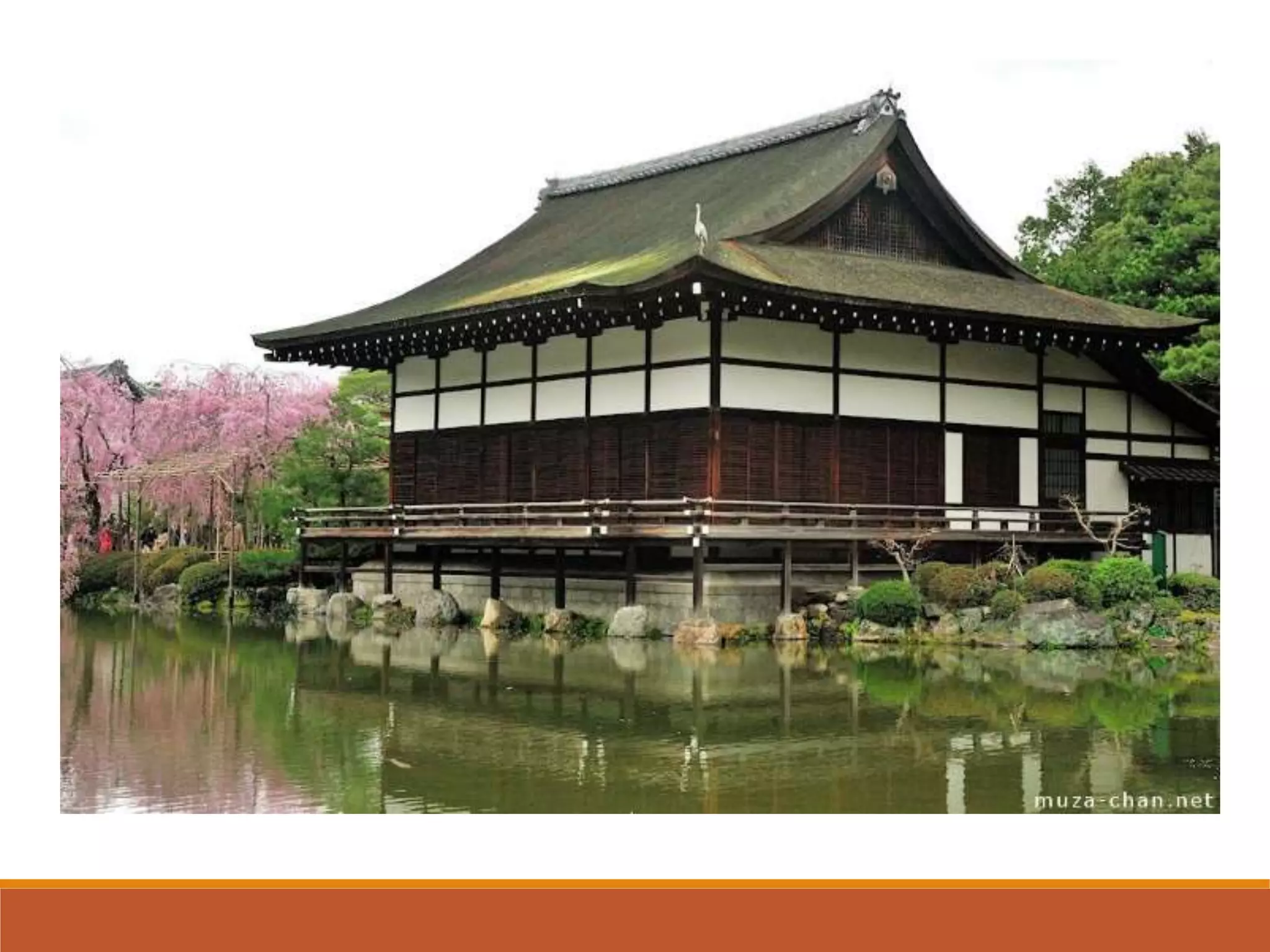
The japaneese style is much derived from the chineese but still has its special
character.
Traditional Japanese houses have unique architectural and interior features that are
considered an important part of Japan's history and culture. These old features are
often included in new homes because many people still find them charming.
Family homes were historically viewed as temporary and were reconstructed
approximately every 20 years. They were primarily made of wood and other natural
materials such as paper, rice straw and clay
Japanese houses didn't use historically use glass, resulting in some interesting
methods of natural lighting. A shoji is a sliding panel that is made of translucent
paper in a wooden frame. They are used for both interior and exterior walls. They
help to give Japanese houses their character by allowing diffuse light and shadows
through. They prevent people from seeing through, but brighten up rooms by
allowing light to pass. As paper is porous, shōji also help airflow and reduce
humidity. In modern Japanese-style houses they are often set in doors between
panes of glass. With one variation, known as the “snow-viewing” or yukimi shōji, it is
possible to slide up the lower section and look out through the glass.
Fusuma are sliding panels that act as doors and walls. They give Japanese homes many
possibilities as rooms can be dynamically reconfigured.
Fusumause heavier paper or sometimes cloth and are opaque, serving as a more
distinct barrier. Unlike walls, however, fusuma can easily be removed to rearrange
space within the house
Ranma are
panels found
above shoji or
fusuma that
are designed
to let light into
rooms. They
are often
ornate wooden
carvings
or shoji
screens.
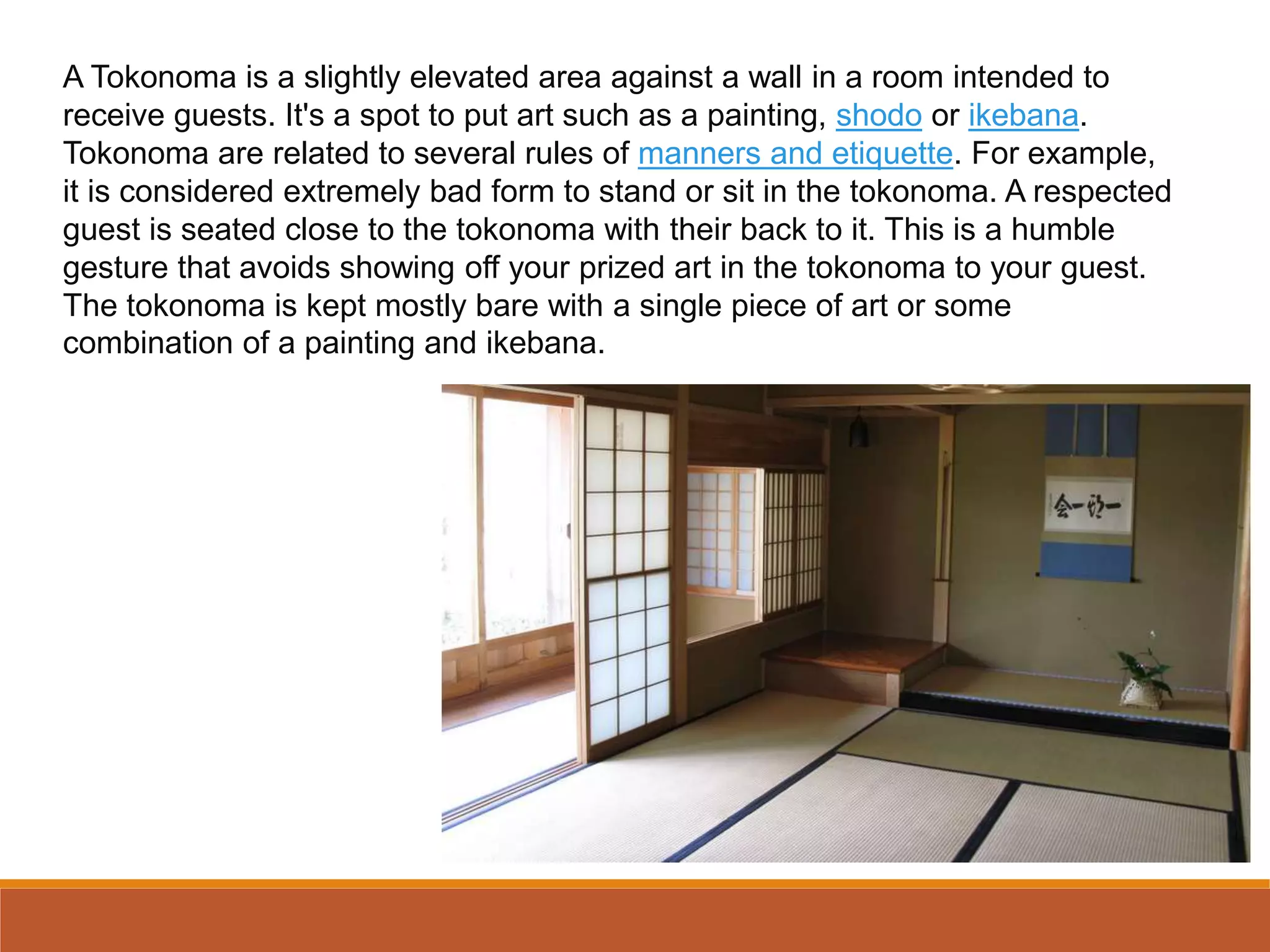
A Tokonoma is a slightly elevated area against a wall in a room intended to
receive guests. It's a spot to put art such as a painting, shodo or ikebana.
Tokonoma are related to several rules of manners and etiquette. For example,
it is considered extremely bad form to stand or sit in the tokonoma. A respected
guest is seated close to the tokonoma with their back to it. This is a humble
gesture that avoids showing off your prized art in the tokonoma to your guest.
The tokonoma is kept mostly bare with a single piece of art or some
combination of a painting and ikebana.
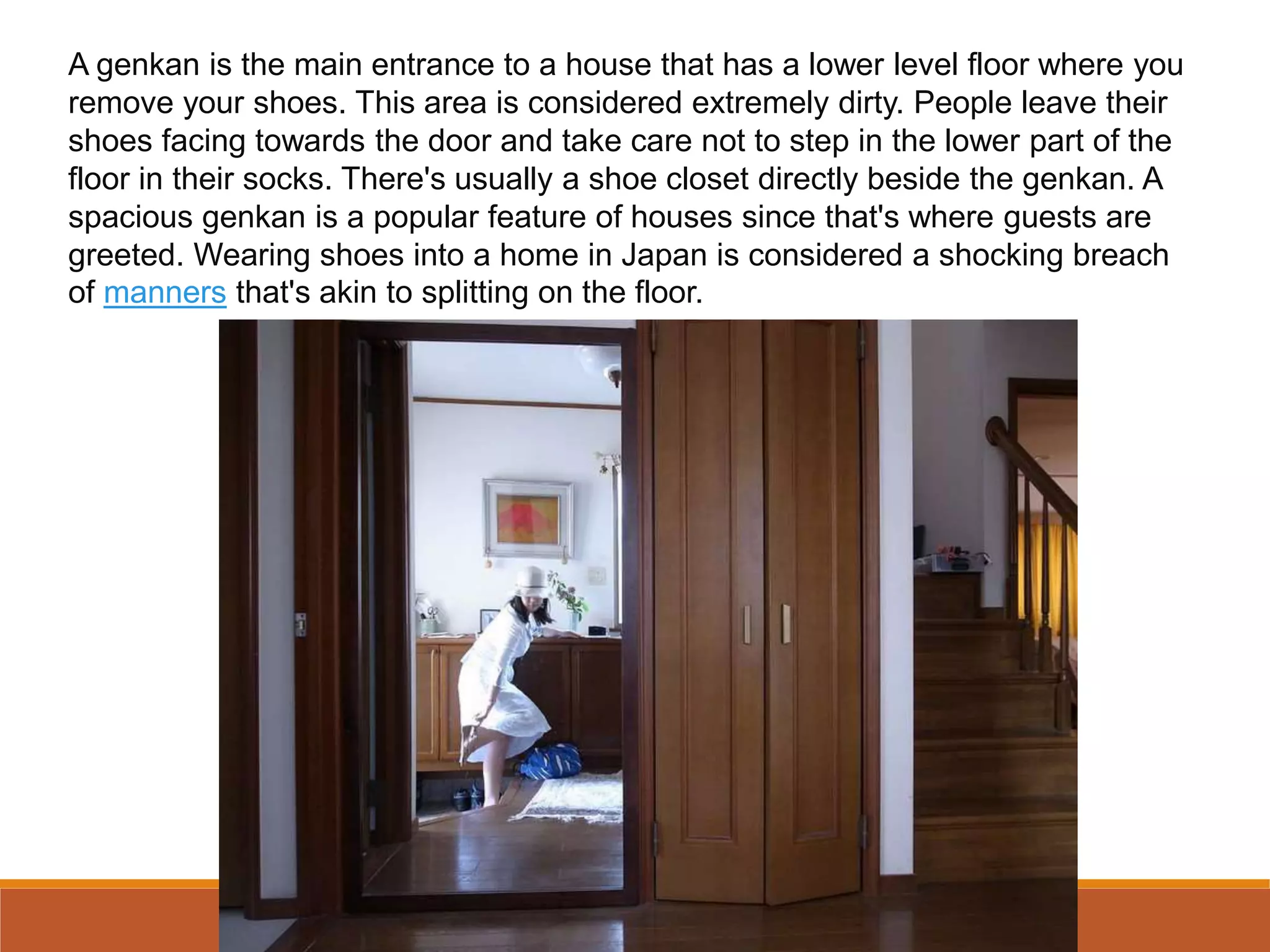
A genkan is the main entrance to a house that has a lower level floor where you
remove your shoes. This area is considered extremely dirty. People leave their
shoes facing towards the door and take care not to step in the lower part of the
floor in their socks. There's usually a shoe closet directly beside the genkan. A
spacious genkan is a popular feature of houses since that's where guests are
greeted. Wearing shoes into a home in Japan is considered a shocking breach
of manners that's akin to splitting on the floor.
Tatami are mat floors traditionally made of rice straw. They are a standard
sizethat varies by region. Tatami are so common in Japan that houses
andapartments are often measured using the size of a tatami as a unit. They
represent a traditional lifestyle that involves siting and sleeping on the floor.
Tatami have a soft, natural feel on your feet and have a pleasant smell when
they're new. They are associated with a wide range of manners and customs
such as sitting seiza.
Chabudai are tables with short legs that
are used while sitting on the floor. They are
most typically used on tatami floors but
make appearances on harder floors too.
It's common for families to eat at a
chabudai while sitting onzabuton.
Zabuton are thin pillows that are used to sit on tatami floors. They are essentially
the equivalent of a chair. At sumo matches, crowds are known to throw their
zabuton into the ring to protest an unpopular outcome.
Ofuro is the Japanese word for bath. In old Japan, homes didn't have baths
and people visited communal baths known as sento each evening. By
the Meiji-era, baths started to become a more common feature in houses.
Japanese baths are usually in a separate room from the toilet. They often
have an adjoining dressing room. The baths themselves tend to be deep but
short. It's customary to completely clean yourself before entering the bath. A
separate shower area sits beside the bath for this purpose. The Japanese
see bathing as a leisure activity and tend to take long baths. Baths made of
wood are a luxury feature of some homes and ryokan. The earliest home
baths were essentially wooden drums and variations of this style remain
popular
CHINEESE AND JAPANEESE.pdf

CHINEESE AND JAPANEESE.pdf

  • 1.
  • 2.
  • 3.
    The country ismountainous with vast fertile valleys in the center of SE and great plains in the north. The centre plain lies between the two rivers Hwang ho and Yangtse, hence thick deposit of soil was found abundantly which helped agriculture to large extent. It has many harbours which promoted trade and commerce as well as art and culture. Coal is abundant, Red sand stone , lime stone and timber were the prominent materials. Mulbery tree produced silk industry. Timber was used for roof and columns . Silk Road became a thoroughfare exporting the luxuary thread to all parts of the world. Taoism, Confuciamism and Buddism are the three religions followed. The climate varies, cold in winter but hot in summer. Rainfall is heavy. Therefore climatic conditions have partly affected the chineese character of buildings. Houses have Ting roof and IRIMOYA gable which slightly bends upwards.
  • 6.
    China has along and interesting history, and in all ages the Chinese decorating is connected with its culture that is to be harmonious with nature. Chinese culture is one of the world’s oldest cultures. The area in which the culture is dominant covers a large geographical region in eastern Asia with customs and traditions varying greatly between provinces, cities, and even towns. Luxury, classic, peaceful, elegant and simple, these are the words that can come to your mind thinking of Chinese cultural interior. Chinese society, basically agricultural, has always laid great stress on understanding the pattern of nature and living in accordance with it. As it developed, the purpose of Chinese art turned from propitiation and sacrifice to the expression of human understanding of these forces, in the form of painting of landscapes, bamboo, birds, and flowers.
  • 7.
    The basic elementsin a Chinese timber building are the platform of pounded earth faced with stone or tile on which the building stands; the post-and-lintel frame (vertical posts topped by horizontal tie beams); the roof-supporting brackets and truss; and the tiled roof itself. The wallsbetween the posts, or columns, are not load-bearing, and the intercolumnar bays (odd-numbered along the front of the building) may be filled by doors (usually doubled in larger, institutional buildings) or by brick or material such as bamboo wattle faced with plaster, or the outermost bays may be left open to create peristyles.
  • 8.
    The characteristics largelydepend on Budhhist architecture. The temple, tombs followed the plan similar to Indian buildings. Walls were built of timber and brick. The Chinese built chiefly in timber, which is vulnerable to moisture, fire, insects, and the ravages of time, very little ancient architecture has survived. The roofs are steep and carved eaves are enriched with crestal ornamentation such as fantastic dragon and grotesque ornamentation
  • 10.
    One of themost basic principles in Chinese interior design is simplicity. For them, a room should not be filled with all sorts of common décor. What is important is the proper placement of a few valuable and beautiful objects in a room to achieve optimal effects. The design in Chinese culture is something exotic and emitted something spiritual even magic with room layout, furniture, and color scheme. Modern Chinese designs are evolving and these images are beautiful, because they strike a fine balance by combining tradition and contemporary designs. Chinese interior design is an art of combining simplicity, contemporary, modern, nature and power to make an environment of harmony and serenity, using colorful fabrics of upholstery as well as out-of-box items like saris for home décor. Bright, vivid colors are used in style decorating, with red, gold and black being dominant. Gold or multi-colored dragons against a red, white or black background are common.
  • 11.
    Chinese art issymbolic, at the same time, Chinese art is full of symbols of a more specific kind, some with various possible meanings. Bamboo suggests the spirit of the scholar, which can be bent by circumstance but never broken, and jade symbolizes purity and indestructibility. The dragon, in remote antiquity perhaps an alligator or rain deity, is the benevolent but potentially dangerous symbol of the emperor; Popular among the many symbols drawn from the plant world are the orchid, a Confucian symbol of purity and loyalty; the winter plum, which blossoms even in the late winter’s snow and stands for irrepressible purity, in either a revolutionary political or a spiritual sense; and the gnarled pine tree, which may represent either survival in a harsh political environment or the unconquerable spirit of old age.
  • 16.
  • 17.
    The country liesto the east coast of Asia and is covered by Passific ocean on eastern shores. It has a numbers of Harbours. The country lies in the earthquake area which had great influence on buiding development. All about three fourth of Japan is covered by forest and wild vegetation Bamboo is available in plents and widely used as construction material. Stone was used on the foundations. The japaneese style is much derived from the chineese but still has its special character. Traditional Japanese houses have unique architectural and interior features that are considered an important part of Japan's history and culture. These old features are often included in new homes because many people still find them charming. Family homes were historically viewed as temporary and were reconstructed approximately every 20 years. They were primarily made of wood and other natural materials such as paper, rice straw and clay
  • 20.
    Japanese houses didn'tuse historically use glass, resulting in some interesting methods of natural lighting. A shoji is a sliding panel that is made of translucent paper in a wooden frame. They are used for both interior and exterior walls. They help to give Japanese houses their character by allowing diffuse light and shadows through. They prevent people from seeing through, but brighten up rooms by allowing light to pass. As paper is porous, shōji also help airflow and reduce humidity. In modern Japanese-style houses they are often set in doors between panes of glass. With one variation, known as the “snow-viewing” or yukimi shōji, it is possible to slide up the lower section and look out through the glass.
  • 22.
    Fusuma are slidingpanels that act as doors and walls. They give Japanese homes many possibilities as rooms can be dynamically reconfigured. Fusumause heavier paper or sometimes cloth and are opaque, serving as a more distinct barrier. Unlike walls, however, fusuma can easily be removed to rearrange space within the house
  • 23.
    Ranma are panels found aboveshoji or fusuma that are designed to let light into rooms. They are often ornate wooden carvings or shoji screens.
  • 24.
    A Tokonoma isa slightly elevated area against a wall in a room intended to receive guests. It's a spot to put art such as a painting, shodo or ikebana. Tokonoma are related to several rules of manners and etiquette. For example, it is considered extremely bad form to stand or sit in the tokonoma. A respected guest is seated close to the tokonoma with their back to it. This is a humble gesture that avoids showing off your prized art in the tokonoma to your guest. The tokonoma is kept mostly bare with a single piece of art or some combination of a painting and ikebana.
  • 25.
    A genkan isthe main entrance to a house that has a lower level floor where you remove your shoes. This area is considered extremely dirty. People leave their shoes facing towards the door and take care not to step in the lower part of the floor in their socks. There's usually a shoe closet directly beside the genkan. A spacious genkan is a popular feature of houses since that's where guests are greeted. Wearing shoes into a home in Japan is considered a shocking breach of manners that's akin to splitting on the floor.
  • 26.
    Tatami are matfloors traditionally made of rice straw. They are a standard sizethat varies by region. Tatami are so common in Japan that houses andapartments are often measured using the size of a tatami as a unit. They represent a traditional lifestyle that involves siting and sleeping on the floor. Tatami have a soft, natural feel on your feet and have a pleasant smell when they're new. They are associated with a wide range of manners and customs such as sitting seiza.
  • 27.
    Chabudai are tableswith short legs that are used while sitting on the floor. They are most typically used on tatami floors but make appearances on harder floors too. It's common for families to eat at a chabudai while sitting onzabuton.
  • 28.
    Zabuton are thinpillows that are used to sit on tatami floors. They are essentially the equivalent of a chair. At sumo matches, crowds are known to throw their zabuton into the ring to protest an unpopular outcome.
  • 30.
    Ofuro is theJapanese word for bath. In old Japan, homes didn't have baths and people visited communal baths known as sento each evening. By the Meiji-era, baths started to become a more common feature in houses. Japanese baths are usually in a separate room from the toilet. They often have an adjoining dressing room. The baths themselves tend to be deep but short. It's customary to completely clean yourself before entering the bath. A separate shower area sits beside the bath for this purpose. The Japanese see bathing as a leisure activity and tend to take long baths. Baths made of wood are a luxury feature of some homes and ryokan. The earliest home baths were essentially wooden drums and variations of this style remain popular