Downloaded 456 times


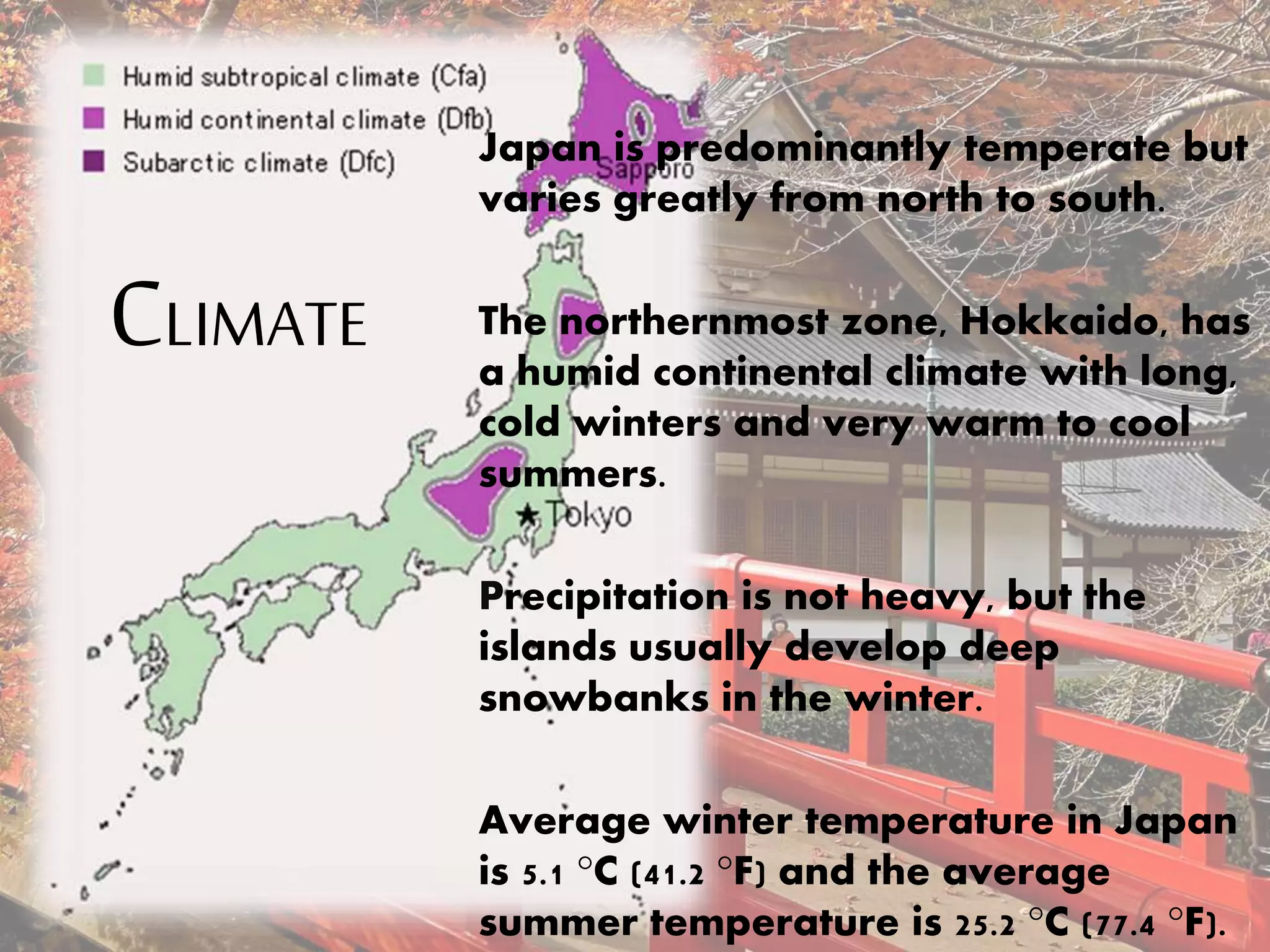


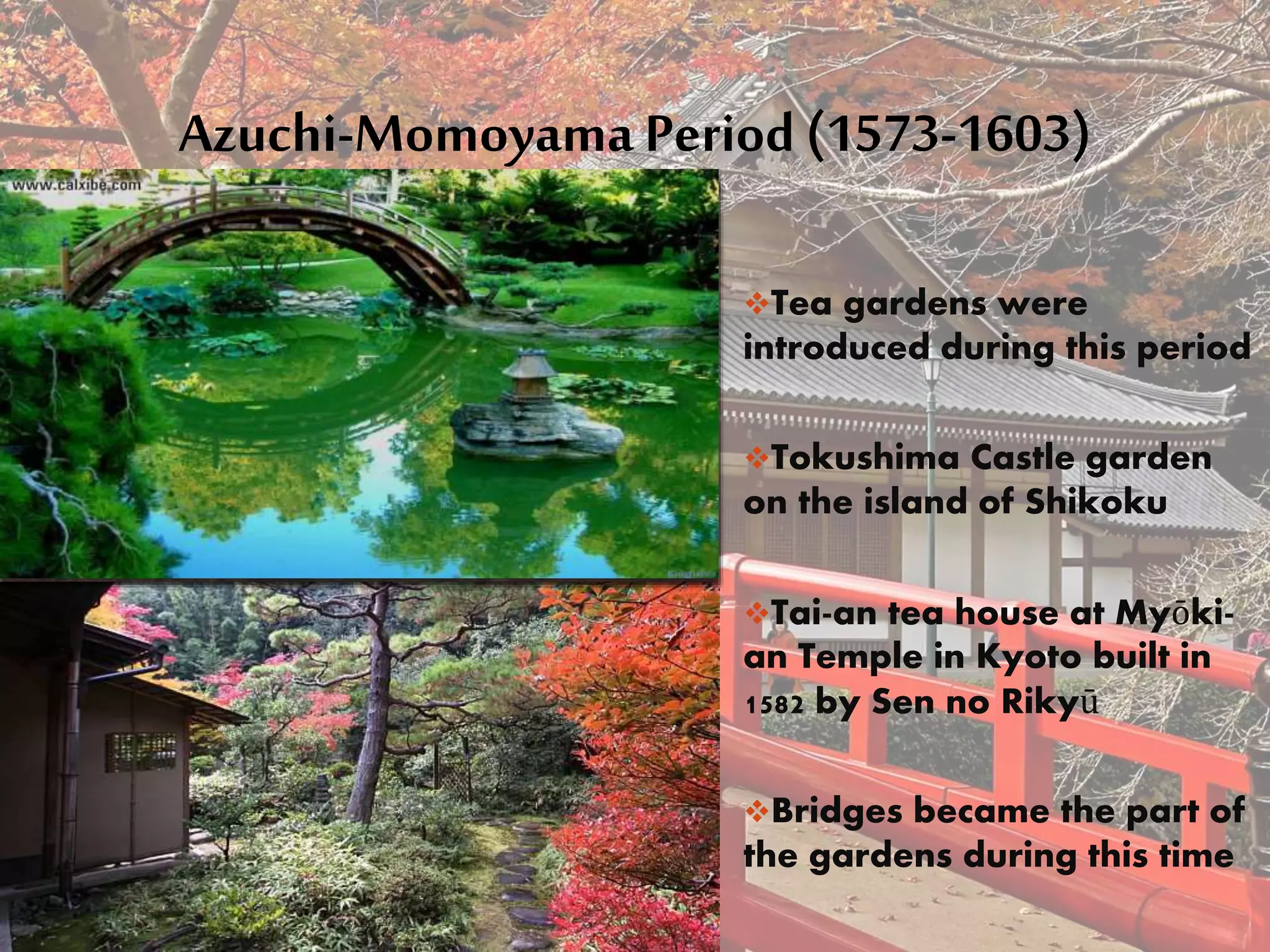


- Japanese gardens originated over 1000 years ago and were influenced by Chinese garden design. They were built for nobility's recreation or Buddhist meditation. - The gardens use elements like ponds, streams, hills and rocks to symbolize islands surrounded by sea and forests. Different styles include dry "karesansui" gardens, wet "tsukiyama" gardens featuring distant views, and tea ceremony "chaniwa" gardens. - Traditional Japanese gardens follow principles of asymmetry, minimalism, and drawing focus to natural elements like old trees. They aim to represent tranquility and harmony with nature on a small plot of land.


