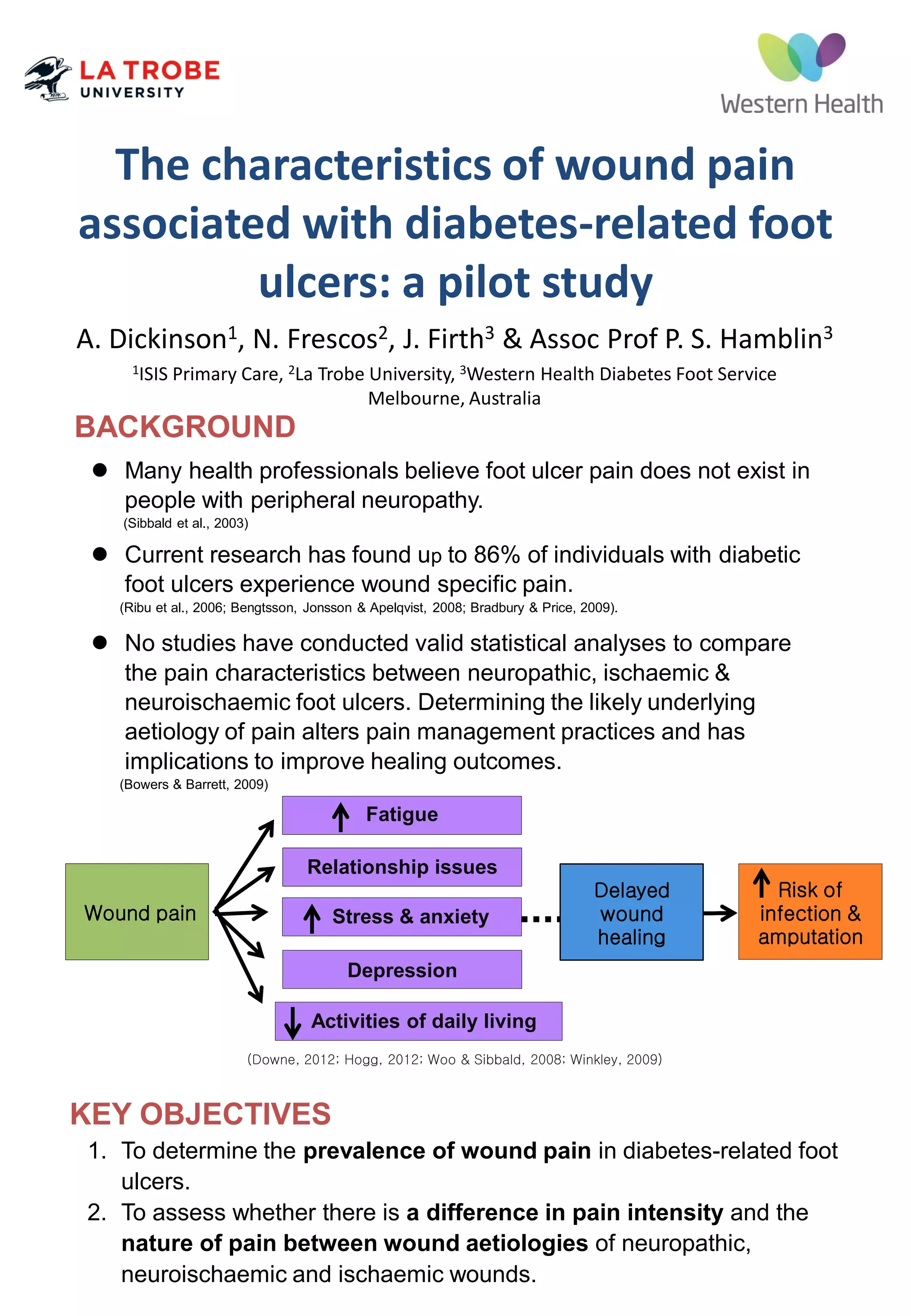
Risk of
infection &
amputation
A. Dickinson1, N. Frescos2, J. Firth3 & Assoc Prof P. S. Hamblin3
1ISIS Primary Care, 2La Trobe University, 3Western Health Diabetes Foot Service
Melbourne, Australia
KEY OBJECTIVES
1. To determine the prevalence of wound pain in diabetes-related foot
ulcers.
2. To assess whether there is a difference in pain intensity and the
nature of pain between wound aetiologies of neuropathic,
neuroischaemic and ischaemic wounds.
Relationship issuesRelationship issues
Depression
Stress & anxiety
Fatigue
Activities of daily living
Delayed
wound
healing
Delayed
wound
healing
Wound pain
(Downe, 2012; Hogg, 2012; Woo & Sibbald, 2008; Winkley, 2009)
BACKGROUND
 Many health professionals believe foot ulcer pain does not exist in
people with peripheral neuropathy.
(Sibbald et al., 2003)
 Current research has found up to 86% of individuals with diabetic
foot ulcers experience wound specific pain.
(Ribu et al., 2006; Bengtsson, Jonsson & Apelqvist, 2008; Bradbury & Price, 2009).
 No studies have conducted valid statistical analyses to compare
the pain characteristics between neuropathic, ischaemic &
neuroischaemic foot ulcers. Determining the likely underlying
aetiology of pain alters pain management practices and has
implications to improve healing outcomes.
(Bowers & Barrett, 2009)
The characteristics of wound pain
associated with diabetes-related foot
ulcers: a pilot study
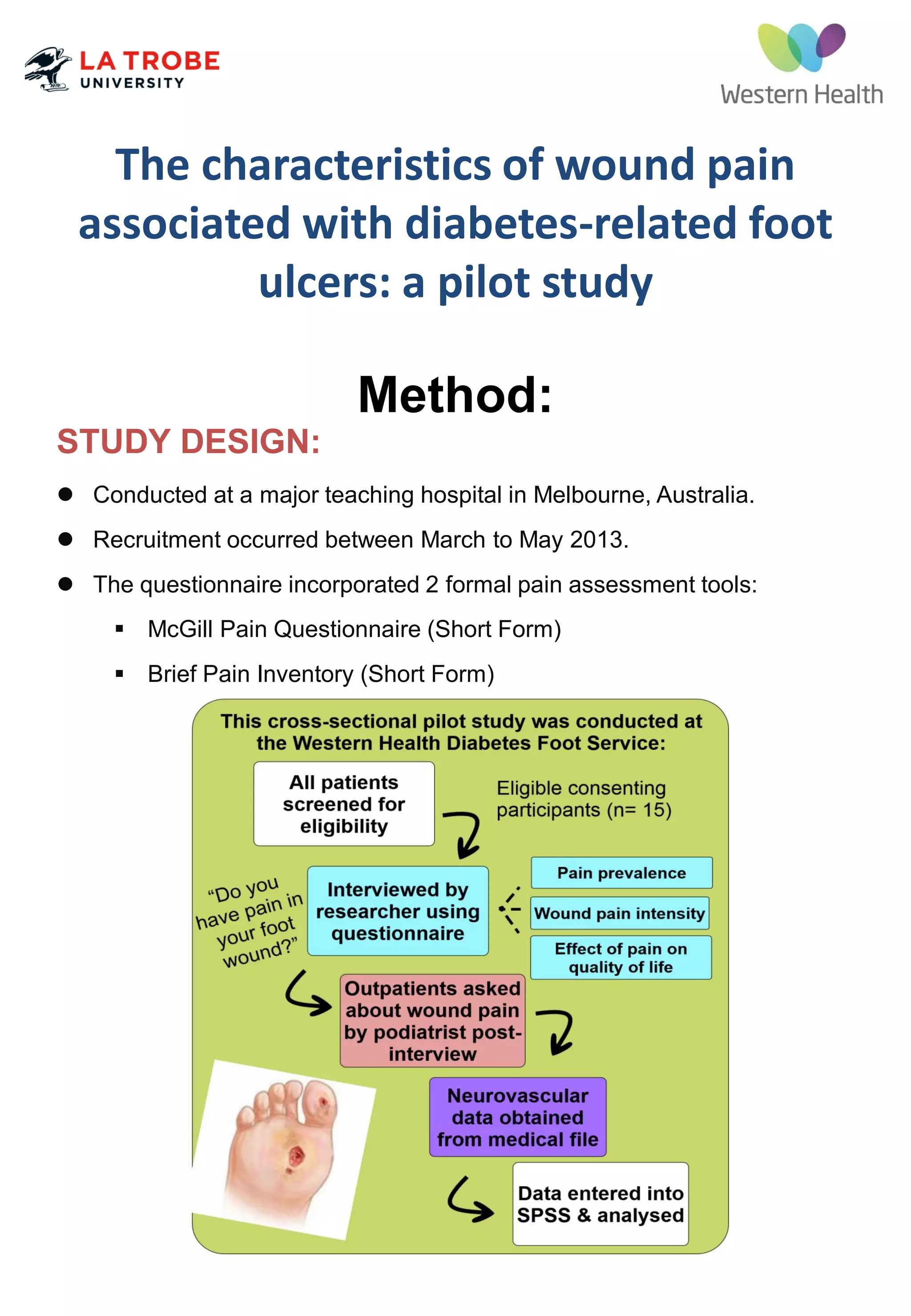
STUDY DESIGN:
 Conducted at a major teaching hospital in Melbourne, Australia.
 Recruitment occurred between March to May 2013.
 The questionnaire incorporated 2 formal pain assessment tools:
 McGill Pain Questionnaire (Short Form)
 Brief Pain Inventory (Short Form)
Method:
The characteristics of wound pain
associated with diabetes-related foot
ulcers: a pilot study
The characteristics of wound pain
associated with diabetes-related foot
ulcers: a pilot study
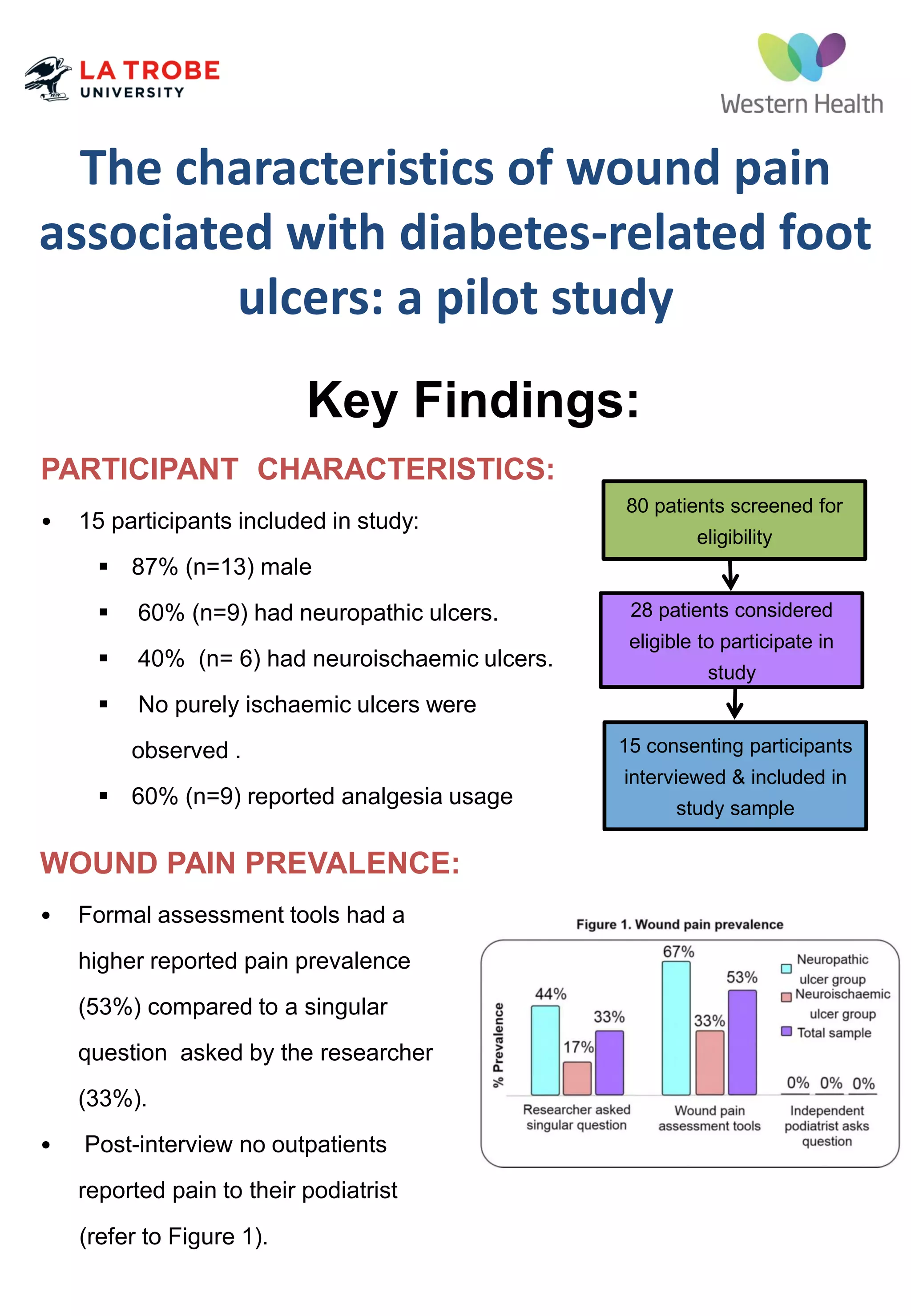
PARTICIPANT CHARACTERISTICS:
• 15 participants included in study:
 87% (n=13) male
 60% (n=9) had neuropathic ulcers.
 40% (n= 6) had neuroischaemic ulcers.
 No purely ischaemic ulcers were
observed .
 60% (n=9) reported analgesia usage
WOUND PAIN PREVALENCE:
• Formal assessment tools had a
higher reported pain prevalence
(53%) compared to a singular
question asked by the researcher
(33%).
• Post-interview no outpatients
reported pain to their podiatrist
(refer to Figure 1).
Key Findings:
80 patients screened for
eligibility
28 patients considered
eligible to participate in
study
15 consenting participants
interviewed & included in
study sample
The characteristics of wound pain
associated with diabetes-related foot
ulcers: a pilot study
Key Findings:
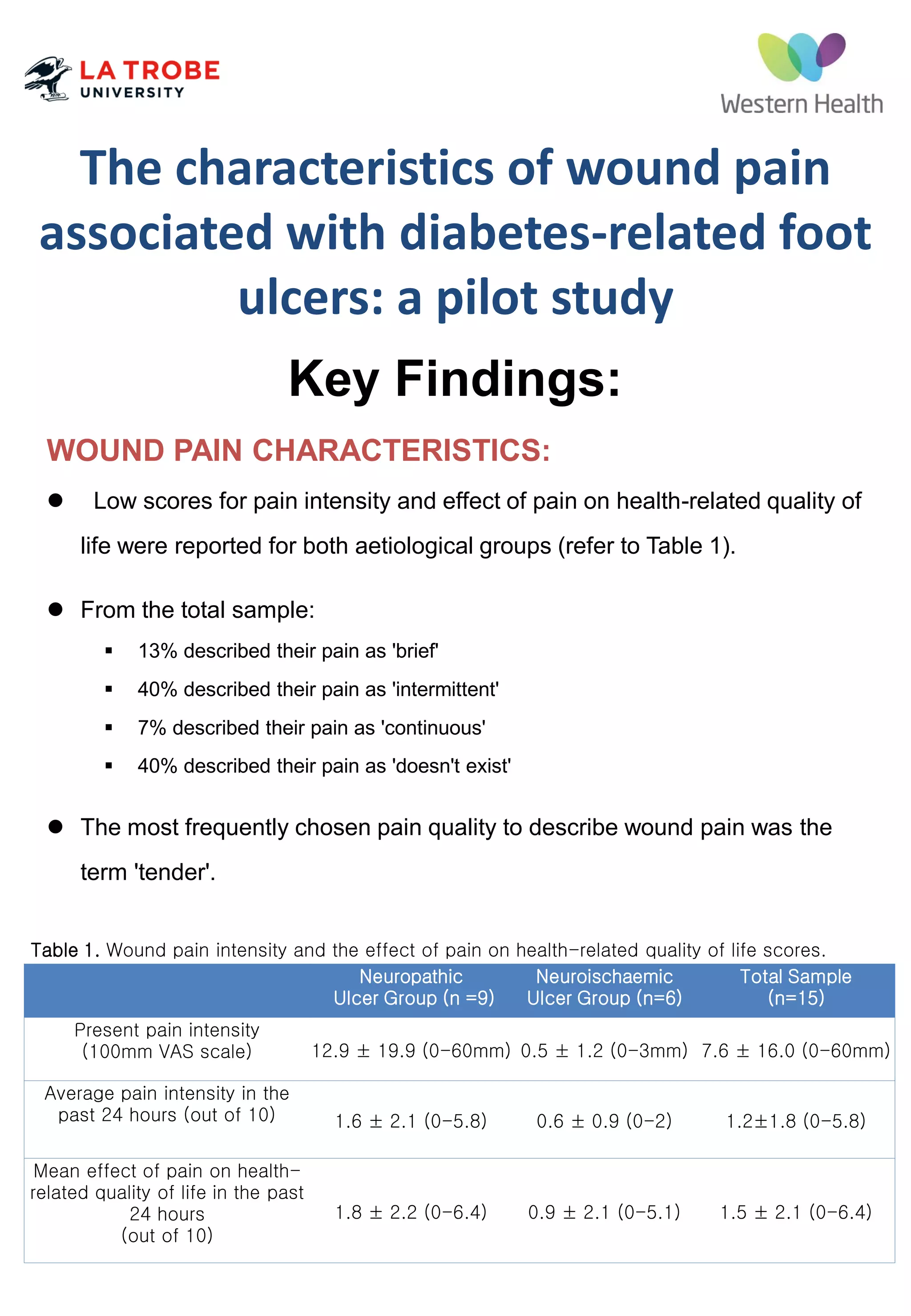
WOUND PAIN CHARACTERISTICS:
 Low scores for pain intensity and effect of pain on health-related quality of
life were reported for both aetiological groups (refer to Table 1).
 From the total sample:
 13% described their pain as 'brief'
 40% described their pain as 'intermittent'
 7% described their pain as 'continuous'
 40% described their pain as 'doesn't exist'
 The most frequently chosen pain quality to describe wound pain was the
term 'tender'.
Table 1. Wound pain intensity and the effect of pain on health-related quality of life scores.
Neuropathic
Ulcer Group (n =9)
Neuroischaemic
Ulcer Group (n=6)
Total Sample
(n=15)
Present pain intensity
(100mm VAS scale) 12.9 ± 19.9 (0-60mm) 0.5 ± 1.2 (0-3mm) 7.6 ± 16.0 (0-60mm)
Average pain intensity in the
past 24 hours (out of 10) 1.6 ± 2.1 (0-5.8) 0.6 ± 0.9 (0-2) 1.2±1.8 (0-5.8)
Mean effect of pain on health-
related quality of life in the past
24 hours
(out of 10)
1.8 ± 2.2 (0-6.4) 0.9 ± 2.1 (0-5.1) 1.5 ± 2.1 (0-6.4)
The characteristics of wound pain
associated with diabetes-related foot
ulcers: a pilot study
 Wound pain can be present in diabetes-
related neuropathic and neuroischaemic foot
ulcers, despite analgesia useage.
 Wound pain appears to not be accurately
assessed in clinical practice.
 Future research is required to establish
whether a statistically significant and clinically
important differences in wound characteristics
exist between diabetic foot ulcer types.
For more information please email:
Ashlea.Dickinson@isispc.com.au
Conclusion:

EWMA 2014 - EP490 THE CHARACTERISTICS OF WOUND PAIN ASSOCIATED WITH DIABETES-RELATED FOOT ULCERS: A PILOT STUDY

  • 1.
    Risk of infection & amputation A.Dickinson1, N. Frescos2, J. Firth3 & Assoc Prof P. S. Hamblin3 1ISIS Primary Care, 2La Trobe University, 3Western Health Diabetes Foot Service Melbourne, Australia KEY OBJECTIVES 1. To determine the prevalence of wound pain in diabetes-related foot ulcers. 2. To assess whether there is a difference in pain intensity and the nature of pain between wound aetiologies of neuropathic, neuroischaemic and ischaemic wounds. Relationship issuesRelationship issues Depression Stress & anxiety Fatigue Activities of daily living Delayed wound healing Delayed wound healing Wound pain (Downe, 2012; Hogg, 2012; Woo & Sibbald, 2008; Winkley, 2009) BACKGROUND  Many health professionals believe foot ulcer pain does not exist in people with peripheral neuropathy. (Sibbald et al., 2003)  Current research has found up to 86% of individuals with diabetic foot ulcers experience wound specific pain. (Ribu et al., 2006; Bengtsson, Jonsson & Apelqvist, 2008; Bradbury & Price, 2009).  No studies have conducted valid statistical analyses to compare the pain characteristics between neuropathic, ischaemic & neuroischaemic foot ulcers. Determining the likely underlying aetiology of pain alters pain management practices and has implications to improve healing outcomes. (Bowers & Barrett, 2009) The characteristics of wound pain associated with diabetes-related foot ulcers: a pilot study
  • 2.
    STUDY DESIGN:  Conductedat a major teaching hospital in Melbourne, Australia.  Recruitment occurred between March to May 2013.  The questionnaire incorporated 2 formal pain assessment tools:  McGill Pain Questionnaire (Short Form)  Brief Pain Inventory (Short Form) Method: The characteristics of wound pain associated with diabetes-related foot ulcers: a pilot study
  • 3.
    The characteristics ofwound pain associated with diabetes-related foot ulcers: a pilot study PARTICIPANT CHARACTERISTICS: • 15 participants included in study:  87% (n=13) male  60% (n=9) had neuropathic ulcers.  40% (n= 6) had neuroischaemic ulcers.  No purely ischaemic ulcers were observed .  60% (n=9) reported analgesia usage WOUND PAIN PREVALENCE: • Formal assessment tools had a higher reported pain prevalence (53%) compared to a singular question asked by the researcher (33%). • Post-interview no outpatients reported pain to their podiatrist (refer to Figure 1). Key Findings: 80 patients screened for eligibility 28 patients considered eligible to participate in study 15 consenting participants interviewed & included in study sample
  • 4.
    The characteristics ofwound pain associated with diabetes-related foot ulcers: a pilot study Key Findings: WOUND PAIN CHARACTERISTICS:  Low scores for pain intensity and effect of pain on health-related quality of life were reported for both aetiological groups (refer to Table 1).  From the total sample:  13% described their pain as 'brief'  40% described their pain as 'intermittent'  7% described their pain as 'continuous'  40% described their pain as 'doesn't exist'  The most frequently chosen pain quality to describe wound pain was the term 'tender'. Table 1. Wound pain intensity and the effect of pain on health-related quality of life scores. Neuropathic Ulcer Group (n =9) Neuroischaemic Ulcer Group (n=6) Total Sample (n=15) Present pain intensity (100mm VAS scale) 12.9 ± 19.9 (0-60mm) 0.5 ± 1.2 (0-3mm) 7.6 ± 16.0 (0-60mm) Average pain intensity in the past 24 hours (out of 10) 1.6 ± 2.1 (0-5.8) 0.6 ± 0.9 (0-2) 1.2±1.8 (0-5.8) Mean effect of pain on health- related quality of life in the past 24 hours (out of 10) 1.8 ± 2.2 (0-6.4) 0.9 ± 2.1 (0-5.1) 1.5 ± 2.1 (0-6.4)
  • 5.
    The characteristics ofwound pain associated with diabetes-related foot ulcers: a pilot study  Wound pain can be present in diabetes- related neuropathic and neuroischaemic foot ulcers, despite analgesia useage.  Wound pain appears to not be accurately assessed in clinical practice.  Future research is required to establish whether a statistically significant and clinically important differences in wound characteristics exist between diabetic foot ulcer types. For more information please email: Ashlea.Dickinson@isispc.com.au Conclusion: