Molecular biology
Assignment
Topic: Enzyme
induction and
repression
By
S.Srividhya
III Biochemistry
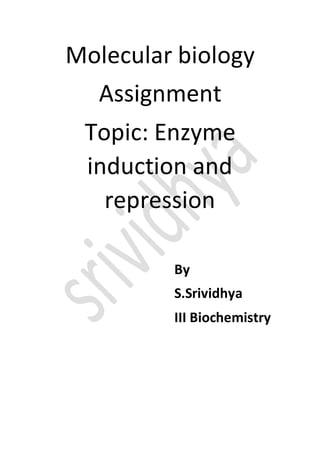
What is Enzyme Induction?
 A process in which a molecule (e.g. a drug) induces (i.e. initiates
or enhances) the expression of an enzyme.
 An enzyme inducer is a type of drug which binds to an enzyme
and increases its metabolic activity.
 Regulated by exposure to drugs and environmental chemicals
leading to increased rates of metabolism.
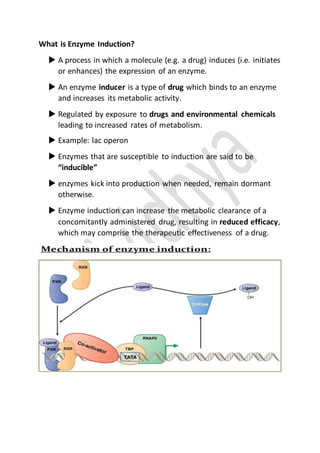
 Example: lac operon
 Enzymes that are susceptible to induction are said to be
“inducible”
 enzymes kick into production when needed, remain dormant
otherwise.
 Enzyme induction can increase the metabolic clearance of a
concomitantly administered drug, resulting in reduced efficacy,
which may comprise the therapeutic effectiveness of a drug.
Importance of enzyme induction
 Essential to understand various reactions that occur inside the
body
 Important to analyse drug reaction
 Study toxicity
 Causes less or over production of hormones
 Therapeutically used in treatment of hyperbilirubinemia
 Conversion of drugs into polar groups
What is Enzyme Repression?
 Effectors can associate with the operator and alter the
configuration so that the binding of the polymerase occurs less
efficiently or not at all. This effect is known as repression.
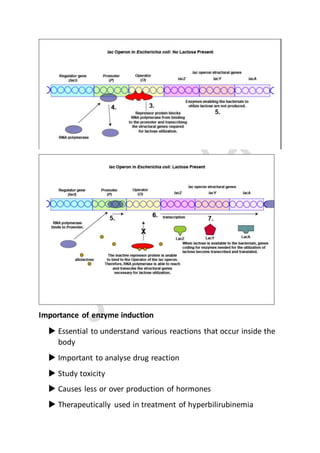
 Example: trp operon
 Feedback inhibition
 Prevents wasting of energy
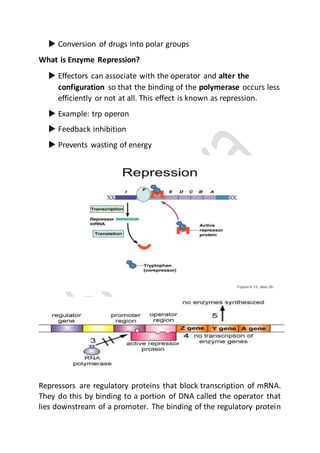
Repressors are regulatory proteins that block transcription of mRNA.
They do this by binding to a portion of DNA called the operator that
lies downstream of a promoter. The binding of the regulatory protein
to the operator prevents RNA polymerase from passing the operator
and transcribing the coding sequence for the enzymes. This is called
negative control. Repressors are allosteric proteins that have a binding
site for a specific molecule. Binding of that molecule to the allosteric
site of the repressor can alter the repressor's shape that, in turn
affects its ability to bind to DNA. This can work in one of two ways:
Some repressors are synthesized in a form that cannot by itself bind
to the operator. The binding of a molecule called a corepressor,
however, alters the shape of the regulatory protein to a form that can
bind to the operator and block transcription.
An example of this type of repression is the trp operon in E. coli that
encodes the five enzymes in the pathway for the biosynthesis of the
amino acid tryptophan. In this case, the repressor protein, coded for
by a regulatory gene, normally does not bind to the operator region
of the trp operon and the five enzymes needed to synthesize the
amino acid tryptophan are made.
Steps:
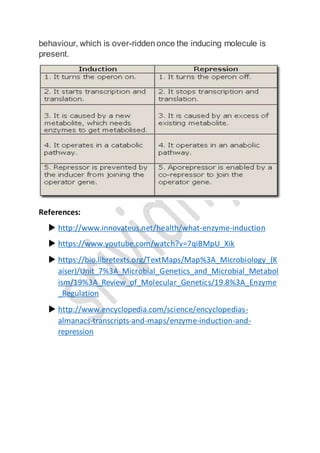
Enzyme induction is a process where an enzyme is manufactured
in response to the presence of a specific molecule. This molecule
is termed an inducer. Typically, an inducer molecule is a
compound that the enzyme acts upon. In the induction process,
the inducer molecule combines with another molecule, which is
called the repressor. The binding of the inducer to the repressor
blocks the function of the repressor, which is to bind to a specific
region called an operator. The operator is the site to which
another molecule, known as ribonucleic acid (RNA)
polymerase, binds and begins the transcription of the gene to
produce the so-called messenger RNA that acts as a template for
the subsequent production of protein. Thus, the binding of the
inducer to the repressor keeps the repressor from preventing
transcription, and so the gene coding for the inducible enzyme is
transcribed. Repression of transcription is essentially the default
behaviour, which is over-ridden once the inducing molecule is
present.
References:
 http://www.innovateus.net/health/what-enzyme-induction
 https://www.youtube.com/watch?v=7qiBMpU_Xik
 https://bio.libretexts.org/TextMaps/Map%3A_Microbiology_(K
aiser)/Unit_7%3A_Microbial_Genetics_and_Microbial_Metabol
ism/19%3A_Review_of_Molecular_Genetics/19.8%3A_Enzyme
_Regulation
 http://www.encyclopedia.com/science/encyclopedias-
almanacs-transcripts-and-maps/enzyme-induction-and-
repression

Enzyme induction and repression

  • 1.
    Molecular biology Assignment Topic: Enzyme inductionand repression By S.Srividhya III Biochemistry
  • 2.
    What is EnzymeInduction?  A process in which a molecule (e.g. a drug) induces (i.e. initiates or enhances) the expression of an enzyme.  An enzyme inducer is a type of drug which binds to an enzyme and increases its metabolic activity.  Regulated by exposure to drugs and environmental chemicals leading to increased rates of metabolism.  Example: lac operon  Enzymes that are susceptible to induction are said to be “inducible”  enzymes kick into production when needed, remain dormant otherwise.  Enzyme induction can increase the metabolic clearance of a concomitantly administered drug, resulting in reduced efficacy, which may comprise the therapeutic effectiveness of a drug.
  • 3.
    Importance of enzymeinduction  Essential to understand various reactions that occur inside the body  Important to analyse drug reaction  Study toxicity  Causes less or over production of hormones  Therapeutically used in treatment of hyperbilirubinemia
  • 4.
     Conversion ofdrugs into polar groups What is Enzyme Repression?  Effectors can associate with the operator and alter the configuration so that the binding of the polymerase occurs less efficiently or not at all. This effect is known as repression.  Example: trp operon  Feedback inhibition  Prevents wasting of energy Repressors are regulatory proteins that block transcription of mRNA. They do this by binding to a portion of DNA called the operator that lies downstream of a promoter. The binding of the regulatory protein
  • 5.
    to the operatorprevents RNA polymerase from passing the operator and transcribing the coding sequence for the enzymes. This is called negative control. Repressors are allosteric proteins that have a binding site for a specific molecule. Binding of that molecule to the allosteric site of the repressor can alter the repressor's shape that, in turn affects its ability to bind to DNA. This can work in one of two ways: Some repressors are synthesized in a form that cannot by itself bind to the operator. The binding of a molecule called a corepressor, however, alters the shape of the regulatory protein to a form that can bind to the operator and block transcription. An example of this type of repression is the trp operon in E. coli that encodes the five enzymes in the pathway for the biosynthesis of the amino acid tryptophan. In this case, the repressor protein, coded for by a regulatory gene, normally does not bind to the operator region of the trp operon and the five enzymes needed to synthesize the amino acid tryptophan are made. Steps: Enzyme induction is a process where an enzyme is manufactured in response to the presence of a specific molecule. This molecule is termed an inducer. Typically, an inducer molecule is a compound that the enzyme acts upon. In the induction process, the inducer molecule combines with another molecule, which is called the repressor. The binding of the inducer to the repressor blocks the function of the repressor, which is to bind to a specific region called an operator. The operator is the site to which another molecule, known as ribonucleic acid (RNA) polymerase, binds and begins the transcription of the gene to produce the so-called messenger RNA that acts as a template for the subsequent production of protein. Thus, the binding of the inducer to the repressor keeps the repressor from preventing transcription, and so the gene coding for the inducible enzyme is transcribed. Repression of transcription is essentially the default
  • 6.
    behaviour, which isover-ridden once the inducing molecule is present. References:  http://www.innovateus.net/health/what-enzyme-induction  https://www.youtube.com/watch?v=7qiBMpU_Xik  https://bio.libretexts.org/TextMaps/Map%3A_Microbiology_(K aiser)/Unit_7%3A_Microbial_Genetics_and_Microbial_Metabol ism/19%3A_Review_of_Molecular_Genetics/19.8%3A_Enzyme _Regulation  http://www.encyclopedia.com/science/encyclopedias- almanacs-transcripts-and-maps/enzyme-induction-and- repression