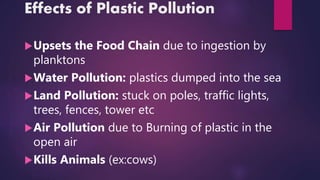
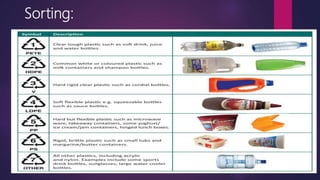
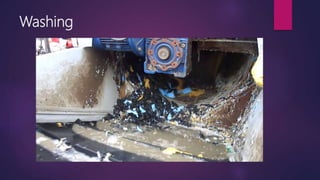
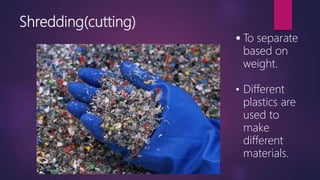
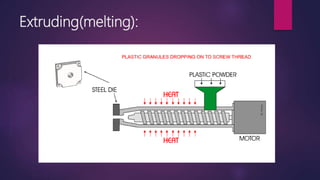
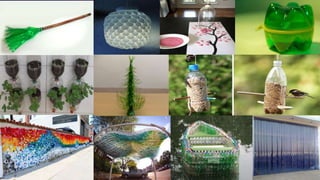
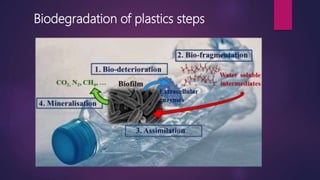
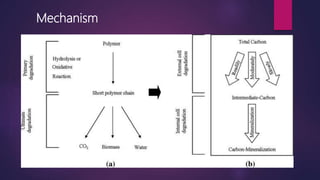
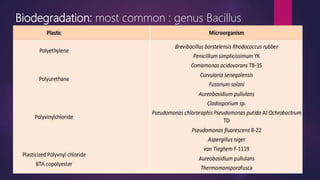
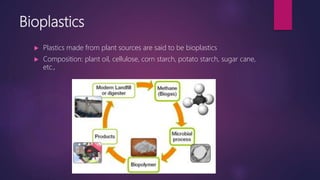
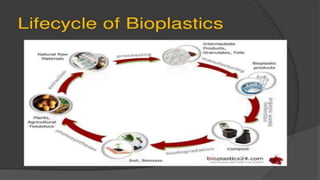
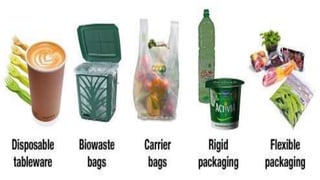
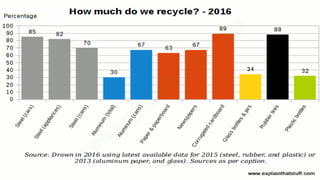
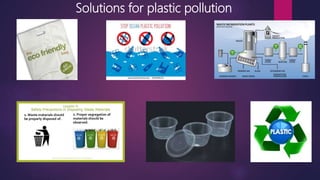
Plastic pollution involves the accumulation of plastic products in the environment that can harm wildlife and humans. Plastic pollution can occur through micro, meso, or macro debris based on size. Plastic pollution can upset the food chain if ingested by plankton, pollute water and land if dumped or stuck in places, and pollute air if burned openly. Plastic recycling recovers different types of plastic to reprocess them into new products unlike the original form. The recycling process involves sorting plastics by type, washing, shredding, extruding or melting plastics, and making new materials. Bioplastics are an alternative to conventional plastics as they are made from renewable plant sources like corn starch or sugar cane
![Plastic pollution
Plastic pollution involves the accumulation
of plastic products in the environment that adversely
affects wildlife, wildlife habitat, or humans.[1] Plastics
that act as pollutants are categorized into micro-,
meso-, or macro debris, based on size.
Can cause other pollutions secondarily
Affects thyroid gland and reproductive system](https://image.slidesharecdn.com/plasticpollutionandrecycling-171215091135/85/Plastic-pollution-and-recycling-2-320.jpg)