Nanomaterials modulate stem
cell differentiation: biological
interaction and underlying
mechanisms
BY
SRIVIDHYA S
ANUSUYA B
Introduction
 Stem cells are unspecialized cells that have the potential for
self-renewal and differentiation into more specialized cell
types.
 Uses: regeneration and replacement of cells, tissue therapy.
 Efforts were made to differentiate stem cells into different
types of cells : osteoblast cells, neurons, adipocytes and
cardiomyocytes.
 The success rate is limited and low efficiency.
 Nanoparticles manipulate stem cells differentiation.
 The engineered nanoparticles imitate the stem cells
environment.
 Growth factors and bioactive in the medium is accepted to
promote stem cell differentiation.
 Functionalized CNTs and GR, differentiate without extra
supplements.
 The application depends on the regulation and control of cell
differentiation into specific cell types.
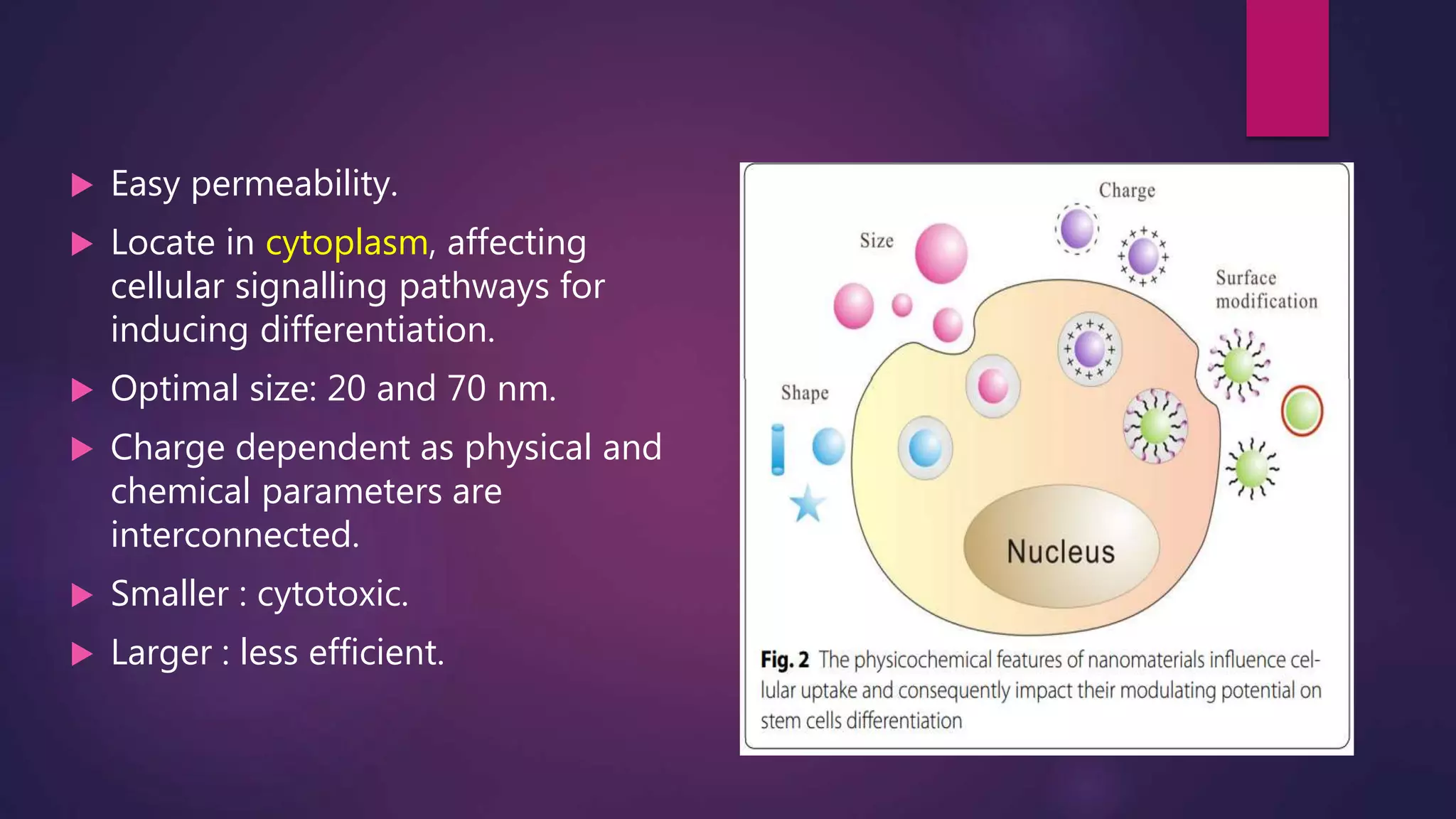
 Easy permeability.
 Locate in cytoplasm, affecting
cellular signalling pathways for
inducing differentiation.
 Optimal size: 20 and 70 nm.
 Charge dependent as physical and
chemical parameters are
interconnected.
 Smaller : cytotoxic.
 Larger : less efficient.
Gold nanoparticle
 Controlled size
 Adipose derived and mesenchymal to osteoblast or
cardiomyocytes.
 30-50nm sphere – most efficient.
 40 and 70nm sphere with bovine serum albumin
affects differentiation.
 Non biodegradable
Silver nanoparticles
 Fastest growing nanomaterial.
 10-20nm : no influence.
 30nm : no influence but cytotoxic.
 80nm : inhibit differentiation.
 Osteogenic differentiation and proliferation.
 Conclusion : size, charge, concentration, surface
modification is imporatant.
Titanium dioxide
 Spherical : negative result.
 Nanotubes : promote differentiation.
 Induce through epigenic mechanism by modulating
histone H3.
 Multilayer coated nanotube : osteoblastic differentiation.
Graphene oxide
 GO – oxidative derivative of graphene.
 Into dopamine neurons and bone cells.
 Incorporated GO : enhance hydrophilicity.
 Spontaneous differentiation.
 Used as adhesion layer for long time differentiation.
Semiconductor nanomaterials
 Does not promote differentiation.
 Serve as nanocarriers.
 Differentiate into adipocytes invitro.
 Bio safety, high loading capacity and biocompatibility.
 Silica modified as nanocarriers : cardiomyocytes.
Polymeric nanoparticles
 Retinolic acid : neural stem cells differentiation.
 Chitosan nanoparticles : osteogenesis.
 Neurodegerative diseases.
 High molecular weight : high toxicity.
 Low immunogenicity, controllable surface
modification, reproducibility and low cost.
Conclusion
 Obtain desired product.
 Side effects should be taken into account.
 Due to complexity exact mechanism – difficult to understand.
 Treatment : cardiovascular disease, neurodegenerative
diseases, bone tissue formation and regeneration.
Reference
 https://jnanobiotechnology.biomedcentral.com/track/pdf/10.1186/s12951-
017-0310-5?site=jnanobiotechnology.biomedcentral.com
Nanomaterials modulate stem cell differentiation

Nanomaterials modulate stem cell differentiation

  • 1.
    Nanomaterials modulate stem celldifferentiation: biological interaction and underlying mechanisms BY SRIVIDHYA S ANUSUYA B
  • 2.
    Introduction  Stem cellsare unspecialized cells that have the potential for self-renewal and differentiation into more specialized cell types.  Uses: regeneration and replacement of cells, tissue therapy.  Efforts were made to differentiate stem cells into different types of cells : osteoblast cells, neurons, adipocytes and cardiomyocytes.  The success rate is limited and low efficiency.
  • 3.
     Nanoparticles manipulatestem cells differentiation.  The engineered nanoparticles imitate the stem cells environment.  Growth factors and bioactive in the medium is accepted to promote stem cell differentiation.  Functionalized CNTs and GR, differentiate without extra supplements.  The application depends on the regulation and control of cell differentiation into specific cell types.
  • 5.
     Easy permeability. Locate in cytoplasm, affecting cellular signalling pathways for inducing differentiation.  Optimal size: 20 and 70 nm.  Charge dependent as physical and chemical parameters are interconnected.  Smaller : cytotoxic.  Larger : less efficient.
  • 6.
    Gold nanoparticle  Controlledsize  Adipose derived and mesenchymal to osteoblast or cardiomyocytes.  30-50nm sphere – most efficient.  40 and 70nm sphere with bovine serum albumin affects differentiation.  Non biodegradable
  • 7.
    Silver nanoparticles  Fastestgrowing nanomaterial.  10-20nm : no influence.  30nm : no influence but cytotoxic.  80nm : inhibit differentiation.  Osteogenic differentiation and proliferation.  Conclusion : size, charge, concentration, surface modification is imporatant.
  • 8.
    Titanium dioxide  Spherical: negative result.  Nanotubes : promote differentiation.  Induce through epigenic mechanism by modulating histone H3.  Multilayer coated nanotube : osteoblastic differentiation.
  • 9.
    Graphene oxide  GO– oxidative derivative of graphene.  Into dopamine neurons and bone cells.  Incorporated GO : enhance hydrophilicity.  Spontaneous differentiation.  Used as adhesion layer for long time differentiation.
  • 10.
    Semiconductor nanomaterials  Doesnot promote differentiation.  Serve as nanocarriers.  Differentiate into adipocytes invitro.  Bio safety, high loading capacity and biocompatibility.  Silica modified as nanocarriers : cardiomyocytes.
  • 11.
    Polymeric nanoparticles  Retinolicacid : neural stem cells differentiation.  Chitosan nanoparticles : osteogenesis.  Neurodegerative diseases.  High molecular weight : high toxicity.  Low immunogenicity, controllable surface modification, reproducibility and low cost.
  • 12.
    Conclusion  Obtain desiredproduct.  Side effects should be taken into account.  Due to complexity exact mechanism – difficult to understand.  Treatment : cardiovascular disease, neurodegenerative diseases, bone tissue formation and regeneration.
  • 13.