ENVIRONMENTAL
SANITATION
OBJECTIVES
• Define Environmental Sanitation
• Identify the Importance of Environmental Sanitation
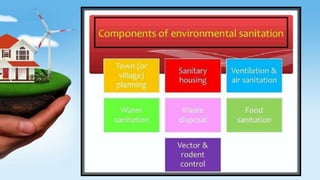
• Explain the Components of Environmental Sanitation
• Discuss Sanitation at house hold Level
• Appreciate Sanitation at community Level
• Narrate on World Environment Day
• Understand Laws Protecting Environment
DEFINITION
Environmental sanitation" means the art
and science of applying sanitary,
biological and physical science principles
and knowledge to improve and control
the environment therein for the protection
of the health and welfare of the public.
IMPORTANCE OF
ENVIRONMENTAL HEALTH
Promotes health
Prevents disease transmission
Eliminates breeding places of insects
Improves quality of life
WATER SANITATION
• The provision of Safe water, Sanitation and Hygiene(WASH) are
crucial for human health and well-being.
• Safe Drinking water-Provision of RO Systems and Cooler in
Schools
• Boiling water in household
• Awareness and sensitization sessions-In School and Community
• Construction of Household Toilet ,School, community toiletcomplex
• Maintenance of Toilets
• Cleanliness Drives
• Rainwater Harvesting
WASTE DISPOSAL
• Waste management (or waste disposal) include
the activities and actions required to
manage waste from its inception to its final
disposal.
• This includes the collection, transport, treatment
and disposal of waste, together with monitoring
and regulation of the waste management process
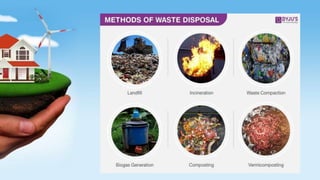
Methods of waste disposal
(a)Dumping
(b)Controlled tipping or sanitary land-
fill
(c)Incineration
(d)Composting
(e)Manure pits
(f) Burial
FOOD SANITATION
• Practice Good Personal Hygiene
• Clean Utensils and Cooking Equipment
• Separate Raw and Ready to Eat Foods
• Wash Fruits and Vegetables Before Use
• Use Appropriate Kitchen Tools for Food Preparation
• Food Handler’s should maintain Hygiene and positive Health
• Keep Dry Foods Separate From Liquids
• Cook Food to an AppropriateTemperature
• Keep Insects and Pests Away From FoodAreas
• Always Use Clean Water to Prepare Food
• Clean the Kitchen and Mop the Floor After EachFood
Preparation
• Keep Kitchen Towels, Sponges and Cleaning Cloths Clean and
Replace Regularly
AIR SANITATION
Air pollution occurs when harmful or excessive
quantities of substances are introduced into Earth’s
atmosphere
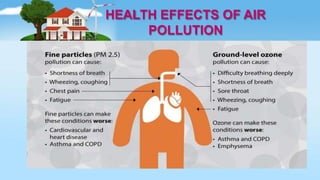
HEALTH EFFECTS OF AIR
POLLUTION
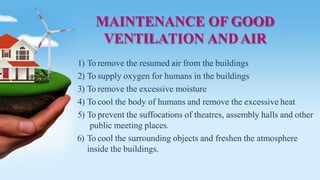
MAINTENANCE OF GOOD
VENTILATION ANDAIR
1) To remove the resumed air from the buildings
2) To supply oxygen for humans in the buildings
3) To remove the excessive moisture
4) To cool the body of humans and remove the excessive heat
5) To prevent the suffocations of theatres, assembly halls and other
public meeting places.
6) To cool the surrounding objects and freshen the atmosphere
inside the buildings.
A good ventilating system should have the following characteristics:
1) It should be possible to control the incoming and outgoing air from
the rooms.
2) It should freshen each and every corner of the room and there should
be no stagnant pockets left.
3) It should only allow the entrance of fresh air free from dirt and
excessive moisture.
4) It should draw sufficient quantity of fresh air which is necessary for
preventing stagnation.
5) It should also allow the control over the room temperature which
should not decrease or increase than that required for comfortable
working and living
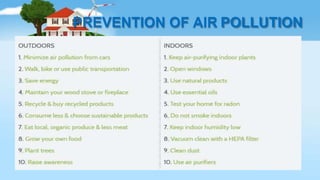
PREVENTION OF AIR POLLUTION
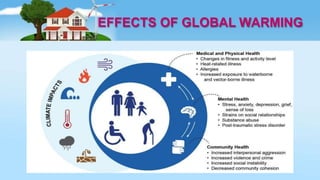
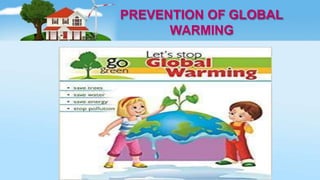
EFFECTS OF GLOBAL WARMING
PREVENTION OF GLOBAL
WARMING
SANITATION AT HOUSEHOLD
LEVEL
• Proper personal hygiene, including frequent
hand washing
• Proper cleaning and sanitizing of all food contact
surfaces and utensils;
• Proper cleaning and sanitizing of food
equipment;
• Good basic housekeeping and maintenance;
SANITATION AT COMMUNITY
LEVEL
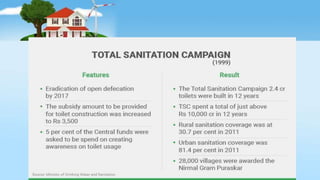
• In 1999, the Indian government introduced the Total
Sanitation Campaign (TSC) to accelerate sanitation
coverage throughout the country, particularly in rural
areas.
• It focused on information and education to generate
public demand for sanitation facilities, particularly in
schools.
• It was renamed Nirmal Bharat Abhiyan in 2012 and
relaunched as Swachh Bharat Abhiyan in 2014.
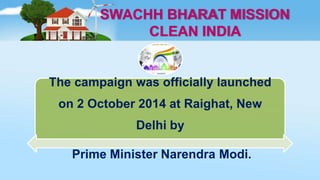
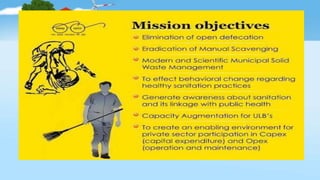
SWACHH BHARAT MISSION
CLEAN INDIA
The campaign was officially launched
on 2 October 2014 at Raighat, New
Delhi by
Prime Minister Narendra Modi.
AIM
• The mission aimed to achieve an "open-defecation
free" (ODF) India by 2 October 2019, the 150th
anniversary of the birth of Mahatma Gandhi.
• The mission aimed at directly contributing to India
achieving target 6.2 of the Sustainable Development
Goal, established by the United Nations in 2015.
WORLD ENVIRONMENT DAY
• World Environment Day is celebrated on 5 June
every year.
• The theme for the World Environment Day 2020 is
“TIME FOR NATURE“ with a focus on its role in
providing essential infrastructure that supports life
on earth and human development.
LAWS PROTECTING
ENVIRONMENT
• The Environment (Protection) Act, 1986;
• The Forest (Conservation) Act, 1980;
• The Wildlife Protection Act, 1972;
• Water (Prevention and Control of Pollution) Act,
1974;
• Air (Prevention and Control of Pollution) Act, 1981
• The Indian Forest Act, 1927.
Environmental sanitation

Environmental sanitation

  • 1.
  • 2.
    OBJECTIVES • Define EnvironmentalSanitation • Identify the Importance of Environmental Sanitation • Explain the Components of Environmental Sanitation • Discuss Sanitation at house hold Level • Appreciate Sanitation at community Level • Narrate on World Environment Day • Understand Laws Protecting Environment
  • 3.
    DEFINITION Environmental sanitation" meansthe art and science of applying sanitary, biological and physical science principles and knowledge to improve and control the environment therein for the protection of the health and welfare of the public.
  • 4.
    IMPORTANCE OF ENVIRONMENTAL HEALTH Promoteshealth Prevents disease transmission Eliminates breeding places of insects Improves quality of life
  • 6.
    WATER SANITATION • Theprovision of Safe water, Sanitation and Hygiene(WASH) are crucial for human health and well-being. • Safe Drinking water-Provision of RO Systems and Cooler in Schools • Boiling water in household • Awareness and sensitization sessions-In School and Community • Construction of Household Toilet ,School, community toiletcomplex • Maintenance of Toilets • Cleanliness Drives • Rainwater Harvesting
  • 7.
    WASTE DISPOSAL • Wastemanagement (or waste disposal) include the activities and actions required to manage waste from its inception to its final disposal. • This includes the collection, transport, treatment and disposal of waste, together with monitoring and regulation of the waste management process
  • 8.
    Methods of wastedisposal (a)Dumping (b)Controlled tipping or sanitary land- fill (c)Incineration (d)Composting (e)Manure pits (f) Burial
  • 10.
    FOOD SANITATION • PracticeGood Personal Hygiene • Clean Utensils and Cooking Equipment • Separate Raw and Ready to Eat Foods • Wash Fruits and Vegetables Before Use • Use Appropriate Kitchen Tools for Food Preparation • Food Handler’s should maintain Hygiene and positive Health • Keep Dry Foods Separate From Liquids • Cook Food to an AppropriateTemperature • Keep Insects and Pests Away From FoodAreas • Always Use Clean Water to Prepare Food • Clean the Kitchen and Mop the Floor After EachFood Preparation • Keep Kitchen Towels, Sponges and Cleaning Cloths Clean and Replace Regularly
  • 11.
    AIR SANITATION Air pollutionoccurs when harmful or excessive quantities of substances are introduced into Earth’s atmosphere
  • 12.
    HEALTH EFFECTS OFAIR POLLUTION
  • 13.
    MAINTENANCE OF GOOD VENTILATIONANDAIR 1) To remove the resumed air from the buildings 2) To supply oxygen for humans in the buildings 3) To remove the excessive moisture 4) To cool the body of humans and remove the excessive heat 5) To prevent the suffocations of theatres, assembly halls and other public meeting places. 6) To cool the surrounding objects and freshen the atmosphere inside the buildings.
  • 14.
    A good ventilatingsystem should have the following characteristics: 1) It should be possible to control the incoming and outgoing air from the rooms. 2) It should freshen each and every corner of the room and there should be no stagnant pockets left. 3) It should only allow the entrance of fresh air free from dirt and excessive moisture. 4) It should draw sufficient quantity of fresh air which is necessary for preventing stagnation. 5) It should also allow the control over the room temperature which should not decrease or increase than that required for comfortable working and living
  • 15.
  • 16.
  • 17.
  • 18.
    SANITATION AT HOUSEHOLD LEVEL •Proper personal hygiene, including frequent hand washing • Proper cleaning and sanitizing of all food contact surfaces and utensils; • Proper cleaning and sanitizing of food equipment; • Good basic housekeeping and maintenance;
  • 19.
    SANITATION AT COMMUNITY LEVEL •In 1999, the Indian government introduced the Total Sanitation Campaign (TSC) to accelerate sanitation coverage throughout the country, particularly in rural areas. • It focused on information and education to generate public demand for sanitation facilities, particularly in schools. • It was renamed Nirmal Bharat Abhiyan in 2012 and relaunched as Swachh Bharat Abhiyan in 2014.
  • 21.
    SWACHH BHARAT MISSION CLEANINDIA The campaign was officially launched on 2 October 2014 at Raighat, New Delhi by Prime Minister Narendra Modi.
  • 22.
    AIM • The missionaimed to achieve an "open-defecation free" (ODF) India by 2 October 2019, the 150th anniversary of the birth of Mahatma Gandhi. • The mission aimed at directly contributing to India achieving target 6.2 of the Sustainable Development Goal, established by the United Nations in 2015.
  • 24.
    WORLD ENVIRONMENT DAY •World Environment Day is celebrated on 5 June every year. • The theme for the World Environment Day 2020 is “TIME FOR NATURE“ with a focus on its role in providing essential infrastructure that supports life on earth and human development.
  • 25.
    LAWS PROTECTING ENVIRONMENT • TheEnvironment (Protection) Act, 1986; • The Forest (Conservation) Act, 1980; • The Wildlife Protection Act, 1972; • Water (Prevention and Control of Pollution) Act, 1974; • Air (Prevention and Control of Pollution) Act, 1981 • The Indian Forest Act, 1927.