S. Naga Prathyusha
B. Sc. (N)
Subject: CoHN
OBJECTIVES
At the end of the class, you must be able to
• Define sanitation and its purposes.
• List out the components of sanitation.
• Discuss the effects of poor sanitation.
• Discuss the illness prevention through sanitation.
• Describe the nurses responsibility in sanitation.
CONTENT
 INTRODUCTION
 DEFINITION
 PURPOSES OF SANITATION
 COMPONENTS OF SANITATION
 EFFECTS OF POOR SANITATION
 MANAGEMENT OF POOR SANITATION
 ROLE OF NURSE IN SANITATION
 CONCLUSION
INTRODUCTION
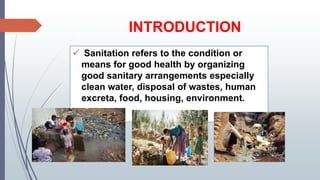
 Sanitation refers to the condition or
means for good health by organizing
good sanitary arrangements especially
clean water, disposal of wastes, human
excreta, food, housing, environment.
DEFINITION
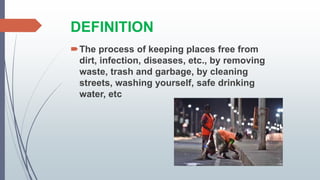
The process of keeping places free from
dirt, infection, diseases, etc., by removing
waste, trash and garbage, by cleaning
streets, washing yourself, safe drinking
water, etc
PURPOSES OF SANITATION
The overall purposes of sanitation are:
 To provide a healthy living environment for everyone.
 To protect the natural resources(ground water, surface water, soil).
 To provide safety, security and dignity for people when they defecate
or urinate.
 To safely reduce human exposure to pathogens.
 To prevent mosquito breeding.
 To maintain and practice healthy lifestyles.
 To have a healthy mind.
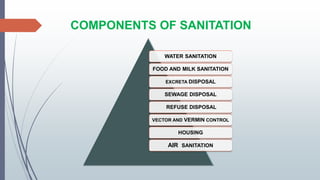
COMPONENTS OF SANITATION
WATER SANITATION
FOOD AND MILK SANITATION
EXCRETA DISPOSAL
SEWAGE DISPOSAL
REFUSE DISPOSAL
VECTOR AND VERMIN CONTROL
HOUSING
AIR SANITATION
1. WATER SANITATION
 PUBLIC WATER SUPPLY MUST BE
–
1. Safe
2. Cheap
3. Reasonably soft
 TREATMENT OF WATER –
1. Boiling
2. Chlorination
3. Iodine treatment
4. Filtration
2. FOOD & MILK
SANITATION
Food
 DO’S
- Keep it cold or hot
- cover it properly
 DON’T’S
- High temperature
- High humidity
- Contamination by strong odors
Milk
- Sterilization
- Pasteurization
3. AIR SANITATION
 Fumigation( eg :silver
hydrogen peroxide under
the trade name alstasan
silvox )
 Formaldehyde (slow acting)
4. SEWAGE DISPOSAL
 municipality system
 Off- site sewer system
 On-site system
 Full sewage system
 Pit latrines
5. REFUSE DISPOSAL
COMMUNITY
 Dumping
 Sanitary landfill
 Composting
 Incineration
 Reduction and salvage
HOUSEHOLD
 Burning
 Burial
 Feeding to animals
6. VECTOR CONTROL
 Chemical method (Insecticides,
Larvicides etc)
 Physical method (removing
unused plastic pools, old buckets,
water storage for long time)
 Biological control (using natural
enemies eg: Gambusia )
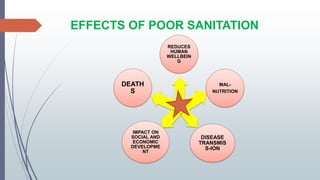
EFFECTS OF POOR SANITATION
REDUCES
HUMAN
WELLBEIN
G
MAL-
NUTRITION
DISEASE
TRANSMIS
S-ION
IMPACT ON
SOCIAL AND
ECONOMIC
DEVELOPME
NT
DEATH
S
MANAGEMENT OF POOR SANITATION
ROLE OF A NURSE IN SANITATION
 The role of public health nurse in controlling the influence
of environmental factors on health was first recognized by
Florence Nightingale and Lillian Wald. The ANA developed
some principles of environmental health. They are:
 Knowledge of health concepts related to environment are
essential.
 Nurses must follow precautionary principles to use
products and practices that do not harm health or the
environment and to take preventative action when met with
uncertainty.
 Nurse should leverage the best evidence available when
selecting materials, products, technology and practices.
Cont…
 Multi-disciplinary collaboration helps to sustain healthy
environments.
 Nurses must respect the diverse values, beliefs, cultures
and circumstances of their families in their approach to
promote a healthy environment.
 A community nurse need to regularly assess the quality of
the environment in which they practice and live.
 Nurse should give appropriate and timely information about
the potentially harmful pollutants, chemicals and other
hazards they are exposed to.
Cont…
 Nurses need to actively research what the best practices
are for promoting a safe and healthy environment.
 Instruct the community about potential health risks related
to the environment.
 Nurses must provide education for safe and healthy
lifestyle practices.
Sanitation

Sanitation

  • 1.
    S. Naga Prathyusha B.Sc. (N) Subject: CoHN
  • 2.
    OBJECTIVES At the endof the class, you must be able to • Define sanitation and its purposes. • List out the components of sanitation. • Discuss the effects of poor sanitation. • Discuss the illness prevention through sanitation. • Describe the nurses responsibility in sanitation.
  • 3.
    CONTENT  INTRODUCTION  DEFINITION PURPOSES OF SANITATION  COMPONENTS OF SANITATION  EFFECTS OF POOR SANITATION  MANAGEMENT OF POOR SANITATION  ROLE OF NURSE IN SANITATION  CONCLUSION
  • 4.
    INTRODUCTION  Sanitation refersto the condition or means for good health by organizing good sanitary arrangements especially clean water, disposal of wastes, human excreta, food, housing, environment.
  • 5.
    DEFINITION The process ofkeeping places free from dirt, infection, diseases, etc., by removing waste, trash and garbage, by cleaning streets, washing yourself, safe drinking water, etc
  • 6.
    PURPOSES OF SANITATION Theoverall purposes of sanitation are:  To provide a healthy living environment for everyone.  To protect the natural resources(ground water, surface water, soil).  To provide safety, security and dignity for people when they defecate or urinate.  To safely reduce human exposure to pathogens.  To prevent mosquito breeding.  To maintain and practice healthy lifestyles.  To have a healthy mind.
  • 7.
    COMPONENTS OF SANITATION WATERSANITATION FOOD AND MILK SANITATION EXCRETA DISPOSAL SEWAGE DISPOSAL REFUSE DISPOSAL VECTOR AND VERMIN CONTROL HOUSING AIR SANITATION
  • 8.
    1. WATER SANITATION PUBLIC WATER SUPPLY MUST BE – 1. Safe 2. Cheap 3. Reasonably soft  TREATMENT OF WATER – 1. Boiling 2. Chlorination 3. Iodine treatment 4. Filtration 2. FOOD & MILK SANITATION Food  DO’S - Keep it cold or hot - cover it properly  DON’T’S - High temperature - High humidity - Contamination by strong odors Milk - Sterilization - Pasteurization
  • 9.
    3. AIR SANITATION Fumigation( eg :silver hydrogen peroxide under the trade name alstasan silvox )  Formaldehyde (slow acting) 4. SEWAGE DISPOSAL  municipality system  Off- site sewer system  On-site system  Full sewage system  Pit latrines
  • 11.
    5. REFUSE DISPOSAL COMMUNITY Dumping  Sanitary landfill  Composting  Incineration  Reduction and salvage HOUSEHOLD  Burning  Burial  Feeding to animals 6. VECTOR CONTROL  Chemical method (Insecticides, Larvicides etc)  Physical method (removing unused plastic pools, old buckets, water storage for long time)  Biological control (using natural enemies eg: Gambusia )
  • 12.
    EFFECTS OF POORSANITATION REDUCES HUMAN WELLBEIN G MAL- NUTRITION DISEASE TRANSMIS S-ION IMPACT ON SOCIAL AND ECONOMIC DEVELOPME NT DEATH S
  • 13.
  • 14.
    ROLE OF ANURSE IN SANITATION  The role of public health nurse in controlling the influence of environmental factors on health was first recognized by Florence Nightingale and Lillian Wald. The ANA developed some principles of environmental health. They are:  Knowledge of health concepts related to environment are essential.  Nurses must follow precautionary principles to use products and practices that do not harm health or the environment and to take preventative action when met with uncertainty.  Nurse should leverage the best evidence available when selecting materials, products, technology and practices.
  • 15.
    Cont…  Multi-disciplinary collaborationhelps to sustain healthy environments.  Nurses must respect the diverse values, beliefs, cultures and circumstances of their families in their approach to promote a healthy environment.  A community nurse need to regularly assess the quality of the environment in which they practice and live.  Nurse should give appropriate and timely information about the potentially harmful pollutants, chemicals and other hazards they are exposed to.
  • 16.
    Cont…  Nurses needto actively research what the best practices are for promoting a safe and healthy environment.  Instruct the community about potential health risks related to the environment.  Nurses must provide education for safe and healthy lifestyle practices.