WHAT IS HAZARD?
A hazard is a situation that poses a
level of threat to life, health,
property, or environment.
'Environmental hazard' is the state of
events which has the potential to threaten
the surrounding natural environment and
adversely affect people's health.
Ibrahim
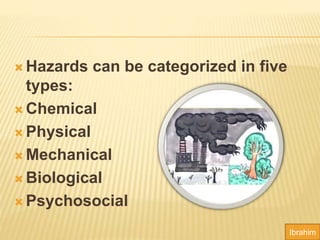
 Hazards can be categorized in five
types:
 Chemical
 Physical
 Mechanical
 Biological
 Psychosocial
Ibrahim
ENVIRONMENTAL HEALTH HAZARDS:
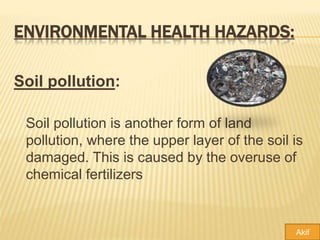
Soil pollution:
Soil pollution is another form of land
pollution, where the upper layer of the soil is
damaged. This is caused by the overuse of
chemical fertilizers
Akif
SOLUTIONS FOR LAND POLLUTION:
 Make people aware about the concept of
Reduce, Recycle and Reuse.
 Reduce the use of pesticides and fertilizers
in agricultural activities.
 Avoid buying packages items as they will
lead to garbage and end up in landfill site.
 Create dumping ground away from
residential areas.
Akif
CAUSES AND EFFECTS OF LAND
RELATED HAZARDS:
Land instability:
Land sliding
Subsidence
Altaf
IMPACTS OF LAND INSTABILITY:
 danger to life in the case of sudden
landslides
 damage or destruction of buildings and
impacts on lifeline infrastructure
 loss of land, particularly in coastal cliff
environments
 destabilisation of neighboring slopes and
properties
 environmental impacts of sedimentation in
waterways
Altaf
ATMOSPHERIC HAZARDS:
Atmospheric hazards include
things such as oxygen
deficiencies, dusts, chemical
vapors, welding fume.
Nabeel
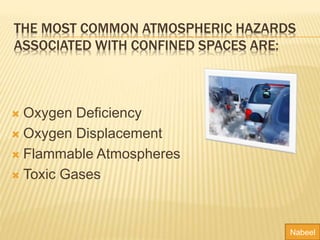
THE MOST COMMON ATMOSPHERIC HAZARDS
ASSOCIATED WITH CONFINED SPACES ARE:
 Oxygen Deficiency
 Oxygen Displacement
 Flammable Atmospheres
 Toxic Gases
Nabeel
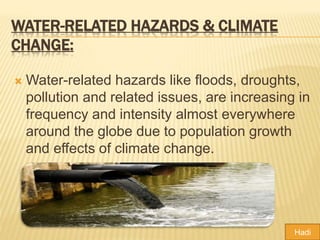
WATER-RELATED HAZARDS & CLIMATE
CHANGE:
 Water-related hazards like floods, droughts,
pollution and related issues, are increasing in
frequency and intensity almost everywhere
around the globe due to population growth
and effects of climate change.
Hadi
WATER POLLUTION:
 Virtually all water pollutants are hazardous to
humans Water pollution is an even greater problem
in the Third World, where millions of people obtain
water for drinking and sanitation from unprotected
streams and ponds that are contaminated with
human waste. This type of contamination has been
estimated to cause more than 3 million deaths
annually from diarrhea in Third World countries,
most of them children.
Hadi
HOW TO SOLVE ENVIRONMENTAL
PROBLEMS?
 Abandoned vehicles:
 Air pollution:
 Dog nuisance:
 Flooding:
 Mobile phone masts:
 Noise:
Luqma
n
 Waste disposal:
 HIV:
 Communicable Diseases:
 Hearing Loss:
 Traffic management and parking:
Luqma
n
M.Ibrahim 9213
Akif Amir 9180
Altaf 9068
Nabeel Meo 9088
Abdul Hadi 9074
Luqman 9052

Environmental hazard

  • 1.
    WHAT IS HAZARD? Ahazard is a situation that poses a level of threat to life, health, property, or environment.
  • 2.
    'Environmental hazard' isthe state of events which has the potential to threaten the surrounding natural environment and adversely affect people's health. Ibrahim
  • 3.
     Hazards canbe categorized in five types:  Chemical  Physical  Mechanical  Biological  Psychosocial Ibrahim
  • 4.
    ENVIRONMENTAL HEALTH HAZARDS: Soilpollution: Soil pollution is another form of land pollution, where the upper layer of the soil is damaged. This is caused by the overuse of chemical fertilizers Akif
  • 5.
    SOLUTIONS FOR LANDPOLLUTION:  Make people aware about the concept of Reduce, Recycle and Reuse.  Reduce the use of pesticides and fertilizers in agricultural activities.  Avoid buying packages items as they will lead to garbage and end up in landfill site.  Create dumping ground away from residential areas. Akif
  • 6.
    CAUSES AND EFFECTSOF LAND RELATED HAZARDS: Land instability: Land sliding Subsidence Altaf
  • 7.
    IMPACTS OF LANDINSTABILITY:  danger to life in the case of sudden landslides  damage or destruction of buildings and impacts on lifeline infrastructure  loss of land, particularly in coastal cliff environments  destabilisation of neighboring slopes and properties  environmental impacts of sedimentation in waterways Altaf
  • 8.
    ATMOSPHERIC HAZARDS: Atmospheric hazardsinclude things such as oxygen deficiencies, dusts, chemical vapors, welding fume. Nabeel
  • 9.
    THE MOST COMMONATMOSPHERIC HAZARDS ASSOCIATED WITH CONFINED SPACES ARE:  Oxygen Deficiency  Oxygen Displacement  Flammable Atmospheres  Toxic Gases Nabeel
  • 10.
    WATER-RELATED HAZARDS &CLIMATE CHANGE:  Water-related hazards like floods, droughts, pollution and related issues, are increasing in frequency and intensity almost everywhere around the globe due to population growth and effects of climate change. Hadi
  • 11.
    WATER POLLUTION:  Virtuallyall water pollutants are hazardous to humans Water pollution is an even greater problem in the Third World, where millions of people obtain water for drinking and sanitation from unprotected streams and ponds that are contaminated with human waste. This type of contamination has been estimated to cause more than 3 million deaths annually from diarrhea in Third World countries, most of them children. Hadi
  • 12.
    HOW TO SOLVEENVIRONMENTAL PROBLEMS?  Abandoned vehicles:  Air pollution:  Dog nuisance:  Flooding:  Mobile phone masts:  Noise: Luqma n
  • 13.
     Waste disposal: HIV:  Communicable Diseases:  Hearing Loss:  Traffic management and parking: Luqma n
  • 14.
    M.Ibrahim 9213 Akif Amir9180 Altaf 9068 Nabeel Meo 9088 Abdul Hadi 9074 Luqman 9052