Wastewater Treatment
BY SUSHIL KUMAR
What is wastewater ?
 Water that has been utilized in some capacity that
negatively impacts the quality of water.
 Sewage is a subset of wastewater that is contaminated
with feces or urines.
Where does wastewater come
from?
 Residences (kitchen, bathroom)
 Rainfall, Highway drainage
 Industrial institution
Wastewater Constituents
 Water (more than 95%)
 Pathogens (bacteria, viruses and parasitic worms)
 Non-pathogenic bacteria
 Organic particles(feces, hair, food, paper fiber, plant materials)
 Soluble organic (urea, protein, sugar ,drug)
 Inorganic particles (sand, grit, metals, ceramics etc.)
 Soluble inorganic (ammonia, hydrogen sulfide, thiosulfates etc.)
 Toxins (pesticides, poisons, herbicides etc.)
What is wastewater treatment?
 process of removing contaminants from wastewater,
both runoff and domestic and making it suitable to
discharge back into the environment.
 Municipal wastewater treatment
Industrial wastewater treatment
How can we say water is pure?
 Physically
a) Total solid (tested by boiling water)
b) Odors
c) Colors
d) Turbidity
 Chemically
a. Biological oxygen demand (BOD)
b. Chemical oxygen demand (COD)
Methods involved in wastewater
treatment
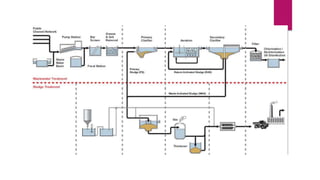
 Wastewater Treatment
 Mechanical (Physical) Treatment
a) Preliminary
b) Primary
 Secondary (Biological) Treatment
 Tertiary (Chemical) Treatment
 Sludge Treatment
Preliminary Treatment
 The objective of preliminary treatment is the removal of
coarse solids and other large materials often found in raw
wastewater.
 Removal of these materials is necessary to enhance the
operation and maintenance of subsequent treatment unit.
 Coarse Screening
 Grit Removal
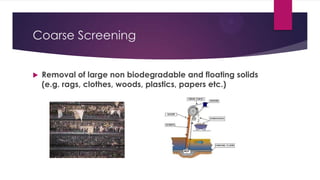
Coarse Screening
 Removal of large non biodegradable and floating solids
(e.g. rags, clothes, woods, plastics, papers etc.)
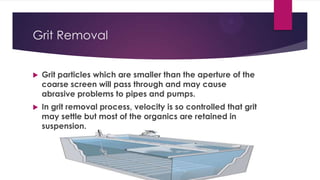
Grit Removal
 Grit particles which are smaller than the aperture of the
coarse screen will pass through and may cause
abrasive problems to pipes and pumps.
 In grit removal process, velocity is so controlled that grit
may settle but most of the organics are retained in
suspension.
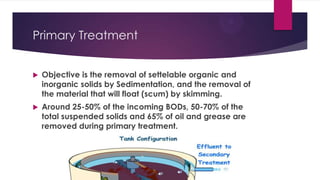
Primary Treatment
 Objective is the removal of settelable organic and
inorganic solids by Sedimentation, and the removal of
the material that will float (scum) by skimming.
 Around 25-50% of the incoming BODs, 50-70% of the
total suspended solids and 65% of oil and grease are
removed during primary treatment.
Secondary Treatment
 Biological Treatment
• Secondary treatment is designed to substantially degrade the biological content of the
sewage which are derived from the human waste, food waste, soaps and detergents etc.
• Aerobic bacteria and protozoa consume biodegradable soluble organic contaminants
(e.g. sugar, fats, short chain carbon molecules etc.) and binds much of the less soluble
fractions into floc.
 Secondary sedimentation
• Microorganisms must be separated from the treated water by sedimentation to produce
clarified secondary effluent.
• Biological floc is settled out in secondary clarifier and the secondary sludge is then sent to
sludge treatment unit.
Nutrients Removal
 Wastewater may contain high level of nutrients (N or P
compounds) which excessive release to environment
may cause eutrophication.
 Overgrowth of weeds, algae, blue-green algae
(cyanobacteria).
 DE oxygenation
 Toxins produced by some algae may contaminate
drinking water supply.
Nitrogen Removal
 Nitrification
• Biological oxidation of nitrogen from ammonia to nitrate.
I. Ammonia to nitrite using Nitrosomonas
II. Nitrite to Nitrate using Nitrobacter ssp.
 DE nitrification (anoxic condition)
• Nitrate is converted into nitrogen gas and released into air.
Phosphorus Removal
 Biologically
• Using Polyphosphate Accumulating Organism (PAOs)
• The process is called “Enhanced biological phosphorus
removal”.
 By chemical precipitation
• Using salts of irons (e.g. ferric chloride) or aluminium
(e.g. alum) or lime.
Tertiary Treatment
 Purpose is to provide a final treatment stage to further improve the
effluent quality before it is discharged to the receiving environment.
 Nutrients removal
 Disinfection
• to reduce the number of microorganisms
 Chlorination
 Ultraviolet radiation
 Ozone
 Odor control
Odor Control
 Odor emitted by wastewater treatment are typically an
indication of anaerobic or septic condition.
 Generally arises due to hydrogen sulfide.
 Controlled by adding iron salts or hydrogen peroxide or
calcium nitrate.
Sludge Treatment
 This process describes the management and disposal of
primary and secondary sludge.
 processes involved are
 Anaerobic digestion
 Composting
 De watering
Anaerobic Digestion
 Anaerobic bacteria acts on sludge and produces large
amount of waste solids and biogas ( high concentration
of methane).
 Methane can be used to generate electricity and run
few pumps.
 Solid waste (containing water) is sent for composting.
Composting
 An aerobic process that involves mixing of wastewater
solids with sources of carbons such as sawdust, straw or
woodchips.
 Aerobic bacteria digests both wastewater solids and
carbon source and produce large amount of heat.
 Resultant solid is then sent for dewatering.
DeWatering
 Water is removed from solid waste for volume reduction.
 Using drying beds
 Mechanically filtering often through cloth screens.
 Centrifugation.
The sludge is now ready to be used off sites as fertilizers.
Waste Water Treatment

Waste Water Treatment

  • 1.
  • 2.
    What is wastewater?  Water that has been utilized in some capacity that negatively impacts the quality of water.  Sewage is a subset of wastewater that is contaminated with feces or urines.
  • 3.
    Where does wastewatercome from?  Residences (kitchen, bathroom)  Rainfall, Highway drainage  Industrial institution
  • 4.
    Wastewater Constituents  Water(more than 95%)  Pathogens (bacteria, viruses and parasitic worms)  Non-pathogenic bacteria  Organic particles(feces, hair, food, paper fiber, plant materials)  Soluble organic (urea, protein, sugar ,drug)  Inorganic particles (sand, grit, metals, ceramics etc.)  Soluble inorganic (ammonia, hydrogen sulfide, thiosulfates etc.)  Toxins (pesticides, poisons, herbicides etc.)
  • 5.
    What is wastewatertreatment?  process of removing contaminants from wastewater, both runoff and domestic and making it suitable to discharge back into the environment.  Municipal wastewater treatment Industrial wastewater treatment
  • 6.
    How can wesay water is pure?  Physically a) Total solid (tested by boiling water) b) Odors c) Colors d) Turbidity  Chemically a. Biological oxygen demand (BOD) b. Chemical oxygen demand (COD)
  • 7.
    Methods involved inwastewater treatment  Wastewater Treatment  Mechanical (Physical) Treatment a) Preliminary b) Primary  Secondary (Biological) Treatment  Tertiary (Chemical) Treatment  Sludge Treatment
  • 8.
    Preliminary Treatment  Theobjective of preliminary treatment is the removal of coarse solids and other large materials often found in raw wastewater.  Removal of these materials is necessary to enhance the operation and maintenance of subsequent treatment unit.  Coarse Screening  Grit Removal
  • 9.
    Coarse Screening  Removalof large non biodegradable and floating solids (e.g. rags, clothes, woods, plastics, papers etc.)
  • 10.
    Grit Removal  Gritparticles which are smaller than the aperture of the coarse screen will pass through and may cause abrasive problems to pipes and pumps.  In grit removal process, velocity is so controlled that grit may settle but most of the organics are retained in suspension.
  • 11.
    Primary Treatment  Objectiveis the removal of settelable organic and inorganic solids by Sedimentation, and the removal of the material that will float (scum) by skimming.  Around 25-50% of the incoming BODs, 50-70% of the total suspended solids and 65% of oil and grease are removed during primary treatment.
  • 12.
    Secondary Treatment  BiologicalTreatment • Secondary treatment is designed to substantially degrade the biological content of the sewage which are derived from the human waste, food waste, soaps and detergents etc. • Aerobic bacteria and protozoa consume biodegradable soluble organic contaminants (e.g. sugar, fats, short chain carbon molecules etc.) and binds much of the less soluble fractions into floc.  Secondary sedimentation • Microorganisms must be separated from the treated water by sedimentation to produce clarified secondary effluent. • Biological floc is settled out in secondary clarifier and the secondary sludge is then sent to sludge treatment unit.
  • 13.
    Nutrients Removal  Wastewatermay contain high level of nutrients (N or P compounds) which excessive release to environment may cause eutrophication.  Overgrowth of weeds, algae, blue-green algae (cyanobacteria).  DE oxygenation  Toxins produced by some algae may contaminate drinking water supply.
  • 14.
    Nitrogen Removal  Nitrification •Biological oxidation of nitrogen from ammonia to nitrate. I. Ammonia to nitrite using Nitrosomonas II. Nitrite to Nitrate using Nitrobacter ssp.  DE nitrification (anoxic condition) • Nitrate is converted into nitrogen gas and released into air.
  • 15.
    Phosphorus Removal  Biologically •Using Polyphosphate Accumulating Organism (PAOs) • The process is called “Enhanced biological phosphorus removal”.  By chemical precipitation • Using salts of irons (e.g. ferric chloride) or aluminium (e.g. alum) or lime.
  • 16.
    Tertiary Treatment  Purposeis to provide a final treatment stage to further improve the effluent quality before it is discharged to the receiving environment.  Nutrients removal  Disinfection • to reduce the number of microorganisms  Chlorination  Ultraviolet radiation  Ozone  Odor control
  • 17.
    Odor Control  Odoremitted by wastewater treatment are typically an indication of anaerobic or septic condition.  Generally arises due to hydrogen sulfide.  Controlled by adding iron salts or hydrogen peroxide or calcium nitrate.
  • 18.
    Sludge Treatment  Thisprocess describes the management and disposal of primary and secondary sludge.  processes involved are  Anaerobic digestion  Composting  De watering
  • 19.
    Anaerobic Digestion  Anaerobicbacteria acts on sludge and produces large amount of waste solids and biogas ( high concentration of methane).  Methane can be used to generate electricity and run few pumps.  Solid waste (containing water) is sent for composting.
  • 20.
    Composting  An aerobicprocess that involves mixing of wastewater solids with sources of carbons such as sawdust, straw or woodchips.  Aerobic bacteria digests both wastewater solids and carbon source and produce large amount of heat.  Resultant solid is then sent for dewatering.
  • 21.
    DeWatering  Water isremoved from solid waste for volume reduction.  Using drying beds  Mechanically filtering often through cloth screens.  Centrifugation. The sludge is now ready to be used off sites as fertilizers.