




WELCOME TO ALL
SOHAILAHAMED(C)
SREEKANTH VIJAYAN
SAJANA K AZEEZ
SIRAJUDHEEN M.A
SHIFAS IBRAHIM
 ENTERPRISE WIDE SYSTEM
 E-BUSINESS APPLICATIONS
Enterprise wide system are large-scale
application software packages that
support business processes,
information flows, reporting and data
analytics in complex organizations.
◦ From a hardware perspective, enterprise systems
are the servers, storage and associated software
that large businesses use as the foundation for
their IT infrastructure. These systems are
designed to manage large volumes of critical
data. These systems are typically designed to
provide high levels of transaction performance
and data security.
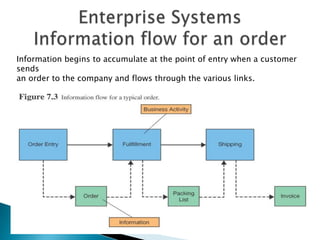
Information begins to accumulate at the point of entry when a customer
sends
an order to the company and flows through the various links.
 enterprise resource planning (ERP) systems, enterprise
planning systems,supply chain management,
and customer relationship management software.
Although data warehousing or business
intelligence systems are enterprise-wide packaged
application software often sold by ES vendors, since
they do not directly support execution of business
processes, they are often excluded from the term.
 Enterprise systems are built on software platforms, such
as SAP’s NetWeaver and Oracle's Fusion, and
databases.
DECISION MAKING
AUTOMATION
QUALITY OF PRODUCTS
COSTS
TRAINING AND TURNOVER
DIFFICULT TO CUSTOMIZE
INTEGRATION
THE NATURE OF ENTERPRISE
SYSTEM PACKAGE
BEST PRACTICES
ASSEMBLY REQUIREMENTS
EVOLUTIONARY NATURE OF
ENTERPRISE SYSTEMS
CUSTOMER RELATIONSHIP
MANAGEMENT
SUPPLY CHAIN MANAGEMENT
ENTERPRISE RESOURCE
PLANNING
BUSINESS INTELLIGENCE
1. BUSINESS TO CONSUMER(B2C)
2. BUSINESS TO BUSINESS(B2B)
3. CUSTOMER TO BUSINESS(C2B)
4. CUSTOMER TO CUSTOMER(C2C)
Thank to all

Enterprise wide system

  • 1.
  • 2.
    SOHAILAHAMED(C) SREEKANTH VIJAYAN SAJANA KAZEEZ SIRAJUDHEEN M.A SHIFAS IBRAHIM
  • 3.
     ENTERPRISE WIDESYSTEM  E-BUSINESS APPLICATIONS
  • 4.
    Enterprise wide systemare large-scale application software packages that support business processes, information flows, reporting and data analytics in complex organizations.
  • 5.
    ◦ From ahardware perspective, enterprise systems are the servers, storage and associated software that large businesses use as the foundation for their IT infrastructure. These systems are designed to manage large volumes of critical data. These systems are typically designed to provide high levels of transaction performance and data security.
  • 6.
    Information begins toaccumulate at the point of entry when a customer sends an order to the company and flows through the various links.
  • 7.
     enterprise resourceplanning (ERP) systems, enterprise planning systems,supply chain management, and customer relationship management software. Although data warehousing or business intelligence systems are enterprise-wide packaged application software often sold by ES vendors, since they do not directly support execution of business processes, they are often excluded from the term.  Enterprise systems are built on software platforms, such as SAP’s NetWeaver and Oracle's Fusion, and databases.
  • 8.
  • 9.
  • 10.
    INTEGRATION THE NATURE OFENTERPRISE SYSTEM PACKAGE BEST PRACTICES ASSEMBLY REQUIREMENTS EVOLUTIONARY NATURE OF ENTERPRISE SYSTEMS
  • 11.
    CUSTOMER RELATIONSHIP MANAGEMENT SUPPLY CHAINMANAGEMENT ENTERPRISE RESOURCE PLANNING BUSINESS INTELLIGENCE
  • 13.
    1. BUSINESS TOCONSUMER(B2C) 2. BUSINESS TO BUSINESS(B2B) 3. CUSTOMER TO BUSINESS(C2B) 4. CUSTOMER TO CUSTOMER(C2C)
  • 14.