



Designing an Enterprise Performance Management (EPM) SystemforGuided byMr.S. Anandane, Sr. Manager-EDPAnglo French Textiles, Pudhucherry&Mr.S. Victor Anand Kumar, Senior LecturerPondicherry University, PudhucherryPresented by 				M.Sundarrajan 				II MBA				Pondicherry University
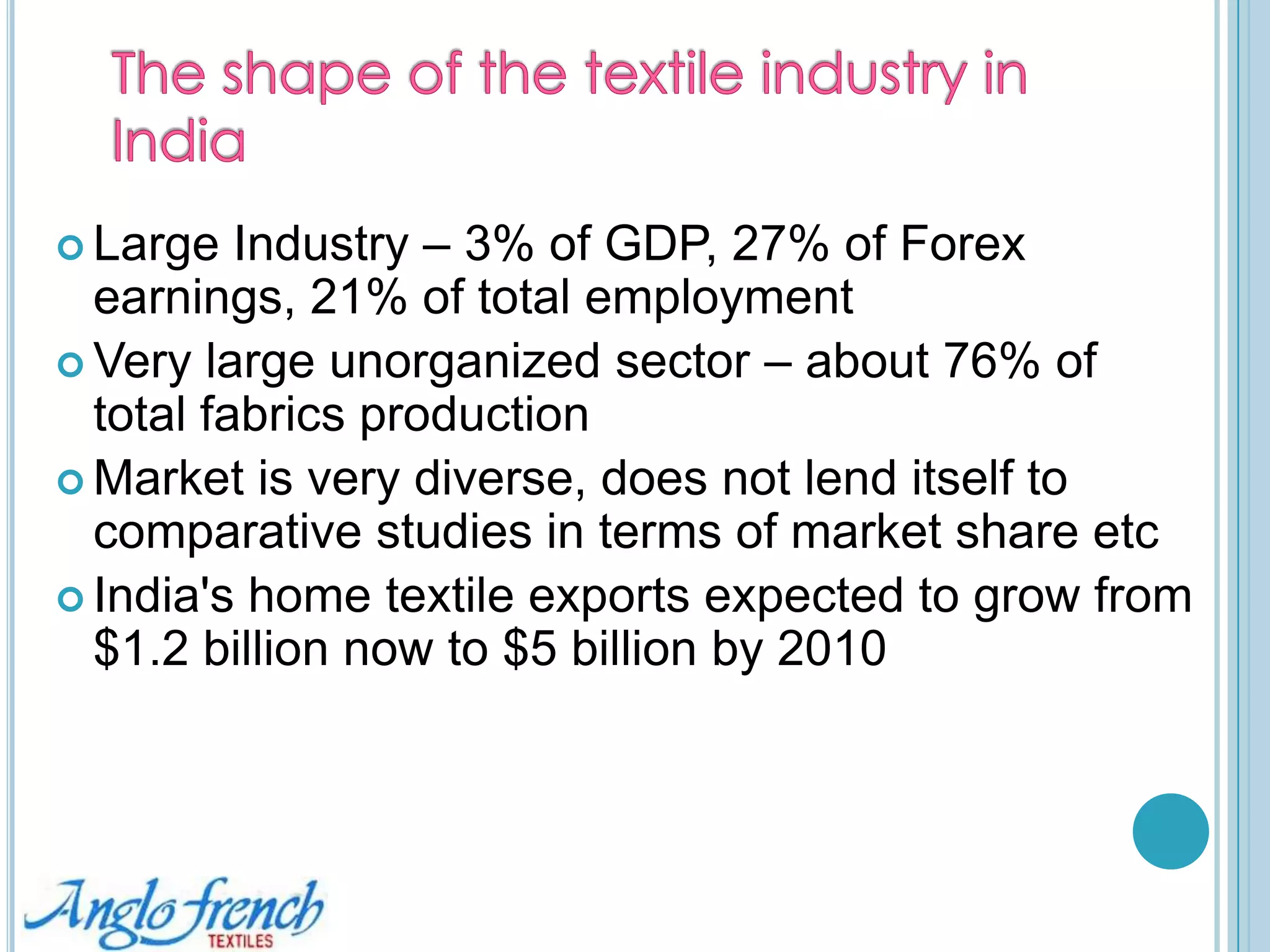
The shape of the textile industry in IndiaLarge Industry – 3% of GDP, 27% of Forex earnings, 21% of total employmentVery large unorganized sector – about 76% of total fabrics productionMarket is very diverse, does not lend itself to comparative studies in terms of market share etcIndia's home textile exports expected to grow from $1.2 billion now to $5 billion by 2010
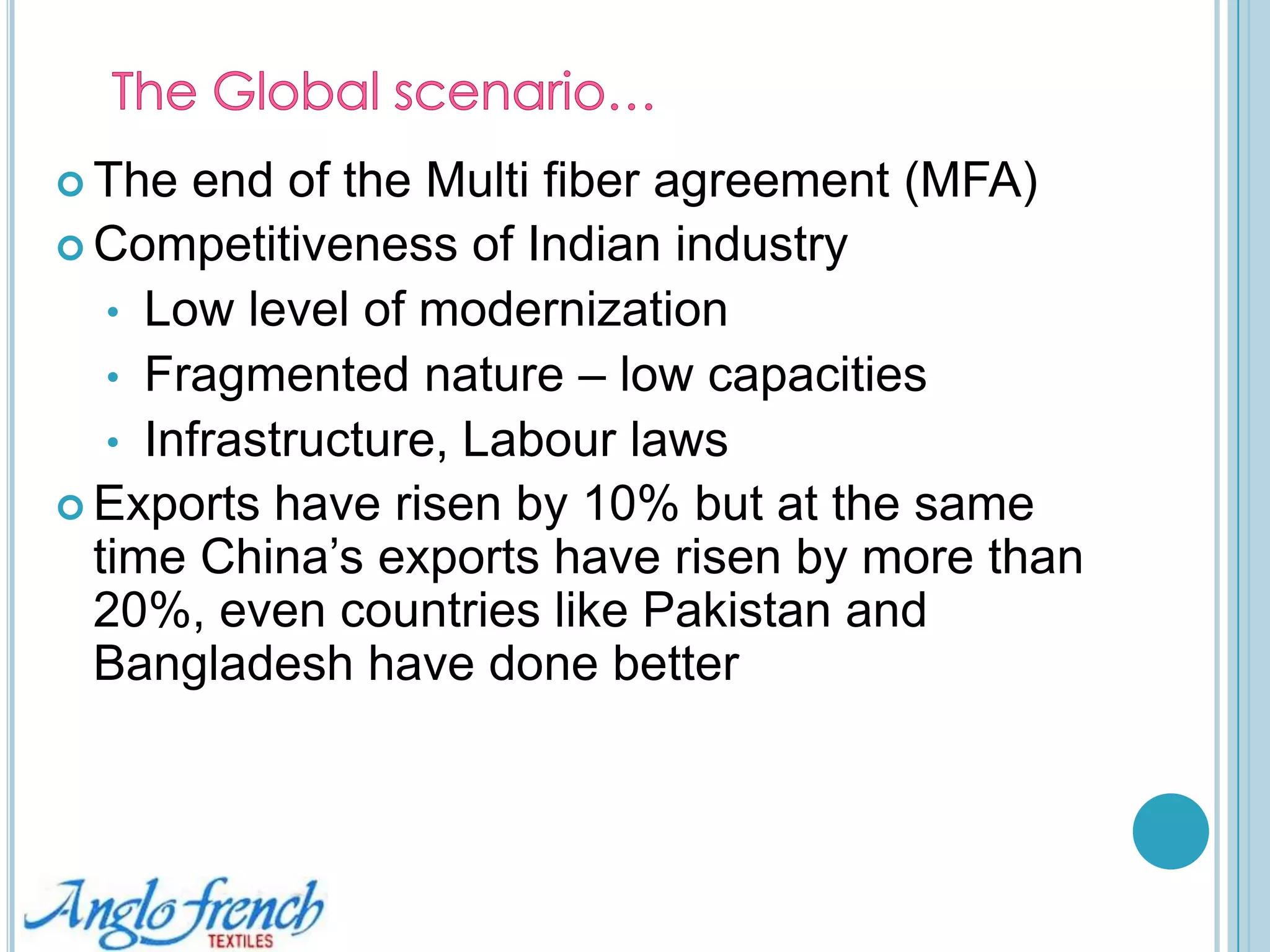
The Global scenario…The end of the Multi fiber agreement (MFA)Competitiveness of Indian industryLow level of modernization
Fragmented nature – low capacities
Infrastructure, Labour lawsExports have risen by 10% but at the same time China’s exports have risen by more than 20%, even countries like Pakistan and Bangladesh have done better
Company Profile – Anglo French TextilesLegacy of over 100 years ( started in 1898)Company is owned by Government of PondicherryKnown as a ‘composite mill’ProductsBed sheets, school uniforms, parachute suits etcEmployee Strength: 3,279 no's (465 staff and the rest workers)
Enterprise Performance Management System – EPM Overview
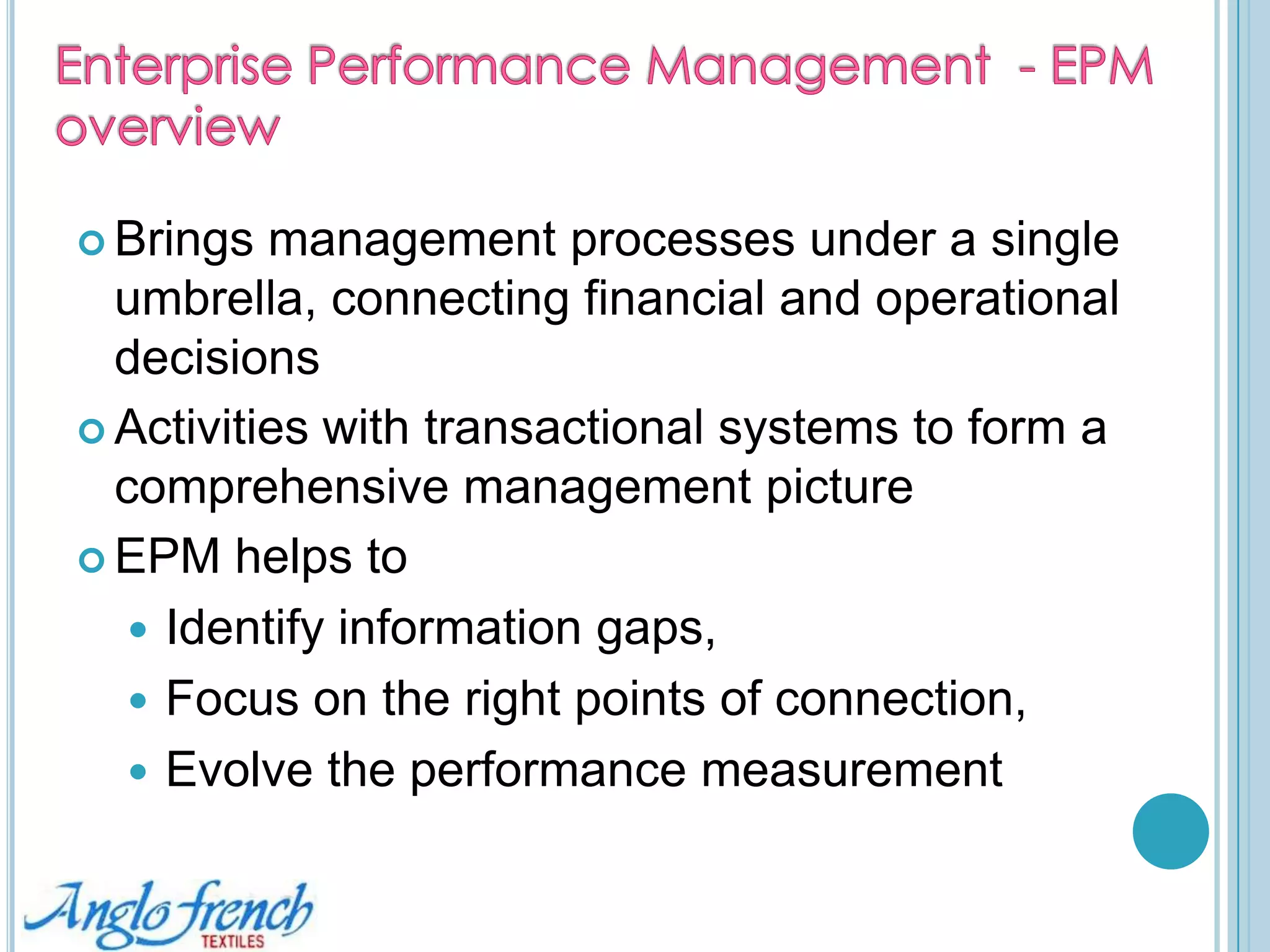
Enterprise Performance Management  - EPM overviewBrings management processes under a single umbrella, connecting financial and operational decisionsActivities with transactional systems to form a comprehensive management pictureEPM helps toIdentify information gaps, Focus on the right points of connection, Evolve the performance measurement
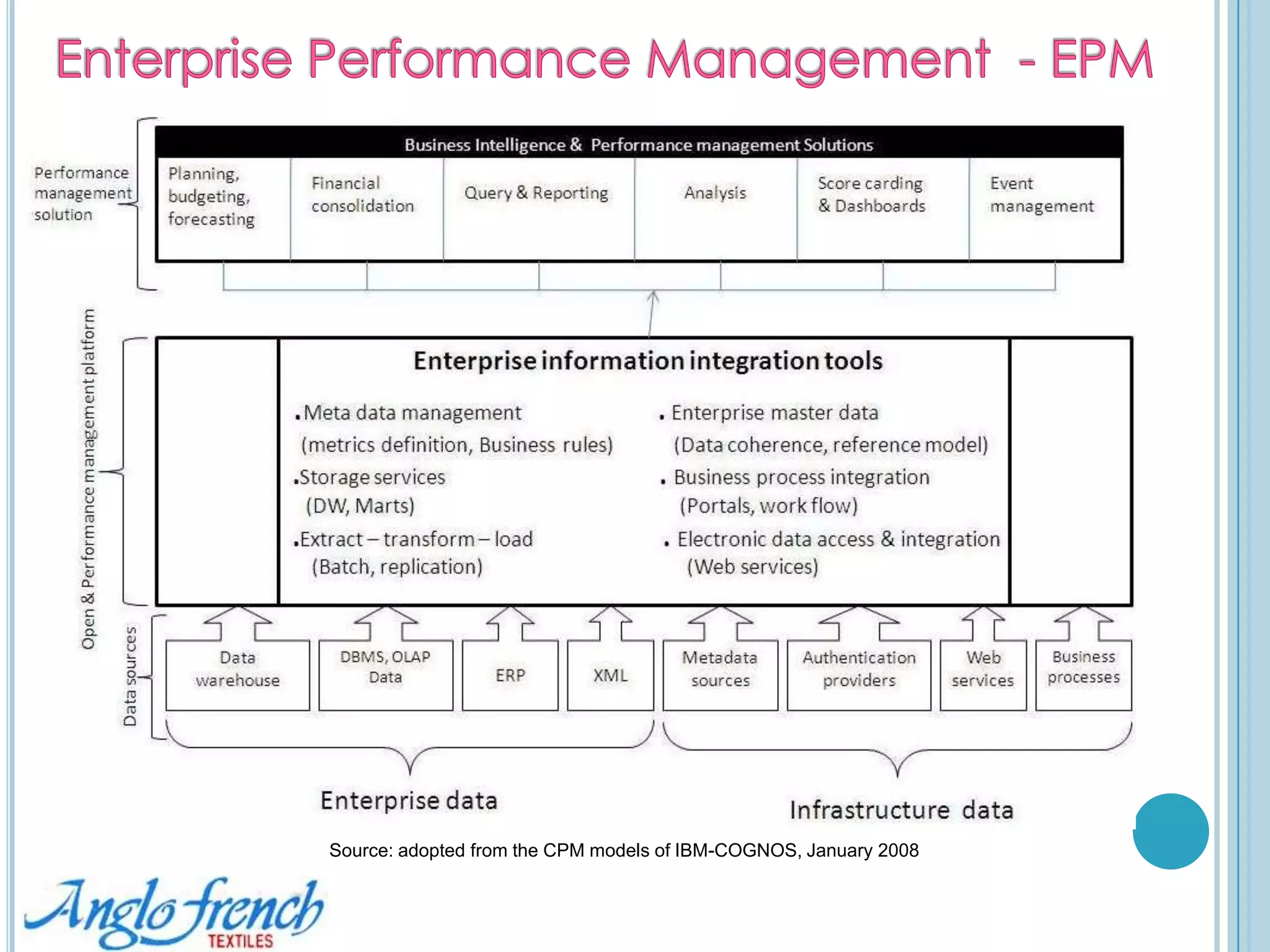
Enterprise Performance Management  - EPMSource: adopted from the CPM models of IBM-COGNOS, January 2008
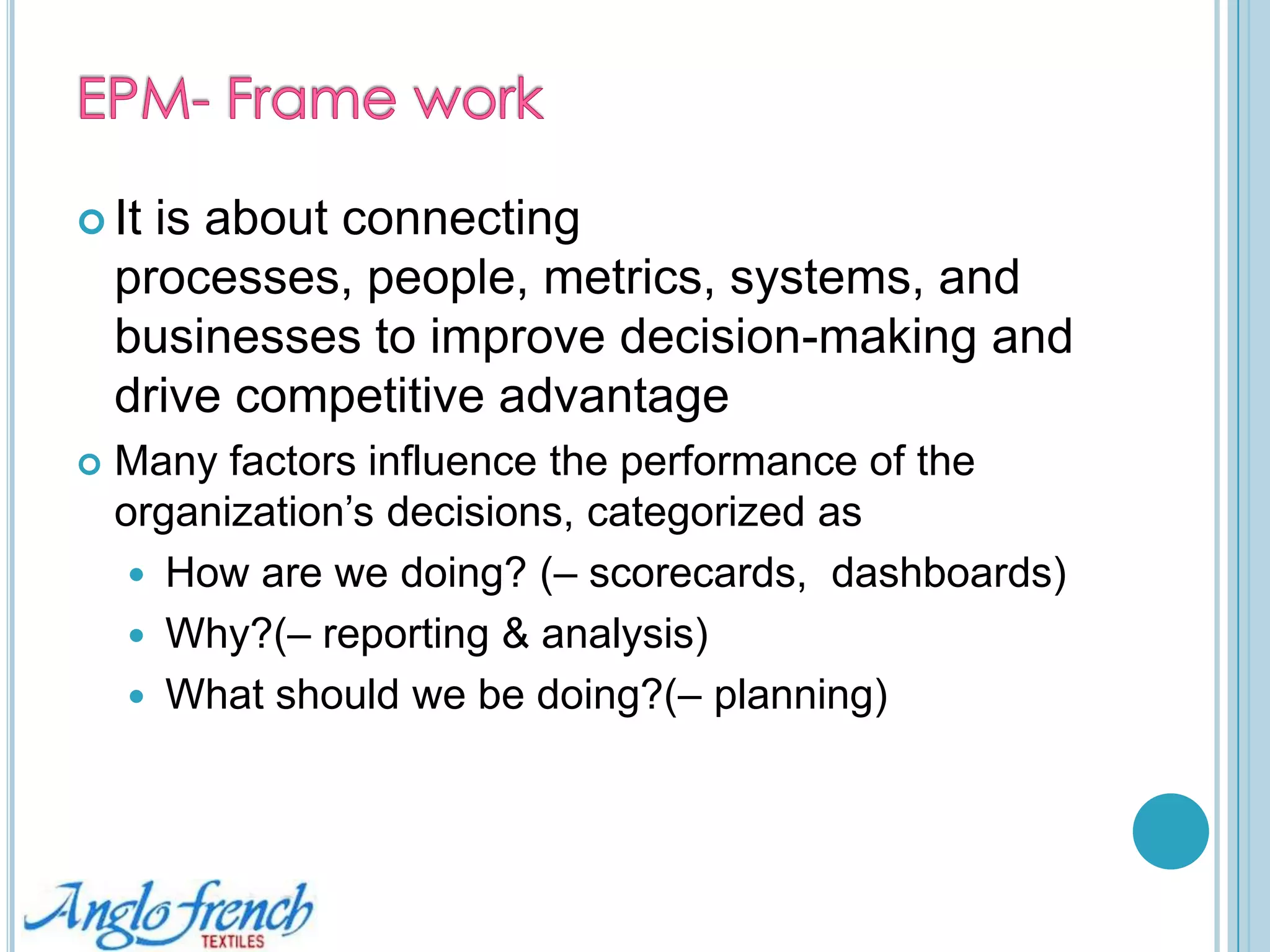
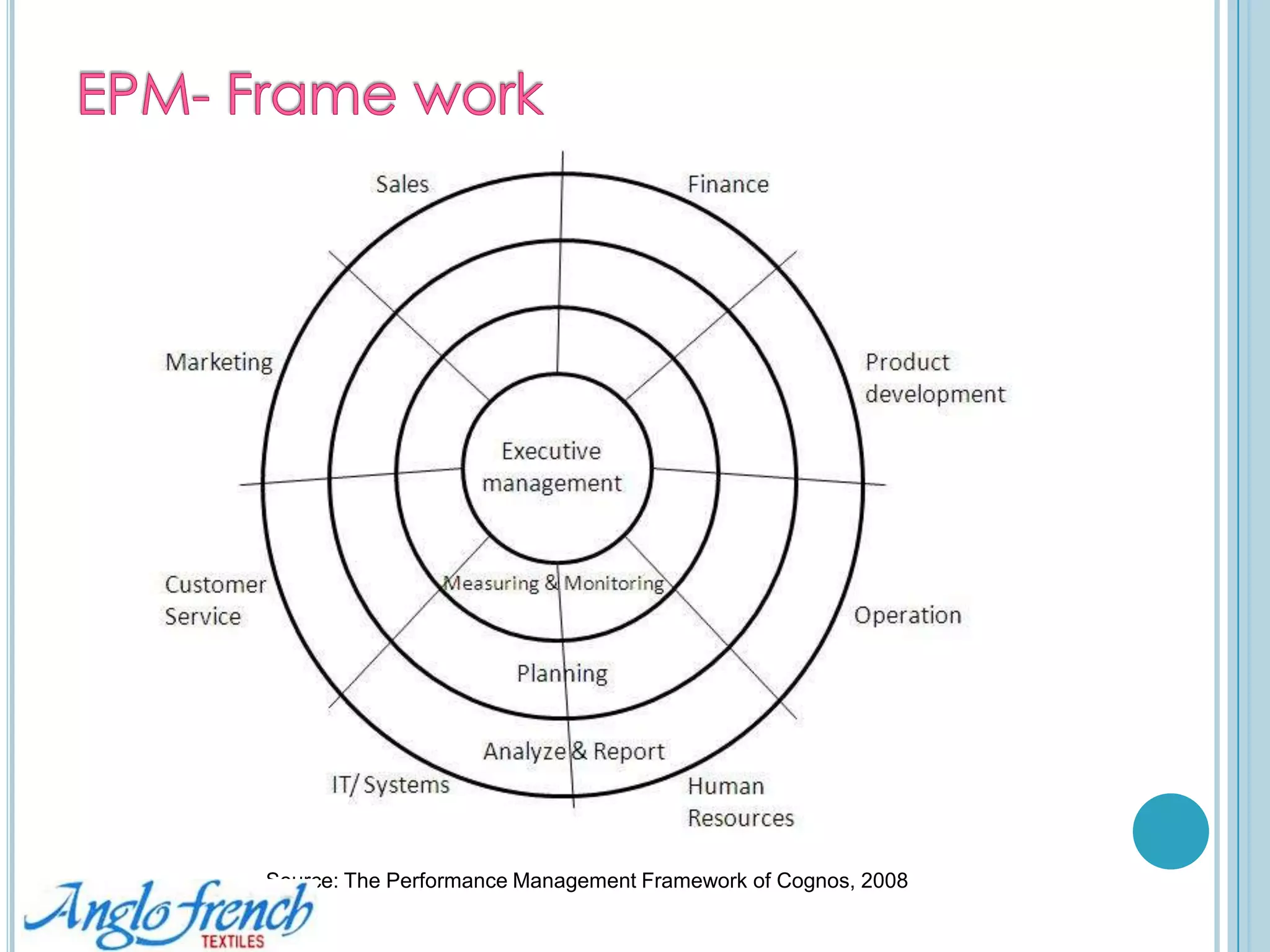
EPM- Frame workIt is about connecting processes, people, metrics, systems, and businesses to improve decision-making and drive competitive advantageMany factors influence the performance of the organization’s decisions, categorized as How are we doing? (– scorecards,  dashboards)Why?(– reporting & analysis)What should we be doing?(– planning)
EPM- Frame workSource: The Performance Management Framework of Cognos, 2008
Identification of Key Performance Indicators (KPIs)Evaluating the performance of any department starts with the key performance indicators (KPIs)Classified based on the origin, namely department, workflow, cost incurring activity, profitable activity, etcThe whole organization is classified into main eight quarters and the activities are monitoredFinanceManufacturing (Operation)
Finance department KPIsFocus on checks and controls to comply with legal, tax, and accounting regulations and requirementsto advise the business on future directions, performance, and opportunitiesIncome statementDrill-down varianceOperational plan varianceCash flow and working capitalBalance sheetCapital expenditure and strategic investmentsReserves
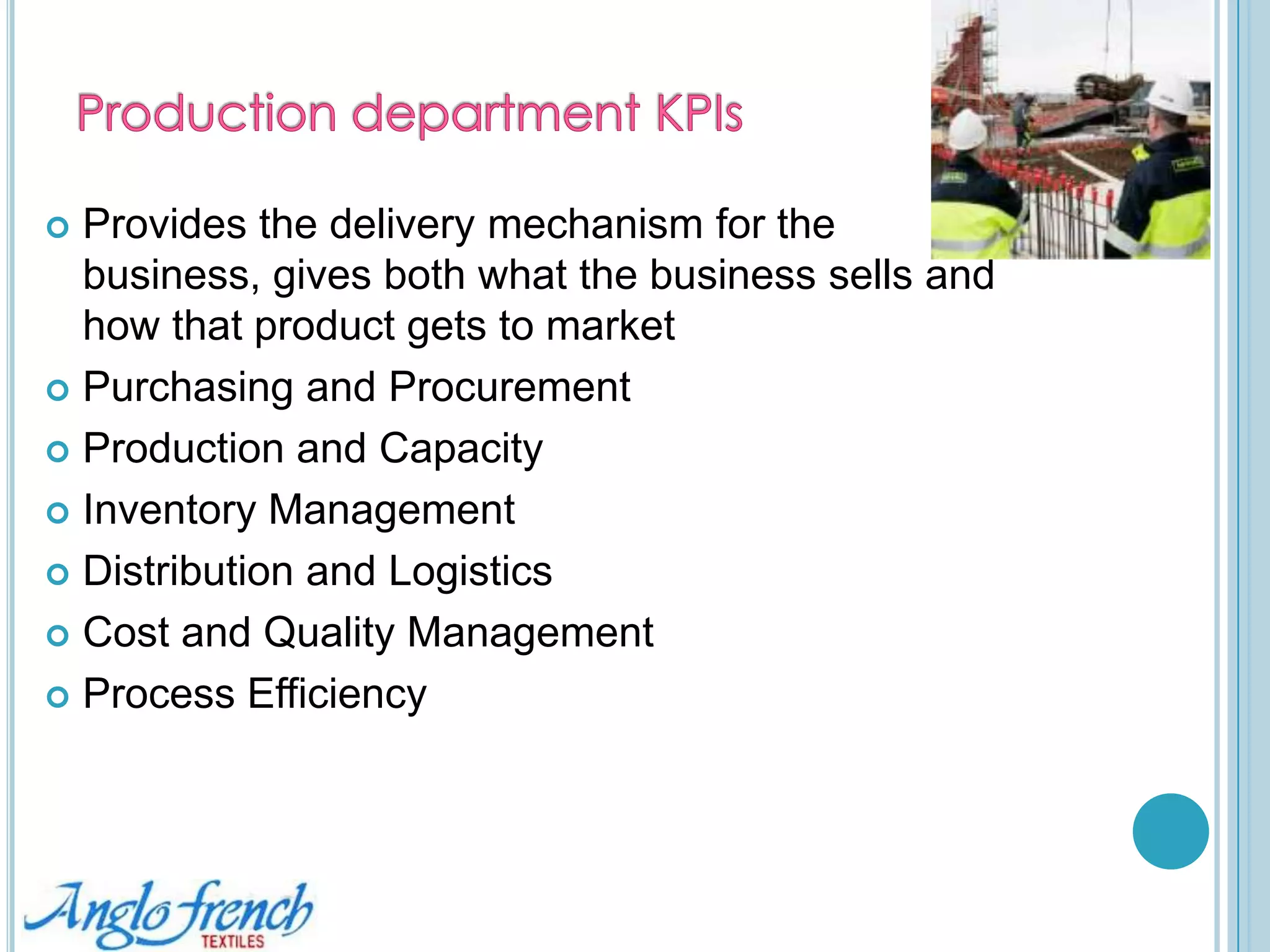
Production department KPIsProvides the delivery mechanism for the business, gives both what the business sells and how that product gets to marketPurchasing and ProcurementProduction and CapacityInventory ManagementDistribution and LogisticsCost and Quality ManagementProcess Efficiency
Existing Decision Support System (DSS) @ AFTInformation support to many day-to-day decision making needsAnalysis and reports remain Unconsolidated & Scattered (connected inefficiently)Only few can read the plan, but cant modify according to the departmental driversDisjointed technologies lead to silos of information and limit the ability to act with focus and agility
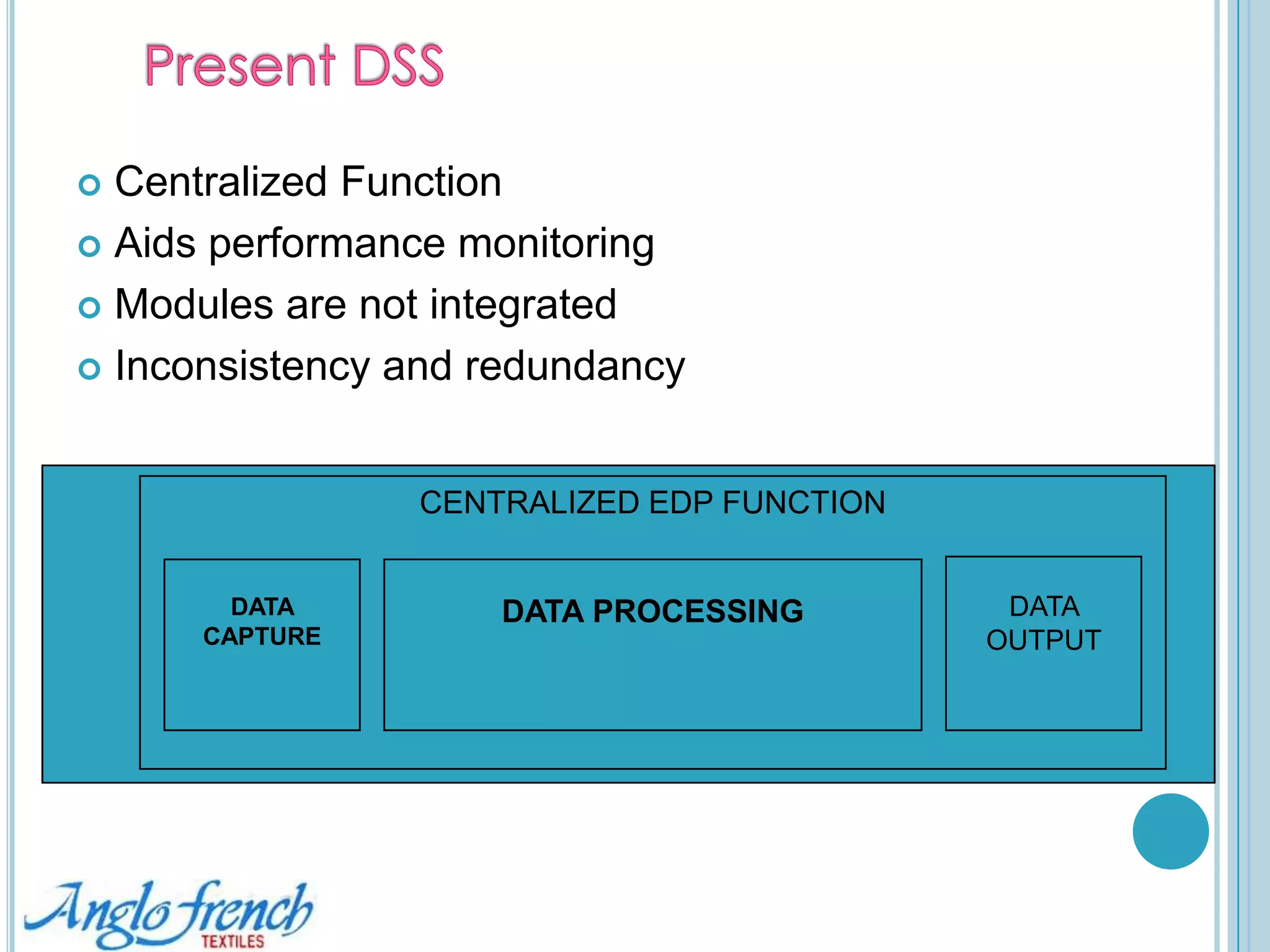
CENTRALIZED EDP FUNCTIONDATA OUTPUTDATA CAPTUREDATA PROCESSINGPresent DSSCentralized Function
Aids performance monitoring
Modules are not integrated
Inconsistency and redundancyProblems in the existing systemData redundancy and inconsistencyData available in operational/ transactional level are not integrated.Non-availability of compact dataLarge volumes of data with high levels of detail and low levels of granularitySystem does not support unstructured decision-making.Requires large processing time and effort
Project-Overview  Need for the project
 Scope of the project
 Proposed system
Benefits Need for the project…Need for an Enterprise Performance Management System to provide information support for unstructured decision making and strategic planningNeed for well defined Key Performance Indicators KPIs Need for well established metrics for the evaluation of KPIsStatistical and graphical reports to identify patterns and trendsare needed
Scope of the project…Identify the KPIs in the organization, by analyzing various information and to suggest solutionDevelop an enterprise performance management system (EPM) model in order to aid managers in making quick decision in each department of the organization
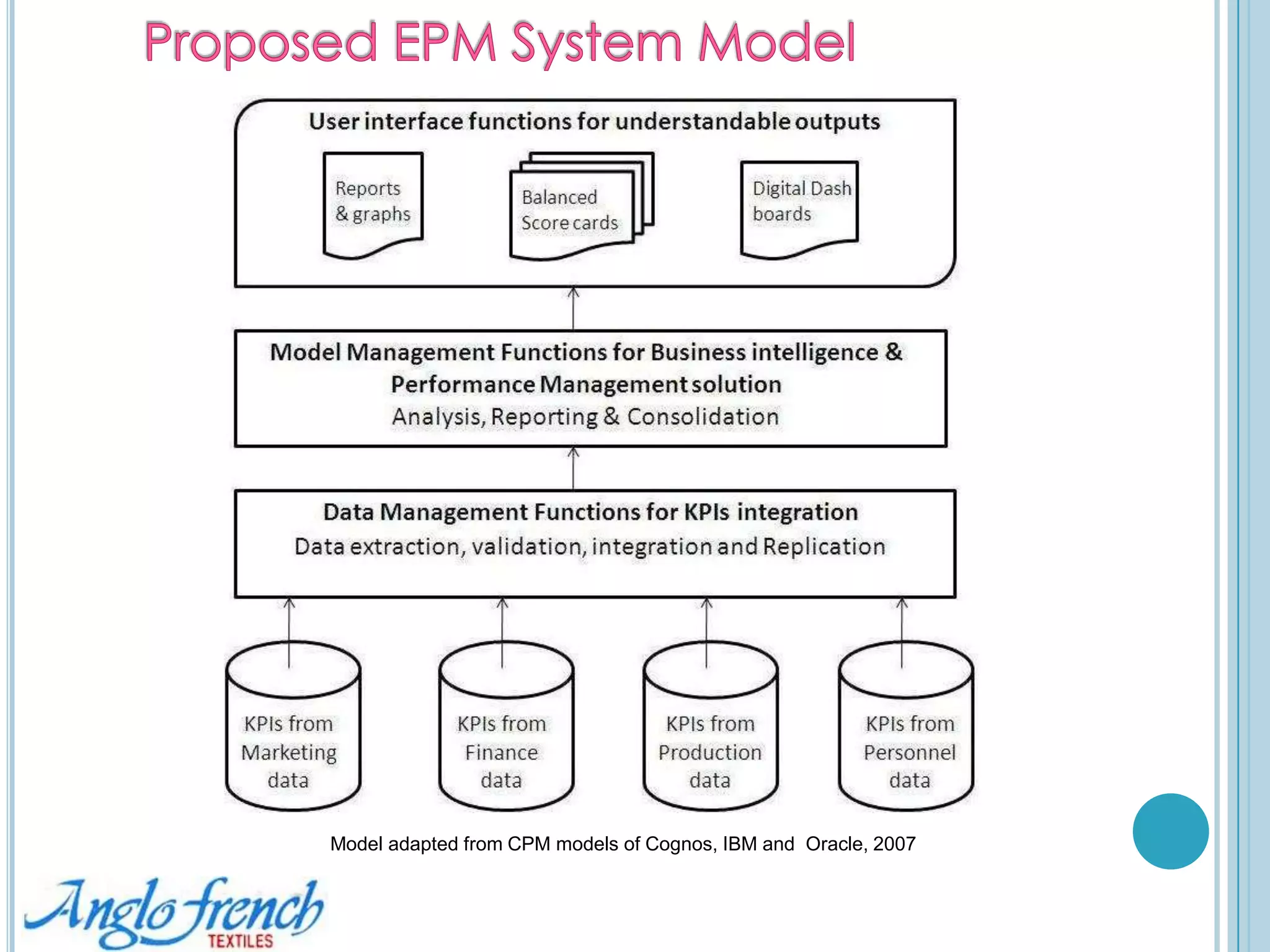
Proposed EPM System Model Model adapted from CPM models of Cognos, IBM and  Oracle, 2007
Benefits of the proposed systemFocus on the leading metricsData integrityVisualization tools for navigatingSecuring a continuum of homogeneous and aligned informationAddress the full scope of the business
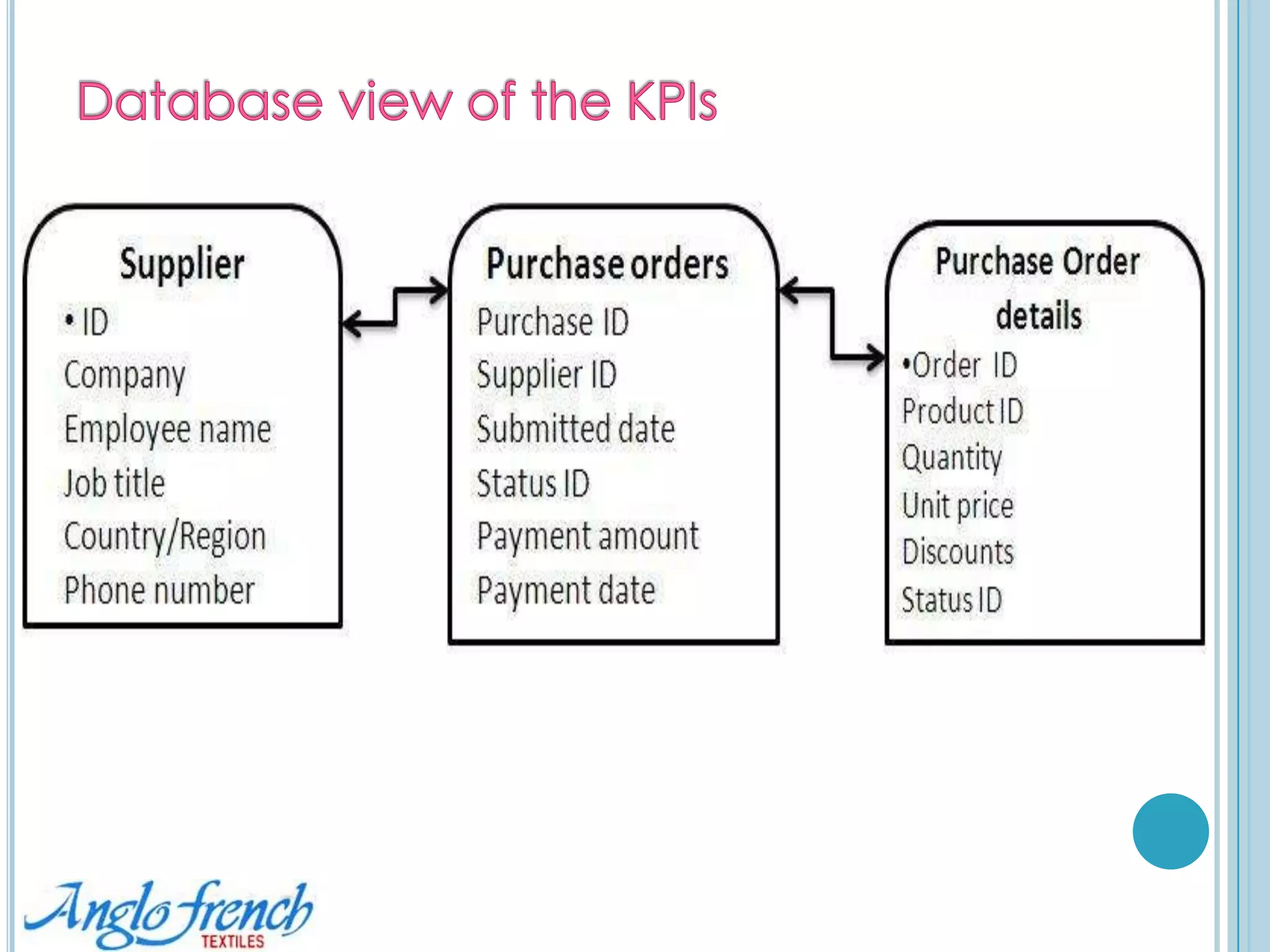
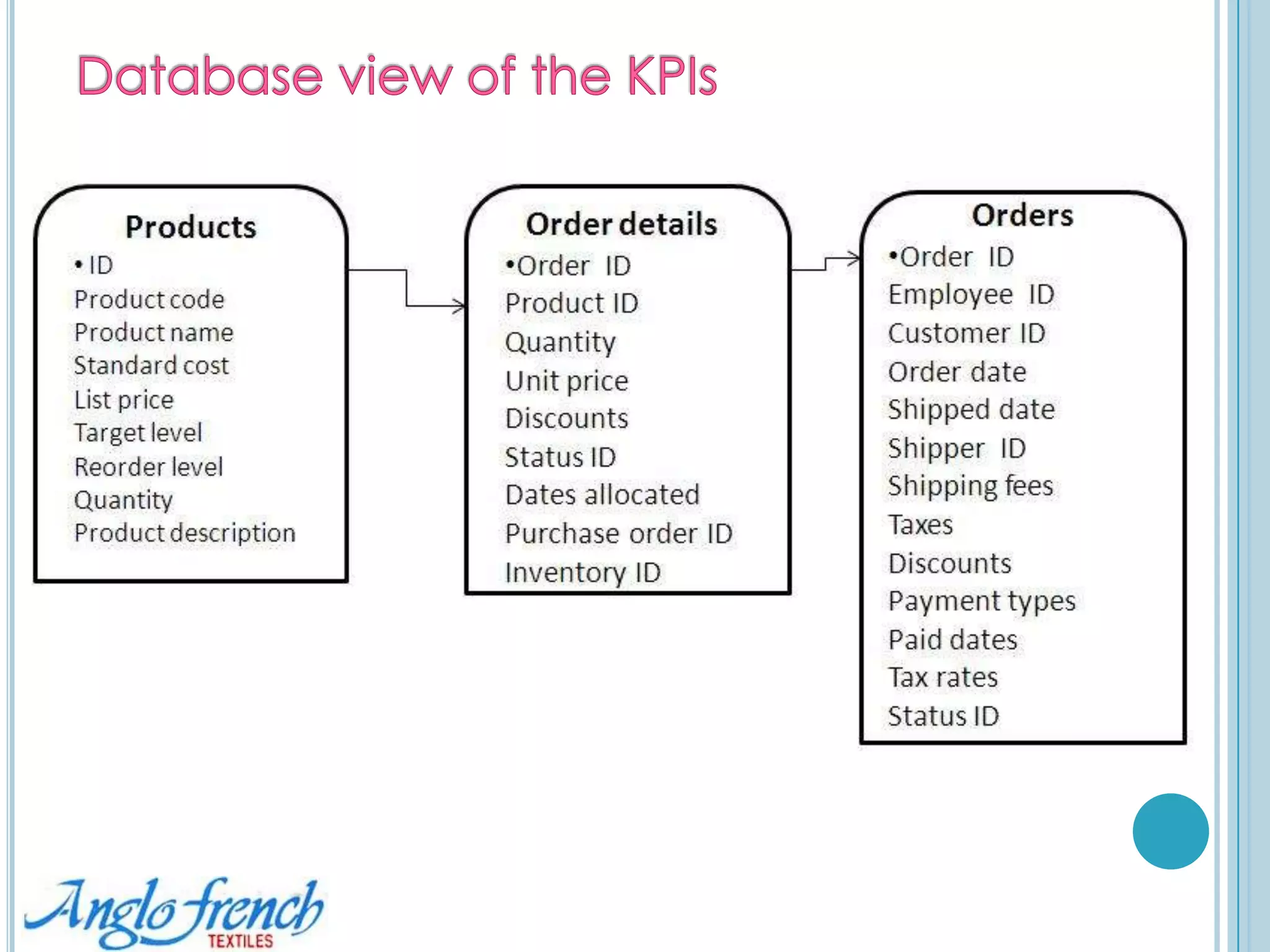
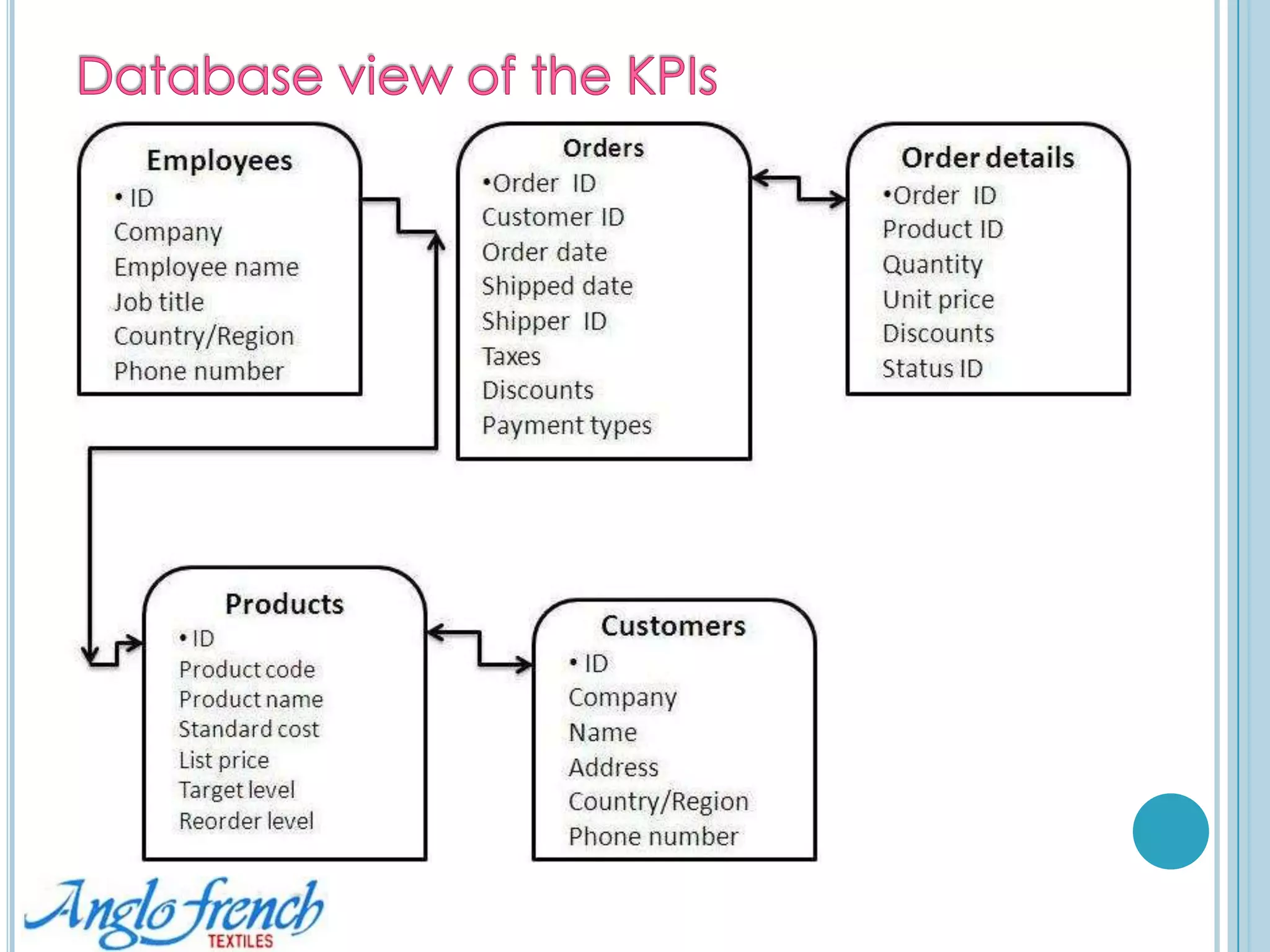
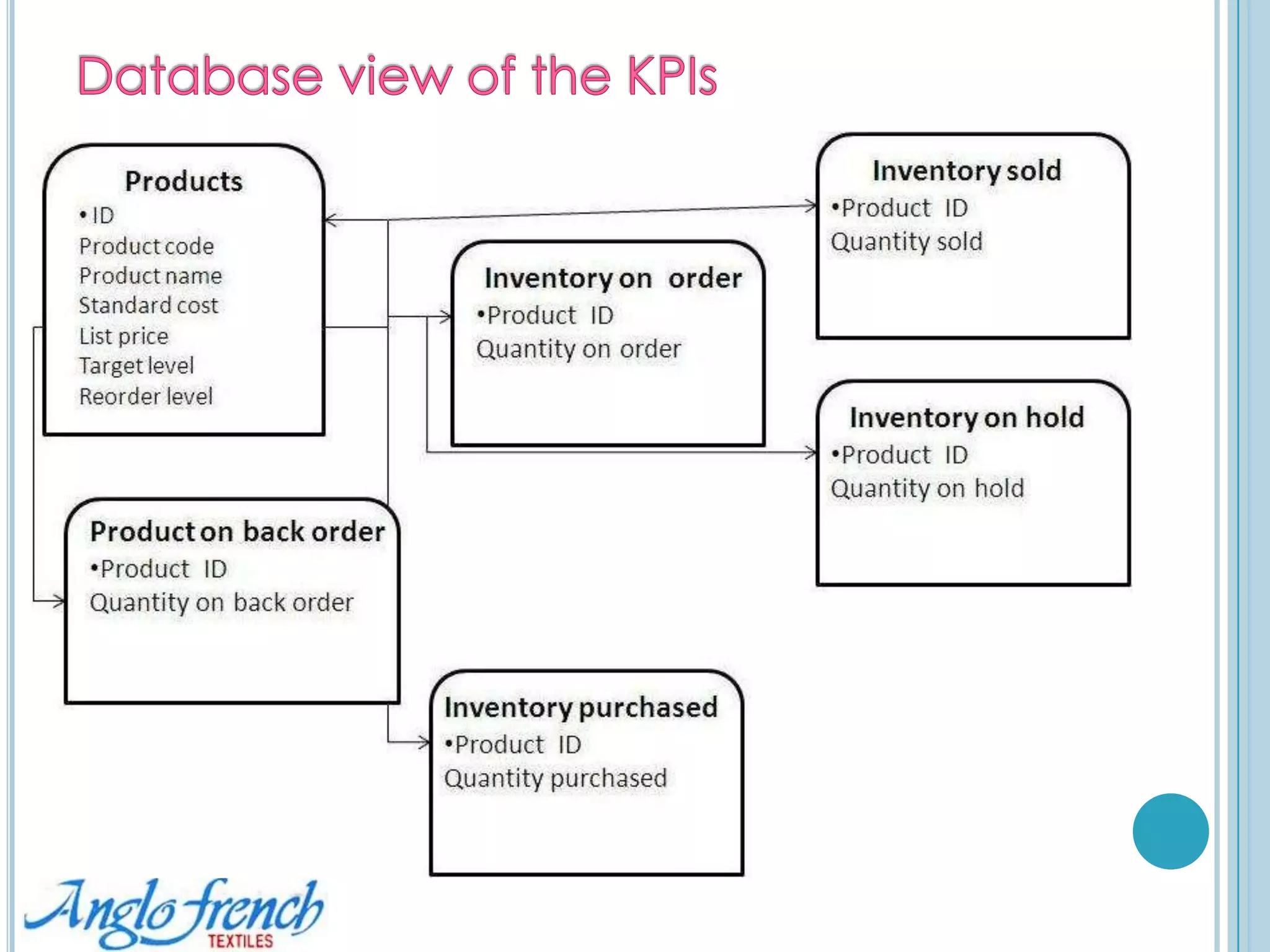
System Design Database views of KPIs
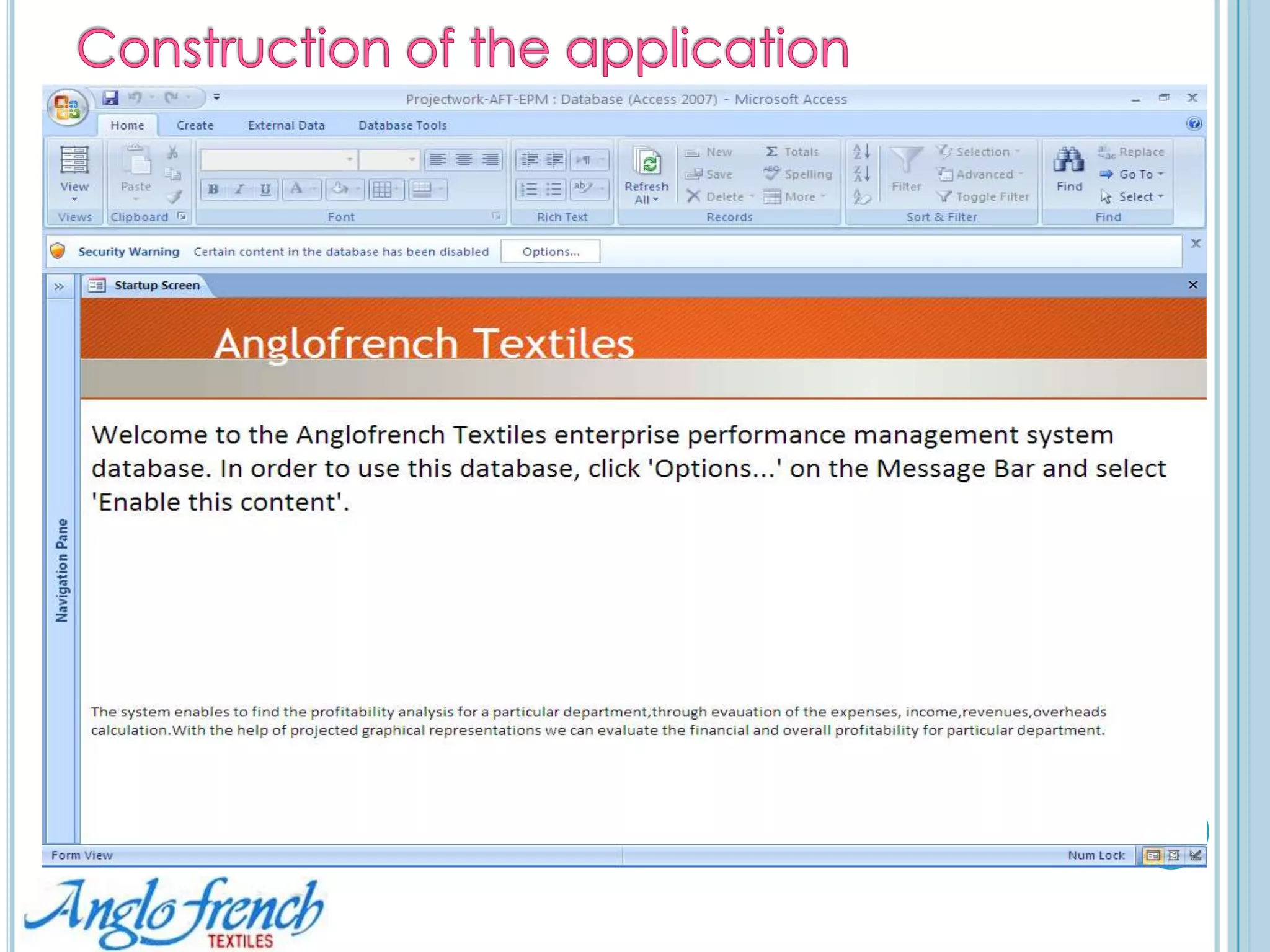
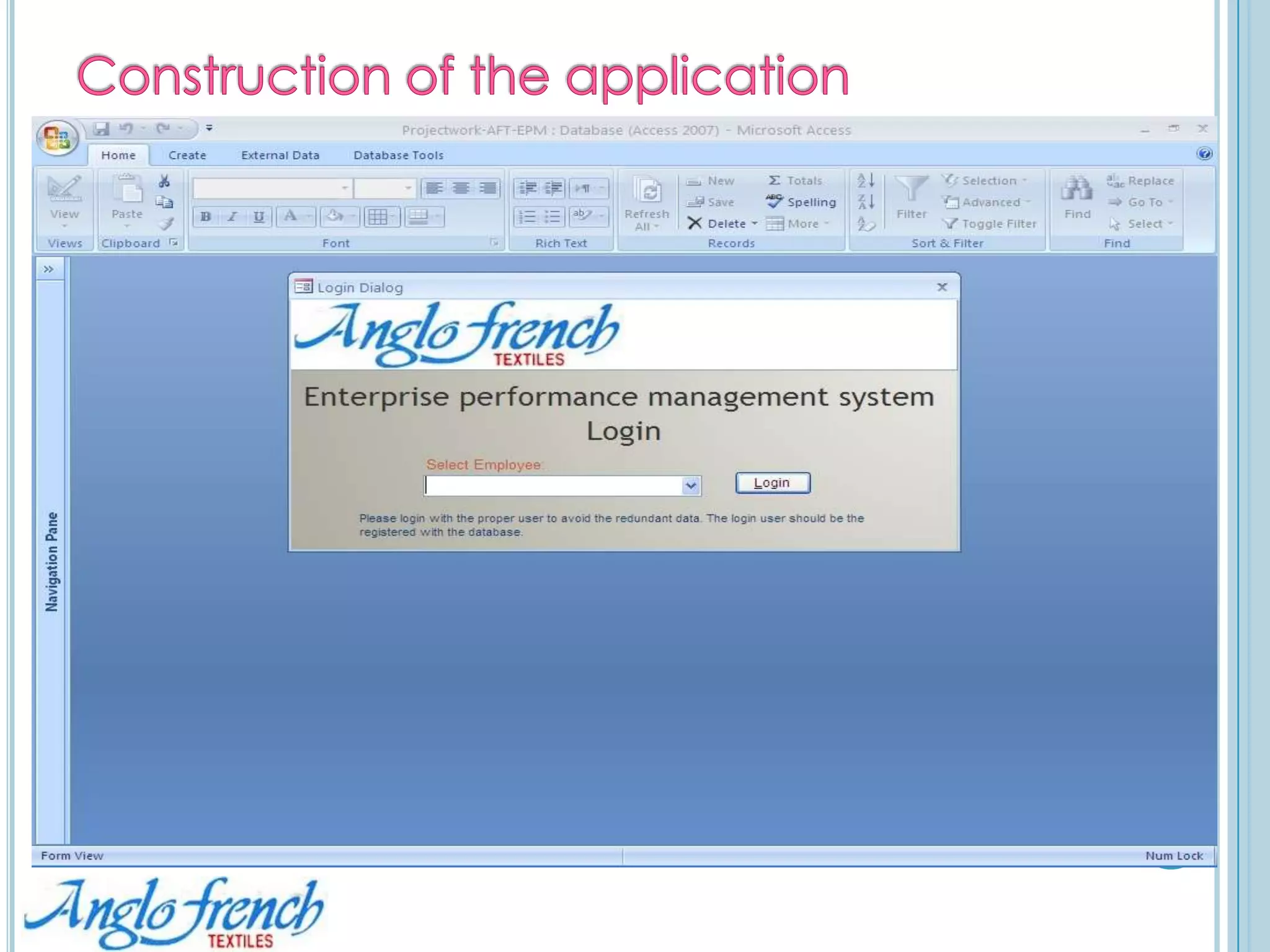
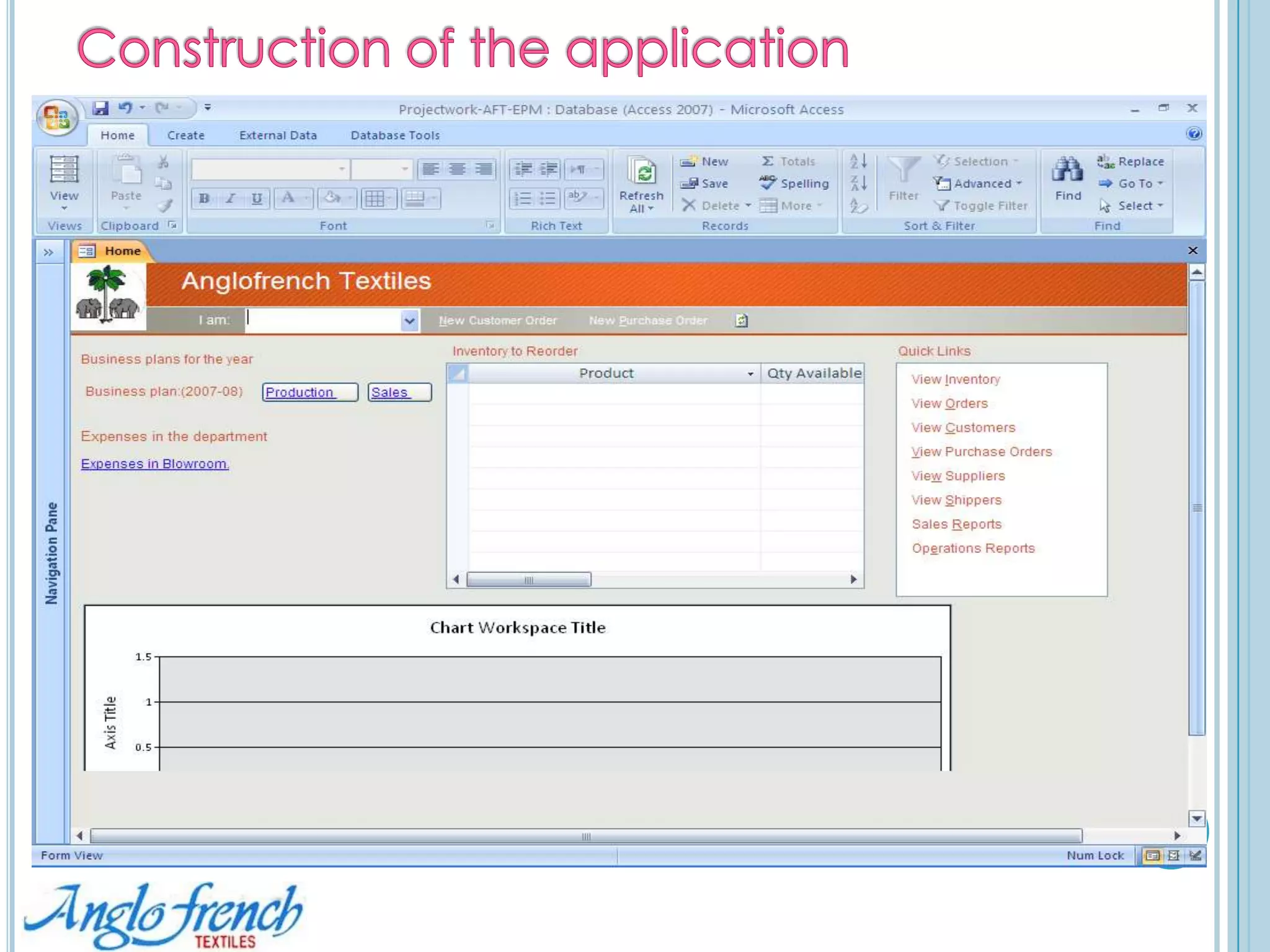
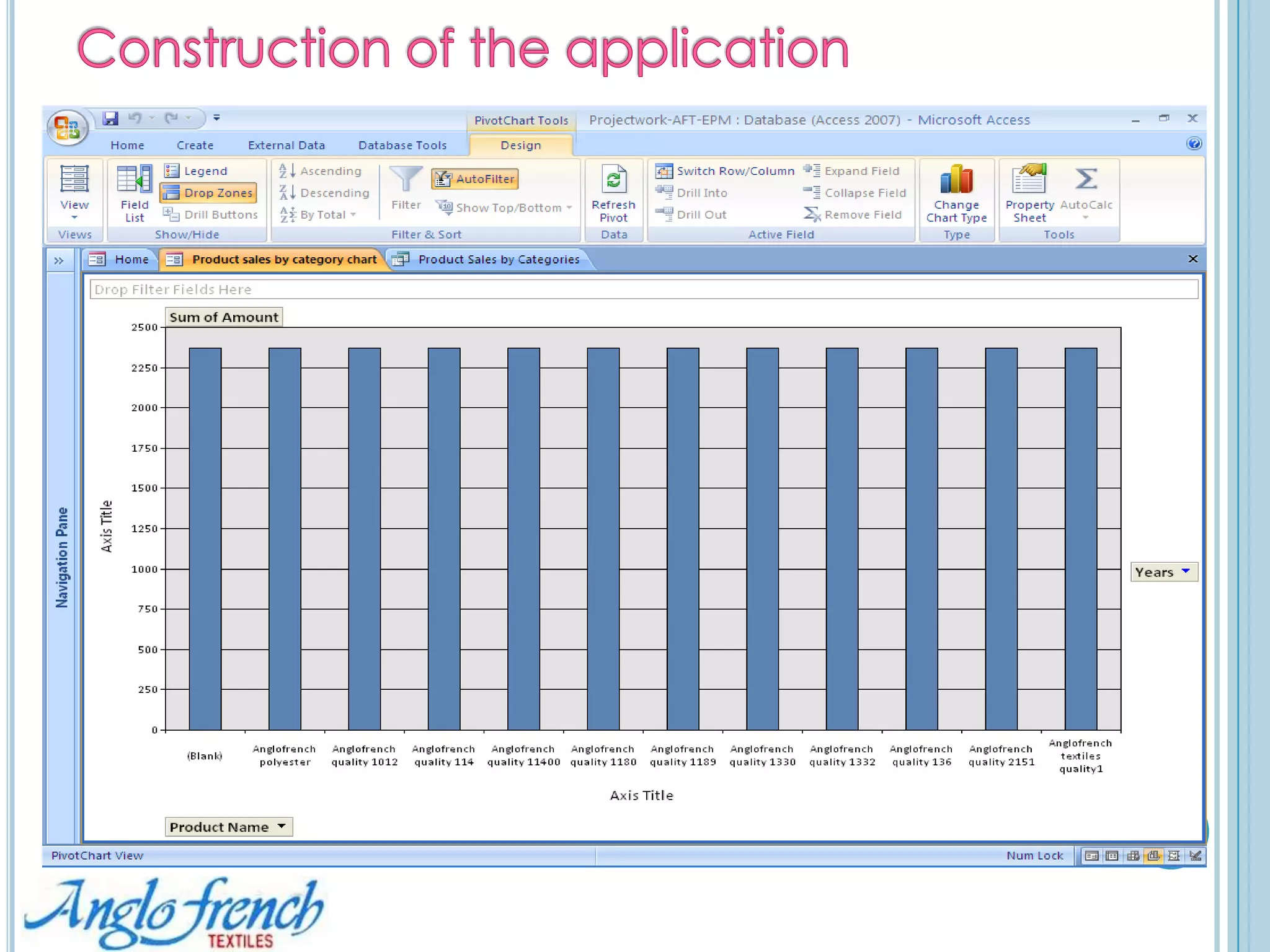
 Construction of ApplicationsSystem DesignData Design: The data design is used to group data into a number of tables called the dimension tablesThe database design is used to group data into a number of tablesReduction in duplication of dataSimplification of functions like addition, deletion, modification, etcRetrieving dataIncreasing clarify and ease of useProviding more information at less cost
Database view of the KPIs
Construction of the application

Enterprise Performance Management

  • 1.
    Designing an EnterprisePerformance Management (EPM) SystemforGuided byMr.S. Anandane, Sr. Manager-EDPAnglo French Textiles, Pudhucherry&Mr.S. Victor Anand Kumar, Senior LecturerPondicherry University, PudhucherryPresented by M.Sundarrajan II MBA Pondicherry University
  • 2.
    The shape ofthe textile industry in IndiaLarge Industry – 3% of GDP, 27% of Forex earnings, 21% of total employmentVery large unorganized sector – about 76% of total fabrics productionMarket is very diverse, does not lend itself to comparative studies in terms of market share etcIndia's home textile exports expected to grow from $1.2 billion now to $5 billion by 2010
  • 3.
    The Global scenario…Theend of the Multi fiber agreement (MFA)Competitiveness of Indian industryLow level of modernization
  • 4.
    Fragmented nature –low capacities
  • 5.
    Infrastructure, Labour lawsExportshave risen by 10% but at the same time China’s exports have risen by more than 20%, even countries like Pakistan and Bangladesh have done better
  • 6.
    Company Profile –Anglo French TextilesLegacy of over 100 years ( started in 1898)Company is owned by Government of PondicherryKnown as a ‘composite mill’ProductsBed sheets, school uniforms, parachute suits etcEmployee Strength: 3,279 no's (465 staff and the rest workers)
  • 7.
    Enterprise Performance ManagementSystem – EPM Overview
  • 8.
    Enterprise Performance Management - EPM overviewBrings management processes under a single umbrella, connecting financial and operational decisionsActivities with transactional systems to form a comprehensive management pictureEPM helps toIdentify information gaps, Focus on the right points of connection, Evolve the performance measurement
  • 9.
    Enterprise Performance Management - EPMSource: adopted from the CPM models of IBM-COGNOS, January 2008
  • 10.
    EPM- Frame workItis about connecting processes, people, metrics, systems, and businesses to improve decision-making and drive competitive advantageMany factors influence the performance of the organization’s decisions, categorized as How are we doing? (– scorecards, dashboards)Why?(– reporting & analysis)What should we be doing?(– planning)
  • 11.
    EPM- Frame workSource:The Performance Management Framework of Cognos, 2008
  • 12.
    Identification of KeyPerformance Indicators (KPIs)Evaluating the performance of any department starts with the key performance indicators (KPIs)Classified based on the origin, namely department, workflow, cost incurring activity, profitable activity, etcThe whole organization is classified into main eight quarters and the activities are monitoredFinanceManufacturing (Operation)
  • 13.
    Finance department KPIsFocuson checks and controls to comply with legal, tax, and accounting regulations and requirementsto advise the business on future directions, performance, and opportunitiesIncome statementDrill-down varianceOperational plan varianceCash flow and working capitalBalance sheetCapital expenditure and strategic investmentsReserves
  • 14.
    Production department KPIsProvidesthe delivery mechanism for the business, gives both what the business sells and how that product gets to marketPurchasing and ProcurementProduction and CapacityInventory ManagementDistribution and LogisticsCost and Quality ManagementProcess Efficiency
  • 15.
    Existing Decision SupportSystem (DSS) @ AFTInformation support to many day-to-day decision making needsAnalysis and reports remain Unconsolidated & Scattered (connected inefficiently)Only few can read the plan, but cant modify according to the departmental driversDisjointed technologies lead to silos of information and limit the ability to act with focus and agility
  • 16.
    CENTRALIZED EDP FUNCTIONDATAOUTPUTDATA CAPTUREDATA PROCESSINGPresent DSSCentralized Function
  • 17.
  • 18.
    Modules are notintegrated
  • 19.
    Inconsistency and redundancyProblemsin the existing systemData redundancy and inconsistencyData available in operational/ transactional level are not integrated.Non-availability of compact dataLarge volumes of data with high levels of detail and low levels of granularitySystem does not support unstructured decision-making.Requires large processing time and effort
  • 20.
    Project-Overview Needfor the project
  • 21.
    Scope ofthe project
  • 22.
  • 23.
    Benefits Need forthe project…Need for an Enterprise Performance Management System to provide information support for unstructured decision making and strategic planningNeed for well defined Key Performance Indicators KPIs Need for well established metrics for the evaluation of KPIsStatistical and graphical reports to identify patterns and trendsare needed
  • 24.
    Scope of theproject…Identify the KPIs in the organization, by analyzing various information and to suggest solutionDevelop an enterprise performance management system (EPM) model in order to aid managers in making quick decision in each department of the organization
  • 25.
    Proposed EPM SystemModel Model adapted from CPM models of Cognos, IBM and Oracle, 2007
  • 26.
    Benefits of theproposed systemFocus on the leading metricsData integrityVisualization tools for navigatingSecuring a continuum of homogeneous and aligned informationAddress the full scope of the business
  • 27.
  • 28.
    Construction ofApplicationsSystem DesignData Design: The data design is used to group data into a number of tables called the dimension tablesThe database design is used to group data into a number of tablesReduction in duplication of dataSimplification of functions like addition, deletion, modification, etcRetrieving dataIncreasing clarify and ease of useProviding more information at less cost
  • 29.
  • 30.
  • 31.
  • 32.
  • 33.
  • 34.
  • 35.
  • 36.
  • 37.
  • 38.
    Recommendations Adopting anuniform performance managementDecentralization of the informationRisk and compliances integrated performance management Enhance the usage of Business Intelligence in the organizationImplementing a scenario based analysis of problemKnowledge about the competitorsReducing the cost components
  • 39.
    ConclusionThe proposed systemhelps the organization to process the information in no timePeople are connected by embracing a broader definition of stakeholders and a more flexible performance management approachEasy to connect business beyond boarders
  • 40.
    Scope for futureworkAdapting to Web-based reporting and analysis solutionDevelop a fully integrated solution based on a single, common reference data repositoryEnhance the system to work in real time EPM solutions can be made more access modesBlackBerry®, Windows Mobile,GoogleMS Office application, or Web browser
  • 41.